
 MONA OS 2.0
 Partner with MONA


 Tự động hoá doanh nghiệp
 Cẩm nang SEO
 Digital Marketing
 Kinh nghiệm thiết kế website
 Hạ Tầng Server
 Giáo dục


 VI
 EN





































Message us on
Zalo Official


 ProductsNew

 ProductsProducts
 Mới ra mắtKHA AI 2027App tự edit video, tự đăng mọi mạng xã hội, 2 phút mỗi ngày










 Website designLooks good and wins customers over.
SEO servicesBrings in customers searching for exactly what you sell.
 Tư vấn digital marketingKéo khách từ nhiều kênh, đo bằng số thật.
Corporate video productionVideos introducing your company, factory and team.
 NewAI video productionCompany story films made with AI.
 Custom software developmentCRM, ERP and HRM built for your business.
 Viết AI Agent theo yêu cầuĐặt riêng một trợ lý AI cho đúng việc của mình.
 Tư vấn chuyển đổi AIĐưa AI vào vận hành của cả công ty.
NewMONA LMSManagement for centers and schools.
MONA SkillHubInternal training for company staff.
 NHTQ systemEnd-to-end China–Vietnam shipping operations.
MONA JMSManagement for gold, diamond and pawn shops.
 MONA E-LearningA website with every feature you need to sell courses.
 How to sell online courses (course)More than 30 free lessons on selling courses on autopilot.
 MONA Cloudmonacloud.vnServers to get your apps and websites running.
 MONA Basemonabase.vnPostgres database, sign-in and file storage.
 MONA Mailmonamail.vnSend OTP, order and invoice emails from your software.
 MONA Paymonapay.vnAccept bank transfers via VietQR and notify your software when the money arrives.
 MONA eInvoiceComing soonIssue e-invoices that meet tax standards.
Gấu CườiTrả lời khách 24/7 trên web, Fanpage, Zalo và thu lead cho sale.
 Gấu TeleSalesGọi điện tư vấn, chăm khách như tổng đài viên thật.
Dê CườiTư vấn và chốt đơn cho shop ngay trong khung chat.
Gấu WebmasterNhắn nhóm Zalo là website được sửa xong.
 Gấu Pháp ChếSoạn hợp đồng, rà điều khoản trong vài phút.
 Gấu Báo GiáLên báo giá đúng mẫu và gửi khách ngay.
 AI chăm sóc khách hàngTheo dõi và giữ chân khách hàng cũ.
 Gấu Tuyển DụngLọc hồ sơ, hẹn lịch, phỏng vấn ứng viên.
 Mới ra mắt
KHA AI 2027
Xây kênh chuyên gia 2 phút mỗi ngày
Quay bằng điện thoại, AI tự edit video, tự đăng lên 16 nền tảng và tự trả lời bình luận, tin nhắn.
884.102lượt xem trên kênh CEO MONA sau 36 ngày
 Anh Khánh HùngCEO MONA đang dùng mỗi ngày
Xem app làm được gì
 AI
Gấu Cười MONA ĐANG TỰ XÀITrả lời khách 24/7 trên website, Zalo OA, Messenger và thu lead về cho sale.
Dê CườiChốt đơn bán lẻ và sàn: Shopee, TikTok Shop, web. Chăm cả khách sỉ, đại lý.
Gấu WebmasterCập nhật nội dung, tối ưu SEO website mỗi ngày.
Gấu TeleSalesGọi điện tư vấn, chăm khách như tổng đài viên thật.
Gấu Tuyển DụngLọc hồ sơ, hẹn lịch, phỏng vấn ứng viên tự động.
AI chăm sóc khách hàngGiữ khách cũ, cứu lead đã rớt cho phòng kinh doanh.
Gấu Pháp ChếSoạn hợp đồng, rà điều khoản trong vài phút.
Gấu Báo GiáLên báo giá đúng mẫu, gửi khách ngay khi có yêu cầu.
 Chuyển đổi AI toàn phầnGiải pháp tổng cho doanh nghiệp, 3 lớp triển khai.
 Viết AI Agent theo yêu cầuĐặt riêng một con AI gánh đúng nghiệp vụ của bạn.
 Custom softwareCRM, ERP and HRM with built-in AI automation.
 SEO & AEO thời đại AIĐược Google lẫn AI trích dẫn, không chỉ xếp hạng.
 Kiến thức AI cho doanh nghiệpBài phân tích, hướng dẫn ứng dụng AI vào vận hành.
 Free AI courses
 AI tools at work
App mới · KHA AI 2027
Xây kênh 2 phút mỗi ngày
AI tự edit video, tự đăng mọi mạng xã hội
Free consultation, 8am–10pm every day

18 March, 2023

Keyword are one of the most important factors in SEO, because they are what connects users with your website. Keywords bring an article in front of users when they search, and they make it easier for SEO teams to get a website's information to customers. Search engines like Google rank websites against the keywords users type in. This article MONA Media explains what a keyword is, why keywords matter in SEO, and how to use them to get the best results from your website SEO.
Keyword (keyword) is a word or phrase that represents the topic of a web page and brings that page in front of users when they search. Put simply, keywords are the phrases users type into the search box of a search engine such as Google, Bing or Yahoo to find a product or service.
For Google to understand what a website is about, SEOers need to research keywords and write content that contains the main keyword or phrases related to what users are searching for. Google then recognizes websites with SEO-friendly content and ranks them on the first page of search results.

The term “hosting” above is the keyword
So keywords are an effective bridge between businesses and customers. SEO practitioners need to know where to place keywords properly: Slug, the title, heading tags in the article… and they need to balance main, secondary and related keywords so that the effort of getting a website to the top of search results pays off.
-> Learn more:

Now you know what a keyword is. Keywords help search engines recognize what your website is about.
On the other hand, if you use keywords that do not match what users are searching for, your website will struggle to get traffic and rankings. That is why you need to understand how keywords really work in order to optimize your content effectively.
Example: When you search for the keyword “web design”, you will see MONA Media in the number 1 position in the search results. This shows that MONA has optimized the keyword “web design” well on its own website, and that it is a trusted, high-quality name in web design.

According to the latest statistics, every second Google can process 100,000 searches based on the keywords people search for. Thanks to Google's algorithms , the search engine quickly understands what users want and helps them find relevant content. Choosing keywords that match users' search needs therefore makes it easier for you to reach target customers your business is targeting.
You need to be clear about the type of keyword you are targeting and create content that matches the searcher's needs; this is how Google can easily recognize your website's content. Keywords fall into 3 main types:
SEO practitioners analyze potential keywords and choose short or long keywords to optimize for their products, brand and services. Beyond this basic split, keywords can also be classified in more specific ways, including the 4 types below:
By length, keywords with 1 to 3 words are called short keywords. Keywords with 4 to 6 words are called long keywords. Specifically:

The phrase “company profile photography” is a long-tail keyword

“SEO services” is a short keyword

When classified by user search intent, SEO keywords fall into:
Information Keyword are keywords users search with to find information about an issue, a field or a product. These keywords are usually medium or long and contain words such as: what is, how to, guide, benefits,…
Example: SEO là gì (What is SEO), Cách thiết kế web (How to design a website), Hướng dẫn sử dụng WordPress (WordPress guide), Lợi ích của thiết kế web chuẩn SEO (Benefits of SEO-friendly web design),…
Navigational Keyword are keywords users search with to go directly to a website they already know. These keywords are usually short and contain a brand name, product name or the website's domain.
Example: MONA Media, Facebook, Gmail,…
Commercial Investigation Keyword are keywords users search with to find and compare products or services before deciding to buy. These keywords are usually medium or long and contain words such as: compare, review, top, cheap, best,…
Example: Đánh giá dịch vụ SEO MONA Media (MONA Media SEO service review), Top 10 thiết kế website giá rẻ (Top 10 affordable web design),…
Transactional Keyword are keywords users search with to take an action such as buying something or signing up for a service. These keywords are usually short or medium and contain words such as: buy, sell, sign up, download, discount, promotion,…
Example: mua SSL (buy SSL), Dịch vụ SEO MONA Media có gì khác biệt (what makes MONA Media's SEO service different), tải về WordPress miễn phí (free WordPress download), thiết kế website chuyên nghiệp chuẩn SEO trọn gói (all-in-one professional SEO-friendly web design),…

Keyword modifier is a type of keyword that shows a user's search purpose on Google. If you look closely at keywords, you will see they all have two main parts:
Example: The keyword “website design” has the head “thiết kế website” (website design) and can take many modifiers such as “giá rẻ” (affordable), “chuyên nghiệp” (professional), “chuẩn SEO” (SEO-friendly),… These modifiers help users find a web design service that fits their needs and budget.
These are keywords that appear on search engines for a short period because of a special event or trend. They usually have high search volume but only for a limited time, then gradually decline or disappear.
Example: World Cup 2022, Covid-19,…
These keywords stay on search engines for a long time because user demand is stable or continuous. They usually have steady or gradually growing search volume and are not much affected by events or trends.
Example: SEO, dịch vụ SEO (SEO services), thiết kế web (web design)…
These are the important keywords you want to rank at the top for, with high search volume, that represent the industry or products and services of a website. You usually see them on product category pages or in article titles on a website.

LSI keywords are keywords with similar meanings that often appear together within a topic. Thanks to them, Google can find pages about a given keyword and return accurate results to users.
Example: the main keyword is “SEO services”, the LSI keywords would be “dịch vụ SEO Top/dịch vụ SEO website/dịch vụ SEO tổng thể,…” (top SEO services/website SEO services/full-scope SEO services,…)
Keywords that contain your brand name or a competitor's. Users usually search these directly when they already know a little about your product.
Example: Thiết kế website MONA Media
Product attribute keywords describe the details of a product, such as color, size, style, material, function,… They help users find specific products that fit their needs and preferences.
Example: “dịch vụ viết bài chuẩn SEO” (SEO article writing services), “thiết kế website chuẩn Responsive” (responsive web design)…

Geo-targeted keywords are keywords that show the specific location where users want to find information or products/services. Google often prioritizes showing a map with directions on the SERP for these keywords.
Example: “dịch vụ SEO TPHCM” (SEO services in Ho Chi Minh City), “thiết kế website HCM” (web design in Ho Chi Minh City)…
This is a way to state clearly which audience a business wants to reach and serve. These keywords help a business find and attract potential customers whose needs and interests match its products or services.
Example: “SEO Website bất động sản” (real estate website SEO), “thiết kế website giáo dục” (education website design),…
There are many ways to optimize keywords on Google. Below are 3 ways you can apply to help your keywords show up easily on Google's search results page:
Google regularly changes its algorithms to evaluate and rank websites as accurately as possible. How you optimize articles and use keywords also has a big effect on where a website ranks.
One thing is certain, though: however Google changes, keywords stay at the heart of every article on a website. They play a key role in how both Google and customers search for information.
In addition, Keyword SEO also help a website reach the top of Google quickly and attract more traffic, which gives you a chance to raise the conversion rate during the campaign. Usually, a keyword SEO campaign is faster, typically taking 2 to 6 months. During this time, SEOers focus only on a list of important keywords,
A clear example of how much keyword SEO matters to a website is the Binh My Nursing Home system , a client that has worked with MONA continuously since 2020.

As one of MONA's long-standing clients, Viện dưỡng lão Bình Mỹ (Binh My Nursing Home) rolled out a comprehensive SEO strategy to reach top positions in Google search results for important keywords in elderly care.
MONA carried out in-depth keyword research to identify important, high-volume keywords in elderly care, such as “Viện dưỡng lão Bình Mỹ (Bình Mỹ nursing home)“, “chăm sóc người cao tuổi theo yêu cầu (on-demand elderly care)“, “viện dưỡng lão ở Việt Nam (nursing homes in Vietnam)“, “viện dưỡng lão 5 sao (5-star nursing home)“, “thực đơn cho người trên 60 tuổi (meal plans for people over 60)“, “chăm sóc người cao tuổi sau đột quỵ (elderly care after a stroke)“, “dịch vụ chăm sóc người già (elderly care services)“,… which were selected and prioritized.
With continuous support from the MONA team working alongside them, brand visibility increased 6x compared with when the project started. Having seen how much keywords matter in SEO, Binh My Nursing Home keeps working with MONA to hold its position and stay ahead of competitors in its industry.
>> SEE THE FULL PROJECT DETAILS: https://mona.media/project/he-thong-duong-lao-binh-my/
SEO website has to start with keywords. Keyword research helps SEOers map out a strategy and build a solid “backbone” for the website. The main site needs important content, optimized pages and a clear keyword distribution. Every SEO strategy aims to get your website ranking, and whether it works depends largely on keywords.
SEO is also the form of online marketing chosen by more than 90% of businesses . The analysis below shows why.

Researching keywords and building a keyword set aimed at the right target customers is essential. At MONA, 100% of the SEO keywords for our projects are developed through detailed research, selection and analysis.
What makes SEO strategy at MONA different is that it reaches every customer segment of a business with both indirect and direct keyword sets, rather than only main, secondary and related keywords as most agencies do.
This is also part of why MONA's SEO campaigns succeed, delivering reach and traffic without missing any customer segment.
For each business, we design a Digital Marketing strategy tailored to that business, analyzing the market, industry difficulty, target customers, the business's strengths and weaknesses,… From there, MONA puts together the most suitable SEO plan for each business.
What's more, MONA can build your SEO strategy completely free and before the contract is signed, which means even before you become a client of ours.

100% of MONA Media's SEO projects succeed thanks to a well-structured process, starting from the SEO strategy,
-> You can learn more about SEO concepts at:
Most customers find your website through keywords. You can only create content that matches what they look for by researching keywords and learning their search habits. Keywords reduce how much you rely on paid ads, and your website's views grow naturally through customers' searches. In short, choosing the right SEO keywords is the best way to reach your target audience and potential customers.
However, keyword research requires in-depth SEO knowledge, skill with keyword analysis tools and experience building an SEO growth plan around the right keyword set.
In reality, not every business has an in-house SEO team with the capability to analyze keywords and build an SEO strategy that delivers strong results. That is why outsourced SEO services exist.
The analysis below explains more.

Keyword traffic from users is one of the signals used to judge a website's ranking. If your content around those keywords is engaging, customers stay longer on your website, and Google rates it even higher.
A website without the keywords customers are searching for is very hard for Google to show to readers. Keywords are what let you use Marketing online to optimize for Google search, and they tell you what useful content to create for your customers.
In the same competitive field, whoever researches keywords and optimizes their website better will be ranked higher by Google. When your website shows up higher than competitors' sites, customers find you first and you get more clicks, faster.
From a business whose keywords were “cannibalizing” each other to a leading website for importing goods from China: here is how AliOrder got there with MONA.

AliOrder is a business that has been operating for more than 6 years in the market, providing services for importing goods from major Chinese e-commerce sites such as 1688 and Taobao. Before working with MONA, AliOrder faced many challenges with SEO because competition in the import services industry is quite high, which limited website traffic and made it hard to get important keywords to the top of search results.
After struggling in the market for a long time, AliOrder decided to work with MONA on a comprehensive SEO strategy. The project's goals were to increase brand visibility, grow website traffic and get difficult keywords to the top on Google. The AliOrder case study shows clearly how well MONA's comprehensive SEO strategy worked.
With support from the team of SEO specialists, AliOrder met and exceeded its goals, strengthening its online presence and competitiveness in the import services industry. Specifically:
Understanding the factors below will make it easier to optimize your website SEO for strong results:
This is the number of times users type that keyword into a search engine in a month. Search volume shows how much interest and demand users have for that keyword. Keywords with high search volume usually have the potential to bring more visitors to a website.
Keyword competition is how hard it is to rank high in search results for that keyword. The level of keyword competition depends on the number and quality of other websites that also use that keyword. High-competition keywords usually have many websites trying to take positions in the search results, so SEO practitioners need to put in a lot of effort and spend more to optimize for that keyword.

This is a metric based on factors such as search volume, competition, and the quality and authority of the websites ranking high for that keyword. Keyword difficulty shows how challenging it is to rank high in search results for that keyword. High-difficulty keywords usually require more time and a more in-depth SEO strategy to beat competitors.
-> See How to assess keyword difficulty in SEO most accurately – HERE
Other factors that affect keyword selection include:
WATCH THE VIDEO a guide to keyword research in an SEO strategy
To get the best results from keyword research, beyond understanding which keyword types match user search intent, you need to carry them out through a structured process to find the right keyword set for your business's SEO & Marketing strategy .
Follow these steps for SEO keyword research:
-> A complete A-Z guide to keyword research, research keyword SEO – READ THE ARTICLE
Free keyword research can save you a lot of money on keyword research. There are about 3.5 billion searches every day on Google. Understanding this keyword traffic helps you optimize your articles and website well. You can find keywords for free in the following ways:

Google Analytics is a completely free Google service. It shows you the keywords users search for most, the traffic to your website, and the keywords that brought customers to your site. It also reports keywords that are not sending visitors to your pages. You can use all of this to improve your website.
Google Search Console shows how your keywords rank based on what people searched for. Just log in to Google Search Console and open the search results report. You can use this data to plan website maintenance, images and articles. Competitors' keywords will also show up in these queries.
-> See also:
Google Trend is a Google tool that lets you research one or several keywords completely free. It helps you easily see which keywords many users are interested in, as well as the newest and most trending content on Google right now.
Google Suggest is the feature that shows keyword suggestions when you type a keyword into Google's search bar. With this tool, you can see the most popular related keywords users are searching for on Google. From there you can find keyword ideas, expand your keywords and understand user intent.

Google Keyword Planner is a free Google Ads tool that lets you find and filter keywords that fit your advertising goals, with metrics such as search volume and competition on Google.
AnswerThePublic is a free keyword research tool that helps you find and visualize questions and phrases related to a keyword. With AnswerThePublic, you can find question, comparison, prefix and suffix keywords,… You can use this tool to create content that answers users' questions and improves your chances of ranking in search results.
Choosing the right SEO keywords for each website SEO campaign helps you optimize time and cost for the best results.
First, you need to research the target market of the SEO campaign you are planning. This helps you understand your website's position in the market and set suitable goals for the campaign. This step also helps you define clearly the goals you want to achieve and which audience you want to reach when optimizing your website for search engines.
Look for SEO keywords in your field using keyword research tools such as Google Keyword Planner, Google Trends, Ahrefs, SEMRush,… to find and filter keywords with high search volume that fit your goals.

You can analyze competitors by researching and evaluating other websites that also use the keywords you want to rank high for. Look at and analyze metrics such as traffic, backlink, content quality,… of competing websites to understand the level of competition and their strengths and weaknesses.
Do this by classifying keywords by the type of intent users have when searching. For example: informational, navigational, transactional, comparison,… Choose keywords that reflect the user's intent and stage in the search process.
Choose keywords by looking at the current Google search results for your keyword. Look at factors such as the result type (For example: videos, images, Featured Snippet,…), the quality and authority of the websites ranking high, and the content and structure of those pages,… This helps you understand what users want and expect when searching for that keyword.
Secondary keywords support your main keywords; choose related keywords that complement your main keyword. You can use criteria such as relevance, fit and how well they reflect user needs to choose secondary keywords. Choose keywords with a clear meaning, not too generic or too specific.
Keyword research is an SEO technique that requires real expertise. Here are the things you should not do with keywords:

You should not stuff too many keywords into one article. You need to distribute keyword density, and add secondary and extended keywords to the article. Articles stuffed with keywords will not be rated highly by Google.
Place keywords in important positions in the article's content, such as the title, Meta Description, URL, heading tags… Above all, use keywords naturally and sensibly; do not stuff or overuse them.
Misleading keywords, or keywords that have nothing to do with the article's content, are a mistake you must avoid completely. Google uses up to 200 different algorithms, so it will quickly catch a mistake like this that hurts your users. Focus only on keywords related to the content of your page.
Keywords used clumsily in articles are not rated highly either. Do not pack too many keywords into one heading while other headings have none. Keep keyword placement natural. And don't forget to include the keyword in the description.
Want more organic traffic and more online sales? MONA Media can help you get there with SEO services , done professionally and effectively.
The more than 9 years of experience in SEO, MONA Media's team of specialists has successfully delivered more than 300 SEO projects for businesses across many industries. MONA always keeps up with the latest algorithms and applies Under the SEO trends modern techniques to get the best results for each project:
At MONA Media, our clients' interests always come first. We work to deliver the best possible results, so your website ranks high on Google and turns more visitors into buyers.
CONTACT US via HOTLINE 1900 636 648 for a detailed consultation and a quote for full-service SEO that is as accurate as possible. The MONA Media team will advise you carefully and recommend the best way to grow your business online.
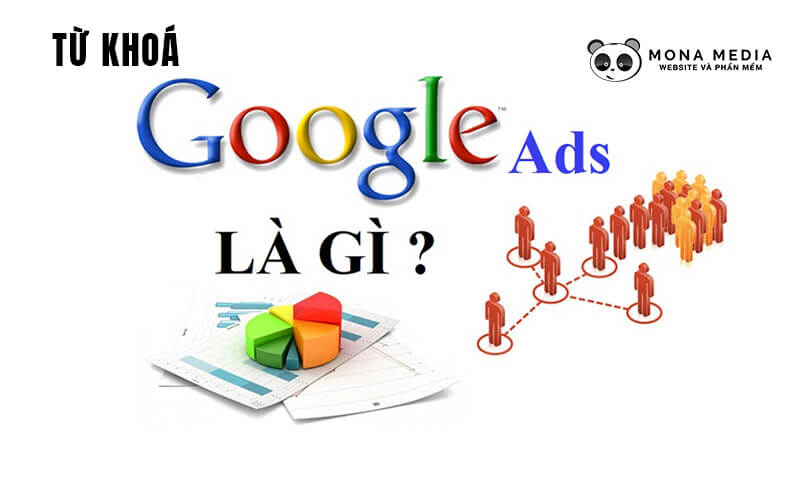
1- What are Google Ads keywords?
Google Adwords keywords are words or phrases used to match your ads with the phrases people are searching for. Choosing the right keywords helps you reach the customers you want, increase engagement and improve your keyword quality score. Choosing the right keywords also helps you make the most of your current ad budget.
2- How to optimize keywords effectively for SEO
There are many ways to optimize keywords for SEO, but MONA sums them up in the 6 main steps below:
3- What are the best keyword research tools today?
There are many good keyword research tools today, but some of the most notable are:
You can also look at other tools such as KWFinder, Moz Keyword Explorer, Google Trends, Spineditor,… to get the best keyword research results for your SEO campaign.
Keyword are at the heart of every article and a key way to optimize a website and its rankings. But they are not the only factor: images, videos, backlinks, media, website code, bandwidth and user experience matter too. We hope this article from MONA Media has helped you understand what a keyword isand their role in website SEO. Understanding how keywords really work helps you optimize your website SEO and get the best results.
-> See more tips for effective SEO optimization:

CEO & Founder · The MONA
Founder of The MONA, who built a services company of 60+ staff with 14,000+ projects delivered. Khánh Hùng shares how he thinks about building systems that run themselves, automating a business, and the real lessons from delivering projects at MONA.
 1,6K


Professional website
design services
Own a website with a beautiful, 100% exclusive design and a lifetime warranty, with the ability
to expand features flexibly as your business grows, starting today!



NHẬN TƯ VẤN SEO MIỄN PHÍ !






 MONA will never sell your information or send you spam


 MONA will never sell your information or send you spam
