
 MONA OS 2.0


 Tự động hoá doanh nghiệp
 Cẩm nang SEO
 Digital Marketing
 Kinh nghiệm thiết kế website
 Hạ Tầng Server
 Giáo dục



 VI
 EN




Message us on
Zalo Official


 Products

 ProductsProducts










 Website designLooks good and convinces your customers.
SEO servicesBrings in customers searching for exactly what you sell.
 Tư vấn digital marketingKéo khách từ nhiều kênh, đo bằng số thật.
Corporate video productionVideos introducing your company, factory and team.
 NewAI video productionCompany story films made with AI.
 Custom software developmentCRM, ERP and HRM built for your business.
 Viết AI Agent theo yêu cầuĐặt riêng một trợ lý AI cho đúng việc của mình.
 Tư vấn chuyển đổi AIĐưa AI vào vận hành của cả công ty.
NewMONA LMSManagement for centers and schools.
MONA SkillHubInternal training for company staff.
 NHTQ systemEnd-to-end China–Vietnam shipping operations.
MONA JMSManagement for gold, diamond and pawn shops.
 MONA E-LearningA website with every feature you need to sell courses.
 Course on selling online coursesMore than 30 free lessons on selling courses automatically.
 MONA Cloudmonacloud.vnServers to get your apps and websites running.
 MONA Basemonabase.vnPostgres database, sign-in and file storage.
 MONA Mailmonamail.vnSend OTP, order and invoice emails from your software.
 MONA Paymonapay.vnReceive bank transfers via VietQR, with payment alerts sent to your software.
 MONA eInvoiceComing soonIssue e-invoices that meet tax standards.
Gấu CườiTrả lời khách 24/7 trên web, Fanpage, Zalo và thu lead cho sale.
 Gấu TeleSalesGọi điện tư vấn, chăm khách như tổng đài viên thật.
Dê CườiTư vấn và chốt đơn cho shop ngay trong khung chat.
Gấu WebmasterNhắn nhóm Zalo là website được sửa xong.
 Gấu Pháp ChếSoạn hợp đồng, rà điều khoản trong vài phút.
 Gấu Báo GiáLên báo giá đúng mẫu và gửi khách ngay.
 AI chăm sóc khách hàngTheo dõi và giữ chân khách hàng cũ.
 Gấu Tuyển DụngLọc hồ sơ, hẹn lịch, phỏng vấn ứng viên.
 AI
Gấu Cười MONA ĐANG TỰ XÀITrả lời khách 24/7 trên website, Zalo OA, Messenger và thu lead về cho sale.
Dê CườiChốt đơn bán lẻ và sàn: Shopee, TikTok Shop, web. Chăm cả khách sỉ, đại lý.
Gấu WebmasterCập nhật nội dung, tối ưu SEO website mỗi ngày.
Gấu TeleSalesGọi điện tư vấn, chăm khách như tổng đài viên thật.
Gấu Tuyển DụngLọc hồ sơ, hẹn lịch, phỏng vấn ứng viên tự động.
AI chăm sóc khách hàngGiữ khách cũ, cứu lead đã rớt cho phòng kinh doanh.
Gấu Pháp ChếSoạn hợp đồng, rà điều khoản trong vài phút.
Gấu Báo GiáLên báo giá đúng mẫu, gửi khách ngay khi có yêu cầu.
 Chuyển đổi AI toàn phầnGiải pháp tổng cho doanh nghiệp, 3 lớp triển khai.
 Viết AI Agent theo yêu cầuĐặt riêng một con AI gánh đúng nghiệp vụ của bạn.
 Custom softwareCRM, ERP and HRM with built-in AI automation.
 SEO & AEO thời đại AIĐược Google lẫn AI trích dẫn, không chỉ xếp hạng.
 Kiến thức AI cho doanh nghiệpBài phân tích, hướng dẫn ứng dụng AI vào vận hành.
 Free AI courses
 AI tools at work












































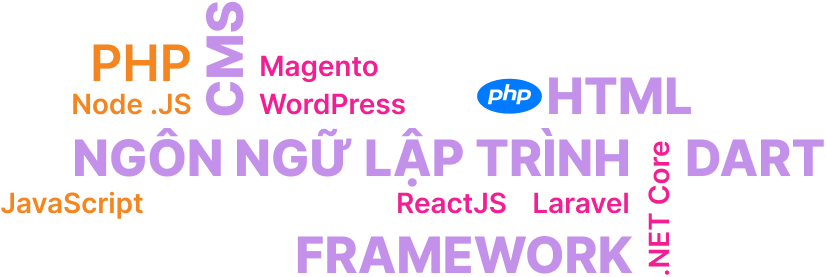
A PHP-based content management system. Create and manage websites easily, with many themes and custom plugins


Easy planning, notes, timelines and more. Data is stored in one place, syncs quickly and is highly customisable


Used to build dynamic, more lively websites, validate input, handle events, and create games and web apps


Components for building complex web apps, combined with libraries such as Redux, React Router, Axios and Material-UI




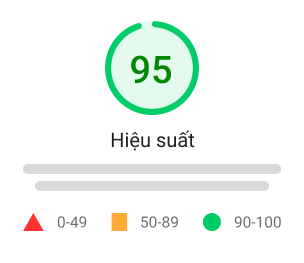

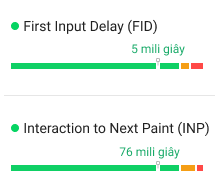

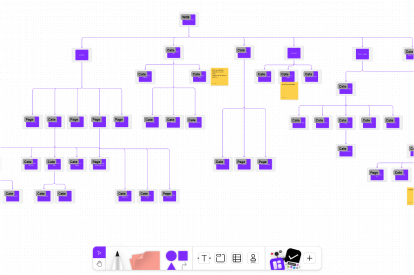
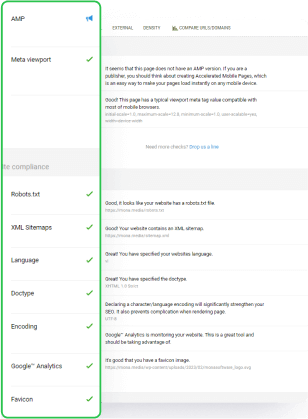
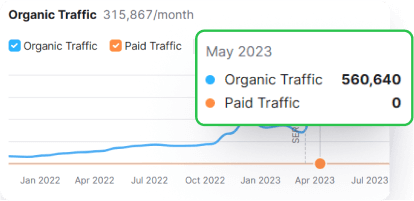


Our own coding standards that every developer follows on a project.
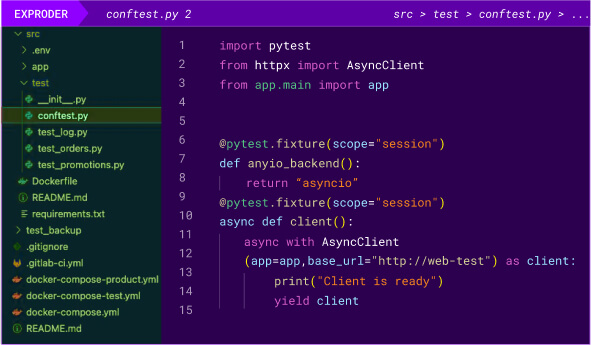
After these steps, MONA runs additional automated code checks to catch any small bugs left from development
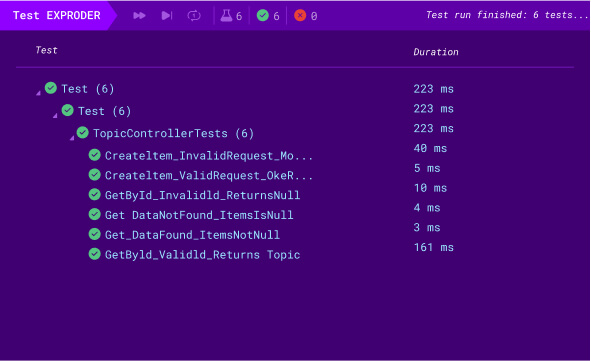
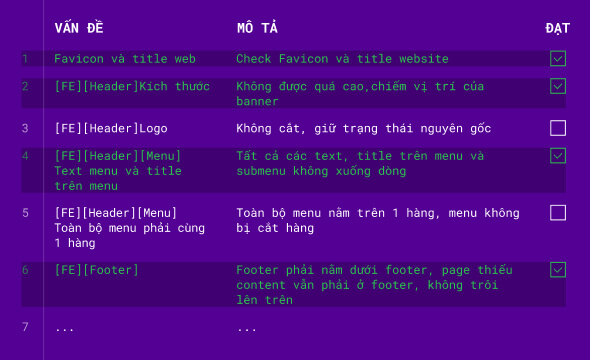
Manual website testing by project supervisors, who approve the standard before the client gives feedback











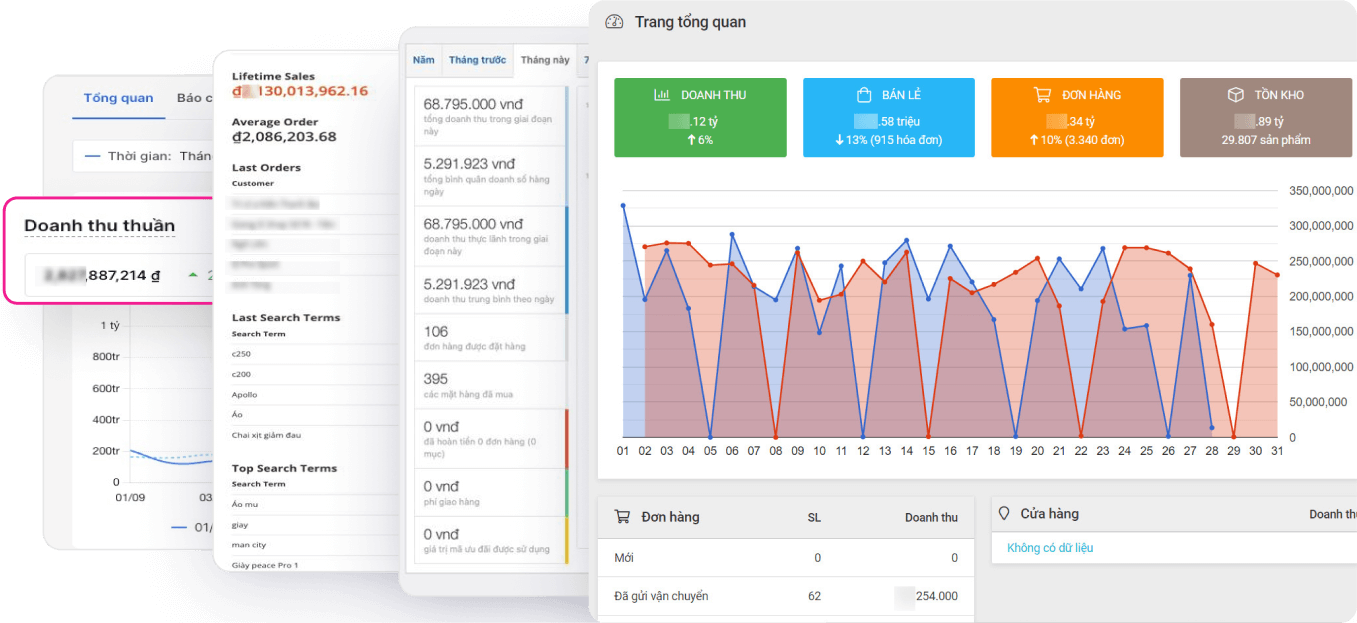





 MONA Ecommerce multichannel sales management software
Nhahang.AI restaurant management software
China import management software
MONA JMS software for gold, jewellery and gemstone shops
MONA Skillhub internal training software
Custom software development
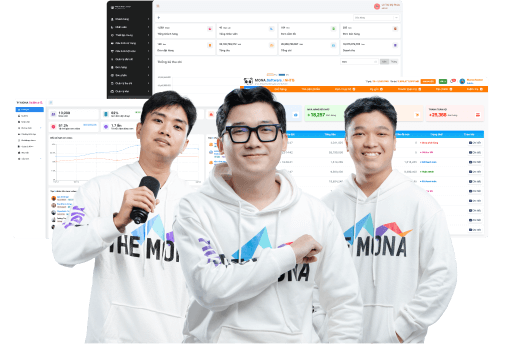

A business owner once told us this at our first meeting: “I've had a website built three times. Each time I thought it was done, and after six months I found something missing.” Three websites means paying three times for the same lesson: designing a website means building a website real business system that runs 24 hours a day, where customers find you, trust you and leave their details, not just a product put online for the sake of it. MONA has done this work since 2016, with more than 14,000 projects delivered, and the very page you are reading is one product of that system. This article covers it all: what website design is, how to choose an agency, what the price is made of and how the process works, so you know the rules of the game before signing with anyone, including us. About a 12-minute read.
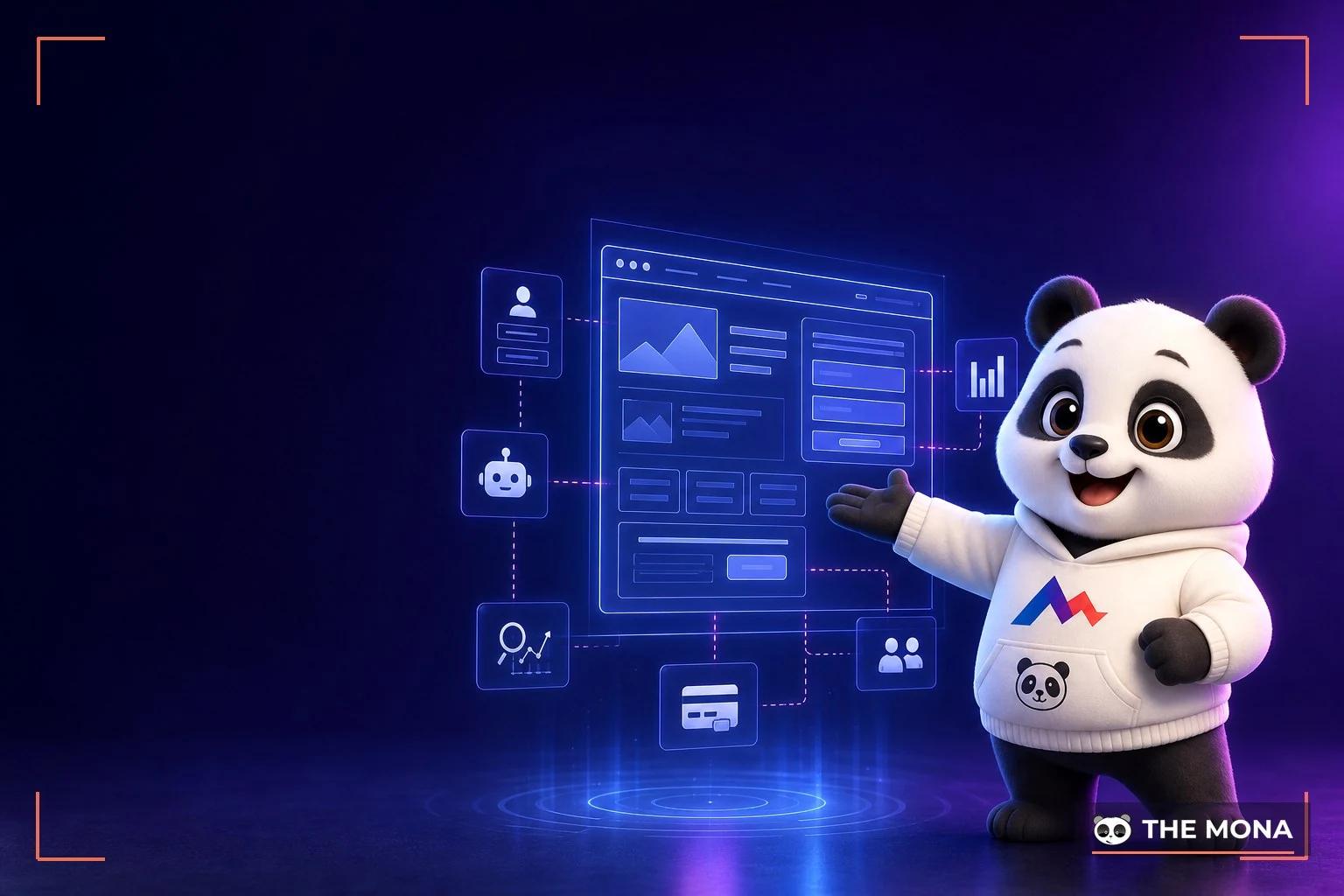
Web design and website design are two names for the same job: building a complete system with 4 layers: the interface users see, the source code running behind it, the content that convinces customers, and the infrastructure of domain and hosting that keeps it all running smoothly. Professional web design means mastering all 4 layers around a specific business problem, not stopping at making the interface look nice.
| Project layer | Question to settle | Deliverables | Metric to check |
|---|---|---|---|
| Strategy | Who is the website for and what action should it drive? | Goals, personas, decision flow | Leads, orders, appointments |
| Content | What do customers need to understand before contacting you? | Sitemap, messaging, product data | Content coverage, read rate |
| Experience | How do customers move from need to action? | Wireframes, mockups, mobile version | Action completion rate |
| Technology | Which features and systems must connect? | Source code, APIs, permissions | Correct business logic, no errors |
| Operations | Who updates, monitors and maintains it? | Accounts, guides, processes | Response time, ability to self-manage |
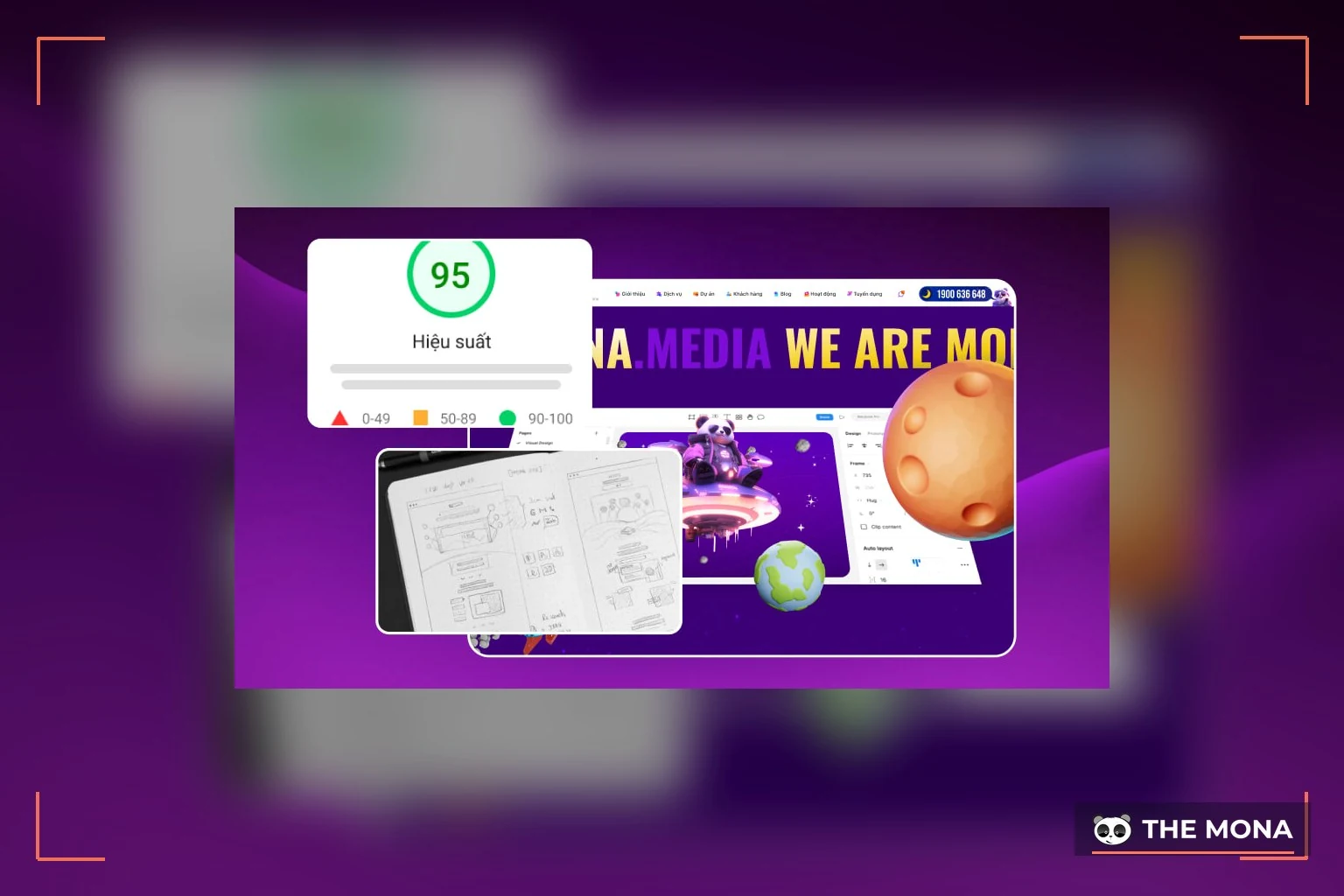
This distinction decides your budget: a website built from a ready-made template with the logo and colours swapped is cheap and fast, but it shares a mould with thousands of other sites and often carries piles of unused features that slow it down. A custom-designed website costs more up front than a website template off the shelf, but in return it matches your brand and your industry's customer flow, and does not depend on the lifecycle of a theme bought from nowhere. The difference is 20 to 40 million VND at signing, and a difference in your whole public face over 5 to 10 years of use. Look a little further ahead and the choice is easy.
The phrase “SEO-ready” is so overused it has almost lost its meaning, so we speak in things that can be measured. An SEO-ready website is one whose structure search engines can read: clean source code, speed that meets the threshold Core Web Vitals with the main content appearing within 2.5 seconds, correct URLs and meta tags, and complete structured data. That foundation sets the ceiling that later SEO effort can reach.
| Business goal | What the website must do | Events to measure | Data to keep |
|---|---|---|---|
| Generating leads | Explain clearly and capture needs | Form submissions, calls, Zalo messages | Lead source, service of interest |
| Selling | Showcase, advise and close orders | Add to cart, checkout, repeat purchase | Orders, products, customers |
| Booking | Show availability and confirm automatically | Choose a time slot, confirm the booking | Booking history, processing status |
| Recruitment | Convince and receive applications for the right roles | View jobs, submit applications | Candidates, recruitment sources |
| Caring for existing customers | Provide documents and a support portal | Log in, submit requests | Service usage history |
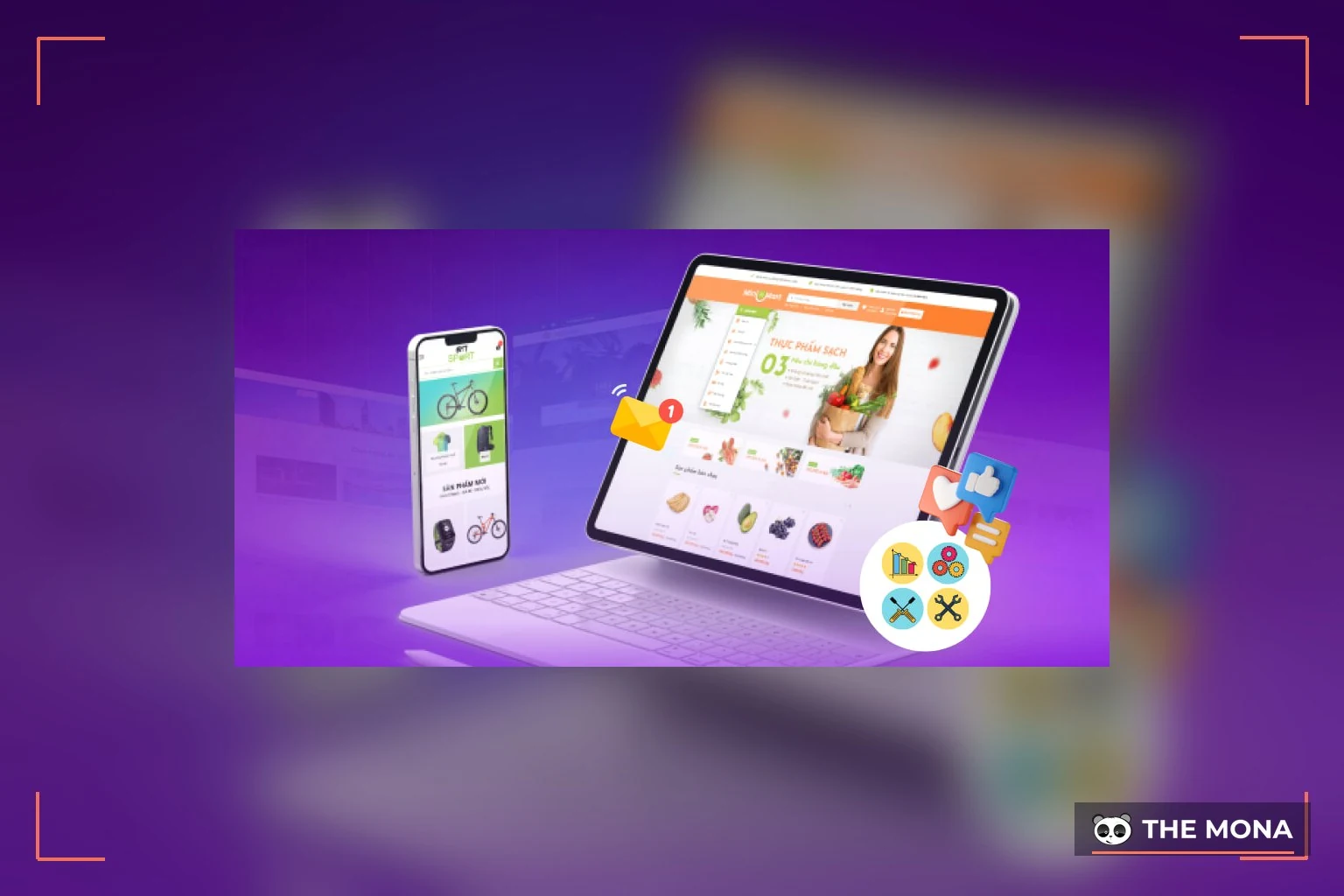
The benefit in money terms is here: customers from search are actively looking, they arrive every month, and you don't pay per click as with ads. A website with a weak foundation has to be torn down and almost rebuilt when you later want SEO, and the fix can cost as much as a new site. So SEO readiness has to be built from day one, in the true sense of an SEO-ready website, not an add-on bolted on later, and page experience is also a ranking signal Google has announced. Pouring the foundation after the house is built makes no sense. Don't let your website do that.
The first working session of a serious web project does not discuss colours. It discusses 3 questions: who your customers are and what they look for before buying; what job the website must do for sales, whether collecting contacts, taking bookings or selling directly; and which number measures success after 6 months. Once those 3 questions are answered, the design is built from mockup, and features and content have a basis for every decision, with no more arguing on gut feeling.
| Project type | Core scope | Common integrations | Risks to block |
|---|---|---|---|
| Company profile website | Services, projects, team, contact | CRM, email, analytics | Thin content, forms with no one receiving them |
| E-commerce website | Products, cart, payment | Inventory, shipping, invoices | Wrong stock, lost orders, hard refunds |
| Booking website | Services, staff, availability | Calendar, reminders, CRM | Double bookings, missing processing status |
| Member portal | Accounts, private content, permissions | SSO, payment, LMS | Data leaks, wrong access rights |
| Business web app | Processes, dashboards, reports | ERP, API, webhook | Uncontrolled scope creep |

We call this step the discovery workshop, done thoroughly in 1 to 2 sessions with the people on both sides who can make decisions. Our experience after all these projects: 30 minutes of the right questions at the start saves weeks of back-and-forth at the end, because fixing things on paper is ten times cheaper than fixing them in code. Projects that skip this step almost always hit a “wait, I thought…” moment halfway through. Ask first, assume less.
Website prices on the market range from a few million to several hundred million VND, and buyers often have no way to tell agencies apart except by price. Here is the checklist we recommend you use on every agency, MONA included:
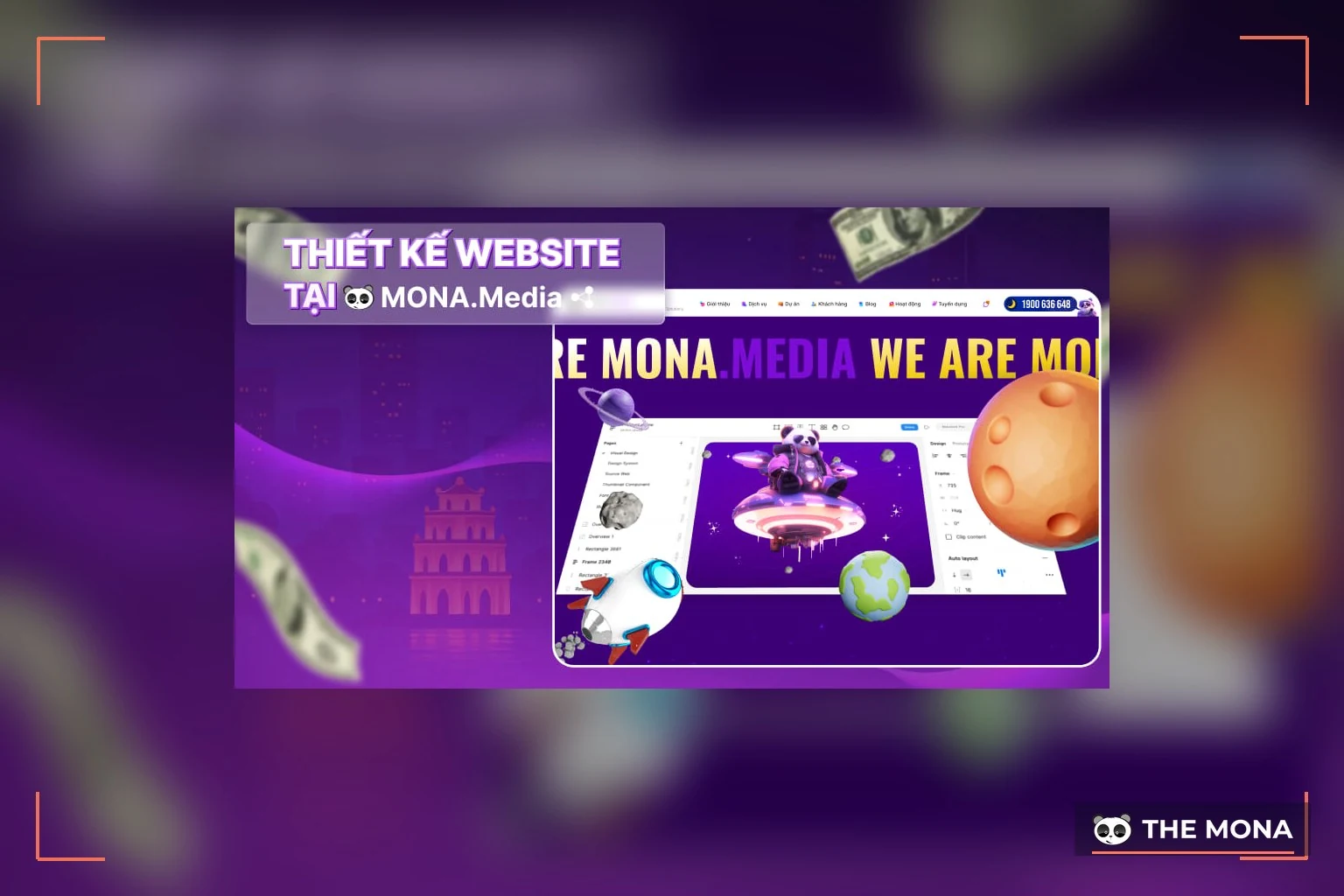
Five criteria, checked in about 2 hours, and the first 30 minutes usually rule out more than half the list. An agency that passes all 5 is worth a slightly higher price, because rebuilding a website halfway costs far more than doing it right the first time. Cheap twice is expensive.
| Criterion | Evidence to ask for | Question to check | Warning sign |
|---|---|---|---|
| Understands the business | Discovery notes, customer flow diagram | Which pages drive conversions? | Only asks about colours and reference websites |
| UX/UI capability | Wireframes, mockups, mobile version | Which milestones are approved? | Designs straight away, with no approval rounds |
| Technical capability | Architecture, list of integrations | Where does data go when something fails? | No description of flows or permissions |
| SEO foundations | Checklist index, schema, redirect | Who is responsible before launch? | Promises rankings with no criteria |
| Security | Update, backup and permission process | How long does recovery take? | Shared admin accounts |
| Handover | List of assets and accounts | Who owns each asset? | Keeps the domain or source code |
| Support | SLA, contact channels, maintenance scope | Which bugs are free and which are paid? | Just says “support” with no conditions |
Now we hold ourselves to the same 5 criteria. Real projects: more than 14,000 projects since 2016, across industries from services and manufacturing to education and retail chains, most of them viewable directly in project portfolio and our bilingual system monamedia.co, and we are happy to walk you through websites in your industry. Ownership: full handover of source code, accounts and a domain in the client's name, a hard rule with no exceptions. Quote: every line itemised as in the cost table below. Schedule: acceptance milestones written into the contract, with penalties. As for our own website, it is this page; you are standing in our showroom, so feel free to test its speed and check its rankings.
One thing we say upfront to save both sides time: MONA is not the cheapest agency on the market and does not compete on price. We compete on websites that do their job after handover: on-brand, SEO-ready in their structure, measurable, with someone accountable after handover. If you need a 3-million-VND website, the market has better-suited options, and we can even recommend one. The right client at the right price makes work that lasts.
Four things we consider our own, and the reasons past clients stay with us:
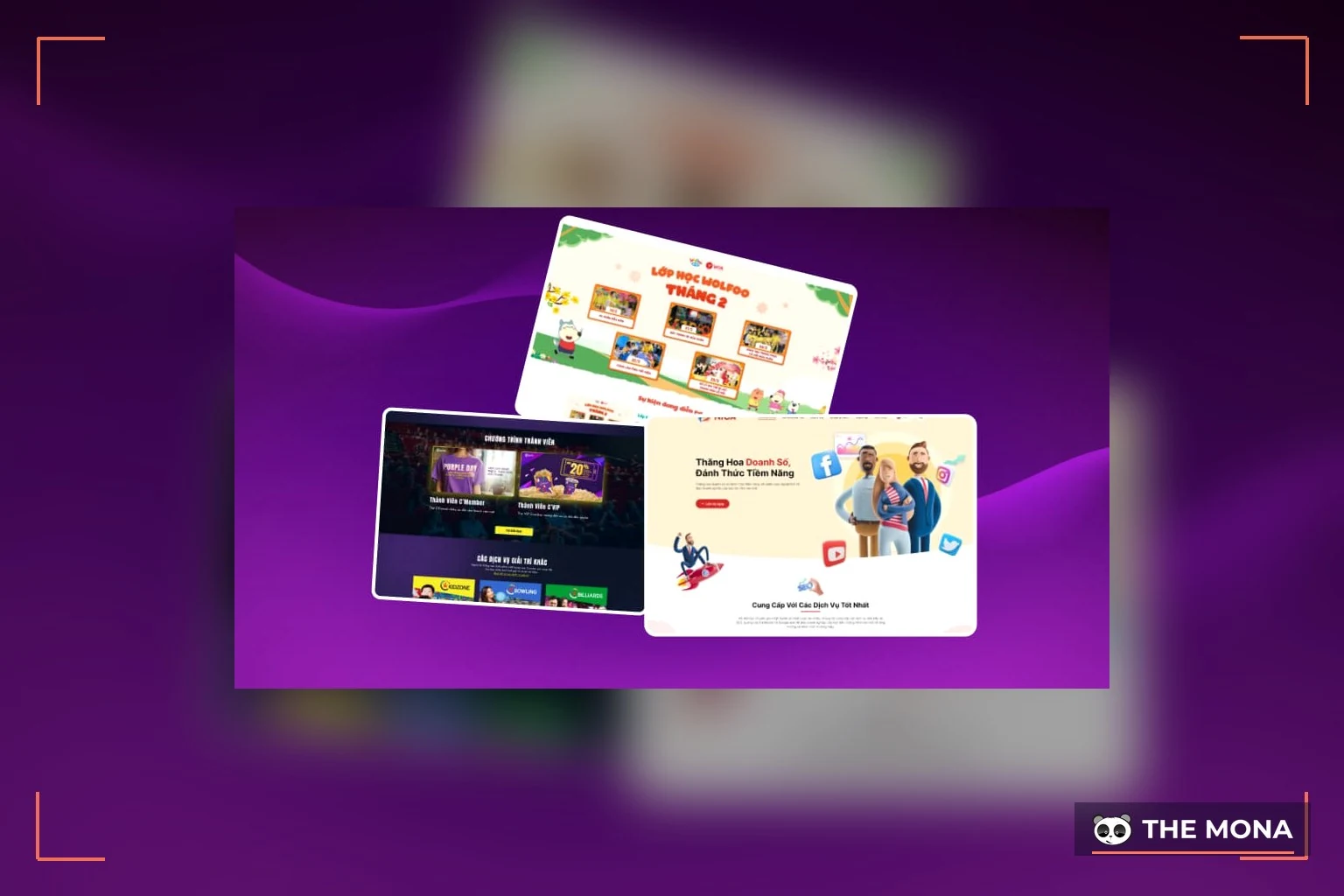
First, an exclusive design drawn from a blank page around each client's identity, never reused between clients, with 2 rounds of revisions within the agreed scope, and development starts only after approval. Second, an in-house team of design, development, content and SEO in one office, meeting the client once a week, not outsourcing pieces and stitching them together loosely. Third, measurable technical standards: speed, security and SEO structure accepted with public tools, numbers on screen rather than verbal promises. Fourth, one ecosystem: if you need SEO, advertising, hosting hay operations software , the same company handles it, and the data stays connected.
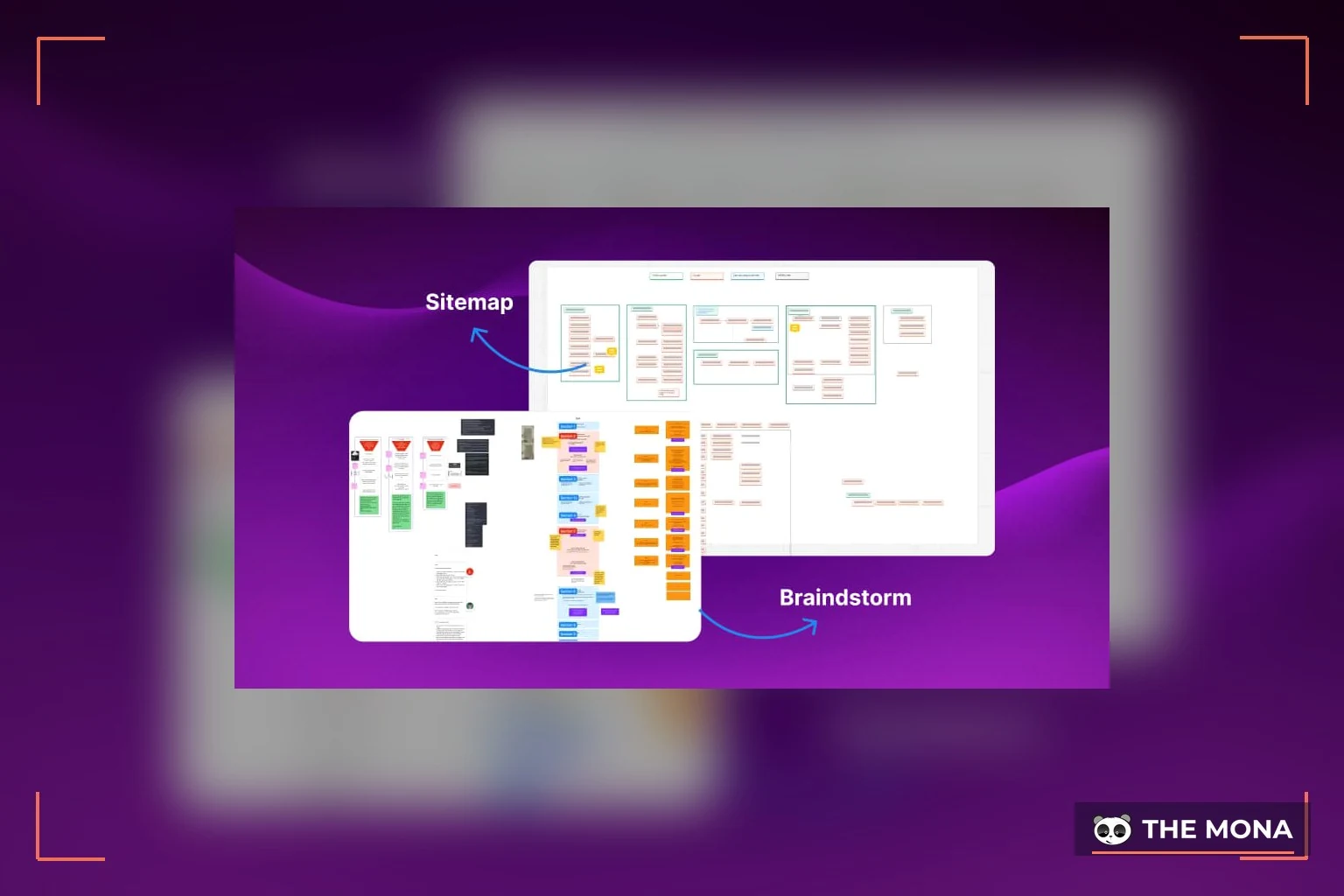
The fourth one is worth more than it looks: a website on its own is just a shopfront; a website connected to ads, SEO and customer care software becomes a sales machine. Built by one company, the pieces fit from the start. Built by 4 companies, you end up as the reluctant referee between 4 parties blaming each other, each round of blame costing another week of schedule, and we have taken over projects stitched together from 3 or 4 vendors like that. One vendor, one person accountable.
| Item | What MONA delivers | Approver on the client side | Scope lock point |
|---|---|---|---|
| Strategy | Goals, customer flow, sitemap | Project owner | Before wireframes |
| Content | Page list and sample data | Marketing, sales | Before mockups |
| UX/UI | Wireframes, desktop and mobile mockups | Brand, project owner | Before development |
| Features | Flows, roles, states, errors | Operations, IT | Before build |
| Measurement | Events, data sources, dashboards | Marketing, management | Before QA |
| Handover | Accounts, source code, data, guides | Owner, IT | Before final acceptance |
The acceptance standard applied to every project, written into the contract scope, covering the 5 groups below. Each group takes about 30 minutes to accept, and the whole set fits in one session with the numbers attached. If anything is missing, we don't sign off.
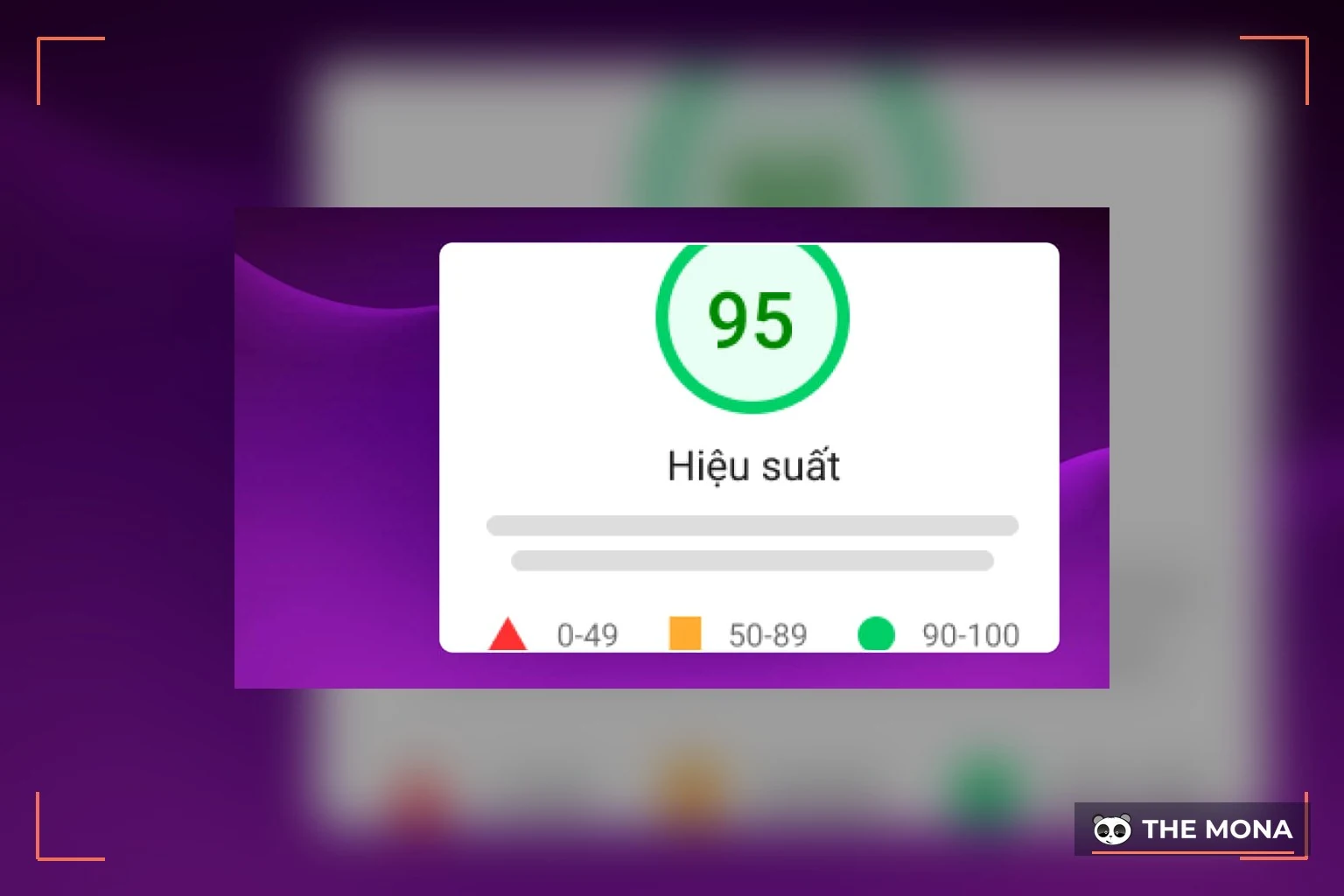
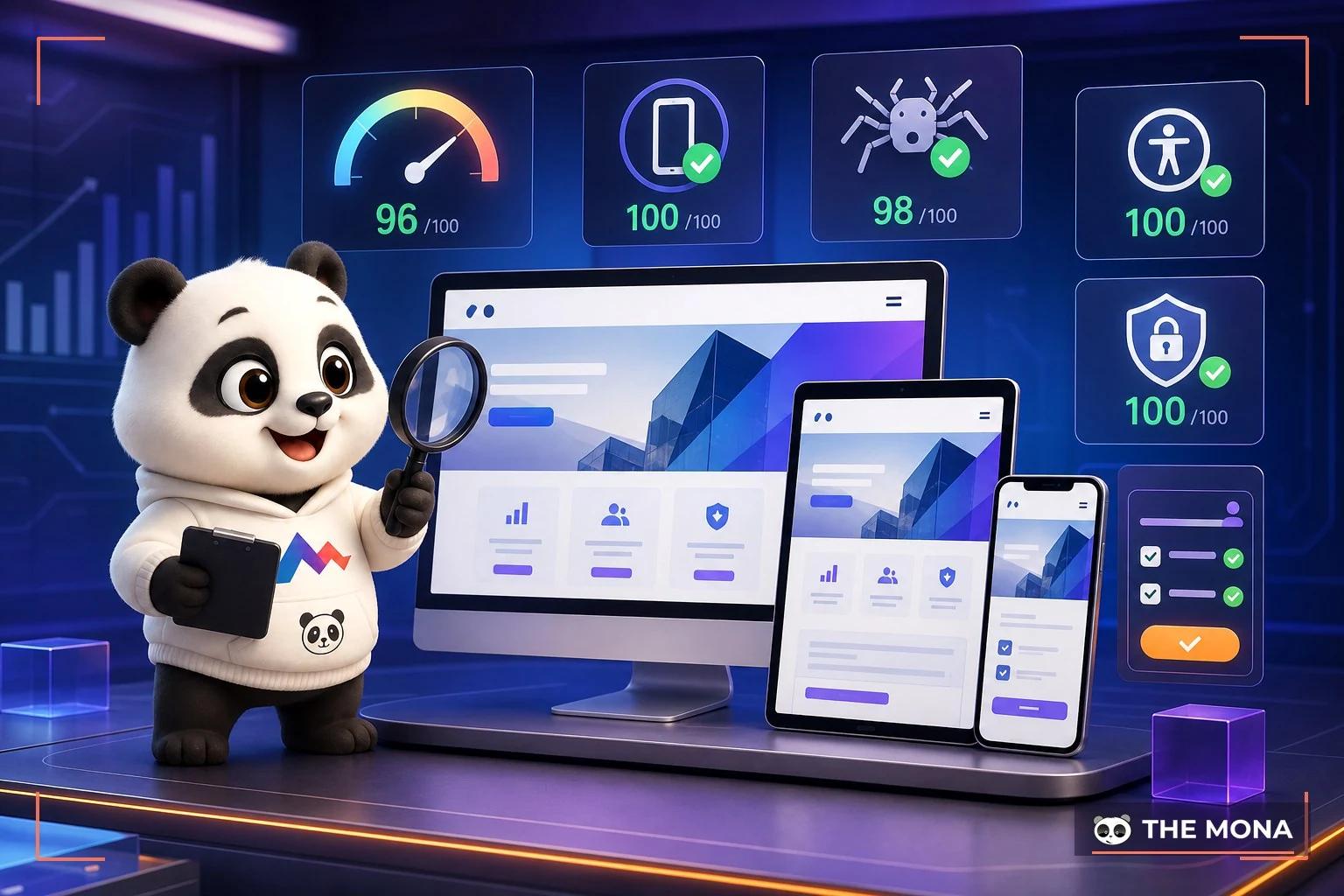
Before handover, the website goes through 2 to 3 days of testing on real devices: budget phones, tablets and the main browsers, because your customers' screens are far more varied than a designer's. A bug caught before handover is cheap. A bug your customers find for you is expensive.
| Test group | Acceptance criterion | How it is measured | Handover evidence |
|---|---|---|---|
| Functionality | Main flows and error cases work correctly | Test cases by role | QA report, test videos |
| Mobile | No horizontal overflow, no controls hidden | Real devices and screen sizes | Screenshots, browser list |
| Performance | LCP, INP, CLS within the agreed thresholds | CrUX, Lighthouse, server logs | Before-and-after optimisation report |
| Technical SEO | Index, canonical, sitemap and schema correct | Search Console, crawler, Rich Results | Checklist launch |
| Accessibility | Clear alt text, contrast, focus and form labels | Automated and manual checks | WCAG checklist within scope |
| Security | Permissions, backup, updates and safe input | ASVS checklist by level | Report and remediation plan |
| Measurement | Conversion events recorded correctly | DebugView, Tag Assistant | Event map, account permissions |
Website quotes can differ tenfold, and the only fair way to compare them is to break each one down into its components. Once broken down, the illusions disappear. The table below is the framework for reading quotes that we recommend you use with every agency:
| Project layer | Question to settle | Deliverables | Metric to check |
|---|---|---|---|
| Strategy | Who is the website for and what action should it drive? | Goals, personas, decision flow | Leads, orders, appointments |
| Content | What do customers need to understand before contacting you? | Sitemap, messaging, product data | Content coverage, read rate |
| Experience | How do customers move from need to action? | Wireframes, mockups, mobile version | Action completion rate |
| Technology | Which features and systems must connect? | Source code, APIs, permissions | Correct business logic, no errors |
| Operations | Who updates, monitors and maintains it? | Accounts, guides, processes | Response time, ability to self-manage |
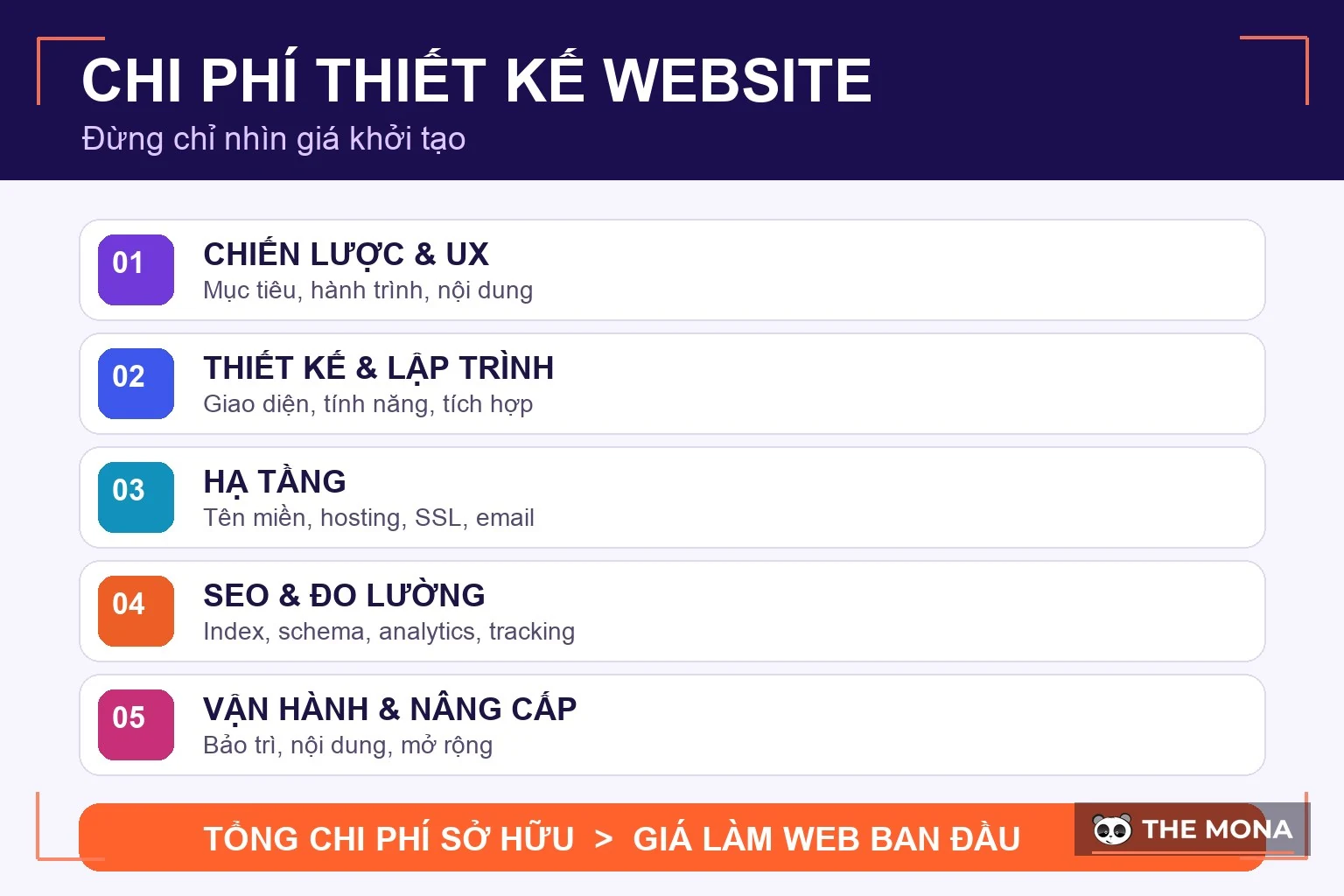
As for MONA's price range: a custom-designed company profile website starts from 25 million VND, more depending on the number of pages and the level of customisation, e-commerce websites and systems with custom functions are priced by their specific scope; see the published price range in our website design price list. The exact figure comes only after we discuss your problem, and our quote is the price you sign, with nothing added outside the agreed scope; anything new is quoted clearly before work starts. Quoting low and raising the price halfway is a fatal mistake in this trade, so we would rather quote correctly from the start. A correct price lets both sides sleep well.
Six stages, each with a deliverable you can accept; the full version is published in our website design process:
The usual total time for a custom-designed company profile website is 4 to 6 weeks; complex functional websites take months, with acceptance milestones every 1 to 2 weeks. If a stage runs late because of us, the contract sets out the penalty; the schedule depends most on how quickly content and design approvals come back from your side, which we say upfront so we keep the pace together. It's only fast when both sides are fast.
Handover day at MONA has a fixed list: the top-level admin rights, the hosting account, domain management rights, the full source code, a user guide, and one training session for the person who will manage the website. The website is in your name and the keys are in your pocket, even if you later choose another agency to run it.

After handover, the contract warranty covers every bug within the build scope, and the support team takes requests through a shared, staffed channel; for long-term care there are separate maintenance and website management plans, with a transparent website running cost framework. Many of our clients from 5 to 7 years ago still come back when they need to upgrade or expand, and that is the number we value more than any testimonial: 85% of clients come back or refer others. In a long game, reputation is capital. Your website is where we put that capital. We look after it carefully.
Custom-designed company profile website: 4 to 6 weeks from when requirements are settled. E-commerce websites and systems with custom functions: by scope, with acceptance milestones for each stage written into the contract.
It depends on scope: template-based websites from 15 million VND, custom-designed company profile websites from 25 million VND, and complex systems priced per project. Every quote lists the build cost, the yearly recurring cost and the warranty scope, following the framework in this article.
Everything: the source code, top-level admin rights, the hosting account and a domain in your name. This is MONA's hard rule, written into the contract. No exceptions.
We review the source code and structure and tell you plainly: a clean foundation gets upgraded, a patched-together one is cheaper to rebuild than to keep patching. Send us the address; this review is free and comes with no obligation. You get an answer within 2 days.
Yes, that is our one-vendor strength: website, full-scope SEO, advertising and hosting from one company, so data and responsibility are not split between several parties.
A website is an investment you use for 5 to 10 years, the face customers see even before your office. So choose a web agency as carefully as a building contractor: see real work, ask about ownership, read the quote closely and lock the schedule into the contract. The five criteria in this article are enough to assess the whole market. Check carefully, regret less.
And when you want to hear us talk through your own problem, call 1900 636 648 or leave your details on our contact page. The first consultation is free: we listen to your problem, walk you through 3 to 5 live websites in your industry, and send an itemised quote within 2 to 3 working days. Bring your current website too and we will tell you whether to fix it or start fresh. A 10-year shopfront deserves the right builder.


A professional website with a clear structure and good UX makes you much more likely to convince customers on your website. Mona Media offers an all-in-one web solution across these stages:
Mona operates on a legal basis, so we commit to a full contract to protect clients' rights and to stay honest and reliable when delivering the product.
In a website design contract, you pay a deposit of 50% of the contract value, and the remaining 50% after the finished product is accepted, so you can be fully confident in how it performs.
Websites at Mona Media always follow current trends and SEO standards. In particular, we have adopted Google's latest standard, Core Web Vitals.
We build websites that meet Google's responsive standard and display well on many devices: phones, computers, tablets, MacBooks… and across browsers: Chrome, Coc Coc, Brave, Safari…
Mona builds a separate AMP version for mobile devices that meets the criteria for ranking on Google and suits users' needs.
WordPress is one of the main platforms Mona Media uses to build websites, because it is friendly, easy to use, easy to manage, easy to change and fairly secure.
The languages we use for web development at Mona Media include .NET, ASP.NET, PHP, HTML, CSS and JavaScript.




 MONA promises never to use your information for sale or SPAM
Quy trình của MONA
Người ra đề, kiểm soát và chịu trách nhiệm, AI làm phần tay chân. Spec viết bằng tiếng Việt để anh chị duyệt trước khi code chạy, giá commit từ spec, dev senior kiểm từng dòng AI trả về, tiến độ nhìn thấy trên board thay vì nghe báo cáo miệng.


 MONA promises never to use your information for sale or SPAM


 MONA promises never to use your information for sale or SPAM


