
 MONA OS 2.0
 Partner with MONA


 Tự động hoá doanh nghiệp
 Cẩm nang SEO
 Digital Marketing
 Kinh nghiệm thiết kế website
 Hạ Tầng Server
 Giáo dục


 VI
 EN




























Message us on
Zalo Official


 ProductsNew

 ProductsProducts
 Mới ra mắtKHA AI 2027App tự edit video, tự đăng mọi mạng xã hội, 2 phút mỗi ngày










 Website designLooks good and wins customers over.
SEO servicesBrings in customers searching for exactly what you sell.
 Tư vấn digital marketingKéo khách từ nhiều kênh, đo bằng số thật.
Corporate video productionVideos introducing your company, factory and team.
 NewAI video productionCompany story films made with AI.
 Custom software developmentCRM, ERP and HRM built for your business.
 Viết AI Agent theo yêu cầuĐặt riêng một trợ lý AI cho đúng việc của mình.
 Tư vấn chuyển đổi AIĐưa AI vào vận hành của cả công ty.
NewMONA LMSManagement for centers and schools.
MONA SkillHubInternal training for company staff.
 NHTQ systemEnd-to-end China–Vietnam shipping operations.
MONA JMSManagement for gold, diamond and pawn shops.
 MONA E-LearningA website with every feature you need to sell courses.
 How to sell online courses (course)More than 30 free lessons on selling courses on autopilot.
 MONA Cloudmonacloud.vnServers to get your apps and websites running.
 MONA Basemonabase.vnPostgres database, sign-in and file storage.
 MONA Mailmonamail.vnSend OTP, order and invoice emails from your software.
 MONA Paymonapay.vnAccept bank transfers via VietQR and notify your software when the money arrives.
 MONA eInvoiceComing soonIssue e-invoices that meet tax standards.
Gấu CườiTrả lời khách 24/7 trên web, Fanpage, Zalo và thu lead cho sale.
 Gấu TeleSalesGọi điện tư vấn, chăm khách như tổng đài viên thật.
Dê CườiTư vấn và chốt đơn cho shop ngay trong khung chat.
Gấu WebmasterNhắn nhóm Zalo là website được sửa xong.
 Gấu Pháp ChếSoạn hợp đồng, rà điều khoản trong vài phút.
 Gấu Báo GiáLên báo giá đúng mẫu và gửi khách ngay.
 AI chăm sóc khách hàngTheo dõi và giữ chân khách hàng cũ.
 Gấu Tuyển DụngLọc hồ sơ, hẹn lịch, phỏng vấn ứng viên.
 Mới ra mắt
KHA AI 2027
Xây kênh chuyên gia 2 phút mỗi ngày
Quay bằng điện thoại, AI tự edit video, tự đăng lên 16 nền tảng và tự trả lời bình luận, tin nhắn.
834.956lượt xem trên kênh CEO MONA sau 27 ngày
 Anh Khánh HùngCEO MONA đang dùng mỗi ngày
Xem app làm được gì
 AI
Gấu Cười MONA ĐANG TỰ XÀITrả lời khách 24/7 trên website, Zalo OA, Messenger và thu lead về cho sale.
Dê CườiChốt đơn bán lẻ và sàn: Shopee, TikTok Shop, web. Chăm cả khách sỉ, đại lý.
Gấu WebmasterCập nhật nội dung, tối ưu SEO website mỗi ngày.
Gấu TeleSalesGọi điện tư vấn, chăm khách như tổng đài viên thật.
Gấu Tuyển DụngLọc hồ sơ, hẹn lịch, phỏng vấn ứng viên tự động.
AI chăm sóc khách hàngGiữ khách cũ, cứu lead đã rớt cho phòng kinh doanh.
Gấu Pháp ChếSoạn hợp đồng, rà điều khoản trong vài phút.
Gấu Báo GiáLên báo giá đúng mẫu, gửi khách ngay khi có yêu cầu.
 Chuyển đổi AI toàn phầnGiải pháp tổng cho doanh nghiệp, 3 lớp triển khai.
 Viết AI Agent theo yêu cầuĐặt riêng một con AI gánh đúng nghiệp vụ của bạn.
 Custom softwareCRM, ERP and HRM with built-in AI automation.
 SEO & AEO thời đại AIĐược Google lẫn AI trích dẫn, không chỉ xếp hạng.
 Kiến thức AI cho doanh nghiệpBài phân tích, hướng dẫn ứng dụng AI vào vận hành.
 Free AI courses
 AI tools at work
App mới · KHA AI 2027
Xây kênh 2 phút mỗi ngày
AI tự edit video, tự đăng mọi mạng xã hội
Free consultation, 8am–10pm every day

26 April, 2025
Did you know? Every year, Google processes more than 5 trillion searches, and more than 90% of users usually look up information online before deciding to buy. In that context, a website without a clear SEO strategy gets “lost” in the vast ocean of information online.
So how do you build an SEO strategy that is truly effective, one that not only earns your website Google’s “favor” but also attracts the right potential customers? In this article, the team at MONA Media – with more than 10 years of experience in SEO – will share how to build a comprehensive SEO strategy that is easy to implement and delivers real results. We will also walk through real SEO case studies so you can picture how to apply it to your own website. Let’s explore!
An SEO strategy is an overall plan that helps a business optimize its website with a clear direction, instead of doing each technique in isolation. It combines methods such as content optimization, speed improvements, user experience optimization and link building to reach specific goals.

The core goals of an SEO strategy include:
Google keeps updating its algorithm to improve user experience and keep up with new search trends. So if you jump straight into technical optimization or content production, it is easy to end up doing a lot with little result.
Before starting any SEO activity, the key step is to research, analyze and build a full-scope SEO strategy for ranking on Google in a structured way. A clear strategy works like a map: it helps you set the right goals, choose the right methods and know where you stand in the process of optimizing your website to reach the top of Google.
→ Read next: Guide to doing SEO for beginners detailed view
To build an effective website SEO strategy, a business needs to tell apart the core steps it must have from the supporting Digital Marketing activities. Understanding this boundary helps you put resources in the right place, avoid waste and get lasting SEO results.
| Elements included in an SEO optimization strategy | Elements not included in an SEO strategy |
| Understanding your target customers, field and market | Conversion Rate Optimization (CRO) |
| Analyzing and assessing the website’s condition with an SEO audit | Social media strategy |
| Setting clear goals and KPIs | PPC advertising (Facebook Ads, Google Ads, …) |
| SEO competitor analysis to find opportunities | Marketing automation |
| Listing and evaluating feasible SEO solutions | |
| Implementing, optimizing and monitoring the strategy |
Before starting the steps of building a complete website SEO strategy, you need to understand the difference between an SEO strategy, plan and process. These three concepts are easy to confuse, so telling them apart from the start will help you work in the right direction and more effectively.
| Element | SEO strategy | SEO plan | SEO process |
|---|---|---|---|
| The concept of | Overall direction and long-term vision for all SEO activity | A list of specific actions to take to reach the set goals | Detailed, sequential steps for carrying out each task in the SEO plan |
| Main goal | Defines the destination and the overall route | Plans what to do, when and who does it to get from A to B | Guides how to carry out each specific task in the plan |
| Scope | Broadest – covers the whole SEO campaign | Medium – focuses on specific tasks in each phase | Narrow – describes each step of the work in detail |
| Connected to each other | The “direction map” | The “schedule + to-do list” | The “step-by-step instructions for each task in the plan” |

As mentioned above, a website SEO strategy is like a road map from where you are now to the destination you want to reach. A is where you stand (website status, traffic, brand awareness…), B is where you want to go (traffic growth, higher conversion, top keyword rankings, brand coverage…).
First phase: The goal could be to build awareness of vitamin C’s benefits for skin care and attract readers with beauty knowledge articles. The specific target is to grow organic traffic from 1,000 to 10,000 in 4 months. The tasks you need to do are:
GNext phase: Once there is enough attention, the business should focus on optimizing the main product landing pages, going hard on high-converting keywords such as “serum vitamin C da nhạy cảm” (vitamin C serum for sensitive skin).
Building an SEO strategy to reach the top does not mean listing every step. It means clearly defining goals, obstacles, resources and SEO tools supporting factors. This is the core part that shapes the whole SEO roadmap, so you do not lose direction and know when to speed up or focus on optimizing.
If the website SEO strategy is the “overall framework”, then a structured full-scope is what breaks down each detail to turn that strategy into reality.
Suppose the website SEO strategy’s goal is “Optimize content to reach the top 5 and increase traffic”. The plan then tells you how many articles to write, when, who is responsible and what to optimize.
SEO process is the series of specific steps you carry out in a clear order to complete a given task. Unlike an SEO strategy for a website (focused on long-term goals) and a web SEO plan (how to reach the goals), an SEO process is about how the work is done. That is, finish task A, then move on to B, then C…, and keep going steadily in that order.
Example: When implementing an SEO strategy Content SEO for a website, the SEO process could be:
| Keyword research → Outline → Write content → On-page optimization → Publish to the website → Off-page optimization → Performance tracking |
2026 is the year of AI SEO, and you cannot keep doing SEO the old way! Watch the video guide SEO IN 2026 MADE EASY IN JUST 5 MINUTES to keep up with the trend and optimize rankings sustainably:
Instead of doing SEO by gut feeling or relying on a few SEO techniques basics, you need a more concrete roadmap. The steps below for building an effective website SEO strategy from A to Z will help your business reach customers faster and steadily improve its Google rankings.

To build an SEO strategy that reaches the top, you need to know: SEO is not about serving Google but the very users who are searching, your target customers. Based on MONA’s experience, a business should look closely at the following factors:
| Search intent | What is your customer looking for? Do they need a solution, information or a specific guide? |
| Search context | Are they researching, comparing or about to buy? How did they come across this content? (Searching on Google or recommended by someone else) |
| Content | What type of content do they like to read? Does the content solve what they searched for? |
| Channel | Which channel suits this content best: website, Facebook or YouTube? |
A customer persona is a detailed description of the person you want to reach. A clear and honest persona helps you see their habits, interests, pain points and the barriers that keep them from deciding.
To define your potential customer persona, answer these questions:
| Why do they choose you? | What makes customers choose your solution instead of turning to a competitor? |
| What do they want to achieve? | What do users hope to get after using your product/service? |
| Barriers to buying | What makes them hesitate: price, lack of trust, fear of risk, or simply not understanding the benefits yet? |
| Customer journey | Who takes part in this process (individuals, colleagues, family…)? Where do they usually look for information: Google, social media, reviews from acquaintances, or advice from KOLs? |
| Deciding factors | When comparing options, what do they base the final decision on: quality, reputation, real feedback, after-sales support, or something else? |
From here, you can build a web SEO strategy around topics and keywords closely tied to their real needs.
Understanding the buying journey lets you optimize SEO content for each stage and raises the chance of guiding customers from interest to action. The journey can be broken into these basic steps:
To see how well an effective SEO strategy works, look at the case study of the collaboration between MONA x Bình Mỹ Nursing Home. From the very first phase, the MONA team came alongside, analyzed the website’s condition, studied search behavior and built an optimized SEO strategy.

Thanks to a detailed, closely managed rollout, the project exceeded its target with 100% of keywords reaching the top of Google, showing that MONA not only designs a strategy that is on course and aimed at the right audience, but also delivers real results. If you also want your website to rank high and grow sustainably, contact MONA for an SEO strategy that fits you.
SEO Audit is an overall check that assesses the full health of a website. It is the basis for finding out why your website’s SEO strategy is not working or is running into obstacles.
Through this step, you also discover other optimization solutions that can improve rankings, raise performance and get you ahead of competitors in search results.

To assess the website’s current state thoroughly, analyze each area that affects SEO performance. Looking at each aspect separately makes it easier to see where the problems are, so you can fix them in time with the right approach:
The work checking whether a website meets SEO standards goes more effectively with support from these popular tools:
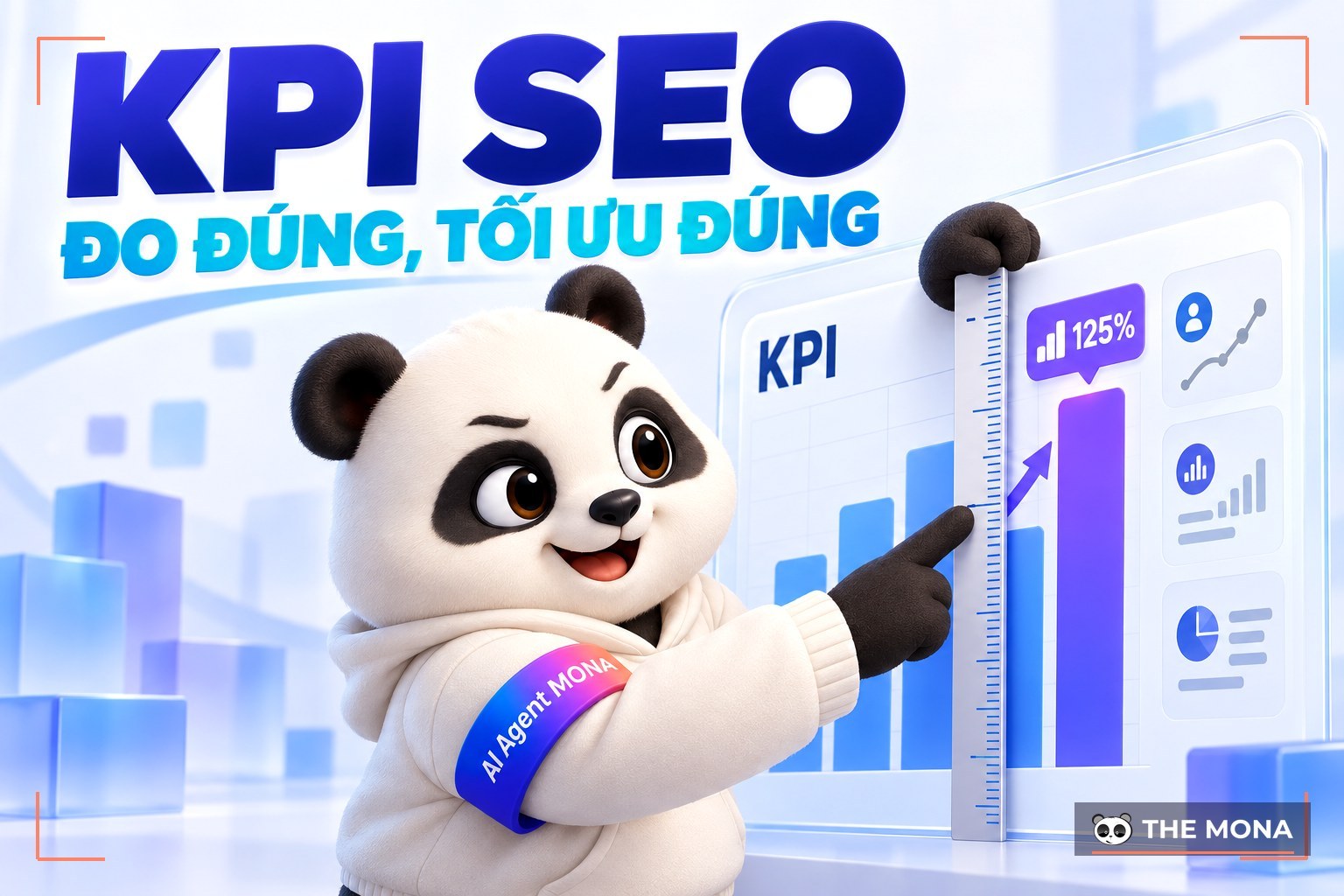
Clear goals and KPIs decide whether your website’s SEO strategy stays on course and delivers.
Defining clear website goals is an important step in building an SEO strategy that reaches the top. Before optimizing your strategy, define what you want the website to achieve:
Each goal helps you shape content and navigation flow sensibly. For example, if the goal is a higher conversion rate, the content needs clear CTAs and smooth navigation from the blog to the landing page.
Conversion is not only direct sales. It covers many steps in the customer journey. At each stage when building an SEO strategy to reach the top of Google, set a suitable conversion goal:
When setting KPI SEO, stay close to the overall SEO strategy and avoid goals that are too far out of reach, such as “30,000 visits/month” or “main keyword set with high KD in the top 3” if the website is new and does not have much strength yet.
Instead, focus on realistic, suitable metrics for SEO KPIs such as:

A good KPI reflects the SEO goal you are pursuing and lets you track progress and adjust the strategy in time.
Once everything is stable, you can track metrics such as:
*Note: In MONA’s experience, you SEO specialists should update KPIs periodically, depending on the business’s stage of growth or the big marketing campaigns of the year. What matters is to see KPIs as a tool that reflects the real situation, so you have a basis for optimizing instead of setting goals too high and pressuring yourself.

Competitors are a mirror for your website SEO strategy. Looking at what they do and the results they get shows you where your strengths lie and where there are gaps you can exploit. To find competitive opportunities from competitors, look closely at these 4 key factors:
*Note: Not every website that uses the same keywords as you is a direct competitor. Classify them carefully so your strategy does not drift. For example, if you sell nut milk, then besides milk stores, health blogs or food sites can also compete with you for the top spots.
Search engines keep updating their algorithms to improve user experience. Google ranks websites on many factors, and keywords play a key role.
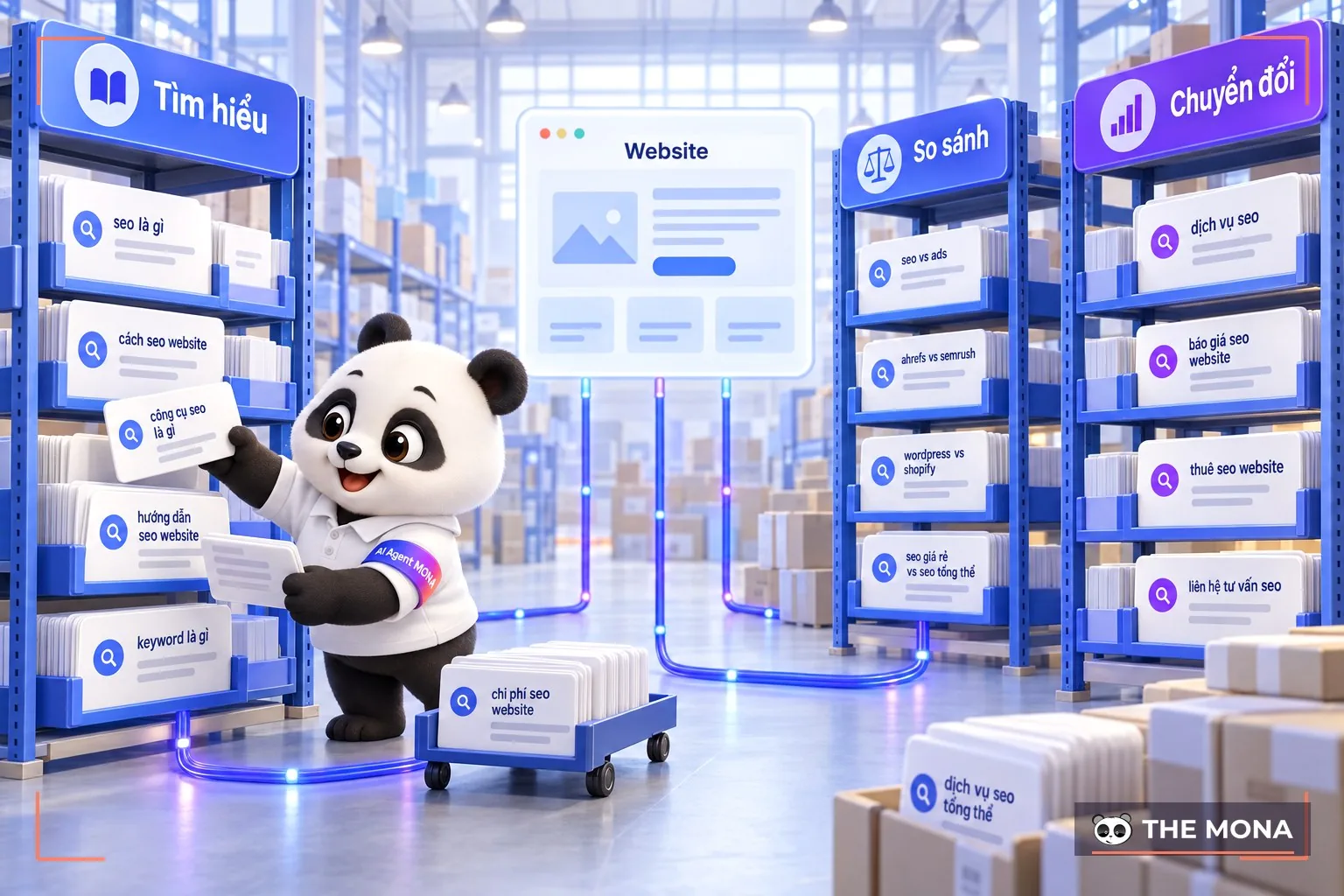
Keywords help search engines understand what your website is about, so they can show it to people searching for related information. So, to keyword SEO strategy effectively, you should:
After finishing your keyword SEO strategy, assess it carefully against these criteria:
Solutions commonly assessed include: a strategy gain traffic through content and on-page optimization, off-page SEO, ways to build website credibility, reducing bounce rate and dealing with Google algorithm issues.
By now you should understand your competitors’ “formula for success”. List every feasible solution for reaching your SEO goals, then evaluate each against these criteria:

These steps help you build a clear website SEO strategy, avoid wasting resources and focus on the solutions that work best. Below are some SEO strategies and tactics for reference, with estimated timing:
1. Strategy for growing traffic with content and on-page SEO
| Tactic | Time to see results |
|---|---|
| Content audit: Optimize existing posts and add new information. | 1.5 months |
| On-page SEO optimization to the new standard | 1 month |
| Build topic clusters: Group content by topic cluster | 2 months |
| Optimize internal links using the Link Wheel model | 1 month |
| Expanded list posts: Expand into new topics | 3.5 months |
| Optimize for featured snippets – Google position 0 | 1 month |
2. Off-page SEO strategy
| SEO tips | Time to see results |
|---|---|
| Promote content through social media | 2 weeks |
| Build backlinks (press PR, guest posts, buying quality backlinks) | 2.5 months |
| Build a strong PBN system | 4 months |
| Tier 2 backlinks | 3 months |
3. Strategy for increasing website credibility
| SEO tips | Time to see results |
|---|---|
| Verify the entity and unify business information | 2.5 months |
| IFTTT: Automate content updates | 1 month |
| Schema: Declare business information to SEO standards | 1 month |
4. Other SEO strategies
After analyzing all the factors, it is time to bring every strategy into one complete SEO plan. A detailed SEO plan includes these items:
Below is a sample SEO plan template you can use as a reference to build an effective website SEO campaign.

Reporting is essential when running an SEO campaign: it helps SEOers track the strategy’s progress and builds trust with partners.
Getting keywords to the top takes time, especially highly competitive ones. So reports should stay close to reality and avoid painting overly distant expectations.

An SEO report should include metrics and next steps such as:
Measure metrics such as keyword rankings, organic traffic, click-through rate (CTR), time on page, …
Explain the reasons for the rise or fall in rankings (content, competitors, website speed, …).
Offer improvement suggestions that are specific (not just dry figures).
After some time, go back and assess the overall performance of the web SEO strategy. Based on the KPIs set at the start, use Google Analytics to track traffic from Organic Search, and build a detailed table in Google Sheets or Excel to compare and update results for each phase.

Besides traffic, watch the metrics that clearly reflect campaign quality, such as the number of indexed pages, leads collected, ROI and ranking growth of important keywords. This is a solid basis for making your next decisions more accurately and effectively.
If you are still unsure how to build and run a proper SEO strategy, Full-scope SEO services SEO combined with AI at MONA Media is the best option. With an experienced team of experts and more than 10 years of hands-on work in the field, MONA is confident in helping your business reach the top of Google sustainably.

Benefits of full-scope SEO combined with SEO AI at MONA Media:
Do not miss the chance. Contact us through HOTLINE 1900 636 648 or CLICK or the button below to get support a quote for full-service SEO quote.

The process of building a web SEO strategy to reach the top includes tasks such as:
Quality content remains the top criterion Google uses to assess and rank websites. However, writing long or stuffing in lots of keywords does not guarantee a high position.
Google now puts strong emphasis on user experience, so only content that is genuinely useful and meets the searcher’s specific needs can hold a top position for the long term.

So, SEO-standard articles needs to:
Instead of only writing new content, spend time checking and re-optimizing old posts with high ranking potential. This saves cost and improves website performance quickly.

The old content audit process includes:
To optimize SEO and improve its rankings in AI Overviews in Google, focus on the following key strategies, based on the latest guidelines and SEO trends:

To optimize snippets and improve keyword ranking, focus on short, clear, easy-to-understand passages that Google can extract and show directly on the search results page (SERP).

Here are steps and tips for optimizing snippets effectively:
Embedding video in posts is an effective way to lower bounce rate, because video offers a lively, interactive experience that draws readers in and keeps them longer.
Video helps visitors spend more time on the content, which lowers bounce rate and improves positive engagement signals in the eyes of search engines.
Sitelinks are the extra links shown beneath your main search result on Google. You cannot “control” which sitelinks Google shows, but you can improve your chances of getting them in a few ways:

In 2026, voice search SEO has become a Under the SEO trends and a new way to search, with over 50% Internet users worldwide, alongside the rapid growth of AI and virtual assistants such as Google Assistant, Siri, Alexa, … So optimizing your strategy for SEO cho voice search is an essential step so businesses are not left behind in the new era of search.

To optimize SEO for voice search when carrying out your web SEO strategy, focus on creating useful content that matches how people naturally speak. You should also optimize technically so virtual assistants and voice search devices can easily recognize your website.
To raise search rankings and keep visitors longer, optimize user experience from the start. The soundest SEO strategy is to make sure the website loads fast, displays correctly on every device and is easy to navigate, which makes for a smooth experience.
When user experience improves, your website’s Time on Site improves, it attracts more traffic and delivers lasting results.

A brand that is consistent across social platforms and the website helps Google see you as a trustworthy source, which lifts keyword rankings. To build an effective website SEO strategy, focus on building a quality link system:
For a service business, being good at the craft is not enough. To take the company further, you must be able to bring in new customers steadily. Watch the video to hear Hùng share the 7 ways MONA has used throughout its growth.
1. How long does an effective SEO campaign take?
An SEO campaign usually takes about 6 months to show results such as better rankings and more traffic, but reaching stable growth and holding a top position sustainably usually takes 10 – 12 months.
The time can vary with keyword competition, target Google position, the SEO company’s pace of work and the campaign’s scale.
2. Does your website need an SEO strategy?
The answer is YES. Organic search accounts for more than 50% of website visits and is a key element of any digital marketing strategy.
Whether you are a large company or a small shop, optimizing an overall SEO strategy is necessary to compete effectively and attract potential customers sustainably.
SEO success does not come from luck. It comes from heading the right way and patiently working through each small step in building an SEO strategy for your SEO strategy website. When you understand the steps for building an effective SEO strategy, you will be more proactive in catching trends, improving rankings and building a lasting competitive advantage. Whether you are just starting or already experienced, keep updating and adapting to the latest changes so you can break through in the race to the TOP 1 spot on Google.

CEO & Founder · The MONA
Founder of The MONA, who built a services company of 200+ staff with 14,000+ projects delivered. Khánh Hùng shares how he thinks about building systems that run themselves, automating a business, and the real lessons from delivering projects at MONA.
 1,5K




Professional website
design services
Own a website with a beautiful, 100% exclusive design and a lifetime warranty, with the ability
to expand features flexibly as your business grows, starting today!



NHẬN TƯ VẤN SEO MIỄN PHÍ !






 MONA will never sell your information or send you spam


 MONA will never sell your information or send you spam
