
 MONA OS 2.0
 Partner with MONA


 Tự động hoá doanh nghiệp
 Cẩm nang SEO
 Digital Marketing
 Kinh nghiệm thiết kế website
 Hạ Tầng Server
 Giáo dục


 VI
 EN







Message us on
Zalo Official


 ProductsNew

 ProductsProducts
 Mới ra mắtKHA AI 2027App tự edit video, tự đăng mọi mạng xã hội, 2 phút mỗi ngày










 Website designLooks good and wins customers over.
SEO servicesBrings in customers searching for exactly what you sell.
 Tư vấn digital marketingKéo khách từ nhiều kênh, đo bằng số thật.
Corporate video productionVideos introducing your company, factory and team.
 NewAI video productionCompany story films made with AI.
 Custom software developmentCRM, ERP and HRM built for your business.
 Viết AI Agent theo yêu cầuĐặt riêng một trợ lý AI cho đúng việc của mình.
 Tư vấn chuyển đổi AIĐưa AI vào vận hành của cả công ty.
NewMONA LMSManagement for centers and schools.
MONA SkillHubInternal training for company staff.
 NHTQ systemEnd-to-end China–Vietnam shipping operations.
MONA JMSManagement for gold, diamond and pawn shops.
 MONA E-LearningA website with every feature you need to sell courses.
 How to sell online courses (course)More than 30 free lessons on selling courses on autopilot.
 MONA Cloudmonacloud.vnServers to get your apps and websites running.
 MONA Basemonabase.vnPostgres database, sign-in and file storage.
 MONA Mailmonamail.vnSend OTP, order and invoice emails from your software.
 MONA Paymonapay.vnAccept bank transfers via VietQR and notify your software when the money arrives.
 MONA eInvoiceComing soonIssue e-invoices that meet tax standards.
Gấu CườiTrả lời khách 24/7 trên web, Fanpage, Zalo và thu lead cho sale.
 Gấu TeleSalesGọi điện tư vấn, chăm khách như tổng đài viên thật.
Dê CườiTư vấn và chốt đơn cho shop ngay trong khung chat.
Gấu WebmasterNhắn nhóm Zalo là website được sửa xong.
 Gấu Pháp ChếSoạn hợp đồng, rà điều khoản trong vài phút.
 Gấu Báo GiáLên báo giá đúng mẫu và gửi khách ngay.
 AI chăm sóc khách hàngTheo dõi và giữ chân khách hàng cũ.
 Gấu Tuyển DụngLọc hồ sơ, hẹn lịch, phỏng vấn ứng viên.
 Mới ra mắt
KHA AI 2027
Xây kênh chuyên gia 2 phút mỗi ngày
Quay bằng điện thoại, AI tự edit video, tự đăng lên 16 nền tảng và tự trả lời bình luận, tin nhắn.
883.362lượt xem trên kênh CEO MONA sau 36 ngày
 Anh Khánh HùngCEO MONA đang dùng mỗi ngày
Xem app làm được gì
 AI
Gấu Cười MONA ĐANG TỰ XÀITrả lời khách 24/7 trên website, Zalo OA, Messenger và thu lead về cho sale.
Dê CườiChốt đơn bán lẻ và sàn: Shopee, TikTok Shop, web. Chăm cả khách sỉ, đại lý.
Gấu WebmasterCập nhật nội dung, tối ưu SEO website mỗi ngày.
Gấu TeleSalesGọi điện tư vấn, chăm khách như tổng đài viên thật.
Gấu Tuyển DụngLọc hồ sơ, hẹn lịch, phỏng vấn ứng viên tự động.
AI chăm sóc khách hàngGiữ khách cũ, cứu lead đã rớt cho phòng kinh doanh.
Gấu Pháp ChếSoạn hợp đồng, rà điều khoản trong vài phút.
Gấu Báo GiáLên báo giá đúng mẫu, gửi khách ngay khi có yêu cầu.
 Chuyển đổi AI toàn phầnGiải pháp tổng cho doanh nghiệp, 3 lớp triển khai.
 Viết AI Agent theo yêu cầuĐặt riêng một con AI gánh đúng nghiệp vụ của bạn.
 Custom softwareCRM, ERP and HRM with built-in AI automation.
 SEO & AEO thời đại AIĐược Google lẫn AI trích dẫn, không chỉ xếp hạng.
 Kiến thức AI cho doanh nghiệpBài phân tích, hướng dẫn ứng dụng AI vào vận hành.
 Free AI courses
 AI tools at work
App mới · KHA AI 2027
Xây kênh 2 phút mỗi ngày
AI tự edit video, tự đăng mọi mạng xã hội
Free consultation, 8am–10pm every day



If you want customers to buy from you,
make sure they know and trust you.
A BRAND IS THE HIGHEST FORM OF A PRODUCT
Branding marketing is the most complete form of marketing

It goes beyond brand marketing
It goes beyond brand building
Branding marketing also
RAISES THE VALUE
OF YOUR PRODUCT THROUGH ITS BRAND
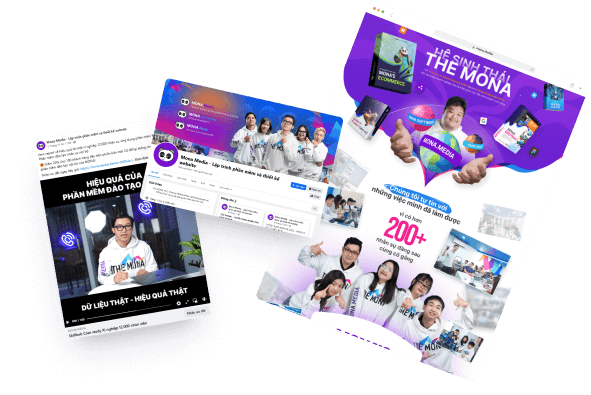
x10value
When you get it right, customers don't just know youand recognize you at a glance; you also become
a name that stands out on their shortlist of first choices.


But we know that
YOU AND MANY OTHER BRANDS FACE REAL CHALLENGES









Our branding service is a marketing solution
that MONA designed specifically for
01
Businesses OFFLINE BUSINESSES that want to start expanding online
02
STARTUPS, SMES that want to invest in a polished, distinctive brand image
03
EVERY BUSINESS THAT WANTS TO IMPROVE ITS BRAND IMAGE to be more trusted and more professional
On top of that, it's a
staffing question for your business

Building an
IN-HOUSE team
80 - 100+
million VND
All for
Results that aren't
guaranteed
Lost money
Lost effort
Lost time
Results that fall short

Yet for just 1/4 of the cost of building a team
you can
months
That saves you
up to 70+ MILLION VND or more.






Ready to
build an online business that
performs, on a budget that makes sense, with MONA?

That's what you'll find in the MONA team
We're ready to work with you. Get in touch and let's grow together.
Contact MONA todayMONA'S PROVEN BRANDING PROCESS























Bringing success to
300 +
Businesses



























because MONA has an end-to-end solution
for you right here


Strategy advice tailored to your business We'll give you our full support to reach the best possible conversion rate.
MONA will never
sell your information or send you spam 










 MONA will never sell your information or send you spam
Customers are increasingly demanding when choosing products and services, because they focus on brands that are well known and trusted in the market. So how do you make your brand stick in customers' minds? Join MONA Media for a detailed look at Branding Marketing strategy in this article. As digital technology grows, Branding Marketing is becoming familiar to more and more businesses.
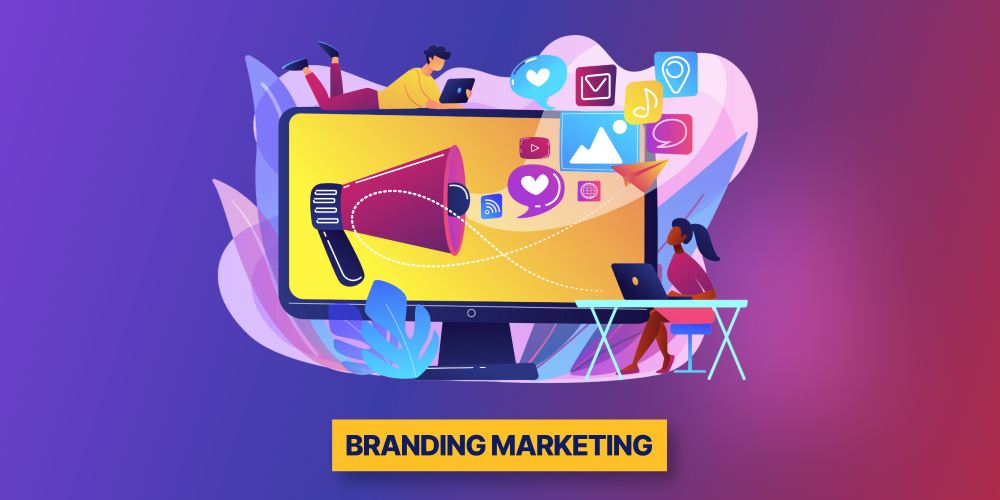
Branding Marketing (also called brand marketing) is the full set of activities and strategies to build, develop and promote a brand's image, identity and core values in customers' minds.
What is the main goal of Branding Marketing? It is to build a strong brand that customers love and trust for the long term. When your brand becomes reliable and distinctive, that is a big advantage over competitors. It not only helps you sell more, but also builds a close, lasting relationship with customers.
Branding focuses on building the brand's “self”, from the name and logo to its personality and core values, and defines who your brand is in customers' eyes. Branding Marketing, by contrast, is telling the story of that “self” to the outside world, using media channels to promote, communicate and connect emotionally with customers so they recognize, trust and love your brand.
An example to understand Branding Marketing better: look at big brands like Apple, Vinamilk or Adidas. However many different products or campaigns they run, the “personality” or “soul” of the parent brand stays consistent throughout. This consistency is what gives them their strength and solid position in the market. Branding Marketing is the craft of creating and maintaining that consistency.
Branding Marketing delivers core value that helps businesses grow sustainably. Its main purpose is not only to make customers aware of you, but also to prove your brand's value and capability in its field.
For example, through Branding Marketing, MONA Media consistently shows that it is an experienced provider of Digital Marketing, website design and software development. We don't just talk; we show clients our professionalism and the quality of our services.
Thanks to Branding Marketing activities, the brand's image and message stay firmly present in the minds of potential and existing customers. This not only drives their first purchase decision but also encourages more regular use of products and services, building loyalty and a long-term relationship with the brand.
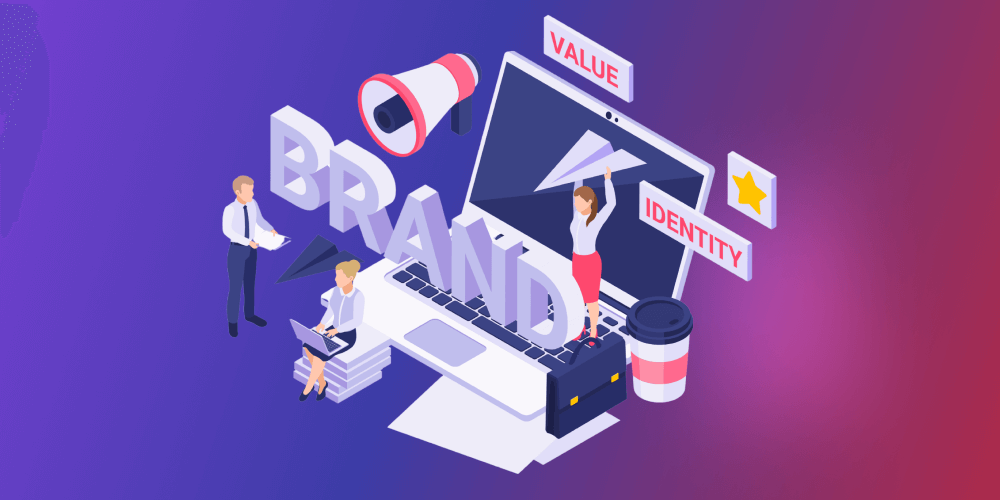
Many people still misunderstand Branding Marketing and expect it to bring in revenue right away. In reality, it promotes the brand to customers and supports the sales process. When customers need a product or service and think of you first, your Branding Marketing strategy has worked.
Given the role of Branding Marketing in a business, you will see that it is not just a Digital Marketing activity, an ad or a promotion. Building a brand is more than a positioning statement, a nice logo, slogan or a catchy line. Accordingly, Branding Marketing can be split into the following 5 main activities:
To meet every customer's needs and stay among the top products/services people choose to buy, a business needs to understand and correctly identify its target customers; this is a crucial step in every campaign. Starting from the products it sells, the business should create value that fits its customers and grow sales.

In this activity, you need to research the following:
After researching in detail the potential customers of the product/service, building the Branding strategy is the next step in Branding Marketing.
The strategy aims to fix the brand in customers' minds. To do this, the brand must have something different, important or meaningful so customers remember it when the need arises.
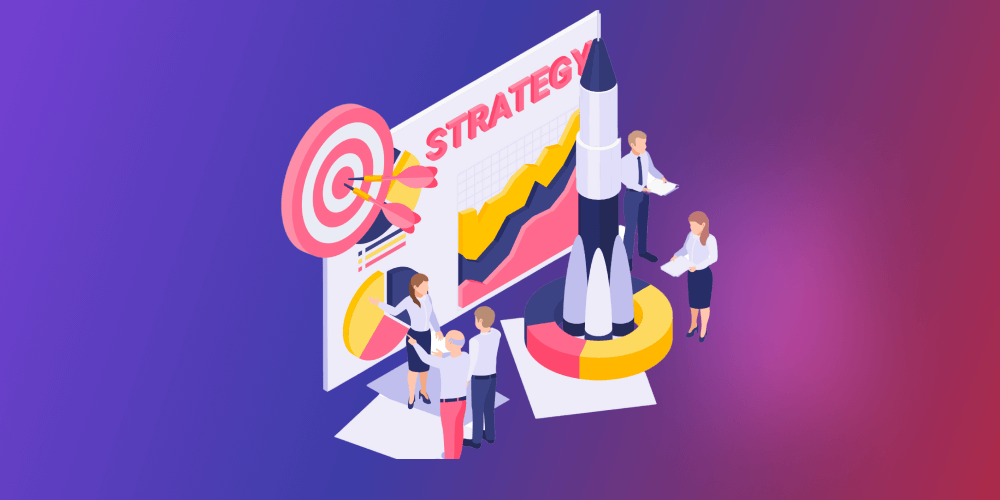
The specific Branding Marketing strategy is as follows:
Branding Marketing is carried out through the following work:
Making the product stick in customers' minds is not the end goal. To get wide brand coverage across the market, Branding Marketing needs to work together with Trade Marketing and the Sales Team.
To evaluate any campaign, the company needs to define metrics that show the problems it is facing. From there, it can find fixes and the best way to adjust the campaign.
To avoid confusing Branding Marketing with Trade Marketing, see the detailed comparison of the two below.
| Branding Marketing | Trade Marketing | |
| Target audience | Reaches consumers | Reaches buyers and partners in the company's distribution system, such as distributors, wholesalers, retailers or customers. |
| Activities | Focuses on activities such as shooting TV commercials, events, PR, Digital Marketing,… | Focuses on activities at the point of sale, merchandise displays with promotions, discounts or category development at the store. |
| Other factors |
|
|
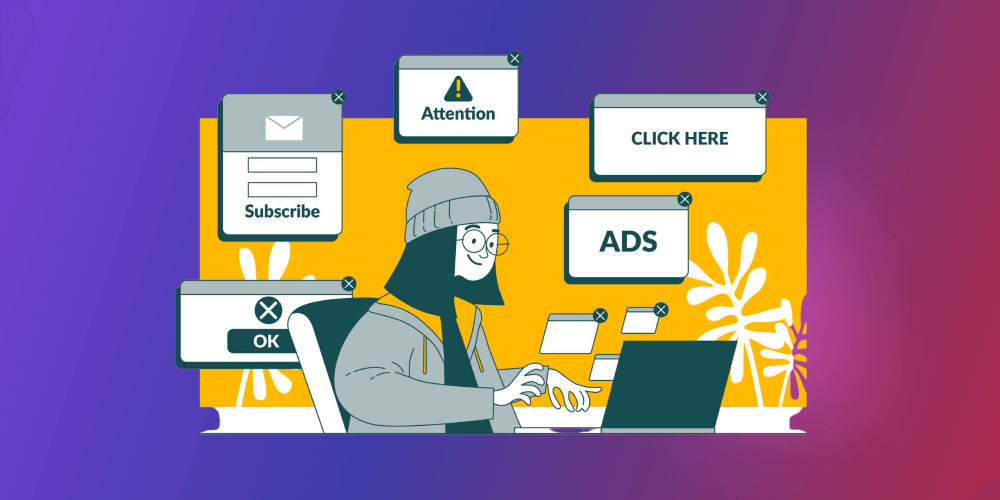
A paid ad campaign helps the business reach customers faster, with more control over reach and goals that are easier to hit in a short time. However, running only paid ads will drain your budget. If the business stops running ads, customer numbers and revenue will stall. So keep this in mind before choosing this approach.
According to research by Wyzowl, 69% of customers prefer to learn about a product through video rather than images or text. That makes it a common approach for businesses that want to promote their products to customers.

As technology advances, many digital platforms have appeared that serve business brand promotion. You can run your Branding Marketing campaign on different digital channels such as social media, email marketing,…
Once customers take an interest in a brand, they can immediately see its updates, including posts, new products,… So when rolling out a Branding Marketing strategy, build content that is valuable and useful to customers.
A website is an important marketing tool for growing a business and building the right brand. When customers want to learn more about a business and the products and services it offers, they tend to visit its website.

If your website is well designed, with a clear interface and useful, valuable information, customers will remember your brand longer. So businesses should study UX, UI to improve the experience of customers using the website.
Based on the 5 main modules of Branding Marketing, what actually works? MONA answers that below.
For a brand or product to succeed, the business needs a broad vision and a defined mission so it doesn't lose direction during rollout.
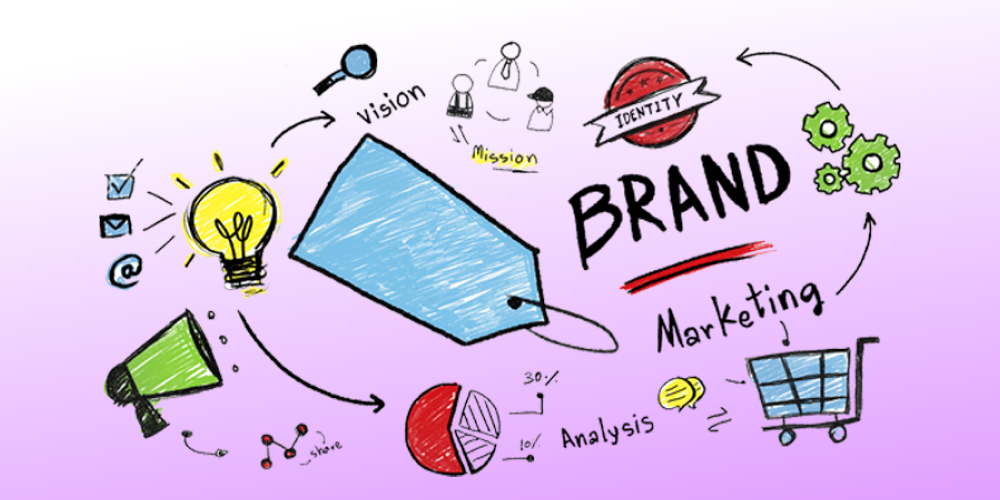
To define your brand mission, answer the following questions:
From these 4 questions, you can define the purpose of your Branding Marketing, set out core values for the business and a message to deliver to customers.
If your business is developing a new product/service for the market, don't copy what competitors are doing. Study and learn from them to develop new products or features strong enough to compete.
The key purpose of researching and analyzing competitors is to set your brand apart, so you can convince customers to use your products and services instead of your competitors'.

In addition, when running Branding Marketing, you need to analyze how competitors build their brands. The most visible points to look at are:
By analyzing competitors' strengths and weaknesses, your business can map out the right direction for its Branding Marketing campaign.
Based on the products and services your company offers, identify your main customers. That lets the business craft the most accurate message for them. The most thorough way is to put yourself in the customer's shoes to find the insight, understanding both their real needs and their preferences, and the channels they usually check, to set the right Branding Marketing strategy.

Key factors in building a customer persona are:
Before customers trust you and start using your service, the business needs to understand the value it brings them, and that shows in how it sets its brand mission.
A brand's mission shows in how the business gives customers what they need. Customers can also recognize the mission through the logo, slogan, daily activities,…
In Branding Marketing, the business needs to create a message so its products/services reach customers more easily. By defining the customer persona it targets and understanding their personality and preferences, it can create a message, a Story telling Marketing that is truly different and has a big impact on consumers' minds. Note that this message must run through the whole campaign, so research it carefully before rollout.

Take SUNHOUSE MAMA in the “Nhà là bếp” (Home is the kitchen) campaign for Tet 2018: SUNHOUSE successfully positioned itself in consumers' minds as a leading kitchenware brand in Vietnam.
Campaign message:“This Tet, don't go home to celebrate Tet – go home to share a meal” meaning go home to “share a meal” instead of to “celebrate Tet”. Children who work far from home all year only come back when Tet arrives, and no longer get excited about “celebrating Tet”. The story hit hard with people who don't get the chance to eat with their families often and long for a meaningful family meal.
The TVC successfully spread the message SUNHOUSE sent to customers. Through this case study, businesses can see how important it is to create a message for their Branding Marketing campaign.
The logo and brand identity are the first impression, the “face” of your business in customers' eyes. A beautiful logo design, distinctive and paired with a memorable slogan, creates a strong first impression and helps your brand stand out from the competition.
To build an effective Brand Identity, focus on these key elements:
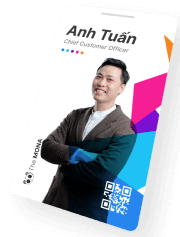
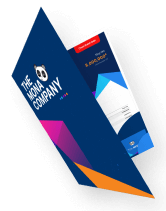
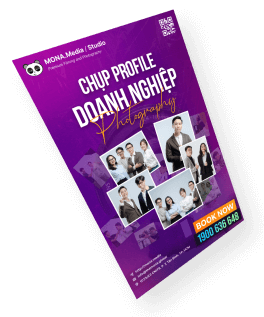
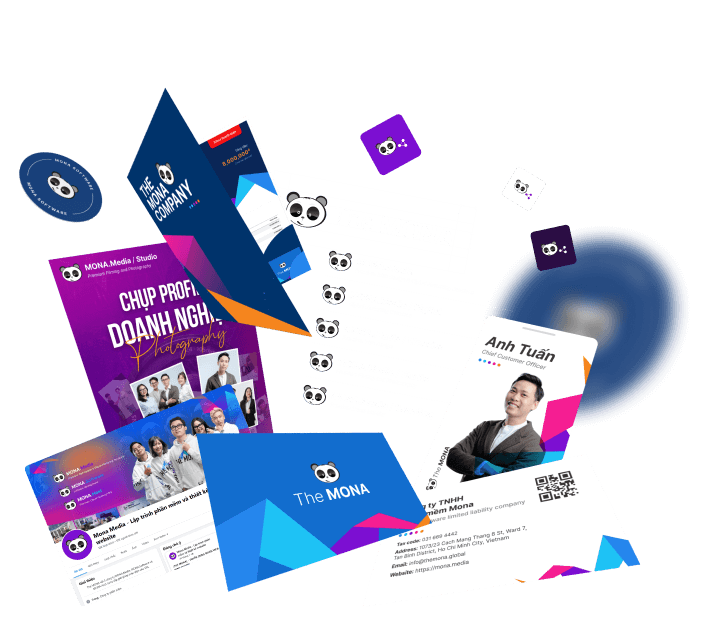
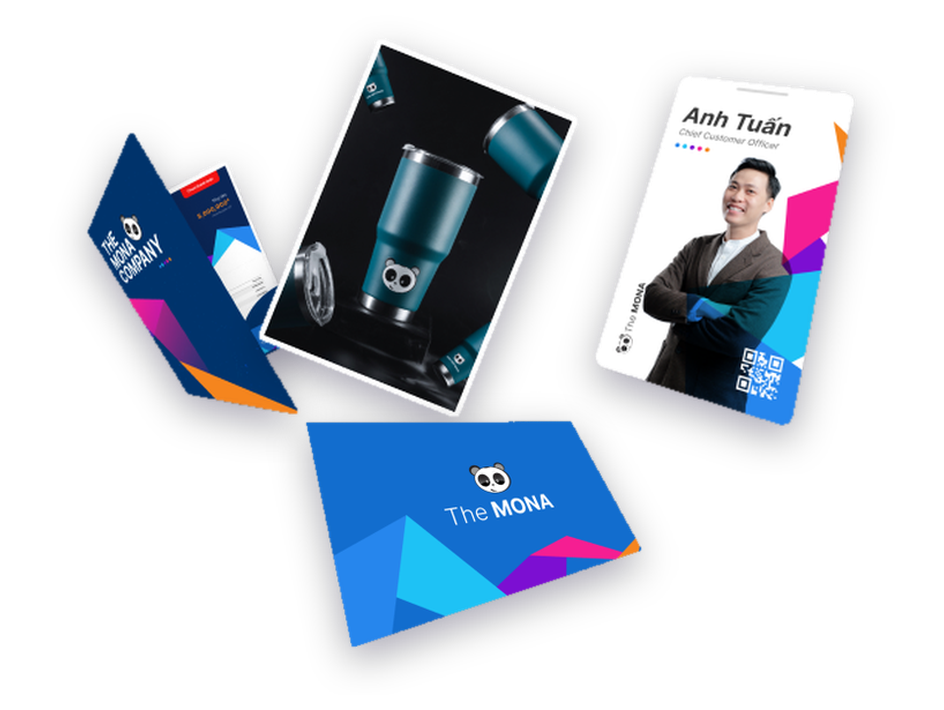
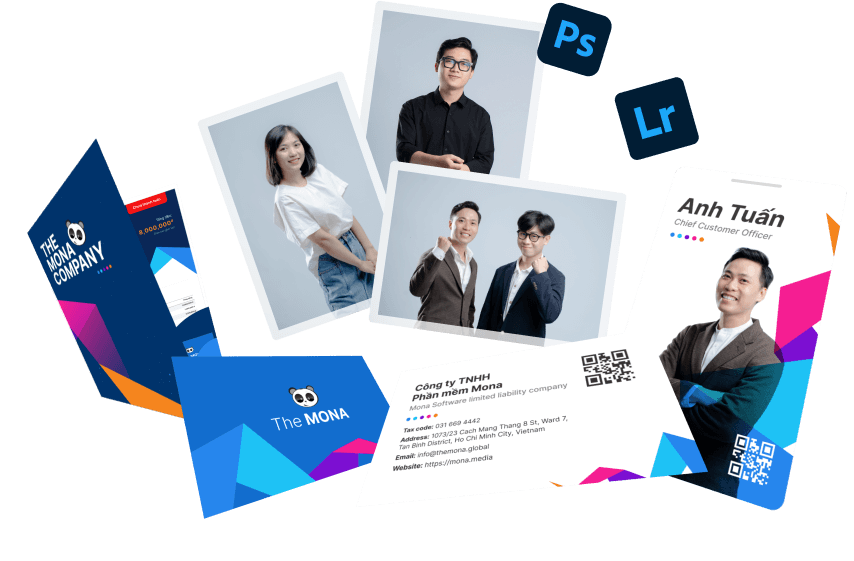
Knowing how important this is, MONA Media is proud to offer brand identity design as an end-to-end service, giving your business a solid foundation for Branding Marketing. MONA covers everything, from creating a distinctive logo with a strong brand imprint to designing professional marketing materials (name cards, letterheads, email signatures,…), eye-catching advertising materials (poster design, banners, flyers), attractive brochure design, striking, and product packaging design that is creative and eye-catching.
With a talented, experienced design team, MONA Media is committed to creating a brand identity that not only looks good but also conveys your core values, attracts customers and gives your business a strong competitive edge.

Logo MONA Media
Covering every aspect of the business with the brand is an effective way to make it widely known. When the brand appears everywhere, customers recognize and remember it easily.
In addition, covering the brand on the website, social media,… through SEO, Google Ads or Social Media services also helps the business reach more potential customers. Being present on many marketing channels gives the business the chance to reach many different customer groups, increasing sales opportunities and revenue.

Consistency is the top priority when building a brand for a business. Don't change the brand after going through a long process of measuring results. Stay consistent with your brand. Once the tone of voice and mission of the business are set, apply them regularly in the content on the business's website.
If your business wants to do Branding Marketing but isn't sure where to begin, contact MONA Media on the hotline 1900 636 648 for detailed advice. Build a lasting presence in the market with a distinctive Branding Marketing strategy and a clear message, and we will work with you through every opportunity and challenge.
To run a successful Branding Marketing strategy, the company needs to avoid these issues:
If a business doesn't study competitors' earlier campaigns, it won't know what they did well and where they failed. Without careful research, the message the company puts into its Branding Marketing strategy will certainly not succeed as expected.
When promoting the brand through videos on social media, companies usually create fun videos with lots of different information. But doing so dilutes the information the company most wants customers to remember, and sometimes makes customers misunderstand the message it wants to send.

A business's Branding Marketing strategy will lack direction without a long-term vision. Instead of setting a short-term goal of increasing sales, the company needs a long-term plan and to roll out its strategy across all social media platforms.
This article has answered the question: what is Branding Marketing? We hope it gives you a broader view of Branding Marketing so you can build the campaign that best suits your business.


 MONA will never sell your information or send you spam


 MONA will never sell your information or send you spam


