When you start learning SEO, you will probably feel lost among all the terms that come up. With digital technology moving fast and search engines constantly updating their algorithms, knowing the basic SEO terms matters a great deal. It helps you understand the strategy itself and also helps you optimize your website effectively. Let's MONA Media explore the common SEO terms.
What are SEO terms?
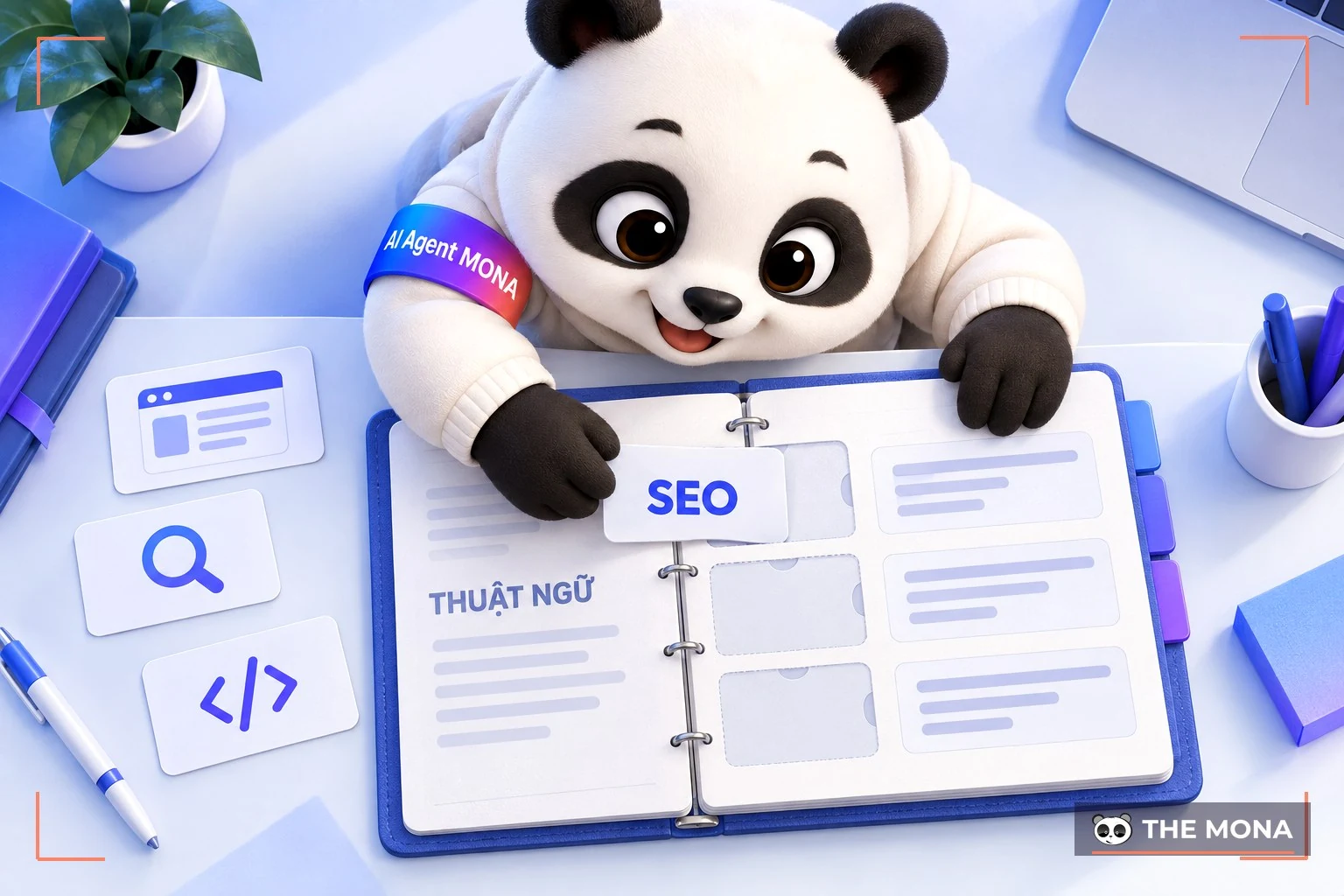
SEO terms is the general name for the specialist vocabulary used in search engine optimization. They are usually abbreviations or phrases that describe a specific concept, tool or technique used in SEO.
Understanding SEO terms properly helps you pick up knowledge faster and follow what you are learning or working on.
Basic SEO terms
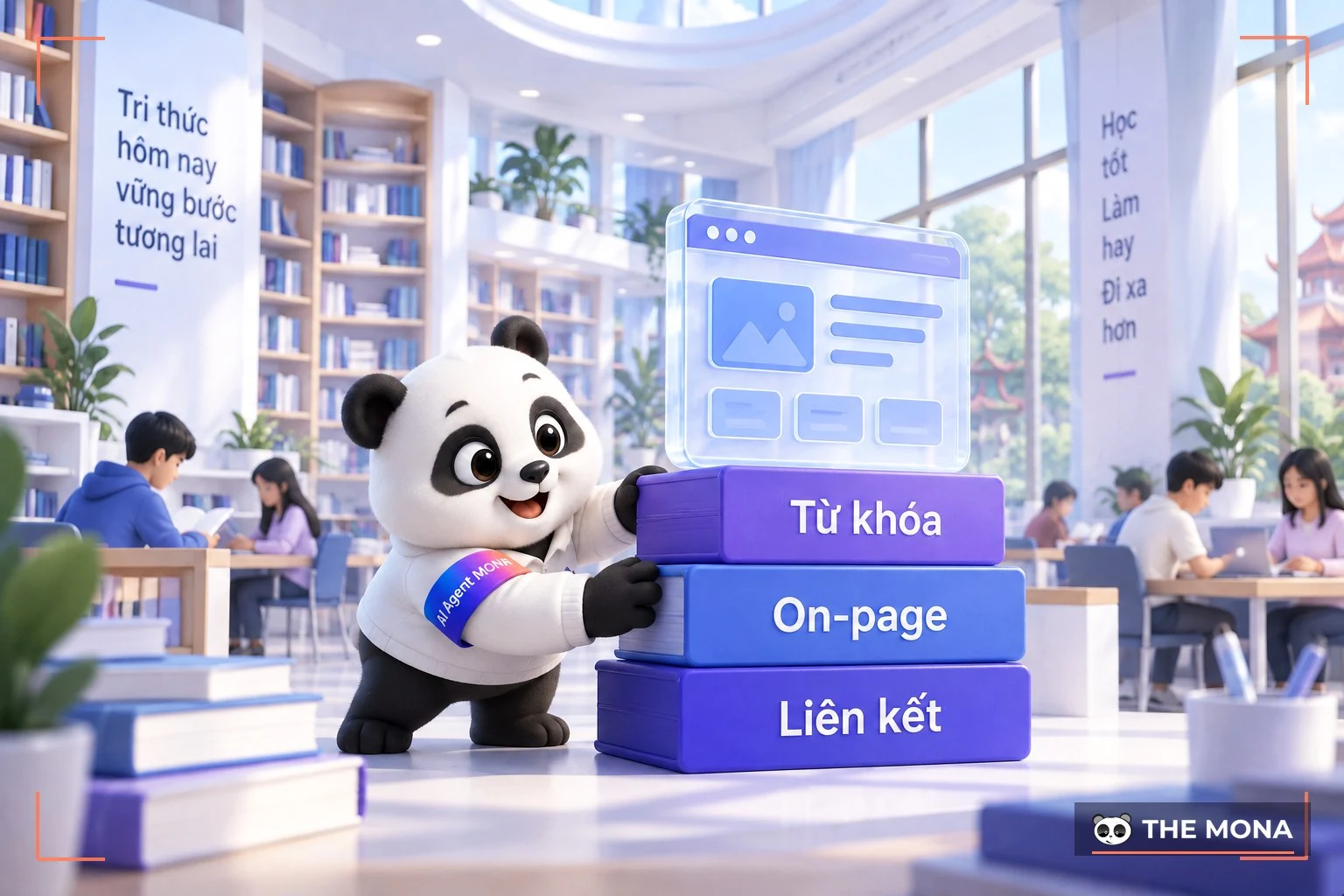
These are the most common SEO terms, found in guides and beginner SEO courses all the time. Getting these basics right is an important step toward teaching yourself how to do SEO effectively and building solid knowledge to apply when you optimize a website in practice.
SEO: Search Engine Optimization is the process of optimizing a website so it appears more often on search engines such as Google. Done properly, SEO brings your site in front of the right audience, grows organic visits and supports your overall digital marketing strategy.
Search engine: A search engine is a system that lets users look up information on the internet. Platforms such as Google and Bing use algorithms to analyze, collect data and return the results that best fit what the user is searching for.
SERPs: Search Engine Results Page is the page that shows results when a user enters a query. It usually contains both organic results and ads. The higher your website appears on the SERP, the more clicks it is likely to get.
Keywords in SEO: Keywords are phrases that reflect exactly what users are searching for. Researching and choosing the right keywords puts your content in front of the right people at the right time, and raises the effectiveness of your optimization overall.
Technical SEO: Technical SEO focuses on technical factors such as page load speed, mobile display, structured data, the sitemap and the robots.txt file. These help search engines crawl and index your content more easily.
SEO Onpage: The process of improving each individual page on a website, from the title and content to the URL structure. Good optimization helps search engines understand the content and judge page quality, and it makes the page friendlier for users.
SEO Offpage: This SEO term covers factors outside your website that build its trust and popularity. Key off-page factors include quality backlinks from reputable sites, presence on social media and brand mentions on other platforms.
Content marketing in SEO: Content marketing is a strategy of creating and distributing valuable content to attract and keep users. Combined well with SEO, quality content grows organic traffic, earns links and builds trust in your website.
Applied SEO terms
Once you are familiar with the basics of what SEO terms are, you will start to meet more specialized ones. These are used when building a real SEO strategy and call for deeper understanding:
Backlink in SEO: Backlinks are links from another website that point to your page. They are an important factor in search engine ranking algorithms. When a site earns backlinks from trusted pages, its authority and visibility in search results rise significantly.
Anchor text in SEO: Anchor text is the clickable text of a link. Used sensibly, anchor text that contains a relevant keyword can help a page rank for that same keyword.
Page Authority (PA): A metric created by Moz that estimates the ranking ability of an individual page on a website. Page Authority (PA) helps you see which pages have good SEO potential, so you can optimize them or build more related content around them.
Domain Authority (DA): A metric developed by Moz to estimate the overall strength of a domain at ranking in search results. Its scale runs from 1 to 100 and reflects a website's SEO competitiveness against its rivals. It is one of the SEO terms used to analyze and compare the performance of several websites.
CTR (Click-Through Rate): The share of people who click a result compared with the number of times it was shown. In SEO, CTR reflects how appealing the page title and description are in search results. Improving CTR is an essential part of raising rankings and growing traffic.
Bounce Rate what it means in SEO: Bounce rate is the share of users who leave a website after viewing only one page. It is an important measure of how well a site attracts and keeps users. If the bounce rate is high, the content is probably not engaging enough, or the user experience needs work.
Organic Traffic and its role in SEO: This SEO term refers to traffic that comes from organic search results, not from ads. It is high-value, lasting traffic, and usually the end goal of most SEO strategies.
Conversion rate in an SEO strategy: Conversion rate is the share of visitors who take a desired action, such as placing an order or filling in a contact form. It ties directly to business results and is an important target in SEO.
Meta tags and how they are used in SEO: Meta tags are snippets of code in the head of an HTML page that describe the page's content. The two most important are the title tag and the meta description. Optimizing them improves visibility and click-through rate on the search engine results page (SERP).
Alt text and its role in image SEO: Alt text is a short description of what an image shows, which helps search engines understand the image. It is a must-have when optimizing images, and especially useful for people using screen readers or when an image fails to load.
Advanced SEO terms
For experienced or specialist SEOs, advanced SEO terms are essential for analyzing and improving performance at a high technical level:
Schema markup and its role in SEO: Schema markup is special code added to a website to give search engines structured information. Done properly, it improves how rich snippets appear in search results, which raises CTR and improves the user experience when people reach your content.
LSI keywords in SEO: LSI (Latent Semantic Indexing) keywords are phrases closely related to the main keyword, which help search engines understand the context of the content. Using LSI keywords properly not only makes the text read more naturally but also helps it rank for many related queries on the same topic.
Canonical URL in SEO: This SEO term describes a technical fix that names the official URL when the same content can be reached through several addresses. A canonical URL prevents duplicate content and keeps SEO value concentrated on a single version.
Sitemap and how it is used in SEO: A sitemap is a list of the important pages on a website that helps search engines find and index them. Besides supporting efficient crawling, it also gives information about how often each page is updated and how high a priority it has, which improves performance full-scope SEO.
Robots.txt in SEO management: The robots.txt file controls how search engines crawl a website. It is one of the advanced SEO terms most often used to tell search engines which parts of a site they should or should not crawl.
301 redirect in SEO: A 301 redirect is a permanent redirect, used when content moves from an old URL to a new one. Done correctly, it preserves all the SEO value the old page has built up and makes sure users do not hit errors on old links.
What a 404 error means in SEO: A 404 error appears when the requested page no longer exists or cannot be reached. It is a common problem that can hurt both user experience and SEO performance.
White Hat SEO in a long-term strategy: White hat SEO is optimization that follows search engine guidelines fully. It focuses on building quality content, improving user experience and earning links naturally.
Black hat SEO and its risks:Black Hat SEO is a set of optimization techniques that manipulate search results and often break Google's guidelines. They can bring quick results, but black hat SEO carries a very high risk of penalties, leading to lost rankings or removal from the index altogether.
Grey Hat SEO and its limits: Grey Hat SEO is optimization that sits between white and black. It gets results faster than white hat SEO, but still risks a penalty if it breaks the rules. A typical example is creating quality content and then buying backlinks to push rankings up, which Google's algorithm looks at closely.
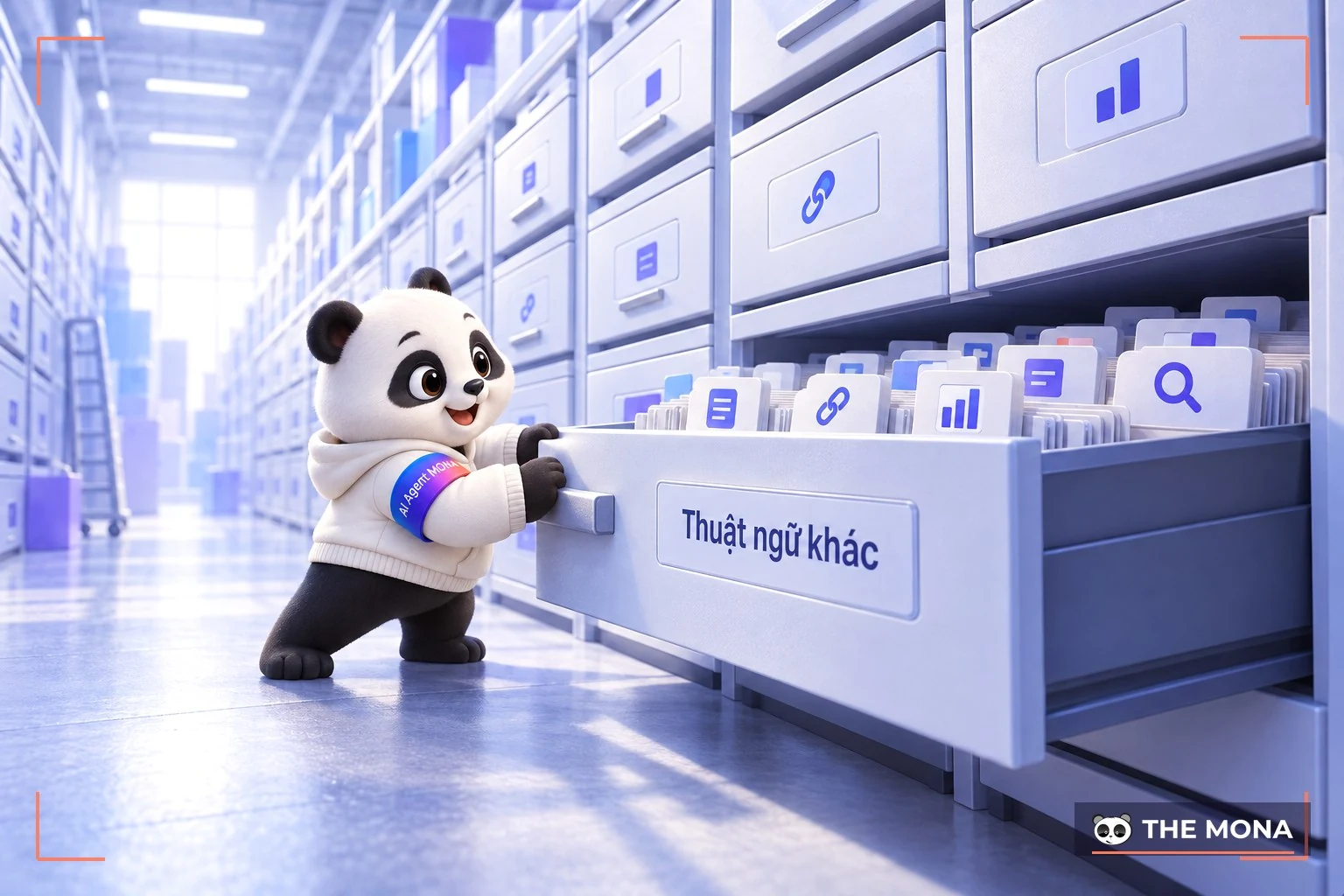
Other common SEO terms
Beyond the common concepts, many other everyday SEO terms come up while optimizing a website.
Organic Search: Organic Search is the SEO term for organic traffic that comes from unpaid search results. It is lasting, high-value traffic in any SEO campaign.
Search Volume: Among the important SEO terms, search volume tells you how many times a keyword is searched each month. It is the basis for judging a keyword's reach and popularity, and for building a more effective SEO strategy. Choosing keywords with the right search volume helps you optimize content and attract the right audience.
Keyword Difficulty (KD): Keyword Difficulty reflects how hard it is to rank high for a keyword. Among common SEO terms, it is the metric that helps you weigh up competition and the resources you need to invest.
User Engagement: Among SEO terms, user engagement is the measure of how users interact with a website. Metrics such as time on site, bounce rate and pages viewed all show whether your content is truly engaging.
Visibility: Visibility describes how often a website appears on search results pages. The higher your visibility, the more users you reach.
Mobile Optimization: An SEO term for optimizing a website for mobile devices, making sure it loads fast and feels smooth on a phone screen.
Page load time: Page load time is how long a page takes to display all its content. Among SEO terms, it strongly affects user experience and search rankings. The faster the page loads, the lower the bounce rate and the better you hold on to customers.
Indexing: Also called indexing, this SEO term describes how a search engine stores a page's content in its database to serve user queries. If a page is not indexed, it will not appear in search results.
Crawling: The step before indexing, when search engine bots scan and discover content on a website by following links. Optimizing crawling helps bots reach new content faster and keeps your pages up to date in the search system.
Content Keywords: The main phrases placed in the content to target a structured full-scope specific. This is the basic factor that lets search engines understand what a site is about and how relevant it is to a user's query.
Title Tag: The main title of a page, shown in search results and in the browser title bar. A strong title that includes the target keyword can noticeably improve click-through rate (CTR).
Meta Description: The short description that appears right under the title on search engine results pages. It does not directly affect rankings, but it is a powerful way to raise click-through rate.
PBN (Private Blog Network): A private network of blogs built to create backlinks for a main website. This tactic falls under black hat SEO. It can bring quick results, but the risk of a Google penalty is very high.
Internal Links: Internal links between pages on the same website. A tight link structure guides users better and distributes SEO value sensibly. Among technical SEO terms, this is one you should not skip.
External Links: Links from your website out to other sites. Citing reputable sources not only increases trust in your content but also helps search engines understand its context.
AMP (Accelerated Mobile Pages):AMP is a Google initiative that speeds up page loading on mobile devices by using stripped-down HTML. It is not an official ranking factor, but the faster loading AMP provides can give a better experience and indirectly improve SEO.
Long Tail Keyword: Long-tail keywords are long, specific phrases that usually have low search volume but bring a high conversion rate. Targeting long-tail keywords is an effective SEO strategy, especially for businesses in niche markets.
User Experience (UX): User experience is everything a user goes through when interacting with a website. Layout, navigation, speed and content all directly affect how long people stay and how many convert.
Mobile-First Indexing: Mobile-first indexing is an SEO term meaning Google uses the mobile version of a page to evaluate and rank it. It reflects the trend of users searching mainly on mobile devices. To meet this, optimize your content, images and structure for phones from the start.
Link Juice: Link juice refers to the SEO "strength" passed through links between web pages. Optimizing internal links and earning quality backlinks helps distribute link juice better and improves search rankings. It is one of the SEO terms you meet often when analyzing a link strategy.
SEO-Friendly URLs: SEO-friendly URLs are clear addresses that contain a relevant keyword and reflect the page's content. Friendly URLs improve indexing and the user experience when people visit your website.
Trust Flow: A metric that measures how trustworthy a website is, based on the quality of the links pointing to it. A high Trust Flow usually shows that a site has many reputable backlinks, which improves overall SEO performance.
Citation Flow: This SEO term describes how popular a website is, measured by the number of backlinks pointing to it. It ignores link quality, but it still gives a worthwhile view, especially when analyzed together with Trust Flow.
Keyword Density: Keyword density is the percentage of times a keyword appears in the content compared with the total word count. It is no longer a major ranking factor, but spreading keywords sensibly still keeps content natural and friendly to search engines.
Long-Form Content: Long-form content (over 1,000 words)dives deep into one specific topic and keeps readers on the page longer. This kind of content is usually very effective for SEO because it attracts backlinks and increases time on site.
Pillar Content: Pillar content is the main hub that links out to more detailed articles on the same topic. This structure keeps content well organized and improves both user experience and SEO.
Domain Age: A domain's age is often linked to the level of trust Google gives that site. Long-running domains tend to collect many links and a lot of authority, but that does not mean new content has no chance to compete.
Brand Authority: This SEO term usually refers to the level of reputation a brand has earned in the eyes of users and search engines. The more a brand is mentioned, the more natural backlinks it is likely to receive.
Guest Post: A guest post is an article published on an outside website to build backlinks and widen your readership. Used sensibly, guest posting not only builds trust but also helps grow traffic.
Content Freshness: The ability to update content and keep it fresh helps SEO performance. Google tends to favor content that was recently edited or published, especially for hot topics or topics that change often.
Voice Search Optimization: This SEO term is usually used to optimize content for voice queries. With more people searching on mobile devices and through virtual assistants, optimizing for natural speech and longer questions matters more than ever.
User Intent: A common SEO term for what a user really wants when they type a query into the search box. Understanding intent lets you shape content accurately, meet the real need and raise conversions.
Search Intent: Every search query carries a purpose: finding information, reaching a specific website or completing a transaction. Identifying the right type of search intent decides how you build content that matches what searchers expect.
Local SEO: This strategy focuses on optimizing a website to reach customers in a specific geographic area. For businesses serving a local market, it is an essential way to increase presence on Google and attract nearby customers.
Google Business Profile: An SEO term for the free tool that lets a business manage the information shown about it on Google. An optimized profile increases your chances of appearing in Google Maps and local searches.
Disavow Backlinks: When a website has many unwanted links, or links from spam sources, this tool lets you ask Google to ignore them. It is an important step in protecting your reputation and search rankings.
Geo-Targeting: This SEO term describes delivering content or ads based on a user's specific location. By personalizing the experience locally, a business can raise relevance and conversion rate.
NAP Consistency: Keeping your Name, Address and Phone number consistent across platforms is very important in local SEO. Any inconsistency can lower trust and hurt your local ranking.
Citation Building: This SEO term usually refers to listing business information (NAP) in reputable directories and platforms. It adds credibility and strongly supports a local SEO strategy.
Social Signals: Shares, likes and comments on social media may not be a direct ranking factor, but they affect SEO indirectly by raising brand awareness and helping content spread.
Core Web Vitals: Google judges user experience on three main factors: how fast the main content loads, how quickly the page responds to interaction, and how stable the layout is. Optimizing these metrics improves rankings and keeps visitors on your site.
Google Algorithms: A common SEO term for the system of algorithms Google uses to evaluate and rank websites. Algorithms keep changing, so updating and adjusting SEO strategy in good time is a must.
E-A-T (Experience, Expertise, Authoritativeness, Trustworthiness): This SEO term is used in content quality evaluation, especially for topics that strongly affect people's health, finances or lives. The better content shows expertise and trustworthiness, the more it is favored in search results.
PageRank: A well-known algorithm Google once used to measure how important a web page is, based on links from other pages. Google no longer publishes PageRank today, but its underlying principle still shapes how Google evaluates and ranks content.
Indexability: This is the ability of search engines such as Google to access, read and store a page's content in the search index. If a page cannot be indexed, it will not appear in search results, which makes indexability optimization essential.
YMYL (Your Money or Your Life): Websites that give advice on finance, health, law and similar topics need to pay special attention to content quality and sources. Google applies stricter standards to this kind of content to protect users.
Thin Content: This SEO term refers to low-value content, usually too short, duplicated or not useful to the reader. Google rates pages with thin content poorly, so creating deep, information-rich content is important for improving rankings.
Keyword Cannibalization: This term describes a website that has several pages targeting the same keyword, so they compete with each other in search results. This usually lowers overall performance, because Google does not know which page is the main one to prioritize.
Semantic SEO: Instead of optimizing only for keywords, this approach makes content deeper and more in context. Using related keywords, a clear structure and logical links helps search engines understand the topic as a whole.
Heading: This SEO term covers heading tags such as H1, H2 and H3, used to rank and organize content clearly. Sensible use of headings improves the reading experience and helps search engines grasp the structure of an article.
Broken Link: These are links that lead to a page that does not exist or returns an error, which makes for a poor user experience and hurts SEO performance. Checking for and fixing broken links is an important part of website maintenance.
Topical Authority: This term refers to a website's level of expertise and authority on a specific topic. The more in-depth content and tightly connected links a site has around one field, the more likely Google is to recognize it as an expert in that field.
Engagement Metrics: This term covers metrics that measure how users interact with a website, such as time on page, clicks or bounce rate. They help judge user satisfaction and can directly affect SEO rankings.
Understanding what SEO terms mean not only helps you reach specialist knowledge faster, it also gives you a solid base for producing more effective content. Once you are comfortable with concepts like keywords, indexing and internal links, optimization no longer feels so hard. If you need full-scope SEO services at MONA Media, call us now for a consultation and to receive SEO quote as a full package.
MONA has a podcast: listen instead of readingEpisodes on AI, automation & SEO for Vietnamese businesses
Founder of The MONA, who built a services company of 200+ staff with 14,000+ projects delivered. Khánh Hùng shares how he thinks about building systems that run themselves, automating a business, and the real lessons from delivering projects at MONA.
Own a website with a beautiful, 100% exclusive design and a lifetime warranty, with the ability
to expand features flexibly as your business grows, starting today!

 MONA OS 2.0
 Partner with MONA


 Tự động hoá doanh nghiệp
 Cẩm nang SEO
 Digital Marketing
 Kinh nghiệm thiết kế website
 Hạ Tầng Server
 Giáo dục


 VI
 EN









 ProductsNew

 Products
 Mới ra mắtKHA AI 2027App tự edit video, tự đăng mọi mạng xã hội, 2 phút mỗi ngày











 Tư vấn digital marketingKéo khách từ nhiều kênh, đo bằng số thật.
 NewAI video productionCompany story films made with AI.
 Custom software developmentCRM, ERP and HRM built for your business.
 Viết AI Agent theo yêu cầuĐặt riêng một trợ lý AI cho đúng việc của mình.
 Tư vấn chuyển đổi AIĐưa AI vào vận hành của cả công ty.
 NHTQ systemEnd-to-end China–Vietnam shipping operations.
 MONA E-LearningA website with every feature you need to sell courses.
 How to sell online courses (course)More than 30 free lessons on selling courses on autopilot.
 MONA Cloudmonacloud.vnServers to get your apps and websites running.
 MONA Basemonabase.vnPostgres database, sign-in and file storage.
 MONA Mailmonamail.vnSend OTP, order and invoice emails from your software.
 MONA Paymonapay.vnAccept bank transfers via VietQR and notify your software when the money arrives.
 MONA eInvoiceComing soonIssue e-invoices that meet tax standards.
 Gấu TeleSalesGọi điện tư vấn, chăm khách như tổng đài viên thật.
 Gấu Pháp ChếSoạn hợp đồng, rà điều khoản trong vài phút.
 Gấu Báo GiáLên báo giá đúng mẫu và gửi khách ngay.
 AI chăm sóc khách hàngTheo dõi và giữ chân khách hàng cũ.
 Gấu Tuyển DụngLọc hồ sơ, hẹn lịch, phỏng vấn ứng viên.
 Mới ra mắt
KHA AI 2027
Xây kênh chuyên gia 2 phút mỗi ngày
Quay bằng điện thoại, AI tự edit video, tự đăng lên 16 nền tảng và tự trả lời bình luận, tin nhắn.
833.358lượt xem trên kênh CEO MONA sau 27 ngày
 Anh Khánh HùngCEO MONA đang dùng mỗi ngày
Xem app làm được gì
 AI
 Chuyển đổi AI toàn phầnGiải pháp tổng cho doanh nghiệp, 3 lớp triển khai.
 Viết AI Agent theo yêu cầuĐặt riêng một con AI gánh đúng nghiệp vụ của bạn.
 Custom softwareCRM, ERP and HRM with built-in AI automation.
 SEO & AEO thời đại AIĐược Google lẫn AI trích dẫn, không chỉ xếp hạng.
 Kiến thức AI cho doanh nghiệpBài phân tích, hướng dẫn ứng dụng AI vào vận hành.
 Free AI courses
 AI tools at work



 1,6K









 MONA will never sell your information or send you spam


