
 MONA OS 2.0
 Partner with MONA


 Tự động hoá doanh nghiệp
 Cẩm nang SEO
 Digital Marketing
 Kinh nghiệm thiết kế website
 Hạ Tầng Server
 Giáo dục


 VI
 EN
















Message us on
Zalo Official


 ProductsNew

 ProductsProducts
 Mới ra mắtKHA AI 2027App tự edit video, tự đăng mọi mạng xã hội, 2 phút mỗi ngày










 Website designLooks good and wins customers over.
SEO servicesBrings in customers searching for exactly what you sell.
 Tư vấn digital marketingKéo khách từ nhiều kênh, đo bằng số thật.
Corporate video productionVideos introducing your company, factory and team.
 NewAI video productionCompany story films made with AI.
 Custom software developmentCRM, ERP and HRM built for your business.
 Viết AI Agent theo yêu cầuĐặt riêng một trợ lý AI cho đúng việc của mình.
 Tư vấn chuyển đổi AIĐưa AI vào vận hành của cả công ty.
NewMONA LMSManagement for centers and schools.
MONA SkillHubInternal training for company staff.
 NHTQ systemEnd-to-end China–Vietnam shipping operations.
MONA JMSManagement for gold, diamond and pawn shops.
 MONA E-LearningA website with every feature you need to sell courses.
 How to sell online courses (course)More than 30 free lessons on selling courses on autopilot.
 MONA Cloudmonacloud.vnServers to get your apps and websites running.
 MONA Basemonabase.vnPostgres database, sign-in and file storage.
 MONA Mailmonamail.vnSend OTP, order and invoice emails from your software.
 MONA Paymonapay.vnAccept bank transfers via VietQR and notify your software when the money arrives.
 MONA eInvoiceComing soonIssue e-invoices that meet tax standards.
Gấu CườiTrả lời khách 24/7 trên web, Fanpage, Zalo và thu lead cho sale.
 Gấu TeleSalesGọi điện tư vấn, chăm khách như tổng đài viên thật.
Dê CườiTư vấn và chốt đơn cho shop ngay trong khung chat.
Gấu WebmasterNhắn nhóm Zalo là website được sửa xong.
 Gấu Pháp ChếSoạn hợp đồng, rà điều khoản trong vài phút.
 Gấu Báo GiáLên báo giá đúng mẫu và gửi khách ngay.
 AI chăm sóc khách hàngTheo dõi và giữ chân khách hàng cũ.
 Gấu Tuyển DụngLọc hồ sơ, hẹn lịch, phỏng vấn ứng viên.
 Mới ra mắt
KHA AI 2027
Xây kênh chuyên gia 2 phút mỗi ngày
Quay bằng điện thoại, AI tự edit video, tự đăng lên 16 nền tảng và tự trả lời bình luận, tin nhắn.
895.025lượt xem trên kênh CEO MONA sau 37 ngày
 Anh Khánh HùngCEO MONA đang dùng mỗi ngày
Xem app làm được gì
 AI
Gấu Cười MONA ĐANG TỰ XÀITrả lời khách 24/7 trên website, Zalo OA, Messenger và thu lead về cho sale.
Dê CườiChốt đơn bán lẻ và sàn: Shopee, TikTok Shop, web. Chăm cả khách sỉ, đại lý.
Gấu WebmasterCập nhật nội dung, tối ưu SEO website mỗi ngày.
Gấu TeleSalesGọi điện tư vấn, chăm khách như tổng đài viên thật.
Gấu Tuyển DụngLọc hồ sơ, hẹn lịch, phỏng vấn ứng viên tự động.
AI chăm sóc khách hàngGiữ khách cũ, cứu lead đã rớt cho phòng kinh doanh.
Gấu Pháp ChếSoạn hợp đồng, rà điều khoản trong vài phút.
Gấu Báo GiáLên báo giá đúng mẫu, gửi khách ngay khi có yêu cầu.
 Chuyển đổi AI toàn phầnGiải pháp tổng cho doanh nghiệp, 3 lớp triển khai.
 Viết AI Agent theo yêu cầuĐặt riêng một con AI gánh đúng nghiệp vụ của bạn.
 Custom softwareCRM, ERP and HRM with built-in AI automation.
 SEO & AEO thời đại AIĐược Google lẫn AI trích dẫn, không chỉ xếp hạng.
 Kiến thức AI cho doanh nghiệpBài phân tích, hướng dẫn ứng dụng AI vào vận hành.
 Free AI courses
 AI tools at work
App mới · KHA AI 2027
Xây kênh 2 phút mỗi ngày
AI tự edit video, tự đăng mọi mạng xã hội
Free consultation, 8am–10pm every day

23 September, 2025

SEO Shopify is the process of optimizing an online store on the Shopify platform to improve search rankings, increase traffic and raise the conversion rate. So what are the benefits of Shopify SEO, and how do you do it right? With over 10 years of experience in SEO across many industries, MONA Media will share effective strategies and tips for Shopify website SEO in this article, to help your store break through on revenue.

In reality, as many as 67% of users only click on the first 5 results on Google. This means that if you optimize properly, you can get your Shopify SEO to the top and become customers’ first choice, which opens up effective sales opportunities. Some standout benefits businesses get from Shopify SEO are:
You may also be interested in:
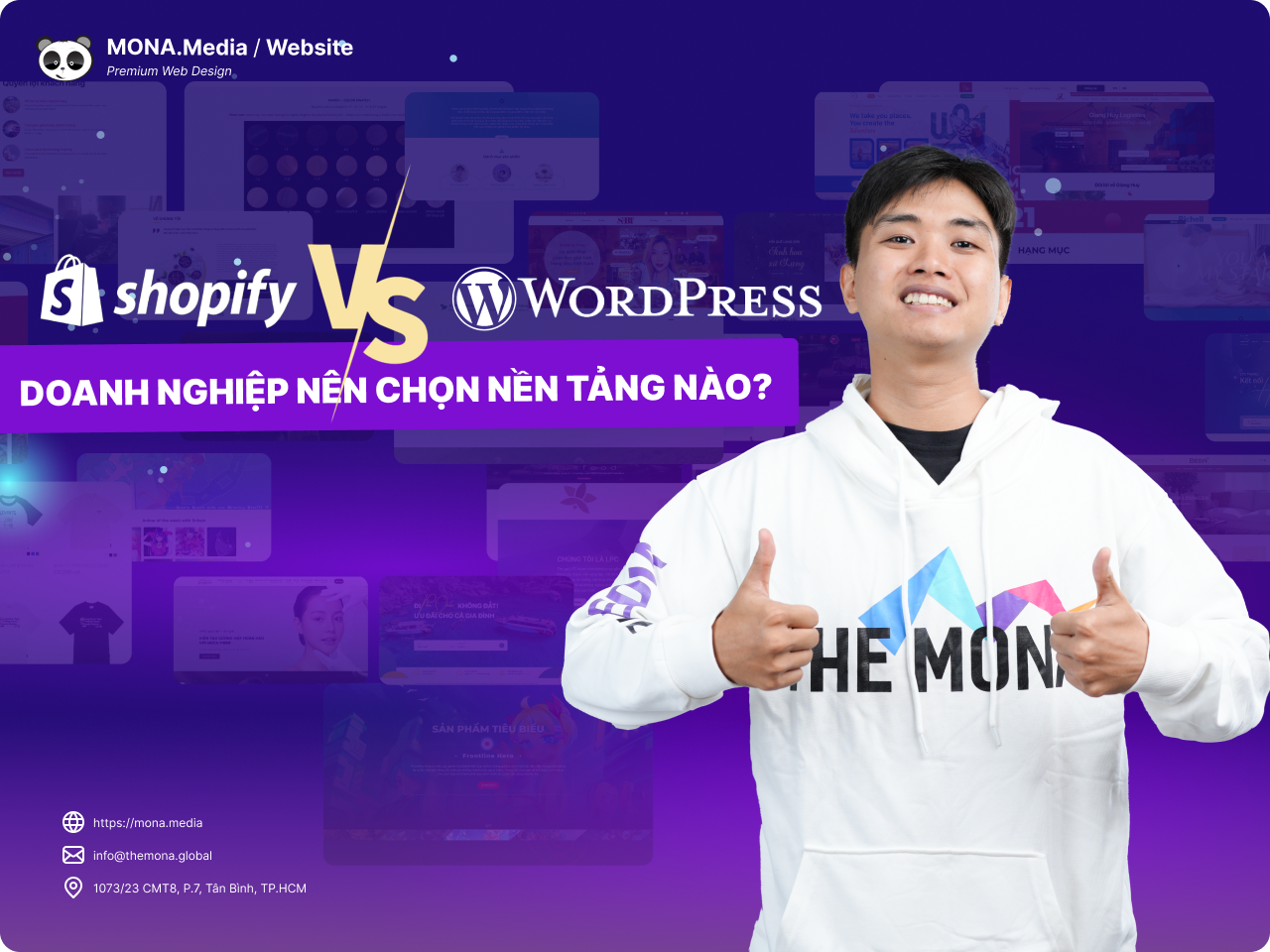
- Shopify vs WordPress : Which Platform Suits Your Business?
- Compare Shopify and Bigcommerce: Which Platform Is Better to Use?
To help your Shopify store jump in rankings and grow revenue, a business needs to carry out a well-structured SEO strategy plan. Here is how:
SEO Technical is an important foundation that keeps your website running smoothly, friendly to search engines and good for users. Here are the key tips you cannot skip when doing Shopify SEO:
By default, Shopify provides a subdomain in the form of storename.myshopify.com, but to look professional and make SEO more effective, a business should register a custom domain. Google favors custom domains over subdomains, so this gives your website a big advantage. In MONA’s experience, you should choose a short, memorable domain that clearly reflects your brand, which makes it easy for customers to find you and builds trust with Google.

A custom domain costs quite little, from only 10 to 20 USD per year. After registering, the business needs to connect the domain to its Shopify store and set it as the primary domain. Also make sure you use it consistently across all marketing and communication channels to strengthen your brand identity.
If you want to use a different domain as your primary domain instead of the one Shopify chose, just follow these steps:
A clear structure helps Google understand the content and hierarchy of your pages, which distributes internal links effectively and lifts overall rankings. You can build your Shopify website structure using one of these two common models:

Besides product and category pages, you also need to optimize essential pages such as About us and Contact us when doing Shopify SEO, because these pages build brand credibility and customer trust. You can also add a search box to help users find the products they need, which drives sales.
Users often leave a website after just a few seconds if it loads slowly, so page performance is always a top priority when optimizing Shopify SEO. You can improve speed by choosing a lightweight, easy-to-use theme, optimizing image sizes so they look good but load light, and removing unnecessary apps. Limiting heavy effects and sliders also helps the site run more smoothly and keeps customers longer, giving them time to explore your products.

More than half of e-commerce traffic now comes from smartphones and tablets, so your website needs to work perfectly on every device. You can hire a professional responsive website design company like MONA to build an interface that automatically adjusts its size and layout, giving a smooth experience whether customers visit your Shopify store from a desktop, laptop or phone. When the experience is good, customers stay longer, which improves the conversion rate and sends positive signals for SEO.

Besides the Shopify SEO items above, controlling how Google crawls your website is also an important step.
Not every Google update is worth worrying about. What matters is knowing which ones really affect you. In this video, Huy shares the sources that help you tell important news from news that is just for reference.
In a Shopify SEO strategy, researching keywords is the key step that connects your website accurately with what customers are searching for. With the right keywords, a store not only gains quality traffic but also clearly improves its ability to sell. To do keyword research effectively, a business should pay attention to these three things:
Identify the keyword types:
Short-tail keywords such as “women’s handbag” have large search volume, often tens of thousands per month, but competition is quite high. In contrast, long-tail keywords such as “women’s crossbody bag” get only a few dozen to a few hundred searches, but they are specific and convert well. Combining both balances reach and the ability to close sales.

Understand search intent:
To choose keywords well, put yourself in the customer’s position to understand why they search. There are three common types of search intent:
Use supporting tools:
If you want to save time, consider using useful keyword research tools such as Google Keyword Planner, Ahrefs, Search Surfer or MozBar. These SEO tools can provide data on search volume and competition, and suggest related keywords.
Once you have your keyword list, prioritize long-tail keywords. Even though their search volume is lower than short-tail keywords, they convert better, especially for new businesses.
In reality, keyword research is the foundation of every Shopify SEO campaign, but it is also the step where many businesses get stuck because they lack in-depth tools and accurate data. With over 10 years of experience delivering SEO services for more than 500 projects across many industries, the SEO experts at MONA Media have the knowledge, capability and expertise to help you reach your goals.
We will help your business filter a set of promising keywords and support you in building a roadmap for sustainable SEO, increasing your competitiveness from the very first steps. For a more detailed discussion, just click the button below, and the MONA team will contact you right away and give you a free consultation!

Once you have mastered the technical SEO tips and keyword research, the next step in getting your Shopify SEO to the top of Google is optimizing on-page elements (On-page SEO). This is the process of adjusting each individual page to improve its ranking and visibility on search engines.

Title SEO and meta description are the first “window” of your website on the search results page (SERP), and they decide whether users click. To optimize effectively, you should:
The URL and slug play an important role in helping both search engines and users recognize what a page is about. So when setting up URLs and slugs to optimize Shopify SEO, keep these points in mind:

A proper heading system makes content easy to read and understand, and raises the chance of ranking higher for your target keyword in SEO Onpage Shopify. When optimizing headings, businesses should follow these principles:
Rich snippets can make your product stand out on the search results page by showing extra information such as price, reviews and ratings, and can even raise the click-through rate by up to 30% (according to Search Engine Land).
With Shopify, many themes already support structured data, but if you use a custom theme, consider installing an app such as Smart SEO or Schema Plus for SEO. At the same time, optimize user-generated content (UGC) such as product reviews and comments. This is the “proof” that helps customers trust your business more, and it also shows Google that your website always has fresh, relevant content.

According to Emarketer, 36% of shoppers return products because the images they saw online did not match reality. To avoid this problem, optimize your Image SEO on Shopify using MONA’s suggestions below:
You may also be interested in: SEO-Friendly Image Sizes for Websites Latest for 2026
There are two groups of links you need to care about when doing Shopify SEO:
Below is a high-impact Shopify SEO guide distilled from the experience of SEO company MONA Media:

Building active links means you actively look for and create backlink from other websites. Some effective ways you can try are:
Unlike building active links, passive links are backlinks you earn naturally. When your website or product or service is good and useful enough, other sites will link to you voluntarily without you asking.
So how do you encourage passive links when optimizing SEO Offpage cho Shopify?
Besides building links, businesses can use the power of media to boost off-page SEO. A well-planned PR campaign gets your brand into the press, industry magazines or major media channels, which brings organic traffic and quality backlinks.

From MONA's experience, you can run a Shopify SEO PR campaign in 3 ways:
According to Salsify's 2024 report, 39% of shoppers prioritize saving money, 26% shop more carefully and 22% put off buying decisions. This shows consumers care more and more about quality and the long-term value a product delivers. To adapt, businesses need to use content marketing as a lasting way to build credibility and improve Shopify SEO.

For Shopify blog SEO, keeping a high-quality blog helps search engines rate your website higher and lifts your rankings. An effective blog needs to:
Example: If you set up a fashion accessories store on Shopify, you can write a blog post like “5 ways to style a durable leather bag for office workers”.
A 2023 Forbes survey found that 70% of online shoppers decide to buy based on product page content. That is why businesses must invest in every word when product category SEO on Shopify.
Based on the experience e-commerce SEO from MONA, you can optimize content for your Shopify product pages by:

Beyond product pages and the blog, other pages such as the homepage, About page and Contact page also need optimizing.
Today video is not only a visual tool but also an important factor in Shopify website SEO tactics. A product demo clip, a how-to guide or a real customer review can build stronger trust than any written description. Businesses can also use behind-the-scenes video to be more transparent, or use graphics and infographics to share information in a short, memorable way.
More importantly, optimize the title, description and tags, and distribute the video on platforms like YouTube or Vimeo to widen your reach. Combined well with blog content and CTAs, video improves the user experience, raises conversions and helps Shopify SEO reach the top lastingly.
One approach many sellers in Vietnam are running in parallel: keep Shopify to test the market, and at the same time build a self-owned online store on WooCommerce so you don't depend on platform fees or algorithms. MONA has a ready-made package WooCommerce online store design for this approach.

To make Shopify SEO work and get your online store to the top of Google quickly, keep the following in mind:
Shopify SEO optimization is more than installing tools or fixing a few technical details. It takes a long-term strategy and a deep understanding of user behavior. That is also why more than 500 businesses in Vietnam and abroad have chosen MONA Media.

With modern SEO methods and technology, we deliver an overall solution that helps your Shopify website reach high rankings, grow traffic steadily and turn visits into real revenue. So if you need a dedicated, capable Shopify SEO partner to get there, call MONA on the hotline 1900 636 648.
SEO Shopify is not a race won overnight but a long-term strategy that takes patience and constant updates. We hope this detailed Shopify SEO guide gives you enough knowledge to start taking your store to the top of Google. If you want to save time, cut costs and get a solid Shopify SEO strategy, contact MONA Media for advice and to receive SEO price list with full details.

CEO & Founder · The MONA
Founder of The MONA, who built a services company of 60+ staff with 14,000+ projects delivered. Khánh Hùng shares how he thinks about building systems that run themselves, automating a business, and the real lessons from delivering projects at MONA.
 1,5K




Professional website
design services
Own a website with a beautiful, 100% exclusive design and a lifetime warranty, with the ability
to expand features flexibly as your business grows, starting today!



NHẬN TƯ VẤN SEO MIỄN PHÍ !






 MONA will never sell your information or send you spam


 MONA will never sell your information or send you spam
