
 MONA OS 2.0
 Partner with MONA


 Tự động hoá doanh nghiệp
 Cẩm nang SEO
 Digital Marketing
 Kinh nghiệm thiết kế website
 Hạ Tầng Server
 Giáo dục


 VI
 EN















Message us on
Zalo Official


 ProductsNew

 ProductsProducts
 Mới ra mắtKHA AI 2027App tự edit video, tự đăng mọi mạng xã hội, 2 phút mỗi ngày










 Website designLooks good and wins customers over.
SEO servicesBrings in customers searching for exactly what you sell.
 Tư vấn digital marketingKéo khách từ nhiều kênh, đo bằng số thật.
Corporate video productionVideos introducing your company, factory and team.
 NewAI video productionCompany story films made with AI.
 Custom software developmentCRM, ERP and HRM built for your business.
 Viết AI Agent theo yêu cầuĐặt riêng một trợ lý AI cho đúng việc của mình.
 Tư vấn chuyển đổi AIĐưa AI vào vận hành của cả công ty.
NewMONA LMSManagement for centers and schools.
MONA SkillHubInternal training for company staff.
 NHTQ systemEnd-to-end China–Vietnam shipping operations.
MONA JMSManagement for gold, diamond and pawn shops.
 MONA E-LearningA website with every feature you need to sell courses.
 How to sell online courses (course)More than 30 free lessons on selling courses on autopilot.
 MONA Cloudmonacloud.vnServers to get your apps and websites running.
 MONA Basemonabase.vnPostgres database, sign-in and file storage.
 MONA Mailmonamail.vnSend OTP, order and invoice emails from your software.
 MONA Paymonapay.vnAccept bank transfers via VietQR and notify your software when the money arrives.
 MONA eInvoiceComing soonIssue e-invoices that meet tax standards.
Gấu CườiTrả lời khách 24/7 trên web, Fanpage, Zalo và thu lead cho sale.
 Gấu TeleSalesGọi điện tư vấn, chăm khách như tổng đài viên thật.
Dê CườiTư vấn và chốt đơn cho shop ngay trong khung chat.
Gấu WebmasterNhắn nhóm Zalo là website được sửa xong.
 Gấu Pháp ChếSoạn hợp đồng, rà điều khoản trong vài phút.
 Gấu Báo GiáLên báo giá đúng mẫu và gửi khách ngay.
 AI chăm sóc khách hàngTheo dõi và giữ chân khách hàng cũ.
 Gấu Tuyển DụngLọc hồ sơ, hẹn lịch, phỏng vấn ứng viên.
 Mới ra mắt
KHA AI 2027
Xây kênh chuyên gia 2 phút mỗi ngày
Quay bằng điện thoại, AI tự edit video, tự đăng lên 16 nền tảng và tự trả lời bình luận, tin nhắn.
899.727lượt xem trên kênh CEO MONA sau 37 ngày
 Anh Khánh HùngCEO MONA đang dùng mỗi ngày
Xem app làm được gì
 AI
Gấu Cười MONA ĐANG TỰ XÀITrả lời khách 24/7 trên website, Zalo OA, Messenger và thu lead về cho sale.
Dê CườiChốt đơn bán lẻ và sàn: Shopee, TikTok Shop, web. Chăm cả khách sỉ, đại lý.
Gấu WebmasterCập nhật nội dung, tối ưu SEO website mỗi ngày.
Gấu TeleSalesGọi điện tư vấn, chăm khách như tổng đài viên thật.
Gấu Tuyển DụngLọc hồ sơ, hẹn lịch, phỏng vấn ứng viên tự động.
AI chăm sóc khách hàngGiữ khách cũ, cứu lead đã rớt cho phòng kinh doanh.
Gấu Pháp ChếSoạn hợp đồng, rà điều khoản trong vài phút.
Gấu Báo GiáLên báo giá đúng mẫu, gửi khách ngay khi có yêu cầu.
 Chuyển đổi AI toàn phầnGiải pháp tổng cho doanh nghiệp, 3 lớp triển khai.
 Viết AI Agent theo yêu cầuĐặt riêng một con AI gánh đúng nghiệp vụ của bạn.
 Custom softwareCRM, ERP and HRM with built-in AI automation.
 SEO & AEO thời đại AIĐược Google lẫn AI trích dẫn, không chỉ xếp hạng.
 Kiến thức AI cho doanh nghiệpBài phân tích, hướng dẫn ứng dụng AI vào vận hành.
 Free AI courses
 AI tools at work
App mới · KHA AI 2027
Xây kênh 2 phút mỗi ngày
AI tự edit video, tự đăng mọi mạng xã hội
Free consultation, 8am–10pm every day

18 March, 2023

Every e-commerce platform is built differently. Depending on how comfortable you are online and how experienced you are, you may want an option that lets you edit code or launch right away. Shopify and BigCommerce are two of the top choices for building an e-commerce platform. The question is which of the two to pick. Below is a Mona Media will comparison of Shopify and BigCommerce to help you make the right decision.
Shopify was founded in 2004 and is headquartered in Canada. It is a technology company that has grown exponentially. About 600,000 online retailers sell on the Shopify platform.
BigCommerce appeared about 5 years after Shopify and is still fairly young. It currently serves about 100,000 online stores worldwide and is headquartered in Austin, Texas.
Being older, Shopify holds a larger share of the market. Still, user reviews generally rate the two as evenly matched, especially as BigCommerce keeps proving its strengths.

You do not pay extra for hosting or for installing additional software, because both are hosted platforms. Both are also easy to manage and customize, with a fairly simple interface. Users get all the necessary features, including marketing tools.
Shopify and BigCommerce both offer useful features and both let you build a good online store. But if you look closely at each platform's goals, the differences are clear. Shopify prioritizes small and medium stores and dropshipping services, while BigCommerce targets large stores and online brands.
See more: Professional web design services, reputable
Before drawing a conclusion, you should test both platforms. We have put together a detailed, objective comparison between Shopify and BigCommerce so you can follow along and find the platform that fits you.
Even if you do not pay to buy the software, you still need to spend money on the materials to build an eye-catching store, right?
Many people are looking for a tool that fits their budget. Shopify and BigCommerce both offer free options and paid upgrades, so you can try one for a while before deciding whether to invest in an upgraded plan.
If you are starting with a e-commerce budget store, Shopify is easier. With the cheapest $9 plan you get a buy button for online sales that you can place on an existing website and even on social media channels.

BigCommerce costs more. There is no $9 option; the plans start from:
Both platforms offer many features, and some limitations, on the $29/month plan. You get products, unlimited file storage, bandwidth and support and live chat options. The biggest difference is that Shopify limits staff accounts, while BigCommerce does not.
On the $79 plan, Shopify gives you gift cards for promotions and professional reports. BigCommerce offers customer segments, an abandoned cart saver and other advanced features that you do not really need if you are just opening a store.
So on cost, the two platforms are not far apart. The only difference is that Shopify has a $9 plan (which only offers a buy button, with no online store). Both Shopify and BigCommerce have a free trial of 14 to 15 days, with 10% and 20% discounts if you choose higher plans or pay 1 to 2 years upfront.

For design and theme library, Shopify has the edge over BigCommerce: it offers up to 10 free themes, while BigCommerce has only 7 free themes.
Both BigCommerce and Shopify have many options within the same theme styles. They mostly differ in color and are not significantly different. Shopify is rated better and more varied in design, while BigCommerce delivers a professional, modern product.
To build a professional, powerful online store, features are essential. On both platforms you can create products, optimize your store for search engines, manage inventory, set up payment methods, and more.
Shopify and BigCommerce both let you connect your store to a variety of payment gateways, but the number differs by country.
Users usually rely on only 2 main gateways. BigCommerce offers about 40 gateways, while Shopify offers more than 100.

Shopify and BigCommerce both offer simple features for setting up product categories. But users find Shopify faster to work with, and it lets you add products manually. BigCommerce only has bulk editing and does not have collections like Shopify.
Here BigCommerce has the advantage. Shopify limits each product to 3 options (material, size and color, for example), while BigCommerce can build full option lists with the flexibility you need.
Shopify lets you import and export data in CSV format, while BigCommerce offers both CSV and XML with more flexibility. The limitation of both platforms is that they cannot import or export other types of content, only blog posts and static pages.
Blogging helps increase traffic. Well-optimized content is an excellent way to promote your products and brand. Both platforms have this feature, but only at a basic level, with no tag categories, and you also cannot use plugin Yoast SEO. BigCommerce also lacks an RSS feed.
This feature lets the store admin send emails to customers to remind them of a paused purchase and the items still in their cart. With this feature, BigCommerce can recover up to 15% of lost sales. It is more flexible and better than Shopify, which only sends automatic emails at set time intervals.
See more: How to reduce cart abandonment on your website
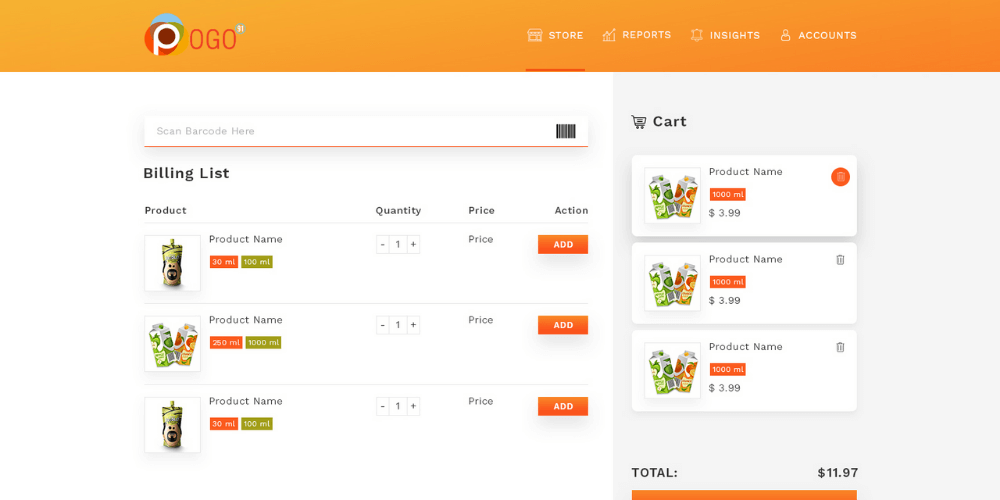
Both selling platforms have built-in analytics, from financial and sales reports to data and abandoned carts. The details differ from plan to plan.
Shopify and BigCommerce are both fairly simple and easy to use, and their interfaces are quite similar. You choose what to do from the menu on the left. Both are convenient to use with just a few clicks.
Both Shopify and BigCommerce have 24/7 customer support and a strong user community, so you do not need to worry about problems while using them.

Shopify and BigCommerce each have strengths and limitations. BigCommerce is the choice for websites selling their own products at a large scale that need customization and flexibility. On cost, Shopify has the advantage, with varied plans, no sales limit, low credit card fees, a free theme library and other perks. It is a good fit for anyone opening a small store.
After these comparisons of Shopify and BigCommerce, you should know which platform suits you. Good luck!
Whether you choose Shopify or BigCommerce, the common point is that you are renting land from the platform. If you want to fully own your own online store — with customer data in your own hands and no monthly rental fee — MONA can build either kind and will tell you straight which one fits your scale.

CEO & Founder · The MONA
The founder of The MONA built a service company of 60+ staff with 14,000+ projects delivered. Khánh Hùng shares his thinking on building self-running systems, automating a business, and the real lessons behind MONA's projects.
 1,5K



Professional website
design services
Own a website with a beautiful, 100% exclusive design and a lifetime warranty, with the ability
to expand features flexibly as your business grows, starting today!






 MONA will never sell your information or send you spam


 MONA will never sell your information or send you spam
