
 MONA OS 2.0
 Partner with MONA


 Tự động hoá doanh nghiệp
 Cẩm nang SEO
 Digital Marketing
 Kinh nghiệm thiết kế website
 Hạ Tầng Server
 Giáo dục


 VI
 EN



















Message us on
Zalo Official


 ProductsNew

 ProductsProducts
 Mới ra mắtKHA AI 2027App tự edit video, tự đăng mọi mạng xã hội, 2 phút mỗi ngày










 Website designLooks good and wins customers over.
SEO servicesBrings in customers searching for exactly what you sell.
 Tư vấn digital marketingKéo khách từ nhiều kênh, đo bằng số thật.
Corporate video productionVideos introducing your company, factory and team.
 NewAI video productionCompany story films made with AI.
 Custom software developmentCRM, ERP and HRM built for your business.
 Viết AI Agent theo yêu cầuĐặt riêng một trợ lý AI cho đúng việc của mình.
 Tư vấn chuyển đổi AIĐưa AI vào vận hành của cả công ty.
NewMONA LMSManagement for centers and schools.
MONA SkillHubInternal training for company staff.
 NHTQ systemEnd-to-end China–Vietnam shipping operations.
MONA JMSManagement for gold, diamond and pawn shops.
 MONA E-LearningA website with every feature you need to sell courses.
 How to sell online courses (course)More than 30 free lessons on selling courses on autopilot.
 MONA Cloudmonacloud.vnServers to get your apps and websites running.
 MONA Basemonabase.vnPostgres database, sign-in and file storage.
 MONA Mailmonamail.vnSend OTP, order and invoice emails from your software.
 MONA Paymonapay.vnAccept bank transfers via VietQR and notify your software when the money arrives.
 MONA eInvoiceComing soonIssue e-invoices that meet tax standards.
Gấu CườiTrả lời khách 24/7 trên web, Fanpage, Zalo và thu lead cho sale.
 Gấu TeleSalesGọi điện tư vấn, chăm khách như tổng đài viên thật.
Dê CườiTư vấn và chốt đơn cho shop ngay trong khung chat.
Gấu WebmasterNhắn nhóm Zalo là website được sửa xong.
 Gấu Pháp ChếSoạn hợp đồng, rà điều khoản trong vài phút.
 Gấu Báo GiáLên báo giá đúng mẫu và gửi khách ngay.
 AI chăm sóc khách hàngTheo dõi và giữ chân khách hàng cũ.
 Gấu Tuyển DụngLọc hồ sơ, hẹn lịch, phỏng vấn ứng viên.
 Mới ra mắt
KHA AI 2027
Xây kênh chuyên gia 2 phút mỗi ngày
Quay bằng điện thoại, AI tự edit video, tự đăng lên 16 nền tảng và tự trả lời bình luận, tin nhắn.
843.812lượt xem trên kênh CEO MONA sau 28 ngày
 Anh Khánh HùngCEO MONA đang dùng mỗi ngày
Xem app làm được gì
 AI
Gấu Cười MONA ĐANG TỰ XÀITrả lời khách 24/7 trên website, Zalo OA, Messenger và thu lead về cho sale.
Dê CườiChốt đơn bán lẻ và sàn: Shopee, TikTok Shop, web. Chăm cả khách sỉ, đại lý.
Gấu WebmasterCập nhật nội dung, tối ưu SEO website mỗi ngày.
Gấu TeleSalesGọi điện tư vấn, chăm khách như tổng đài viên thật.
Gấu Tuyển DụngLọc hồ sơ, hẹn lịch, phỏng vấn ứng viên tự động.
AI chăm sóc khách hàngGiữ khách cũ, cứu lead đã rớt cho phòng kinh doanh.
Gấu Pháp ChếSoạn hợp đồng, rà điều khoản trong vài phút.
Gấu Báo GiáLên báo giá đúng mẫu, gửi khách ngay khi có yêu cầu.
 Chuyển đổi AI toàn phầnGiải pháp tổng cho doanh nghiệp, 3 lớp triển khai.
 Viết AI Agent theo yêu cầuĐặt riêng một con AI gánh đúng nghiệp vụ của bạn.
 Custom softwareCRM, ERP and HRM with built-in AI automation.
 SEO & AEO thời đại AIĐược Google lẫn AI trích dẫn, không chỉ xếp hạng.
 Kiến thức AI cho doanh nghiệpBài phân tích, hướng dẫn ứng dụng AI vào vận hành.
 Free AI courses
 AI tools at work
App mới · KHA AI 2027
Xây kênh 2 phút mỗi ngày
AI tự edit video, tự đăng mọi mạng xã hội
Free consultation, 8am–10pm every day

12 September, 2024

Website structure is not simply how pages are organized on a site. It also determines user experience and SEO performance. A sound website structure map not only helps users find the information they need easily, but also helps search engines understand and index pages effectively. So do you know what website structure is? Let's explore MONA Media this concept in today's article, together with the methods for building an SEO-friendly website structure that you cannot afford to miss.
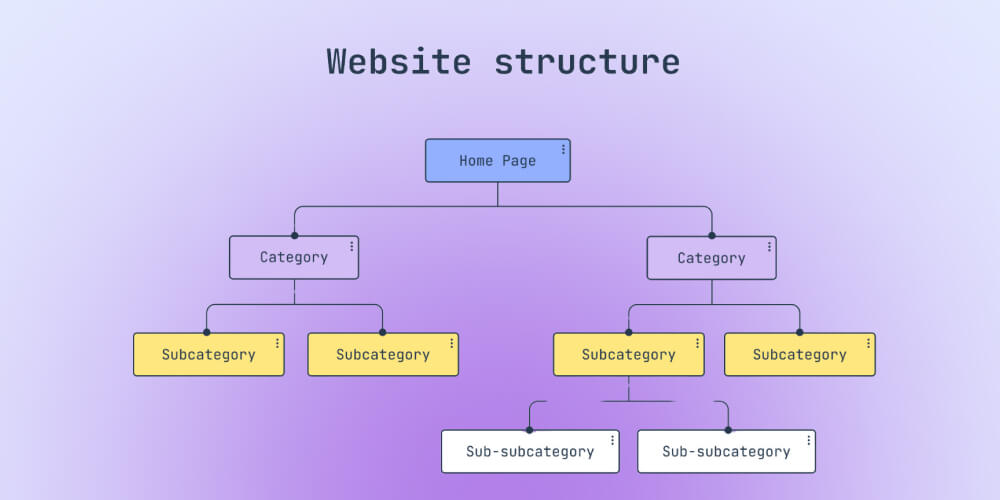
Website structure is the way content on a site is organized and arranged, in order to give users a smooth experience and to optimize for search engines. When a site's structure is well designed, users can easily navigate and find the information they need.
A proper website structure also makes it easier for search engines such as Google to crawl and evaluate the content on the site, which improves your site's SEO ranking. Building the website structure correctly not only improves user experience but is also an important element of your SEO Technicalstrategy, helping your website stand out in a competitive online environment.
When building a website, many businesses focus on the look or on generic information, but overlook real content and trustworthiness, which is what decides credibility in customers' eyes. The video below will help you better understand why it matters to show real value on your website.
It plays an important role in building and optimizing your business's user experience. So what does a website structure include? Any website has three main parts, each with its own function. MONA will analyze them in detail below:
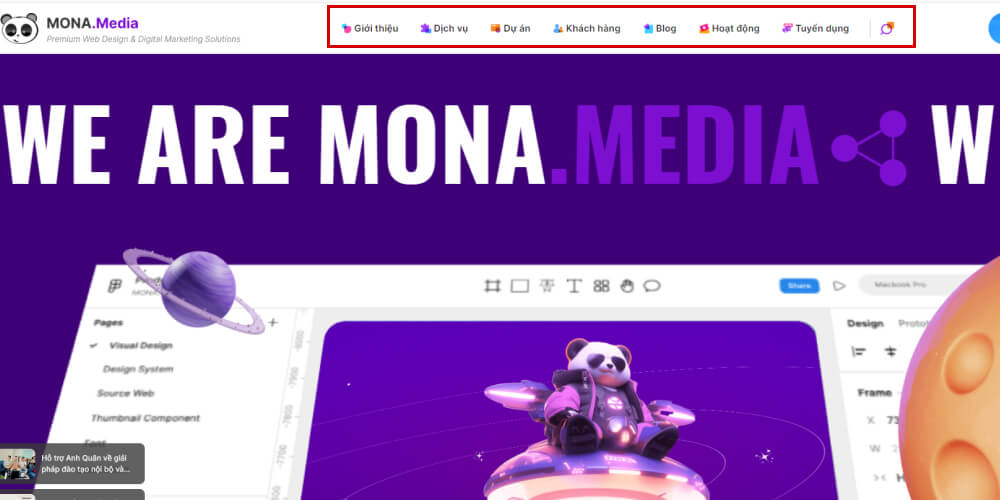
Header section is the top of the page structure. It appears on every page and plays an important role in guiding users and drawing them in. The main components of the Header include:
-> Read more: Standard banner sizes for websites
The place that holds the main content of the website. It usually includes: Breadcrumb navigation, Page title, Paging navigation (pagination navigation), an information bar, the main content of the page, and a bar with share buttons for the social networks linked to the website. This is where users spend the most time on a site, so it needs to be organized logically and attractively to keep them there.
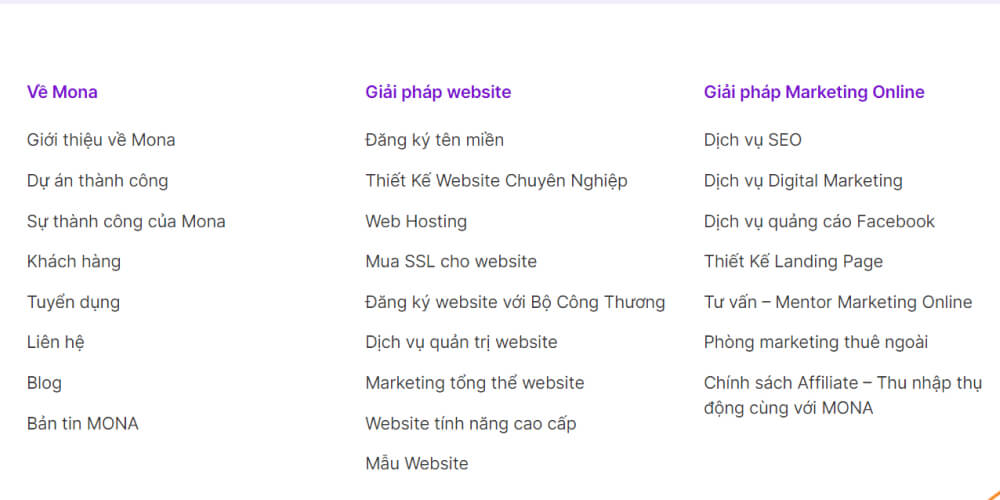
Page Footer is at the bottom of the page and usually holds contact details, copyright notices and other important links. The footer reinforces the site structure and provides necessary information with ease. A clear and sensible website structure not only improves user experience but also contributes to effective SEO.
-> You may also want to read: How to edit the Footer on WordPress
With technology booming, websites now come in more forms, genres and topics. Naturally, to keep pace, website structure optimization has also diversified into more types. Below are the common types of website structure that MONA has collected over its years of practice:
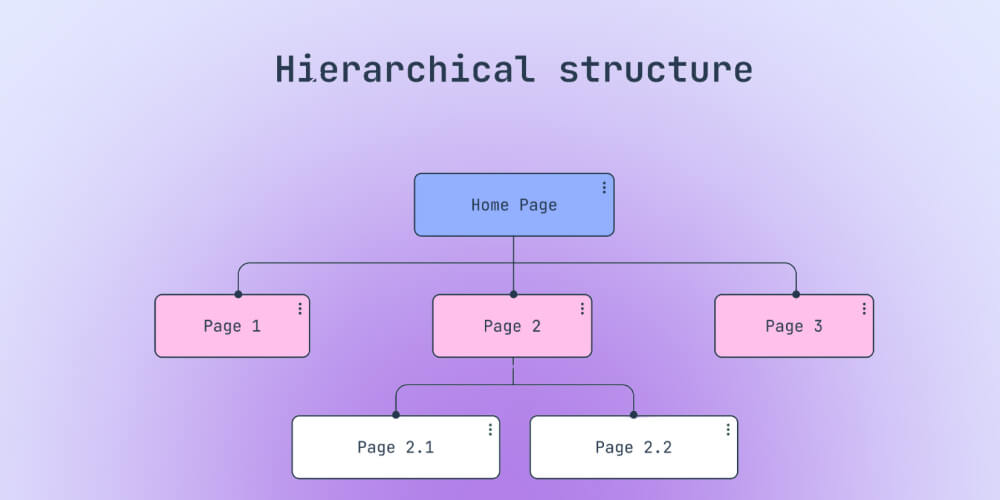
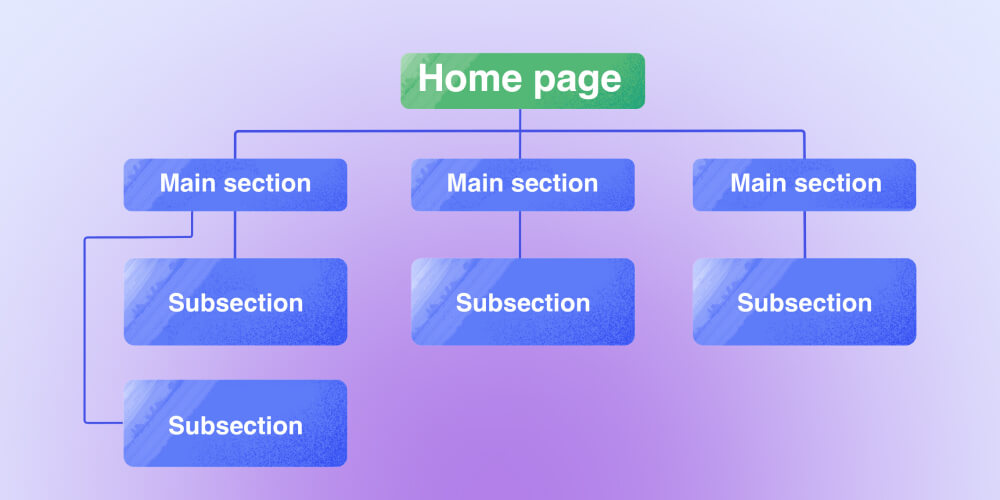
Hierarchical structure is the most commonly used model, especially for websites with rich and varied content. In this structure, pages are organized in levels from top to bottom, like a folder tree. Users can navigate easily through main categories and subcategories, which helps them find information quickly and conveniently.
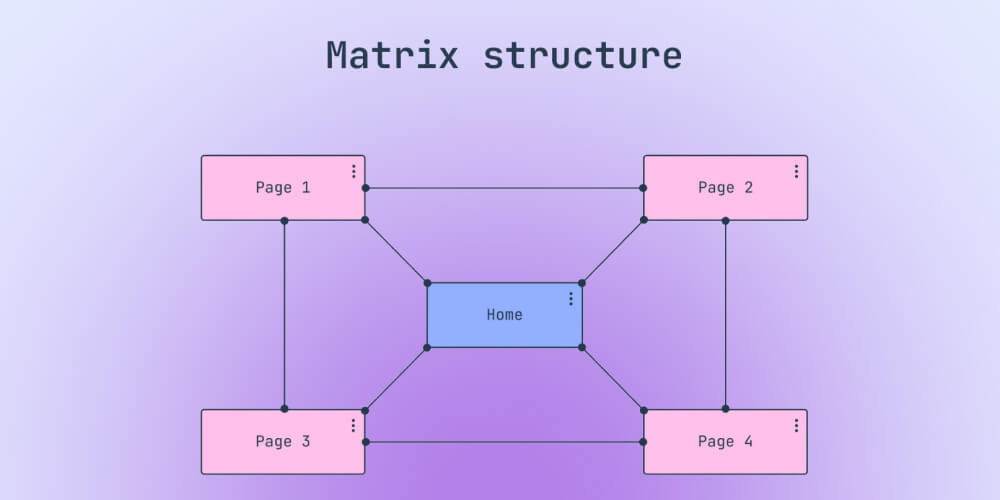
Matrix structure lets users freely choose their path through the website. Instead of following a fixed order, users can jump between different pages as they wish. Although it is no longer as common as before, the matrix structure still offers flexibility and suits sites whose content does not need to follow a set order.
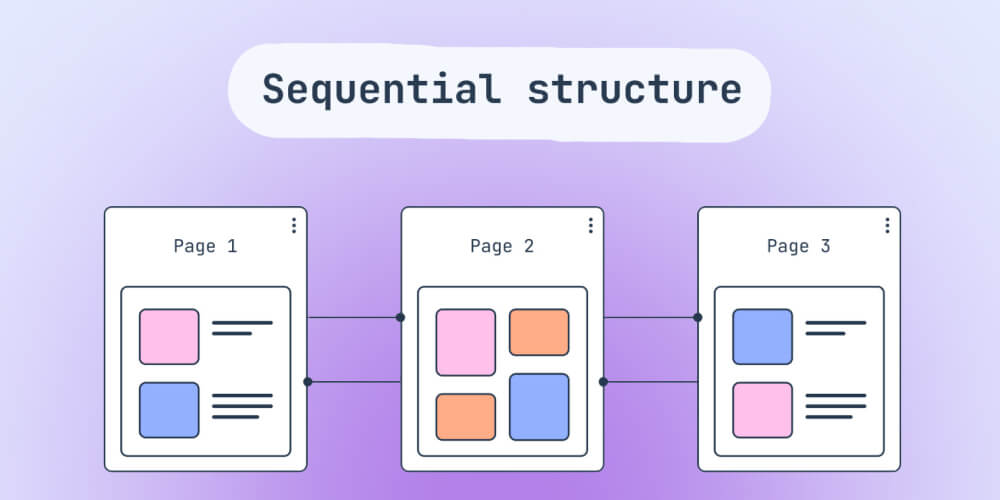
Sequential structure is used when users need to be guided through a set series of steps, such as account registration or completing an order. This model makes sure users complete the required steps without missing any important information. It is ideal for sites that provide services requiring accuracy and care.
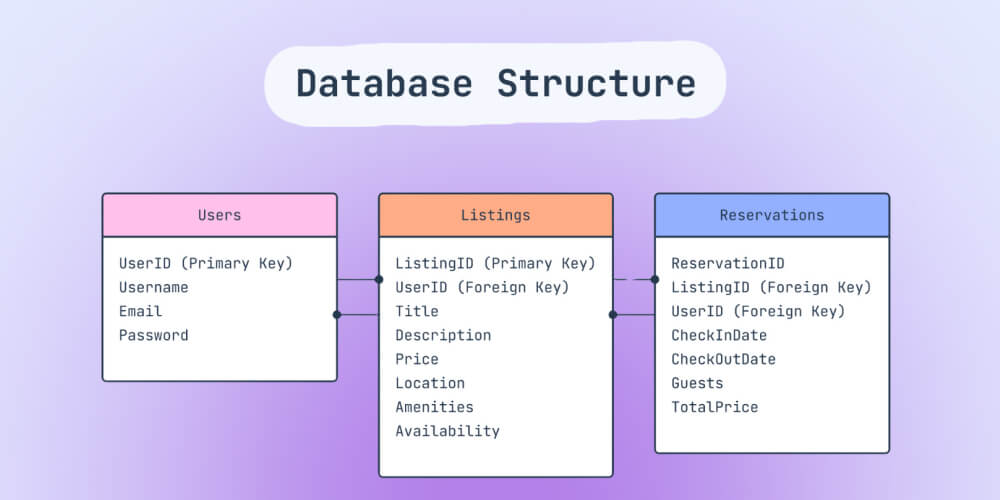
Database structure combines data tables with a powerful search system. This lets users access information from a large database easily and quickly. This type of structure is commonly used for e-commerce sites, digital libraries and education platforms with rich data stores.
A website's structure plays an extremely important role in SEO because it directly affects how users and search engines access and understand the content on the site. A well-organized website structure not only improves user experience but also makes SEO optimization easier.
In detail, website structure supports SEO effectively through:
|
The foundation of a website has a big effect on your SEO results later on. Investing resources in the website from the very first steps is important. So if you are looking for a reliable web design partnerthat can meet every requirement from basic to complex, MONA Media will be the right choice for you. 
The more than 8 years of experience and thousands of real projects, MONA has earned clients' trust through the quality of its products and services. MONA's staff are highly trained and ready to work with you from consulting and implementation through to after-sales support. Let MONA Media be a trusted partner that helps you upgrade and grow your website, and through it, grow your business. To learn more and see the Professional website projects we have completed, you can visit the MONA website or contact HOTLINE 1900 636 648 for the most detailed advice. |
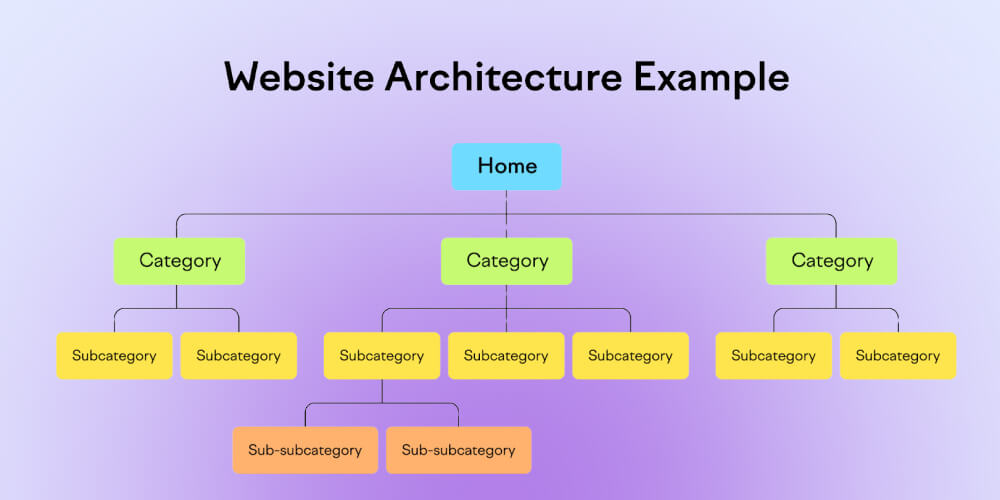
It plays an important role in optimizing user experience and improving search engine rankings. A good website structure must make sure all content is organized logically and is easy to reach and understand. Specifically:
In this case, a flat website architecture is often seen as a better choice than adeep website architecture. A flat structure reduces the number of clicks needed to reach content deep in the site. With this structure, users can reach any page on your website in no more than 4 clicks. This improves user experience and the speed at which search engines crawl your data.
Finally, make sure that every important page on your website has at least one internal link pointing to it. This not only helps users move between pages but also helps search engines crawl more effectively, and avoids “lonely pages” (orphan pages) that are hard to rank.
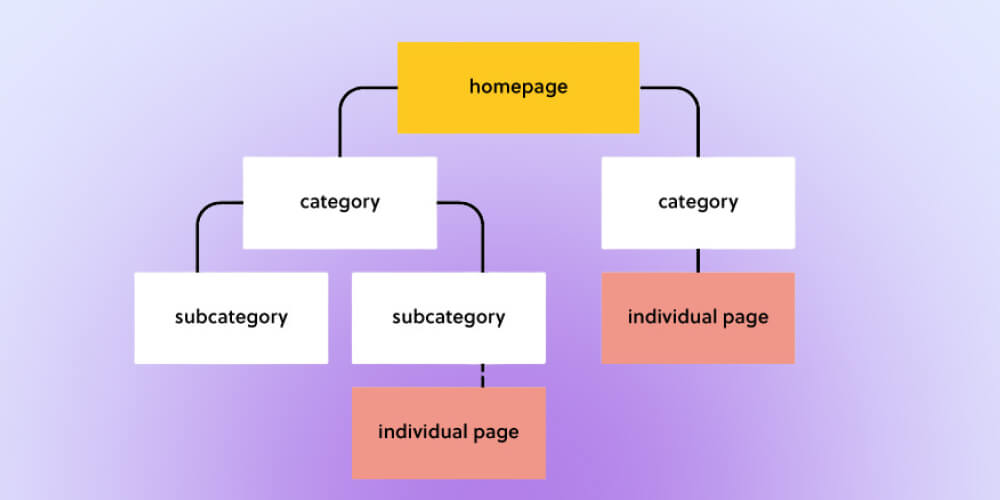
Designing a website structure is not just about arranging pages sensibly. It must also be optimized for both users and search engines. Checking your website structure strongly affects user experience, how easily information can be found, and even your site's ranking on search engines.
Below are the basic principles you need to know to create a good website structure:
Links from one page to another within the same website help search engines better understand your site structure, and also help users move between related pages. When building an internal linking strategy, focus on linking to important pages that are closely related to what users are searching for.
Example: You can use pillar pages as the hub and link related articles in topic clusters (topic cluster). Besides improving rankings on search engines, this way of structuring a site also improves the experience of people visiting your website.
A flat website structure lets users reach information quickly and efficiently. The basic principle is to make sure every page on the site can be reached in 3-4 clicks at most from the home page. A flat structure also makes it easy for search engines to crawl, so important pages get indexed quickly.
To check the depth of your website structure, you can use tools such as Ahrefs or SEMrush. If you find a page that needs more than 4 clicks to reach, consider simplifying the structure by optimizing internal links or rearranging the pages.
The navigation menu plays an important role in guiding users to information on your website. A good navigation menu helps users find the content they need without spending too much time.
There are many kinds of navigation menus, such as horizontal menus, vertical menus, dropdown menus and side menus. Depending on the design and purpose of your site, you can choose the type that fits. What matters is that the menu is intuitive and easy to use, so users can find the information they need quickly.
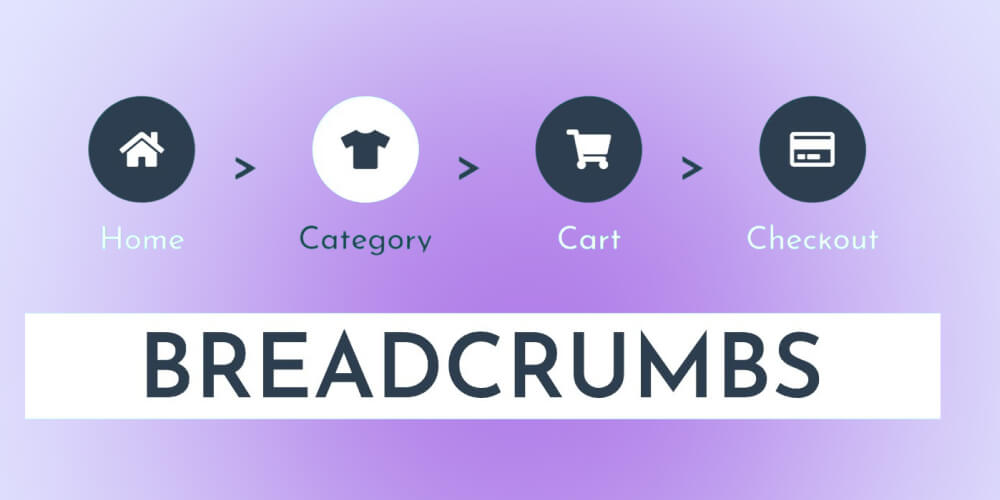
Breadcrumbs is a form of text navigation that helps users see where they are on your website. Breadcrumbs not only support navigation but also help search engines better understand how your website structure is optimized.
Breadcrumbs usually appear at the top or bottom of the page and show the path from the home page to the current page. This lets users easily go back to earlier pages without using the browser's “Back” button. Using breadcrumbs can also improve SEO by helping search engines better understand the relationships between pages.
A professional URL A good URL needs to be short, clear and contain a keyword related to the page's content. Google and other search engines use URLs to understand site structure and judge how relevant the content is. Make sure your URLs are short, easy to understand and contain the main keyword.
Before publishing a page, check and adjust the URL so it fits the page's content. Avoid changing the URLs of pages that are already live, but if you must, make sure to set up a proper redirect (redirect 301) so you do not lose traffic.
Sitemap is a file containing a list of all the pages on your website. A sitemap helps search engines understand a website's structure and crawl data more effectively.
There are two main types of sitemap: HTML Sitemap and XML Sitemap. An HTML Sitemap is usually designed for users and helps them find information easily. An XML Sitemap is created for search engines, helping them understand the site's structure and index pages quickly.
Submitting your XML Sitemap to Google through Google Search Console is an important step to make sure the important pages on your website are discovered and indexed by search engines.
|
If you already have a finished website but have not optimized it for SEO, consider combining it with SEO services so your business can grow stronger. MONA Media is worth considering if you have not yet found the right SEO expert. 
We are proud to be one of the leading SEO service providers in Vietnam, and we have successfully carried out more than 300 SEO projects for businesses in many different industries, from small shops to large corporations. When you choose SEO services at MONA, you are assured of benefits such as:
The more than 12,000 clients in Vietnam and abroad trust in us, MONA has proven its reputation and effectiveness in SEO. Let MONA work with you to win a top Google position and grow your online business. CONTACT US with MONA via HOTLINE 1900 636 648 to get detailed advice from our team and an accurate quote for your business. |
Building an website structure that follows SEO standards is essential for improving your website's performance and user experience. When you apply the right principles, users can easily find what they want on your website, and search engines find it easier to crawl and evaluate your site. We hope today's article from MONA has answered your questions about the concept of website structure, and that you now know how to invest time and effort in designing a sound website structure for long-term benefits.

CEO & Founder · The MONA
Founder of The MONA, who built a services company of 200+ staff with 14,000+ projects delivered. Khánh Hùng shares how he thinks about building systems that run themselves, automating a business, and the real lessons from delivering projects at MONA.
 1,7K



Professional website
design services
Own a website with a beautiful, 100% exclusive design and a lifetime warranty, with the ability
to expand features flexibly as your business grows, starting today!






 MONA will never sell your information or send you spam


 MONA will never sell your information or send you spam
