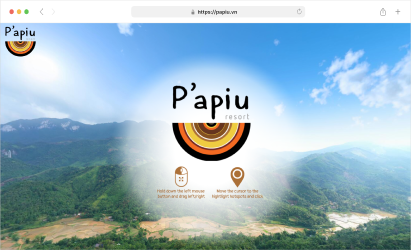
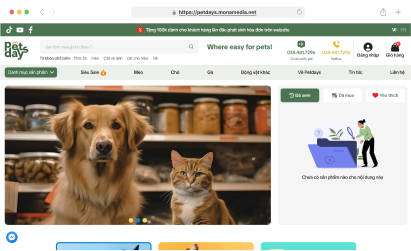
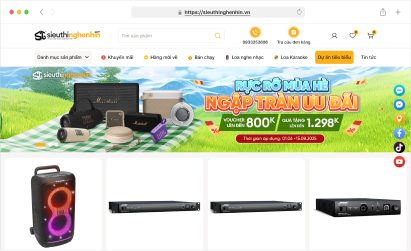
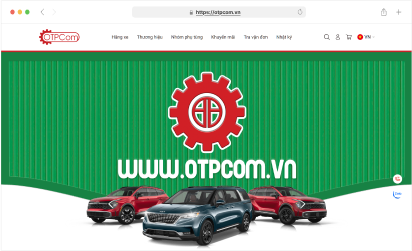
E-commerce website design is one of the most effective online marketing channels, and a top choice for businesses selling products and services. Standards for online stores keep rising, so e-commerce web design now needs an attractive interface, a good user experience and an SEO-ready structure to rank high on search engines. Read on with The MONA to learn the key standards of e-commerce web design that keep your business running smoothly online.
Why build an online store?
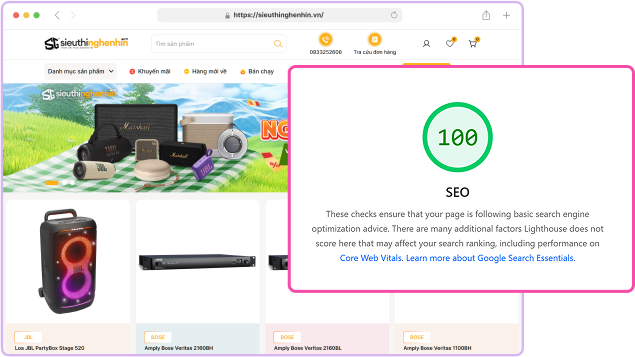
An online store website is no longer optional; it is a must if your business wants to grow sustainably in the digital age. With an SEO-ready e-commerce website, you get an attractive, easy-to-use interface and also better visibility on Google, which helps drive conversions and sell more effectively.
Reach shoppers when they're ready to buy

An SEO-ready e-commerce website helps you capture shoppers' needs quickly
According to e-commerce statistics from Emarketer, the number of online shoppers is expected to reach 2.77 billion by 2026, clear proof of how fast e-commerce is growing thanks to the convenience of shopping online. To keep up, businesses need a professional online store website to reach shoppers' needs quickly. If your store website shows up right when customers are searching, at the moment they are ready to buy, that is the best chance to turn visits into real orders and generate revenue fastest.
You may also be interested in: What is traffic? How to grow website traffic effectively and sustainably
Raise conversion rates and grow revenue substantially
An SEO-ready e-commerce website does more than look good; it also optimises the conversion rate. From layout, page load speed and the buying experience to the call to action (CTA), everything is optimized to lead customers to a buying decision faster. And because it runs 24/7, a business with a quality online store can grow revenue substantially, even while you sleep.
Lower costs, higher profit
An online store website is a cost-efficient investment that increases profit
Compared with investing in premises, staff or offline advertising, an online store website is a cost-saving solution that pays off over the long term. With a one-time investment, you can own an attractive, SEO-ready e-commerce website that attracts organic traffic (organic traffic) from Google, which effectively lowers your advertising budget.
Look after and engage customers 24/7

An e-commerce website can run and support customers 24/7
With a professional e-commerce website, you can care for and engage customers anytime, anywhere, even when you are not there. A chatbot system, consultation forms, offer popups or simply an easy-to-use interface keep visitors on the site longer and raise purchase rates. It doesn't depend on office hours or staff: your website is your hardest-working salesperson, working non-stop and bringing in steady revenue 24/7.
Improve the user experience

A professional e-commerce website improves the user experience
User experience is the core factor that determines a sales channel's conversion rate. An online store design that is mobile-friendly, loads fast and has a clear, easy-to-use layout lets users navigate and find information and products easily, so they decide to buy faster.
Measure and monitor business activity in real time
With an online store website, you can easily integrate measurement tools such as Google Analytics, Google Search Console,… to measure real traffic to the website accurately and track user behavior and their interest in your products/services. Once you have clear metrics, it is easy to plan improvements and make your marketing and sales strategies work better. This is something traditional offline sales channels find very hard or impossible to do well.
Establish your brand's credibility online

Investing in an attractive e-commerce website builds brand credibility
Your website is your brand's face on the internet; it shows your core values, style and professionalism. According to a survey on LinkedIn, 84% of consumers trust a business with a website more than one that only appears on social media. This shows that investing in professional website design for selling is how you establish brand value, build credibility and gain a lasting competitive edge in a crowded online market.
The most popular types of online store websites in 2026
There is no doubt that 2026 is a great time for businesses to invest in an online store website. But how do you choose the a website template that fits from so many options? From MONA's survey results, we have put together professional e-commerce website designs that convert well and can help you build a solid foundation for your online business.
E-commerce website templates
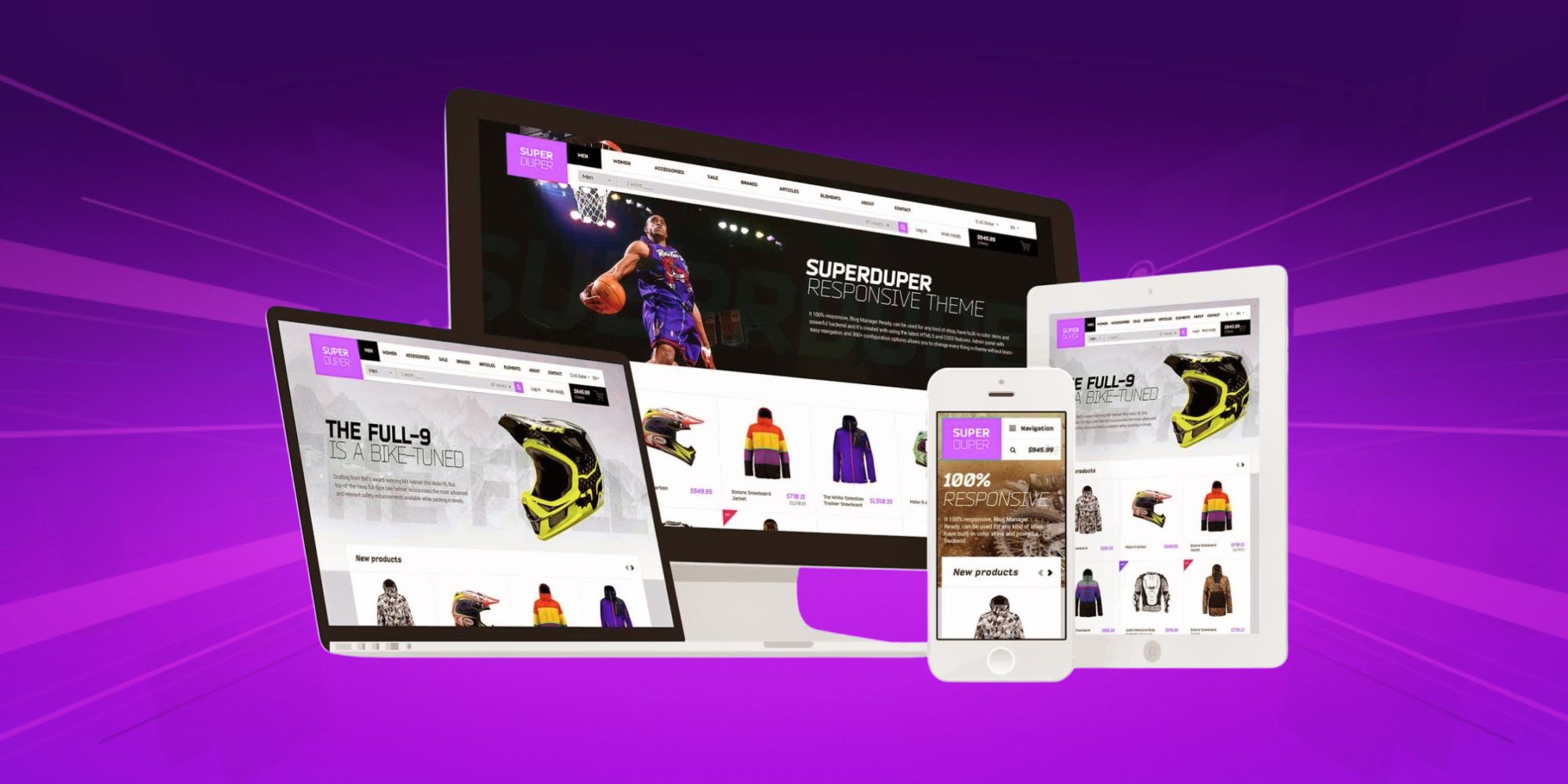
E-commerce marketplace-style store website template
E-commerce website design is the most popular type today. It acts as a platform bringing together many products, services and businesses,… managed by a single system, giving users a consistent and convenient experience. With a wide product range and huge traffic, an e-commerce marketplace-style website helps businesses reach a large customer base and maximize revenue without investing in the whole operation themselves. Successful dynamic websites and static websites using the e-commerce model include Shopee, Tiki, Lazada and Tiktok Shop.
Commercial Website design
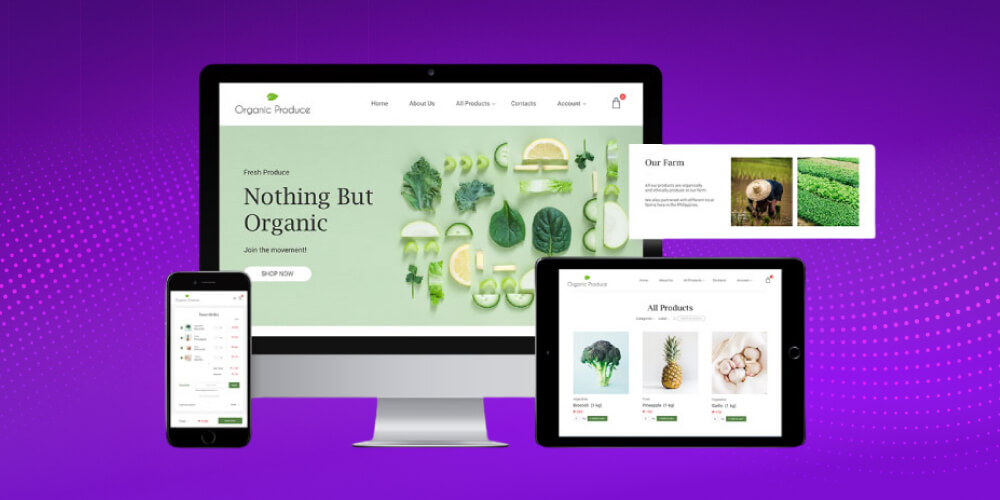
Attractive e-commerce website design in the Commercial Website style
A commercial website is a specialized type of e-commerce website, usually built as a “satellite website” that focuses entirely on displaying and selling specific products/services. Unlike a main website that usually focuses on the brand and general information, a commercial-style online store prioritises the shopping experience, detailed product descriptions and built-in ordering and payment tools. It is the best choice for small and medium businesses, retail stores, fashion shops, personal brands or businesses selling physical and digital products.
Sale Page (the Landing page of the main store website)
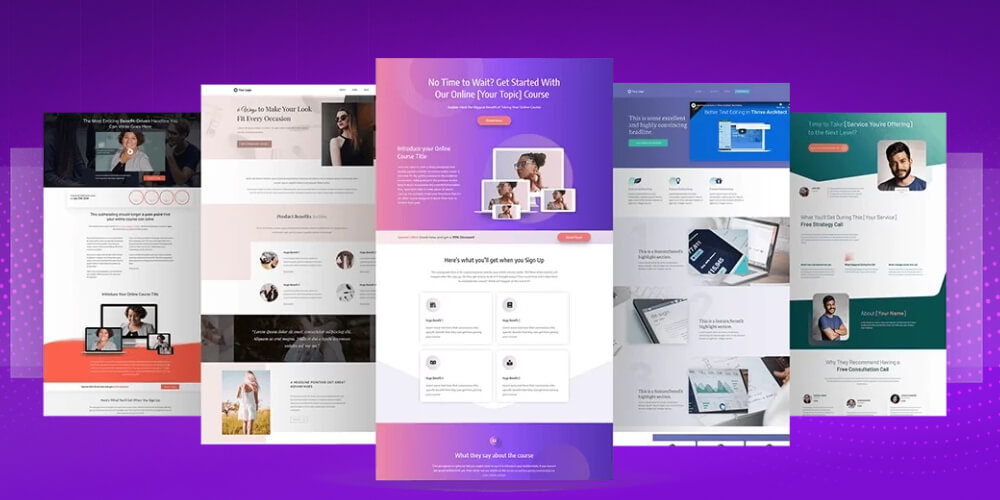
Online store website design based on a Sale Page template
Some brands focus on selling a single product, and to promote it they often use a Sale Page (or Product Page) – a specialized type of landing page . On Sale Pages, product information is presented in clear detail so users fully understand the key benefits and features. Sale Page content is also updated regularly to fit each moment, such as promotions, discount offers or big marketing campaigns when the brand launches a new product.
See also: Online course website design
What an e-commerce website needs
With deep experience designing professional e-commerce websites for hundreds of partners, MONA has put together 11 key elements every professional e-commerce website needs:
| STT |
Element |
Details |
| 1 |
Logo and brand identity |
Design the e-commerce website with a unique logo placed where it is easy to see (usually the top left corner). Use consistent brand colors throughout the website to look professional and help customers remember you longer. |
| 2 |
Sharp images and videos |
Use real, high-resolution images with zoom support. Images should be optimized for size (WebP) so they do not slow the site down while still looking true to life and making people want to buy. |
| 3 |
Detailed product information |
Clearly show the name, price (with sale price if any), technical specifications and product benefits. Content should be split into bullet points so customers can scan it and decide quickly. |
| 4 |
Cart and checkout features |
The buying process on an e-commerce website should be as simple as possible. Integrate a range of payment methods such as bank transfer, e-wallets (Momo, VNPay), credit cards and COD for maximum convenience. |
| 5 |
Smart search |
An e-commerce website needs a search bar with keyword suggestions and attribute filters (color, size, price range…). This helps customers find what they need in just a few clicks. |
| 6 |
Policies and commitments |
Clearly display these pages: Return policy, Privacy, Shipping terms and Quality commitment. These are key to building trust and removing customers' hesitation when buying online. |
| 7 |
Online support tools |
An e-commerce website should include quick-contact buttons such as an AI Chatbot, Zalo, Hotline or Facebook Messenger so customers can easily ask about products or get buying advice,… Replying to customers right away when they have questions raises order conversion rates considerably. |
| 8 |
Mobile display optimization |
When building an e-commerce website, make sure the interface works perfectly on mobile phones and tablets. Since most orders now come from smartphones, mobile optimization is a must for SEO. |
| 9 |
Customer reviews |
Let customers who bought a product leave comments and star ratings. Real feedback is the most objective proof and convinces later buyers to trust the brand. |
| 10 |
SSL security and Trustmark |
Install an SSL certificate (https) to encrypt transaction data. Display certifications from the Ministry of Industry and Trade or reputable security organizations to show the website is a safe place to shop. |
| 11 |
Page speed and SEO |
Optimize the source code so the website loads in under 2 seconds. A proper Heading structure (H1, H2, H3), image Alt tags and friendly URLs help the website rank at the top of Google search. |
Simple steps to build an e-commerce website for beginners
To build an effective e-commerce website, choosing the right platform is the deciding step. Each platform has its own pros and cons that affect cost, customization and ease of management.
So before building your e-commerce website, consider your business needs, budget and the level of control you want carefully. Below is an overview of popular e-commerce website platforms, their pros and cons, and the cost of building an e-commerce website on each platform for your reference.
| Platform |
Advantages |
Disadvantages |
Typical cost |
| Shopify |
Easy to use, full e-commerce features, supports multi-channel selling |
High cost, limited interface customization |
From 29 USD/month |
| WooCommerce – WordPress |
Free, open source, flexible, many extension plugins, full control of your data |
Requires technical knowledge or a hired developer; the huge choice of plugins can be confusing |
Free (hosting and plugin fees apply) |
| Magento |
Open source, highly customisable, many advanced functions |
Hard to use, requires in-depth technical knowledge |
Free basic version, high development cost |
| Sapo Web |
Multi-channel sales management, easy to use, integrates many local channels |
Less flexible than WordPress |
About 299,000 VND/month |
| Wix |
Drag-and-drop interface, suitable for non-technical users |
Limited features, little customization, not suitable for large scale |
Free version available, paid plans from 14 USD/month |
There are also platforms such as Drupal, Zoho Commerce, BigCommerce and Haravan that suit specific needs or larger scale.
Register a domain and web hosting for your e-commerce website
Design a user-friendly e-commerce interface
In the e-commerce website design process, a friendly interface is what decides the customer experience. A good e-commerce design helps customers find and choose products easily and also builds trust, which raises the chance of purchase and long-term loyalty.
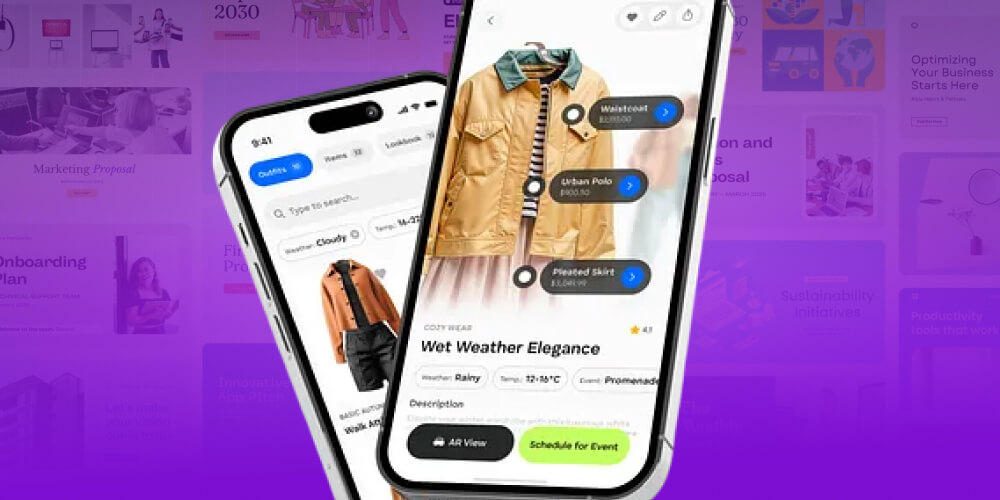
Key elements of a user-friendly e-commerce interface:
- First impression and trust: A business website interface needs to be truly professional, with quality product images and clear information so customers trust it from their first visit.
- Minimal, clear design: Avoid clutter and focus on highlighting the main products, so users can decide to buy easily.
- Smart search: Helps customers find products quickly and suggests relevant related items.
- Mobile optimization: The interface must display smoothly on every screen, especially phones, where most users shop online.
- Fast page load speed: Keep waiting time short so customers don't leave the website.
- Clear information hierarchy: Clear layout, prominent CTAs, easy to use.
- Consistent style: Fonts, colors and design stay consistent across the website for stronger recognition.
- Simple navigation: Important functions must be easy to reach, without wasting users' time.
- Personalized experience: Suggest suitable products and promotions based on needs and buying behavior.
Build the features needed to improve the user experience
In professional online store website design, features are what decide customer satisfaction. A nice interface without shopping support tools will struggle to keep users for long. So when choosing an e-commerce website design service, businesses should prioritize building the essential features that make shopping convenient, fast and friendly.
Essential features when building an e-commerce website:
- Convenient online cart: Lets users add, remove and edit products easily before checkout.
- A varied and secure payment system: Supports many methods such as bank cards, e-wallets and COD.
- Smart search: Integrates filters by price, color, brand and rating to find products faster.
- An interface that works on every device: Especially optimized for mobile so customers can use it easily.
- Transparent order management: Lets users track order status and supports fast returns and exchanges.
- Product ratings and reviews: Builds trust and gives customers peace of mind when shopping.
- Live chat or AI chatbot: Supports customers 24/7 and answers questions instantly.
- Page load speed optimization: Reduces visitors leaving because of waiting.
- Personalized content: Shows products and suggests promotions that fit each user's behavior.
- Clear shipping and return information: Gives customers peace of mind and trust in the website.
Test, optimize and publish your e-commerce website
Once the design is finished, you need to test and optimize the website before publishing so it works effectively. This is an important stage that makes sure the website runs stably, gives customers a good experience and supports online revenue growth.
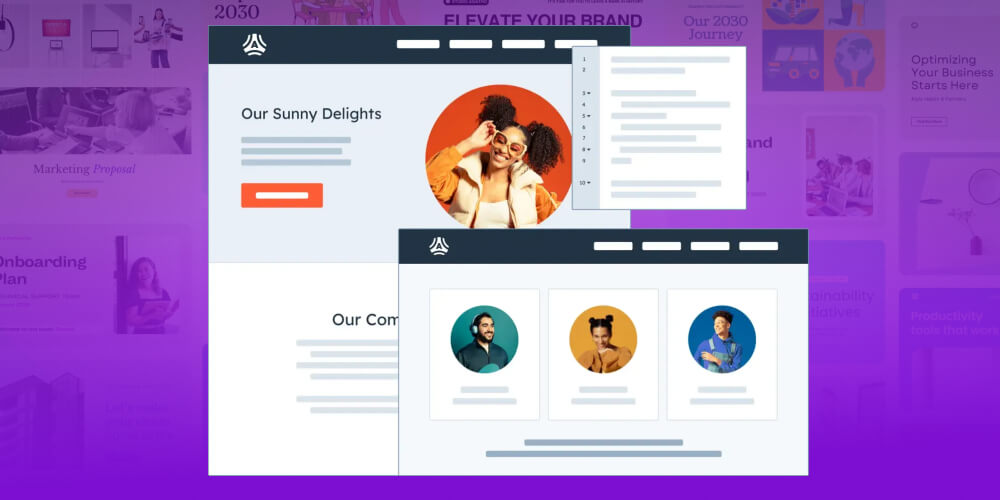
Test the website before publishing:
- Review all key pages such as the homepage, categories, product details, cart, checkout and login/registration.
- Make sure product content is accurate: descriptions, prices, sizes and high-quality images, displaying well on every device and browser.
- Place a test order to check order processing, payment, shipping and order management.
- Test the user experience: load speed, navigation, search, product filters and contact forms.
- Make sure interactions (image sliders, links) work smoothly without errors.
Optimize the e-commerce website:
- Speed up page loading by compressing images while keeping display quality.
- On-page SEO optimization, including friendly URLs, a unique meta description for each page and image alt text.
- Make sure the interface is responsive, easy to read and easy to use on both desktop and mobile.
- Improve the buying process with a simple, clear checkout interface that serves customers quickly.
- Personalize the shopping experience based on customer behavior.
Publish and run the website:
- Register the website and notify the authorities
- Monitor the website regularly to catch errors, update products and maintain the system.
- Analyze user and revenue data to adjust your marketing strategy and improve business results.
Note: The steps above are only the basics to help you picture how to create a simple e-commerce website. If you want a professional e-commerce website that really works, you should dig deeper and get advice from experts. Also, keep up with new design trends so you know how to build a modern e-commerce website that attracts customers. And if you are looking for an affordable yet quality e-commerce website design solution, MONA is always ready to work with you.
Important notes when building an e-commerce website
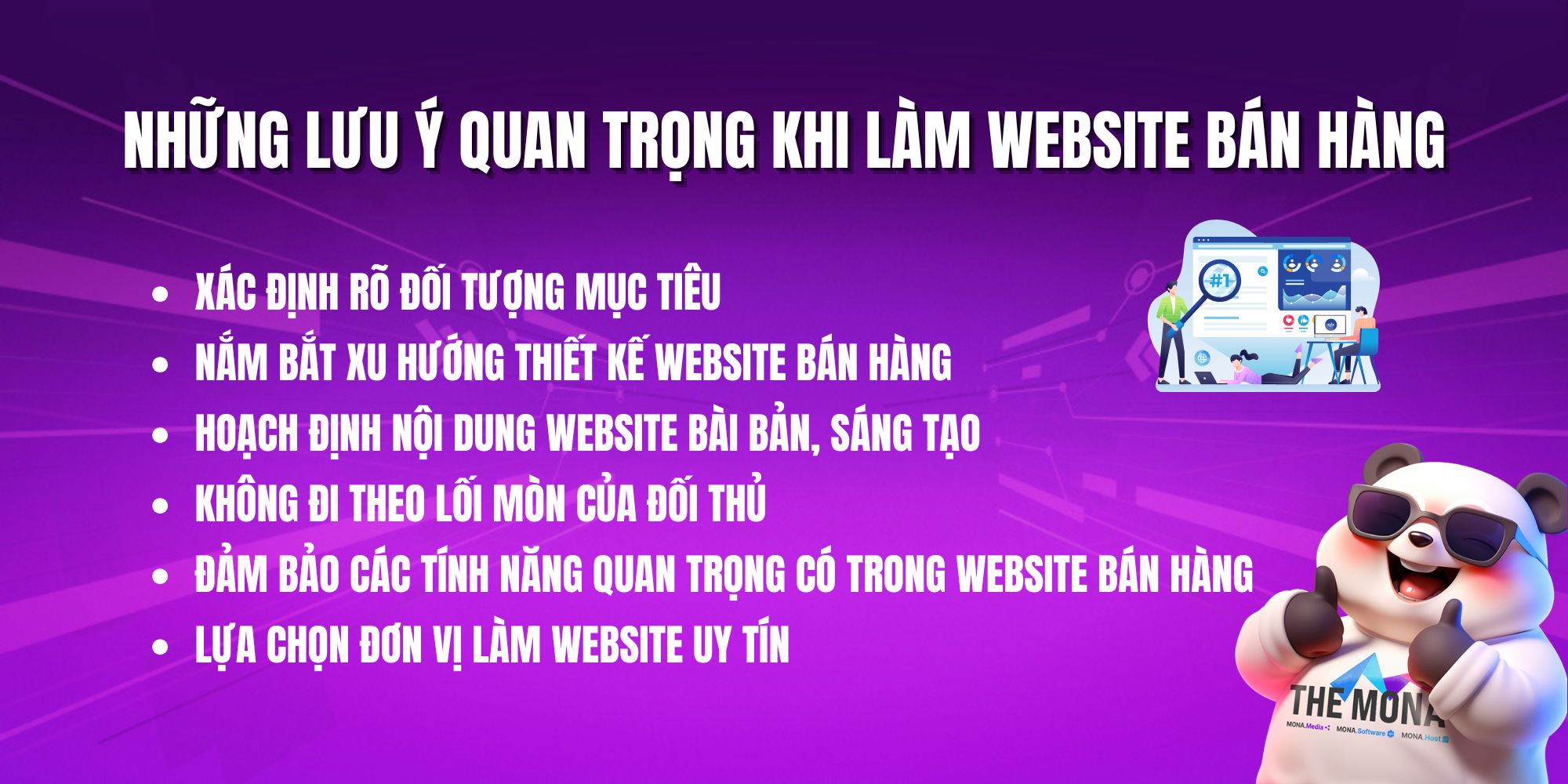
Some important notes on online store website design
A professional e-commerce website with an attractive interface can double or triple your revenue, but if you focus too much on brand personality, online sales may not perform as expected. To build a business website that really “makes money”, consider the key criteria below:
- Define your target audience clearly: Before you start building an e-commerce website, you need to answer the question who am I selling to? A website for Gen Z will be completely different from a platform for middle-aged business people. Understanding your customer profile (age, behavior, needs, shopping habits…) helps you choose the right design style, colors, content structure and user experience.
- Keep up with e-commerce website design trends: Keeping up with online WordPress website design trends keeps you from falling behind. To attract customers and encourage engagement, design a friendly website interface, invest in image quality or integrate an AI chatbot, and optimize mobile friendly,…
- Plan website content methodically and creatively: Today's consumers are not easily persuaded by flowery advertising. What they really need when they click on your website is clear, accurate, honest and in-depth information. So investing in content methodically (whether product descriptions, blog posts or your company introduction) is the best way to build trust and keep customers.
- Don't follow your competitors' beaten path: Don't just copy what your competitors are doing, because that hurts your first impression. Be creative and find your own signature in your online store design (for example brand colors, storytelling, a distinctive user experience…).
- Make sure your e-commerce website has the key features: Whatever you sell, your online store website must have all the core features such as a cart, online payment, product ratings and comments, live chat or chatbot,… along with a security certificate SSL to ensure credibility and safe transactions for buyers.
- Choose a reputable website company: To optimize conversions, choose a reputable e-commerce web design service that is experienced and understands both technology and consumer behavior.
Benefits of SEO-ready e-commerce website design at MONA Media
With 10+ years of experience in custom website design, MONA has worked with 12,000+ clients, successfully delivering SEO-ready e-commerce website projects across many industries. We put real thought and research time into every project to produce the most complete solution, designing business websites that help companies turn each visit into a real order. Some highlights of MONA's e-commerce website design service include:
- SEO-ready web design and faster page loading: MONA applies SEO-ready e-commerce design standards from the moment the website structure is built, so Google can easily recognize the site and rank it highly. In addition, elements such as URL optimization, meta tags, headings, schema and page load speed are all handled carefully, helping you reach customers faster.
- An interface that works well on every device: MONA's e-commerce website service builds fully responsive e-commerce websites that display smoothly on laptops, phones and tablets as well as popular browsers such as Chrome, Firefox, Safari, Edge…
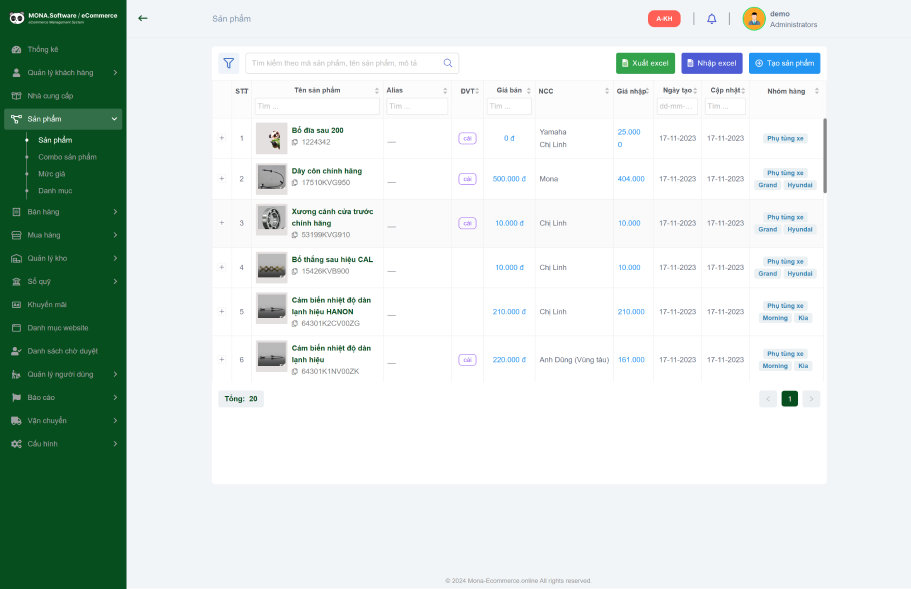
- An easy-to-use admin interface: The admin interface MONA designs is minimal and intuitive, saving business owners time and effort in day-to-day operation.
- Reasonable e-commerce website design pricing: MONA Media offers a range of drag-and-drop website design, static and dynamic plans to fit businesses of different sizes and budgets.
- A website that runs fast: From the cart, checkout and order processing to automatic emails, all the features a professional e-commerce website needs are built in. You can start selling right after handover without needing any third party.
- SSL security: Every website comes with an SSL certificate, encrypting data to protect customer information and increase trust during transactions.
- 24/7 support: When you use MONA's online store website design service, our technical team is always ready to support you 24/7 with any issue, from performance optimization to feature upgrades on request.

MONA Media – professional, SEO-ready e-commerce website design at a good price
If your store doesn't look professional, potential customers leave. Call our hotline 1900 636 648 and we'll help you set up an online store that actually sells, starting today.
How is SEO-ready e-commerce web design different from building a regular website?
Building a regular website means putting the interface together and taking it live for customers to see. SEO-ready e-commerce web design also has to account for how Google reads the site: how product categories are split, the URL of each page, title tags, product data and load speed. The difference is that these things have to be built in from the moment the framework is set up. If you optimize only after the site is running, you usually have to tear down and redo the categories and URLs, and changing URLs once pages have rankings means losing those rankings.
Take a common example: a shop with 400 products split into three category levels. If this isn't defined clearly during the build, each product generates several different URLs depending on which path the customer clicked from. Google sees three or four pages with identical content and doesn't know which one to rank, so none of them ranks. The site still works normally and customers can still order, so shop owners usually don't notice until they compare their Google traffic with competitors in the same industry.
What does MONA's e-commerce web design service include?
An e-commerce website package at MONA covers everything from sitting down to look at what you sell, who you sell to and which steps an order goes through, to handing over a working site and training your staff to use it. The framework includes category pages and product pages, a cart, a payment gateway, shipping fees calculated by region, discount codes, and an order management area so you can track which orders have shipped and which haven't. The SEO part covers category structure, URLs, title tags and load speed, all done in the handover version.
Two questions to ask any company before signing, not just MONA: does the handover include the source code, and how will adding features later be charged. Those two questions filter out quite a few careless companies, because a company that won't hand over the source code is one that will keep you locked in for the long run.
Cheap e-commerce web design: where you save and where you pay later
Cheap plans are usually cheap because they reuse a ready-made theme and cut customization for your business processes. For a newly opened shop with few products and a simple way of selling, that is enough, and there's no need to pay extra for things you don't need yet. The cost shows up later, when the shop grows and starts having its own rules: shipping fees by region, merging orders for customers who buy several times a day, syncing stock with the software you already use. Ready-made themes get stuck on exactly these points, and the usual fix is to stack more plugins, and the more you stack, the heavier the site gets and the easier it breaks with every update.
The way to avoid extra costs is not to choose the most expensive plan, but to state clearly from the start how many products you will sell, how you will deliver and whether you plan to connect to any software. Cover those three things and the quote will be right the first time.
Professional e-commerce web design for growing shops
When order volume grows, what matters is no longer a pretty interface but whether the site holds up when traffic is high and whether the ordering flow is tight. Every step you remove from checkout keeps more customers at that step, especially those buying on phones, who make up most buyers in Vietnam. This is also the time to move order management away from manual records, because at a few hundred orders a month, end-of-day reconciliation in a notebook starts to go wrong.
MONA has done more than 14,000 projects over more than 10 years, and most clients stay on for later phases, so every handover already allows for upgrades: adding features without rebuilding from scratch. If you want to see the case closest to yours, call 1900 636 648, and our consulting team will show you a project from your industry before talking about price.
MONA online store website design pricing
When deciding to invest in an e-commerce website, every business owner wants to look carefully into all the related information, from the e-commerce website design process to the cost of building one. Understanding this, MONA Media provides a detailed e-commerce website design price list below so you have the information you need before making a decision.
| MONA Theme Website Plan |
Premium Website Design Plan |
| CONTACT US |
CONTACT US |
|
|
- Lifetime maintenance support for clients
- Exclusive custom-designed website interface
- SEO-ready, responsive website design
- Custom-coded effects on client request
- Custom-coded feature set on client request
- Integration of SEO tools and business management tools
- Web services, Web APIs, websites connected to third parties
|
For more detailed advice and a website design quote tailored to your needs, contact MONA and our team will help.
Explore striking, SEO-ready e-commerce website templates at MONA
In the digital age, an e-commerce website needs to look good and also be SEO-ready, fast and user-friendly to attract customers and win over Google's algorithm.
At MONA, our team keeps sharpening its skills and creativity to build professional e-commerce websites that pair striking design with a solid technical foundation, so your business stands out, ranks at the top of search and grows sales steadily. Take a look at some of the e-commerce websites MONA has designed.
A striking online course sales website template
Nga Đặng Academy is one of the e-commerce web design projects the MONA team built to promote a professional, modern and user-friendly livestream course. Understanding learners' need for flexible online study, MONA designed a minimal but polished interface that makes it easy and intuitive to access lessons, track progress and download materials. The website runs smoothly on every device so learners can study anytime, anywhere without interruption. Besides providing a smooth learning experience, the project also raised Nga Đặng Academy's image, building trust and a professional impression from a learner's very first visit.
Read the case study to see why this website makes online learning smoother and more effective for learners.

A modern e-commerce website template that attracts customers
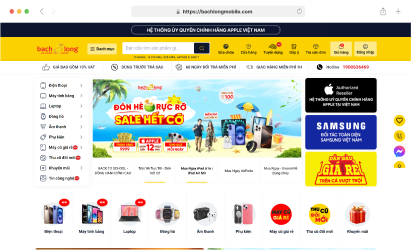
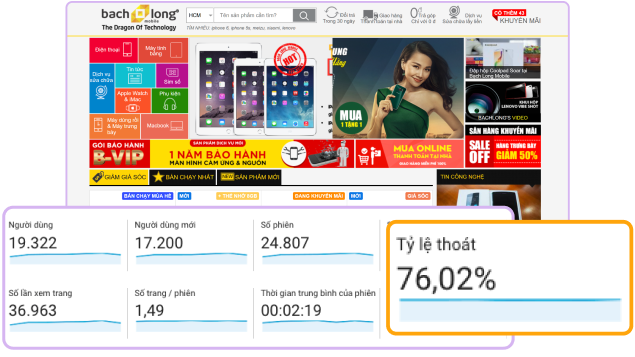
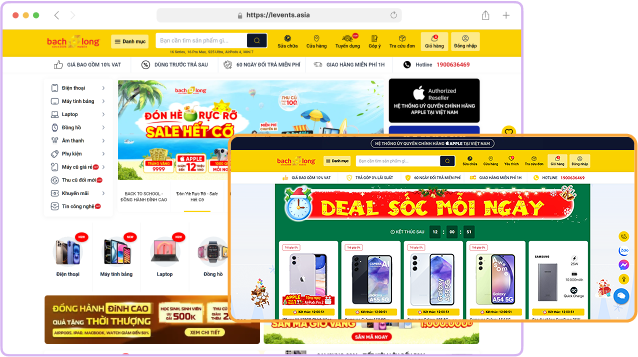
Bạch Long Mobile is one of the e-commerce website templates built with modern technology, easy to use and offering a smooth shopping experience. Built on Magento, the website has a streamlined design with a clear layout, smart search, well-organized product categories, flexible flash sales and a convenient order lookup tool.
Every detail is designed to help customers choose, buy and receive products quickly and feel the professionalism from their first visit. It is an ideal e-commerce website template for tech brands that want to make an impression and keep customers effectively.
Read the Bạch Long Mobile case study to see how the MONA team built a modern tech e-commerce website with a well-optimized user experience.

An SEO-ready e-commerce website template with convenient features
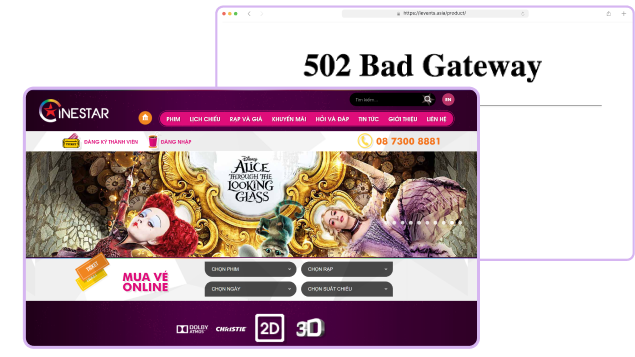
Cinestar – a large cinema chain with millions of visitors a year – needed a fast, stable, easy-to-use website. Facing problems such as an outdated interface, a cumbersome ticket buying process, hard-to-export data and frequent overloads, MONA redesigned the entire platform to be modern, intuitive and SEO-ready.
The new website optimises the user experience so customers buy tickets faster, with fewer steps and fewer errors. Add-on services such as bowling, cafe, billiards and C’Game are also clearly laid out and easy to find. With fast loading, a smooth interface and an SEO-ready structure, Cinestar has improved its customer experience and also increased revenue and brand recognition effectively.
See the Cinestar website to find out how MONA improved everything from the interface and features to the user journey, at a very good e-commerce website design price.

A professional e-commerce website design template that boosts sales
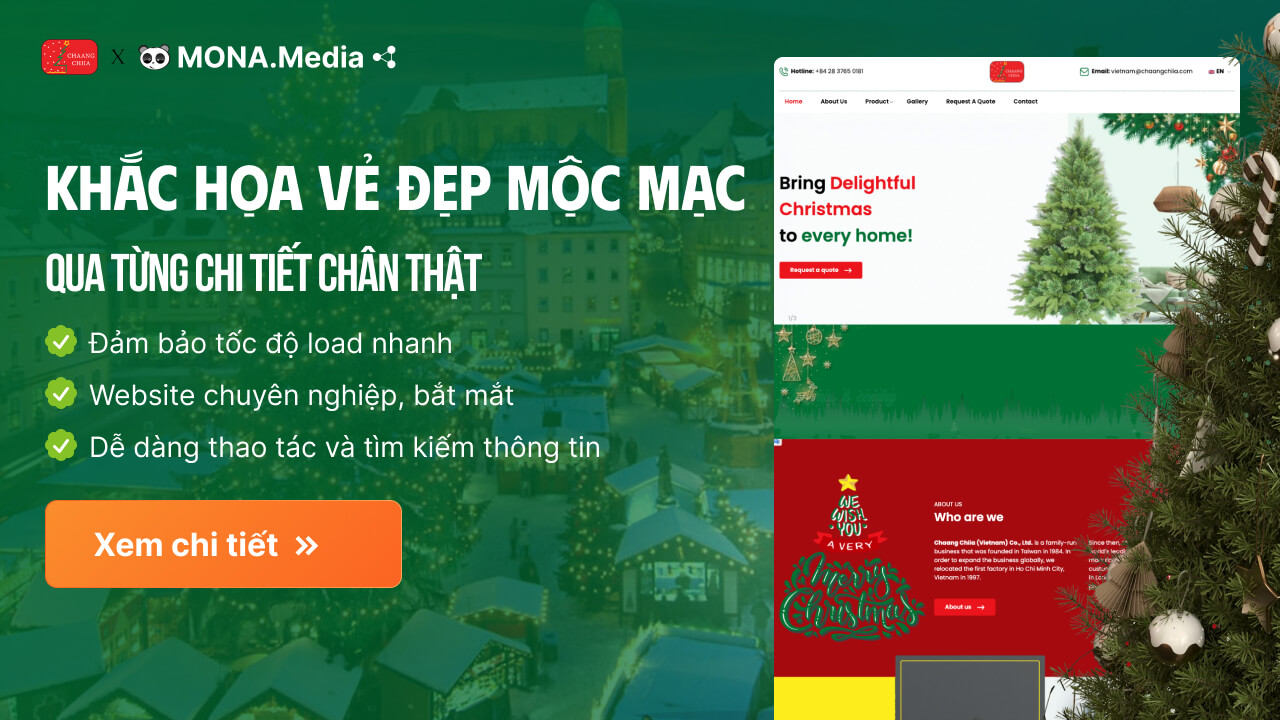
With more than 40 years of experience producing Christmas trees and decorative accessories for export on a B2B model, Chaangchiia wanted to expand into global markets and show its large-scale production capability. MONA worked with them to build a professional, modern, SEO-ready e-commerce website optimized for both desktop and mobile, at a very good online store design price compared with the market.
A responsive interface, clear layout, well-organized categories and fast loading help international partners learn about the products, get in touch quickly and trust the company's reputation. The website has raised the brand's image and also become a powerful tool for attracting new customers and driving sustainable sales.
See the Chaangchiia website to find out how MONA improved the user experience and supported business growth with an affordable, quality online store design.
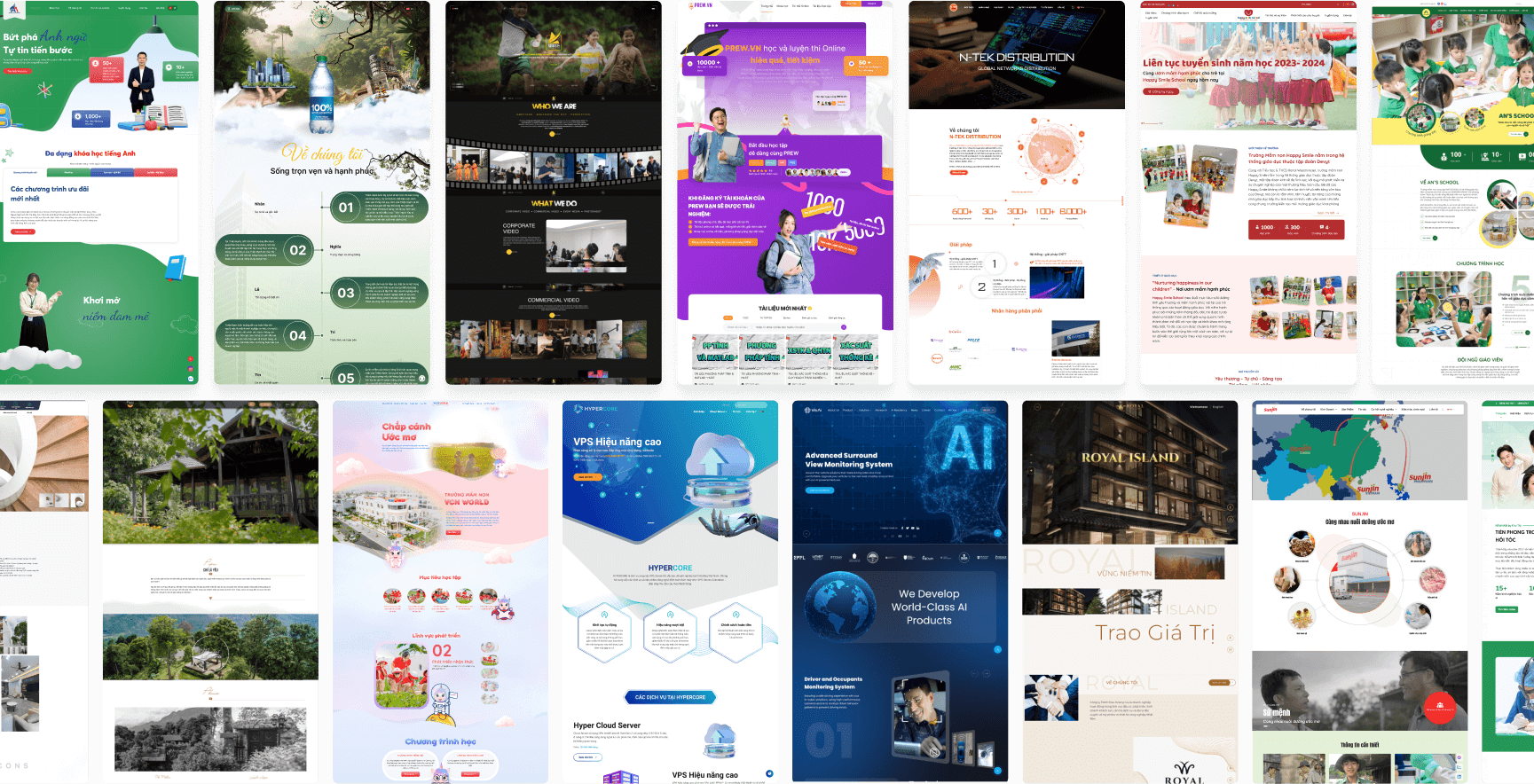
Besides the e-commerce websites above, MONA has many more professional e-commerce designs for a wide range of industries and business models. Browse more modern, SEO-ready e-commerce website templates at reasonable prices below to find the style that fits your business best.

If you want an attractive, SEO-ready e-commerce website that runs smoothly, contact MONA today. The MONA team is always ready to advise you and give a detailed e-commerce website design quote to help you start building an effective online business platform.
Frequently asked questions about building an online store website
Why integrate live chat/a chatbot when building an e-commerce website?
Adding live chat or a chatbot to an e-commerce website brings your business closer to potential customers. When visitors have a question or need advice, the chat system responds right away, which keeps them on the site longer and helps them decide to buy sooner.
If my website runs into a problem, will MONA help fix it?
Definitely. MONA Media's team of SEO-ready e-commerce website designers is always ready to help clients solve the problem as quickly as possible in the rare event that something goes wrong.
Can I try out an online store design platform at MONA Media?
MONA Media has 3,000+ e-commerce website templates. You can try our professional online store designs for free.
Can I upgrade my e-commerce website later?
Absolutely. If you built your e-commerce website with MONA Media, you can upgrade it at any time and only pay for the additional work, with no need to sign up for a new website design service.
In short, e-commerce website design is a sound, long-term business strategy for companies that want to expand online. With hands-on experience and a highly skilled team, MONA Media is committed to delivering a well-optimized website design that helps you increase orders, manage your business more efficiently and build a strong brand. Contact the SEO companyand web design team at MONA to start your digital transformation and grow your online sales.
If you want to understand the groundwork behind this in more depth, the article what a mockup is and why the interface should be approved first explains it in detail and describes how we do it for our clients.



 MONA OS 2.0
 Partner with MONA










































 Free AI courses
 AI tools at work

 Tự động hoá doanh nghiệp
 Cẩm nang SEO
 Digital Marketing
 Kinh nghiệm thiết kế website
 Hạ Tầng Server
 Giáo dục


 VI
 EN