
 MONA OS 2.0


 Tự động hoá doanh nghiệp
 Cẩm nang SEO
 Digital Marketing
 Kinh nghiệm thiết kế website
 Hạ Tầng Server
 Giáo dục



 VI
 EN







Message us on
Zalo Official


 ProductsNew

 ProductsProducts
 Mới ra mắtKHA AI 2027App tự edit video, tự đăng mọi mạng xã hội, 2 phút mỗi ngày










 Website designLooks good and wins customers over.
SEO servicesBrings in customers searching for exactly what you sell.
 Tư vấn digital marketingKéo khách từ nhiều kênh, đo bằng số thật.
Corporate video productionVideos introducing your company, factory and team.
 NewAI video productionCompany story films made with AI.
 Custom software developmentCRM, ERP and HRM built for your business.
 Viết AI Agent theo yêu cầuĐặt riêng một trợ lý AI cho đúng việc của mình.
 Tư vấn chuyển đổi AIĐưa AI vào vận hành của cả công ty.
NewMONA LMSManagement for centers and schools.
MONA SkillHubInternal training for company staff.
 NHTQ systemEnd-to-end China–Vietnam shipping operations.
MONA JMSManagement for gold, diamond and pawn shops.
 MONA E-LearningA website with every feature you need to sell courses.
 How to sell online courses (course)More than 30 free lessons on selling courses on autopilot.
 MONA Cloudmonacloud.vnServers to get your apps and websites running.
 MONA Basemonabase.vnPostgres database, sign-in and file storage.
 MONA Mailmonamail.vnSend OTP, order and invoice emails from your software.
 MONA Paymonapay.vnAccept bank transfers via VietQR and notify your software when the money arrives.
 MONA eInvoiceComing soonIssue e-invoices that meet tax standards.
Gấu CườiTrả lời khách 24/7 trên web, Fanpage, Zalo và thu lead cho sale.
 Gấu TeleSalesGọi điện tư vấn, chăm khách như tổng đài viên thật.
Dê CườiTư vấn và chốt đơn cho shop ngay trong khung chat.
Gấu WebmasterNhắn nhóm Zalo là website được sửa xong.
 Gấu Pháp ChếSoạn hợp đồng, rà điều khoản trong vài phút.
 Gấu Báo GiáLên báo giá đúng mẫu và gửi khách ngay.
 AI chăm sóc khách hàngTheo dõi và giữ chân khách hàng cũ.
 Gấu Tuyển DụngLọc hồ sơ, hẹn lịch, phỏng vấn ứng viên.
 Mới ra mắt
KHA AI 2027
Xây kênh chuyên gia 2 phút mỗi ngày
Quay bằng điện thoại, AI tự edit video, tự đăng lên 16 nền tảng và tự trả lời bình luận, tin nhắn.
352.433lượt xem trên kênh CEO MONA sau 20 ngày
 Anh Khánh HùngCEO MONA đang dùng mỗi ngày
Xem app làm được gì
 AI
Gấu Cười MONA ĐANG TỰ XÀITrả lời khách 24/7 trên website, Zalo OA, Messenger và thu lead về cho sale.
Dê CườiChốt đơn bán lẻ và sàn: Shopee, TikTok Shop, web. Chăm cả khách sỉ, đại lý.
Gấu WebmasterCập nhật nội dung, tối ưu SEO website mỗi ngày.
Gấu TeleSalesGọi điện tư vấn, chăm khách như tổng đài viên thật.
Gấu Tuyển DụngLọc hồ sơ, hẹn lịch, phỏng vấn ứng viên tự động.
AI chăm sóc khách hàngGiữ khách cũ, cứu lead đã rớt cho phòng kinh doanh.
Gấu Pháp ChếSoạn hợp đồng, rà điều khoản trong vài phút.
Gấu Báo GiáLên báo giá đúng mẫu, gửi khách ngay khi có yêu cầu.
 Chuyển đổi AI toàn phầnGiải pháp tổng cho doanh nghiệp, 3 lớp triển khai.
 Viết AI Agent theo yêu cầuĐặt riêng một con AI gánh đúng nghiệp vụ của bạn.
 Custom softwareCRM, ERP and HRM with built-in AI automation.
 SEO & AEO thời đại AIĐược Google lẫn AI trích dẫn, không chỉ xếp hạng.
 Kiến thức AI cho doanh nghiệpBài phân tích, hướng dẫn ứng dụng AI vào vận hành.
 Free AI courses
 AI tools at work
App mới · KHA AI 2027
Xây kênh 2 phút mỗi ngày
AI tự edit video, tự đăng mọi mạng xã hội
Free consultation, 8am–10pm every day

18 March, 2023
Many people think that adding a lot of External Link to a website weakens the page's SEO strength and ranking. That isn't necessarily true. If you use outbound links strategically and well, your site not only improves SEO, it also builds a strong, quality private blog network (PBN). So what is an external link and what is the effective way to use it? Find out in the article that MONA Media brings you today.
An external link is also called an outbound link or link out. External links create links from your website to another website.

External link code: <a href=”http://www.external-domain.com/”>Link Anchor Text</a>
These external links have a big effect on page rankings, and on site trust. SEOers doing on-page SEO need to study many external link techniques to optimize the site as well as possible.
Placing quality outbound links serves three main purposes:
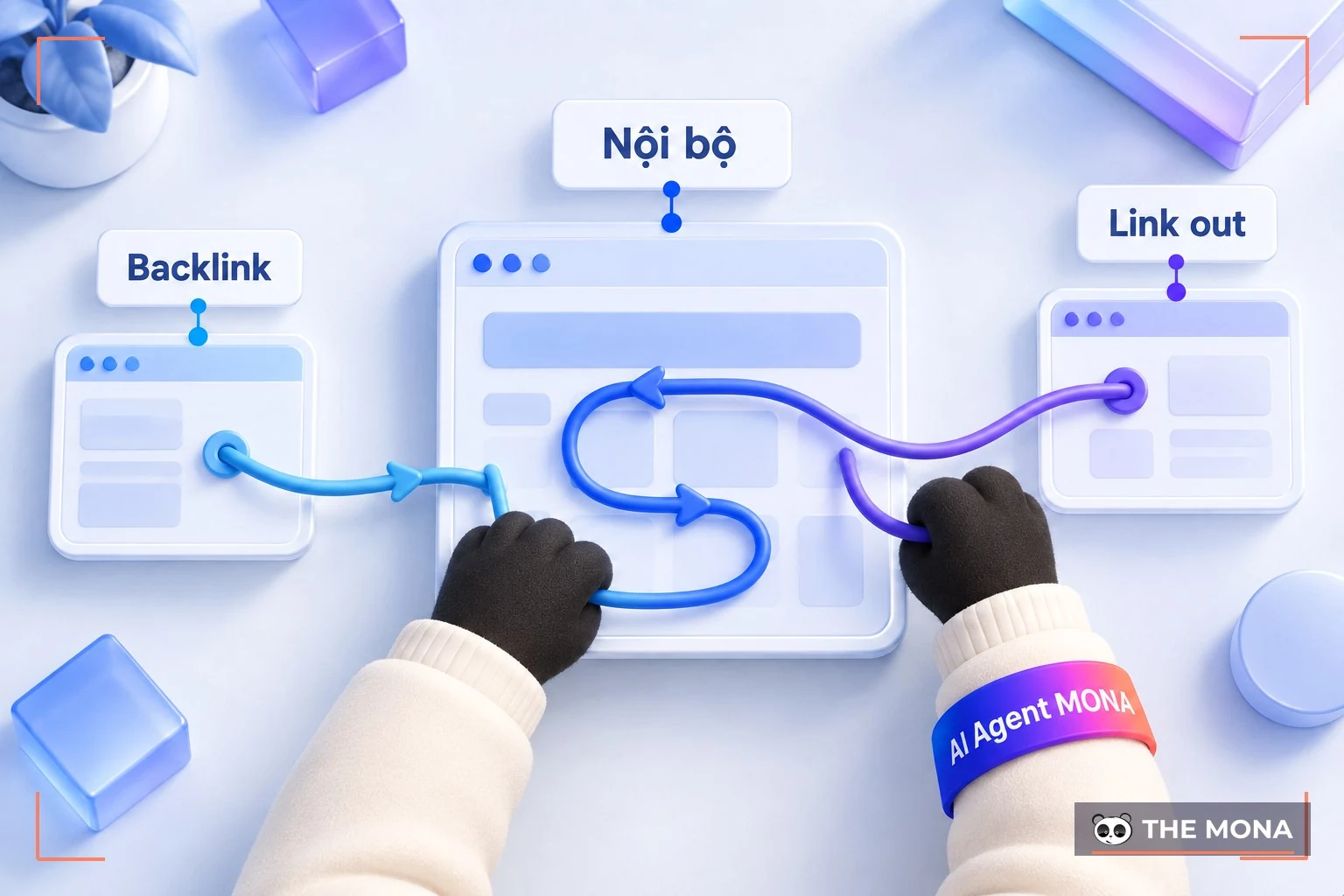
Besides external links, throughout the whole process of SEO Onpage for your website, you'll also “run” into two other kinds of links Backlink and Internal link. All three link types matter for raising rankings and optimizing search, and each has its own traits. MONA compares them in detail in the table below so you can use each one for the right purpose at the right time:
|
External link |
Internal link |
Backlink |
|
|
The concept of |
Outbound links point from one domain to another. |
Internal links connect pages within the same website. |
The term for links from other websites that point to your website. |
|
Benefits |
– Linking to reliable, reputable sources increases the credibility of your content. – Google and other search engine place a high value on websites that use reputable outbound links. – Provides value and improves the user experience. |
– Improves navigation, so users can easily find and reach related content on the same site. – Makes it easy to move between pages and tends to keep users on the site longer. – Distributes value (link juice) from high-ranking pages to other pages on your site. |
– Many backlinks from reputable sites help Google rate your site highly and push it to higher rankings. – Brings direct traffic from the sites that link to yours. – Builds relationships and strengthens your network in the industry. |
|
Features |
Both the number and the relevance need to be controlled; too many can backfire. |
There's no limit on the number of internal links on a page, as long as they aren't duplicated. |
Makes your site known to more people. Many people build satellite sites and use backlinks to point to their main site. |
Outbound links (external links) directly affect the quality and trustworthiness of a website. As mentioned, this is an important criterion Google uses to rank your site. Used well, outbound links bring you more benefits than rankings alone.

One article may not provide enough convincing information. External links help readers understand your knowledge more deeply and widely. This makes the article truly useful to readers, rather than written only for SEO.
The best external links come from reputable sites with genuinely useful content, and they make your arguments more convincing. They also help readers trust you, value your expertise and stay longer. They may even visit your site regularly to find more knowledge.
Google puts the experience of people using its search engine first. One factor in judging that experience is how external links are declared, since they bring genuinely useful information to customers.
Make sure the articles on your website carry quality outbound links that are truly useful to readers. That way both sides benefit:
“Do links to other sites weaken my site?” Almost everyone who does SEO has wondered. In fact, external links aren't bad if you understand how Google sees them. Google likes articles with evidence and reliable sources, and that's exactly what external links are. Watch this video to learn how to use them properly so you don't have to worry about losing your site's strength.

The benefits of external links are beyond dispute, which is why Google values them and why you're here learning about them. But like everything else, using external links to raise your rankings has drawbacks that can affect your site, such as:
To avoid these risks, make sure the outbound links you use are reputable, high quality, relevant to what you share, and free of any negative signals from Google.
An external link should meet these criteria:
External links play a vital, indispensable role in on-page SEO because a website's quality and credibility show through its external links, specifically:
Through the number and quality of external links pointing to a page, Google judges that page's popularity and credibility. These links are clear evidence that other sites recognize and share your content.
A website's traffic is usually seen as hard to measure accurately because it depends on many changing factors. External links, by contrast, are public and easy to record, so search engines can clearly determine a site's popularity. When a site gets many external links from reputable pages, it's treated as a trustworthy source of information and has a better chance of showing up in users' results.
When you link to sites with relevant, quality content, you build a useful network of knowledge on the Internet. It gives readers more reference material, improves the user experience, and raises their trust and engagement with your site.
For example, if your article is about “external link”, linking to detailed, related articles on the topic helps readers understand more and gives them quality references. On the other hand, linking to unrelated content such as “how to cook sour soup” annoys users and lowers your site's credibility.
Always make sure the external links you use add value and relate to the main content, which optimizes SEO and improves the user experience.
MONA Media has a team of SEO experts with deep expertise who understand the industry and safe SEO rules. We're confident we can give you a SEO services full-scope plan that helps you build a link system, draw quality traffic and may help you increase revenue 300-fold. Please CONTACT US with MONA via hotline 1900 636 648 so our team of experts can support you a detailed SEO quote as quickly as possible.
Using external links skillfully not only builds your site's credibility but also helps improve search rankings. It's an important SEO technique, especially useful for anyone starting out with SEO for beginners. Don't miss the detailed guide MONA has put together below to help you add and manage external links effectively and professionally.
Before adding external links to your website, keep two small things in mind:
In HTML, rel is an attribute that defines the nature of each link. There are two attribute values Googlebot can understand and crawl:
You can set rel=”nofollow” on an external link by:

You can also use plugins that insert dofollow and nofollow automatically for easier management.
Managing external links is an important part of keeping a site's quality and credibility. These links can come from many sources, such as user comments or paid ads. To make sure external links don't hurt your site, you need to make sure that:
A comment section increases engagement, but it also risks spam if not controlled. Moderate comments that contain links and add rel=”nofollow” to those links so they don't pass SEO strength.
Ad links can bring income but can also annoy users. To avoid that, be clear with users that it is advertising content. Make sure ad links also carry rel=”nofollow”.
When inserting an outbound link, it's best to add rel=”nofollow” so you don't pass your site's strength to other sites, and to reduce spam.
If you need to remove an outbound link, follow these steps:
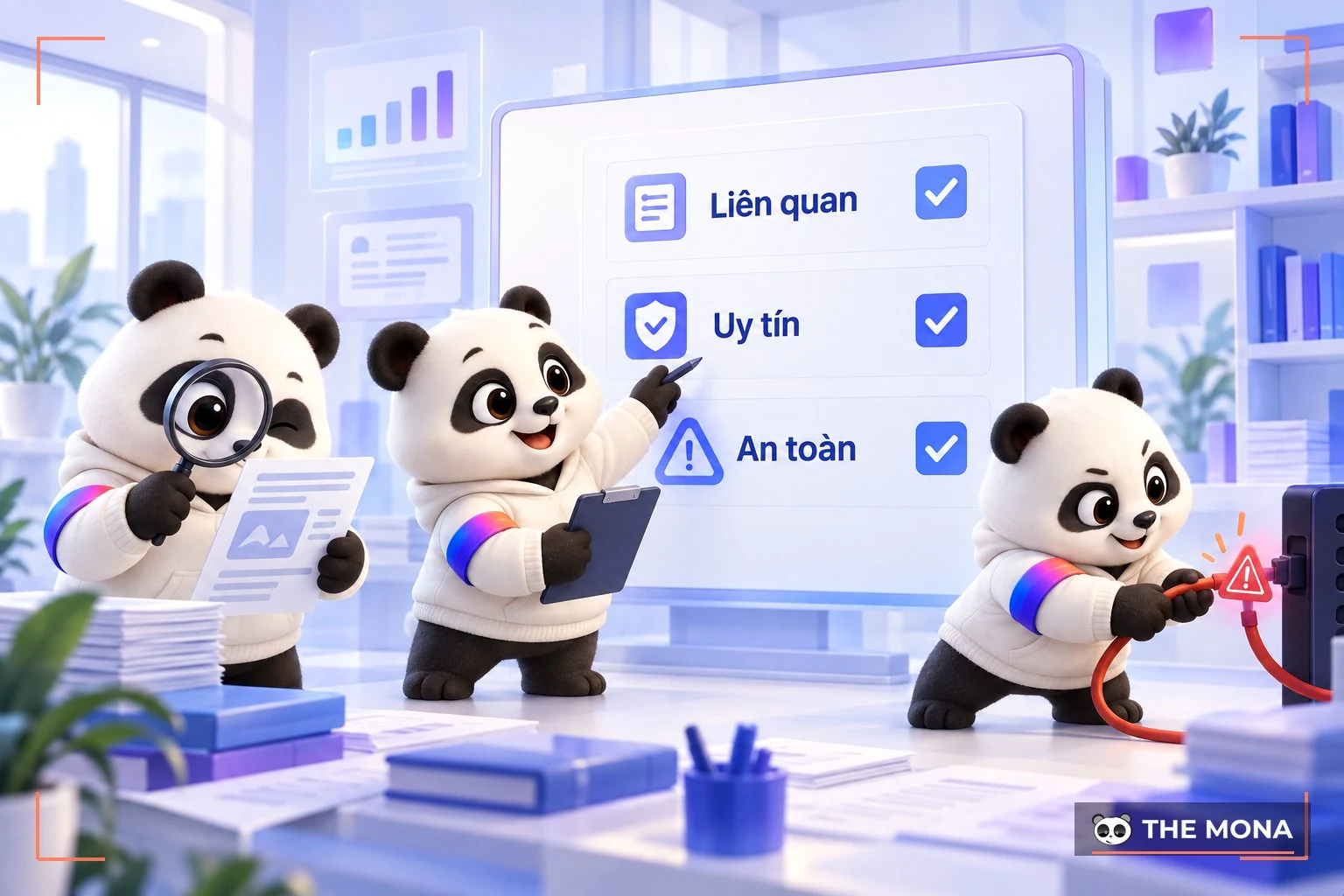
To get high-quality outbound links, keep the following points in mind:
Linking to poor-quality external sites can seriously hurt your website and your SEO results. Check the quality and reliability of every external link carefully.
Remove any of the following 8 types of external link right away:
You can put outbound links at the end of an article that contains an embedded list, but not inside the list itself. Embedded lists are meant for direct information and internal navigation.
Personal biography pages often raise doubts about authenticity. Make sure any biography page you link to is genuinely reputable.
If you can't verify the source of the page, don't cite it. The standard for a biography page used as an external link should be higher than for other articles.
Avoid adding quality external links to pages that require registration or payment to see the information, because most users won't do it.
The exception is when the main topic of your article is a reference document that must be cited. Even then, make sure the source is authoritative, high-quality and official rather than somebody's blog copy.
The unwritten rule is not to link out to non-Vietnamese sources. Prefer links to Vietnamese sites so readers can understand them quickly.
In some cases you can still add a simple outbound link to a foreign site, such as:
Links to pages that redirect to other URLs are treated as spam and are often used by spammers. Never use outbound links like these, which can easily hurt you.

Think carefully before adding outbound links to media-format pages, because they often don't work across different user setups and browsers.
Some media pages rely on platform plugins such as Adobe Flash or Microsoft Silverlight. So keep these points in mind:
Stick to external links in these formats:
There is no outright ban on YouTube links or other user-submitted video sites, but linking to them has to follow certain rules.
Videos on YouTube and similar sites can't meet all the standards for external links, and they also raise copyright issues. If you use them, check first which extra software readers would need.
If your article makes several points, don't give one point far more supporting links than the others. Keep the number of external-link sources balanced across points, so no point is treated unfairly.
Checking the external links on your website is an essential part of SEO optimization. Here are two leading tools for checking external links:
Ahrefs is one of the SEO tools is one of the most powerful and popular tools, letting you analyze your website's external links in detail. To check external links with Ahrefs, follow these steps:
Step 1 – Open Ahrefs: First, log in to your Ahrefs account. If you don't have one yet, you can sign up to use it.
Step 2 – Enter the website URL to check: In the search bar on the main screen, enter the address of the website whose external links you want to check.

Step 3 – Select “Linked domains”: In the left-hand menu, scroll down and select “Linked domains” to see the list of domains your website links to.

Step 4 – Review the external links: The results show the domains your website links to, with details such as the authority score (DR), the number of outbound links pointing to each domain, and the dofollow/nofollow attribute.

Step 5 – Look at each link in detail: Click the down arrow next to each domain in the Links from target column to see the pages that contain external links, the specific links and their anchor text.

Screaming Frog is a versatile SEO tool that crawls your whole website and gives detailed reports on external links. To check, follow these steps:
Step 1 – Enter your website in Screaming Frog: Open Screaming Frog, enter the website address or link whose external links you want to check in the search field, then click “Start”.

Step 2 – View the crawl results: After you click “Start”, Screaming Frog starts crawling the whole website and shows the results in a table.

Step 3 – Check the external links: Click the External tab to see all of the website's external links. You'll see details for each link, including the URL of the page containing it and the URL of the target page.

Step 4 – Export the report: To download the list of external links, click “Export” and save the report to your computer, so you can review and manage your external links easily.
Outbound links are an important SEO strategy that builds your website's authority and trustworthiness. Don't miss the five reputable outbound link sources below when looking for the right ones:
Government websites are regarded as the most official and reliable sources of information. Linking to them not only builds credibility but can also improve your site's SEO ranking. Reliable, up-to-date government sites in Vietnam include:
Well-known non-profits with national or international reach are very reputable sources for outbound links. Users tend to trust these sites because of their socially beneficial activities and goals. Examples of non-profit websites in Vietnam:

Education sites with a .edu domain are seen as reliable, reputable sources. Linking to them can improve your SEO ranking and bring more traffic to your site. Typical reputable education sites in Vietnam include:
Keep in mind that not every .edu site has quality content. Check that the site's content is trustworthy before you link to it.
Linking to the personal websites of respected industry figures is also an effective SEO strategy. These sites are usually run by well-known experts, and readers trust their content. For MONA, some reputable personal websites in marketing worth looking at are:
Industry-leading websites are always the most accurate and detailed sources of information. Linking to them helps readers trust your content and improves Google's view of your site's reliability. Some of these sites offer in-depth, trustworthy knowledge that gives users more useful and accurate information.
Done properly, building external (outbound) links is an essential step that makes Google see your website as natural and highly reputable. Planning an outlink strategy isn't easy, though, especially for beginners. But don't worry, Entity Backlink Social SEO service of MONA Media is here to help you build up TRUST for your website as effectively as possible.
Entity Backlink Social SEO service MONA's clients will help you:
Act now and SIGN UP for the service to take your website to a new level!

Contact information:
1- What are external backlinks?
External backlinks, also called inbound links, are links from another website pointing to yours. They are completely different from external links (outbound links).
2- What does an external link in a blog mean?
An external link in a blog is a link to another site, added to support the points made in a knowledge article.
That wraps up this article on What an external link is, and how to link out to build trust and rankings for your website. External links are an important part of your website SEO strategy, so don't skip building a quality set of them. We hope the information MONA shared here helps you add outbound links in a sensible, well-optimized way.
-> See also: What is PageRank? Why PageRank matters in SEO

CEO & Founder · The MONA
Founder of The MONA, who built a services company of 200+ staff with 14,000+ projects delivered. Khánh Hùng shares how he thinks about building systems that run themselves, automating a business, and the real lessons from delivering projects at MONA.
 1,5K




Professional website
design services
Own a website with a beautiful, 100% exclusive design and a lifetime warranty, with the ability
to expand features flexibly as your business grows, starting today!






 MONA will never sell your information or send you spam


 MONA will never sell your information or send you spam
