
 MONA OS 2.0


 Tự động hoá doanh nghiệp
 Cẩm nang SEO
 Digital Marketing
 Kinh nghiệm thiết kế website
 Hạ Tầng Server
 Giáo dục



 VI
 EN










Message us on
Zalo Official


 ProductsNew

 ProductsProducts
 Mới ra mắtKHA AI 2027App tự edit video, tự đăng mọi mạng xã hội, 2 phút mỗi ngày










 Website designLooks good and wins customers over.
SEO servicesBrings in customers searching for exactly what you sell.
 Tư vấn digital marketingKéo khách từ nhiều kênh, đo bằng số thật.
Corporate video productionVideos introducing your company, factory and team.
 NewAI video productionCompany story films made with AI.
 Custom software developmentCRM, ERP and HRM built for your business.
 Viết AI Agent theo yêu cầuĐặt riêng một trợ lý AI cho đúng việc của mình.
 Tư vấn chuyển đổi AIĐưa AI vào vận hành của cả công ty.
NewMONA LMSManagement for centers and schools.
MONA SkillHubInternal training for company staff.
 NHTQ systemEnd-to-end China–Vietnam shipping operations.
MONA JMSManagement for gold, diamond and pawn shops.
 MONA E-LearningA website with every feature you need to sell courses.
 How to sell online courses (course)More than 30 free lessons on selling courses on autopilot.
 MONA Cloudmonacloud.vnServers to get your apps and websites running.
 MONA Basemonabase.vnPostgres database, sign-in and file storage.
 MONA Mailmonamail.vnSend OTP, order and invoice emails from your software.
 MONA Paymonapay.vnAccept bank transfers via VietQR and notify your software when the money arrives.
 MONA eInvoiceComing soonIssue e-invoices that meet tax standards.
Gấu CườiTrả lời khách 24/7 trên web, Fanpage, Zalo và thu lead cho sale.
 Gấu TeleSalesGọi điện tư vấn, chăm khách như tổng đài viên thật.
Dê CườiTư vấn và chốt đơn cho shop ngay trong khung chat.
Gấu WebmasterNhắn nhóm Zalo là website được sửa xong.
 Gấu Pháp ChếSoạn hợp đồng, rà điều khoản trong vài phút.
 Gấu Báo GiáLên báo giá đúng mẫu và gửi khách ngay.
 AI chăm sóc khách hàngTheo dõi và giữ chân khách hàng cũ.
 Gấu Tuyển DụngLọc hồ sơ, hẹn lịch, phỏng vấn ứng viên.
 Mới ra mắt
KHA AI 2027
Xây kênh chuyên gia 2 phút mỗi ngày
Quay bằng điện thoại, AI tự edit video, tự đăng lên 16 nền tảng và tự trả lời bình luận, tin nhắn.
310.136lượt xem trên kênh CEO MONA sau 17 ngày
 Anh Khánh HùngCEO MONA đang dùng mỗi ngày
Xem app làm được gì
 AI
Gấu Cười MONA ĐANG TỰ XÀITrả lời khách 24/7 trên website, Zalo OA, Messenger và thu lead về cho sale.
Dê CườiChốt đơn bán lẻ và sàn: Shopee, TikTok Shop, web. Chăm cả khách sỉ, đại lý.
Gấu WebmasterCập nhật nội dung, tối ưu SEO website mỗi ngày.
Gấu TeleSalesGọi điện tư vấn, chăm khách như tổng đài viên thật.
Gấu Tuyển DụngLọc hồ sơ, hẹn lịch, phỏng vấn ứng viên tự động.
AI chăm sóc khách hàngGiữ khách cũ, cứu lead đã rớt cho phòng kinh doanh.
Gấu Pháp ChếSoạn hợp đồng, rà điều khoản trong vài phút.
Gấu Báo GiáLên báo giá đúng mẫu, gửi khách ngay khi có yêu cầu.
 Chuyển đổi AI toàn phầnGiải pháp tổng cho doanh nghiệp, 3 lớp triển khai.
 Viết AI Agent theo yêu cầuĐặt riêng một con AI gánh đúng nghiệp vụ của bạn.
 Custom softwareCRM, ERP and HRM with built-in AI automation.
 SEO & AEO thời đại AIĐược Google lẫn AI trích dẫn, không chỉ xếp hạng.
 Kiến thức AI cho doanh nghiệpBài phân tích, hướng dẫn ứng dụng AI vào vận hành.
 Free AI courses
 AI tools at work
App mới · KHA AI 2027
Xây kênh 2 phút mỗi ngày
AI tự edit video, tự đăng mọi mạng xã hội
Free consultation, 8am–10pm every day

18 March, 2023

For website administrators, the concept of a subdomain is familiar. For many people, though, including new administrators and business owners who want to learn about websites, it is not so well known. So What is a subdomain? When should you use them, and for what purpose? The following article from MONA Media will help you understand subdomains fully so you can apply them properly.
A subdomain, which experts also call a secondary domain, is a part split off from a domain. A subdomain works separately like an ordinary website under the same main domain, and is completely separate from any other website (so for SEO it gets no backlinks from the main domain).
As an example, say a website's main domain is abc.com. If you want a new site to review your company's products, you can register a subdomain such as review.abc.com. It is not a module; a module would be reached at abc.com/review.
A concrete example from MONA Media, whose main domain is: mona.media, is that we later wanted to expand into selling domain names and selling web hosting so we added a subdomain like this: mona.host.
By using a subdomain you create a completely separate website that runs independently, without paying to register a new domain or dealing with redirect headaches. If you do not have a domain yet, see this guide to registering a domain.
So instead of adding a module under the control of the main website, you can use subdomains to create new sites freely while keeping your main domain. Subdomains are often used for specific sites such as e-commerce, blogs and review channels.

The subdomain is a very useful tool for businesses in general and administrators in particular. Without subdomains, these goals would be much harder to reach:
As mentioned, the main purpose of a subdomain is to create a website while still using the main domain. You pay nothing extra to register a new domain, yet a site built on a subdomain can work just like the main one.
A subdomain is especially useful when your business wants a place with complete information for a specific group of customers, with suitable language and content. For example, your company may want one site for children's goods and another for maternity goods, because one website with too many products leaves customers unable to browse them all. A subdomain makes this simple, and the images and language can be tailored to each group of customers.
It is common to use subdomains to turn modules of the main website into independent sites. For a business in several industries, separating them helps it grow at scale.
Say your company sells shoes, watches, handbags, perfume, wallets and more. You want a blog for each product group, but it is hard to separate them within a single module. So you can split them into other websites using subdomains. Sometimes managing several independent websites is much easier than maintaining one all-purpose site.
Using a subdomain for a mobile version is not new, but it is no longer common, because websites today are all built to be responsive and mobile-friendly. So a mobile subdomain is mostly used by sites that are not yet mobile-ready. When a user visits, the site detects the device's screen size and serves a layout that fits it.
For example, a user on a PC gets abc.com, while a phone visiting the same address is sent to the subdomain x.abc.com.
Subdomains are free. You can create many new websites as subdomains without registering domains for them. This is economical and effective. You can also reuse the design of the main website on the subdomain site without worrying about duplication, since they are consistent. That saves you money you would otherwise pay a service provider company website design.
Since subdomains are free and unlimited, you can use them whenever you like. They only work well, however, when used for the right purpose. You should use a subdomain when:
Your business has just launched a product line for a different customer group than the main website's. Use a subdomain to create a new website dedicated to those customers, with its own design and independent content.
A subdomain also lets a company run a new test campaign or test content. After building the page, you can advertise the campaign to see whether it really works. If it does, you can build the site out properly. If not, simply delete the subdomain with no loss.

It is a tool for testing experimental content quickly and cheaply.
Although your company's large team of administrators can manage a multi-industry website well, this causes overlapping work and makes a complete process hard to keep.
So businesses choose to split each product group into its own subdomain site and assign administrators to it. Management then becomes easier and better organized. Also, e-commerce sites need tighter security than a blog or review site, and only by separating them can that security be fully effective.
Creating a product launch website on a subdomain helps a business reach customers faster and run effective ad campaigns. In particular, you can draw on the traffic of the main domain while doing more targeted SEO. Only with the right strategy and suitable campaigns can a business build its brand quickly and promote it sustainably.
In principle, one main domain can create countless subdomains, with no limit on number. Because of this, many people use the tool to make money. The method is simple: you spend money to buy a very good main domain (Domain) and then create related subdomains and resell them to people who need them.
In practice, though, setting up a site under a subdomain depends on the following factors:
SEO compatibility is the main reason administrators limit the number of subdomains. The more subdomains you have, the lower the SEO compatibility, which greatly affects the main website.
Domain and subdomain are not very different. Even so, many people get confused and think "www" is part of the domain. In fact the main domain is only abc.com, and "www.abc.com" is actually a subdomain. It is just so familiar that many people assume otherwise. You can replace "www" with another subdomain, such as "wiki.abc.com" or "buy.abc.com".
Now you can tell from the web address you visit whether it is a domain or a subdomain.
Subdomains are very useful, but alongside the benefits they have a few drawbacks. When you use subdomains, keep the following in mind:
The first downside of creating too many subdomains arises when you sell or hand over a website to someone else.
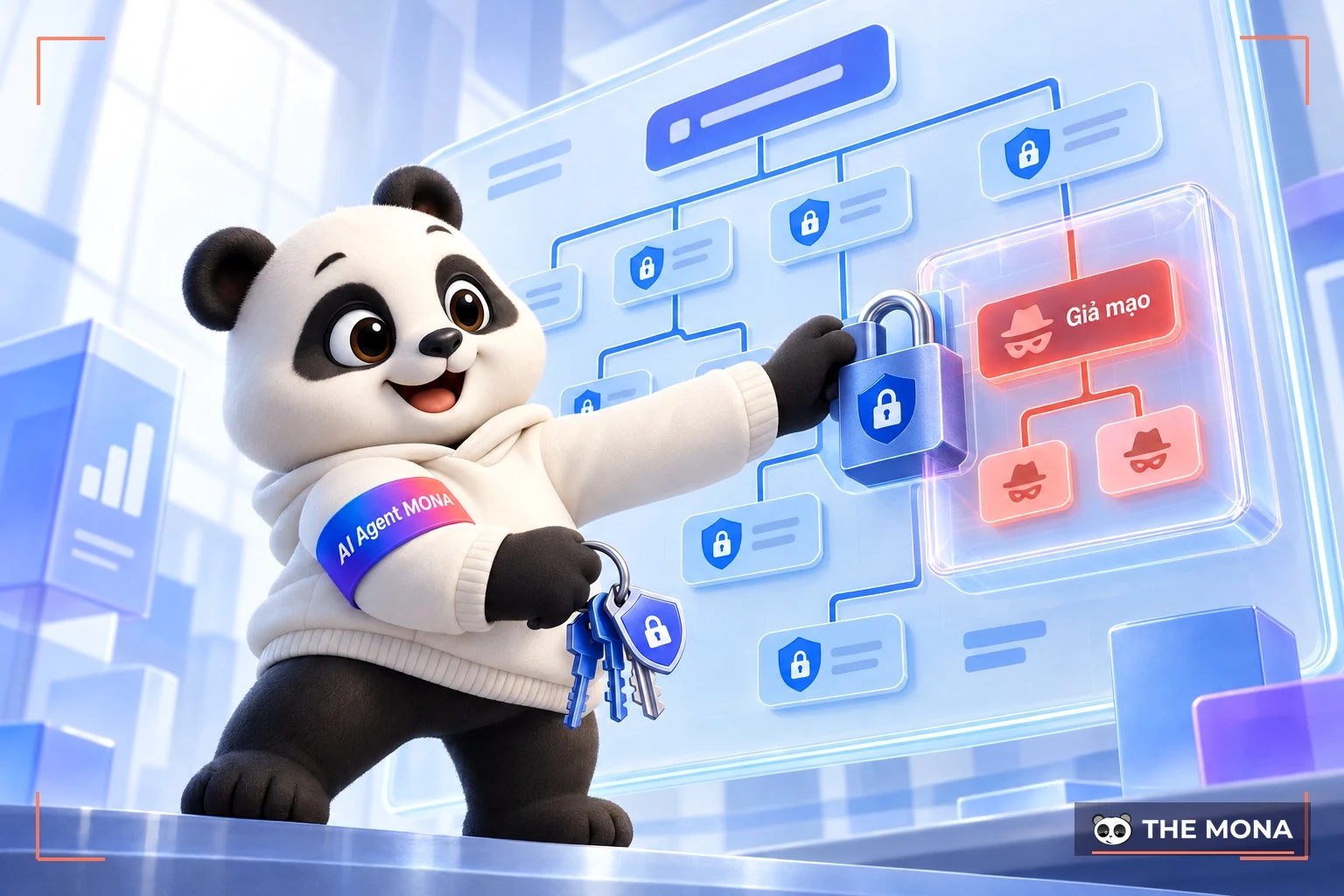
If just one subdomain is reported or flagged as spam, all the other subdomains are immediately at risk. If an impersonation attack is suspected, your main domain could even be banned permanently, unless you provide full evidence that you did not profit from it, and those procedures are usually tedious.
Naturally, more websites means more building and administration work. Besides the benefit of fast, independent management, administrators seem to do double the usual work. If you only use a subdomain as a support site, building it is easier.
Usually, to make a subdomain site fully match the main site, a business reuses the same design. It is hard to keep a consistent brand experience on a completely new website, unless you get help from a professional website design company.
In the past, search engines such as Google treated the main domain and subdomains as completely separate, as two independent websites. SEO administrators took advantage of this to support both and improve their rankings.
However, as Google's smart algorithm keeps changing, domains and subdomains are now treated as almost the same. This directly affects the domain, so the more subdomains you have, the more your site's ranking suffers. You can see this when you search for a keyword: the main domain is shown more often in the results.

If you want a unique domain name that makes your website look more professional, go to MONA – a leading domain registration platform. SEE the details right here: https://mona.media/huong-dan-mua-ten-mien-domain/ |
Overall, subdomain are a great tool. They are free and useful in many ways. Even so, you should not use too many subdomain on your website. They work best when used for the specific purposes described above. We hope this article gave you some useful information.

If you ask a developer to type every line by hand, the app will be a long time getting online. Configuring a server and editing DNS often takes a whole morning, and one wrong IP can take down the main website. For a non-specialist, a DNS table looks like a matrix of numbers. On foreign platforms the setup is convoluted, and one wrong click on a service can charge a large amount to your Visa/Mastercard unexpectedly, based on figures we checked on 19/09/2026. We have seen it happen.
We built MONA Cloud, an AI-friendly server and database platform from The MONA Group. It is very fast for customers in Vietnam and Southeast Asia, with servers in Vietnam, Hong Kong, Singapore, Australia and the US, rented by the hour and paid in VND, so AI agents like Claude Code, Codex and Cursor can create servers and put apps online themselves.
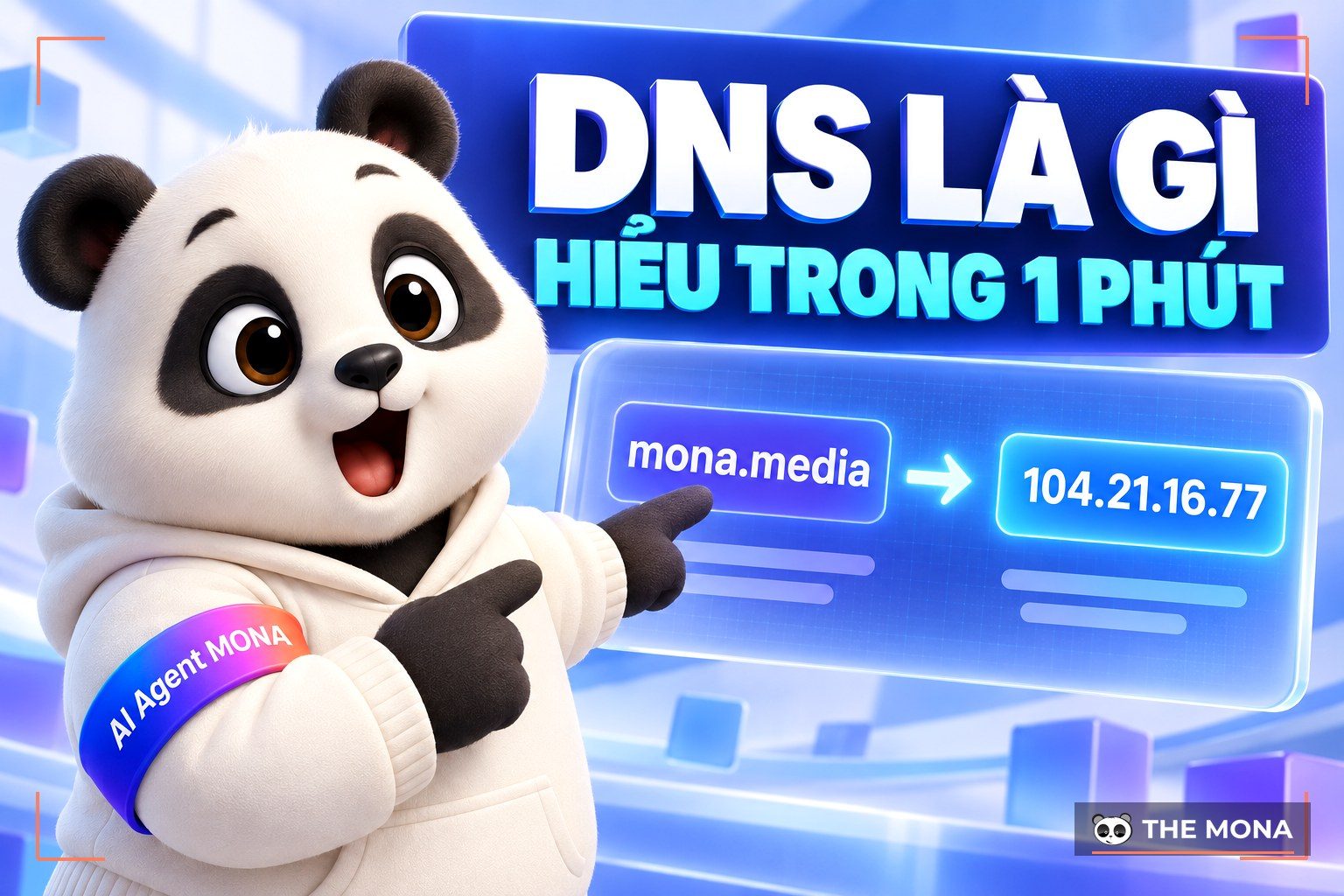
You only need to paste one line npx -y monacloud-mcp login into Claude Code or Codex. The AI immediately creates the server, deploys the app and returns an HTTPS URL, with nothing more for a non-developer to do. When you need to split off a branch, the AI calls cloud_domain_dns_add to create a subdomain record such as app.tenmien.vn and attach it straight to the app running on MONA Cloud. We always program the system to wait until DNS has updated and settled before issuing SSL, a hard-learned lesson: if you rush the system to issue a certificate before the record has propagated worldwide, it will certainly fail.
Our infrastructure is very fast for Vietnam and Southeast Asia because the servers are in Vietnam. You pay only for what you use, by the hour: CPU 250 VND/core, RAM 150 VND/GB, disk 15 VND/GB, and the smallest VPS 550 VND/hour. There is no yearly plan, stopping a machine stops CPU and RAM billing, and you spend only what you top up. We bill in VND, issue proper VAT invoices with a tax code, and give 100,000 VND credit when you sign up for the first time. We built AI-friendly infrastructure because we know that the more people touch the configuration by hand, the higher the error rate. Let the AI do the work and check it in a free sandbox, and you only need to confirm the spelling. Services at MONA Domain and Cloud always have a Vietnamese team behind them for support, with experience since 2016 across more than 14,000 projects and 85% of clients coming back.
Honest advice: do not fiddle with DNS records by hand, because the risk of breaking the system is very high. Hand the job of pointing subdomains and issuing security certificates to an AI system through the MCP protocol.
A manifesto for growing together
MONA is a software, digital transformation and AI transformation company, but above all, MONA is a B2B service company that benefits directly from this: THE MORE SUCCESSFUL VIETNAMESE BUSINESSES BECOME, THE MORE MONA BENEFITS, while a declining, slow market with weak technology is exactly what kills MONA's future business opportunities. So, more than anyone, MONA wants you to succeed, and MONA actually steps in to help you succeed.
And AI transformation is the key to that success for all of us.
MONA
If you need AI-friendly server infrastructure to run apps and manage subdomains smoothly without manual configuration, now is the time to upgrade. MONA Domain quotes prices in VND including VAT, with .vn domains at 756,000 VND a year (measured 17/09/2026). Go to https://monadomain.vn/ and try it first; it takes about 5 minutes. Click, and you're done.
Look up a domain and let AI buy it for you in VND Call 1900 636 648

CEO & Founder · The MONA
Founder of The MONA, who built a services company of 200+ staff with 14,000+ projects delivered. Khánh Hùng shares how he thinks about building systems that run themselves, automating a business, and the real lessons from delivering projects at MONA.
 1,5K




Professional website
design services
Own a website with a beautiful, 100% exclusive design and a lifetime warranty, with the ability
to expand features flexibly as your business grows, starting today!






 MONA will never sell your information or send you spam


 MONA will never sell your information or send you spam
