
 MONA OS 2.0
 Hợp tác với MONA


 Tự động hoá doanh nghiệp
 Cẩm nang SEO
 Digital Marketing
 Kinh nghiệm thiết kế website
 Hạ Tầng Server
 Giáo dục


 VI
 EN























Message us on
Zalo Official


 ProductsNew

 ProductsProducts
 Mới ra mắtKHA AI 2027App tự edit video, tự đăng mọi mạng xã hội, 2 phút mỗi ngày










 Thiết kế websiteVừa đẹp vừa thuyết phục được khách.
Dịch vụ SEOKéo về khách đang tìm đúng thứ anh chị bán.
 Tư vấn digital marketingKéo khách từ nhiều kênh, đo bằng số thật.
Quay video doanh nghiệpVideo giới thiệu công ty, nhà xưởng, đội ngũ.
 MớiDựng video AIDựng phim câu chuyện công ty bằng AI.
 Custom software developmentCRM, ERP and HRM built for your business.
 Viết AI Agent theo yêu cầuĐặt riêng một trợ lý AI cho đúng việc của mình.
 Tư vấn chuyển đổi AIĐưa AI vào vận hành của cả công ty.
NewMONA LMSManagement for centers and schools.
MONA SkillHubInternal training for company staff.
 NHTQ systemEnd-to-end China–Vietnam shipping operations.
MONA JMSManagement for gold, diamond and pawn shops.
 MONA E-LearningA website with every feature you need to sell courses.
 How to sell online courses (course)More than 30 free lessons on selling courses on autopilot.
 MONA Cloudmonacloud.vnServers to get your apps and websites running.
 MONA Basemonabase.vnPostgres database, sign-in and file storage.
 MONA Mailmonamail.vnSend OTP, order and invoice emails from your software.
 MONA Paymonapay.vnAccept bank transfers via VietQR and notify your software when the money arrives.
 MONA eInvoiceComing soonIssue e-invoices that meet tax standards.
Gấu CườiTrả lời khách 24/7 trên web, Fanpage, Zalo và thu lead cho sale.
 Gấu TeleSalesGọi điện tư vấn, chăm khách như tổng đài viên thật.
Dê CườiTư vấn và chốt đơn cho shop ngay trong khung chat.
Gấu WebmasterNhắn nhóm Zalo là website được sửa xong.
 Gấu Pháp ChếSoạn hợp đồng, rà điều khoản trong vài phút.
 Gấu Báo GiáLên báo giá đúng mẫu và gửi khách ngay.
 AI chăm sóc khách hàngTheo dõi và giữ chân khách hàng cũ.
 Gấu Tuyển DụngLọc hồ sơ, hẹn lịch, phỏng vấn ứng viên.
 Mới ra mắt
KHA AI 2027
Xây kênh chuyên gia 2 phút mỗi ngày
Quay bằng điện thoại, AI tự edit video, tự đăng lên 16 nền tảng và tự trả lời bình luận, tin nhắn.
879.625lượt xem trên kênh CEO MONA sau 35 ngày
 Anh Khánh HùngCEO MONA đang dùng mỗi ngày
Xem app làm được gì
 AI
Gấu Cười MONA ĐANG TỰ XÀITrả lời khách 24/7 trên website, Zalo OA, Messenger và thu lead về cho sale.
Dê CườiChốt đơn bán lẻ và sàn: Shopee, TikTok Shop, web. Chăm cả khách sỉ, đại lý.
Gấu WebmasterCập nhật nội dung, tối ưu SEO website mỗi ngày.
Gấu TeleSalesGọi điện tư vấn, chăm khách như tổng đài viên thật.
Gấu Tuyển DụngLọc hồ sơ, hẹn lịch, phỏng vấn ứng viên tự động.
AI chăm sóc khách hàngGiữ khách cũ, cứu lead đã rớt cho phòng kinh doanh.
Gấu Pháp ChếSoạn hợp đồng, rà điều khoản trong vài phút.
Gấu Báo GiáLên báo giá đúng mẫu, gửi khách ngay khi có yêu cầu.
 Chuyển đổi AI toàn phầnGiải pháp tổng cho doanh nghiệp, 3 lớp triển khai.
 Viết AI Agent theo yêu cầuĐặt riêng một con AI gánh đúng nghiệp vụ của bạn.
 Custom softwareCRM, ERP and HRM with built-in AI automation.
 SEO & AEO thời đại AIĐược Google lẫn AI trích dẫn, không chỉ xếp hạng.
 Kiến thức AI cho doanh nghiệpBài phân tích, hướng dẫn ứng dụng AI vào vận hành.
 Free AI courses
 AI tools at work
App mới · KHA AI 2027
Xây kênh 2 phút mỗi ngày
AI tự edit video, tự đăng mọi mạng xã hội
Free consultation, 8am–10pm every day

29 May, 2026
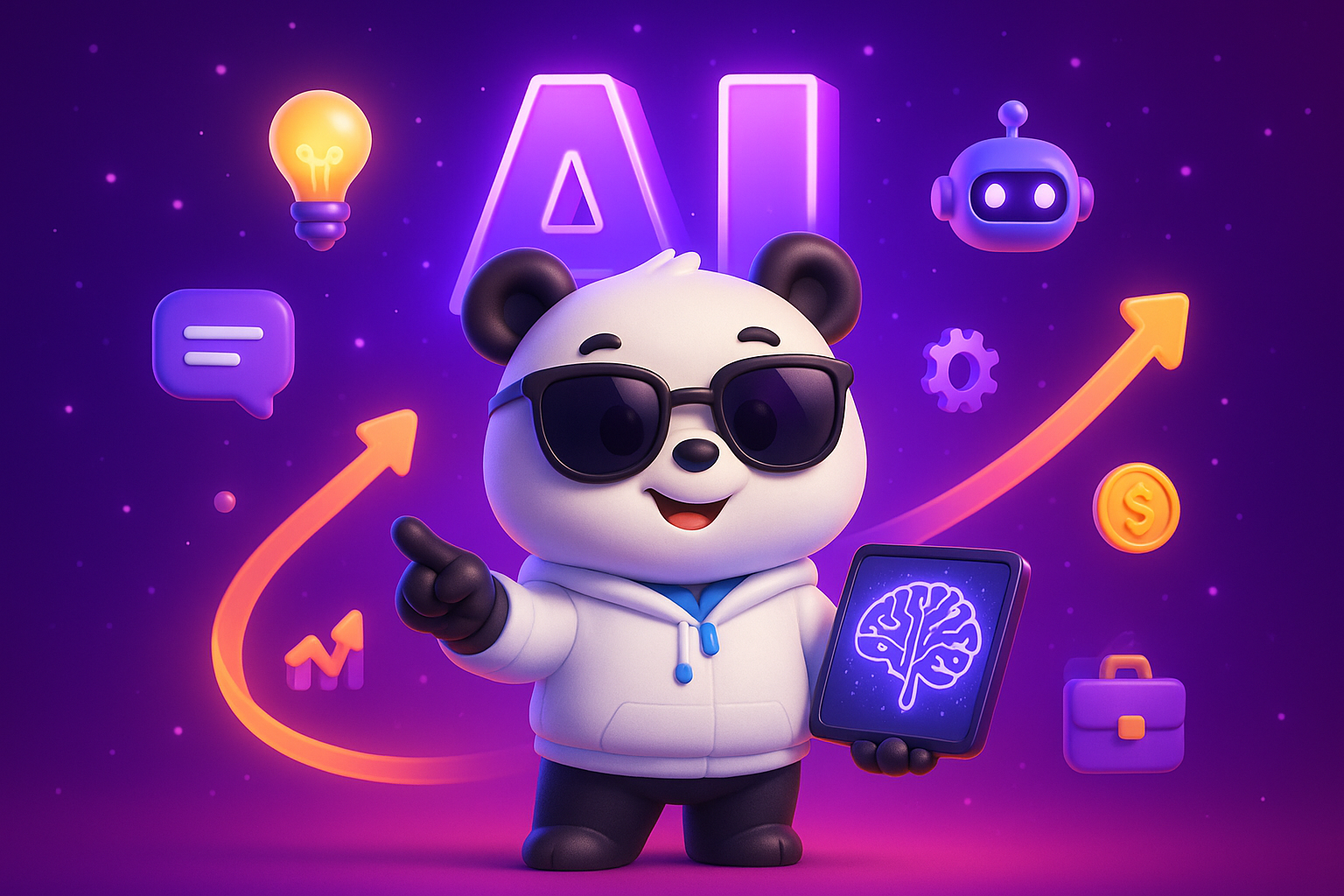
To founders and business owners: we at MONA are not writing this to sell services. We just read Stanford AI Index 2026: 88% of organizations worldwide already use AI in at least one department. In Vietnam, 73% of businesses have tried it too (VINASA 2025). But only 6% are really making big money from AI. That gap has a name: AI first. In this article we share everything: the definition of AI first, 40+ AI terms every business must know, MONA's internal case of cutting costs by 60% and raising productivity by 900% since 2026, and a concrete roadmap so we can rise together in the age of automation. This article is a AI roadmap for business leaders is recommended further reading.

Before going deeper, we want you to hold on to the core point: AI first is not a marketing slogan. See also how employees react when the boss rolls out AI. It is how the world's leading companies are changing the way they operate.
The term AI first was declared by Sundar Pichai (Google CEO) at Google I/O 2017, marking the shift from “mobile-first” to an “AI first world.” That vision set a 10-year mark. Right in 2026, the leading companies have entered the stage of truly operating AI first.
As of 2026, AI first is the core operating model, not an add-on layer. AI is the “primary actor,” the main character, in the process of creating value. You still matter, in the role of designing, supervising and making the final call. Manual, repetitive work, producing numbers, sending emails, drafting reports and answering tier-1 questions are all done by AI.
Businesses AI first is very different from a business that merely “uses AI.” When something new needs doing, the first question is no longer “who do we hire” but “can AI do it, how far, and which part is for people.” Every process is redesigned around AI's new capabilities.
If you want to go deeper than the basic definition, read What is AI first? A strategy that puts AI first. The article we are writing here focuses on 2026 execution, specifically for Vietnamese businesses.
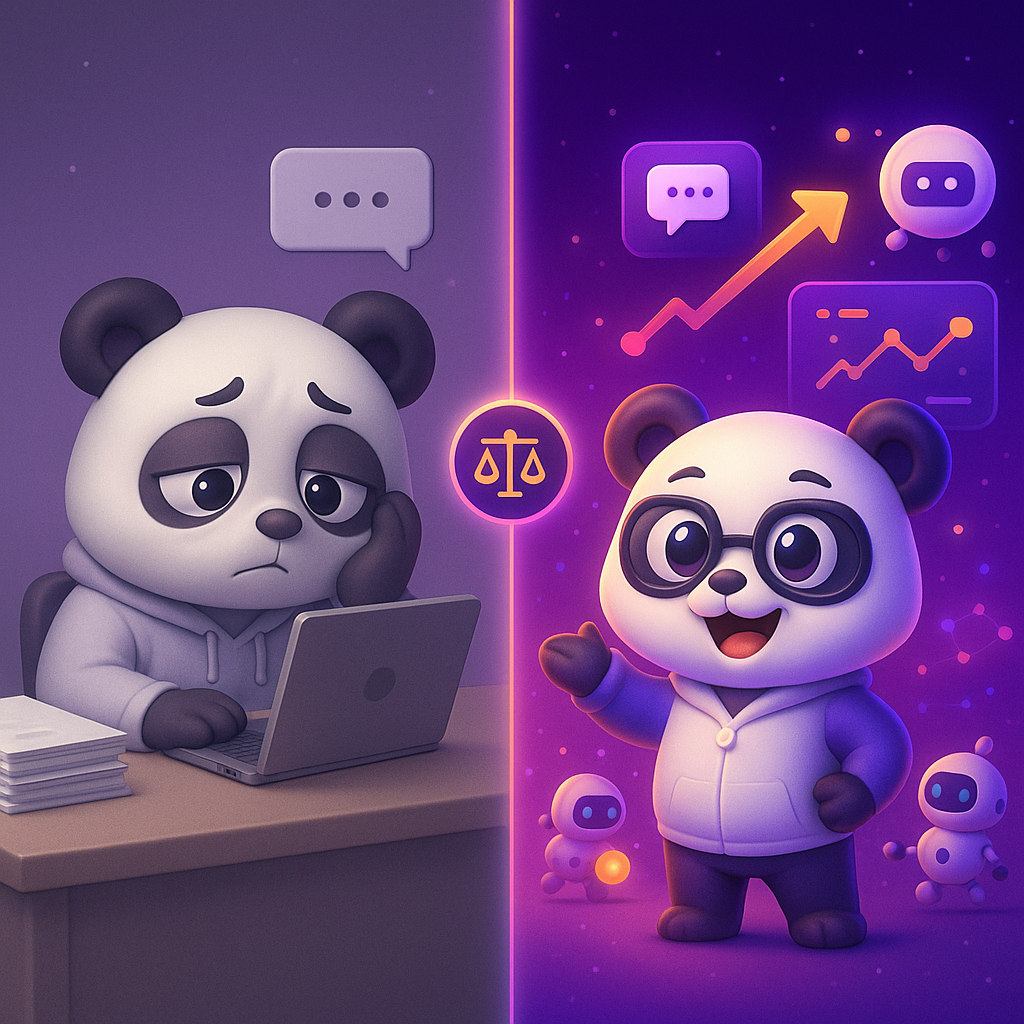
Most Vietnamese businesses today are AI enabled, not AI first. The difference lies in depth, not in whether you use ChatGPT. We have put it in the table below so you can check which tier your business is on:
| Criterion | AI enabled | AI first |
|---|---|---|
| Role of AI | A supporting layer attached to old processes | The center of operating logic |
| The site structure | Run by a Data/Innovation team | Decision rights redesigned around AI |
| Decision | Humans decide, AI suggests | AI decides on its own within allowed limits |
| Hiring | Hire people first, train AI later | Hire only after proving AI cannot do it |
| KPI | Traditional | Has an “AI leverage ratio” + EBIT-from-AI |
| Technology stack | Traditional SaaS + a few AI tools | LLMs, AI Agents, RAG and MCP as the backbone |
Theo McKinsey in its report The State of AI 2025 (published 11/2025), businesses that embed AI across functions are twice as likely to beat their industry on revenue growth. AI enabled brings local gains. AI first brings gains that compound over time.
The table also explains why 73% of Vietnamese businesses already use AI but only 13.8% deploy it at scale. Most stop at the AI enabledtier and have not reached the AI firsttier. This is not a weakness, it is an opportunity. We are about to point out the next step.
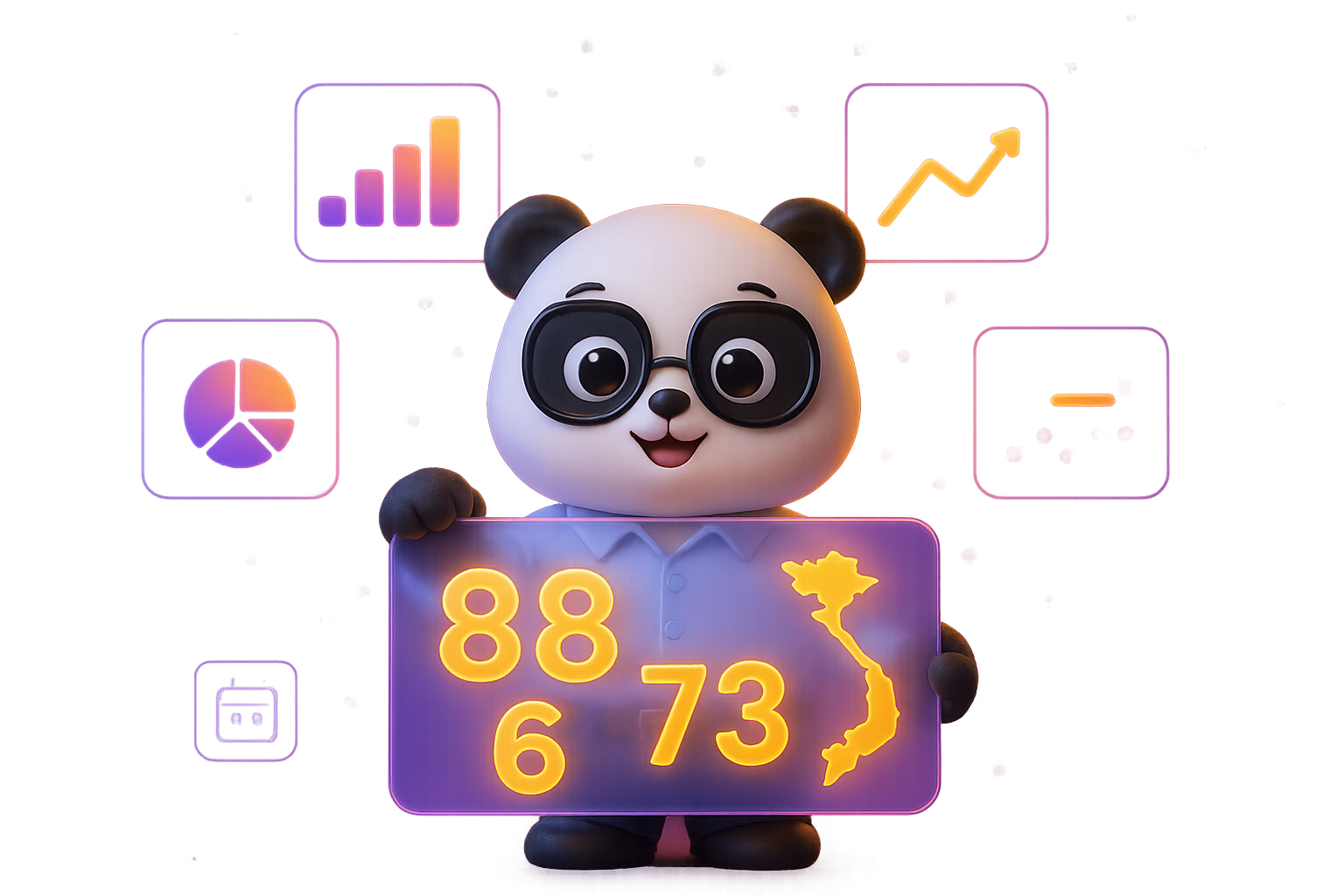
To show you how important AI first is, we share 3 groups of numbers below. None are picked at random, and all have clear sources.
The National Assembly passed the Law on Artificial Intelligence on 10/12/2025, effective from 01/03/2026. The law sets 3 risk levels (inspired by the EU AI Act's 4 tiers), requires businesses to set up AI governance and provides an incident reporting portal. At the same time, VINASA launched STAIR Framework, the first AI Readiness self-assessment for Vietnamese businesses. See details in the AI rollout handbook framework for Vietnamese founders.
Five minutes of reading is enough to see this is not a fad, it is a foundational shift. We, founders and MONA alike, are “halfway up the slope.” It is both a risk of falling out of the global race and a chance to learn from those ahead and avoid their mistakes. It is the perfect moment to pick a path AI first now, instead of waiting another 2-3 years.
If you want to look at it by industry first, MONA has a series: AI in banking, AI in healthcare, AI in logistics, AI in education, and the roundup 9 uses of AI in business.
We guess some of you are thinking by now: “There is so much AI hype online. I tried it, it could barely do anything, and now MONA is jumping in to hype it too?”
We understand that feeling. And we will say it straight: you are not wrong.
Most Vietnamese-language AI content online in 2025-2026 comes from 3 groups:
They DOES NOT do not use AI to run a business. They use AI to make content about AI. You try their way, get no results, feel embarrassed and start doubting yourself. You are right. Their way is surface-level.
There is a quieter pain that is even worse: you ask an employee to research whether “AI can replace your own role,” and the default answer will always be “AI can't do it yet, boss”. We get it, MONA has been there. This is not a bad employee, it is a structural conflict of interest: nobody volunteers that they can be replaced. Klarna in 2024 hit exactly this: customer service said AI could replace them → they rolled it out fully → in 2025 they had to partly reverse it (see the Klarna case below). AI assessments must come from a third party, not from the team being paid for that very position. MONA has written this up in full in 12 months to become an AI first business. MONA has written this up in full in mistakes when rolling out AI in business. MONA has written this up in full in assessing your business's AI readiness.
There is another pain tied to credibility: some of you in leadership try AI yourselves, and every time an employee asks something you open ChatGPT and copy-paste the answer. Your staff see through it right away and lose respect. We understand, because in Vietnamese culture a leader is expected to have “knowledge” and “capital.” But an AI first leader is not a leader who COPY-PASTES AI, but one who KNOWS HOW TO BUILD AI systems so the whole team has answers. Your role is not to “answer questions” but to “build the machine that answers questions automatically.”
So what separates AI that “can't do anything” from AI that is “stronger than a whole department”?
The truth is, you do not need “AI”. You need business automation software.
Look at any task in your business: taking orders, calling customers, reconciling accounting, running payroll, writing reports, after-sales care, screening job candidates. There is one simple question for each: can this be handed to a machine to do on its own?
10 years ago the answer for most tasks was “no, machines don't understand human language, can't see images and can't speak”. Now, in 2026, the answer has flipped:
The set of tasks “a machine can do on its own” is now 10 times wider than in 2016. Technically, almost anything you want a machine to do, it can do. But most Vietnamese businesses still haven't put it in place. Seen on its own it still looks confusing, nobody guides them, and they fear trying wrong.
We at MONA chose a different way. We do not hype “general AI.” We go into each specific task in the business, write automation software for it, run it for real and measure it for real. Our next series goes deep on one task at a time: what machines can do, which industries MONA has delivered for, what it costs and what the results are. MONA has written this up in full in Vietnamese voice AI for call center callbots. MONA has written this up in full in why Vietnamese businesses fail at AI. MONA has written this up in full in AI replaces average employees, not the top 10%.
👉 Follow the Business automationsection, a series where MONA shares real experience from our own operation and about 30 close clients. No trend-chasing, no course selling, only what we have done and measured.
We are sharing this long article not to ride a trend. MONA has done this for real, on our own operation and about 30 close clients, at the level of fully automating the work of a whole department. Below are the numbers we measured in the first 5 months of 2026, not “engagement bait” numbers.
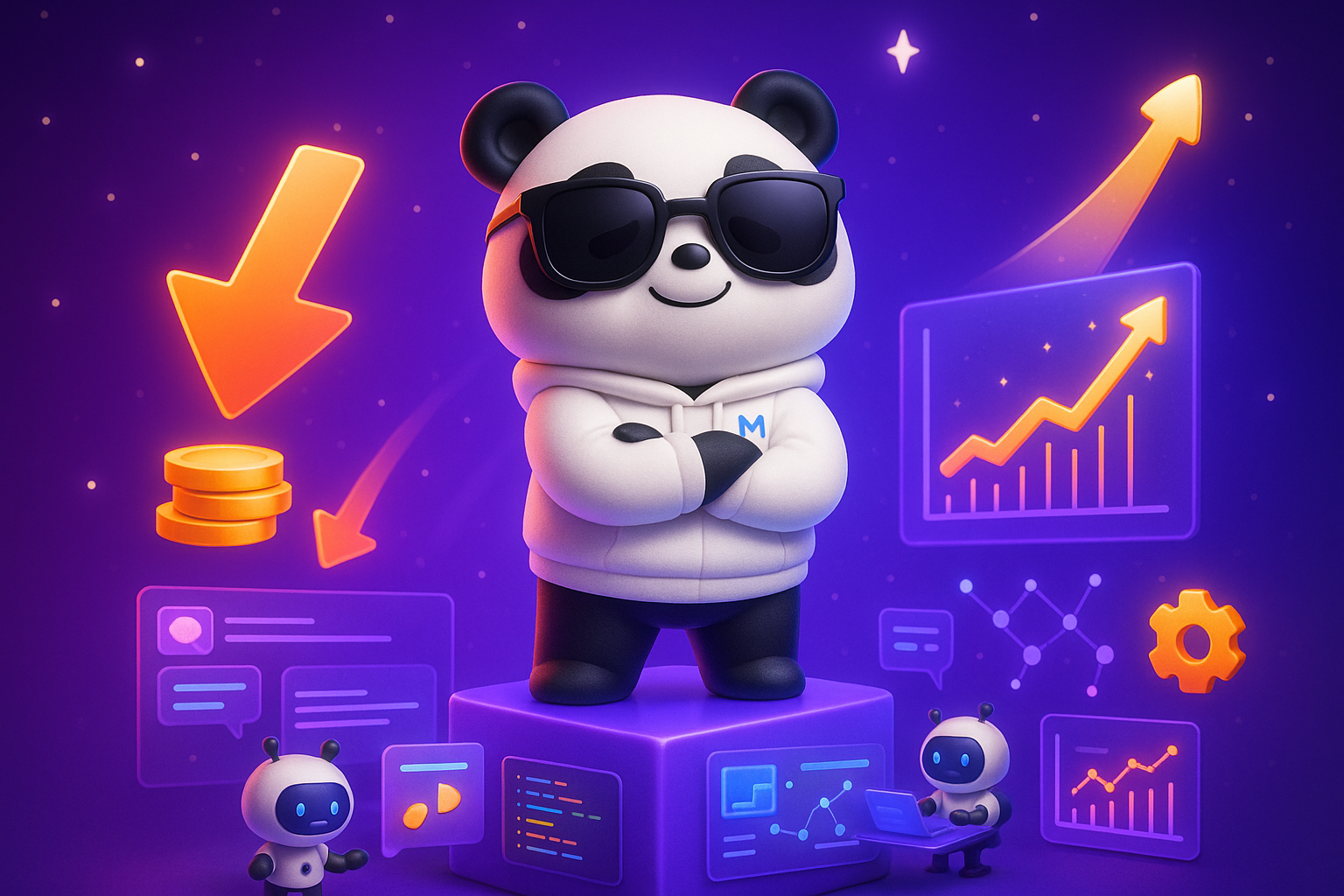
Before we tell the internal case, we have one direct question for you: what do we really want?
We want to cut costs. We hate bureaucracy most of all. We want less back-and-forth between people and between departments, because those handoff loops are exactly where bureaucracy, delays and mistakes creep in. We want staff to put their energy into creating value, not sitting there copy-pasting, reconciling Excel files and sending reminder emails.
That is exactly why MONA decided to move to AI first from early 2026, not because of a trend, but because we hate bureaucracy just as much as you do. After a 12-month pilot, MONA's leadership officially committed to operating AI first. Here are the numbers we measured in the first 5 months of 2026:
When MONA redesigns processes around AI instead of bolting AI onto old processes, variable costs drop sharply. Here are the specifics:
In total, across the roles that have been converted to AI first, MONA measured a 60% cost reduction at the end of Q1/2026 compared with the same period in 2025.
Productivity does not mean “9 times faster.” It is a throughput metric, the amount of output produced per person per hour, up 900% on roles converted to AI first. This number comes from 3 sources:
Result: with the same team, MONA's Q1/2026 output equals the entire 2024 output combined.
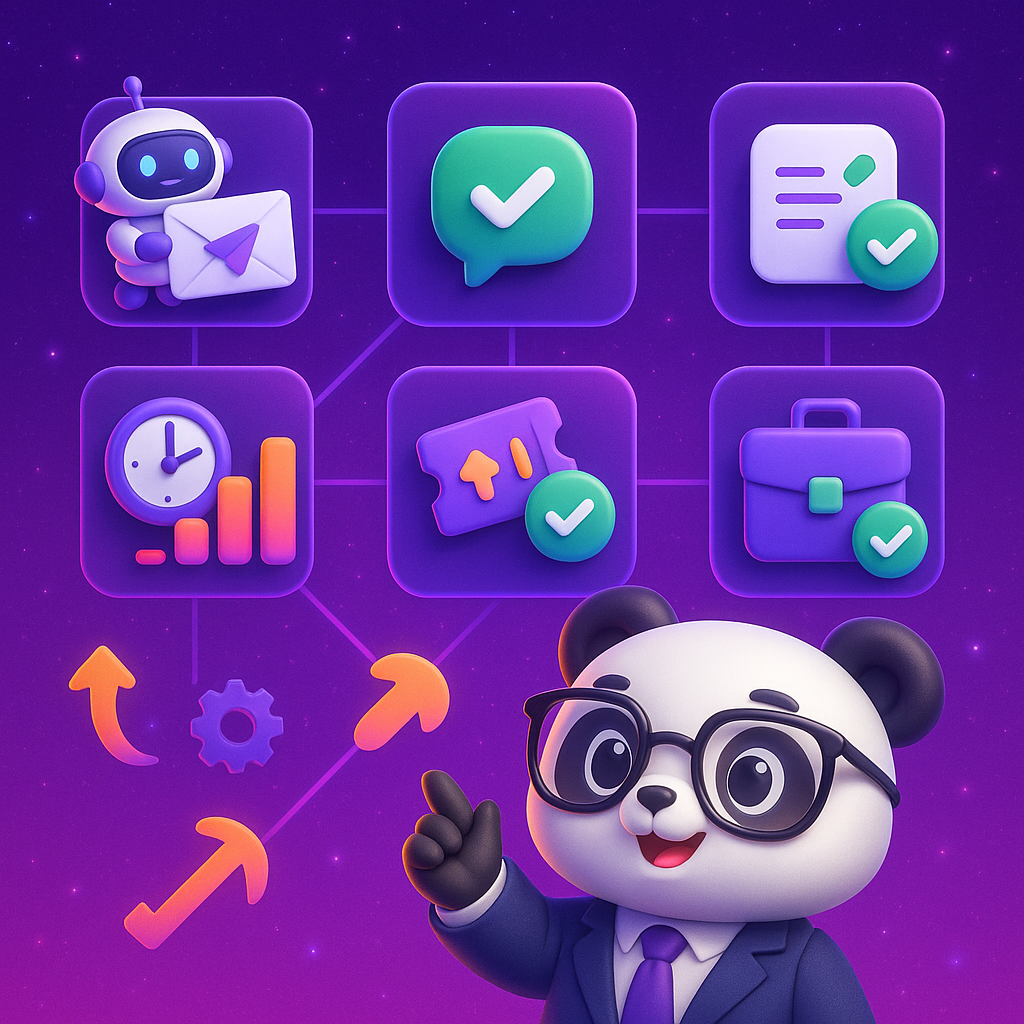
By May 2026, MONA had moved these roles to 100% automatic, with people only auditing periodically:
This automation does not “cut people.” MONA moves staff into higher-value roles: AI training, prompt engineering, AI governance and senior customer success. We see this as the most decent way to use AI: freeing people from repetitive work, not removing people. MONA has written this up in full in hire more or automate.
Your business can absolutely move faster, because you have MONA and the international cases as references. We are ready to share the detailed playbook with anyone who needs it.
In April 2025, CEO Tobi Lütke sent an internal memo: “Before asking for headcount, teams must prove AI cannot do the job.” AI usage became a KPI in performance reviews. Eight months later, US companies copied it, and the share of job postings requiring AI skills rose from 5% to 9% in a year. This is a model of AI first enforcement through HR policy, not just a slogan.
JPMorgan rolled out to LLM Suite for more than 200,000 employees for daily use. By 2026 it had over 600 use cases in production, delivering USD 1.5 to 2 billion in value per year. CEO Jamie Dimon said openly: they spend USD 2 billion a year on AI and save about USD 2 billion. Investment bankers automate 40% of research; traders cut research time by 83%. This is a AI first corporate-style rollout, scaling from pilot to the whole organization in 18 months.
In 2023-2024 Klarna replaced 700 customer service staff with AI, claiming USD 40 million in annual savings. In early 2025 it partly reversed course because CSAT dropped and AI could not handle complex edge cases. CEO Sebastian Siemiatkowski admitted: “Cost seems to have been a too predominant evaluation factor.” See details in a practical Vietnam AI First roadmap.
The key lesson for you: AI first does not mean replacing people 1:1. You need a mechanism for Human-in-the-loop, with people approving at high-risk points. MONA learned this lesson from the pilot, so every workflow has an “AI confidence threshold,” and below the threshold it hands over to staff automatically. We share this experience so you can avoid the pitfall Klarna already fell into.
This is the part to bookmark. We split it into 8 clusters for easy lookup. Each term has the English name, the Vietnamese name, a plain explanation and a usage example, so when your tech team reports, you follow right away and do not get “lost in jargon.”
| The term | Vietnamese | Explanation and example |
|---|---|---|
| AI (Artificial Intelligence) | Artificial intelligence | Machines simulating human thinking and decision-making. Example: an automated credit scoring system. Read more what AI is. |
| ML (Machine Learning) | Machine learning | Machines learn from past data to predict new things, with no need to program each rule. Shopee's product recommendations are ML. |
| Deep Learning | Deep learning | A branch of ML that uses multi-layer neural networks, modeled on the brain. The foundation of ChatGPT, face recognition and self-driving cars. |
| GenAI (Generative AI) | Generative AI | AI that generates new content on its own: text, images, video, code. See What is Generative AI. |
| AGI | Artificial general intelligence | AI that can do almost any intellectual task at human level. As of 2026 nobody has reached it, and it is the goal of OpenAI, Anthropic and Google. |
| NLP | Natural language processing | Lets machines understand and generate human language. A Vietnamese customer service chatbot is NLP. |
| Computer Vision | Computer vision | Lets machines “see” images and video. AI cameras count customers entering a shop and check product defects on the line. |
| STT / TTS | Two-way speech-text conversion | STT writes up Zoom meeting minutes. TTS lets a voice agent call customers with a human-sounding voice. |
| The term | Vietnamese | Explanation and example |
|---|---|---|
| LLM | Large language model | The “brain” of ChatGPT, Claude AI, Gemini. Trained on billions of pages of text. |
| SLM (Small Language Model) | Small language model | A shrunken LLM that runs on a laptop or phone and is cheaper. Businesses use it internally to protect data. |
| Foundation Model | Foundation model | A general model that people fine-tune for each task. GPT underpins over 100,000 applications. |
| Multimodal AI | Multimodal AI | Processes text + images + audio + video at the same time. Snap a photo of an invoice and AI reads it and builds the report. |
| Reasoning Model | Reasoning model | An LLM that “thinks” through several steps before answering. OpenAI o3, Claude thinking mode. |
| Frontier Model | Frontier model | The strongest available, which only a few labs can build: OpenAI, Anthropic, Google, xAI. |
A few specific AI products worth remembering: ChatGPT, Claude AI, DeepSeek, Perplexity AI, Manus AI, Midjourney, Leonardo AI, SearchGPT.
| The term | Vietnamese | Explanation and example |
|---|---|---|
| Prompt Engineering | Prompt engineering | The craft of writing instructions for AI to get good results. A “must-have” skill for every employee in 2026. See What is a prompt. |
| Few-shot / Zero-shot | Few-shot / Zero-shot | Give AI a few examples (few-shot) or none (zero-shot), then ask it to do a new task. |
| Chain-of-Thought (CoT) | Chain of thought | Ask AI to “show its reasoning steps,” which improves accuracy on complex problems. |
| Fine-tuning | Fine-tuning | Train an LLM further on a business's own data so it is strong in that domain. Example: fine-tuning Llama for Vietnamese law. |
| RAG | Retrieval-augmented generation | AI looks up internal documents before answering, which prevents made-up answers and lets it use private knowledge. Example: an HR policy lookup chatbot. |
| Embedding / Vector DB | Embeddings / vector database | Turn text into numbers so machines can compare “closeness in meaning”. Pinecone, Weaviate, pgvector. |
| Context Window / Token | Context window / Token | The amount of text an AI “remembers” in one chat. Claude Opus 4.7 reaches 1M tokens (about 700,000 Vietnamese words). API pricing is per token. |
| Hallucination | Hallucination / Making things up | AI states wrong answers with confidence. 74% of businesses see it as the biggest risk (Stanford 2026). |
| The term | Vietnamese | Explanation and example |
|---|---|---|
| AI Agent | AI agent | AI that plans, uses tools and carries out multi-step tasks on its own, not just answers questions. Booking tickets, sending emails, reconciling orders. See What is an AI Agent. |
| Agentic AI | Agentic AI (strategy) | The approach of using AI agents instead of traditional chatbots. High performers scale agents 3x more than their peers (McKinsey). |
| Autonomous Agent | Autonomous agent | An agent that runs for a long time, makes its own decisions and needs little human review. |
| MCP (Model Context Protocol) | Model Context Protocol | An open standard from Anthropic launched in 11/2024, the “USB-C for AI agents”. It connects LLMs with internal data and tools. OpenAI, Microsoft and Google have all adopted it. |
| Tool Use / Function Calling | Tool calling | AI calls APIs, queries databases and sends mail instead of only chatting. The core mechanism of an agent. |
| Computer-Use AI | Computer use AI | AI looks at the screen, moves the mouse and types like a person. Anthropic Claude 10/2024 leading the way, with OpenAI Operator following in 01/2025. |
| Operator Agent | Action agent | OpenAI's product name for an agent that controls a browser, placing orders and booking appointments by itself. |
| Multi-agent System | Multi-agent system | Several specialist agents working together: 1 for research, 1 for writing, 1 for review. |
| The term | Vietnamese | Explanation and example |
|---|---|---|
| AI Copilot | AI copilot | AI sits next to the employee and suggests in real time. GitHub Copilot, Microsoft 365 Copilot. |
| Workflow Automation | Workflow automation | Link work steps into a flow that runs by itself. n8n, Zapier, Make. |
| RPA | Robotic process automation (RPA) | A “bot” that mimics human mouse clicks. UiPath reconciling invoices. |
| Hyperautomation | Hyperautomation | Combines RPA, AI and agents to automate an entire process end to end. See What is AI automation. |
| Human-in-the-loop (HITL) | Human in the loop | Design the workflow so a person checks the important steps, a golden lesson from Klarna. |
| AI Orchestration | AI orchestration | A layer that manages and coordinates multiple models, agents and tools. LangGraph, LlamaIndex, n8n AI nodes. |
| Marketing Automation | Marketing automation | Email sequences, lead nurturing and multi-channel flows that run by themselves. See What is marketing automation. |
| The term | Vietnamese | Explanation and example |
|---|---|---|
| Inference / Training | Inference / Training | Inference: when AI runs to serve real users (the main cost). Training: when a model is built, enormously expensive; GPT-4 is estimated at over 100 million USD. |
| GPU / TPU | Chip AI | Nvidia GPUs (H100/B200) are the “oil” of 2026. The TPU is a chip Google designed itself. |
| MLOps / LLMOps / AIOps | MLOps / LLMOps / AIOps | The toolset, deployment process and monitoring for AI in production. |
| Edge AI | Edge AI | Running AI right on the device (phone, camera, POS) instead of the cloud: faster and more secure. |
| The term | Vietnamese | Explanation and example |
|---|---|---|
| AI ROI | AI ROI | Measures money spent against value gained. Only 6% of companies get an EBIT impact above 5% from AI. |
| AI Governance | AI governance | Internal rules on who may use which AI, for what, and how it is audited. The AI Governance Officer role grew 17% in 2025. |
| Responsible AI | Responsible AI | Deploying AI that is fair, transparent and safe. The share of companies with a policy rose from 76% to 89% in one year. |
| EU AI Act / Vietnam AI Law | AI legislation | EU AI Act: 4 risk levels, applying 2024-2026. Vietnam: effective 01/03/2026, 3 risk levels, with an incident reporting portal. |
| Data Privacy | Data privacy | Protecting personal data in AI training and inference. Vietnam: Decree 13/2023 on personal data protection. |
| AI Bias | AI bias | AI learns from skewed data and so makes skewed decisions. Example: a hiring AI rejects women because the old data was almost all men. |
| The term | Vietnamese | Explanation and example |
|---|---|---|
| AI SDR | AI sales rep | An AI agent that prospects, sends emails, calls to qualify leads and books demos. A 4.12 billion USD market (2025), CAGR 29.5%. |
| Voice Agent | Voice agent | AI that phones like a real person: customer care, debt collection, appointment booking. Retell AI, Vapi, ElevenLabs Conversational. |
| AI Customer Support | AI customer support | Chatbots and voice agents that handle tier-1 issues. See Conversational AI and What is a chatbot. |
| AI Coding Assistant | AI coding assistant | Cursor, Claude Code, GitHub Copilot, Windsurf, writing code alongside developers. |
| Vibe Coding | “Vibe” coding | Coined by Karpathy in 02/2025: describe an idea in plain language and AI writes the code. 25% of Y Combinator Winter 2025 startups have a codebase that is 95% AI-generated. Collins Word of the Year 2025. |
| AI Marketing / AI SEO | AI cho marketing / SEO | Personalization, content generation, ad optimization, topic research, AI Overview optimization. See AI Marketing, AI SEO, AI Overview. |
| AI Native | AI-native | A product or company that has run on AI since day one, not bolted on. See What is AI Native. |
A total of 40+ AI terms that every business must know in 2026. Print it or bookmark it to look up when needed. We update this list regularly because the AI cluster changes faster than the stock market.
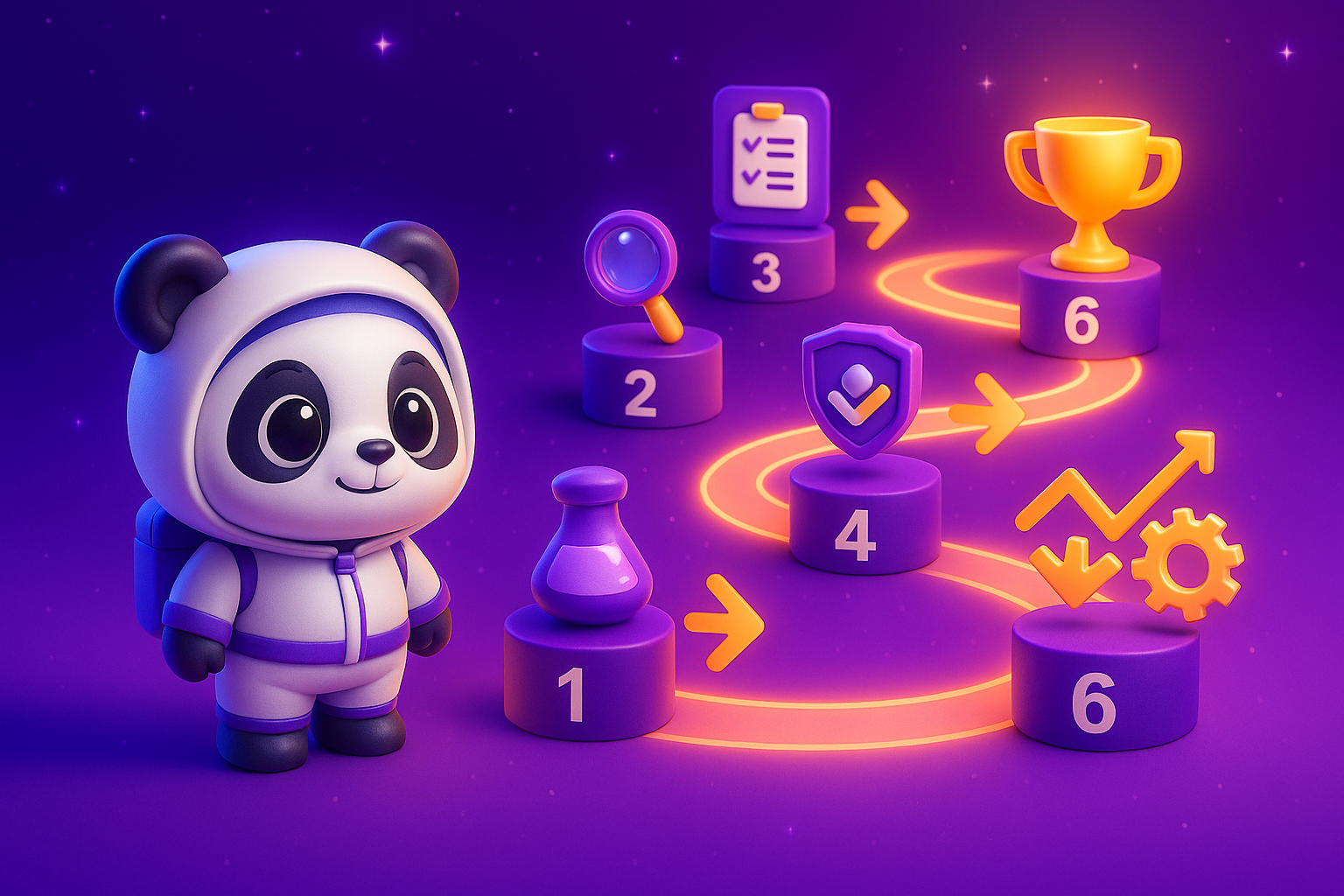
From MONA's experience and VINASA's STAIR model, here are the 6 steps we recommend for you. They are simple, and you can start this week:
By completing all 6 steps, a Vietnamese SME with 100-200 staff can reach the AI first state in 12-18 months. You can go faster if you choose the right partner. What matters most is to start; we do not have another 2-3 years to hesitate while competitors are already running.

Thank you for reading this far. We shared such a long article not to pitch a service, but because we truly want you to see the opportunity that is opening up. If the roadmap above fits you, the MONA ecosystem can support you in 3 main areas:
In addition, the MONA ecosystem also includes Mona.Academy, a business management SaaS suite (expense ledger, team budgets, agent management) with built-in AI workflows, and SkillHub, an internal training platform that helps you upskill AI literacy across the whole team. For individuals who want to learn AI properly, Khánh Hùng Academy (40,000+ students) is the training sub-brand led directly by MONA's founder.
Contact us through the MONA website or Zalo OA and we will audit your AI readiness and propose the 3 fastest-ROI use cases for your business. Consulting is free, because at MONA, your success is our success.
The age of automation waits for no one. But it does not leave behind anyone who dares to step forward. Having read this far, we believe you are a business owner who looks far ahead and acts.
AI first is not a destination, it is a new way of operating. 88% of the world is already on the road. 73% of Vietnamese businesses have tried it. The question is no longer “should we use AI or not”, but “how fast do we rise together in the race AI first ?”.
MONA has been through the pilot stage and is now cutting costs by 60% and raising productivity by 900%. We are ready to share everything we have learned, so you do not stumble on the stretches of road we have already walked. You and MONA, rising together in the era of AI first this URL.
Learn more about AI first

CEO & Founder · The MONA
The founder of The MONA built a service company of 60+ staff with 14,000+ projects delivered. Khánh Hùng shares his thinking on building self-running systems, automating a business, and the real lessons behind MONA's projects.
 1,6K




Professional website
design services
Own a website with a beautiful, 100% exclusive design and a lifetime warranty, with the ability
to expand features flexibly as your business grows, starting today!






 MONA will never sell your information or send you spam


 MONA will never sell your information or send you spam
