
 MONA OS 2.0
 Partner with MONA


 Tự động hoá doanh nghiệp
 Cẩm nang SEO
 Digital Marketing
 Kinh nghiệm thiết kế website
 Hạ Tầng Server
 Giáo dục


 VI
 EN










Message us on
Zalo Official


 ProductsNew

 ProductsProducts
 Mới ra mắtKHA AI 2027App tự edit video, tự đăng mọi mạng xã hội, 2 phút mỗi ngày










 Website designLooks good and wins customers over.
SEO servicesBrings in customers searching for exactly what you sell.
 Tư vấn digital marketingKéo khách từ nhiều kênh, đo bằng số thật.
Corporate video productionVideos introducing your company, factory and team.
 NewAI video productionCompany story films made with AI.
 Custom software developmentCRM, ERP and HRM built for your business.
 Viết AI Agent theo yêu cầuĐặt riêng một trợ lý AI cho đúng việc của mình.
 Tư vấn chuyển đổi AIĐưa AI vào vận hành của cả công ty.
NewMONA LMSManagement for centers and schools.
MONA SkillHubInternal training for company staff.
 NHTQ systemEnd-to-end China–Vietnam shipping operations.
MONA JMSManagement for gold, diamond and pawn shops.
 MONA E-LearningA website with every feature you need to sell courses.
 How to sell online courses (course)More than 30 free lessons on selling courses on autopilot.
 MONA Cloudmonacloud.vnServers to get your apps and websites running.
 MONA Basemonabase.vnPostgres database, sign-in and file storage.
 MONA Mailmonamail.vnSend OTP, order and invoice emails from your software.
 MONA Paymonapay.vnAccept bank transfers via VietQR and notify your software when the money arrives.
 MONA eInvoiceComing soonIssue e-invoices that meet tax standards.
Gấu CườiTrả lời khách 24/7 trên web, Fanpage, Zalo và thu lead cho sale.
 Gấu TeleSalesGọi điện tư vấn, chăm khách như tổng đài viên thật.
Dê CườiTư vấn và chốt đơn cho shop ngay trong khung chat.
Gấu WebmasterNhắn nhóm Zalo là website được sửa xong.
 Gấu Pháp ChếSoạn hợp đồng, rà điều khoản trong vài phút.
 Gấu Báo GiáLên báo giá đúng mẫu và gửi khách ngay.
 AI chăm sóc khách hàngTheo dõi và giữ chân khách hàng cũ.
 Gấu Tuyển DụngLọc hồ sơ, hẹn lịch, phỏng vấn ứng viên.
 Mới ra mắt
KHA AI 2027
Xây kênh chuyên gia 2 phút mỗi ngày
Quay bằng điện thoại, AI tự edit video, tự đăng lên 16 nền tảng và tự trả lời bình luận, tin nhắn.
882.681lượt xem trên kênh CEO MONA sau 36 ngày
 Anh Khánh HùngCEO MONA đang dùng mỗi ngày
Xem app làm được gì
 AI
Gấu Cười MONA ĐANG TỰ XÀITrả lời khách 24/7 trên website, Zalo OA, Messenger và thu lead về cho sale.
Dê CườiChốt đơn bán lẻ và sàn: Shopee, TikTok Shop, web. Chăm cả khách sỉ, đại lý.
Gấu WebmasterCập nhật nội dung, tối ưu SEO website mỗi ngày.
Gấu TeleSalesGọi điện tư vấn, chăm khách như tổng đài viên thật.
Gấu Tuyển DụngLọc hồ sơ, hẹn lịch, phỏng vấn ứng viên tự động.
AI chăm sóc khách hàngGiữ khách cũ, cứu lead đã rớt cho phòng kinh doanh.
Gấu Pháp ChếSoạn hợp đồng, rà điều khoản trong vài phút.
Gấu Báo GiáLên báo giá đúng mẫu, gửi khách ngay khi có yêu cầu.
 Chuyển đổi AI toàn phầnGiải pháp tổng cho doanh nghiệp, 3 lớp triển khai.
 Viết AI Agent theo yêu cầuĐặt riêng một con AI gánh đúng nghiệp vụ của bạn.
 Custom softwareCRM, ERP and HRM with built-in AI automation.
 SEO & AEO thời đại AIĐược Google lẫn AI trích dẫn, không chỉ xếp hạng.
 Kiến thức AI cho doanh nghiệpBài phân tích, hướng dẫn ứng dụng AI vào vận hành.
 Free AI courses
 AI tools at work
App mới · KHA AI 2027
Xây kênh 2 phút mỗi ngày
AI tự edit video, tự đăng mọi mạng xã hội
Free consultation, 8am–10pm every day

19 May, 2026
You have probably heard the term AI Native everywhere lately, from LinkedIn to conference stages. But almost nobody says exactly which position in your company it can replace. Honestly, you don't need an academic definition. What you care about is how many wasted working hours it can cut and how much monthly payroll it can save.
Put simply, AI Native software is built with AI at the center from day one. It actively does the repetitive parts of the work. That is completely different from older software, which is a passive tool that only records whatever your staff type in by hand. This article tells you what AI Native is in the language of someone who runs a business. We will also explain why this technology has only been truly practical since 2023, and which positions in today's org chart it is replacing.
Set aside all the academic definitions online for a moment. Put as simply as possible, AI Native it is software born with AI at its core, from the moment the idea was sketched. It is not an AI feature bolted onto an existing piece of old software. Think of building a new house with the plumbing and wiring hidden in the walls from the start, versus renovating an old house and running exposed wires along the outside of the walls.
To see the difference, look at the older generation of software you may be using now. ERP systems, CRMs and sales software of the past are passive by nature. They are expensive electronic notebooks. Salespeople still type in customer details by hand. Accountants still key in invoices. At the end of the month, the department head still sits down to compile reports by hand from those scattered numbers. The software just passively records whatever people enter.
By contrast, AI Native software is proactive. It reads, understands and does the repetitive work on its own, without anyone giving it step-by-step orders. It doesn't wait for you to enter data. Instead, it connects to the data streams and processes them itself. For example, it can read customer emails and Zalo messages, summarize the request and create a ticket in the customer support system. It can "look" at a photo of an invoice, extract the data and enter it into the accounting software. It isn't a notebook. It's a virtual employee who never gets tired, handles repetitive tasks with near-perfect accuracy, 24/7.
This proactivity comes from two core technologies that have matured since 2023. First, large language models (LLMs) let machines read and write Vietnamese as naturally as a person. Second, computer vision lets machines "see" and recognize images and documents. These two pillars created a new generation of software that can fully replace positions that only copy, key in and compile information.
Telling the difference matters a great deal. If you buy an old piece of software with an "AI" label stuck on it, that is a wasted investment. The operational and data-entry burden still sits on your staff. The payroll for work that creates no value is still there. A real system should free people from mechanical tasks so they can focus on work that truly needs judgment and empathy, like looking after VIP customers or building strategy.
See more: What is an AI chatbot: how it differs from a scripted chatbot and how to choose the right one
The idea of AI Native is not new. Professors at Stanford and MIT were talking about it a decade ago. But for Vietnamese business owners it was just words in the news, distant and expensive. You may have heard of AI beating humans at Go, but applying it to manage a chain of 20 stores felt almost impossible.
Things only really changed from late 2022 to early 2023. Not because of one big invention, but because two technology pillars had accumulated for long enough to mature. They became strong enough, cheap enough and accessible enough for real business use, instead of staying in the lab. That is when a new generation of automation software was born.
This isn't just our own impression. The Transformer architecture, published in 2017 in the paper Attention Is All You Need is the foundation of almost every language model today, and the report Stanford's AI Index records that the cost of calling an AI model has dropped to a level even small and medium businesses can afford. The survey McKinsey's State of AI shows that most businesses around the world have already put AI into at least one operational step. In short, the technology is now strong enough and cheap enough that it no longer lives only in the lab.
To picture it, an LLM is like an extremely smart staff member who can read any kind of text and communicate in natural language. Computers used to understand only rigid commands. You had to enter the exact keyword and the exact structure for it to run. LLMs are different.
It can read a 50-page contract and summarize the risky clauses in three bullet points. It can review a customer's chat history and draft a follow-up email in the right tone. It can sort 1,000 Zalo and Facebook messages every morning, recognizing which are price questions, which are complaints and which are potential customers, and send each to the right team.
Most important, it understands the context and intent of Vietnamese people, including everyday ways of speaking. Just 5 years ago, no machine could do that. This step forward opened the door to automating almost all work involving writing, communication and information processing.
Computer vision is a computer's ability to "see" and "understand" images. The technology isn't new either, but it used to be very inaccurate and extremely expensive to deploy. Now it is reliable enough to solve real operational problems in business.
Here are some concrete examples:
When you add these two pillars together, you finally have software that is truly AI Native. It is no longer a passive tool that only records what people enter. It actively "reads", "sees" and "does" the repetitive work that only people could handle before. This is the foundation on which we at MONA build closed-loop automation chains for businesses.
The market is now sticking an "AI" label on everything, just to sell. But having the word AI doesn't mean the software will do the work for you. In many cases you are paying for a nearly useless feature that was bolted on for show.
To avoid paying for inflated marketing, you need to tell apart three levels of AI integration. We call them Level 1, Level 2 and Level 3.
This is the most common kind. Picture an old car. Everything still runs by hand. Then the supplier buys a navigation screen, mounts it on the dashboard and calls it a "smart car."
The car itself hasn't changed. Remove the screen and it drives exactly the same. This kind of software is the same. The core is still a passive system, and you and your staff still enter data and click buttons yourselves. The AI button is only a side feature, usually to suggest a few lines of product description or summarize a long text. Take the AI button away and the software runs just as before. It doesn't cut a single second of your staff's work.
This level is a bit more advanced. Same car, but instead of adding a screen, the manufacturer built lane keeping or automatic braking into the driving system. AI has become part of a core process.
In software, that is like AI automatically scoring a lead based on interaction history, or automatically sorting incoming email. It does a few specific things and reduces the load on staff at one small step. But the software basically still needs an operator. You are still the main driver, and AI only helps with a few actions.
This is a completely different level. It isn't a car with smart features added. It's a self-driving car. All of its value lives in the AI brain. Take out the self-driving AI and the car is just a useless block of metal.
A piece of AI Native software is the same. AI isn't a feature, it's the reason the software exists. It doesn't "suggest" or "assist." It actively runs a whole chain of work that used to need one or more people. For example, a virtual assistant that reads and answers all Facebook and Zalo messages across 28 branches. It understands what the customer wants, advises, books the appointment and updates the CRM by itself. People only review the final result.
Where should your money go? The answer is clear. For repetitive work with a clear process, invest only in Level 3. Because only software that is AI Native can truly replace a position, cut operating costs directly and free people from work machines do better.
Many managers and business owners wonder about the role of this new technology. Will AI Native take over work that needs creativity? Will it replace important decision-making roles?
In reality, no. AI Native does not target strategic staff. This technology is built to directly replace middle-layer positions. These are people who only convert data and carry out repetitive tasks. They don't create direct added value.
You can picture it more clearly through the roles below:
This position exists in every business. They sit and copy figures from many different sources. From paper invoices, customer emails or scattered Excel files. Then they paste it all into the company's CRM or ERP. This work takes most of the working day. It demands care but not complex thinking. Mistakes are very easy when you do it nonstop.
AI Native software takes over this whole part with computer vision. It reads photos of invoices and paper documents directly, extracts the data in emails and online forms, and fills it into the right fields in the system by itself, faster than a person and almost without getting a single number wrong.
At the end of every day, week and month, this team starts compiling again. They filter figures from the sales report and the marketing report. Then paste them into large Excel summary sheets. Finally, they produce a report for management. This takes hours every day. It is a tedious chain of repeated actions. Often the time spent making a report by hand is longer than the time spent reading it.
AI Native connects straight to the original data sources, gathers the numbers and builds the report in the exact template your company already uses. You don't wait until the end of the day for a summary: open the dashboard and see the numbers move in real time, with a few observations the system draws out to help you see things faster.
Do you run a chain with many branches? Do lots of customer messages pour into Zalo and Facebook? Staff usually have to pull information from there. Then they type it by hand into the company's customer management system. The goal is to save appointments, service requests or personal details. This is easy to miss and data gets lost. It also slows down replies to customers.
AI Native plugs deep into Zalo and Facebook, picks up customer information from each message and writes it straight into the customer record. Every interaction is saved in one place, so looking at one customer shows you the full history. No more data scattered in pieces, and no more customers waiting for a reply.
In service industries like spas, restaurants and retail, customers ask a lot. The questions usually revolve around prices, opening hours and branch addresses. Or the booking process and current offers. Staff spend a huge amount of time answering these messages. Sometimes they reply with the same content dozens or hundreds of times a day. This lowers productivity.
Thanks to large language models, AI Native understands the question and answers right away, 24/7, in natural Vietnamese. The price, opening hour and booking questions that keep coming back are handled entirely by the machine, so staff can focus on difficult customers and real selling.
Added up, these are all fixed salaries you pay every month that bring in no new revenue and only keep the machine running. When AI Native takes over this work, you cut costs and raise the capacity of the whole system at the same time. To see how we do it, take a look at the business automation page where we lay out how to apply it to each department.
AI Native is not a far-off idea. It is already running for real in many Vietnamese businesses, lifting the daily operating burden so the company can put its people and money into what actually generates revenue. Here are a few real cases we have done.
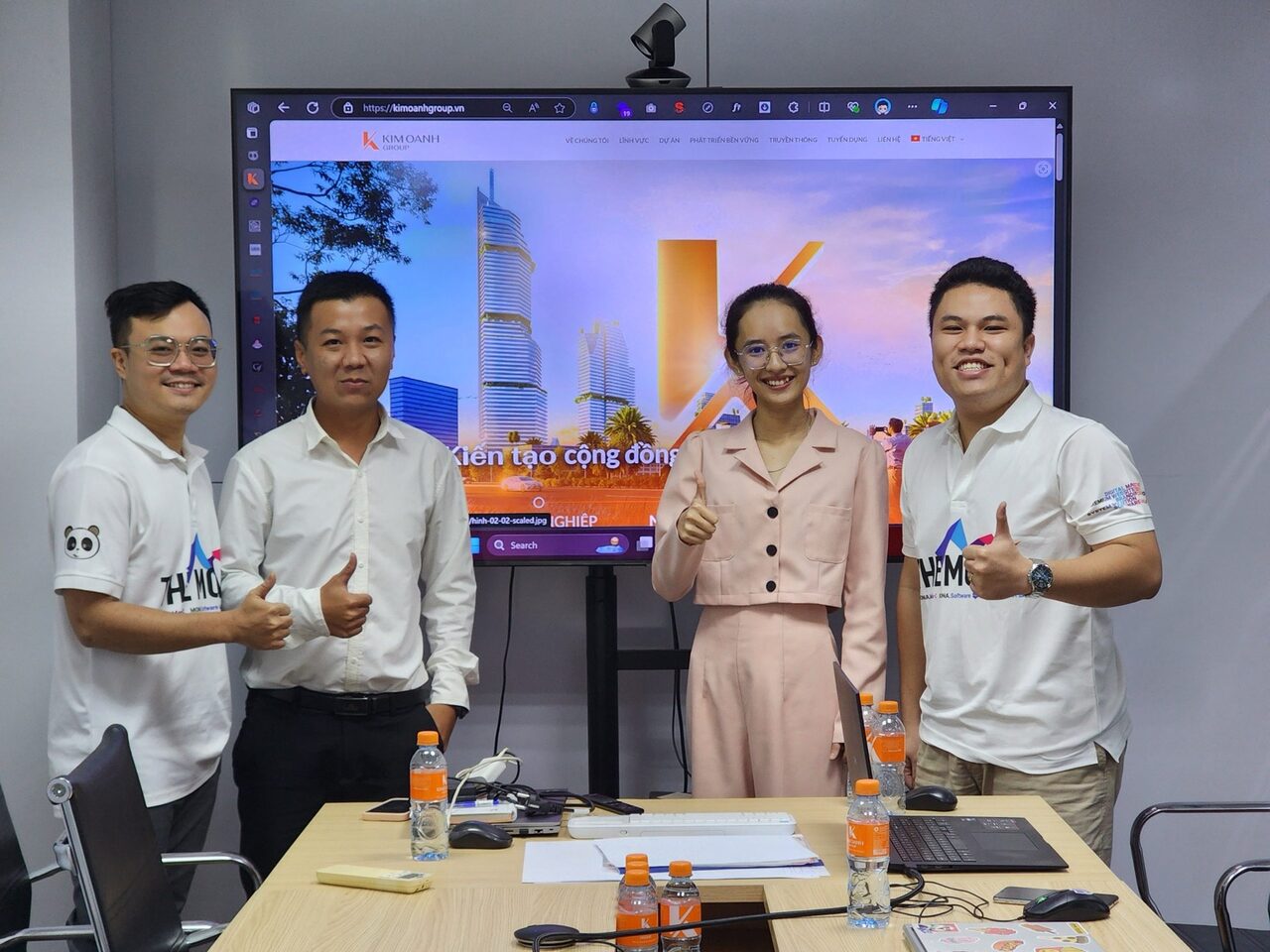
Does this scene look familiar?
It's 10 pm on a Saturday. A customer messages on Zalo asking about a HIFU lifting package. The receptionist turned off her phone 5 hours ago. On Monday morning, she opens it to find 280 similar messages.
By the time she replies, the customer has already booked with a competitor. A 28-branch spa chain, a client of ours in Ho Chi Minh City and Hanoi, once lost tens of billions of VND in revenue per month for this reason. The numbers show 500 million VND saved per month by reducing lost customers.
With MONA's AI Native software, the story changes completely. The virtual assistant answers customers 24/7 in Vietnamese so natural that customers can hardly tell whether they are chatting with a machine or a person. It books appointments straight into the system and saves all the details. Message handling time drops to nearly zero, and receptionists are free to advise the valuable customers in depth.
For a restaurant chain with over 30 branches, keying in paper invoices every day is a nightmare.
Hundreds of goods-in and goods-out invoices. Data-entry staff spend 3-4 days just to finish. Mistakes are routine.
Our AI Native software uses computer vision to read goods-in invoices the moment they are photographed, and ingredient data flows straight into the system with nobody typing. It also spots which dishes are selling fast and warns before ingredients run out, so the chain owner sees inventory in real time and orders more accurately. This alone saves the chain about 600 million VND per month in labor cost and losses.
A chain of 15 jewelry stores in Da Nang with revenue of 50 billion VND per month. Counting gold and silver by hand took a lot of people. It took several days to get the month-end report.
Meanwhile, products kept moving. The owner didn't have real-time numbers.
MONA's AI Native software scans product photos and follows sales figures in real time, pushing them straight to the owner's dashboard instead of waiting three days for someone to compile them. Every change in stock and revenue shows up instantly, so the jeweler can make buying, selling and stock-transfer decisions quickly, prevent losses and keep profit clearly protected.
MONA EduCenter is the clearest example, because it is a system we built ourselves with AI Native at its core. It grades multiple-choice tests and basic essays, reminds students to submit on time and drafts content outlines for new courses, so academic staff are freed up to focus on in-depth questions.
Over 40,000 students at Khanh Hung Academy (KHA) run on this system. Operations staff at the center dropped by 30%, while training capacity rose by 20% after just 6 months of rollout.
What do these examples have in common?
Every repetitive, time-consuming, error-prone task is handled by the machine. People can focus on work that needs judgment, creativity or deeper interaction.
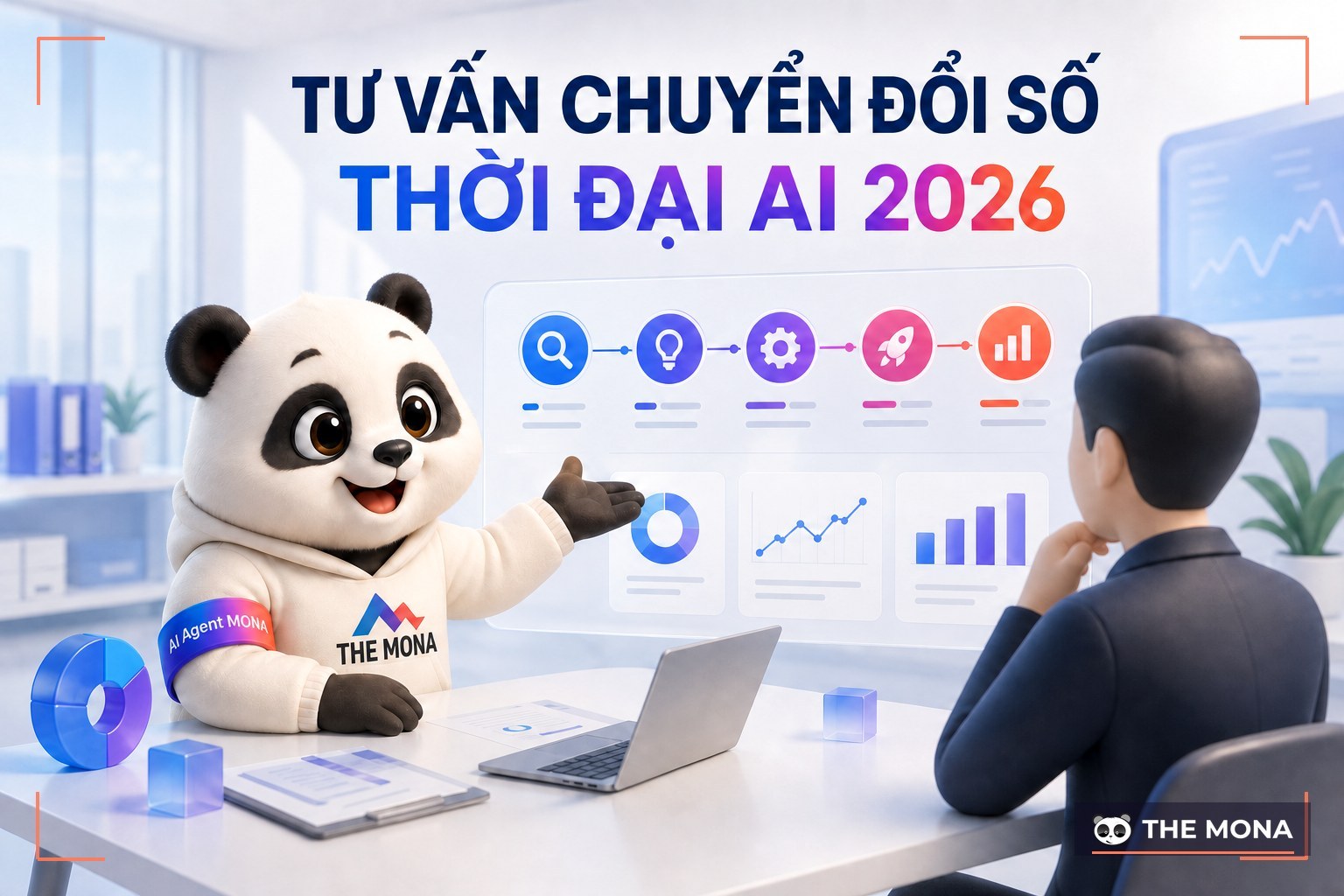
If you want to know where in your company AI Native can be applied, contact us to get digital transformation consultation.
We will work with you to find the pain points and the most suitable solution.
The examples above are not things we read somewhere and retold. MONA turned itself into an AI Native company first, putting AI into every step of its own work, and only then brought that way of working to build for clients. So far we have accompanied 82 partners through exactly this process, each with a different problem, from spas, restaurants and retail to training centers. How we package that whole roadmap is in the full AI transformation.
We understand that your difficulty isn't a lack of definitions. It's that nobody has shown you, up close, an AI that really does work in a real business, and nobody has told you where to take the first step. That is why we are opening The Last AI Secret, a completely free online session, taught in person by Triết Phan (Growth Manager, in charge of AI at MONA).
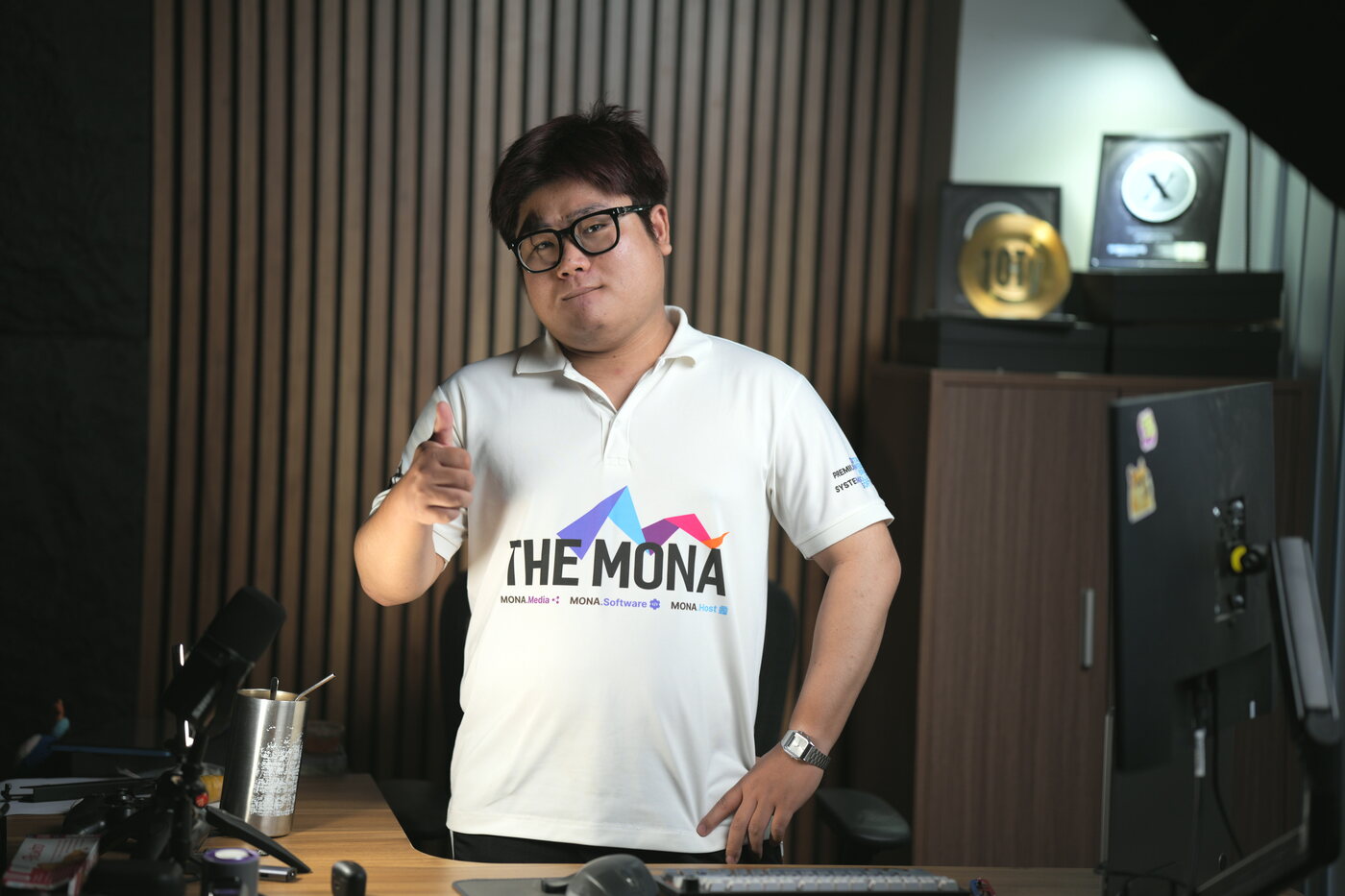
In this session we won't teach prompt theory from A to B like the many courses flooding the market. We will switch on AIs that are actually running so you can see what they can do, point out where in an ordinary business you can automate right away, then map out a roadmap for transforming on your own without tearing down your old systems or burning billions of VND. The session now open for registration takes place at 8 pm on Saturday, 26/09/2026; reserve your free spot at lastaisecret.mona.media.
Why does MONA offer this for free?
MONA is a software, digital transformation and AI transformation company, but above all, MONA is a B2B service company that benefits directly from this: the more successful Vietnamese businesses are, the more MONA benefits. A slow, shrinking market with weak technology is exactly what would kill MONA's future business.
So more than anyone, MONA wants you to succeed, and MONA genuinely gets involved in helping you get there.
And AI transformation is the key to that success for all of us.
When many people hear about AI Native, they picture an expensive scenario. Tearing down the entire old software system. Building something completely new from scratch while the business still has to run every day. We understand this worry, because it is the costliest mistake a business can make. You don't need to, and shouldn't, do that. Rebuilding everything burns billions of VND in cash and badly disrupts staff who are used to the old processes. Data accumulated over a decade risks being lost in migration. Employees have to relearn from scratch, creating a dip in productivity that can last for months. We wouldn't begin an important process with a step that risky.
Instead, start small and smart. Set aside one session with your department heads. Together, list about 10-15 repetitive tasks that need no creativity but eat the most working hours each week. For example, the customer care team answering hundreds of identical questions about addresses and prices. Or the accounting team keying every figure from paper invoices into an Excel file. Or the marketing team writing the same emails and Zalo messages again and again for different customer groups. From that list, pick one or two of the easiest tasks with the clearest pattern to pilot automation. You can use AI tools tools already on the market, or simply ask your tech team to connect an API to your current software. It's like fitting a robotic arm onto an old machine so it does one boring task by itself, instead of replacing the whole machine.
The goal of this small step is to create a clear win within 90 days. A result the whole company can see and measure. For example, after 90 days an automated chatbot handles 70% of basic questions, cutting the team's message-monitoring time in half. Or software that reads invoices automatically saves the accounting team 40 working hours a month. When employees see AI genuinely freeing them from boring work to focus on more demanding tasks, the fear of being replaced gradually fades. In its place come curiosity and a wish to use it more. These small wins build momentum and buy-in from the inside. Once the machine is running smoothly and a culture open to technology has formed, that's when to think about building deep AI Native modules designed specifically for your business's most particular problems.
Finally, we know the biggest barrier for you is often not technology or money. The real difficulty is having to make decisions alone in the fog. There's no trusted advisor to ask, while employees either stay silent or quietly resist because they worry about their own jobs. The feeling of steering a ship alone through new waters is real. We shared a lot about this mindset and how to get past it in the AI-First Handbook for Businesses. Read it to see that you are not alone in this transformation. And if you need a concrete, safe and clear starting point, the first step should always be a business AI Audit. It isn't a sales meeting. It's a working session to figure out together where your business stands and where the easiest opportunity lies to create a win in the next 90 days.

The upfront cost of building AI Native software can be higher than older data-recording software. However, you should see it as an investment in an automated asset, not an operating expense.
The return comes quickly. One automation system can replace the work of 2-3 people doing repetitive tasks like data entry or report compiling. You can calculate the monthly payroll saved right away, and it typically pays back within 12-18 months.
Very much, but with a different approach. At a small scale, building a large AI Native system from the start may not be necessary. Instead, begin by using ready-made AI tools to optimize small pieces of work.
For example, have the marketing team use ChatGPT to draft content and the design team use Canva AI to make images faster. Once you are used to the automation mindset and know which process eats the most time, investing in a dedicated solution will be more effective and more accurate.
The straight answer is no. AI Native doesn't replace people, it replaces the mechanical, non-creative parts of work that people are doing now. It frees your staff from boring, repetitive tasks.
Specifically, it replaces middle positions that only move data from one place to another. In contrast, staff who are good at strategic judgment, creativity and deep customer relationships become even more valuable. They get more time to focus on the work that creates the most value.
Completely safe. This is the biggest advantage of working with MONA. We don't sell packaged software that many companies share on one platform. Instead, we build a separate system dedicated to your business.
All the software and databases are installed on your own server infrastructure. Only your company has access and control. Your business data, customer information and technology secrets all stay in your hands, with no dependence on any third party.
You can see the first concrete results within just 90 days. This is entirely achievable if we work together to pick the right easy wins to deploy first.
That might be automating 80% of the repeated questions for customer care, or automatically generating the end-of-day revenue report with nobody compiling it by hand. These early results build momentum and confidence for the whole team to keep expanding automation.
The right way is to start with a frank conversation with the MONA team. We won't rush to sell you software. The first step is to review your business's current operating process with you.
From there, we work together to identify the bottlenecks, the steps that take the most people and time and can be automated. You can reach MONA at 1900 636 648 or email info@themona.global to book a review session.
AI Native is not a trend to follow for the sake of it. It is a practical way to cut operating costs, raise capacity and free staff from boring repetitive work. But applied in the wrong place or with the wrong tool, it becomes a real money-burning machine, causing disruption without any return on investment.
MONA was founded in 2016, now 10 years in business, with over 14,000 projects large and small and 85% of clients coming back to work with us again. What sets us apart is that we both advise on the roadmap and build the custom software for you with our own hands. You don't have to hear the advice and then go find another company to program it. Everything is wrapped up closed-loop under one roof.
This week, try listing the 5 tasks that eat the most working hours in your company. Then mark the ones that are repetitive. You can send that list to info@themona.global or call 1900 636 648 to book a review session. Or you can preview digital transformation consulting service from MONA. In the first session we promise not to sell anything. We just sit down with you and point out exactly which positions AI can replace.

CEO & Founder · The MONA
Founder of The MONA, who built a services company of 60+ staff with 14,000+ projects delivered. Khánh Hùng shares how he thinks about building systems that run themselves, automating a business, and the real lessons from delivering projects at MONA.
 1,6K




Professional website
design services
Own a website with a beautiful, 100% exclusive design and a lifetime warranty, with the ability
to expand features flexibly as your business grows, starting today!






 MONA will never sell your information or send you spam


 MONA will never sell your information or send you spam
