
 MONA OS 2.0
 Partner with MONA


 Tự động hoá doanh nghiệp
 Cẩm nang SEO
 Digital Marketing
 Kinh nghiệm thiết kế website
 Hạ Tầng Server
 Giáo dục


 VI
 EN













Message us on
Zalo Official


 ProductsNew

 ProductsProducts
 Mới ra mắtKHA AI 2027App tự edit video, tự đăng mọi mạng xã hội, 2 phút mỗi ngày










 Website designLooks good and wins customers over.
SEO servicesBrings in customers searching for exactly what you sell.
 Tư vấn digital marketingKéo khách từ nhiều kênh, đo bằng số thật.
Corporate video productionVideos introducing your company, factory and team.
 NewAI video productionCompany story films made with AI.
 Custom software developmentCRM, ERP and HRM built for your business.
 Viết AI Agent theo yêu cầuĐặt riêng một trợ lý AI cho đúng việc của mình.
 Tư vấn chuyển đổi AIĐưa AI vào vận hành của cả công ty.
NewMONA LMSManagement for centers and schools.
MONA SkillHubInternal training for company staff.
 NHTQ systemEnd-to-end China–Vietnam shipping operations.
MONA JMSManagement for gold, diamond and pawn shops.
 MONA E-LearningA website with every feature you need to sell courses.
 How to sell online courses (course)More than 30 free lessons on selling courses on autopilot.
 MONA Cloudmonacloud.vnServers to get your apps and websites running.
 MONA Basemonabase.vnPostgres database, sign-in and file storage.
 MONA Mailmonamail.vnSend OTP, order and invoice emails from your software.
 MONA Paymonapay.vnAccept bank transfers via VietQR and notify your software when the money arrives.
 MONA eInvoiceComing soonIssue e-invoices that meet tax standards.
Gấu CườiTrả lời khách 24/7 trên web, Fanpage, Zalo và thu lead cho sale.
 Gấu TeleSalesGọi điện tư vấn, chăm khách như tổng đài viên thật.
Dê CườiTư vấn và chốt đơn cho shop ngay trong khung chat.
Gấu WebmasterNhắn nhóm Zalo là website được sửa xong.
 Gấu Pháp ChếSoạn hợp đồng, rà điều khoản trong vài phút.
 Gấu Báo GiáLên báo giá đúng mẫu và gửi khách ngay.
 AI chăm sóc khách hàngTheo dõi và giữ chân khách hàng cũ.
 Gấu Tuyển DụngLọc hồ sơ, hẹn lịch, phỏng vấn ứng viên.
 Mới ra mắt
KHA AI 2027
Xây kênh chuyên gia 2 phút mỗi ngày
Quay bằng điện thoại, AI tự edit video, tự đăng lên 16 nền tảng và tự trả lời bình luận, tin nhắn.
883.362lượt xem trên kênh CEO MONA sau 36 ngày
 Anh Khánh HùngCEO MONA đang dùng mỗi ngày
Xem app làm được gì
 AI
Gấu Cười MONA ĐANG TỰ XÀITrả lời khách 24/7 trên website, Zalo OA, Messenger và thu lead về cho sale.
Dê CườiChốt đơn bán lẻ và sàn: Shopee, TikTok Shop, web. Chăm cả khách sỉ, đại lý.
Gấu WebmasterCập nhật nội dung, tối ưu SEO website mỗi ngày.
Gấu TeleSalesGọi điện tư vấn, chăm khách như tổng đài viên thật.
Gấu Tuyển DụngLọc hồ sơ, hẹn lịch, phỏng vấn ứng viên tự động.
AI chăm sóc khách hàngGiữ khách cũ, cứu lead đã rớt cho phòng kinh doanh.
Gấu Pháp ChếSoạn hợp đồng, rà điều khoản trong vài phút.
Gấu Báo GiáLên báo giá đúng mẫu, gửi khách ngay khi có yêu cầu.
 Chuyển đổi AI toàn phầnGiải pháp tổng cho doanh nghiệp, 3 lớp triển khai.
 Viết AI Agent theo yêu cầuĐặt riêng một con AI gánh đúng nghiệp vụ của bạn.
 Custom softwareCRM, ERP and HRM with built-in AI automation.
 SEO & AEO thời đại AIĐược Google lẫn AI trích dẫn, không chỉ xếp hạng.
 Kiến thức AI cho doanh nghiệpBài phân tích, hướng dẫn ứng dụng AI vào vận hành.
 Free AI courses
 AI tools at work
App mới · KHA AI 2027
Xây kênh 2 phút mỗi ngày
AI tự edit video, tự đăng mọi mạng xã hội
Free consultation, 8am–10pm every day

19 May, 2026

According to several 2025 market reports, about 78% of financial institutions worldwide have deployed AI in banking to optimize operations, speed up transaction processing and improve customer experience. This is no longer an experimental trend but a new competitive standard in digital finance. From loan approval, fraud detection and customer data analysis to 24/7 customer care chatbots, AI is helping banks run faster, more accurately and at significantly lower operating cost.
Meanwhile, fintech companies keep accelerating by putting AI to heavy use in financial products and services. This puts strong pressure on traditional banks to change if they don't want to gradually lose their competitive edge. In this article, MONA Media will walk you through the trends, benefits and challenges of applying AI in banking today.
Applying artificial intelligence in banking is becoming an important trend in today's digital transformation. From automating operations and improving customer experience to supporting risk control and fraud detection, artificial intelligence helps banks operate more effectively and compete better in an ever-evolving digital finance environment.
Banking is one of the fastest adopters of AI worldwide. According to several market reports, the share of financial institutions deploying AI has grown from about 55% in 2023 to nearly 78% in 2025. This shows AI is no longer an experimental technology but a practical deployment trend in modern banking operations. For a more detailed picture, see the article AI for customer care for a more detailed picture.
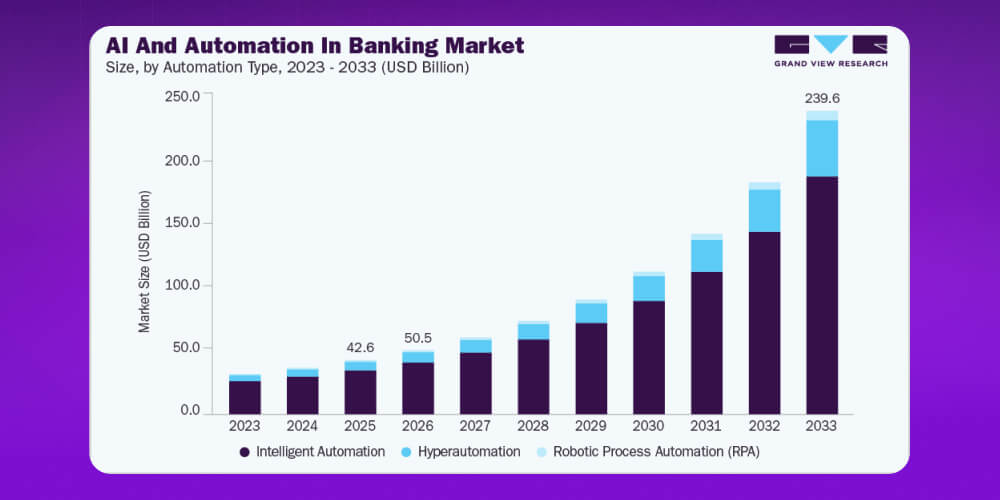
In addition, McKinsey estimates that comprehensive AI adoption could add 200 to 350 billion USD in value to global banking each year. Counting the growth of Generative AI, that figure could approach 1 trillion USD. Beyond improving business results, AI also helps many banks cut operating costs by 15 to 30% through process automation and optimized data handling.
≫ See also: Top 7 free AI website design tools SEO-friendly
In Vietnam, large banks such as Vietcombank, VietinBank, ACB and MB Bank are investing heavily in AI to improve customer experience and optimize system operations.
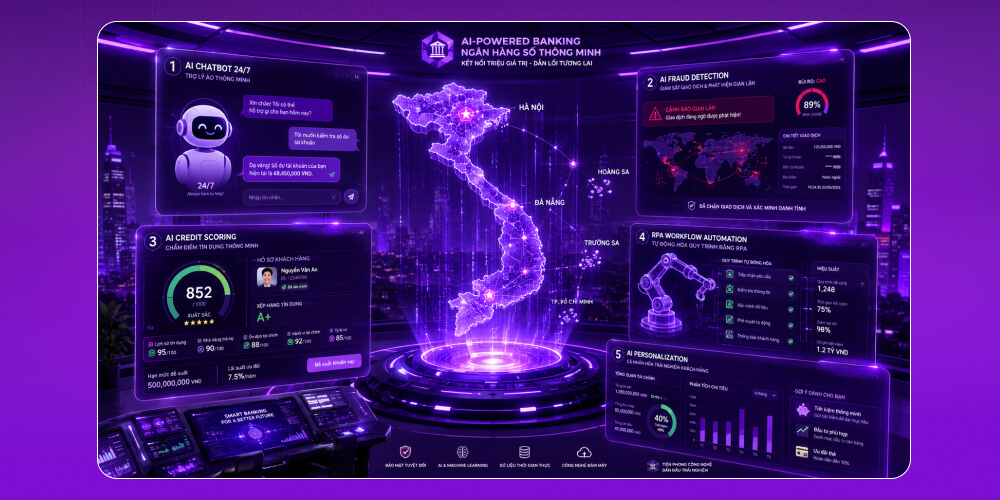
Some common AI applications today include:
Applying AI doesn't just help banks optimize costs, it also creates a clear competitive advantage as digital banking and fintech grow rapidly.
AI in banking isn't a one-size-fits-all solution for every function. Depending on the area, such as lending, risk management, customer care or fraud detection, banks deploy different AI models to fit their data, operating goals and the results they actually need to achieve.
One of the AI applications in banking delivering clear results today is data analysis and financial forecasting. Instead of relying only on traditional data such as transaction history or financial statements, AI can also process other sources like user behavior, e-invoices, statements or online data to build a fuller financial picture of each customer.
Thanks to large-scale data processing and real-time analysis, AI helps banks assess risk more accurately, optimize lending processes and make fast financial decisions in a volatile environment. Beyond credit, AI is also used to forecast market trends, manage investment portfolios and optimize banks' operating strategy.
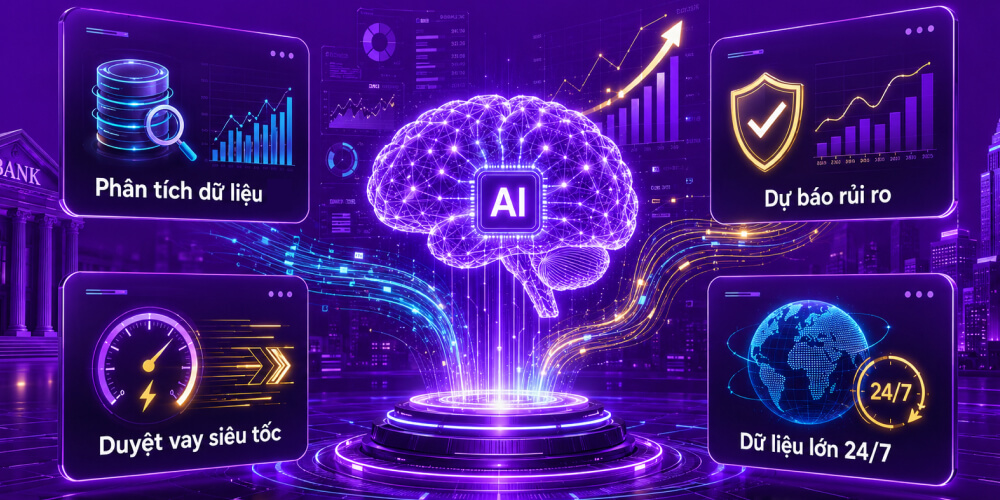
Highlights of AI in lending:
Today, artificial intelligence in banking is changing how banks care for and interact with customers. Where chatbots once answered only simple questions, AI can now understand conversation context, recommend suitable products and handle many requests right in the bank's app or website.
In Vietnam, VietinBank's internal AI assistant Genie is a standout example, having handled hundreds of thousands of employee questions shortly after launch, significantly shortening support time and optimizing internal operations. Many AI systems in banking can also automatically handle 60 to 80% of common customer requests, improving the experience and keeping support running 24/7.
Requests that are commonly chatbot AI supported include:
Applying AI doesn't just lighten the load on customer care teams. It also speeds up response, personalizes the experience and strengthens competitiveness in the digital banking era.
One of the most effective AI applications in banking today is risk management and real-time fraud detection. Instead of relying only on fixed rules like traditional systems, AI uses machine learning to continuously analyze transaction behavior, spot unusual signs and raise alerts almost instantly when it detects risk.
Thanks to the ability to process large volumes of data and learn from earlier fraud patterns, artificial intelligence in banking helps financial institutions move from a reactive model to proactively stopping fraud before damage occurs.
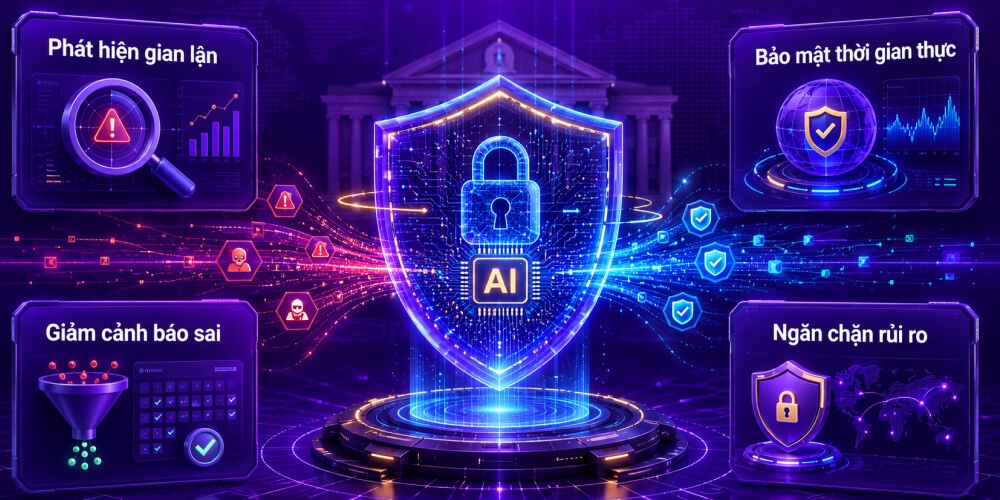
Compared with traditional systems, AI helps banks achieve:
Many banks now see AI as an intelligent security layer that strengthens risk control, protects customers and optimizes operations as digital transactions surge.
AI in banking is helping financial institutions strongly automate internal processes that used to consume a lot of time and labor. Combining RPA (Robotic Process Automation) with AI, banks can handle batches of repetitive tasks faster and more accurately, and greatly reduce employees' manual workload.
Beyond boosting operating efficiency, AI helps banks optimize resources so staff can focus on advisory work, customer care and business development instead of handling paperwork or data entry as before.
Many banks have automated dozens of processes such as:
According to several practical reports, applying artificial intelligence in banking can save more than 80% of the manual workload in repetitive processes. Some banks even report savings of tens of thousands of work hours per year, which optimizes operating costs and improves efficiency across the whole system.
≫ See more: What is AI automation? AI Automation applications in business
AI in banking doesn't only support internal operations. It also helps financial institutions run accounting, payments and personalized customer experiences more effectively. Thanks to real-time data analysis, AI helps banks automatically handle many financial tasks, reduce reconciliation errors and speed up transactions on digital platforms.
In addition, artificial intelligence in banking helps financial institutions understand each customer's behavior, needs and spending habits to deliver better-fitting marketing programs and product suggestions. This raises conversion, improves user experience and boosts customer retention in today's digital competition.
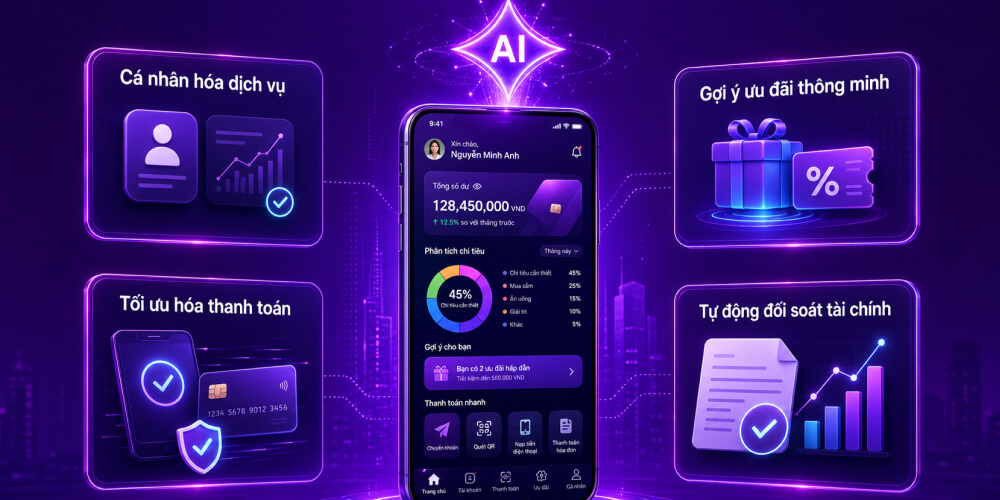
A personalized AI product recommendation system can:
Applying AI helps banks not only optimize financial operations but also build deeper personalized experiences, which raises satisfaction and creates a lasting competitive advantage.
These positive results from AI in banking don't mean deployment is easy. In practice, AI in banking still faces many specific barriers involving data, security and complex operating systems. That is also why applying artificial intelligence in banking calls for a long-term strategy and a careful approach rather than rushing to follow the trend.
As AI in banking is applied ever more deeply, data security becomes one of the most important challenges. Financial data is highly sensitive, and when it is fed into AI systems and continuously connected across multiple platforms, the risk of leaks or unauthorized exploitation rises significantly. Beyond external attacks, systems can also be affected by techniques such as training-data poisoning or model manipulation, which skew analysis results. This is a major risk of applying AI in banking if it isn't tightly controlled. The article AI for customer care is recommended further reading.

To reduce these risks, many financial institutions are deploying several advanced security measures at once:
Balancing the power of technology with data safety is the key factor that determines the long-term success of AI in banking.
In AI in banking, one notable risk is algorithmic bias. Because AI learns from historical data, if that data already contains skew or unfairness, the model can unintentionally repeat and amplify those distortions in financial decisions. This often shows up in credit approval, where some customer groups may be rated lower not because of real risk, but because past data was unfair.
This risk not only affects customers directly but also exposes banks to legal risk and long-term reputational damage as AI in banking becomes more widespread.
To limit algorithmic bias, banks commonly put in place:
Controlling bias is not just a technical requirement. It is the foundation for fairness, transparency and sustainability in applying AI in banking.
≫ 9 Applying AI in business optimize the process
In artificial intelligence in banking, a major challenge is integrating with legacy systems. Many banks still run technology infrastructure from years ago that doesn't handle real-time data well or connect flexibly to modern AI systems. This makes deployment complex, costly and prone to operating errors.
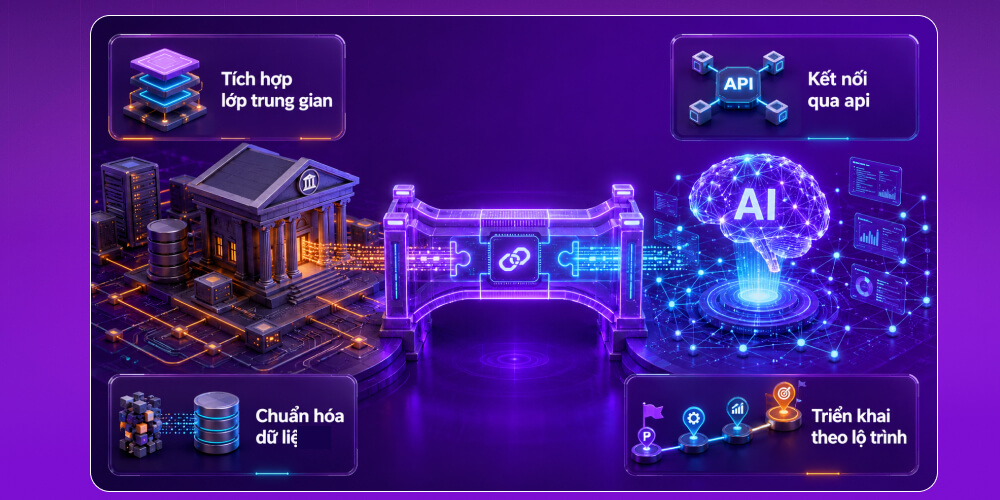
How to solve it:
This approach helps banks modernize their infrastructure step by step while keeping operations stable, especially as AI in banking keeps expanding.
In AI in banking, a major challenge lies in legal compliance and accountability. The banking sector is under close supervision, so when AI takes part in decisions such as granting credit or processing transactions, banks must ensure every result can be clearly explained and meets regulations. However, not every AI model can “explain” itself in a way that people and regulators can verify, which makes compliance more complicated.
How to solve it:
AI in banking is only at the start of a major transformation. In the coming years, this technology won't stop at supporting operations or customer care. It will become the central foundation for how banks design products, make decisions and personalize the financial experience for each user.
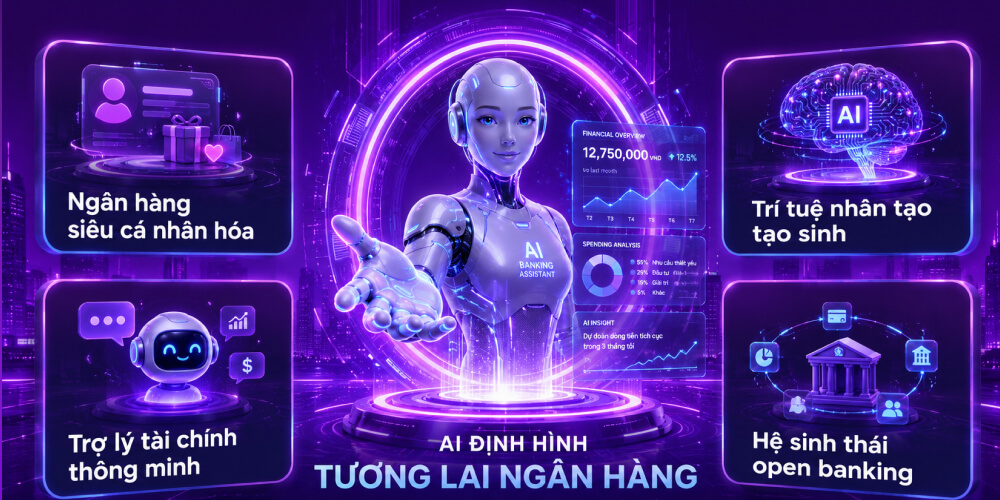
Future trends of AI in banking:
AI in banking is no longer a trend of the future. It is already happening, with clear figures showing a growing gap between pioneering banks and those following behind. From credit scoring, fraud detection and customer care to operational optimization, AI is becoming a clear source of competitive advantage in finance.
That said, deploying AI effectively is not just a technology problem. What matters is data strategy, system architecture, risk management capability and the right team. Banks that build this foundation early will have a sustainable edge in the long run.
If your business is looking for a partner to build a solid digital foundation, from an SEO-ready website to an AI-integrated digital marketing strategy, you can contact MONA Media's team of experts via HOTLINE 1900 636 648 for advice on a solution that fits your business goals.

CEO & Founder · The MONA
Founder of The MONA, who built a services company of 60+ staff with 14,000+ projects delivered. Khánh Hùng shares how he thinks about building systems that run themselves, automating a business, and the real lessons from delivering projects at MONA.
 1,5K




Professional website
design services
Own a website with a beautiful, 100% exclusive design and a lifetime warranty, with the ability
to expand features flexibly as your business grows, starting today!












 MONA will never sell your information or send you spam


 MONA will never sell your information or send you spam
