
 MONA OS 2.0
 Partner with MONA


 Tự động hoá doanh nghiệp
 Cẩm nang SEO
 Digital Marketing
 Kinh nghiệm thiết kế website
 Hạ Tầng Server
 Giáo dục


 VI
 EN
















Message us on
Zalo Official


 ProductsNew

 ProductsProducts
 Mới ra mắtKHA AI 2027App tự edit video, tự đăng mọi mạng xã hội, 2 phút mỗi ngày










 Website designLooks good and wins customers over.
SEO servicesBrings in customers searching for exactly what you sell.
 Tư vấn digital marketingKéo khách từ nhiều kênh, đo bằng số thật.
Corporate video productionVideos introducing your company, factory and team.
 NewAI video productionCompany story films made with AI.
 Custom software developmentCRM, ERP and HRM built for your business.
 Viết AI Agent theo yêu cầuĐặt riêng một trợ lý AI cho đúng việc của mình.
 Tư vấn chuyển đổi AIĐưa AI vào vận hành của cả công ty.
NewMONA LMSManagement for centers and schools.
MONA SkillHubInternal training for company staff.
 NHTQ systemEnd-to-end China–Vietnam shipping operations.
MONA JMSManagement for gold, diamond and pawn shops.
 MONA E-LearningA website with every feature you need to sell courses.
 How to sell online courses (course)More than 30 free lessons on selling courses on autopilot.
 MONA Cloudmonacloud.vnServers to get your apps and websites running.
 MONA Basemonabase.vnPostgres database, sign-in and file storage.
 MONA Mailmonamail.vnSend OTP, order and invoice emails from your software.
 MONA Paymonapay.vnAccept bank transfers via VietQR and notify your software when the money arrives.
 MONA eInvoiceComing soonIssue e-invoices that meet tax standards.
Gấu CườiTrả lời khách 24/7 trên web, Fanpage, Zalo và thu lead cho sale.
 Gấu TeleSalesGọi điện tư vấn, chăm khách như tổng đài viên thật.
Dê CườiTư vấn và chốt đơn cho shop ngay trong khung chat.
Gấu WebmasterNhắn nhóm Zalo là website được sửa xong.
 Gấu Pháp ChếSoạn hợp đồng, rà điều khoản trong vài phút.
 Gấu Báo GiáLên báo giá đúng mẫu và gửi khách ngay.
 AI chăm sóc khách hàngTheo dõi và giữ chân khách hàng cũ.
 Gấu Tuyển DụngLọc hồ sơ, hẹn lịch, phỏng vấn ứng viên.
 Mới ra mắt
KHA AI 2027
Xây kênh chuyên gia 2 phút mỗi ngày
Quay bằng điện thoại, AI tự edit video, tự đăng lên 16 nền tảng và tự trả lời bình luận, tin nhắn.
883.362lượt xem trên kênh CEO MONA sau 36 ngày
 Anh Khánh HùngCEO MONA đang dùng mỗi ngày
Xem app làm được gì
 AI
Gấu Cười MONA ĐANG TỰ XÀITrả lời khách 24/7 trên website, Zalo OA, Messenger và thu lead về cho sale.
Dê CườiChốt đơn bán lẻ và sàn: Shopee, TikTok Shop, web. Chăm cả khách sỉ, đại lý.
Gấu WebmasterCập nhật nội dung, tối ưu SEO website mỗi ngày.
Gấu TeleSalesGọi điện tư vấn, chăm khách như tổng đài viên thật.
Gấu Tuyển DụngLọc hồ sơ, hẹn lịch, phỏng vấn ứng viên tự động.
AI chăm sóc khách hàngGiữ khách cũ, cứu lead đã rớt cho phòng kinh doanh.
Gấu Pháp ChếSoạn hợp đồng, rà điều khoản trong vài phút.
Gấu Báo GiáLên báo giá đúng mẫu, gửi khách ngay khi có yêu cầu.
 Chuyển đổi AI toàn phầnGiải pháp tổng cho doanh nghiệp, 3 lớp triển khai.
 Viết AI Agent theo yêu cầuĐặt riêng một con AI gánh đúng nghiệp vụ của bạn.
 Custom softwareCRM, ERP and HRM with built-in AI automation.
 SEO & AEO thời đại AIĐược Google lẫn AI trích dẫn, không chỉ xếp hạng.
 Kiến thức AI cho doanh nghiệpBài phân tích, hướng dẫn ứng dụng AI vào vận hành.
 Free AI courses
 AI tools at work
App mới · KHA AI 2027
Xây kênh 2 phút mỗi ngày
AI tự edit video, tự đăng mọi mạng xã hội
Free consultation, 8am–10pm every day

19 May, 2026
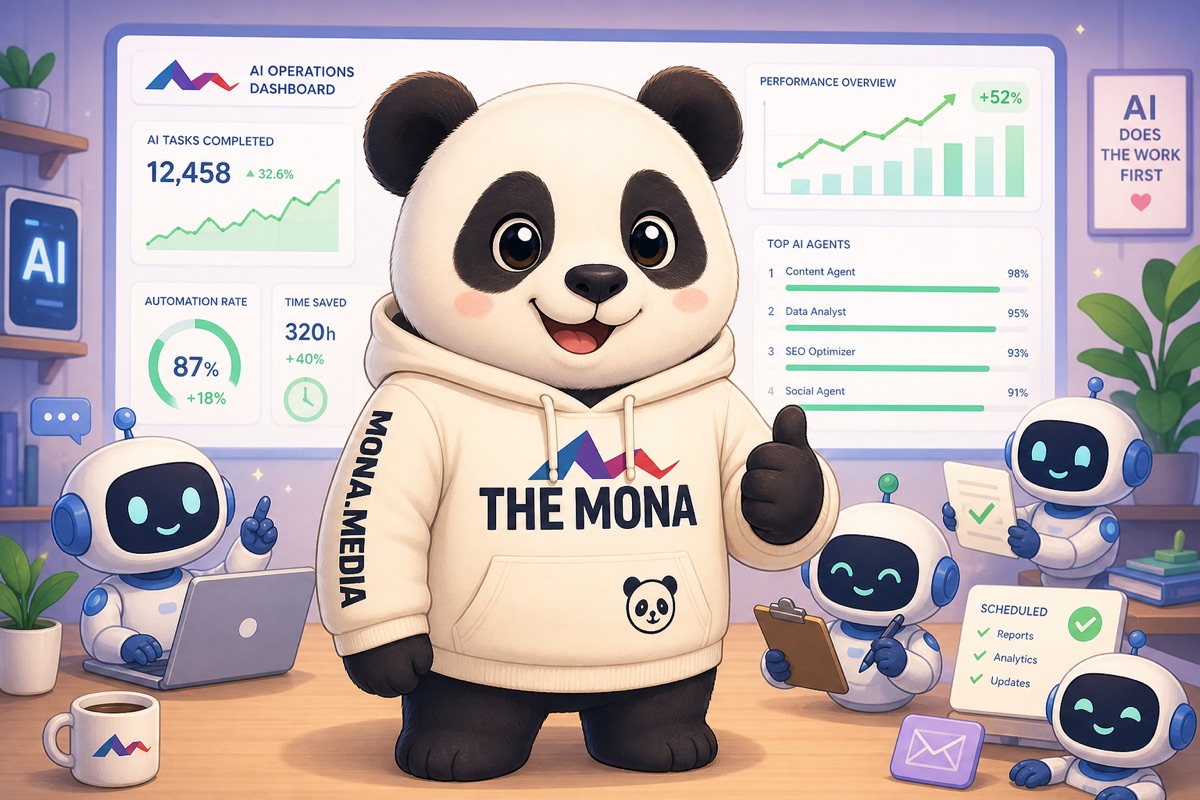
A lot of business owners this year are spending on AI. They buy ChatGPT accounts for the marketing team, put a chatbot on the fanpage, and let accounting try a few invoice-reading tools. Money goes out steadily every month, but the work at home is as jammed as ever. AI first is the concept created to name exactly that problem. An AI first strategy is not about buying more AI. It means putting machines to work first and people doing the rest, right from the moment you design the process. In this post we break down what AI first is, why slow businesses lose customers to competitors, and where an AI-first business should start so it doesn't burn money.
We run into this almost every week. A business is paying for a dozen different AI tools tools, and each department uses its own. At the end of the month the subscriptions add up to tens of millions of VND. But ask how many work hours were saved this month or how many extra orders were closed, and nobody can answer.
The reason is that AI gets stuck on top of old processes. Staff still work by hand as before, and now and then open AI to ask a quick question. The machine is only a minor assistant and cannot carry a whole task. Money keeps flowing out while productivity barely moves.
This is the basic difference. In a business with scattered AI use, AI is a side dish. In an AI-first business, AI is the backbone of the process. The difference is where you put the machine, not buying a more expensive one.
See more: What is an AI chatbot: how it differs from a scripted chatbot and how to choose the right one
AI first is a principle for designing operations. For every task you ask first: how far can a machine take this, and which part truly needs a person? The machine takes the repetitive parts, the rule-based parts and the around-the-clock watch. People keep the hard judgment, the relationships and the final accountability.
That order is the opposite of the common approach. The old way is to hire people to do everything and think about tools only when overloaded. The AI-first way is to assume machines can handle most of the workload, then place people exactly where machines can't reach yet. We often say it simply: design the process for a team with a machine standing on the front line.
For a machine to really stand on the front line, it has to read and understand the business's real data, not just give generic answers. That is where techniques such as RAG and generative AI come in, helping the machine pull the right internal documents to answer. And an AI agent runs many steps in a row by itself instead of waiting for a person to press each button.
There are a few signs that are easy to spot. Take a look at your own company.
These four signs say one thing: AI is a decoration layer, not an operating layer. The business still runs mainly on human effort, and the machine only plays along. So spending on AI feels like spending for fun, hard to measure, hard to cut and hard to scale.
We gathered the confusing terms in the post AI terms for businesses in 2026 so you and your team speak the same language. When everyone understands things the same way, putting machines into the process goes smoothly.
This is the real pain, and it hurts in money. Picture a fashion shop livestreaming on Saturday night, with thousands of comments pouring in at once. Where a machine stands on the front line, comments are scanned, customers get replies and orders are collected right that night. Where people still watch manually, they reply the next morning, and the customer has already bought elsewhere.
The gap isn't in the product or the price. One side has put machines first in answering and closing orders, and the other hasn't. We have built these areas into software that runs for real, for example AI agent chatbot that closes orders automatically for marketplaces and livestreams, or multichannel AI chatbot cho website, Zalo, Messenger.
According to McKinsey, most of the value of AI in business comes from embedding AI in core processes, not from a few separate tools. You can read more on this in McKinsey's State of AI report. The gap between those who embed it deeply and those who use it for fun keeps widening.
To make it easy to picture, we split an AI-first business into four stacked layers. Without the lower layer, the upper one can't stand. A mature AI first model is one where all four layers work together.
Everything starts with clean data gathered in one place: customer history, orders, messages, internal documents. A machine is only good when it reads your own data correctly. This is why we always build the data foundation before adding any AI feature.
On top of the data are processes that run by themselves. This is the part that AI automation really carries the work: receiving, sorting, answering, recording, sending reminders. This layer decides what share of the workload machines handle with no human touching it.
Higher up are AI agents that can chain many steps together to reach a goal. Instead of answering one question, it reads the request, looks up data, drafts a reply, updates the record, and hands off to a person when needed. This idea is close to AI native, the level of a business born with machines at its core.
At the top are still people. But people do the hard parts: judging exceptions, keeping the big relationships, and carrying legal and ethical responsibility. When the three lower layers carry the repetitive work, people are freed to do what is truly worth their pay.
These three concepts often get mixed up, so we separate them clearly.
Most Vietnamese businesses are at the stage right after digital transformation, about to enter AI first. This is a stage where it's easy to burn money if you go in the wrong order. We wrote a full 12-month AI first roadmap and an AI first handbook for businesses so you have a step-by-step map and no jumping ahead.
The costliest mistake is automating the wrong task. Choose tasks by three criteria: highly repetitive, clear rules, and measurable results. A task that meets all three goes to the machine first.
In practice, the easy early wins are usually: answering repetitive messages, screening and sorting leads, gathering customer records, reminding the sales team about calls and follow-ups, and drafting content. We often start with customer care and sales because money in and out shows up right away there, and the boss can measure it within a few weeks.
Content and search are also where machines carry the load well. You can see how we do AI SEO services and optimize for AI AEO, when customers ask an AI assistant directly instead of typing into Google. An interesting technical angle behind this is query fan-out, the way a search engine expands one question into many sub-queries.
Here is one case, with the name withheld by agreement. A spa chain with 28 branches in Ho Chi Minh City, Hanoi and Da Nang, with revenue around 52 billion VND a month. Before, each branch answered its own messages, kept its own schedule, and customer data was scattered across many places.
We didn't sell them an AI. We rebuilt the process so the machine goes first. Messages from every channel are gathered in one place, and the machine handles the first layer around the clock: filtering needs, booking appointments, and only then passing hard cases to a consultant. Customer records are collected automatically by the machine and no longer depend on the receptionist's memory.
Results measured after a few months: most after-hours messages still got a reply within minutes, the number of customers lost to long waits dropped clearly, and consultants spent their time on high-value cases instead of retyping greetings. We have repeated this approach for many industries. Read more in the post spa process automation.
The AI-first path isn't hard, but there are five places where people keep slipping. Most AI-first businesses trip on these in the first six months.
Avoid these five and the road gets much easier. Most of the risk is in the order of work, not in the technology. The technology is now mature enough for mid-market businesses, and MONA has run it for real across many industries.
Putting machines first is not a privilege of one industry. The same features apply to many fields where we have run it for real.
We want to say this plainly to you, the person steering. Moving to put machines first is not just a job for the tech team. It is an operating decision, so it needs an owner to choose the tasks, choose the order, and protect the budget through the early stage.
The key is a spirit of rising together, not cutting people. When machines carry the repetitive work, you have a chance to raise your team to harder work and pay them better. A bot on the front line means your best people don't burn their energy on dull tasks. That is how a business keeps good people in the age of automation.
At MONA we treat our people as an asset, so all the software we build is designed so machines serve people, not people serving machines. The software ecosystem we run internally and for customers spans from custom software by Mona.Software to infrastructure at Mona.Host, and training at Khánh Hùng Academy.
You don't have to do everything at once. This week, just do three small things. One, list the five most repetitive tasks in your company. Two, check which ones have clear rules and can be measured. Three, pick one task to give to the machine first, and get a number out of it.
Once one task produces a result, the whole team's confidence changes. Then expanding to the second and third task is easy. That is the spirit of AI first: no slogans, just putting the machine first on one measurable task at a time, then growing into an operating machine. If you want someone to sit down and map out the right order for your company, we offer a digital transformation consultation session, or call the hotline 1900 636 648. With MONA, your AI first strategy goes from one small task with a number to an operating machine that runs for real.
A project you can't measure will be cut sooner or later. So from the first task, attach clear metrics. We usually use four simple groups of numbers that a boss can understand at a glance.
Lock these four numbers in before turning on the feature, then compare before and after. When MONA hands over software, we always include a tracking sheet so you can see the numbers every week. With numbers in hand, the decision to scale has a basis and doesn't rely on gut feeling.
One point we often make: don't measure by the number of tools bought. Ten idle tools are worth less than one process that makes money. Metrics should follow business results, not the number of software accounts.
The money question always comes early, and it should. The right way to spend is to split it by task, not pour in one big sum and hope for luck. Each task given to a machine is an investment with its own break-even point, measurable within a few weeks to a few months.
We often advise you to set the budget in three stages. Stage one is building the data foundation and one early win, small enough to show numbers fast. Stage two is expanding to a few neighboring stages once the first task is in the black. Stage three is joining the stages into one smooth operating machine, where the cost per unit of work drops sharply.
This split means you never bet the whole company on one technology gamble. Money keeps flowing only after the previous stage has proven results. That is also why MONA always starts small with customers, because we want you to see positive numbers before expanding. If you want to see the cost framework and the exact order, read 12-month AI first roadmap, where we lay out each stage clearly.
Everything we wrote above wasn't copied from a translated book. MONA is a company with a large team, and every month more than 4,000 customers message us, call us or leave their number. In the past, all of that landed on the sales team: watching the fanpage until late, opening the inbox in the morning to thirty unanswered messages, and a customer who messaged at 2 a.m. was as good as lost. We lived through exactly the “people first, machine second” situation this post describes, and we got stuck in exactly the places this post describes.
Then we flipped the order, for real AI first: machines first, people do the rest. Now when a customer messages the fanpage, Zalo, the website or calls the switchboard 1900 636 648, the first one to receive them is a pack of AI Agents that MONA wrote itself. The machine greets the customer, asks what they need, gives a rough quote, then scores who needs help urgently and who is just browsing. When a salesperson starts the day, they only see a list of customers the machine has already filtered, with a summary of what each one needs, and just call and close. Nobody has to stay up at night, and no customer is lost for messaging outside hours.
That is why, when you work with MONA on AI transformation for businesses, we don't bring theory slides. We open the very system that keeps our own company alive, show you exactly where machines should go first in your industry, and where it must still be a person. A company that has done 14,000+ projects since 2016 and dares to hand the first stage of customer reception to a machine shows a level of trust you only earn after the machine has run long enough on your own money.
No. AI first means machines carry the repetitive work while people keep judgment and relationships. The goal is to raise productivity and free up your best people, not to cut people out.
Yes, and it should start early. Small businesses have fewer legacy systems, so they change processes faster. Pick one measurable task to give to the machine first, then grow from there.
The cost depends on scope, but the right way is to start small and measure task by task. Expand only after one task is in the black, and the budget stays under control.
Give tasks that are highly repetitive, have clear rules and measurable results. Answering messages, screening leads, gathering customer records and reminding sales about follow-ups are the easy early wins.
Main topic: AI first

CEO & Founder · The MONA
Founder of The MONA, who built a services company of 60+ staff with 14,000+ projects delivered. Khánh Hùng shares how he thinks about building systems that run themselves, automating a business, and the real lessons from delivering projects at MONA.
 1,6K




Professional website
design services
Own a website with a beautiful, 100% exclusive design and a lifetime warranty, with the ability
to expand features flexibly as your business grows, starting today!






 MONA will never sell your information or send you spam


 MONA will never sell your information or send you spam
