
 MONA OS 2.0


 Tự động hoá doanh nghiệp
 Cẩm nang SEO
 Digital Marketing
 Kinh nghiệm thiết kế website
 Hạ Tầng Server
 Giáo dục



 VI
 EN



















Message us on
Zalo Official


 ProductsNew

 ProductsProducts
 Mới ra mắtKHA AI 2027App tự edit video, tự đăng mọi mạng xã hội, 2 phút mỗi ngày










 Website designLooks good and wins customers over.
SEO servicesBrings in customers searching for exactly what you sell.
 Tư vấn digital marketingKéo khách từ nhiều kênh, đo bằng số thật.
Corporate video productionVideos introducing your company, factory and team.
 NewAI video productionCompany story films made with AI.
 Custom software developmentCRM, ERP and HRM built for your business.
 Viết AI Agent theo yêu cầuĐặt riêng một trợ lý AI cho đúng việc của mình.
 Tư vấn chuyển đổi AIĐưa AI vào vận hành của cả công ty.
NewMONA LMSManagement for centers and schools.
MONA SkillHubInternal training for company staff.
 NHTQ systemEnd-to-end China–Vietnam shipping operations.
MONA JMSManagement for gold, diamond and pawn shops.
 MONA E-LearningA website with every feature you need to sell courses.
 How to sell online courses (course)More than 30 free lessons on selling courses on autopilot.
 MONA Cloudmonacloud.vnServers to get your apps and websites running.
 MONA Basemonabase.vnPostgres database, sign-in and file storage.
 MONA Mailmonamail.vnSend OTP, order and invoice emails from your software.
 MONA Paymonapay.vnAccept bank transfers via VietQR and notify your software when the money arrives.
 MONA eInvoiceComing soonIssue e-invoices that meet tax standards.
Gấu CườiTrả lời khách 24/7 trên web, Fanpage, Zalo và thu lead cho sale.
 Gấu TeleSalesGọi điện tư vấn, chăm khách như tổng đài viên thật.
Dê CườiTư vấn và chốt đơn cho shop ngay trong khung chat.
Gấu WebmasterNhắn nhóm Zalo là website được sửa xong.
 Gấu Pháp ChếSoạn hợp đồng, rà điều khoản trong vài phút.
 Gấu Báo GiáLên báo giá đúng mẫu và gửi khách ngay.
 AI chăm sóc khách hàngTheo dõi và giữ chân khách hàng cũ.
 Gấu Tuyển DụngLọc hồ sơ, hẹn lịch, phỏng vấn ứng viên.
 Mới ra mắt
KHA AI 2027
Xây kênh chuyên gia 2 phút mỗi ngày
Quay bằng điện thoại, AI tự edit video, tự đăng lên 16 nền tảng và tự trả lời bình luận, tin nhắn.
352.433lượt xem trên kênh CEO MONA sau 20 ngày
 Anh Khánh HùngCEO MONA đang dùng mỗi ngày
Xem app làm được gì
 AI
Gấu Cười MONA ĐANG TỰ XÀITrả lời khách 24/7 trên website, Zalo OA, Messenger và thu lead về cho sale.
Dê CườiChốt đơn bán lẻ và sàn: Shopee, TikTok Shop, web. Chăm cả khách sỉ, đại lý.
Gấu WebmasterCập nhật nội dung, tối ưu SEO website mỗi ngày.
Gấu TeleSalesGọi điện tư vấn, chăm khách như tổng đài viên thật.
Gấu Tuyển DụngLọc hồ sơ, hẹn lịch, phỏng vấn ứng viên tự động.
AI chăm sóc khách hàngGiữ khách cũ, cứu lead đã rớt cho phòng kinh doanh.
Gấu Pháp ChếSoạn hợp đồng, rà điều khoản trong vài phút.
Gấu Báo GiáLên báo giá đúng mẫu, gửi khách ngay khi có yêu cầu.
 Chuyển đổi AI toàn phầnGiải pháp tổng cho doanh nghiệp, 3 lớp triển khai.
 Viết AI Agent theo yêu cầuĐặt riêng một con AI gánh đúng nghiệp vụ của bạn.
 Custom softwareCRM, ERP and HRM with built-in AI automation.
 SEO & AEO thời đại AIĐược Google lẫn AI trích dẫn, không chỉ xếp hạng.
 Kiến thức AI cho doanh nghiệpBài phân tích, hướng dẫn ứng dụng AI vào vận hành.
 Free AI courses
 AI tools at work
App mới · KHA AI 2027
Xây kênh 2 phút mỗi ngày
AI tự edit video, tự đăng mọi mạng xã hội
Free consultation, 8am–10pm every day

18 March, 2023

According to Reputation911, 91.5% of users never click through to the second page of Google, which means a website outside the top results is almost “invisible” to customers and brings no conversions. At that point, only Keyword SEO is the best way to raise rankings, attract quality traffic and build brand credibility. So what is keyword SEO, and how do you optimize SEO keywords most effectively? Let's find out with MONA Media in the article below!
Keyword SEO is the process of improving your website so it appears higher on search engine results pages (SERPs) when users search for related keywords. It helps your site reach the right audience and bring in more organic traffic from search engines such as Google, Cốc Cốc and Bing…

So what is the difference between SEO keywords and keyword SEO?
For example: you sell laptops and want to grow sales with an SEO strategy for gaming laptops.
According to recent reports, millions of websites compete fiercely for high positions in search results, so businesses need to adopt SEO strategy that stands out to improve their rankings. Among these, keyword SEO is the best way to get a site to the top and connect directly with customer needs.
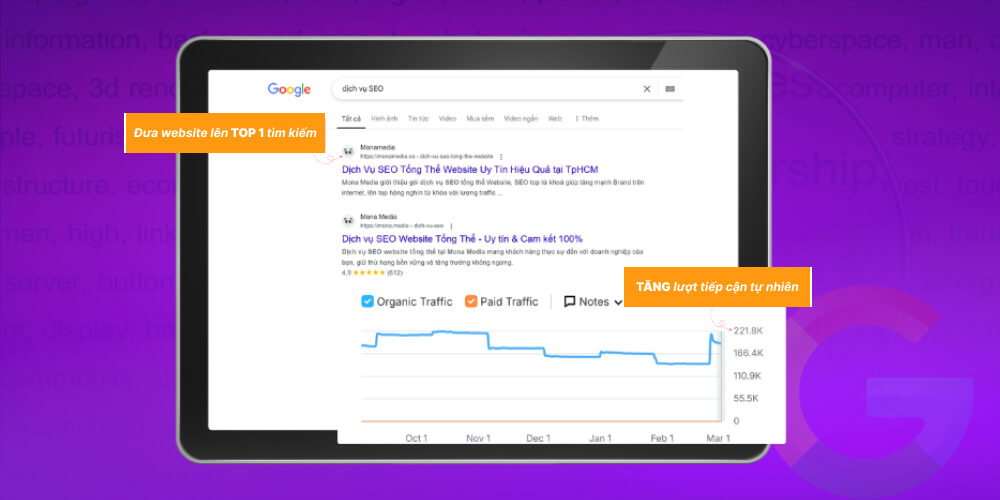
A well-run keyword SEO strategy brings practical benefits such as:
In the past, Google only read individual words to return search results. Today, with the help of artificial intelligence, Google understands intent, context and the relationships between words almost the way people do when they talk. Specifically, AI has changed how Google understands keywords in the following ways:
Google no longer works on a “what you type is what you get” basis. Thanks to AI, the search engine can understand the real intent behind each query, rather than just matching keywords. Businesses that need to run a Local SEO strategy should pay even closer attention to this change.

For example, when you type “cà phê ngon gần quận 4” (good coffee near District 4), Google does not just look at each word. It understands that you want a good coffee shop located near District 4, Ho Chi Minh City, possibly with extras such as parking or a convenience store.
As a result, the results show the coffee shops that best match your need, not simply pages containing the phrase “cà phê ngon gần quận 4”.
Artificial intelligence helps Google “read” and understand human language in context. Thanks to advanced AI models such as BERT and MUM, the search engine can now tell apart the meaning of sentences even when they look alike.
BERT (Bidirectional Encoder Representations from Transformers) helps Google understand the meaning of words in a specific context. One word can have several meanings, and BERT works out the right one from the whole sentence. As a result, long queries and question-style queries are handled more accurately.
For example, with BERT, in the phrases “quản lý nhân sự hiệu quả” (effective HR management) and “hiệu quả công việc” (work efficiency), the word “hiệu quả” is understood in two different contexts. This helps Google return results closer to what the user needs, especially for long, explanatory queries.
A website, on the other hand, is MUM (Multitask Unified Model) also helps Google handle complex questions phrased the way people naturally talk, for example “I climbed Mount Fuji last year and now want to climb a similar mountain. What do I need to prepare?”. Instead of just finding scattered information, Google understands that you want suggestions for a similar trip, and gives a fuller, more practical answer.
An entity is a specific object or concept with a clear identity that can be identified on its own. It can be a concept (SEO), a business (MONA Media), a product, a place (Ho Chi Minh City) or a person.
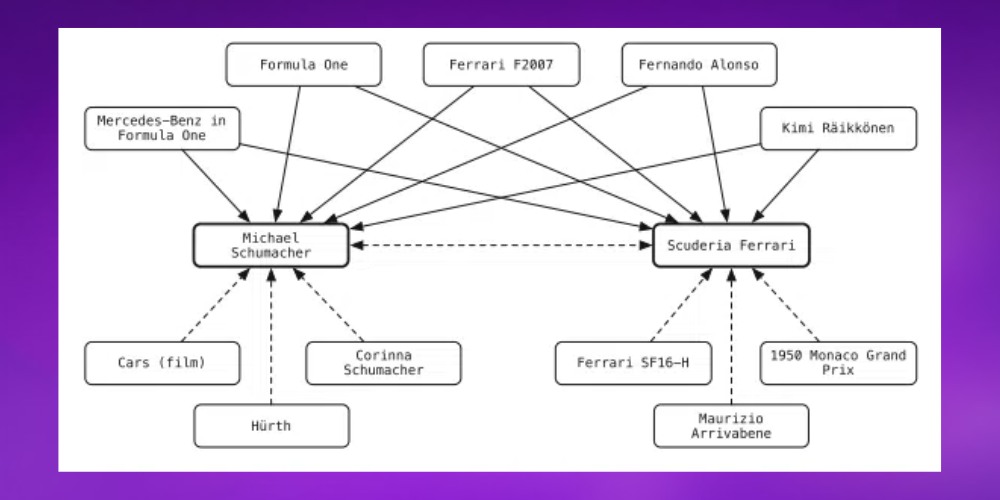
To process and connect this enormous amount of information, Google built the Knowledge Graph, a system that helps AI understand the relationships between entities in the same topic. So Google does not just “read” the content on a page; it also judges how well the website knows the subject.
For example, when you create content on “keyword SEO for business websites” as a whole, besides recognizing the keyword, Google's AI also recognizes related entities such as “SEO keyword research”, “on-page optimization”, “technical SEO” and more. When these entities are covered logically, in depth and linked tightly together, Google understands that the article describes a complete SEO strategy rather than an isolated piece of content, and rates your website as one with strong expertise.
See also: What is SEO entity? How to implement entity SEO for fast indexing
Classifying keywords is an important step in SEO keyword research, because it helps you choose the right keyword set and build an effective keyword SEO strategy. To recognize each type of SEO keyword, you can use the following criteria:
→ Read next: How to get your website to the top of Google that works
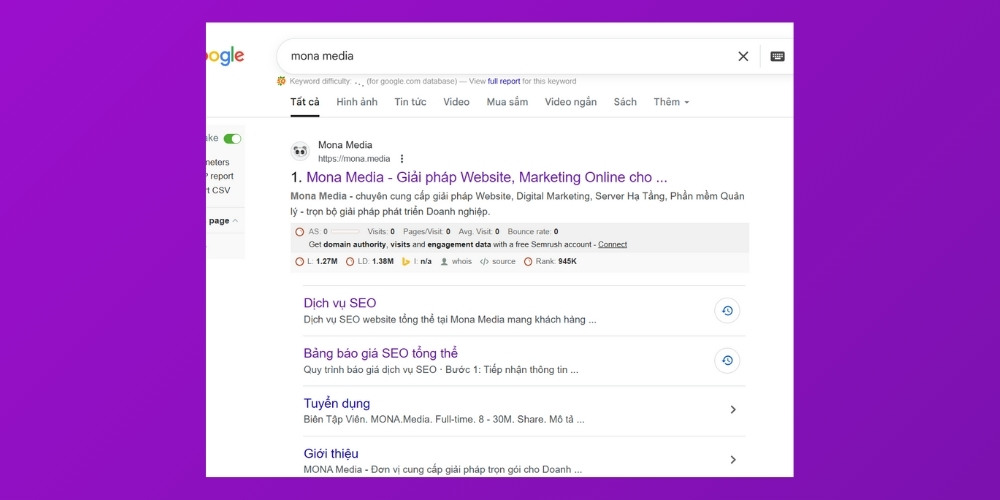
Navigational keywords are what users type to reach a specific website or brand without entering the URL directly. Their goal is quick access to a product, service or content they already know.
Example: MONA Media, YouTube, “dịch vụ SEO tại Hà Nội” (SEO services in Hanoi).
Commercial keywords appear when users research a product or service before deciding to buy. They want to compare, evaluate or find the best option. The commercial keywords you will often run into, and can rank for at the top of Google, include:
Transactional keywords are what users type when they are ready to complete a transaction, such as ordering a product, signing up for a service or downloading an app. This is the final stage of the customer journey, where conversion happens directly. Transactional Intent keywords often contain “mua” (buy), “giá rẻ” (cheap), “đặt hàng” (order), “ưu đãi” (deal), “khuyến mãi” (promotion) or “gần đây” (nearby).
Examples: “Mua Hosting tốc độ cao” (buy high-speed hosting), “đăng ký khóa học SEO” (sign up for an SEO course)…
Informational keywords are phrases users type when they want to learn about a topic but have no intent to buy or take a specific action yet. They often appear as questions or contain words such as “là gì” (what is), “cách” (how to), “hướng dẫn” (guide), “tại sao” (why) and “làm thế nào” (how).
Examples in the SEO field:
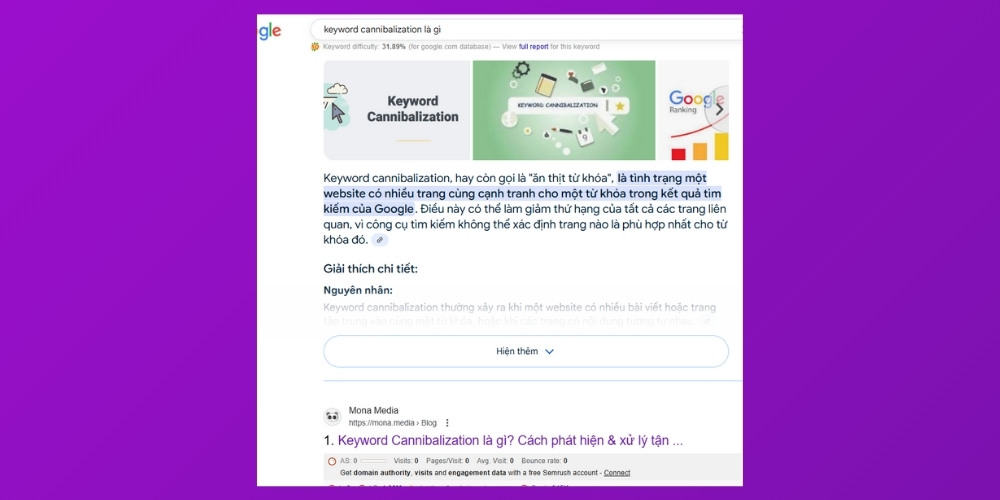
Even though users are not ready to buy right away, if your content is engaging and useful you can still steer them toward commercial keywords, which opens up sales opportunities down the line.
Competitor keywords are phrases related to a competitor's brand, products or services. Users typically type these when they are researching another brand, but you can use them to draw those users toward you.
Example: If customers are searching for HP laptop reviews but you sell ASUS laptops, you can publish a comparison of the two products that shows them what they gain by choosing yours.
Competitor keywords widen your reach and put you in front of potential customers who are weighing up the brands in your industry. During rollout, though, take great care not to break the law or Google's advertising policies.
The rise of smart assistants such as Google Assistant, Siri and Alexa has changed how people search. Instead of typing terse keywords, users increasingly use voice search in natural language, as if they were talking to an expert.
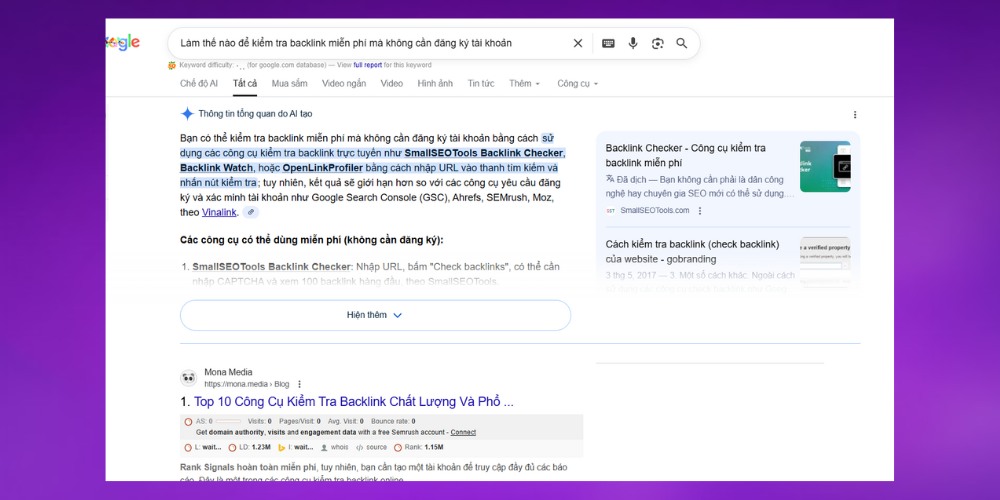
How to recognize them: These are usually long-tail keywords (long-tail keywords), phrased as complete questions with clear question words (who, where, how, why and so on).
Real examples:
Done right, conversational keyword SEO gives your website a chance to be referenced and cited by AI in direct answers on Google AI Overviews, ChatGPT, Gemini and others. That brings more traffic and puts you in front of customers anytime, anywhere.
Google has moved decisively from simple keyword matching to understanding what things actually are, through the Google Knowledge Graph. Users now search for precise information about entities and the relationships between them.
Entity queries usually contain specific proper names of experts, businesses, tools, or clearly defined specialist concepts.
Real examples:
When your content builds a tight network of links between these entities, Google sees your website as authoritative and trustworthy in its field.
Whether an SEO campaign succeeds or fails depends heavily on how you choose and evaluate keywords. Below are the core factors for analyzing and optimizing keywords properly, so you can improve rankings and draw more traffic to your website.
Average monthly search volume tells you how many people search for a keyword in a month. SEO keywords with high search volume can bring more visits and put your website in front of more potential customers online.
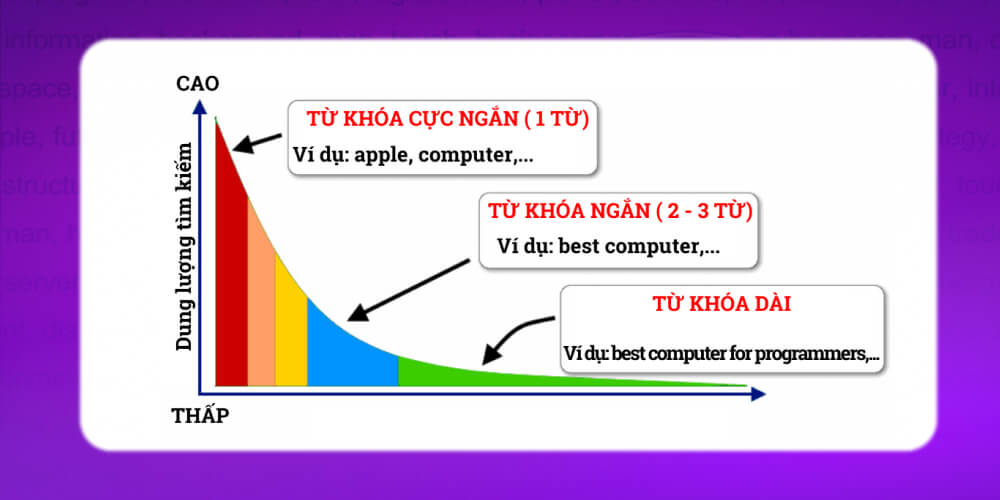
However, a high search volume does not automatically make a keyword a good choice. Some keywords are popular but too generic, so optimizing for them does not deliver the results you expect.
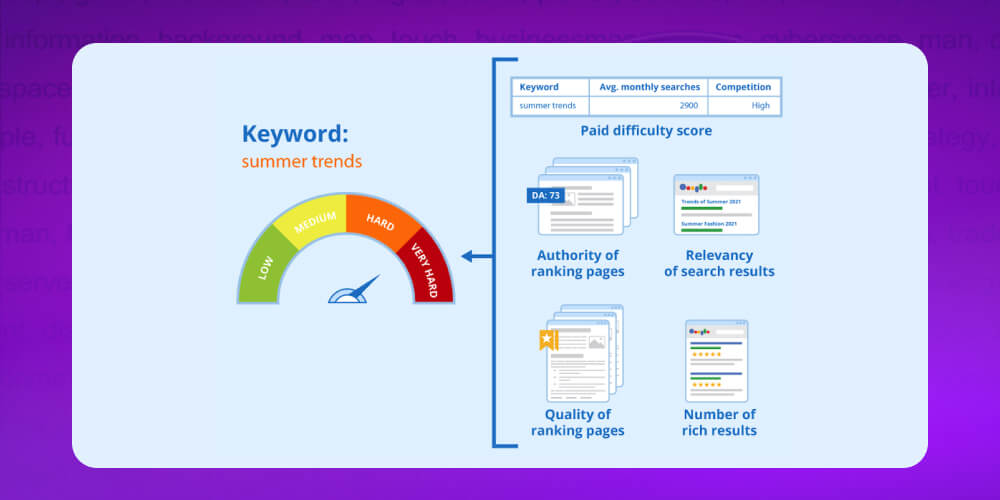
Some ways to judge keyword difficulty:
Suggested Bid (suggested bid) and Cost-Per-Click (CPC) are key indicators of a keyword's commercial value. A high CPC shows the keyword can be profitable, since many businesses are willing to pay to advertise on it. If you do keyword SEO for conversions, prioritize keywords with a high CPC but not fierce competition.
Keyword competition measures how hard it is to get a keyword to the top of the search results. When many businesses “compete” for a keyword with ads or SEO, it shows the keyword is valuable.
However, the more valuable something is, the harder it is to win! Highly competitive keywords usually take a lot of time, effort and resources to rank well. So when doing SEO, weigh it carefully: should you invest in “hot” keywords with fierce competition, or pick niche keywords that are easier to optimize and deliver results sooner?
Google keeps updating complex algorithms to understand natural language more deeply, so businesses have to optimize more to adapt and hold their rankings. To make keyword SEO easier, MONA shares a keyword research process that combines the power of AI, so your SEO strategy delivers the results you want:
Instead of starting with a list of high-volume keywords, start by pinning down search intent and answering these questions:

By answering these questions, you identify the big topics that reflect what your customers actually need.
For example, instead of going straight for “phần mềm quản lý bán hàng” (sales management software), you could start from a topic like “streamlining the sales process for small shops” or “reducing losses in inventory management.”
This approach to Google keyword SEO points your website in the right direction from the start and avoids rambling optimization that brings no conversions.
Once you have the core topics down, bring in AI tools such as ChatGPT or Gemini to uncover angles that people easily overlook. It is a smart way to choose SEO keywords and cover a niche thoroughly.
You can do this in three ways:
1. Use AI to expand your topic cluster
Sample prompt: “I want to build a topic cluster around “SEO services.” Suggest subtopics around this pillar topic.”
2. Use AI to find hidden questions
Sample prompt: “Imagine you are a business worried about how well your website's keyword SEO is working. List 10 questions you would search on Google.”
3. Use AI to find semantic SEO keywords
Sample prompt: List the concepts and entities related to the topic “keyword SEO” without using that exact phrase.”
Once you have your list of topics and ideas, search for them on Google and analyze the SERP. The goal now is not just to “look at competitors” but to understand how Google (and Google's AI) interprets search intent.
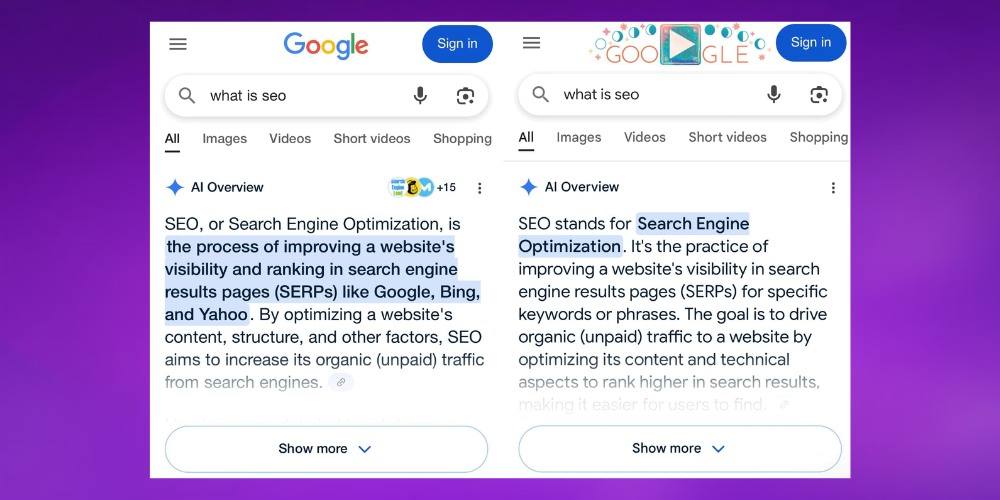
Pay close attention to these elements:
For example, for a query related to “website SEO,” Google may favor step-by-step guides for beginners over service promotion pages. That directly shapes how you do keyword SEO and which content format you need to produce.
AI is powerful at generating ideas, but successful keyword SEO for a website still rests on real numbers. Go back to traditional SEO tools such as Ahrefs, SEMrush or Google Keyword Planner to verify your list of ideas.
Filter and prioritize keywords by these metrics:
The aim is to find keywords with steady search demand and manageable competition that still hit your customers' urgent needs.
The last step in choosing SEO keywords is to place keywords and topics at the right stage of the customer journey. So how should a business arrange them?
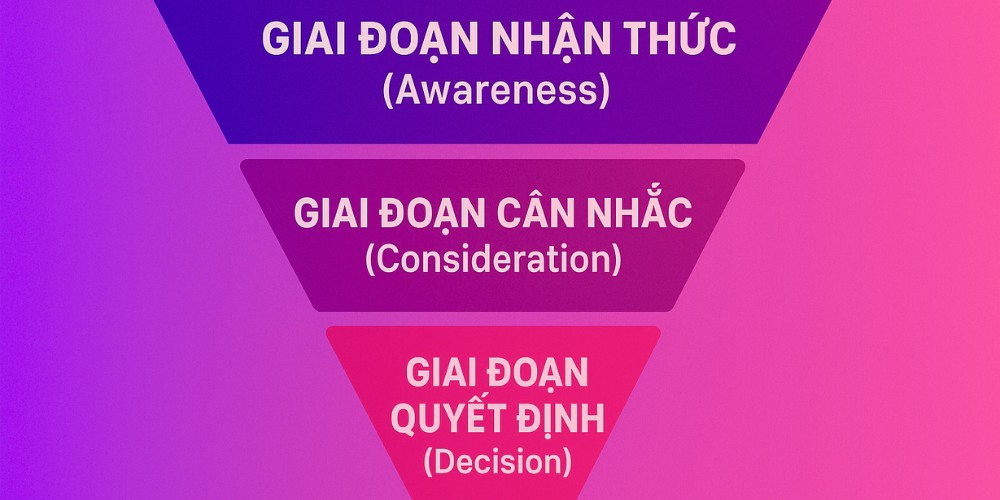
Choosing the right SEO keywords brings better results, saves research time and keeps the keyword set for your website high quality. That is why it is worth focusing on keywords that can actually lift your site's performance. Below, MONA shares several effective ways to choose SEO keywords.
A common mistake when choosing SEO keywords is to chase only keywords with “huge” search volume and forget how competitive they are. If your website is new or not yet “strong” enough, trying to rank for these keywords can cost you a lot of time and still get you nowhere. Start with long-tail or niche keywords, which have lower competition.
For example, instead of trying to reach the top with a broad keyword like “giày thể thao nam” (men's sneakers, with tens of thousands of searches), you could pick a more specific phrase like “giày thể thao nam giá rẻ Hà Nội” (cheap men's sneakers in Hanoi). The search volume is lower, but your chance of reaching the top is higher, and you reach potential customers faster and more effectively.

A smart keyword SEO strategy starts with keywords that fit your website's current strength. Once you have a solid foundation, you can expand to bigger keywords that bring more traffic.
A common mistake in keyword SEO is picking just one keyword per topic, which slows down ranking and leaves content disconnected. Instead, doing keyword SEO by topic group gets better results and helps you reach more customers.
For example, if you sell website design, expand with related keywords such as “SEO-friendly website design”, “business website design”, “sales website design””.
This way your content supports itself, and you have a better chance of showing up on Google and attracting potential customers. Your website also gets a tight set of articles that lead users from one to the next, which lifts conversion rates and improves SEO.
Very generic SEO keywords can bring high traffic but no conversions if your goal is to sell. These keywords rarely show clear buying intent, so you can rank at the top and still struggle to generate revenue. For a website with little strength especially, competing on generic keywords makes high rankings hard to reach.

Rather than focusing only on broad keywords, combine them with more specific ones to reach the right potential customers. If you SEO by topic, you can pick a few generic keywords, but you still need niche keywords to support them. Conversely, if you cover many topics with only broad keywords, results will be weak. So if your SEO budget is limited, prioritize detailed keywords that match real needs, to raise your conversion rate and improve your Google rankings.
Want more tips for getting your keywords to the top quickly and durably in 2026? Don't miss the video “SEO in 2026 Made Easy in Just 5 Minutes” – a short, very practical guide that gives you the full formula for keyword optimization under the latest trends!
Choosing SEO keywords can't rest on gut feeling alone; it takes specialist tools. These tools help you find, analyze and optimize keywords effectively:
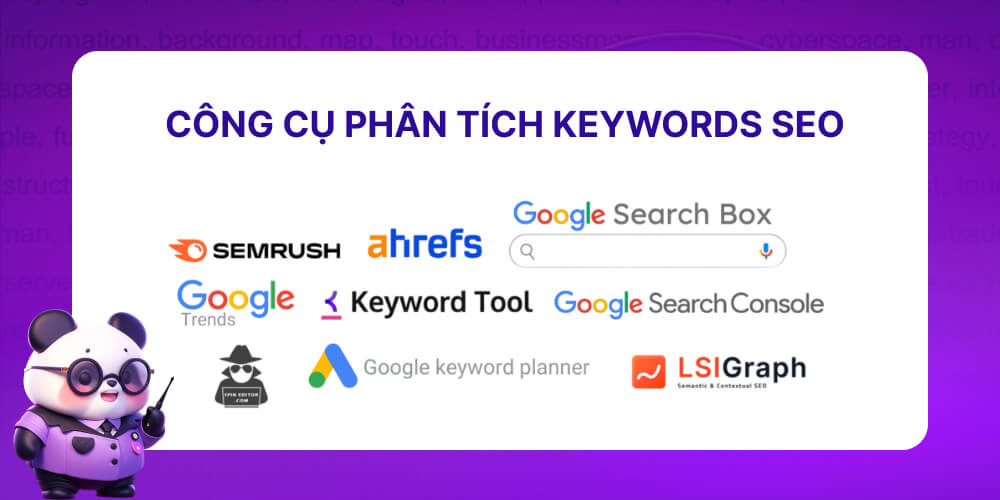
To get the most from keywords in SEO, you need a concrete plan and a sound keyword strategy. Here are some important notes to help you use keywords to support your SEO campaign and content plan.
SEO keyword density is how often a phrase appears on a page relative to the total word count. It helps Google understand what an article is about, but stuffing in keywords does not earn a higher ranking.

If the main keyword appears only once, the optimization effect is weak. But if you overuse it and place keywords too densely, your content may be judged as spam. Instead of repeating one phrase many times, use variants or related keywords so the content reads naturally and still meets SEO needs.
How often an SEO keyword appears in an article should be kept reasonable so the content stays natural and easy to read. Repeating a phrase too many times can make Google think you are trying to manipulate the algorithm, which is a sign of keyword stuffing.
If keyword SEO focuses on quantity and ignores content quality, the reader experience suffers. Instead, use keywords flexibly and in the right context, so your article is friendly to search engines and also gives readers real value.
Content quality plays an important role in keyword SEO strategy, because Google increasingly favors content with real value. In the past, many SEOers simply stuffed SEO keywords into articles hoping to improve rankings. That no longer works, and it can get your site rated poorly by Google.

The business's Google's algorithms search engines keep getting smarter, so low-quality content with keywords cleverly slipped in will not earn your website a good position either. Google increasingly cares about user experience, which pushes SEOers to focus on real value rather than just optimizing for search engines. What matters most is balancing quality content with sensible keyword optimization, so your website ranks high and keeps readers around longer.
MONA encourages businesses to move to a topic cluster strategy, because it is currently seen as the most sustainable way to do keyword SEO for a website. It makes your site structure more logical and keeps users on the page longer.
Linking mechanism: The strength of this model lies in the connections. Make sure every supporting article has an internal link to the pillar page and vice versa. This creates a closed network of information that lets Googlebot crawl easily and shares ranking strength across the whole cluster.
Once you have researched and planned your content, put the strategy into practice with careful on-page technique. Here is a standard process that helps Google understand and rate your content highly, making keyword SEO for your website more effective than ever:
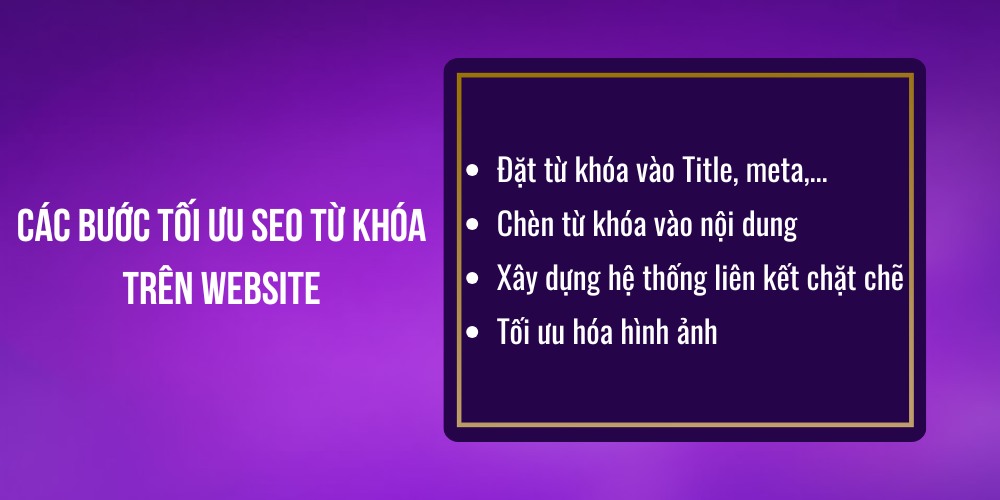
The MONA team does not stop at ranking your website on Google. We optimize the whole site to be AI-friendly so it can improve its ranking in AI Overviews and be chosen as the answer on AI platforms. With hands-on experience across hundreds of SEO projects large and small, MONA understands how Google's algorithms work and knows which AI SEO direction suits your business best.

So what sets full-scope SEO at MONA apart:
Whether your business is new or long established, MONA helps you win the online market with a full-scope SEO strategy that combines SEO AI to deliver results. Contact us HOTLINE 1900 636 648 for SEO services quote and get advice on the SEO roadmap that suits your website best!
Chasing hot keywords that don't match your goal is like shooting an arrow at a wall and then painting the bullseye around it. Instead, invest time in researching and sorting Keyword SEO and choosing SEO keywords that fit your audience. You don't have to rank first for high-volume keywords; ranking at the top for niche keywords often brings in far better customers. SEO is a long road, but go the right way and you will see clear results!

CEO & Founder · The MONA
Founder of The MONA, who built a services company of 200+ staff with 14,000+ projects delivered. Khánh Hùng shares how he thinks about building systems that run themselves, automating a business, and the real lessons from delivering projects at MONA.
 1,7K




Professional website
design services
Own a website with a beautiful, 100% exclusive design and a lifetime warranty, with the ability
to expand features flexibly as your business grows, starting today!



NHẬN TƯ VẤN SEO MIỄN PHÍ !






 MONA will never sell your information or send you spam


 MONA will never sell your information or send you spam
