
 MONA OS 2.0


 Tự động hoá doanh nghiệp
 Cẩm nang SEO
 Digital Marketing
 Kinh nghiệm thiết kế website
 Hạ Tầng Server
 Giáo dục



 VI
 EN

















Message us on
Zalo Official


 Products

 ProductsProducts










 Website designLooks good and wins customers over.
SEO servicesBrings in customers searching for exactly what you sell.
 Tư vấn digital marketingKéo khách từ nhiều kênh, đo bằng số thật.
Corporate video productionVideos introducing your company, factory and team.
 NewAI video productionCompany story films made with AI.
 Custom software developmentCRM, ERP and HRM built for your business.
 Viết AI Agent theo yêu cầuĐặt riêng một trợ lý AI cho đúng việc của mình.
 Tư vấn chuyển đổi AIĐưa AI vào vận hành của cả công ty.
NewMONA LMSManagement for centers and schools.
MONA SkillHubInternal training for company staff.
 NHTQ systemEnd-to-end China–Vietnam shipping operations.
MONA JMSManagement for gold, diamond and pawn shops.
 MONA E-LearningA website with every feature you need to sell courses.
 How to sell online courses (course)More than 30 free lessons on selling courses on autopilot.
 MONA Cloudmonacloud.vnServers to get your apps and websites running.
 MONA Basemonabase.vnPostgres database, sign-in and file storage.
 MONA Mailmonamail.vnSend OTP, order and invoice emails from your software.
 MONA Paymonapay.vnAccept bank transfers via VietQR and notify your software when the money arrives.
 MONA eInvoiceComing soonIssue e-invoices that meet tax standards.
Gấu CườiTrả lời khách 24/7 trên web, Fanpage, Zalo và thu lead cho sale.
 Gấu TeleSalesGọi điện tư vấn, chăm khách như tổng đài viên thật.
Dê CườiTư vấn và chốt đơn cho shop ngay trong khung chat.
Gấu WebmasterNhắn nhóm Zalo là website được sửa xong.
 Gấu Pháp ChếSoạn hợp đồng, rà điều khoản trong vài phút.
 Gấu Báo GiáLên báo giá đúng mẫu và gửi khách ngay.
 AI chăm sóc khách hàngTheo dõi và giữ chân khách hàng cũ.
 Gấu Tuyển DụngLọc hồ sơ, hẹn lịch, phỏng vấn ứng viên.
 KHA AI 2027
Xây kênh chuyên gia 2 phút mỗi ngày
Quay bằng điện thoại, AI tự edit video, tự đăng lên 16 nền tảng và tự trả lời bình luận, tin nhắn.
286.493lượt xem trên kênh CEO MONA sau 16 ngày
 Anh Khánh HùngCEO MONA đang dùng mỗi ngày
Xem app làm được gì
 AI
Gấu Cười MONA ĐANG TỰ XÀITrả lời khách 24/7 trên website, Zalo OA, Messenger và thu lead về cho sale.
Dê CườiChốt đơn bán lẻ và sàn: Shopee, TikTok Shop, web. Chăm cả khách sỉ, đại lý.
Gấu WebmasterCập nhật nội dung, tối ưu SEO website mỗi ngày.
Gấu TeleSalesGọi điện tư vấn, chăm khách như tổng đài viên thật.
Gấu Tuyển DụngLọc hồ sơ, hẹn lịch, phỏng vấn ứng viên tự động.
AI chăm sóc khách hàngGiữ khách cũ, cứu lead đã rớt cho phòng kinh doanh.
Gấu Pháp ChếSoạn hợp đồng, rà điều khoản trong vài phút.
Gấu Báo GiáLên báo giá đúng mẫu, gửi khách ngay khi có yêu cầu.
 Chuyển đổi AI toàn phầnGiải pháp tổng cho doanh nghiệp, 3 lớp triển khai.
 Viết AI Agent theo yêu cầuĐặt riêng một con AI gánh đúng nghiệp vụ của bạn.
 Custom softwareCRM, ERP and HRM with built-in AI automation.
 SEO & AEO thời đại AIĐược Google lẫn AI trích dẫn, không chỉ xếp hạng.
 Kiến thức AI cho doanh nghiệpBài phân tích, hướng dẫn ứng dụng AI vào vận hành.
 Free AI courses
 AI tools at work
 App mới · KHA AI 2027
Xây kênh 2 phút mỗi ngày
AI tự edit video, tự đăng mọi mạng xã hội
Free consultation, 8am–10pm every day

18 March, 2023
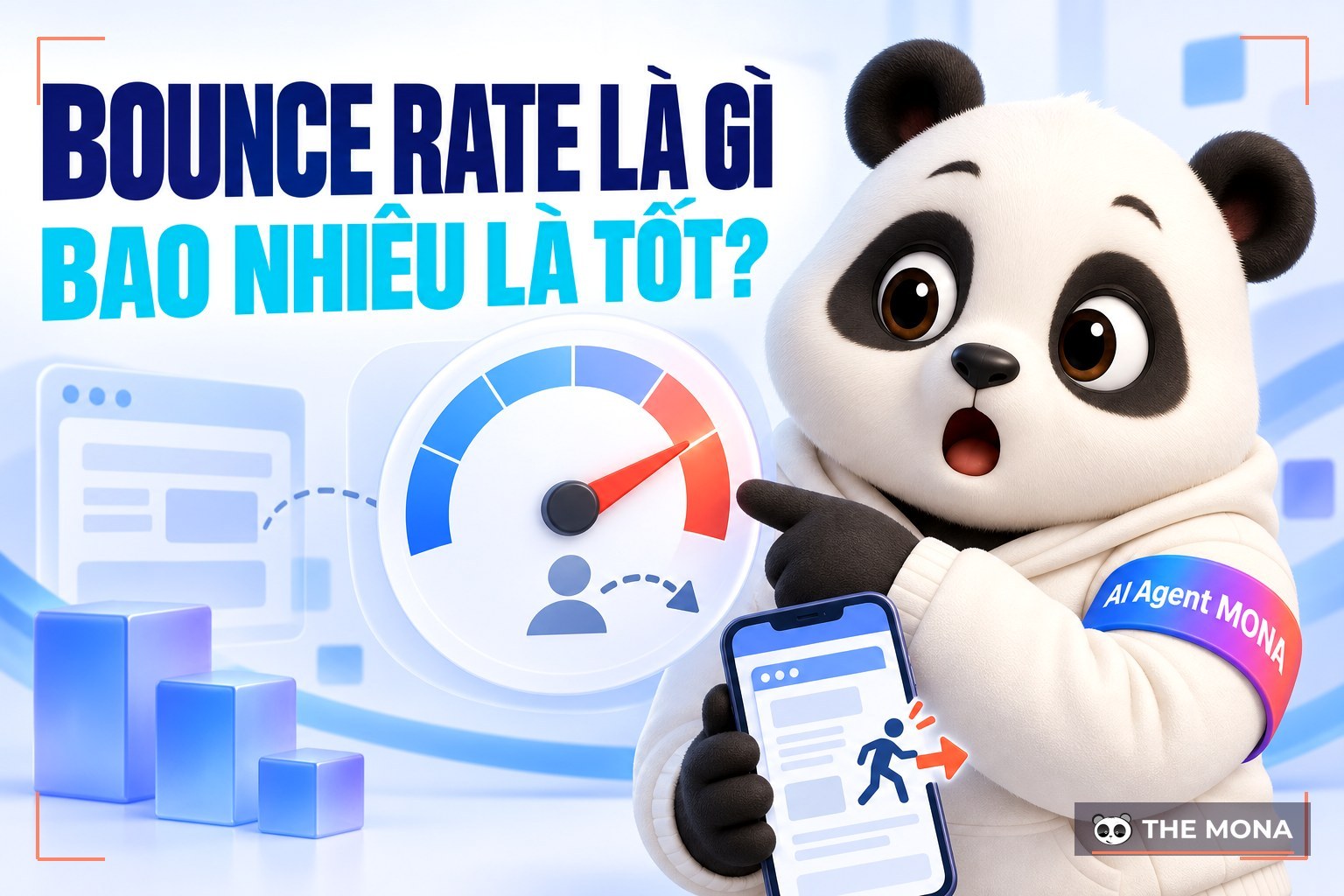
Bounce Rate (also called exit rate) is a metric that gives an objective view of the user experience on your website. With this number you can tell how good your site is and find ways to improve it. So what is bounce rate? What is a good bounce rate? How do you keep it as low as possible? Let's go through MONA Media the detailed answers in this article.
Bounce rate is the percentage of visitors who land on your website and leave right away without clicking on any other content.
Example: If a website's bounce rate is 80%, then out of 100 visits, 80% leave right away and only 20 view more content.

There are several reasons a reader may leave a website as soon as they arrive, including:
Bounce rate is seen as an important website metric for reasons such as:
-> Read more: What is CTR? What is a good CTR? How to increase CTR
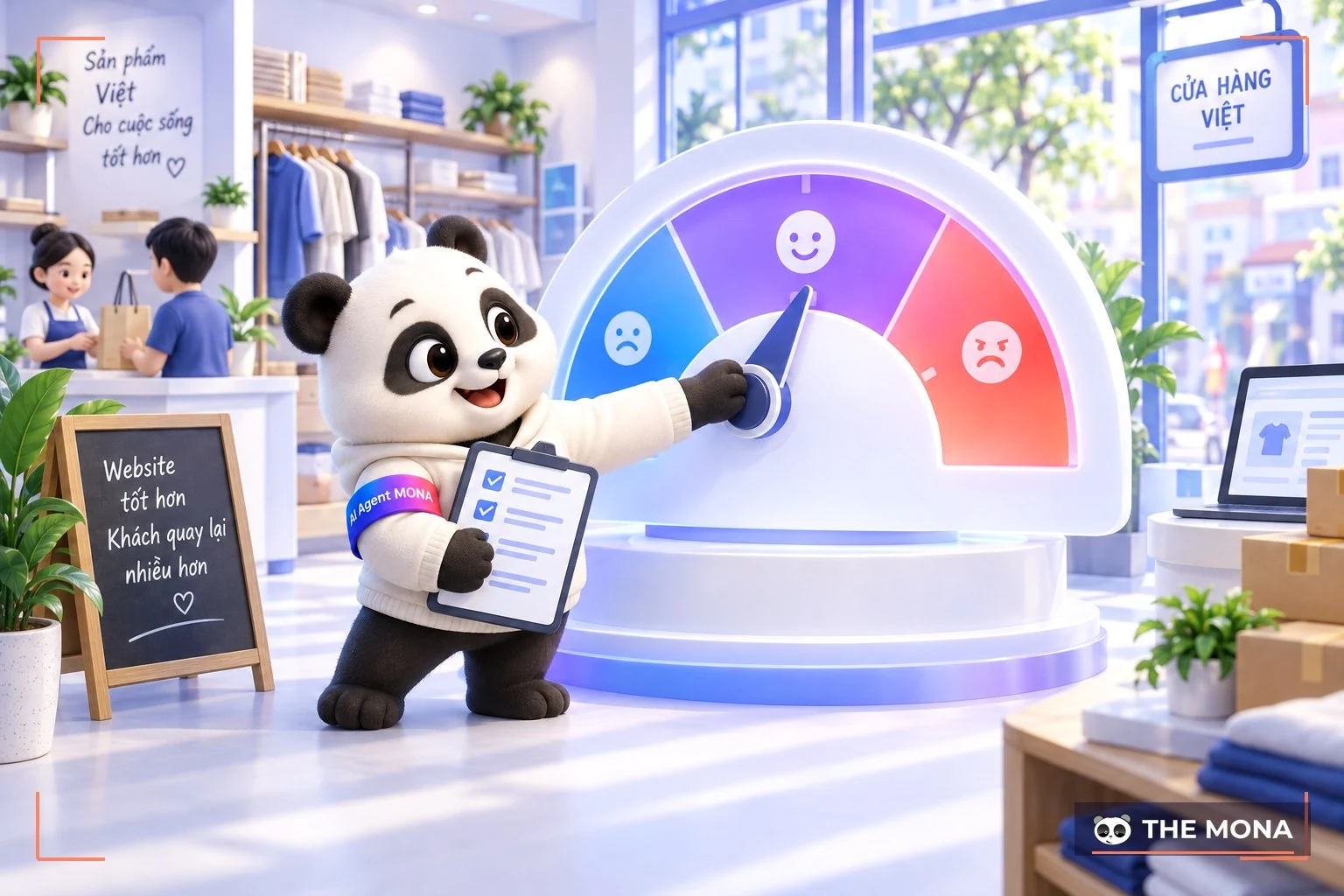
After learning what bounce rate is, many people still ask what a good bounce rate looks like. Every website has a bounce rate, and whether it runs high or low depends on the type of site and its field. Even so, a website's bounce rate should be around 60% or lower.
The standard bounce rate varies with the type of website. Most websites reached through Google search or ads have a high bounce rate. On news websiteswith a lot of traffic (Traffic), readers tend to stay and move from one article to the next, so the bounce rate is low.
If you're not sure where to start with CRO, this video is the answer. Huy shows you which tools you need and how they work together. Watch it to learn how to optimize CRO for your own website.
The most accurate way to calculate a website's bounce rate is usually with Google Analytics, using the formula below:
A page's bounce rate is calculated like this:
Website bounce rate = Total bounces in a given period /Total entrances to a page in the same period.

Where:
Bounce rate of the whole website = Total bounces in a given period /Total entrances to all pages in the same period.

Here are the factors that determine your website's bounce rate. Knowing them helps you bring the rate down. So what affects bounce rate?
Google uses Google Analytics to calculate bounce rate. In the standard version of Google Analytics, a bounce is counted when a visitor views only one page and leaves.

In the Google Analytics 4 – GA4version, bounce rate based on user behavior was upgraded to be more accurate and began to apply in 7/2023. Under it, if a visitor converts or spends at least 10 seconds on the page, it is not counted as a bounce even if they don't visit another page.
You can see that Google now focuses on positive signals, meaning real interaction with the site. The new behavior-based bounce rate in GA4 gives more accurate and more useful numbers.
Websites keep growing in number and come in many types. The bounce rate you reach differs by type. According to research, bounce rates for some types of websites are:
Websites play a key role in the business of most companies in every field.
Don't have a website yet and want one to keep up with the times and support your business, but worried about the cost?
No need to worry. MONA offers quality Website design at a SEO price list reasonable price using ready-made templates.
CONTACT US 1900 636 648 OR CLICK THE BANNER BELOW TO GET ADVICE ON PROFESSIONAL WEBSITE DESIGN SERVICES.

Landing page A landing page, also called a destination page, is a standalone web page built with content focused on one job for the reader. Its purpose is to give information or lead visitors to a specific conversion action.
Landing pages usually carry simple, easy-to-understand information or a form for contact details. So visitors leave quickly once they understand the page or fill in their contact details.
Landing page quality shows in the content and the interface design, such as colors, fonts, text size and the call to action – “Call to action”. If the content is unclear or too long, the design is unattractive or unprofessional, or there is no action button, the bounce rate stays high.
To lower a landing page's bounce rate, you need some knowledge of UI (user interface) to optimize the page. Only when the interface suits users will it keep them on the page and get the content read.
-> See more: Professional, effective Landing Page design service

Type of content depends on how long and how difficult the content is across the page and the site. Content that is entertaining, easy to follow, interesting and short, at around 1,000 words usually has a lower bounce rate than long, difficult, analytical content.
That's because analytical articles take time to digest. Users often bookmark the page to come back to when they have free time.
Bounce rates differ between business fields. Below are the average bounce rates for websites in some specific industries:

If your website attracts traffic from the wrong source or the wrong audience target customers your bounce rate will naturally be high. For example, if https://mona.media/ is aimed at SEO services and Marketing but draws visitors from the entertainment field, the bounce rate will be high.
Different media channels bring in traffic with different bounce rates. Businesses that focus on social media like Facebook and Instagram usually get traffic with a higher bounce rate than traffic from Google SEO results.
New visitors tend to bounce more than loyal or returning customers. New customers aren't yet familiar with your brand, and they are comparing several companies that offer similar products or services.
Different devices have different bounce rates. This depends on how well the content fits phone, tablet and computer screens. Many businesses focus on the phone or the computer layout and forget the other devices. When the site doesn't adapt across devices and the experience is poor, a high bounce rate is no surprise.
To fix a rising bounce rate, you first need to find the cause. MONA has put together the main reasons a website's bounce rate goes up:
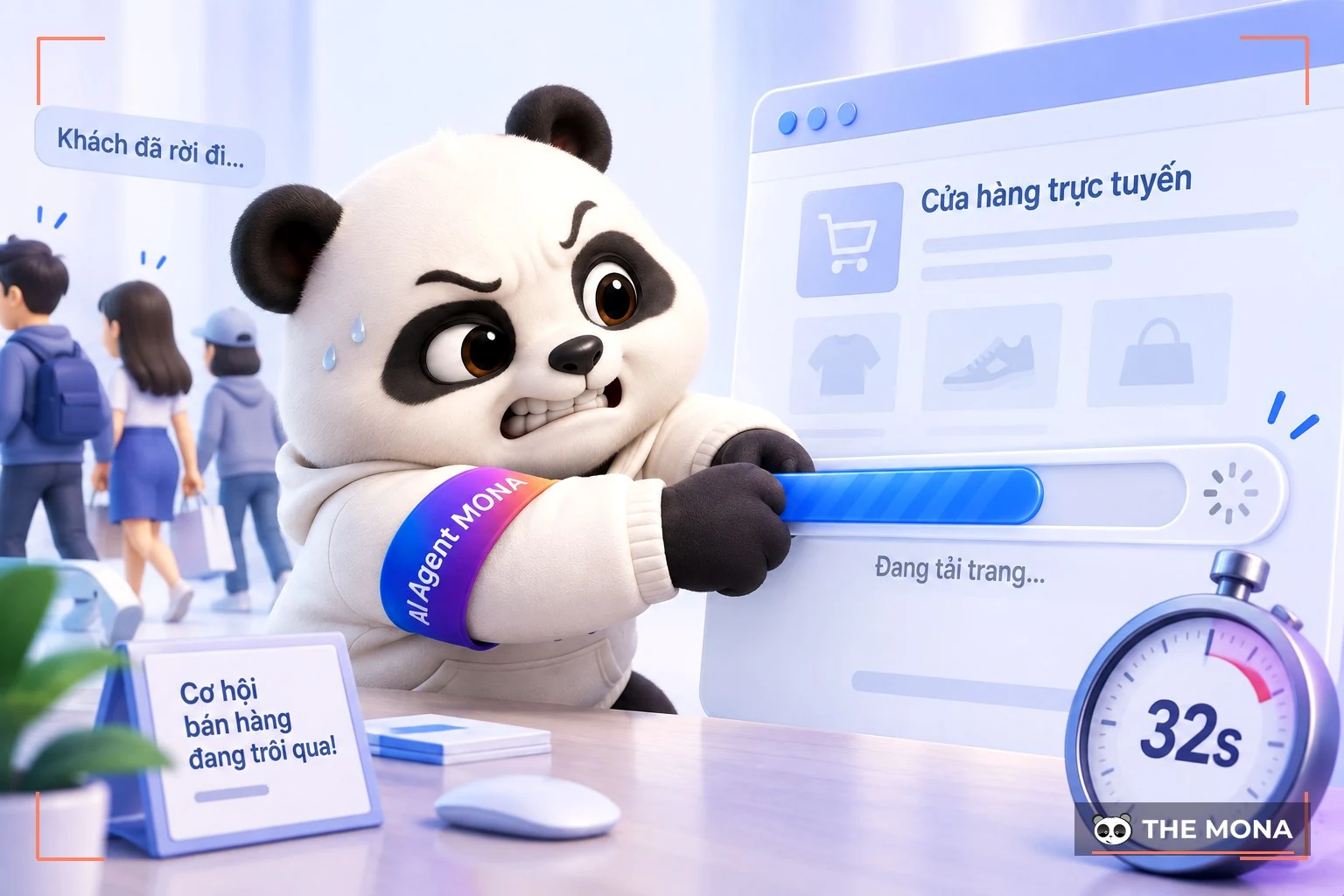
You might think an extra second or two of load time doesn't matter much. It does. A few more seconds of waiting is often enough for a visitor to leave, so Bounce rate a higher bounce rate is almost guaranteed.
About 50% of users leave a page if it takes longer than 3 seconds to load (source: PhocusWright, Forrester Consulting).
As Lý Quốc Siêu, Digital Marketing Manager at The MONA, puts it: “Page speed is also one of the signals Google uses to rank search results. Tracking and improving it regularly helps both your SEO strategy and your bounce rate. Google favours content that gives users a good experience, so a slow-loading website effectively means a poor experience for the people visiting it.”
-> Read more:
People come to your website looking for answers. If the content doesn't give them what they need, or nothing stands out, they leave on the first visit and look for a better page elsewhere. Good content does the opposite: it keeps visitors around longer, leads them on to other articles and brings the bounce rate down considerably.
-> See also: How to find ideas for original, creative content

The layout, images, colours and presentation of your website can decide whether people stay or leave. Don't try to put everything you can think of on one page in great detail. It quickly looks cluttered and pushes visitors away. Choose a simpler layout and fewer, stronger images that draw people in.
-> Read more: What is the standard image size
An attractive title and description is one of the most effective ways to win clicks for your website content. But if the title doesn't match what's in the article, it can “backfire” badly. When readers don't find the information the title or description promised, they leave straight away, which hurts the user experience and costs you favour with search engines.
-> See also:
Internal links can lead visitors from one article to the next, which helps grow organic traffic and noticeably improves your bounce rate. Leaving internal links out of your articles is a big missed opportunity.
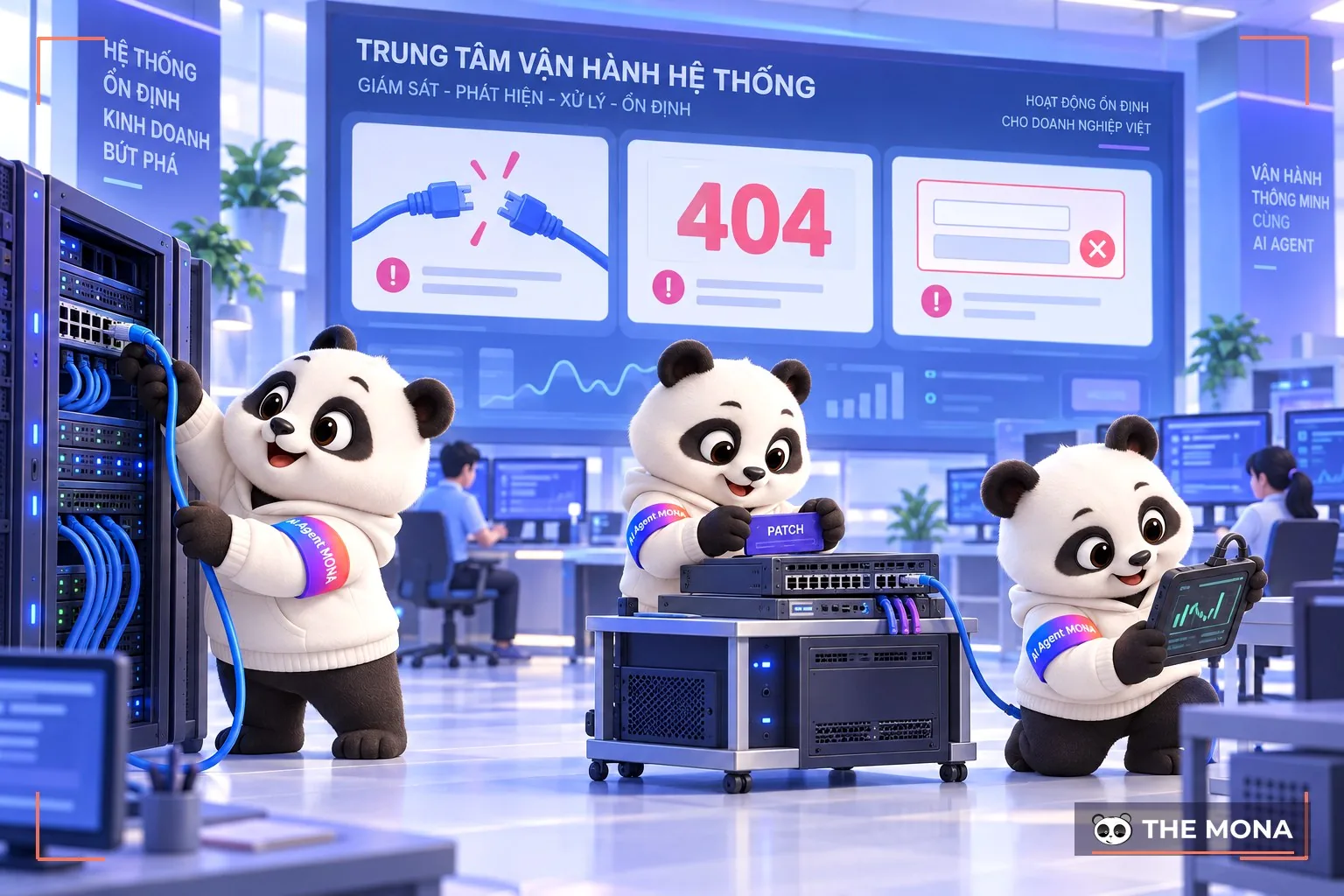
Technical errors can stop a page from loading at all. If your bounce rate suddenly jumps, it may be a sign that your website has run into technical problems.
Errors such as 404s, JavaScript errors or broken plugins can all push the bounce rate up. Check your website regularly so you can spot and fix them quickly.
Here are the cases where Google Analytics does not count a visit as a bounce:

If a user lands on your website, triggers an event tracked with Event Tracking Code and then leaves without visiting another page, the visit is not counted as a bounce. For example, a user arrives on the website, plays a video that is tracked as an event, then leaves.
This means that if you set up Event Tracking on your website, the bounce rate of that page, or even of the whole site, will drop considerably.
A user arrives on the website, performs an action recorded by Social Interactions Tracking code, then leaves without visiting any other page.
Example: NFor example, a user lands on a blog post, reads it and shares it with a tracked “Share” button.
Google doesn't count this visit as a bounce because two GIF requests are sent in the same session: one from the Google Analytics tracking code (sending the page view) and one from the social interaction tracking code (sending the social interaction).
With automatic Tracked Events, every time the page reloads, a single-page visit is not counted as a bounce because more than one GIF request is sent.
If a website contains two or more identical GATC snippets, at least two GIF requests are made, so traffic to that page is not counted as a bounce.
To bring your bounce rate down quickly:
Low-value traffic is one of the main reasons a website's bounce rate stays high. Cutting back on the channels that bring it in is an effective way to lower the bounce rate.
In practice, you should:
-> You might also like: How to find bad backlinks and remove them from your website
Slow loading is the main reason people leave a website immediately. Deal with whatever makes your site slow on desktop and mobile: oversized images, a heavy theme, low-quality hosting, caching issues, unoptimised data and so on.
The article should match its title and description closely. Don't “mislead” readers: they leave as soon as they can't find what they came for. The content also needs to be good and engaging enough that people go on to look at more, which is the best way to lower the bounce rate.
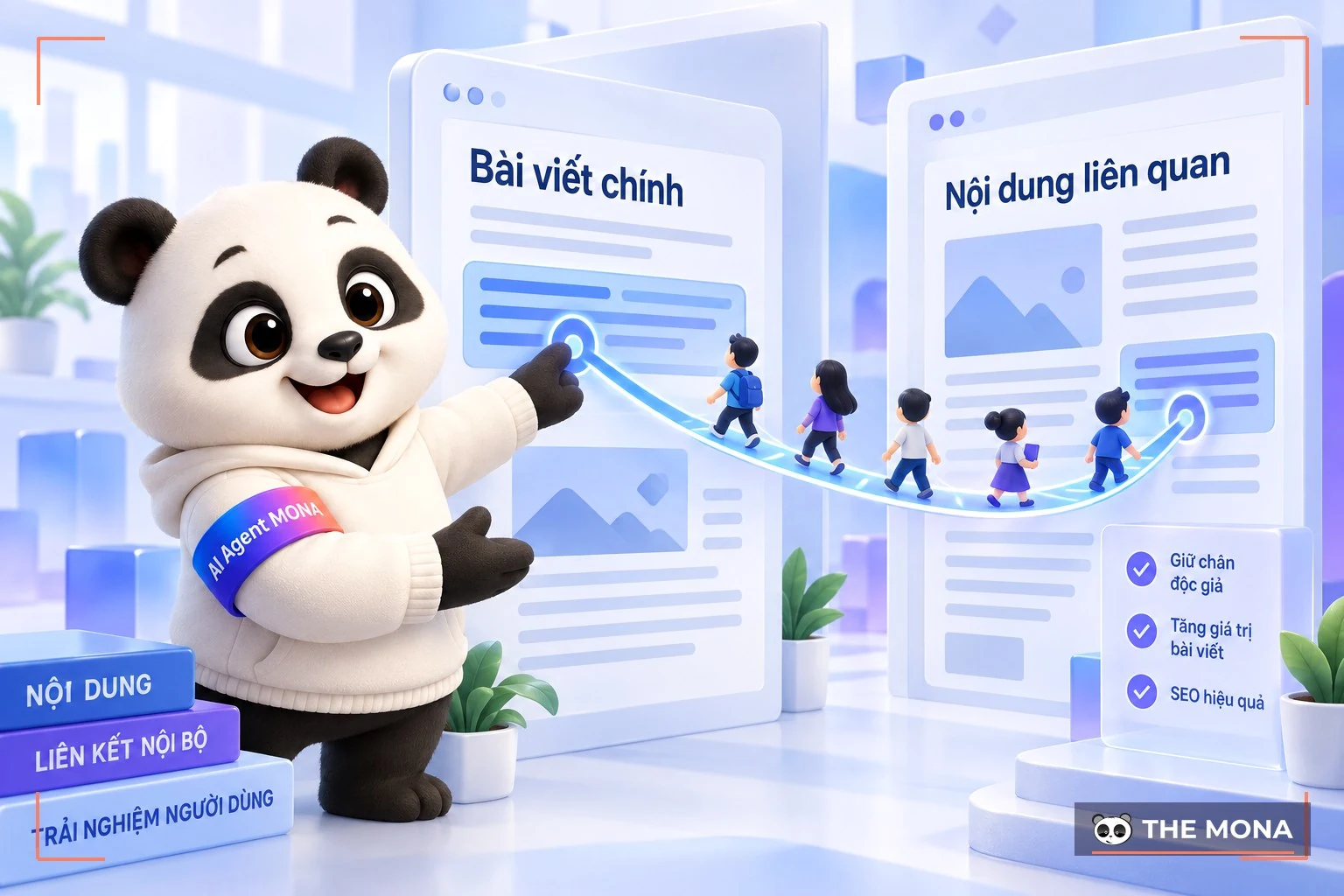
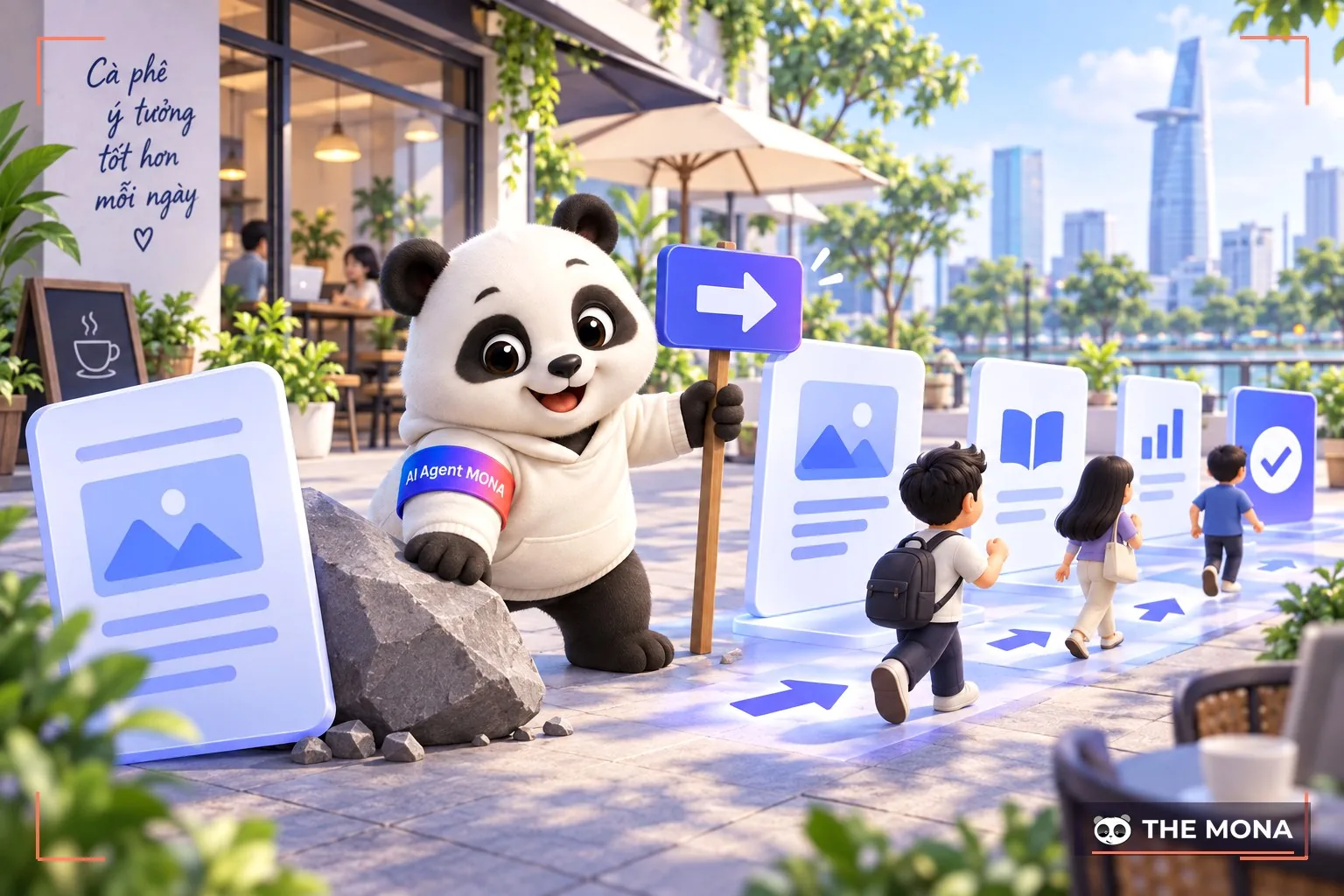
This is an effective way to lower the bounce rate. Place links in the right spots, in the right way, so they spark readers' curiosity. Internal links lead people from one page to another, keeping them on your site and bringing the bounce rate down.
Showing related articles on the topic people searched for keeps them clicking through to the next post, so very few leave in the first few seconds.
A pop-up is an ad that “tags along” the moment someone opens the page, and visitors may find it annoying and leave. Think carefully before using pop-ups, and avoid ones that stay up too long or have content nobody cares about, since they make people leave immediately.
An ad appearing just as someone is absorbed in an interesting article is a bad experience. They will either sit through it and keep reading, or leave the moment the screen changes. Think hard before you put ads on your website.
A page-level survey means adding Like or Dislike buttons at the bottom of a landing page. It gives the business instant feedback from visitors about why they leave. Make it possible to vote without logging in. With that feedback, the business can adjust its content quickly and reach users more effectively.
When a website or its content is built with Ajax or Flash, user interactions such as clicking images or links, downloading media or watching videos all happen on a single page. Most visitors therefore never load another page on the site, and the bounce rate is often high, sometimes 100%. For these websites, use the Virtual Pageview or Event Tracking features in Google Analytics.
Is your website stuck with a high bounce rate you can't seem to fix? You don't have to solve it alone. Talk to MONA about The website optimization service package from MONA?
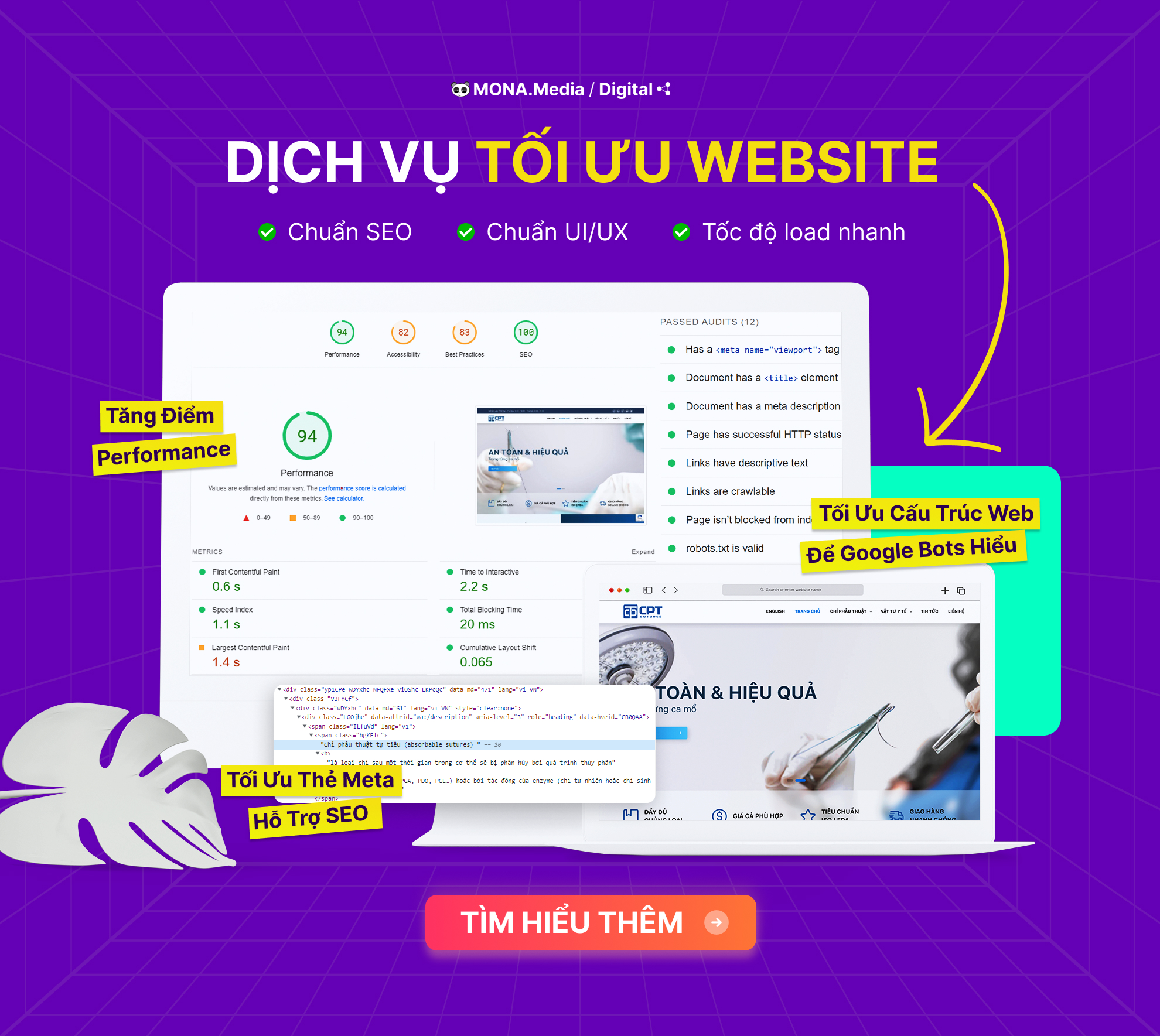
With our experience and expertise, we optimise your website to attract potential customers and noticeably reduce the bounce rate through:
MONA Media offers website optimisation and upgrade plans tailored to your needs, so your website ends up exactly as you want it. Our team has plenty of hands-on experience in SEO & Marketing Online and knows how to deliver. Work with MONA to GROW TRAFFIC BY 200% and and raise revenue up to 300 times with the MONA team.
CONTACT US with MONA Media qua hotline 1900 636 648 and take the chance to grow your business revenue.
1- What does a 100% bounce rate mean?
A 100% bounce rate means every visitor left the website without interacting or opening another page on the domain. It's a warning sign that you need to rework your content, design and so on to give users a better experience.
2- Does bounce rate affect SEO?
A high bounce rate hurts the overall SEO results of a business website. If it stays high for a long time, it shows that the user experience and some other factors are weak, and Google will rank websites with better metrics above yours.
3- Why do some pages have a bounce rate of 0?
Many businesses want a low bounce rate. A 0% bounce rate would be the ideal: every visitor explores more than one page. In practice it doesn't happen anywhere on the internet. So if your website shows a 0% bounce rate, something is wrong and you need to fix it.
4- Where can I see the bounce rate?
Google Analytics is Google's free tool for keeping an eye on the “overall health” of your website. You can see the bounce rate directly in the tool under “Bounce Rate”.
We hope the explanation above from MONAhas given you a clear picture of Bounce rate is, how to calculate a good bounce rate and how best to optimise it. Apply the techniques above and your website will reach a healthy bounce rate. Good luck.
-> Related articles:

CEO & Founder · The MONA
Founder of The MONA, who built a services company of 200+ staff with 14,000+ projects delivered. Khánh Hùng shares how he thinks about building systems that run themselves, automating a business, and the real lessons from delivering projects at MONA.
 1,6K



Professional website
design services
Own a website with a beautiful, 100% exclusive design and a lifetime warranty, with the ability
to expand features flexibly as your business grows, starting today!






 MONA will never sell your information or send you spam


 MONA will never sell your information or send you spam
