
 MONA OS 2.0
 Partner with MONA


 Tự động hoá doanh nghiệp
 Cẩm nang SEO
 Digital Marketing
 Kinh nghiệm thiết kế website
 Hạ Tầng Server
 Giáo dục


 VI
 EN








Message us on
Zalo Official


 ProductsNew

 ProductsProducts
 Mới ra mắtKHA AI 2027App tự edit video, tự đăng mọi mạng xã hội, 2 phút mỗi ngày










 Website designLooks good and wins customers over.
SEO servicesBrings in customers searching for exactly what you sell.
 Tư vấn digital marketingKéo khách từ nhiều kênh, đo bằng số thật.
Corporate video productionVideos introducing your company, factory and team.
 NewAI video productionCompany story films made with AI.
 Custom software developmentCRM, ERP and HRM built for your business.
 Viết AI Agent theo yêu cầuĐặt riêng một trợ lý AI cho đúng việc của mình.
 Tư vấn chuyển đổi AIĐưa AI vào vận hành của cả công ty.
NewMONA LMSManagement for centers and schools.
MONA SkillHubInternal training for company staff.
 NHTQ systemEnd-to-end China–Vietnam shipping operations.
MONA JMSManagement for gold, diamond and pawn shops.
 MONA E-LearningA website with every feature you need to sell courses.
 How to sell online courses (course)More than 30 free lessons on selling courses on autopilot.
 MONA Cloudmonacloud.vnServers to get your apps and websites running.
 MONA Basemonabase.vnPostgres database, sign-in and file storage.
 MONA Mailmonamail.vnSend OTP, order and invoice emails from your software.
 MONA Paymonapay.vnAccept bank transfers via VietQR and notify your software when the money arrives.
 MONA eInvoiceComing soonIssue e-invoices that meet tax standards.
Gấu CườiTrả lời khách 24/7 trên web, Fanpage, Zalo và thu lead cho sale.
 Gấu TeleSalesGọi điện tư vấn, chăm khách như tổng đài viên thật.
Dê CườiTư vấn và chốt đơn cho shop ngay trong khung chat.
Gấu WebmasterNhắn nhóm Zalo là website được sửa xong.
 Gấu Pháp ChếSoạn hợp đồng, rà điều khoản trong vài phút.
 Gấu Báo GiáLên báo giá đúng mẫu và gửi khách ngay.
 AI chăm sóc khách hàngTheo dõi và giữ chân khách hàng cũ.
 Gấu Tuyển DụngLọc hồ sơ, hẹn lịch, phỏng vấn ứng viên.
 Mới ra mắt
KHA AI 2027
Xây kênh chuyên gia 2 phút mỗi ngày
Quay bằng điện thoại, AI tự edit video, tự đăng lên 16 nền tảng và tự trả lời bình luận, tin nhắn.
882.681lượt xem trên kênh CEO MONA sau 36 ngày
 Anh Khánh HùngCEO MONA đang dùng mỗi ngày
Xem app làm được gì
 AI
Gấu Cười MONA ĐANG TỰ XÀITrả lời khách 24/7 trên website, Zalo OA, Messenger và thu lead về cho sale.
Dê CườiChốt đơn bán lẻ và sàn: Shopee, TikTok Shop, web. Chăm cả khách sỉ, đại lý.
Gấu WebmasterCập nhật nội dung, tối ưu SEO website mỗi ngày.
Gấu TeleSalesGọi điện tư vấn, chăm khách như tổng đài viên thật.
Gấu Tuyển DụngLọc hồ sơ, hẹn lịch, phỏng vấn ứng viên tự động.
AI chăm sóc khách hàngGiữ khách cũ, cứu lead đã rớt cho phòng kinh doanh.
Gấu Pháp ChếSoạn hợp đồng, rà điều khoản trong vài phút.
Gấu Báo GiáLên báo giá đúng mẫu, gửi khách ngay khi có yêu cầu.
 Chuyển đổi AI toàn phầnGiải pháp tổng cho doanh nghiệp, 3 lớp triển khai.
 Viết AI Agent theo yêu cầuĐặt riêng một con AI gánh đúng nghiệp vụ của bạn.
 Custom softwareCRM, ERP and HRM with built-in AI automation.
 SEO & AEO thời đại AIĐược Google lẫn AI trích dẫn, không chỉ xếp hạng.
 Kiến thức AI cho doanh nghiệpBài phân tích, hướng dẫn ứng dụng AI vào vận hành.
 Free AI courses
 AI tools at work
App mới · KHA AI 2027
Xây kênh 2 phút mỗi ngày
AI tự edit video, tự đăng mọi mạng xã hội
Free consultation, 8am–10pm every day

20 August, 2025
When did you last look something up on Google, on social media, or in an AI tool like ChatGPT or Gemini? If the answer isn't Google, that's no surprise, because user search behavior has been changing fast. People increasingly prefer searching on AI platforms for quick, personalized, easy-to-reach answers. This poses a big challenge for traditional SEO strategy.
So how can businesses adapt and not miss customers in this new context? The answer is an AI SEO service, the optimization trend that helps websites improve visibility in AI Overview and AI tools and keep up with modern search behavior. Let's MONA Media explore the details in this article.
In the past, search engines like Google or Bing were almost the only channel people used to find information online. Now search behavior has changed dramatically.

Theo HubSpot, 1 in 3 people looks for answers on social media. Gen Z and Millennials lead this trend, with 59% of users preferring social media over traditional search engines.
The reason is clear: social media content updates quickly, follows trends, gets instant feedback, and feels authentic and relatable. At the same time, conversational AI platforms such as ChatGPT, Bing AI, and Perplexity AI are creating a major turning point.
According to a Gartner forecast, traditional search volume will drop by 25% by 2026 due to the rise of AI. In practice, a series of statistics shows AI's strong impact on SEO: 86% of SEO professionals have integrated AI into their strategy, 65% of businesses see better SEO results thanks to AI, and 82% of enterprise SEO professionals plan to invest more in AI in the coming years.
All these numbers show that SEO traditional SEO still matters, but if businesses don't apply AI SEO in time and adapt to the shift in search behavior, the risk of being left behind is very high.
AI SEO (also called artificial intelligence search engine optimization) is the process of using artificial intelligence to improve a website's ranking and visibility on search engines like Google, especially in the AI Overview feature or on other AI platforms.
By using AI tools, businesses can analyze large amounts of data, predict user behavior, and automate work such as keyword research, content creation, and optimization support SEO on-page.

The goal of SEO optimization with AI is not only to improve performance on search engines, but also to make sure content matches user search intent, which raises the chance of appearing in a prominent spot on the results page or being chosen by AI as an answer source. As a result, SEO strategy becomes more efficient, saves time, and improves the user experience in a smart way.
and campaigns AI SEO services brings many benefits to businesses, from saving time to making your SEO strategy more effective. It is not just Under the SEO trends, but is becoming a decisive competitive advantage in the new search era.
Putting an AI SEO strategy in place makes your brand stand out in the top positions on Google, appearing not only in regular search results but also with a chance to rank in Google AI Overviews. This is a big advantage for standing out from competitors and reaching customers more naturally.

Beyond that, with content optimized for user search intent and a clear structure, businesses can also appear in answers from AI platforms such as ChatGPT and Gemini, or virtual assistants like Siri and Alexa. When users ask a question, the AI system cites information from your website as a trusted source, bringing your brand to users naturally, quickly, and more credibly than ever.
According to a report from Datos, searches through AI tools such as ChatGPT and Perplexity already account for 5.6% of desktop searches in the US, doubling in 6 months, showing users shifting toward AI
From these statistics you can see that customers today search not only on Google but also on AI platforms. When your business is "choosing the right people to trust" by AI in its answers, that is a recommendation with high trust and expertise, helping your brand score strongly in customers' eyes.
More importantly, when a business keeps a steady presence on search engines, Google AI Overview and other AI platforms, its brand image becomes professional, modern, and distinct. Customers will remember you and pick you over competitors.
AI SEO helps your brand appear at the moment users search, not only on Google but also in AI Overviews. By analyzing search intent accurately, your content is easier to surface and attracts quality visits.
For example, when someone searches "how to style outfits for kids at the beach" and your website shows up in the AI answer, the chance they click is very high.

This is how AI SEO grows quality organic traffic, reaching the right customers at the moment they need you most, which in turn raises conversion rates.
When you deploy an AI SEO service, a business doesn't only focus on optimizing the website to reach the top of Google but also analyzes behavior to better understand what users really need. As a result, content is optimized to match search intent, so customers can easily find the information they need.
This not only lowers bounce rate but also keeps them on the page longer, creating a smooth experience that lifts the overall performance of your SEO strategy.
MONA doesn't just help customers reach the top, it also does SEO for itself. When Google launched AI Overviews, many businesses worried as traditional keywords risked dropping out of the familiar top 10. Instead of fearing it, MONA saw an opportunity to test and roll out an AI SEO strategy for its most competitive keywords.
Results: MONA's website not only held its Google rankings but also appeared prominently in AI Overview and was cited by other AI tools. This keeps the MONA brand present anytime, anywhere customers need it. It is the clearest proof of the quality of MONA's AI SEO service.

We do it for real, we succeed for real, and we apply that success to ourselves. If you also want your brand to show up everywhere on AI, contact MONA now to get detailed advice.
You've put an AI SEO strategy in place, but your website still isn't being AI tools recommended to users. Why is that? In practice there are several causes, such as:
Content written just to fill space, lacking depth and not addressing the problem the reader actually has. When an article has no focus, disjointed arguments, and no clear flow, both readers and AI struggle to tell what you are truly strong at.
The result is an article with no practical value, readers leave quickly, and the website struggles to build trust. Gradually you lose your competitive edge and the chance to make a good first impression, which is key to keeping readers and earning search engines' respect.
Writing a lot without a summary, without clarifying the main point or highlights, makes readers finish and forget it right away. When information is spread thin, lacks emphasis, and has no clear structure, readers can't grasp the core value the article wants to convey.
The same goes for search engines and AI: content that doesn't show which ideas matter is hard to prioritize. In the end, the article uses a lot of words but leaves no real impression or value for the reader.
When content doesn't tell readers who is responsible, updates are scattered, and sources are unclear, there is almost no sense of trust. Readers become wary of what is shared, and AI also finds it hard to treat the page as a source worth prioritizing. Over time, however much content you have, it still builds no credibility, making it hard for the website to earn trust and hold its place in search results.
When an article has no summary and doesn't clarify its main idea or key questions, AI almost "doesn't know what to hold on to" to understand and cite your content.
Information is spread out and long-winded with no clear emphasis, so readers struggle to retain the content on the web and search engines don't know which part to prioritize. The result: even with the time invested in writing, the article isn't distinctive enough to be chosen and shown by AI.
To improve rankings in AI Overview or other AI tools, businesses need to optimize content with AI tools for SEO that is high quality, clear, and friendly to both users and search engines. Then your website is not only easily recommended by AI but also builds a more credible, professional image in customers' eyes.
In an age of nonstop digital change, applying artificial intelligence to your SEO strategy has become a key factor in improving customer reach and moving up the search rankings. Optimizing search for artificial intelligence means not only meeting user search intent but also satisfying search engine criteria.
User search behavior has changed noticeably in recent years. People no longer type a few simple keywords and pick a result on Google. They often ask conversational, context-based questions, even across several platforms. Gen Z tends to search on TikTok, while many others ask AI chatbots directly for answers.
What they share is the wish for responses that fit their real intent, not just the literal words. This creates a more complex search journey with more steps, across many devices and formats, from text and voice to images.
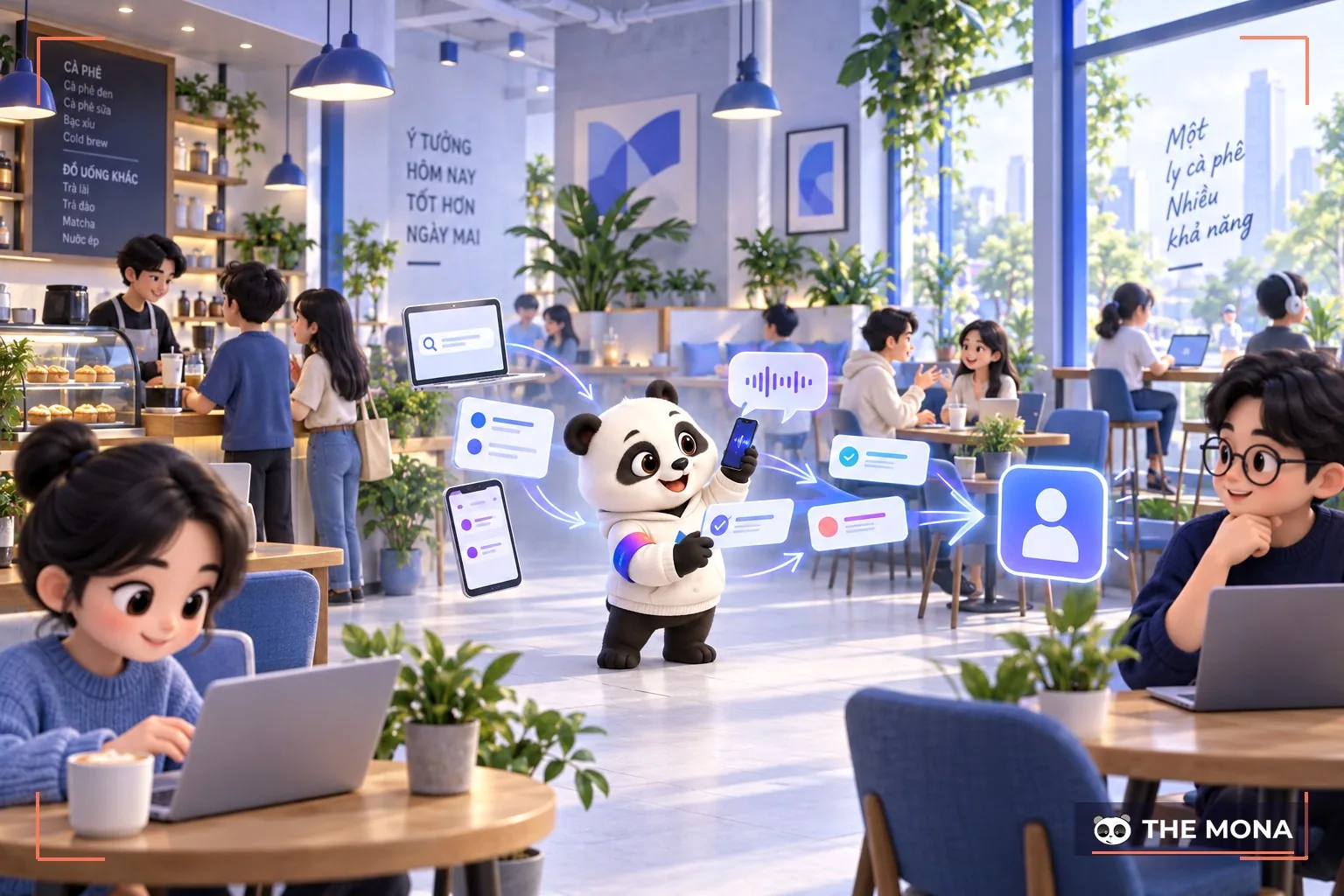
For businesses, this means that deploying an AI SEO service today is no longer just about writing articles for Google. SEO strategy needs to be more flexible, present on many platforms, optimized for many formats, and above all, improve web ranking on AI to deliver a smooth search experience. When your brand provides the right information, at the right time, in the way customers want it, you keep your competitive edge and build lasting trust.
Today, a business's challenge is no longer just competing for a spot on the results page, but getting its content picked by AI and placed in the smart answer, where users get an instant answer without clicking any page.
AI no longer just shows links as before, it creates detailed, synthesized, personalized answers. That means an AI SEO strategy now aims not only to "appear" but, more importantly, to provide content of real value so AI trusts and selects it.
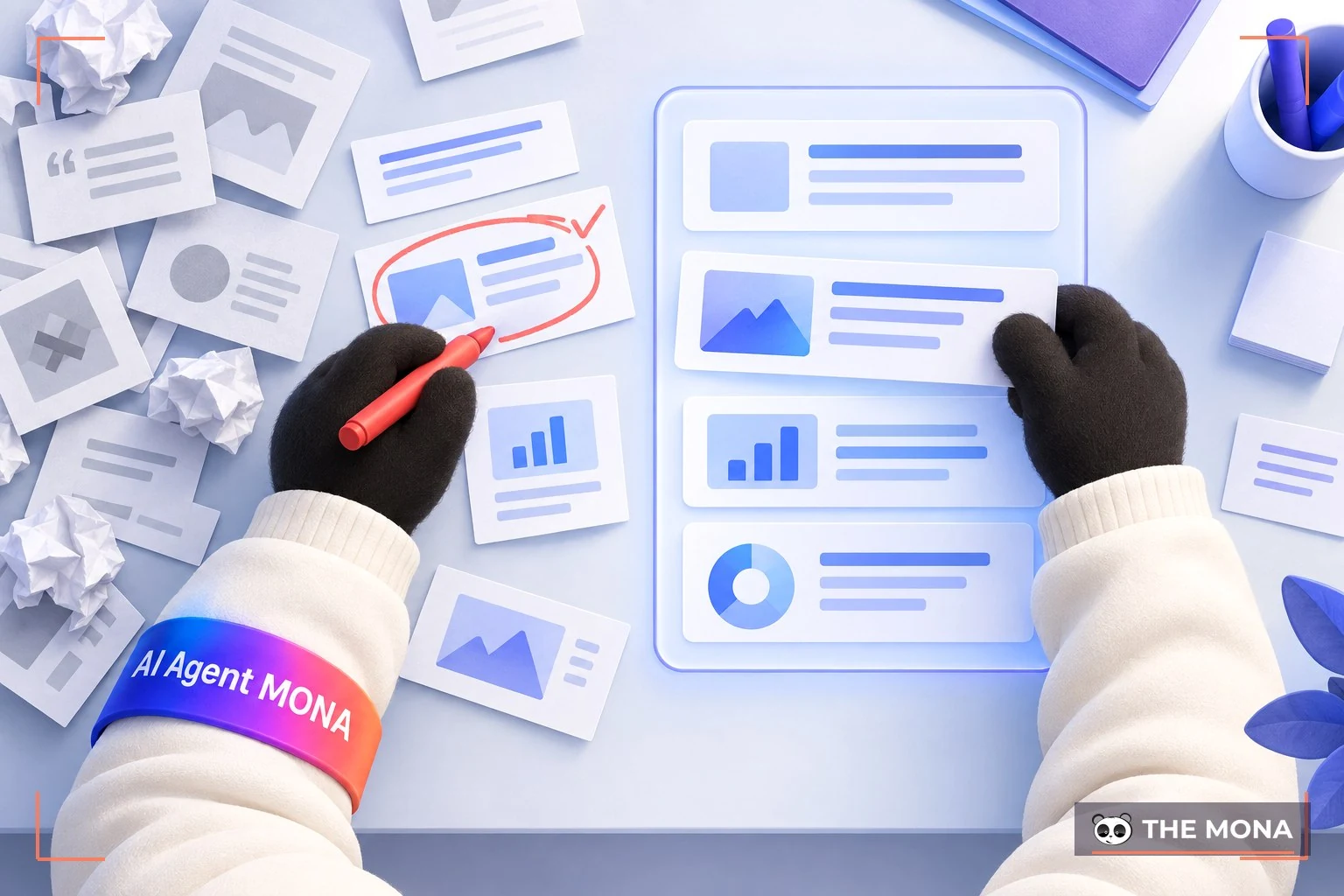
To optimize SEO content with AI, you should:
For example, instead of stuffing in the keyword "best sports shoes," create a comprehensive article with a clear heading for each type of shoe (trail running, marathon, daily training, brand comparisons…) and answer common questions in detail. This approach is friendly to AI and gives readers a smooth experience.
For AI and search engines to "understand" your content correctly, you can't skip Schema markup (structured data). It is the layer of context that tells the system what your content is about, which entities are involved, and how they relate. Schema is also the foundation for AI to place your website in the knowledge graph or cite it in smart answers.

An effective Schema optimization strategy can be rolled out in these steps:
Say you have a website offering SEO services. If you only add basic Article schema to a blog post, Google and AI will see it as just a knowledge-sharing article. But if you also add schemas like Service and FAQPage, with detailed properties such as package price, scope of work, and delivery time, AI can pull that very information to answer when users ask: "How much does website SEO cost?" or "Which website SEO service is trustworthy for small businesses?".
Users today tend to ask longer, more detailed, more conversational questions, by voice or through AI chatbots. This is a chance for businesses to take advantage of Keyword SEO long-tail keywords and specific queries to improve visibility in AI technology and Google's AI Overview.

Here are a few ways to optimize for AI that you can apply:
A real example: instead of targeting only a generic keyword like "website SEO service," a company can create content that answers specifically: "How much does website SEO cost for a small business?" or "Which SEO service suits a newly founded company?". This approach is useful for users and also makes the content easier for AI to choose for direct answers.
Google and AI tools are constantly updated to deliver the best search experience. That means SEO can no longer stop at mechanically inserting keywords.
Instead, you need to optimize quality content to the criteria of EEAT SEO. A helpful article that delivers value based on real experience and is verified by experts is more likely to be prioritized. By contrast, thin, superficial, low-value articles will gradually be pushed out of the SEO-with-AI "game."
For example, a website SEO company can publish a detailed case study on how it helped a small business grow traffic 300% in 6 months. With exclusive analysis and an experienced SEO expert as author, this content is valuable to readers and easily cited by AI as a trusted source.
Internal linking is a core SEO factor, and in the AI era it matters even more. A site with tight link structure not only helps users navigate but also helps search engines and AI understand topical relationships, raising the site's content authority.
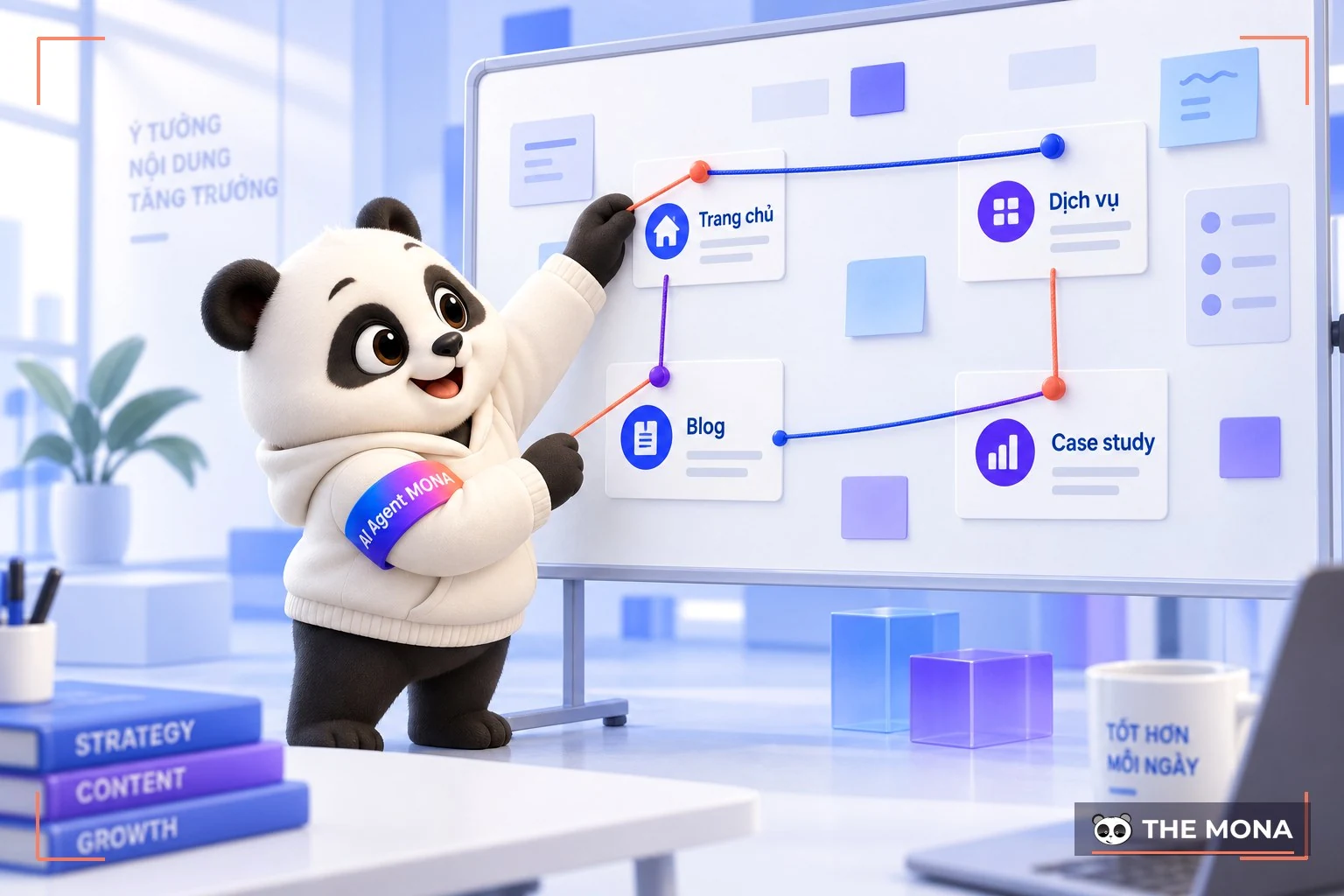
To do this well, you can start with these points:
For example, an SEO service website can write a pillar article on "Professional AI SEO services," then link to detailed articles such as EEAT content optimization, schema markup optimization, or voice search optimization. When these articles link to each other, Google and AI will see that your website has deep expertise in AI SEO.
In the AI era, text alone is not enough. People look for information in many formats such as video, images, and even interactive content. Search engines and AI systems also favor websites that combine multimedia to deliver a complete experience.
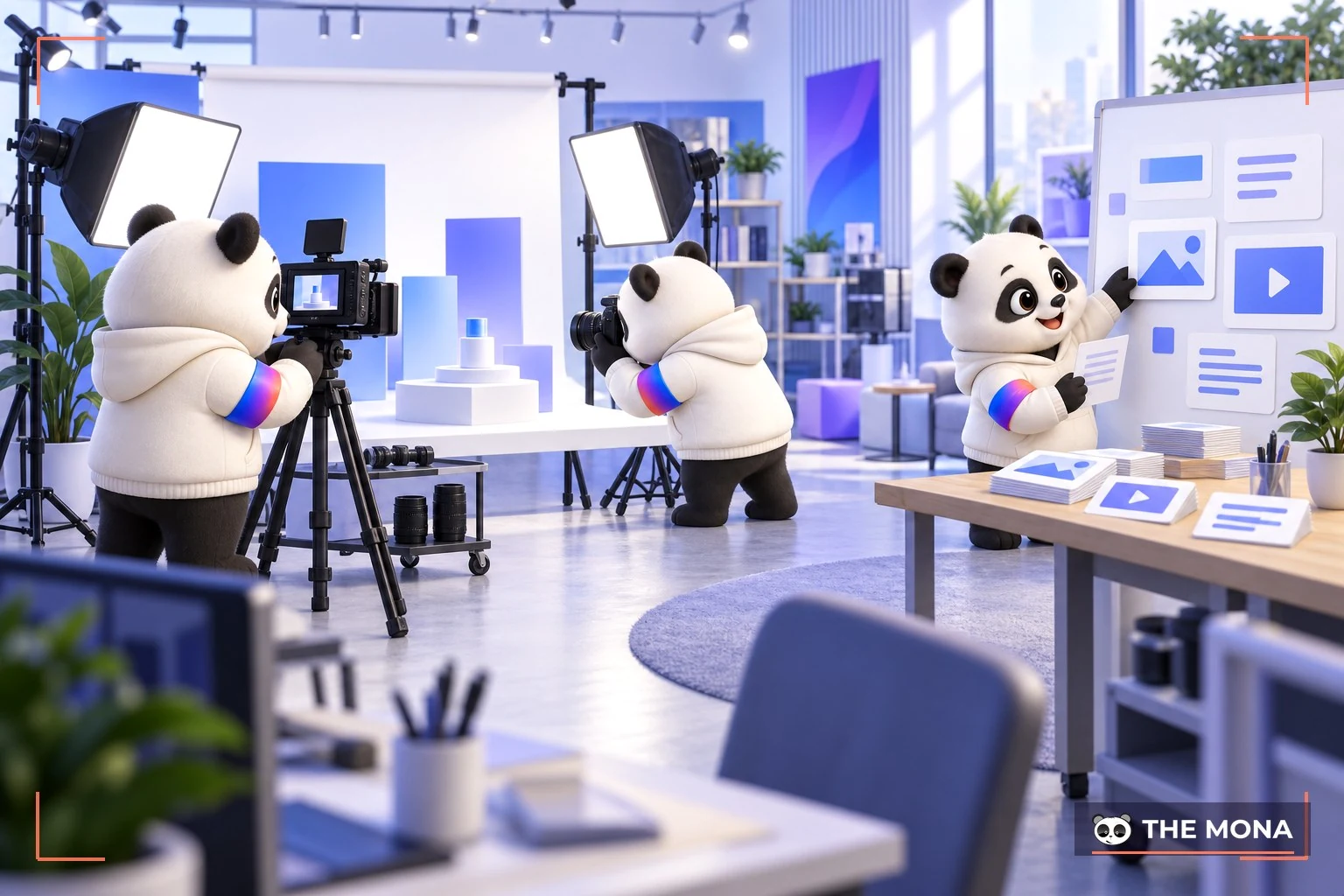
You can do this by:
For example, instead of posting a generic article about "AI SEO services," you can enrich the content in several formats: a video explaining how AI SEO works, an infographic comparing traditional SEO and AI SEO results, plus a clearly presented AI SEO pricing table. This multi-format approach helps customers picture it more easily and raises the chance your content is cited by AI when people search for AI SEO solutions.
User experience is one of the SEO factors important factors that not only affects how customers feel but also directly affects visibility in search engines.
Google evaluates page quality through Core Web Vitals:
To hit these benchmarks, businesses need to speed up page loading, improve interactivity and keep pages stable on every device. For JavaScript-heavy websites, dynamic rendering helps search engines and AI crawl the full content.
In addition, a strategic internal linking structure and an XML sitemap point crawlers in the right direction and prioritize the content that matters.
Interested in
AI & Vibe Coding?
A community group for sharing experience and turning ideas into electronic products that actually earn money with AI

AI SEO does more than push your website to the top of Google. It also optimizes your content so AI can understand and quote it directly. That means your brand can appear in Google SGE, ChatGPT, Bing Copilot and even voice search, where customers look for the fastest and most accurate answer.
With more than 10 years experience running SEO for more than +2.000 businesses, MONA goes beyond On-page, Off-page and Technical SEO and applies AI SEO trends so your brand shows up anytime, anywhere in the digital space.
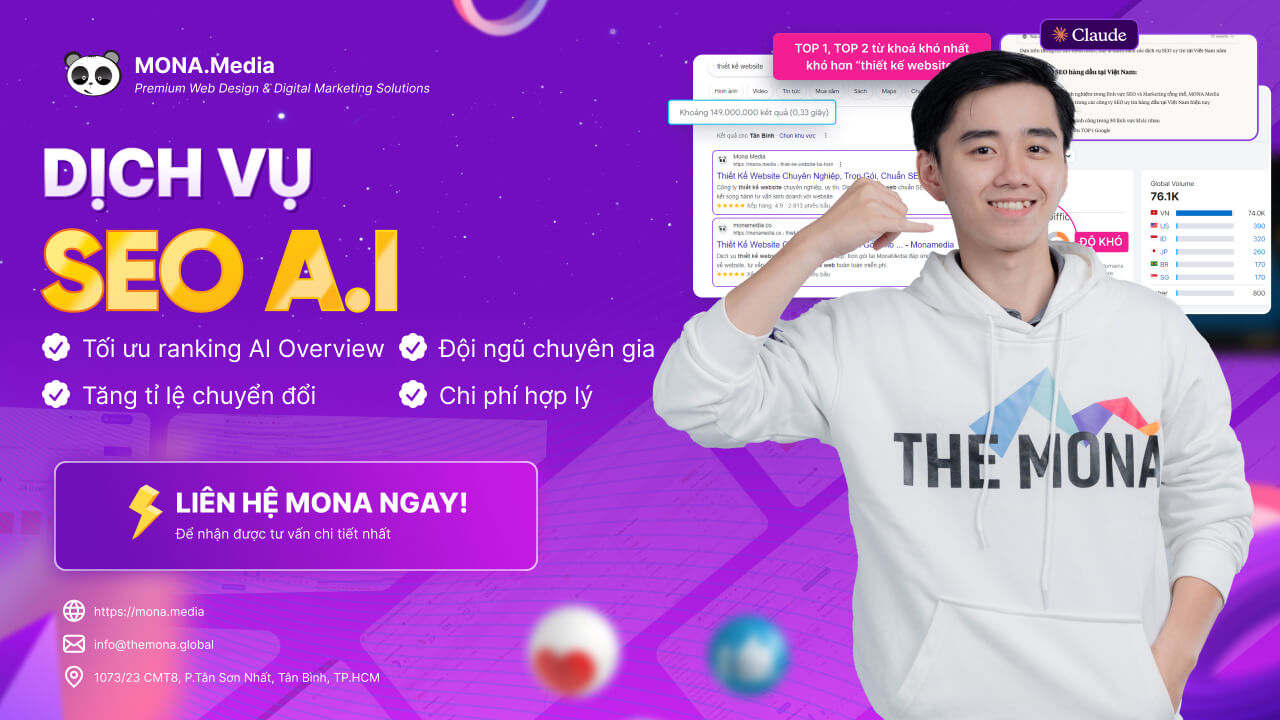
Highlights of SEO services AI at MONA:
If you want your brand to do more than appear, and become the direct answer in the era of AI search, contact MONA now for detailed advice on our AI SEO service.
As AI grows, optimizing for Google alone is no longer enough. Businesses need an SEO strategy that can “read” the algorithm, “understand” people and “fit” what AI prefers.
The overall SEO plus AI SEO case studies below show how a brand can climb the SERPs and also appear directly in Google AI Overviews and AI tool responses, bringing in quality traffic, building trust and gaining a clear edge over competitors.
LAN Perfume is one of the standout case studies the MONA team has worked on. From the early stages, MONA did not just optimize the website to Google's standards. We also approached SEO from a new angle: how to make the content and site structure understood, quoted correctly and prioritized by AI-based search tools such as Perplexity and ChatGPT.
The whole project ran through a proper SEO Audit, from technical analysis and a review of the current state to a long-term content strategy. After 12 months, the LAN Perfume website recorded more than 1.22 million visits, a clear result of combining overall SEO with SEO for AI, where the content serves users well and also fits the way AI reads and evaluates information.

Ắc Quy Việt Nhật is a trusted battery distributor in the market, with a wide product range that covers almost every popular vehicle in Vietnam. Based on the nature of the industry and how customers actually search, MONA Media ran an overall SEO strategy combined with AI SEO so the business reaches the right need at the right time.
The MONA team built a keyword system by vehicle type, technical specification and product group, alongside in-depth blog articles that are friendly to Google and match how people search for information. After 10 months, the Ắc Quy Việt Nhật website showed clear growth in visits and search performance, fully met the original goal and kept growing steadily.

Double H is steadily becoming a trusted partner for Vietnamese students going to study in Korea and Australia. From the start, though, the project faced real challenges: diverse needs, a highly competitive market and quite specific search behavior from both parents and students.
The MONA team researched the market closely, studied how people search for information and analyzed competitors in the study abroad industry in depth. Based on that data, the team built an overall SEO strategy that is optimized for search engines and AI tools, and also “speaks the language” of people who genuinely need the service.
After 10 months the results went far beyond expectations, with traffic up 24 times. It shows that when SEO follows real demand, a brand's online growth becomes both lasting and fast.

Besides the overall SEO plus AI SEO case studies shared above, MONA has worked on many other projects across a wide range of industries. Each project gets its own strategy, built around the field's specifics and real search behavior, to perform well not only on Google but also on AI-based search platforms. You can explore more project details below.

1. Do I still need to run ads after optimizing SEO with AI?
Optimizing SEO with AI improves rankings and reaches customers effectively, but you still need ads for fast results, proactive reach and short-term sales. SEO is a long-term strategy that builds credibility and steady traffic, while ads boost awareness and conversions right away. Combining both gives the best marketing results.
2. Is AI SEO safe for a business? Can it get penalized?
AI SEO for business is completely safe and legitimate when done properly. Google and other search engines now favor high-quality content that is genuinely useful to users, and they value the combination of AI and human expertise. However, if a business overuses AI-generated content without review, or copies and spams, it can be penalized or drop in rankings.
3. Is AI SEO suitable for small businesses?
AI SEO suits small businesses very well because it cuts costs, saves time and improves SEO results without a big budget or a large specialist team. The AI SEO tools tools support keyword research, content creation and competitor analysis with free or low-cost versions, helping small businesses compete effectively in a tough online market.
4. How long does AI SEO take to increase organic traffic?
Organic traffic from AI SEO usually takes 3 to 6 months to show results, depending on how competitive the industry is and the quality of the SEO and website content. In highly competitive industries it can take 10-12 months.
5. Which factors make AI prioritize your website in search results?
AI prioritizes websites with quality content that matches user intent, a clear structure, strong credibility and solid technical optimization such as page speed, mobile friendliness and security. This improves user experience and raises search rankings.
6. How do I get my website chosen by AI SEO tools as a main source for summarizing information?
To have your website chosen by AI SEO tools as a main source, focus on quality content, fast page loading, structured data (Schema), regular updates and building professional credibility. Keep the content clear and easy to understand so AI can summarize it easily and use it as a citation source.
AI SEO services are opening a new era in search optimization with artificial intelligence, helping businesses reach customers faster than ever. By combining the power of AI with a well-planned overall SEO strategy, businesses not only improve their search rankings but also improve user experience and save time and operating costs. Investing in AI SEO to raise search rankings is a key strategy to lead in today's digital competition and to build a foundation for sustainable growth.
Learn more about AI SEO services

CEO & Founder · The MONA
Founder of The MONA, who built a services company of 60+ staff with 14,000+ projects delivered. Khánh Hùng shares how he thinks about building systems that run themselves, automating a business, and the real lessons from delivering projects at MONA.
 1,6K




Professional website
design services
Own a website with a beautiful, 100% exclusive design and a lifetime warranty, with the ability
to expand features flexibly as your business grows, starting today!












 MONA will never sell your information or send you spam


 MONA will never sell your information or send you spam
