
 MONA OS 2.0
 Partner with MONA


 Tự động hoá doanh nghiệp
 Cẩm nang SEO
 Digital Marketing
 Kinh nghiệm thiết kế website
 Hạ Tầng Server
 Giáo dục


 VI
 EN









Message us on
Zalo Official


 ProductsNew

 ProductsProducts
 Mới ra mắtKHA AI 2027App tự edit video, tự đăng mọi mạng xã hội, 2 phút mỗi ngày










 Website designLooks good and wins customers over.
SEO servicesBrings in customers searching for exactly what you sell.
 Tư vấn digital marketingKéo khách từ nhiều kênh, đo bằng số thật.
Corporate video productionVideos introducing your company, factory and team.
 NewAI video productionCompany story films made with AI.
 Custom software developmentCRM, ERP and HRM built for your business.
 Viết AI Agent theo yêu cầuĐặt riêng một trợ lý AI cho đúng việc của mình.
 Tư vấn chuyển đổi AIĐưa AI vào vận hành của cả công ty.
NewMONA LMSManagement for centers and schools.
MONA SkillHubInternal training for company staff.
 NHTQ systemEnd-to-end China–Vietnam shipping operations.
MONA JMSManagement for gold, diamond and pawn shops.
 MONA E-LearningA website with every feature you need to sell courses.
 How to sell online courses (course)More than 30 free lessons on selling courses on autopilot.
 MONA Cloudmonacloud.vnServers to get your apps and websites running.
 MONA Basemonabase.vnPostgres database, sign-in and file storage.
 MONA Mailmonamail.vnSend OTP, order and invoice emails from your software.
 MONA Paymonapay.vnAccept bank transfers via VietQR and notify your software when the money arrives.
 MONA eInvoiceComing soonIssue e-invoices that meet tax standards.
Gấu CườiTrả lời khách 24/7 trên web, Fanpage, Zalo và thu lead cho sale.
 Gấu TeleSalesGọi điện tư vấn, chăm khách như tổng đài viên thật.
Dê CườiTư vấn và chốt đơn cho shop ngay trong khung chat.
Gấu WebmasterNhắn nhóm Zalo là website được sửa xong.
 Gấu Pháp ChếSoạn hợp đồng, rà điều khoản trong vài phút.
 Gấu Báo GiáLên báo giá đúng mẫu và gửi khách ngay.
 AI chăm sóc khách hàngTheo dõi và giữ chân khách hàng cũ.
 Gấu Tuyển DụngLọc hồ sơ, hẹn lịch, phỏng vấn ứng viên.
 Mới ra mắt
KHA AI 2027
Xây kênh chuyên gia 2 phút mỗi ngày
Quay bằng điện thoại, AI tự edit video, tự đăng lên 16 nền tảng và tự trả lời bình luận, tin nhắn.
882.681lượt xem trên kênh CEO MONA sau 36 ngày
 Anh Khánh HùngCEO MONA đang dùng mỗi ngày
Xem app làm được gì
 AI
Gấu Cười MONA ĐANG TỰ XÀITrả lời khách 24/7 trên website, Zalo OA, Messenger và thu lead về cho sale.
Dê CườiChốt đơn bán lẻ và sàn: Shopee, TikTok Shop, web. Chăm cả khách sỉ, đại lý.
Gấu WebmasterCập nhật nội dung, tối ưu SEO website mỗi ngày.
Gấu TeleSalesGọi điện tư vấn, chăm khách như tổng đài viên thật.
Gấu Tuyển DụngLọc hồ sơ, hẹn lịch, phỏng vấn ứng viên tự động.
AI chăm sóc khách hàngGiữ khách cũ, cứu lead đã rớt cho phòng kinh doanh.
Gấu Pháp ChếSoạn hợp đồng, rà điều khoản trong vài phút.
Gấu Báo GiáLên báo giá đúng mẫu, gửi khách ngay khi có yêu cầu.
 Chuyển đổi AI toàn phầnGiải pháp tổng cho doanh nghiệp, 3 lớp triển khai.
 Viết AI Agent theo yêu cầuĐặt riêng một con AI gánh đúng nghiệp vụ của bạn.
 Custom softwareCRM, ERP and HRM with built-in AI automation.
 SEO & AEO thời đại AIĐược Google lẫn AI trích dẫn, không chỉ xếp hạng.
 Kiến thức AI cho doanh nghiệpBài phân tích, hướng dẫn ứng dụng AI vào vận hành.
 Free AI courses
 AI tools at work
App mới · KHA AI 2027
Xây kênh 2 phút mỗi ngày
AI tự edit video, tự đăng mọi mạng xã hội
Free consultation, 8am–10pm every day

05 September, 2025
Have you noticed that lately, when you search on Google, the AI answer often appears right at the top, sometimes even "covering" the familiar list of websites? That's AI Overviews, where SEO is no longer just about ranking number 1, but about continually optimizing so your content gets chosen and shown by the AI. In other words, the rules of the game have changed. Instead of racing for keywords, we now have to focus on creating content that is good enough, trustworthy enough and useful enough for the AI to "trust".
So how do you get your content picked by Google AI? How do you appear in automatically suggested answers? In this article, MONA Media shares the AIO Checklist to help you optimize content for AI Overviews and break through in rankings.
Google AI Overviews and RAG LLMs are completely changing how content is displayed. Instead of just ranking websites, AI can now read, summarize and combine information from many sources to create a new answer. That means we need a more solid strategy to create content that is genuinely useful and trustworthy enough for the AI to cite. This is the key step to optimizing in the new era of search.
Understanding AI Overviews and RAG LLMs shows you that SEO no longer stops at ranking. The AI reads, selects and combines many sources to give an answer. What matters is whether your content gets "retrieved".
If we used to focus on keywords and rankings, now the AI can read, summarize and organize content on its own to give an answer that closely fits the user's search intent.

AI works on context and probability, which means the same query can show different results over time. The goal is no longer position number 1, but making your content easy for the AI to call up.
So, ask yourself:
Huy knows many of you are worried to see AI search showing up everywhere. But really, if you do SEO right and build your brand right, AI is a door that gets your business recommended more.
Watch the video where Huy shares the new SEO trends you should apply to your website!
Popular topics like “top SEO tools” hay “company web design which is reputable" always draw huge search volume. Precisely because competition is high and many websites write on those topics, the AI's citation sources keep changing. You show up today, and tomorrow you may be gone from Google AI Overviews.
Sometimes the AI even pulls information from less reputable sources like Reddit. That shows the rules have changed: it doesn't rely only on backlinks or Domain Authority anymore, what matters is whether a passage answers what the searcher actually wants.

For big topics, volatility is very high, so it's hard to hold a stable position. If you want to improve your chances of appearing, focus on more specific, clearer queries with less intense competition.
Key takeaway:The more popular the topic, the harder it is for content to hold up in AI Overviews, so choose a more specific and focused direction.
In fiercely competitive fields such as web design or SEO services, appearing consistently on traditional Google is already hard, and on AI Overviews the volatility is even greater. That's why this is a "playground" only for well-planned optimization strategies and patient, close monitoring.
MONA's case study is clear proof of that. Instead of worrying when keywords dropped out of their old top positions, the team treated AI Overviews as a new opportunity to experiment. For difficult keywords such as "reputable web design in Vietnam" hay "SEO web service", MONA kept updating useful content, tracking metrics and adjusting its strategy with every change from Google.

As a result, the website not only improve its ranking in AI Overviews but also became a reference source on many other AI tools. This proves that in high-difficulty fields, if you implement the right way and keep at it, you can turn the challenge into a competitive advantage. Let's explore this case study in detail.
Traditional SEO aims to be on top 1 of Google. But with AI Overviews, the rules have changed. Now your content doesn't just need to "reach the top", it also has to be clear, trustworthy and easy for the AI to pick for citation.
So how do you optimize effectively in this new context? Let's explore the AIO checklist for optimizing content with AI below.
When it comes to optimizing SEO-standard content quality, the first thing to remember is relevance. AI always prioritizes passages that answer the user's search intent. But relevance alone isn't enough. Your content also needs to show value, reliability, expertise and a difference from the many "look-alike" posts online.

For example, instead of just listing "the steps of on-page SEO", you can share hands-on implementation experience from your own projects. This not only earns a higher rating from the AI, but also makes readers trust you and want to come back to your website.
A quality article doesn't stop at "writing enough words", it has to bring something new compared with hundreds of near-identical pieces online, because readers want a fresh perspective and real data. The principle of E-E-A-T SEO is the compass for building content like that.
For important topics such as health or finance, it's even more necessary to have experts take part in writing, or to cite reputable sources. For example, when writing about "medical acne treatment", citing a dermatologist or a research institute makes both readers and the AI rate the content as more trustworthy.
Unique, authoritative content not only scores points with AI Overviews, it also builds real trust with users.
One of the key factors in the AIO checklist for optimizing for AI Overview is producing content that answers the user's search intent correctly and fully. When users type a specific question, they want a concise answer, not a long passage they have to read before finding the main information. So open with a short summary, the way you would write for a Featured Snippet.

For example: if a user searches "what is on-page SEO", instead of a rambling intro, you can write right away: "On-page SEO is the process of optimizing elements on a website, such as titles, content and page load speed, to improve search rankings." Then explain the details in the following sections. This helps readers understand right away and also raises the chance that AI Overviews cites you.
When optimizing content for AI Overviews, create content with an easy-to-read structure. Even good content, presented as a long wall of text, is hard for both readers and AI to "digest". So break the article into sections with clear H2 and H3 headings, with each paragraph at only 2-4 sentences. When you need a list, use bullets so the information is clean and easier to scan.
For example: if you're writing about "steps to implement on-page SEO", instead of one long paragraph, you can split it into small items such as: optimize title tags, improve page load speed, build internal links… Readers get the main idea just by skimming, and the AI can extract the key information more accurately.
AI doesn't create answers by itself, it only compiles from sources it trusts. And SEO is the way your website becomes one of those sources. In this video, Huy will explain why AI isn't killing SEO but is forcing SEO to be done better. Let's watch!
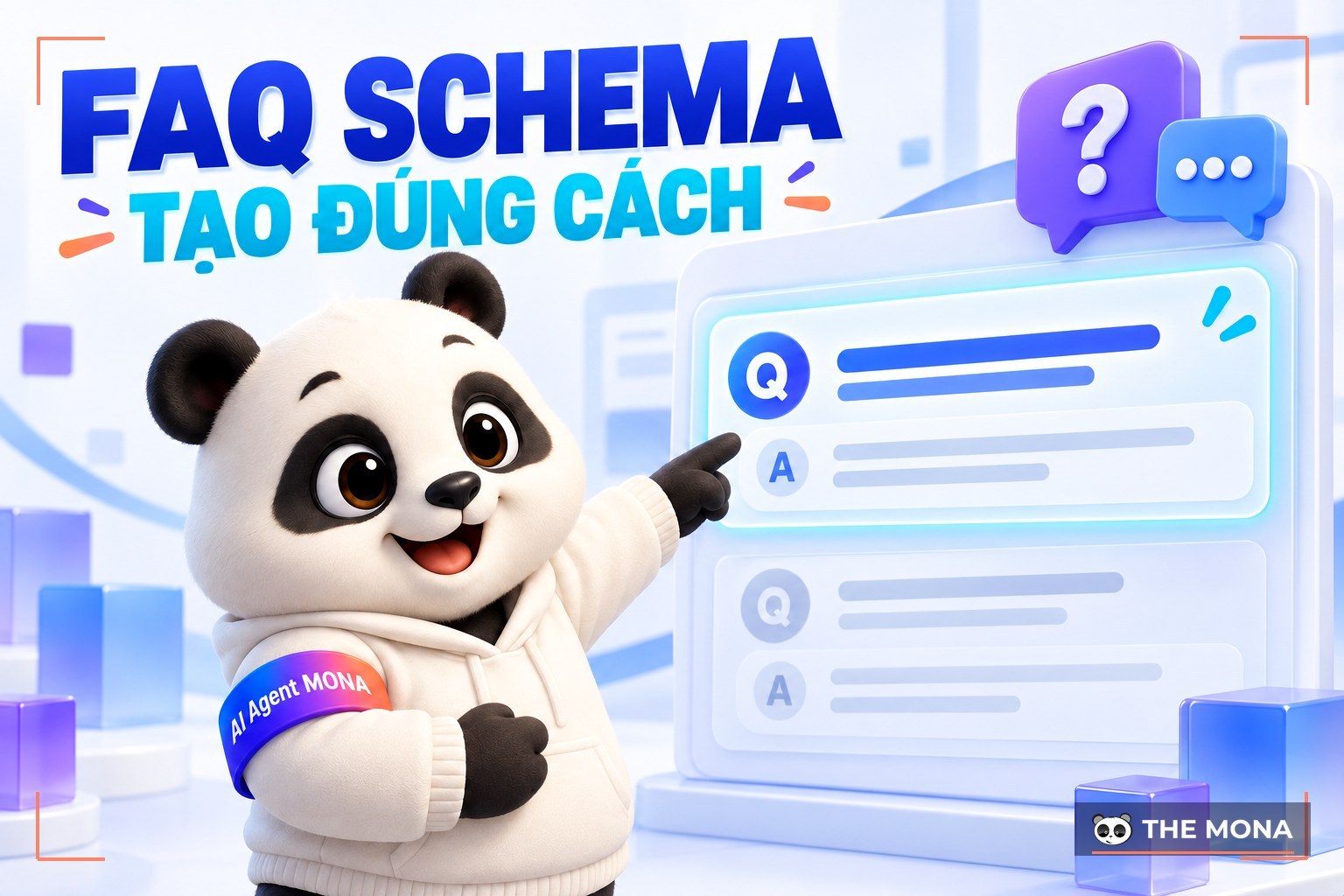
Schema Markup is like a "private language" for talking to Google. When optimized, it helps the AI clearly understand that the content on the page is an article, FAQ schema or a guide, which raises visibility in both traditional search results and AI Overviews.
For example: if you write a news blog, declare Article Schema with full information such as title, author and publish date. If an article has a Q&A section, you can add FAQ Schema so Google can recognize it and show the answer directly.

What matters is that Schema matches the actual content, so avoid "stuffing" in information that isn't real. You should also use Google's testing tool to make sure every declaration is valid. This is one of the important steps in the AIO Checklist, because AI always prioritizes sources that are described clearly and transparently.
An article with only text bores readers, and they skim past it quickly. So when creating content, add images, video or infographics to illustrate it. This helps readers understand faster and also raises the chance that AI uses those visual elements in its answer.
For example: in a post on "how to install Google Tag Manager", you can insert a screenshot of each step and add a short video showing the operation. Beginners will find it much easier to follow, and the AI can even pull your YouTube video into the displayed result.
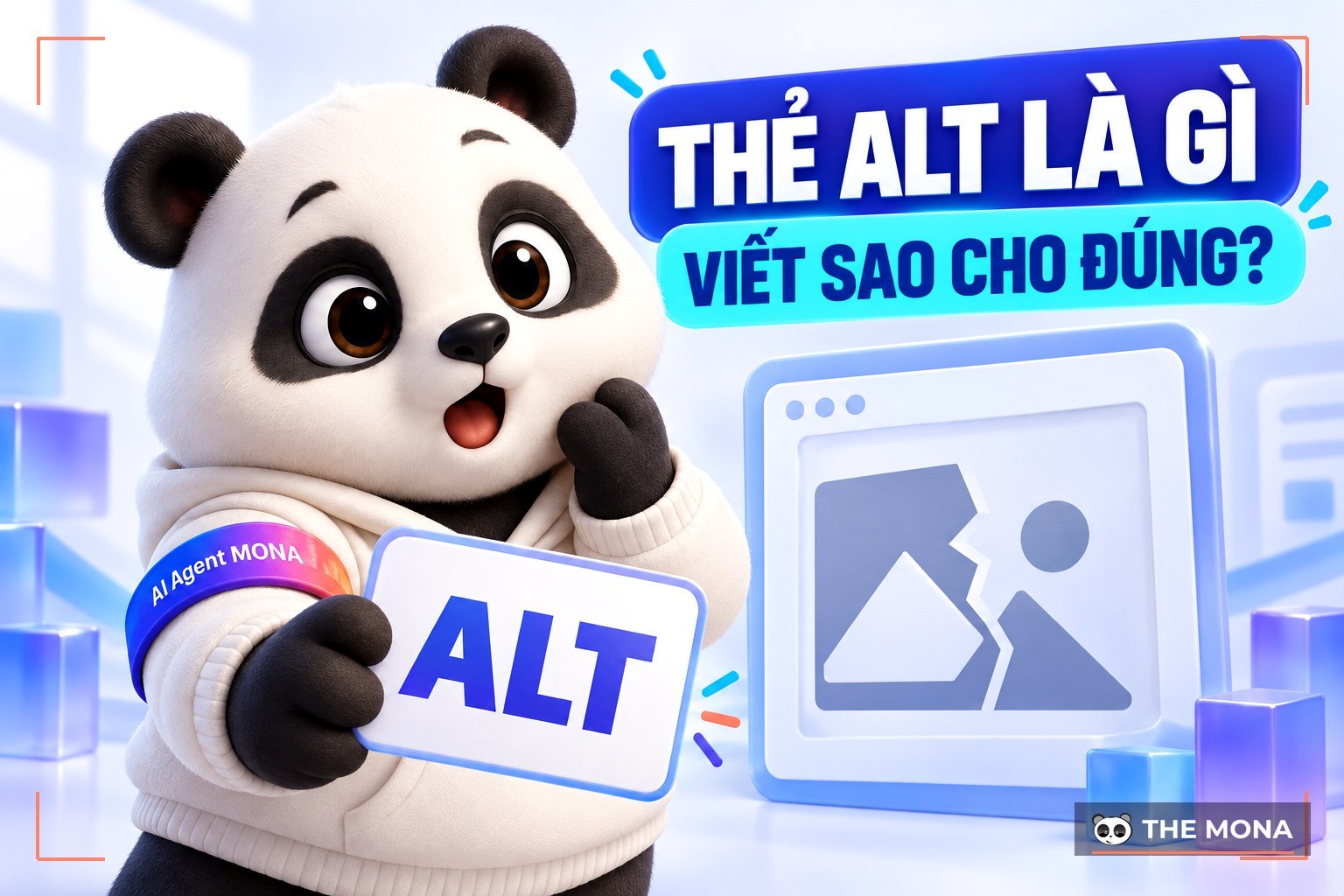
Don't forget to optimize alt tags for images so the AI clearly understands the accompanying content. It's a small step but an important one in AIO optimization, because AI doesn't only read text, it also draws on multimedia data to give a more complete answer.
To have your content appear in AI Overviews, Google must first be able to access your website. If search bots can't crawl your data, your website has almost no chance of being cited, no matter how good the content is.

To make sure your site can be crawled, pay attention to a few important points:
A real example: an e-commerce website has hundreds of products but forgets to update its sitemap. As a result, many new product pages are not Google index, which means missing the chance to appear in AI Overviews.
When you handle these technical factors well, optimizing content for AIO becomes more effective because the AI can easily access, understand and select information from your website.
AI Overviews were created to give users quick, accurate answers. If your website loads slowly, it will almost certainly be dropped from the "game". A compliant website should load in under 2.5 seconds and meet Core Web Vitals from Google to ensure a smooth experience.
For example, if a user searches "reputable SEO service" but your page takes 5 seconds to appear, they will leave before they can read. Conversely, a website that loads instantly not only keeps customers but also raises the chance of being chosen by AI for citation.
So optimizing page load speed is not only about improving user experience, it's also one of the most important steps in the AIO Checklist for appearing in AI Overviews.
Internal links don't only help readers find related content, they also help Google understand how well your website covers a topic. When articles are connected coherently, the AI recognizes you as an authoritative source in that field. This is an important factor when optimizing content for AIO.
For example: you have an overview article about "full-scope SEO" (pillar content), so link to in-depth articles such as "On-page SEO", "Off-page SEO" or "Technical SEO". When readers go from overview to detail, the experience is more coherent. At the same time, Google may choose to show several of your articles in AI Overviews for a broad query.
This approach keeps readers on your website longer and also opens the chance to take multiple display "slots" in AI Overviews. Instead of being cited just once, you can appear across different aspects of the same topic.
If on-page SEO makes a website tidier and friendlier to both users and search engines, then off-page SEO is like building a reputation in society. Google and AI Overviews both value pages that many other sources mention and trust.
Examples include link building, optimizing your Google Business Profile, or appearing on relevant media channels. This is also an important part of optimizing content for AIO, because AI prefers to cite highly reputable sources.

For example: a local SEO business can optimize its Google Business Profile with complete information, regular updates and plenty of positive customer reviews. When a user searches "air conditioner repair near me", the AI is more likely to cite that business than less verified ones.
Also, a backlink from a reputable industry news site is worth far more than dozens of spam links. It's like having an industry expert vouch for you, instead of only you saying good things about yourself.
However good an article is, it gradually goes "stale" if it isn't updated. Readers today always want information that is new, accurate and fits the current context. Google and AI Overviews also favor sources that still have value and are refreshed regularly. That's why updating is a step you can't skip when optimizing content for AIO.
For example, if you have a post called "SEO trends 2023", don't leave it as is. Edit it into "SEO trends 2026" and add new data and evidence. Or for a post on "how to optimize website speed", you can add new guidance based on the latest Core Web Vitals updates.
Traditional SEO helps your website reach the top of Google, but in the AI era that alone isn't enough. With Google AI Overviews, content doesn't only need to meet SEO standards, it also has to be "understood and chosen for citation by AI". That is why MONA developed AI SEO services, a solution that helps businesses stand out in both traditional search results and AI.
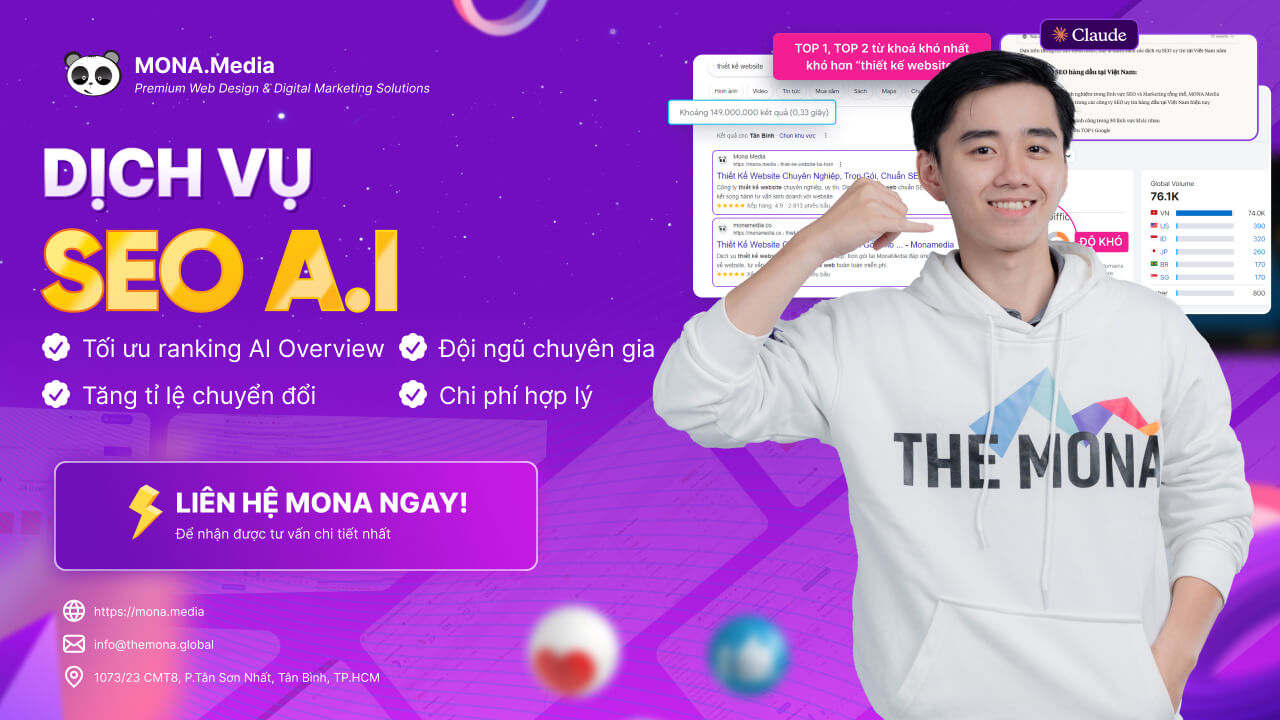
When you run AI SEO with MONA, you get clear benefits:
Don't let your website get left behind in the new era of search. Contact MONA to get advice and a complete AI SEO solution that helps your business break through on Google AI Overviews.
For e-commerce businesses, appearing in AI Overviews depends not only on content but also on product data. Google's Shopping Graph is the "bridge" that helps AI understand selling price, stock status and product attributes in real time.
This matters especially when you want to win queries with high purchase intent, and it's also part of optimizing content for AIO.

For example: when a user searches "how much do Nike sneakers cost", the AI can show products directly from a website integrated with Shopping Graph, with price, remaining quantity and a buy link. If your data isn't standardized or is updated slowly, that opportunity easily falls into a competitor's hands.
To know whether your content really improves rankings on Google AI Overviews, the key step is measurement. You can use Google Search Console under Search appearance to track impressions, CTR and clicks from AI Overviews.
Song song, Google Analytics will help you evaluate "click quality" through session duration or bounce rate from google/organic traffic. This is a clear way to check whether optimizing content for AIO is delivering the results you want.

For example, if an SEO guide has many impressions in AI Overviews but a high bounce rate, it means readers haven't found the detailed content they need. You can try A/B testing the title and snippet, or add a deeper explanation to improve the experience.
Measurement isn't only for knowing results, it also helps you keep fine-tuning so your AI SEO strategy always keeps pace with changes in Google's algorithm.
Google AI Overviews brings a big opportunity for businesses but also sets no small challenges for every website. Instead of coming up with "tip tricks", focus on what lasts: building useful, clear and trustworthy content. The AIO Checklist is the compass that helps you meet the AI's requirements while giving readers the best experience.
Remember that SEO in the AI era is not a short-term race but a continuous process of testing, updating and improving. When you do it right and put users at the center, your website not only has a chance of being cited by AI, but also builds lasting trust with customers. If you have any questions about AI SEO, leave a comment below and the MONA team will answer you quickly.

CEO & Founder · The MONA
Founder of The MONA, who built a services company of 60+ staff with 14,000+ projects delivered. Khánh Hùng shares how he thinks about building systems that run themselves, automating a business, and the real lessons from delivering projects at MONA.
 1,6K



Professional website
design services
Own a website with a beautiful, 100% exclusive design and a lifetime warranty, with the ability
to expand features flexibly as your business grows, starting today!












 MONA will never sell your information or send you spam


 MONA will never sell your information or send you spam
