
 MONA OS 2.0
 Partner with MONA


 Tự động hoá doanh nghiệp
 Cẩm nang SEO
 Digital Marketing
 Kinh nghiệm thiết kế website
 Hạ Tầng Server
 Giáo dục


 VI
 EN













Message us on
Zalo Official


 ProductsNew

 ProductsProducts
 Mới ra mắtKHA AI 2027App tự edit video, tự đăng mọi mạng xã hội, 2 phút mỗi ngày










 Website designLooks good and wins customers over.
SEO servicesBrings in customers searching for exactly what you sell.
 Tư vấn digital marketingKéo khách từ nhiều kênh, đo bằng số thật.
Corporate video productionVideos introducing your company, factory and team.
 NewAI video productionCompany story films made with AI.
 Custom software developmentCRM, ERP and HRM built for your business.
 Viết AI Agent theo yêu cầuĐặt riêng một trợ lý AI cho đúng việc của mình.
 Tư vấn chuyển đổi AIĐưa AI vào vận hành của cả công ty.
NewMONA LMSManagement for centers and schools.
MONA SkillHubInternal training for company staff.
 NHTQ systemEnd-to-end China–Vietnam shipping operations.
MONA JMSManagement for gold, diamond and pawn shops.
 MONA E-LearningA website with every feature you need to sell courses.
 How to sell online courses (course)More than 30 free lessons on selling courses on autopilot.
 MONA Cloudmonacloud.vnServers to get your apps and websites running.
 MONA Basemonabase.vnPostgres database, sign-in and file storage.
 MONA Mailmonamail.vnSend OTP, order and invoice emails from your software.
 MONA Paymonapay.vnAccept bank transfers via VietQR and notify your software when the money arrives.
 MONA eInvoiceComing soonIssue e-invoices that meet tax standards.
Gấu CườiTrả lời khách 24/7 trên web, Fanpage, Zalo và thu lead cho sale.
 Gấu TeleSalesGọi điện tư vấn, chăm khách như tổng đài viên thật.
Dê CườiTư vấn và chốt đơn cho shop ngay trong khung chat.
Gấu WebmasterNhắn nhóm Zalo là website được sửa xong.
 Gấu Pháp ChếSoạn hợp đồng, rà điều khoản trong vài phút.
 Gấu Báo GiáLên báo giá đúng mẫu và gửi khách ngay.
 AI chăm sóc khách hàngTheo dõi và giữ chân khách hàng cũ.
 Gấu Tuyển DụngLọc hồ sơ, hẹn lịch, phỏng vấn ứng viên.
 Mới ra mắt
KHA AI 2027
Xây kênh chuyên gia 2 phút mỗi ngày
Quay bằng điện thoại, AI tự edit video, tự đăng lên 16 nền tảng và tự trả lời bình luận, tin nhắn.
895.025lượt xem trên kênh CEO MONA sau 37 ngày
 Anh Khánh HùngCEO MONA đang dùng mỗi ngày
Xem app làm được gì
 AI
Gấu Cười MONA ĐANG TỰ XÀITrả lời khách 24/7 trên website, Zalo OA, Messenger và thu lead về cho sale.
Dê CườiChốt đơn bán lẻ và sàn: Shopee, TikTok Shop, web. Chăm cả khách sỉ, đại lý.
Gấu WebmasterCập nhật nội dung, tối ưu SEO website mỗi ngày.
Gấu TeleSalesGọi điện tư vấn, chăm khách như tổng đài viên thật.
Gấu Tuyển DụngLọc hồ sơ, hẹn lịch, phỏng vấn ứng viên tự động.
AI chăm sóc khách hàngGiữ khách cũ, cứu lead đã rớt cho phòng kinh doanh.
Gấu Pháp ChếSoạn hợp đồng, rà điều khoản trong vài phút.
Gấu Báo GiáLên báo giá đúng mẫu, gửi khách ngay khi có yêu cầu.
 Chuyển đổi AI toàn phầnGiải pháp tổng cho doanh nghiệp, 3 lớp triển khai.
 Viết AI Agent theo yêu cầuĐặt riêng một con AI gánh đúng nghiệp vụ của bạn.
 Custom softwareCRM, ERP and HRM with built-in AI automation.
 SEO & AEO thời đại AIĐược Google lẫn AI trích dẫn, không chỉ xếp hạng.
 Kiến thức AI cho doanh nghiệpBài phân tích, hướng dẫn ứng dụng AI vào vận hành.
 Free AI courses
 AI tools at work
App mới · KHA AI 2027
Xây kênh 2 phút mỗi ngày
AI tự edit video, tự đăng mọi mạng xã hội
Free consultation, 8am–10pm every day

09 June, 2026

Every time a new product launches, do you see your sales team and distributors struggling under a mountain of training materials? Many businesses spend weeks, even months, just compiling and preparing content. That drains resources and also slows the product to market, missing the golden window. Is there a way for AI to create training materials for a new product faster, in sync and more professionally? We at MONA understand this concern. We need a system where creating materials is no longer a burden but an automated process, so your team is always ready with the most accurate information.
See more: AI chatbot demo: chat with a real MONA bot, free
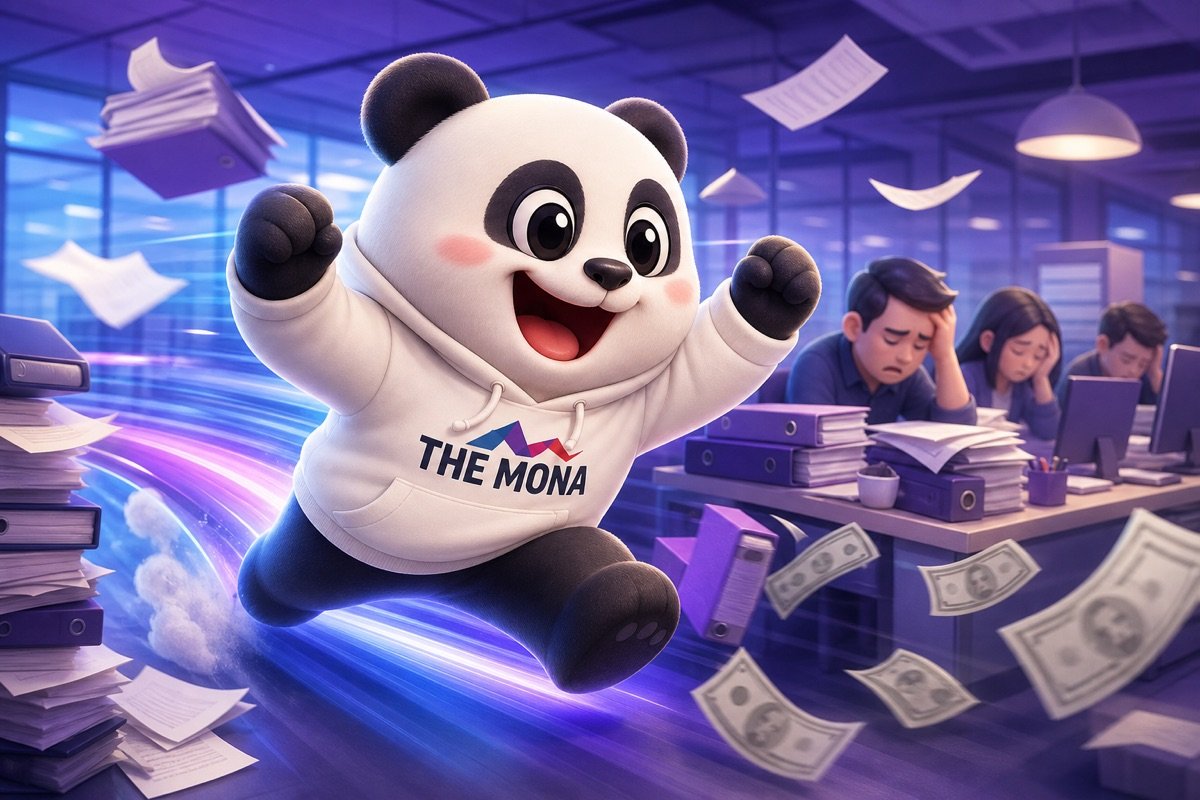
Every new product launch is another time you, as a business owner, burn money: money for R&D, money for marketing, and salaries for a sales team sitting and waiting. We know that feeling, watching costs flow out every day while the revenue column stands still.
The truth is, the golden window to capture the market is slipping away. A McKinsey report shows that, launching a product 6 months late can cost up to 33% of that product's lifetime profit. A day late is a day of money lost.
Let's do a simple calculation. Suppose your sales department has 50 people with an average salary of 15 million VND a month. If they take 2 weeks to learn and start selling the new product, the salary you pay during this “waiting” period is 375 million VND. That money has produced not a single dong of revenue.
That is only the sunk cost. The opportunity cost is far larger. Competitors don't wait for us, and neither do customers. Every day your sales team isn't ready is a day you hand market share to a competitor, lose loyal customers, and lose the pioneer position.
We saw this with a partner, a tech retail chain with 40 stores nationwide. It took them almost 3 weeks to get all 200 sales staff up to speed on 5 new product lines. In those 3 weeks, they lost an estimated nearly 2 billion VND in potential revenue, based on the original forecast.
The root problem usually lies in the training materials. The product team spends a week writing an 80-page PDF. But by the time that file reaches the last salesperson, the market has already responded in a new way, or a competitor has just launched a competing feature. The materials are out of date immediately.
Old materials stuck as an 80-page PDF? We have a PDF to Word converter free service to get an editable version back, with Vietnamese diacritics kept intact.
Sales staff lose confidence as a result. They don't dare advise in depth for fear of giving wrong information. Instead they keep asking the product team, which creates bottlenecks and disturbs people who need to focus on other work. Both teams' performance drops.
At MONA, we don't produce static PDF files. We build a system of software that automates document creation. This system pulls information from many sources automatically: technical specs, marketing briefs, even recorded and analyzed customer care calls. For the retail chain above, MONA's software cut the time to create all materials for 5 product lines from 3 working days by 4 people to 3 hours of supervision by 1 person. That saves over 90% of working hours and ensures every salesperson has the most accurate information at all times.


Every hour a marketing specialist spends editing training slides is an hour they aren't winning new customers. Every day the training department goes from department to department to update information is a day of wasted brainpower and salary. This is the hidden cost eating into your profit every month.
Many businesses pay expert marketers and trainers just to copy and paste text. In a 10-person marketing department, 3 people may be tied up just drafting materials for a new product instead of running campaigns that attract customers. A real waste.
We understand this isn't the staff's fault. They are doing their best with a manual process. At a 30-branch retail chain MONA worked with, the marketing department spent nearly 600 hours a month just updating materials for 5 new product lines. That equals the salary cost of 3 senior staff.
We built them an automated system. Just enter product specs in one place, and the software generates training slides, sales materials and and FAQs for the customer care channel. As a result they save ~580 working hours a month, equal to over 210 million VND in staffing costs redirected to revenue-generating activities.
Another pain is even bigger than the cost of time: inconsistent information. The District 1 branch uses an old price list. The District 3 sales team hasn't been updated on the new features. Customers get confused, staff lose credibility and sales opportunities slip away.
This is inevitable when 20 or 30 branches are updated manually at once. We can't expect everyone to read and apply a notification email immediately. Mistakes are bound to happen.
MONA's solution is to create a single source of truth for all product information. When you update a price or feature at this source, every related document across the system will change automatically. Telesales scripts, product descriptions on the website, slides for training sessions. All of them stay consistent.
Thanks to this, another partner in F&B with 28 restaurants cut promotion information errors at the point of sale from 15% to under 1%. They no longer have to handle crises caused by staff giving customers wrong advice.
Many CEOs have tried AI tools popular tools like ChatGPT or Claude Pro. You hear a lot of advertising and have high expectations. But what you get is often a pile of generic text, with wrong knowledge and a stiff tone like a robotic translation.
In the end, staff spend more time fixing it than writing from scratch. This is exactly the frustration of “trying AI and finding it dumb”. We completely understand this disappointment, when the money and time invested don't deliver the expected results.
Public AI models are trained on enormous amounts of data from the internet. They know a little about everything, but nothing about what makes your business different. They don't understand your internal processes, product specs or company culture.
For example, say you ask AI to write training material for a new air purifier. It will produce a generic document about the benefits of clean air. It has no idea that your M-2025 model has an H14 HEPA filter, 300 m³/h airflow, and needs a filter change after 2,000 hours of use.
The result is a useless document.
At MONA, we don't use AI superficially. We build systems fine-tuned on a business's own proprietary data. For a chain of 18 coding training centers, we loaded their entire curriculum and 5 years of Q&A data into a private language model. The system automatically generates guides for new instructors and cuts initial lesson-plan prep time by 80%. Accuracy on industry terminology reached 97%, as verified by their own head of training.
Every business has its own voice. Some are professional and technical. Others are friendly and approachable. Public AI tools often fail to capture and hold these subtle differences. Inconsistent tone across documents feels unprofessional and weakens the brand.
Employees reading it feel it too. It comes across as very unprofessional.
Brand voice is a valuable asset. Handing it to an AI that hasn't been trained for you is like giving a stranger a pen to write your company diary. To solve this, we build “tone-of-voice rule sets” and train the AI to follow them strictly, based on the sample documents you provide. For a large education system with over 40,000 students, we deployed an AI that drafts announcements. It makes sure 100% of outgoing text keeps the standard, trustworthy tone the system has built over many years.
Before, around 65% of documents written by staff needed the marketing team to fix style errors. Now that number is 0. Approval time from department heads also dropped from an average of 2 days to 4 working hours, saving dozens of management hours each month.

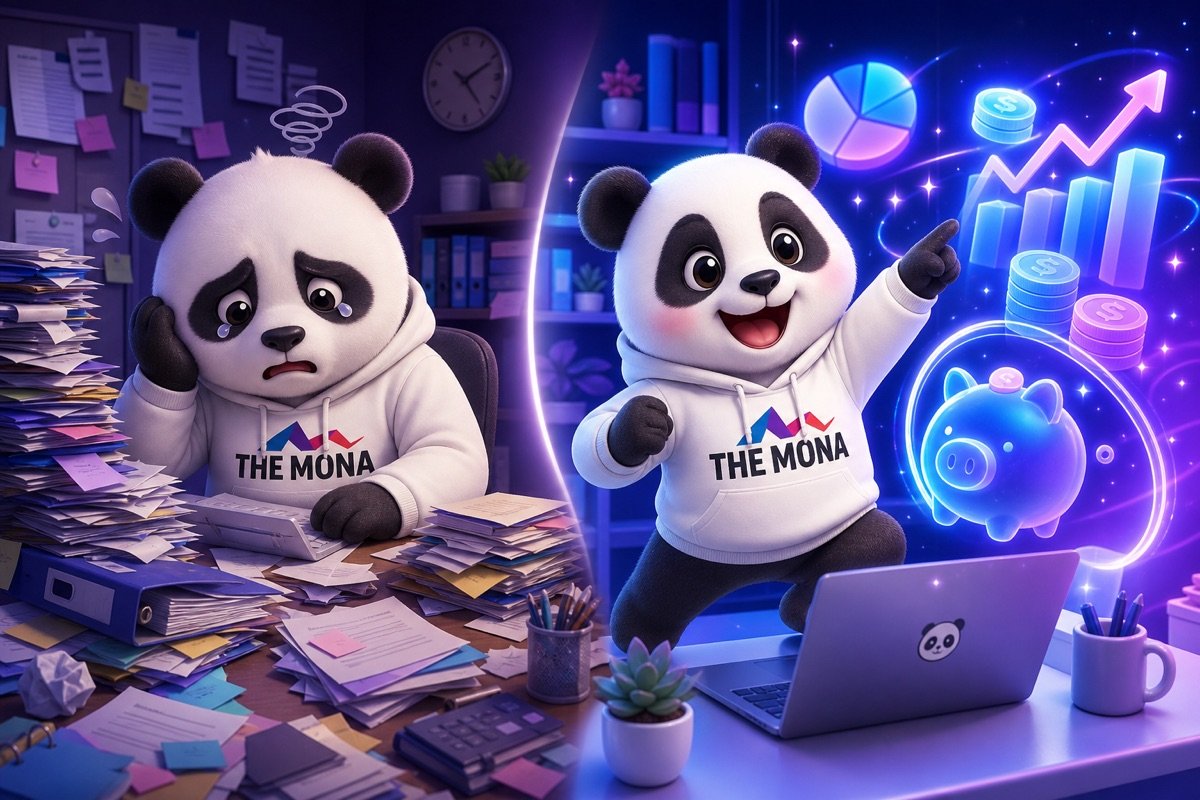
Every month you pay salaries to your product and marketing specialists. They're good people. The pay isn't low. Yet they spend three whole days just putting together a training pack for a new product. Three days. Just to copy and paste./p>
They copy specs, hunt down images again, arrange videos. Salaries are paid on time. The work is repetitive. Creativity is zero. We understand that feeling. Watching talented people do work that needs no brainpower. It's a huge waste of intellect that no CEO wants to see.
This problem isn't new. MONA has met it at many businesses of similar size. Our solution isn't to buy a scattered SaaS tool. We build a closed-loop system: a digital knowledge base made just for your business.
All product information, from descriptions, specs and pricing policy to images and videos, flows into one place. Data is structured and labeled. Fully automatic. No more one Excel file per department or outdated Google Drive folders.
Once the knowledge base is ready, the machine does the rest. MONA's system scans this data store automatically. It takes a command like “Create training material for product X”. Here is how it works.
For a retail chain with 32 branches, this process used to take 2 people 3 days. Now it takes 3 hours. The machine does it. Staff cost for this task fell by 90%. More importantly, new products reach the market faster. The sales team has material to learn from right away. That's speed.

Before working with MONA, we met a large client. They own a chain of 28 spas across Ho Chi Minh City, Hanoi and Da Nang. Monthly revenue is over 52 billion VND. It sounds big, but the cash going out is big too.
Every time they bring in a new laser technology or cosmetics line, they spend hundreds of millions of VND. That money goes to hiring the brand's experts to train staff, then printing thick manuals for every branch. The money keeps flowing out. Every month. What a waste.
The biggest pain for this chain's CEO is hidden cost. Staff have to take time off to attend training. 28 branches stop taking customers for half a day. The revenue loss is real. On top of that, the brand's experts train brilliantly, but only once. Employees who join later never get to hear it again.
We all know this feeling. You spend money on training, but quality is uneven. Strong branches get stronger, weak branches stay weak. The return on investment is close to zero.
We stepped in. MONA doesn't sell a course. We build a software system that automates the whole process. It takes the brand's original documents and automatically produces training videos, multiple-choice tests and digital handbooks. Everything is pushed to an internal portal, much like the MONA EduCenter platform we've built.
The results are clear. Hard costs for experts and printing fell by 90%. More importantly, staff no longer have to leave work to cram training. They can learn on their phones in their free time. Things changed for them. The service capacity of the whole chain went up.
Another problem is speed. When a new service launches, it takes 3-4 weeks for all 700 staff in the chain to master it. During that month they lose a lot of sales opportunities. Customers ask about the new service and staff stumble over the answers. Lost customers. Lost credibility.
We understand the leadership's impatience. Market opportunities don't wait for anyone. One day late is one day of lost money.
The automated system automation, MONA's system cuts this time from 3 weeks to 3 days. An expert only needs to record a video once. The software automatically cuts and assembles it, adds subtitles and creates review questions. Announce the new service on Monday morning, and by Wednesday afternoon every employee has passed the test and is ready to advise customers.
The numbers don't lie. Speeding up new product rollout alone helped this spa chain increase revenue by about 500 million VND per month. That is the kind of return every CEO wants.


Many CEOs have sighed to us. The biggest pressure isn't this quarter's revenue. It's the feeling that competitors in the same industry are quietly pulling ahead. They launch new products fast. Their staff advise customers confidently. Meanwhile you're still slogging through Word files and long training sessions.
That feeling is very real. It's the fear of being left behind. We completely understand.
The pain of manual training isn't only about time. It's also opportunity cost. You spend 3 days, your competitor spends 3 hours. In the 2 days and 21 hours between you, they've had 50 salespeople learn the product by heart. They've closed their first 200 orders. Your team is still sitting there reading documents.
It really hurts. Especially when a competing F&B chain launches 5 new dishes and, after a single morning, all 42 of its branches are pitching them fluently. Or an English center competitor rolls out a new summer program to 8,000 students in just 48 hours. How do they do it?
They have no magic. They simply have an automation system. One that MONA has built for many mid-market clients. At its core is a thoroughly digitized process.
Creating training material means turning input data into standard documents for end users. The automation core that MONA builds does exactly that. It's extremely flexible. Just change the input and it serves a completely different industry.
See for yourself. Here is how it has worked:
One problem. One automation answer. Only the context differs. That is the power of building custom software around a business's actual processes.

Many CEOs know they need to move faster. But an outdated training process keeps holding them back. A new product launches, and a month later the sales staff are only just learning it. Money and opportunities slip away every day.
Such a waste. We understand this feeling. It's the conflict between the ambition to grow and the reality of clumsy operations.
Cutting 3 days of document work down to 3 hours came from picking the right place to start. Just one. You don't need to automate your whole training department at once.
Pick the process that repeats most and eats the most manpower. It could be writing a set of questions about a new product for the sales team. Or turning technical documents into easy-to-understand handbooks for customer service. Fix just one bottleneck and performance changes noticeably.
MONA doesn't sell a packaged solution. We build automation systems based on your business's real processes. This week, you can spend 15 minutes talking with our team.
Just share the one training bottleneck that gives you the biggest headache. We'll listen and sketch an initial approach. Absolutely no sales pressure. The goal is to find a way together to lighten your operational load. Right away.


CEO & Founder · The MONA
The founder of The MONA built a service company of 60+ staff with 14,000+ projects delivered. Khánh Hùng shares his thinking on building self-running systems, automating a business, and the real lessons behind MONA's projects.
 390




Professional website
design services
Own a website with a beautiful, 100% exclusive design and a lifetime warranty, with the ability
to expand features flexibly as your business grows, starting today!






 MONA will never sell your information or send you spam


 MONA will never sell your information or send you spam
