
 MONA OS 2.0
 Partner with MONA


 Tự động hoá doanh nghiệp
 Cẩm nang SEO
 Digital Marketing
 Kinh nghiệm thiết kế website
 Hạ Tầng Server
 Giáo dục


 VI
 EN









Message us on
Zalo Official


 ProductsNew

 ProductsProducts
 Mới ra mắtKHA AI 2027App tự edit video, tự đăng mọi mạng xã hội, 2 phút mỗi ngày










 Website designLooks good and wins customers over.
SEO servicesBrings in customers searching for exactly what you sell.
 Tư vấn digital marketingKéo khách từ nhiều kênh, đo bằng số thật.
Corporate video productionVideos introducing your company, factory and team.
 NewAI video productionCompany story films made with AI.
 Custom software developmentCRM, ERP and HRM built for your business.
 Viết AI Agent theo yêu cầuĐặt riêng một trợ lý AI cho đúng việc của mình.
 Tư vấn chuyển đổi AIĐưa AI vào vận hành của cả công ty.
NewMONA LMSManagement for centers and schools.
MONA SkillHubInternal training for company staff.
 NHTQ systemEnd-to-end China–Vietnam shipping operations.
MONA JMSManagement for gold, diamond and pawn shops.
 MONA E-LearningA website with every feature you need to sell courses.
 How to sell online courses (course)More than 30 free lessons on selling courses on autopilot.
 MONA Cloudmonacloud.vnServers to get your apps and websites running.
 MONA Basemonabase.vnPostgres database, sign-in and file storage.
 MONA Mailmonamail.vnSend OTP, order and invoice emails from your software.
 MONA Paymonapay.vnAccept bank transfers via VietQR and notify your software when the money arrives.
 MONA eInvoiceComing soonIssue e-invoices that meet tax standards.
Gấu CườiTrả lời khách 24/7 trên web, Fanpage, Zalo và thu lead cho sale.
 Gấu TeleSalesGọi điện tư vấn, chăm khách như tổng đài viên thật.
Dê CườiTư vấn và chốt đơn cho shop ngay trong khung chat.
Gấu WebmasterNhắn nhóm Zalo là website được sửa xong.
 Gấu Pháp ChếSoạn hợp đồng, rà điều khoản trong vài phút.
 Gấu Báo GiáLên báo giá đúng mẫu và gửi khách ngay.
 AI chăm sóc khách hàngTheo dõi và giữ chân khách hàng cũ.
 Gấu Tuyển DụngLọc hồ sơ, hẹn lịch, phỏng vấn ứng viên.
 Mới ra mắt
KHA AI 2027
Xây kênh chuyên gia 2 phút mỗi ngày
Quay bằng điện thoại, AI tự edit video, tự đăng lên 16 nền tảng và tự trả lời bình luận, tin nhắn.
882.681lượt xem trên kênh CEO MONA sau 36 ngày
 Anh Khánh HùngCEO MONA đang dùng mỗi ngày
Xem app làm được gì
 AI
Gấu Cười MONA ĐANG TỰ XÀITrả lời khách 24/7 trên website, Zalo OA, Messenger và thu lead về cho sale.
Dê CườiChốt đơn bán lẻ và sàn: Shopee, TikTok Shop, web. Chăm cả khách sỉ, đại lý.
Gấu WebmasterCập nhật nội dung, tối ưu SEO website mỗi ngày.
Gấu TeleSalesGọi điện tư vấn, chăm khách như tổng đài viên thật.
Gấu Tuyển DụngLọc hồ sơ, hẹn lịch, phỏng vấn ứng viên tự động.
AI chăm sóc khách hàngGiữ khách cũ, cứu lead đã rớt cho phòng kinh doanh.
Gấu Pháp ChếSoạn hợp đồng, rà điều khoản trong vài phút.
Gấu Báo GiáLên báo giá đúng mẫu, gửi khách ngay khi có yêu cầu.
 Chuyển đổi AI toàn phầnGiải pháp tổng cho doanh nghiệp, 3 lớp triển khai.
 Viết AI Agent theo yêu cầuĐặt riêng một con AI gánh đúng nghiệp vụ của bạn.
 Custom softwareCRM, ERP and HRM with built-in AI automation.
 SEO & AEO thời đại AIĐược Google lẫn AI trích dẫn, không chỉ xếp hạng.
 Kiến thức AI cho doanh nghiệpBài phân tích, hướng dẫn ứng dụng AI vào vận hành.
 Free AI courses
 AI tools at work
App mới · KHA AI 2027
Xây kênh 2 phút mỗi ngày
AI tự edit video, tự đăng mọi mạng xã hội
Free consultation, 8am–10pm every day

02 June, 2026
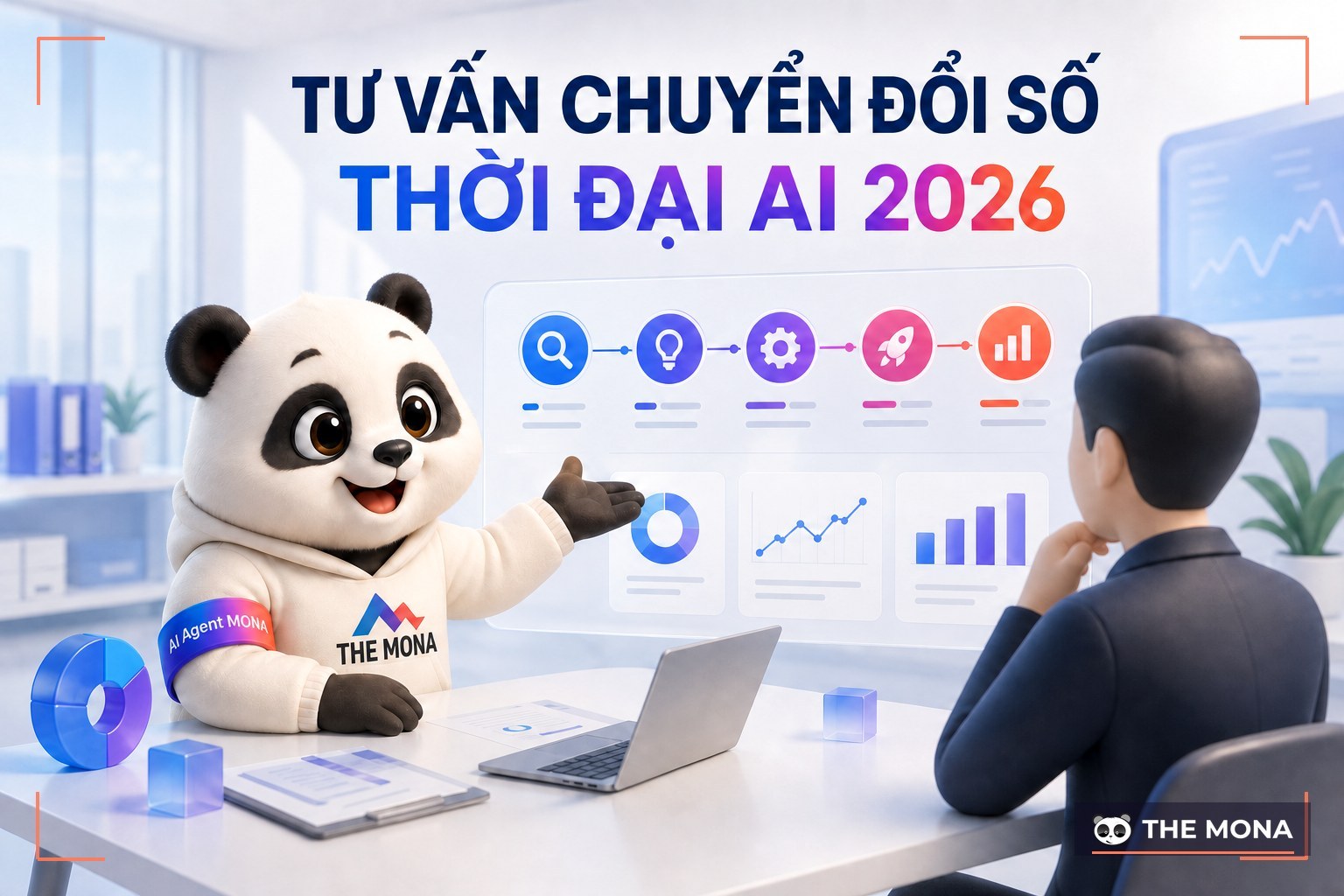
Businesses calling us for digital transformation consultation now are actually asking something very different from 3 years ago. Some bought software and it worked, 6 months then the whole team went back to Excel; some hear about AI every day and worry their own job will disappear; and some chain owners open a report and find each branch's numbers off in its own way. After 14,000+ projects, we've seen these three calls repeat often enough to know the big worry is no longer choosing a CRM or ERP, but finding the right work to give the machine and the right work to keep for people. The question has completely changed.
This post keeps the same consulting framework we use in 2026: review the real process, pick the work AI handles within 90 days, measure the result, and only then scale up. You'll see both the places MONA says do it now and the places we say plainly "no need to buy yet." Do less first. But get numbers.
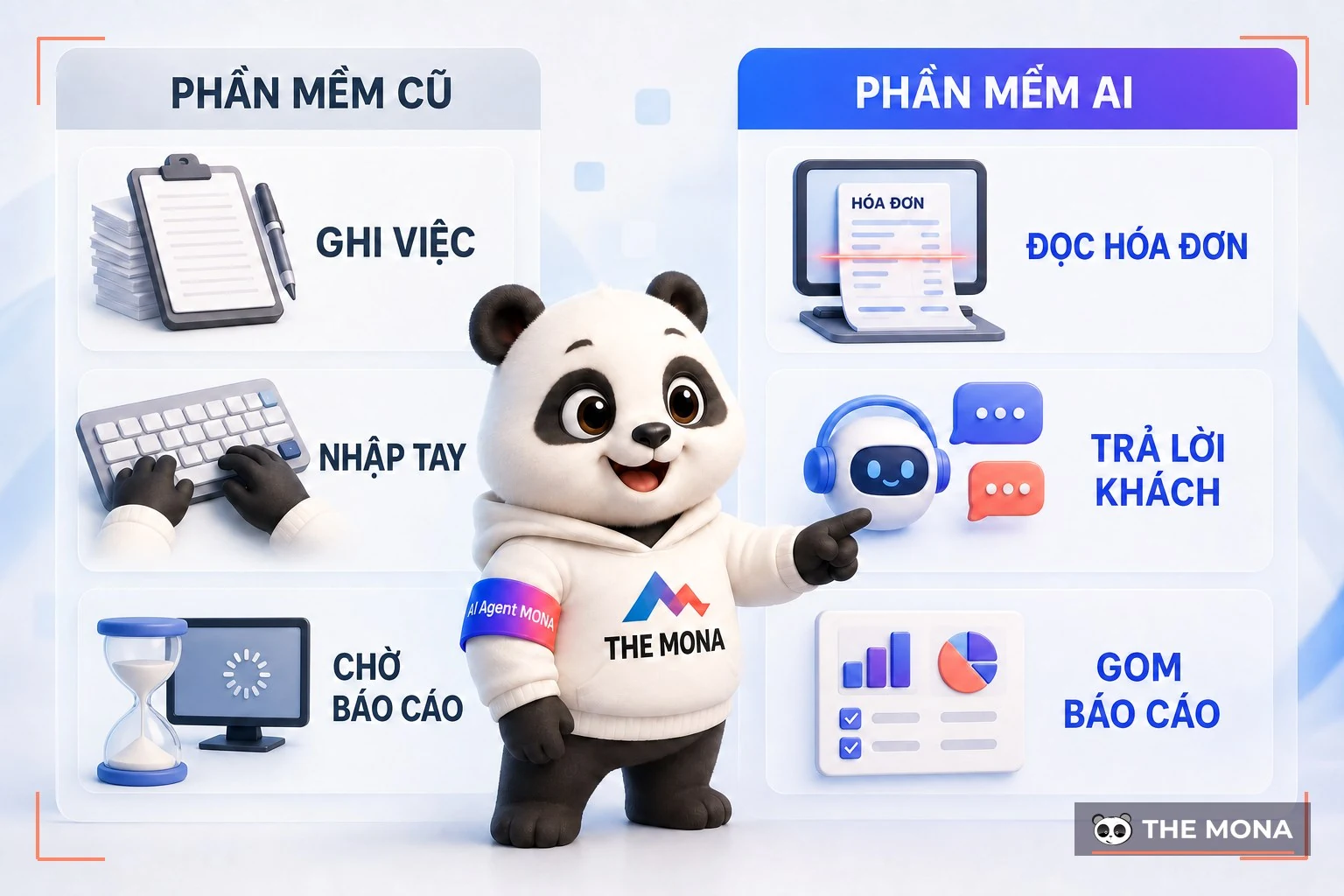
We once opened a version of sales management software that the client had been using for more than 6 months, where every order, customer name and status was visible, yet the end-of-day report still needed someone to gather data for nearly 2 hours. The system records things very consistently. It just doesn't do the work. Users still key in by hand, still cross-check and still fix the places where two sources of numbers don't match, so the workload grows instead of shrinking. That is the difference.
Older-generation software is passive by nature. It stores data but doesn't create action. You buy a system, but the burden of operating it, entering data and mining the numbers still lands on your staff. Efficiency improves, but doesn't take off. The payroll cost of repetitive roles is still there, to be paid every month.
What changed everything came in late 2023: large language models, or LLMs. In short, so you can picture it: it reads and understands text, drafts emails, summarizes long reports and answers customer messages in natural Vietnamese. It understands context, tone and the user's intent. Five years ago, machines couldn't do this. Now, work involving text and communication can be automated.
The second pillar is computer vision, the machine's ability to "see" and understand images. This technology is mature enough for business: reading information off paper invoices, recognizing products on shelves, or checking whether a sales photo meets standards. Work that once needed human eyes on each image, machines now handle at thousands of images a minute.
Put these two technologies together and you get a whole new generation of software. It no longer waits passively for a person's command. It proactively carries out repetitive work. And it directly replaces intermediary roles that don't create value for the business directly, for example:
The strategic question for 2026 has therefore changed completely: "Where in the process can we hand work to AI, and where should people focus to create higher value?" Answering wrong means buying another expensive system that users drop after a few months. We don't try to force a packaged software into every company; we sit with you, analyze your current process and point to the exact link in the chain that, once automated, cuts cost or raises capacity. That is the real digital transformation consultation.
This scene repeats in many companies: a digital transformation project launches with fanfare, endless meetings and an approved budget. Six months later, everything is back to how it was. The Excel files still run. The paper process is untouched, and nobody logs into the newly bought software. We've seen it often enough to treat it as a systemic failure, not an isolated case.
The problem usually shows up after 90 days: users find the new steps longer than the old way, managers have no metrics to measure by, and the person approving spend is still waiting for a report nobody is accountable for. We check all three before talking about tools. Miss one and the project is likely to break.
One afternoon, a software vendor's salesperson comes to present. They show you a beautiful dashboard and charts that update automatically, and promise to solve every problem. You're convinced and approve the spend. But on rollout, your people don't use it. The reason is simple: the software was designed for a generic process, not the specific process your company has run for 10 years. People find it more of a hassle than a help, and quietly go back to the old way.
This is a pain we see very often. You look around the meeting room for someone to ask, someone to trust. But the sales head fears the new process will lower their numbers. The marketing head worries the new tool will expose inefficiency. Staff whisper to each other, "the boss is making a fuss again, more time wasted learning something new." They nod along, but no one really walks beside you. You research alone, decide alone and carry the responsibility alone when it fails. Alone. We've written at length about this loneliness of leaders; read more in the AI-First handbook for businesses.
The market is talking about AI, and a competitor just launched a new app. You feel pressure to do something to keep up. A CRM or ERP purchase is decided quickly. But because it starts from fear of being left behind rather than from a specific business problem, you can't define a metric to measure by. Six months go by, and when leadership asks, "How much money has this software saved us, or how many more customers has it brought in?", nobody has an answer. And the project fades from memory.
The result is that a half-done digital transformation costs more than doing nothing. You lose money twice: once on the mistake, and again to start over. That's why the first step should never be buying software, but an honest session digital transformation consultation to pin down the core problem that needs solving.
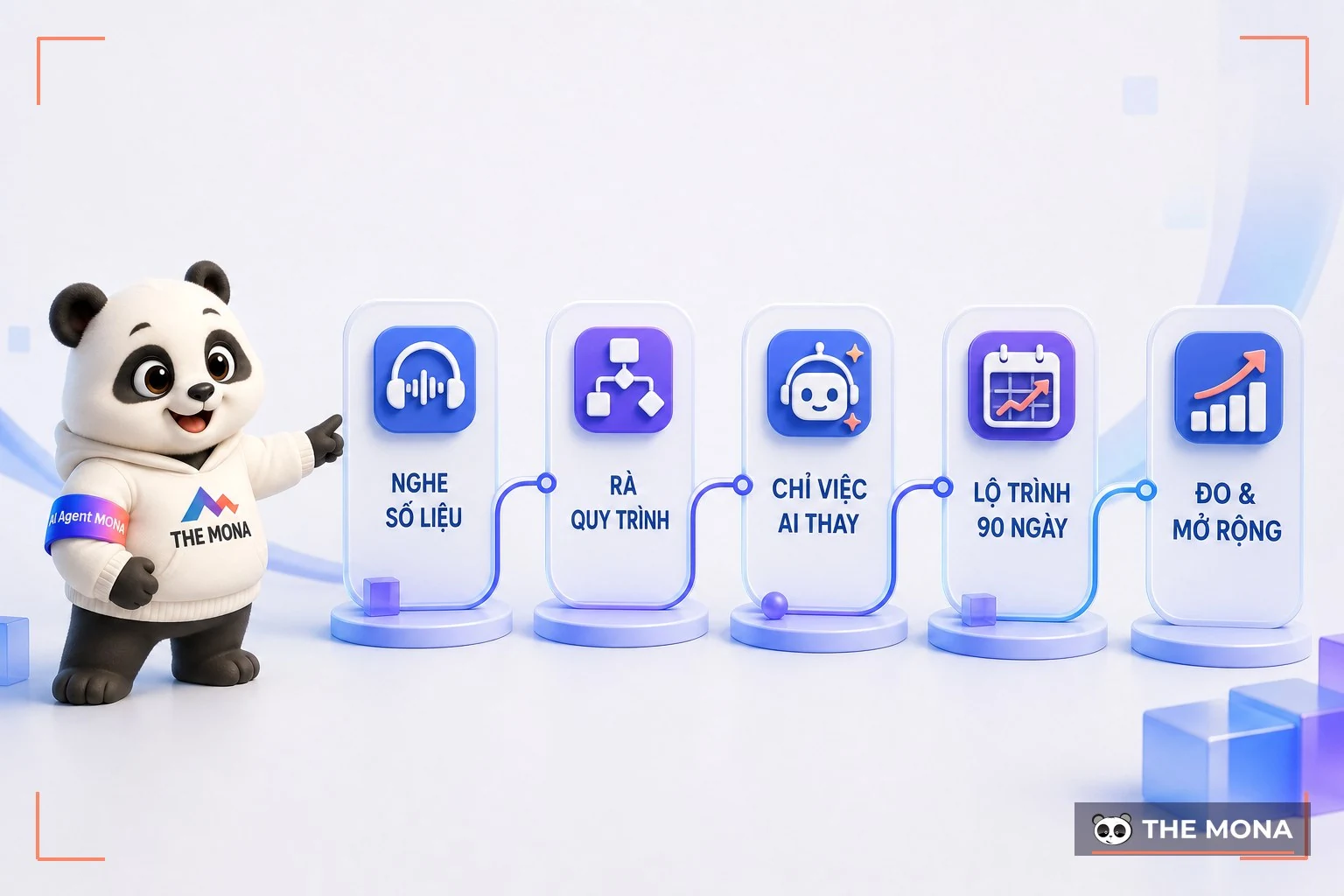
Many people hear digital transformation consultation and picture a software demo right away. A sales team comes, presents features and hands over a quote. That session is selling. At MONA, consulting goes deep into the operating process before any tool is mentioned.
Real consulting starts with sitting with you and laying out the whole operating process on the table: marketing to find customers, sales, after-sales care, warehouse, accounting and internal management. We go through it step by step to find where hours are being burned, where data gets stuck between two departments, and where results depend on one person's gut feeling. Only after we have that map do we name any tools.
The goal of the first session is not for you to buy anything. The goal is for both sides to have a clear map. It shows: which areas AI can replace people almost entirely within the next 90 days. Where people still can't be replaced but need tools to work better. And just as important, which areas to leave alone for now, because investing there at this point only wastes money.
A technology consultancy still has to say "not yet" when the data or process isn't ready. MONA isn't aiming to sell expensive software; we need an automation system that runs, produces profit and is solid enough for both sides to take on bigger projects later. A project that fails from the start goes nowhere. Saying stop is also consulting.
In the AI era, this division of roles is clearer than ever. We'll help you sort the work cleanly.
Consulting means pointing to the right job and assigning the right tool. You don't always need a huge piece of software. Sometimes a few small automated processes solve 80% of the problem.
After working sessions with MONA, you receive a concrete action list, ordered by what to do first and what to postpone. The roadmap spells out the task, the measurement milestone and the expected cost, for example:
A safe start is a full review session. See details of our AI Audit service for businesses that we've standardized. A digital transformation consultation service worth its name has to dare to tell you plainly: "This doesn't need doing yet, it would just burn money." MONA does that.
Digital transformation starts with how the company works today, and software comes after. Buying and then leaving users to fend for themselves pushes risk very high. At MONA, we follow 5 steps from review to a stable running system, so that digital transformation consultation produces measurable results.
We won't sit through slide reports. Instead, MONA specialists go directly to your branches and departments. We time each small action with a stopwatch. How many minutes does it take to enter one order? How many working hours does an end-of-day report take to compile? We listen to the people doing the work every day. They know best where things get stuck and which repetitive work creates no value.
With raw data from the field, we sort each task into three clear groups. Group one: AI can fully replace it, freeing 100% of the hours. Group two: AI partly assists, helping staff become 3-5 times more productive. Group three: creative, strategic and complex-interaction work that must stay with people. The output of this step is a concrete number. You'll see exactly how many hundreds of working hours you can save each month, and what that is worth in cost.
We don't roll out everything at once and cause confusion. The first 90-day roadmap focuses on 2-3 easy-to-automate points that deliver quick results so the whole company sees the benefit. That builds momentum and trust across the system. Go layer by layer. Once the first results are in, we move to bigger items. This approach makes change gradual, steady and low-disruption. See the sample 12-month AI First roadmap for businesses that MONA has already prepared.
This is what sets MONA apart. We don't hand over software and leave. The MONA lead works directly with your team for the first 30 to 60 days to keep the system running right. Together we pick a core group, train them until they're fluent, then hand over how to train the next people. The knowledge ends up inside your company, not stuck outside forever.
Results are measured with metrics no one can argue with. Handling time for a customer request drops from 15 minutes to 30 seconds. Operating cost for department X drops 40%. Everything is a number on a tracking sheet, not a feeling or someone's say-so. When every metric has hit its target and your team runs it smoothly, we formally hand over. You'll have full control of an automation system tailored to you, plus an in-house team able to run and improve it.
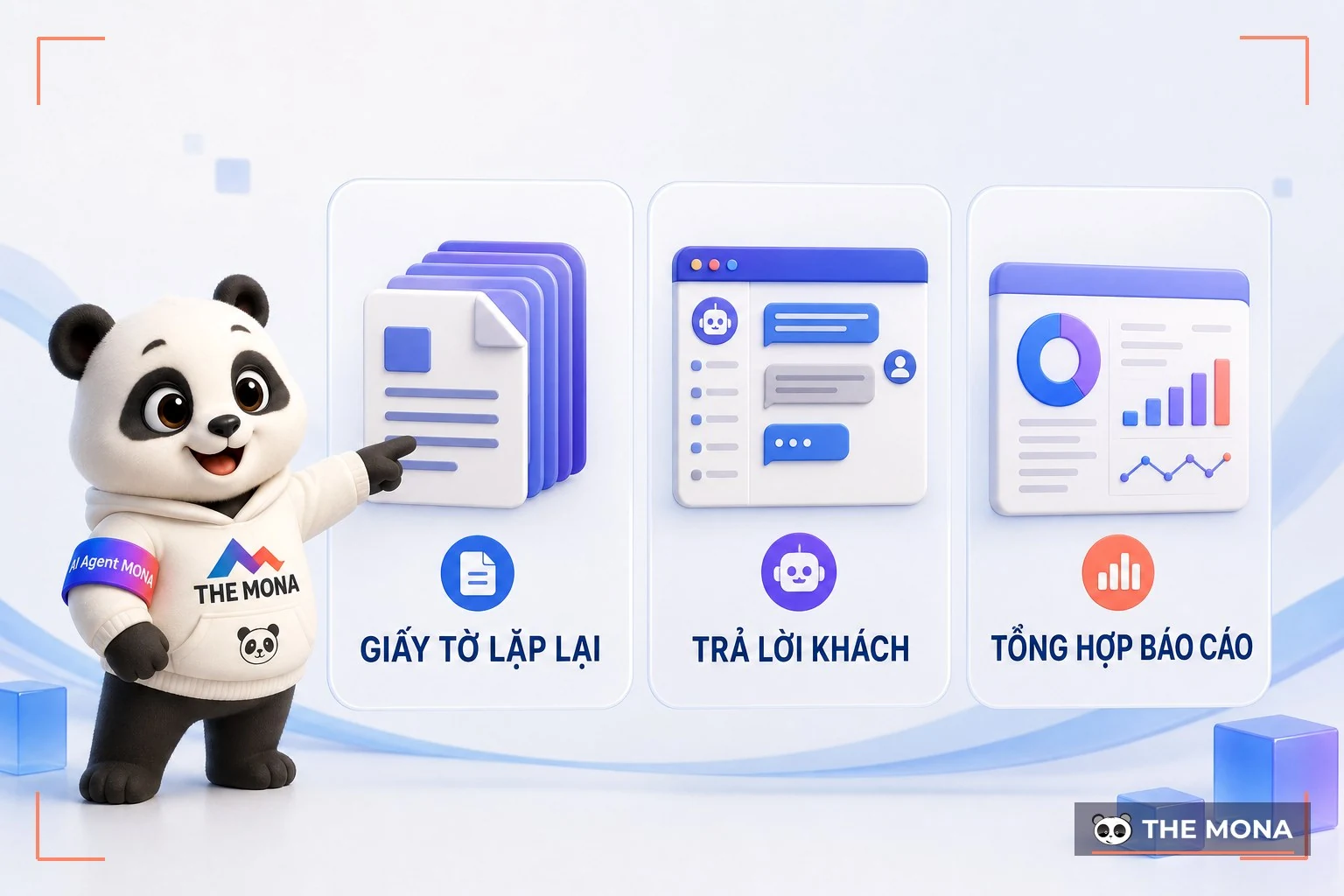
Digital transformation doesn't have to be a multi-billion-dong project that drags on 2 years. In the cases we've done, clear results in the first quarter usually come from one small task that is tightly measured, and then it is multiplied to the next one. When the team sees numbers, they're confident to keep going. Start with text. The three groups below give early signals within 90 days.
This is the easy win because large language models are already mature for text. Template emails, repeated questions, product content and end-of-day reports can each be partly automated. Customer messages left piling up on Zalo and Facebook from Saturday night to Monday morning are sales opportunities already lost. Do this part first.
We built a system for a 28-branch spa chain in HCMC, Hanoi and Da Nang that answers 80% of customer questions 24/7. This AI assistant uses the brand's exact voice, advises on services, quotes prices and books appointments automatically. As a result, message handling time dropped 78%, and all advisors were freed to focus on hard cases that need deeper care. Other work such as drafting contracts from templates, writing product descriptions and summarizing end-of-day reports also falls in this group.
If the company has a warehouse, products or stores, computer vision handles the images and paperwork. Instead of keying in each invoice line by hand, the system scans, reads and extracts the data. The review step stays, while dozens of working hours a week go back to your people.
A fashion retail chain uses AI to check product photos before posting them to its e-commerce site. The system automatically rejects blurry photos, bad lighting or shots that miss the photography standard. The same group also covers counting stock on shelves through cameras and sorting defective products on the line.
The value of digital transformation consultation shows when small tasks are linked into one self-running process, removing the manual hand-off of information. Instead of waiting for someone to compile revenue from 30 branches, data from the point-of-sale machines flows straight into a tracking sheet in real time. Only then does the system truly lighten the work.
Then business decisions rest on numbers that were just updated, rather than yesterday's. This is where the system business automation that MONA builds plays its proper role. We don't sell off-the-shelf software; we design custom software around your operating process so data flows without a gatekeeper. In the first 90 days, we advise you to focus on group 1 to build momentum, and only then connect the complex processes.
We don't believe in consulting for everyone. Digital transformation is not a magic wand. But there are very clear signs that every day of delay is burning your own money. We all know these problems don't go away by themselves. They only balloon as the company grows.
MONA usually asks for just 7-day recent reports and randomly picks 3 orders to trace backward from the moment the customer asked to the moment money hit the books. If each step produces a different number, you don't need to hear another technology presentation. Check the numbers first. They speak more honestly than slides.
If you see yourself in the situations below, it's time for an outside professional view:
If your company has 3 signs above, do a review session before deciding whether to build or buy. Don't let fear of competitors be the reason to sign in a hurry. A proper digital transformation consultation should point out which work is worth doing in 90 days, which to postpone, and which numbers will be used to judge after the first quarter.
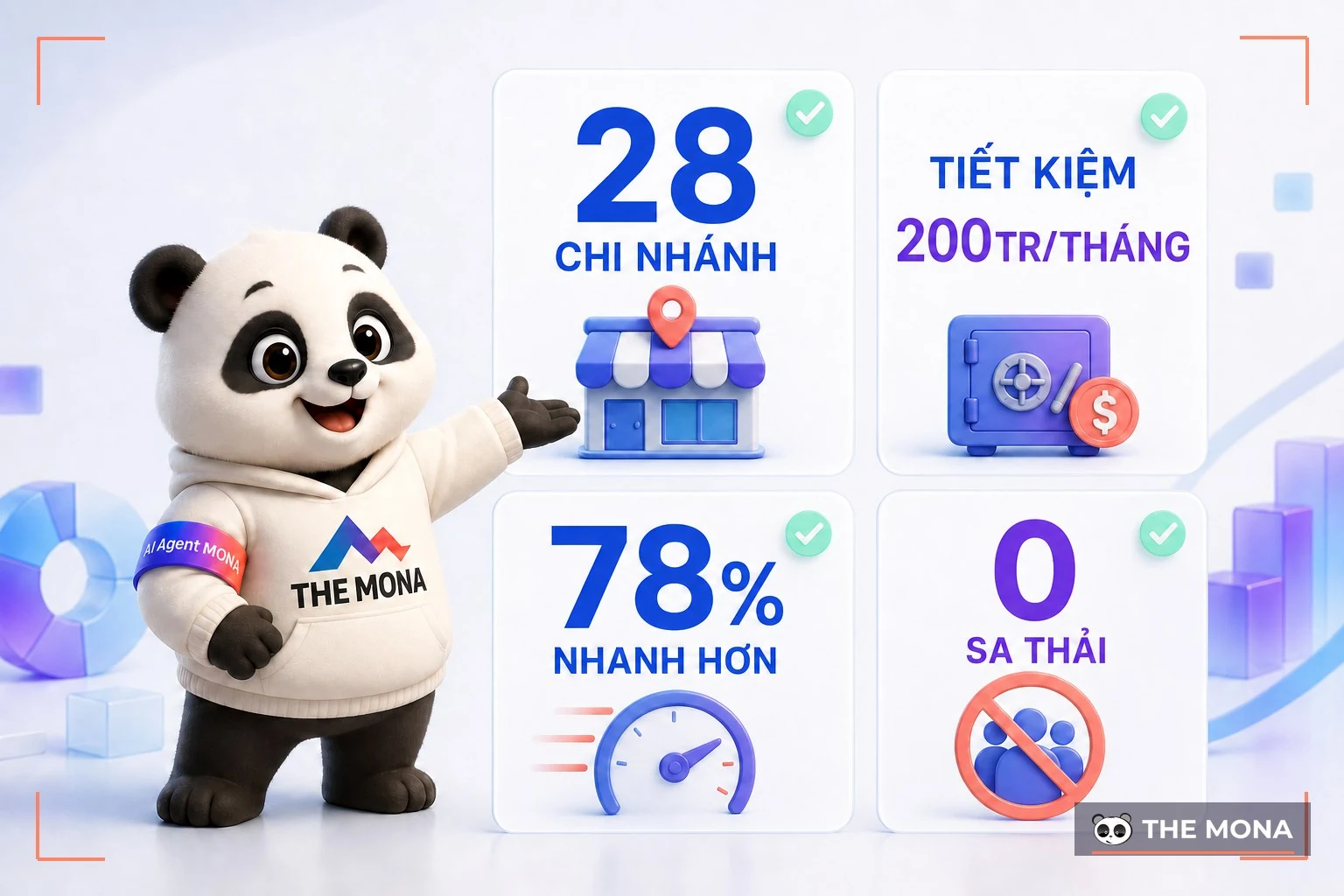
The owner of a spa chain with 28 branches in HCMC, Hanoi and Da Nang once worked with MONA. The first thing she said to us was: "Don't sell me software. I'm scared of it now."
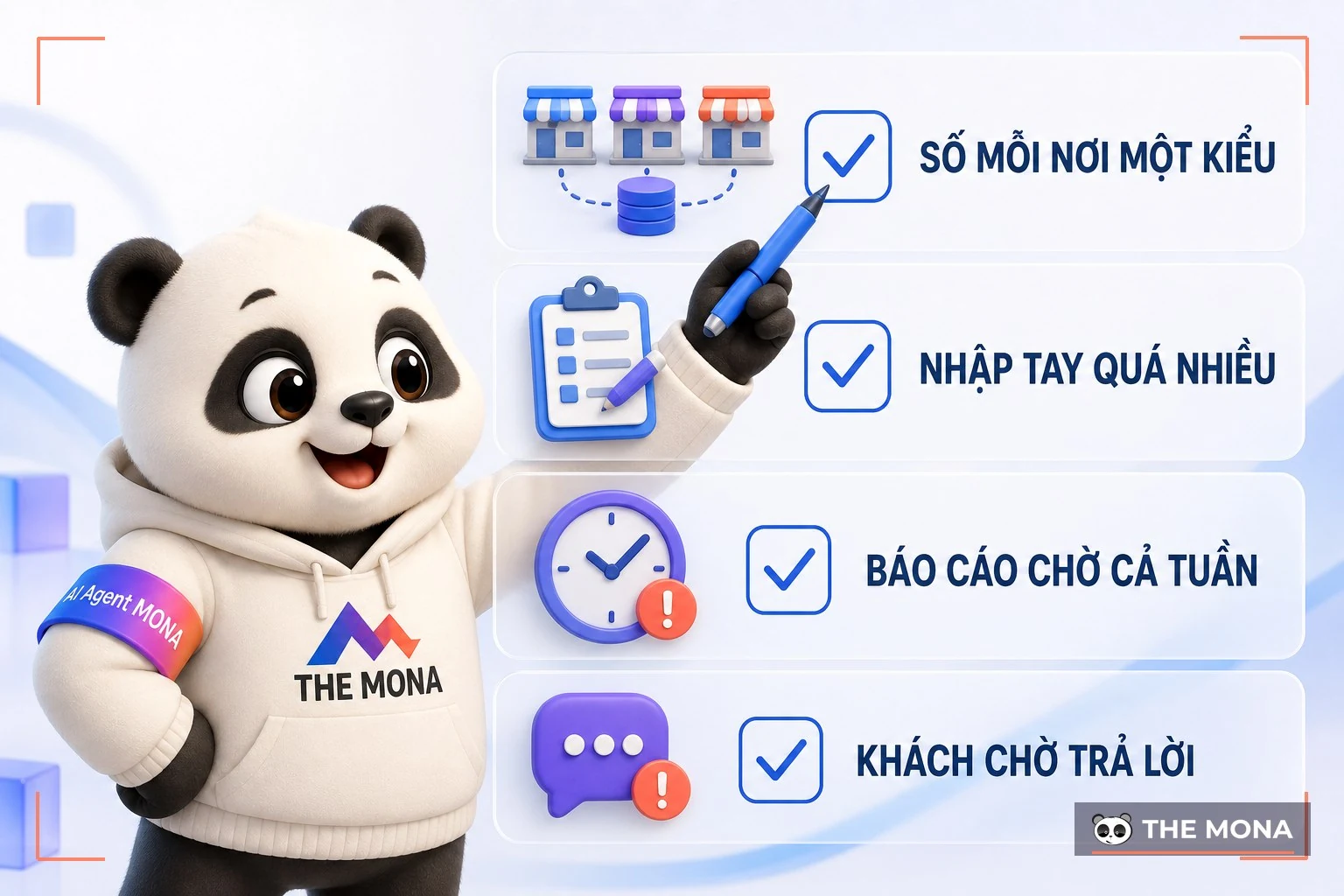
She told us she had spent a fair amount on spa management software. Staff used it for two months, then quietly went back to Zalo and Excel spreadsheets. The money was gone, the rollout time wasted, and the process was as tangled as before. That's a scar many business owners carry.
We weren't trying to sell yet another piece of software. The first job was sitting down to review the chain's real operating process. The core problem gradually came into view, and it wasn't that staff were lazy, but that manual processes were overloading them.
Try picturing these three burdens.
One, the customer care team shares the job of replying to messages on Zalo and Messenger. At 10 PM on Saturday, a customer messages to ask the price of a treatment. By Monday morning when the machine is opened, the message has sunk. The customer closed with a competitor on Sunday night. Every night, money just flows out.
Two, the CEO takes three days to learn revenue. Each branch compiles its report by hand and sends it to the regional accountant. The regional accountant collects and sends it to the chief accountant. By the time the number reaches the owner's desk, the market has moved on. She has no real-time data to make decisions.
Three, receptionists at the branches all do the same repetitive work. They key in customer information by hand, then key in supply purchase invoices. The data is both duplicated and wrong, and no one can verify it.
After the review, MONA proposed a 90-day roadmap. We didn't do everything. Three points that produce fast, visible results went first. That is the essence of digital transformation consultation: finding the right place to use technology, not buying technology for show.
First, we switched on an AI assistant that answers messages 24/7. It was trained on the spa's own data and answers common questions like price, address and open slots in natural Vietnamese. The customer care team moved to handling in-depth consultations and closing high-value orders.
Next, we built an automated data pipeline. Sales data from every branch is pushed straight into a tracking sheet for the CEO. She opens her phone and sees revenue, customer count and which services are selling most right at that moment.
Third, we used computer vision to read invoices. Receptionists just photograph a stock-in invoice, and the system automatically recognizes the products, quantities and unit prices and enters them into inventory. No more manual data entry.
After 90 days, the results beat expectations. Average handling time for a customer message dropped 78%. The share of customers answered within 5 minutes shot up, even in the middle of the night. The CEO no longer waits for reports. She has full control in hand.
Measured savings came to about 200,000,000 VND a month from wasted working hours. More importantly, she didn't have to lay anyone off. Good people were kept and moved to higher-value work. The whole team's morale went up.
The lesson here isn't to buy another new piece of software. The lesson is to find exactly where operations get stuck and remove those blocks with the right technology. That is the core of the business automation that MONA pursues. Do the right work, rather than all the work.
Among hundreds of pitches, choosing a partner to touch your operating process is a hard decision. MONA has been at it since 2016, which is nearly 10 years, has been through 14,000+ projects and keeps a return rate of 85%; these milestones only mean something if the roadmap we give you can be measured in your own company's hours, money and handling time. Look at how we work. Don't look at promises.
Every roadmap we draw comes from systems we've deployed, run and fixed that actually work. We use the three public milestones below so you can check our capability:
The big risk in digital transformation is the gap between the consulting side and the delivery side. One side draws the roadmap, and the other lacks the ability to execute. MONA keeps both in the same chain of work, so we don't hand you a plan and leave you to find someone else to write the software. We build the entire system we propose.
These solutions, from tailored CRM, ERP and HRM to packaged software for spas, restaurants, gold shops and training centers, are all built by the MONA team. Everything is closed-loop in one place. You save the time, cost and risk of working with multiple parties. Consult one way, build that way, and get measurable results.
MONA isn't aiming to sell pricey software packages or grand solution suites. The value we follow is solving the root problem at a reasonable cost. A consulting partner has to protect the effectiveness of whoever is paying.
That's why we're ready to say "no." If a process can be fixed by changing habits without software, we say so plainly. If an AI function is still new and unstable at the scale you run, we advise waiting. Digital transformation consulting is about finding the path to results, not choosing the expensive one.
The first milestone is 90 days. MONA picks 1 or 2 processes that waste working hours, measures before running, then compares after each week. We don't promise to replace the whole company in three months, because the data and ways of working in many departments need time to standardize. The first quarter is used to prove with numbers that AI lightens the work. Measure first.
The smaller the company, the leaner it needs to be, but it doesn't need to spend big on custom software right away. We usually use existing tools to handle template emails, summarize meetings or group repeated questions, and after 30 days we look back at how many hours dropped. Once there are numbers, then we consider a dedicated module. Start small.
MONA doesn't fix one price list and apply it to every company. After the review session, the proposal separates scope, data to connect, rollout time, the person responsible and the acceptance metrics, so you know what each payment is for. Work that isn't needed yet gets written down and postponed.
The first reaction is usually fear of losing their job or reluctance to learn another screen. We don't open with AI promises; we pick one repetitive task, demonstrate it and let the person in charge check the result themselves. During the first 30 to 60 days, a MONA person sits with the team to answer questions on the spot, log errors and adjust the process. When the work gets lighter and roles stay clear, resistance falls. Don't force it with slogans.
Not necessarily. Many problems can be handled with existing tools or an API layer connected to your current system, and custom software is only worth building when the process needs to run closed-loop on specialized data. In the first quarter we prioritize using what you already have. If you don't need it yet, don't buy it.
With custom-built systems, the source code and database are deployed on your own infrastructure within the agreed scope. Access rights, backups, activity logs and maintenance responsibility must be spelled out in the handover file, not stop at a general promise. MONA keeps only the technical access that was explicitly authorized.
AI replaces repetitive work, not every role in the company. Entering invoices, answering basic questions and compiling daily reports are three clear examples; judgment, negotiation and handling sensitive cases still need a person who is accountable. The spa case with 28 branches in this post cut 78% handling time but with zero layoffs. Good people moved to deeper cases. That is the direction we choose.
Prepare one process that you feel is eating hours, along with 7-day recent data if you have it. Call 1900 636 648 or email info@themona.global, and we'll set a review session to pick 1 or 2 points to try first. Don't prepare long slides. Bring real numbers to the table.
This week, try listing 5 tasks that eat a lot of working hours in your company, and next to each one write the minutes per run and the number of runs over the 7-day recent period. Don't estimate by gut feeling. Use order history, messages, invoices or reports to count, because a task that takes only 4 minutes but repeats 300 times a week is still worth reviewing before a 2-hour task that only comes up once a quarter. Just count honestly.
Send that list to info@themona.global or call 1900 636 648 to book a quick review. In the first session we don't sell; together we pick exactly one task, calculate its monthly cost and check whether the input data is sufficient. See the process in advance at our AI Audit service for businesses MONA. One session is enough to know the direction.
If the numbers show it isn't worth doing, we say stop. If a process is eating hundreds of hours a month, the digital transformation consultation session will lock down the task to trial within 90 days, the person responsible and how to measure after it runs. Start with one task. Then let the numbers decide the next step.

CEO & Founder · The MONA
Founder of The MONA, who built a services company of 60+ staff with 14,000+ projects delivered. Khánh Hùng shares how he thinks about building systems that run themselves, automating a business, and the real lessons from delivering projects at MONA.
 281




Professional website
design services
Own a website with a beautiful, 100% exclusive design and a lifetime warranty, with the ability
to expand features flexibly as your business grows, starting today!






 MONA will never sell your information or send you spam


 MONA will never sell your information or send you spam
