
 MONA OS 2.0
 Partner with MONA


 Tự động hoá doanh nghiệp
 Cẩm nang SEO
 Digital Marketing
 Kinh nghiệm thiết kế website
 Hạ Tầng Server
 Giáo dục


 VI
 EN
















Message us on
Zalo Official


 ProductsNew

 ProductsProducts
 Mới ra mắtKHA AI 2027App tự edit video, tự đăng mọi mạng xã hội, 2 phút mỗi ngày










 Website designLooks good and wins customers over.
SEO servicesBrings in customers searching for exactly what you sell.
 Tư vấn digital marketingKéo khách từ nhiều kênh, đo bằng số thật.
Corporate video productionVideos introducing your company, factory and team.
 NewAI video productionCompany story films made with AI.
 Custom software developmentCRM, ERP and HRM built for your business.
 Viết AI Agent theo yêu cầuĐặt riêng một trợ lý AI cho đúng việc của mình.
 Tư vấn chuyển đổi AIĐưa AI vào vận hành của cả công ty.
NewMONA LMSManagement for centers and schools.
MONA SkillHubInternal training for company staff.
 NHTQ systemEnd-to-end China–Vietnam shipping operations.
MONA JMSManagement for gold, diamond and pawn shops.
 MONA E-LearningA website with every feature you need to sell courses.
 How to sell online courses (course)More than 30 free lessons on selling courses on autopilot.
 MONA Cloudmonacloud.vnServers to get your apps and websites running.
 MONA Basemonabase.vnPostgres database, sign-in and file storage.
 MONA Mailmonamail.vnSend OTP, order and invoice emails from your software.
 MONA Paymonapay.vnAccept bank transfers via VietQR and notify your software when the money arrives.
 MONA eInvoiceComing soonIssue e-invoices that meet tax standards.
Gấu CườiTrả lời khách 24/7 trên web, Fanpage, Zalo và thu lead cho sale.
 Gấu TeleSalesGọi điện tư vấn, chăm khách như tổng đài viên thật.
Dê CườiTư vấn và chốt đơn cho shop ngay trong khung chat.
Gấu WebmasterNhắn nhóm Zalo là website được sửa xong.
 Gấu Pháp ChếSoạn hợp đồng, rà điều khoản trong vài phút.
 Gấu Báo GiáLên báo giá đúng mẫu và gửi khách ngay.
 AI chăm sóc khách hàngTheo dõi và giữ chân khách hàng cũ.
 Gấu Tuyển DụngLọc hồ sơ, hẹn lịch, phỏng vấn ứng viên.
 Mới ra mắt
KHA AI 2027
Xây kênh chuyên gia 2 phút mỗi ngày
Quay bằng điện thoại, AI tự edit video, tự đăng lên 16 nền tảng và tự trả lời bình luận, tin nhắn.
884.102lượt xem trên kênh CEO MONA sau 36 ngày
 Anh Khánh HùngCEO MONA đang dùng mỗi ngày
Xem app làm được gì
 AI
Gấu Cười MONA ĐANG TỰ XÀITrả lời khách 24/7 trên website, Zalo OA, Messenger và thu lead về cho sale.
Dê CườiChốt đơn bán lẻ và sàn: Shopee, TikTok Shop, web. Chăm cả khách sỉ, đại lý.
Gấu WebmasterCập nhật nội dung, tối ưu SEO website mỗi ngày.
Gấu TeleSalesGọi điện tư vấn, chăm khách như tổng đài viên thật.
Gấu Tuyển DụngLọc hồ sơ, hẹn lịch, phỏng vấn ứng viên tự động.
AI chăm sóc khách hàngGiữ khách cũ, cứu lead đã rớt cho phòng kinh doanh.
Gấu Pháp ChếSoạn hợp đồng, rà điều khoản trong vài phút.
Gấu Báo GiáLên báo giá đúng mẫu, gửi khách ngay khi có yêu cầu.
 Chuyển đổi AI toàn phầnGiải pháp tổng cho doanh nghiệp, 3 lớp triển khai.
 Viết AI Agent theo yêu cầuĐặt riêng một con AI gánh đúng nghiệp vụ của bạn.
 Custom softwareCRM, ERP and HRM with built-in AI automation.
 SEO & AEO thời đại AIĐược Google lẫn AI trích dẫn, không chỉ xếp hạng.
 Kiến thức AI cho doanh nghiệpBài phân tích, hướng dẫn ứng dụng AI vào vận hành.
 Free AI courses
 AI tools at work
App mới · KHA AI 2027
Xây kênh 2 phút mỗi ngày
AI tự edit video, tự đăng mọi mạng xã hội
Free consultation, 8am–10pm every day

18 March, 2023

Clients who come to MONA asking about website security usually only care about changing passwords to something hard to guess, but in practice that blocks very few risks. According to Patchstack's State of WordPress Security in 2025 report, more than 500,000 websites were infected with malware in 2024, and 96% of vulnerabilities were in third-party plugins rather than the core system. In fact, 43% of vulnerabilities could be exploited without logging in, which means attackers come in through a window and never need the front-door key. A new password won't stop that.
In this article, we break down the most common vulnerabilities today and share all 10 safe deployment rules we wrote after a crypto miner was planted on a MONA server in June 2026. Our advice: don't trust any tool that promises complete protection in one click. The most urgent job right now is to find and remove pirated plugins.

You open your laptop at 8 a.m. on Monday and, instead of new order notifications, you find your homepage has turned into a black screen full of text in a foreign language. We notice that clients who come to MONA for an online store often skip this step, because they assume buying an SSL certificate or installing a free tool is enough. That is the trap.
Patchstack's 2024 report states plainly that 96% of WordPress vulnerabilities sit in third-party plugins, and 43% of those let hackers get deep into the platform without a password. When we handle emergency site recoveries, we see the same thing again and again: shop owners download security plugins as cracked copies to save money. They believe the site is protected. In fact they have opened the door and let the malware in.
Website security means reviewing your code continuously to close the gaps people leave open. When you are busy running the business and the site looks fine, it is easy to ignore the warnings buried in its configuration, right up until your store ends up on a blacklist with more than 500,000 other infected websites.
Don't leave your customer data to automatic buttons. You need a website maintenance team that scans open ports every night and backs up your code continuously, so if the site goes down a backup can go live straight away.

One morning you open your website and it is full of foreign text or redirects to a strange site. The cause is usually files hidden deep in the code, not leaked login details. When we take on clean-ups, we see most owners lose control completely because they don't know where the problem started. Most of the time it starts with installing a pirated plugin without thinking.
The State of WordPress Security in 2025 report by Patchstack gives very clear figures. In 2024 more than 500,000 websites were infected with malware, and around 22 new vulnerabilities were discovered every day. The most worrying figures are that 96% of vulnerabilities sit in add-on plugins, and 43% of those can be exploited directly without logging in.
A strong password is not enough. Using cracked software from random websites invites the risk in. Even if you set up a tool MONA Shield to block unnecessary entry points such as XML-RPC or the REST API, it can never replace cleaning the pirated code out of the site itself.
When something breaks, restoring the latest backup is always far faster and more thorough than trying to delete malicious code line by line yourself. Clients on our website maintenance service always get licensed tools and a technician who handles the problem directly.
Don't use pirated plugins. No shield helps if you save a little on a license and install the malware yourself.

Once the app runs on their laptop, many owners rush the same code onto a server and start taking customer payments. Machine-written code often leaves every port open and the admin password blank to make testing easy. Running a business on that code is handing your customer data to attackers. MONA Shield: a lifetime license per domain, issued once, no annual fee (priced per website quote) (we checked on 19/09/2026).
We learned this the hard way in June 2026, when a draft app running in dev mode with a public port and root access turned one of our virtual servers into a crypto-mining machine for attackers. After that incident, our engineering team locked in 10 rules for production: run apps as non-root, bind to 127.0.0.1 behind nginx, set ufw to deny by default, allow key-only SSH access, and never commit secrets. These rules are now built into every project MONA hands over.
AI also tends to leave API keys in plain, unencrypted files. The process of securing AI-written code requires an experienced engineer to check every configuration line and close exposed ports before launch. This is specialist work. If your company has no developer looking after the system every day, hand it over to website maintenance services for professional services.
AI-generated code is for closed testing only. Never put a draft build on a live business system.
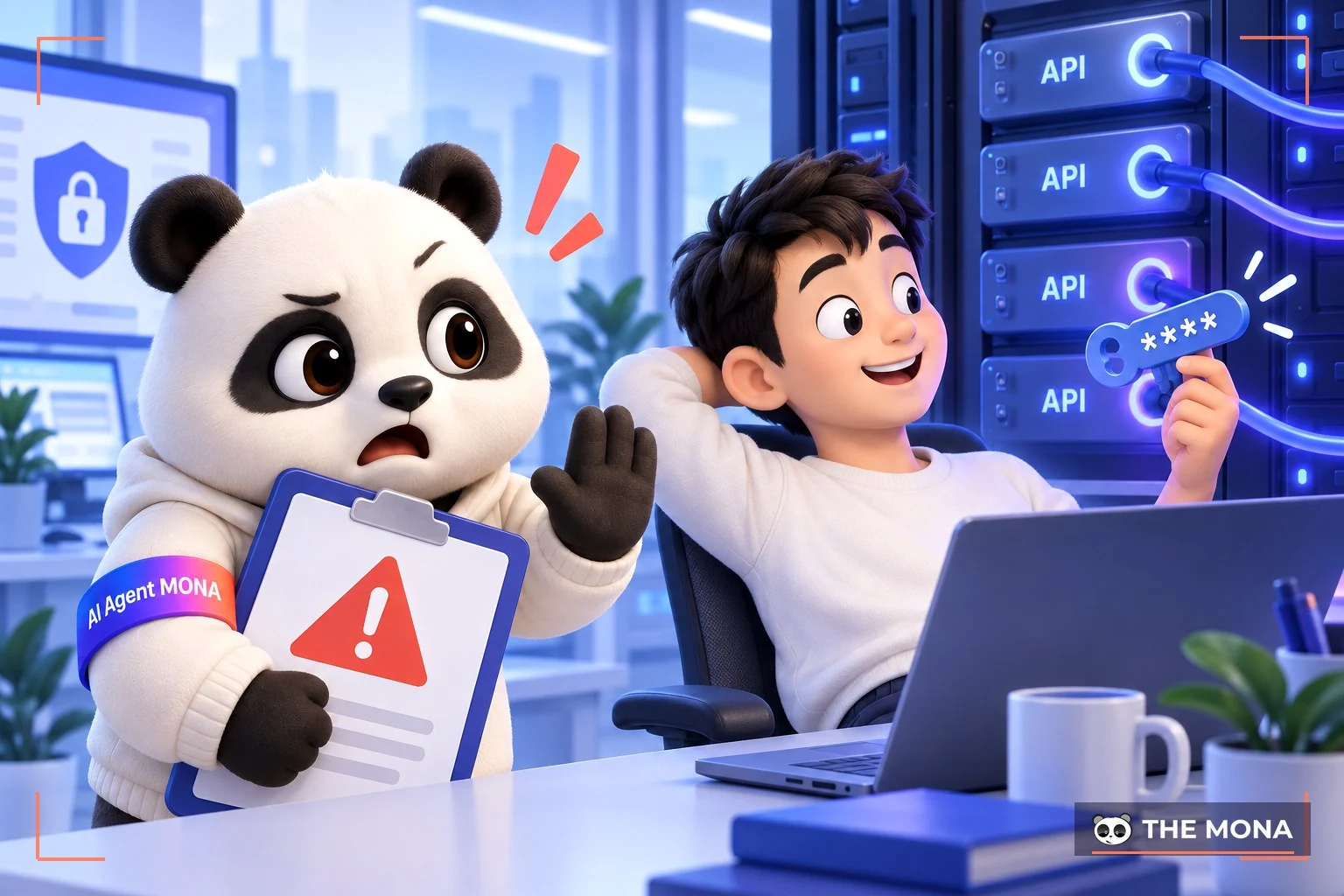
After installing three or four anti-spam tools and ticking every setting in an online tutorial, you close the laptop sure the site is locked up tight. This is the trap we see most often: clients try to save a few million VND on hiring someone and do it themselves with bits of knowledge picked up online. The front door ends up locked, but the REST API and XML-RPC stay wide open, so malware slips through, takes customer data and brings down the whole server, and the clean-up costs ten times more.
When we clean up sites for clients, we find the core code is rarely the problem. According to Patchstack's whitepaper from early 2025, the WordPress ecosystem logged 22 new vulnerabilities a day, with 96% in third-party plugins, only 7 in the core, and 43% exploitable without logging in. Owners install free tools to keep attackers out and end up letting them in, joining the more than 500,000 websites infected with malware in 2024 just because of a careless install.
Cleaning up is actually not expensive if you catch the problem early. When we take on a project, we close unnecessary scanning entry points straight away with MONA Shield. We wrote this lightweight layer ourselves; it comes with a lifetime license and no annual fee, hides the WordPress version and locks the REST API to block scanning bots. If you need someone watching for problems every day, the Gấu Webmaster team takes over backups and one-click restores when something goes wrong, for 2,000,000 VND a month. Doing it yourself is only cheap at the start. Don't experiment on live data.
Open your plugin list and check for pirated copies. A crypto miner hidden in one can eat your bandwidth and cost tens of millions of VND to fix, like the crashed site we rescued in June 2026. Check carefully. If your site is unusually slow, tell us and we will run MONA Shield to scan it.
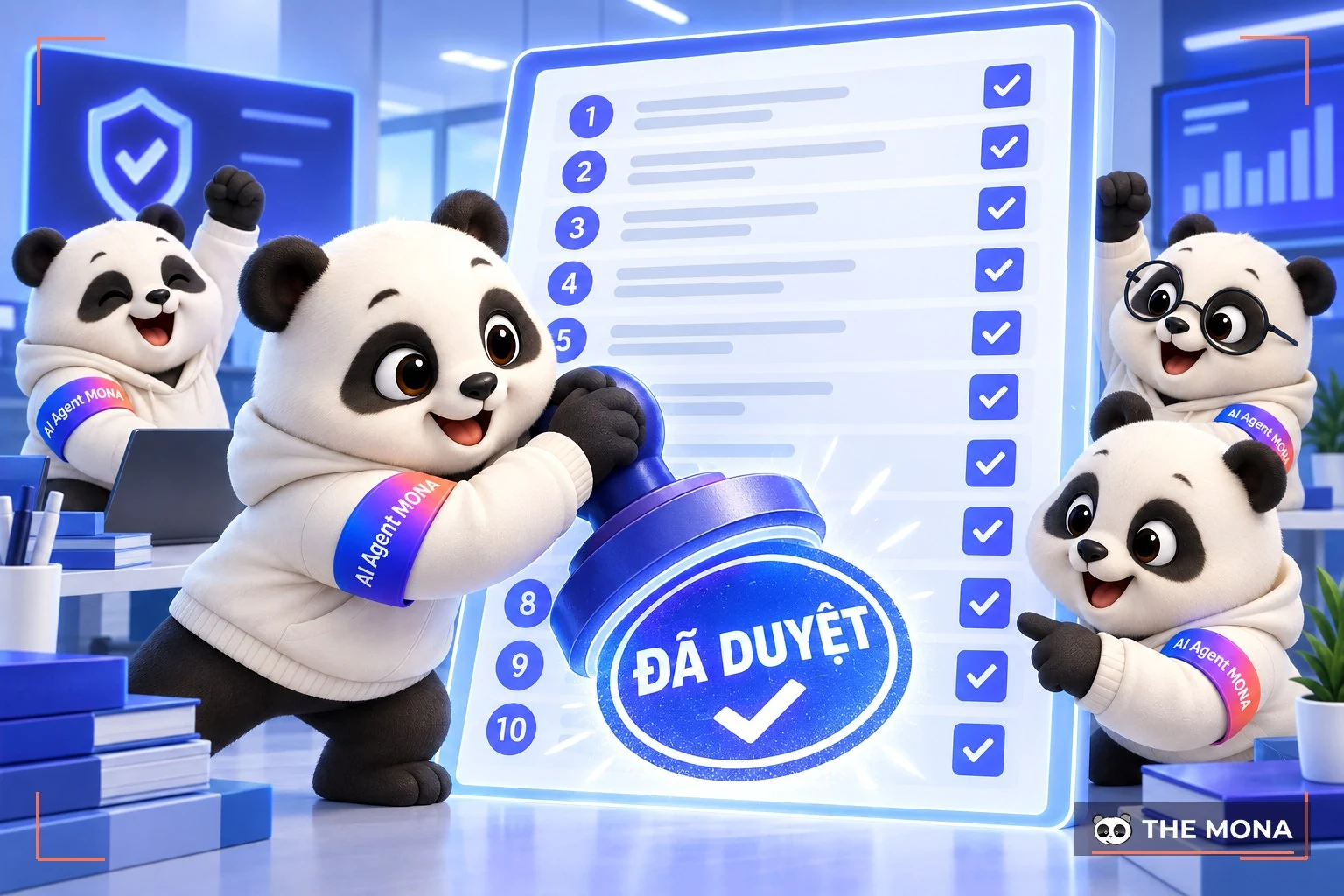
At 2 a.m. the server goes down because a new hire pushed a command to the wrong environment. Customers keep calling about failed payments while you stay up all night chasing technicians, and nothing is under control. Customers who wait three minutes for a reply are already gone, and here the whole system has been down for hours.
After more than 14,000 projects, we know that code running smoothly on a personal computer may not survive in the real world. According to the IBM Cost of a Data Breach 2024 report, the average cost of a data breach reached USD 4.88 million, and it often comes down to tiny configuration mistakes during deployment. So that you are never left to deal with that alone, the software development process we use follows these 10 non-negotiable rules.
Think of it this way: only by following each of these slow steps does the system hold up when traffic peaks. Skip a few to save time, website maintenance services and you will end up tearing it down and rebuilding it again and again, at a cost of hundreds of millions of VND. You can experiment with almost anything, but not with your business itself.

Faced with the yearly renewal bill for security tools, many owners give in and download a cracked copy to save money. They install it and relax.
In reality, 96% of WordPress vulnerabilities come from add-ons like these cracked ones, which quietly spread malware across the system while you are pleased about saving a few million VND on licenses. Today 43% of vulnerabilities can be exploited without logging in at all, so however complex your password is, it does nothing once the back door is open.
We got burned ourselves in June 2026 when a VPS was hijacked for crypto mining; the attacker got in easily because a test app had opened a public port with root privileges. After that, we tightened things with 10 strict deployment rules: no app runs as root, every app sits behind an internal firewall that denies by default, and connections use encrypted keys only. These rules now apply to 100% of the apps we deploy for clients.
We took the same principle of closing unused ports to WordPress and built our own protection layer, MONA Shield which quietly blocks XML-RPC and REST API connections and hides version information. Clients get a lifetime license per domain, paid once, with no yearly renewal fee.
This layer is designed for business websites that already sell steadily, locking the outer doors to protect revenue that can run into billions of VND. Installing security doesn't mean you can stop worrying. You still have to remove any pirated code already inside. The real fix is to work with website maintenance services so a technician can find and remove the malware completely and replace everything with licensed software.

Clients who come to us for software often think a closed internal app is safer than a public sales website, but both are defended in exactly the same way. Take a retail chain whose stores share one management system: one infected computer at a single counter can expose all the data, and the damage is huge.
The biggest trap we see when fixing issues for clients is the habit of using pirated extensions. Patchstack's 2025 report shows 96% of WordPress vulnerabilities sit in third-party plugins, causing more than 500,000 websites to be infected with malware in 2024. Worse, 43% of vulnerabilities let attackers in without logging in, so however hard your password is, it means nothing when the back door is wide open; one small slip and you lose everything.
If you run a WordPress site that is selling with third-party plugins installed, you must set up a dedicated anti-scanning layer plus someone on duty ready to restore the moment something goes wrong. We always bundle this standard into website maintenance services for our clients, combined with MONA Shield to fully close unused ports such as XML-RPC and the REST API. Cleaning malware by hand takes a whole day. A one-click restore takes minutes.
Installing one plugin is not enough. In June 2026 we handled a VPS that had a crypto miner planted on it, caused by an app running in dev mode that opened a public port with root access. Since then we have enforced ten deployment rules on every client app and on MONA Cloud itself, including ufw denying by default and apps running as non-root behind nginx, which shuts that risk down.
Customers call to complain because the homepage has turned into a betting site, while your own staff are still fumbling for the admin password. That feeling of watching your website being taken over right in front of you sends a chill down the spine of anyone running a large site, and changing the password does nothing. MONA Shield: a lifetime license per domain, issued once, no annual fee (priced per website quote) (we checked on 19/09/2026).
Patchstack research from 2025 shows about 22 new WordPress vulnerabilities are published every day, and 43 percent of them let hackers in without logging in. However hard to guess your password is, it does nothing if the site leaves the door open, because 96 percent of vulnerabilities sit in plugins. We have taken on websites running pirated plugins, free downloads used to save a little money, and the owners ended up installing the malware themselves. When a website is hacked, restoring from a daily backup is always cleaner than removing malicious code line by line, so our Gấu Webmaster team always restores the latest working version straight over it.
Many business owners struggle to track down security holes themselves, but closing scanning ports with MONA Shield only protects the outside; you still have to clean out the pirated plugins at the root. A lot of people use AI to write their own software and rush to open it to customers, along with the usual problems: API keys exposed in the source code, or admin ports opened automatically with no password set. In June 2026, one of our own servers had a crypto miner planted on it simply because it ran dev-mode code with a public port under root. Since then, every piece of software we put on a server has to pass ten strict configuration rules that follow the securing AI-written code.
Our advice is simple. If you are not technical, don't try to teach yourself server configuration or patching. Buy licensed plugins and hand system monitoring to specialists so you can focus on selling.

On a Saturday morning you open your laptop and the first message you see is a customer complaining that your site sends them to a betting page. We handle a lot of emergencies like this, and it is painful to watch owners make staff hunt down and delete malicious code line by line, because the next night it comes back through the same unpatched pirated plugin. What we actually do for clients is restore the clean backup from the day before so the site is back up for customers, then quietly isolate and patch the hole in a separate environment. Gấu Webmaster does this every day.
To WordPress website security: the tools installed only send alerts, while a real person has to type the commands to patch plugins, close each unused port and watch the nightly backups. We charge 2,000,000 VND/month for the Gấu Webmaster Basic plan to do all of this hands-on work, and advanced data protection adds 2,000,000 VND/month. Everything included is listed in the Gấu Webmaster service scope; if the site goes down, MONA staff restore it within minutes, so you don't lose customers.
Systems that are already clean inside only need a one-time license for MONA Shield , issued for life per domain and paid once, with no yearly fee. It is a solid shield that keeps automated scanners from forcing their way in, but it is useless if you insist on keeping cracked plugins that carry malware. However good the lock, if someone inside lets the thief in, you still lose everything.
Many people assume buying security software settles it and leave the site to run on its own forever. If you are looking for that kind of magic fix, our service is not for you.
A manifesto for growing together
MONA is a software, digital transformation and AI transformation company, but above all, MONA is a B2B service company that benefits directly from this: THE MORE SUCCESSFUL VIETNAMESE BUSINESSES BECOME, THE MORE MONA BENEFITS, while a declining, slow market with weak technology is exactly what kills MONA's future business opportunities. So, more than anyone, MONA wants you to succeed, and MONA actually steps in to help you succeed.
And AI transformation is the key to that success for all of us.
MONA
The cost of cleaning up malware and repairing your reputation is dozens of times higher than the fee you meant to save, all because you downloaded one pirated plugin. We understand many of you search online for ways to block XML-RPC, or struggle to apply every core patch to protect your customer list. Most business owners we meet have tried installing a few free tools at random, or asked an AI tool to write firewall code for them. That approach breaks easily. AI-written apps often expose sensitive keys, especially when no experienced engineer reviews them. We handle this with MONA Shield on a lifetime license, plus the Gấu Webmaster on-duty team, who test every flow before launch and restore data immediately if the site goes down. Call us on 1900 636 648 and we will start scanning your entire codebase. MONA Shield: a lifetime license per domain, issued once, no annual fee (priced per website quote) (we checked on 19/09/2026).

CEO & Founder · The MONA
Founder of The MONA, who built a services company of 60+ staff with 14,000+ projects delivered. Khánh Hùng shares how he thinks about building systems that run themselves, automating a business, and the real lessons from delivering projects at MONA.
 2,0K




Professional website
design services
Own a website with a beautiful, 100% exclusive design and a lifetime warranty, with the ability
to expand features flexibly as your business grows, starting today!






 MONA will never sell your information or send you spam


 MONA will never sell your information or send you spam
