
 MONA OS 2.0
 Partner with MONA


 Tự động hoá doanh nghiệp
 Cẩm nang SEO
 Digital Marketing
 Kinh nghiệm thiết kế website
 Hạ Tầng Server
 Giáo dục


 VI
 EN









Message us on
Zalo Official


 ProductsNew

 ProductsProducts
 Mới ra mắtKHA AI 2027App tự edit video, tự đăng mọi mạng xã hội, 2 phút mỗi ngày









 Website designLooks good and wins customers over.
SEO servicesBrings in customers searching for exactly what you sell.
 Tư vấn digital marketingKéo khách từ nhiều kênh, đo bằng số thật.
Corporate video productionVideos introducing your company, factory and team.
 NewAI video productionCompany story films made with AI.
 Custom software developmentCRM, ERP and HRM built for your business.
 Viết AI Agent theo yêu cầuĐặt riêng một trợ lý AI cho đúng việc của mình.
 Tư vấn chuyển đổi AIĐưa AI vào vận hành của cả công ty.
NewMONA LMSManagement for centers and schools.
MONA SkillHubInternal training for company staff.
 NHTQ systemEnd-to-end China–Vietnam shipping operations.
MONA JMSManagement for gold, diamond and pawn shops.
 MONA E-LearningA website with every feature you need to sell courses.
 How to sell online courses (course)More than 30 free lessons on selling courses on autopilot.
 MONA Cloudmonacloud.vnServers to get your apps and websites running.
 MONA Basemonabase.vnPostgres database, sign-in and file storage.
 MONA Mailmonamail.vnSend OTP, order and invoice emails from your software.
 MONA Paymonapay.vnAccept bank transfers via VietQR and notify your software when the money arrives.
 MONA eInvoiceComing soonIssue e-invoices that meet tax standards.
Gấu CườiTrả lời khách 24/7 trên web, Fanpage, Zalo và thu lead cho sale.
 Gấu TeleSalesGọi điện tư vấn, chăm khách như tổng đài viên thật.
Dê CườiTư vấn và chốt đơn cho shop ngay trong khung chat.
Gấu WebmasterNhắn nhóm Zalo là website được sửa xong.
 Gấu Pháp ChếSoạn hợp đồng, rà điều khoản trong vài phút.
 Gấu Báo GiáLên báo giá đúng mẫu và gửi khách ngay.
 AI chăm sóc khách hàngTheo dõi và giữ chân khách hàng cũ.
 Gấu Tuyển DụngLọc hồ sơ, hẹn lịch, phỏng vấn ứng viên.
 Mới ra mắt
KHA AI 2027
Xây kênh chuyên gia 2 phút mỗi ngày
Quay bằng điện thoại, AI tự edit video, tự đăng lên 16 nền tảng và tự trả lời bình luận, tin nhắn.
954.414lượt xem trên kênh CEO MONA sau 51 ngày
 Anh Khánh HùngCEO MONA đang dùng mỗi ngày
Xem app làm được gì
 AI
Gấu Cười MONA ĐANG TỰ XÀITrả lời khách 24/7 trên website, Zalo OA, Messenger và thu lead về cho sale.
Dê CườiChốt đơn bán lẻ và sàn: Shopee, TikTok Shop, web. Chăm cả khách sỉ, đại lý.
Gấu WebmasterCập nhật nội dung, tối ưu SEO website mỗi ngày.
Gấu TeleSalesGọi điện tư vấn, chăm khách như tổng đài viên thật.
Gấu Tuyển DụngLọc hồ sơ, hẹn lịch, phỏng vấn ứng viên tự động.
AI chăm sóc khách hàngGiữ khách cũ, cứu lead đã rớt cho phòng kinh doanh.
Gấu Pháp ChếSoạn hợp đồng, rà điều khoản trong vài phút.
Gấu Báo GiáLên báo giá đúng mẫu, gửi khách ngay khi có yêu cầu.
 Chuyển đổi AI toàn phầnGiải pháp tổng cho doanh nghiệp, 3 lớp triển khai.
 Viết AI Agent theo yêu cầuĐặt riêng một con AI gánh đúng nghiệp vụ của bạn.
 Custom softwareCRM, ERP and HRM with built-in AI automation.
 SEO & AEO thời đại AIĐược Google lẫn AI trích dẫn, không chỉ xếp hạng.
 Kiến thức AI cho doanh nghiệpBài phân tích, hướng dẫn ứng dụng AI vào vận hành.
 Free AI courses
 AI tools at work
App mới · KHA AI 2027
Xây kênh 2 phút mỗi ngày
AI tự edit video, tự đăng mọi mạng xã hội
Free consultation, 8am–10pm every day

15 June, 2026

NotebookLM API is a phrase many of you search for when you want to turn a document library into an automated workflow, instead of opening each file and summarizing by hand. To be plain: NotebookLM doesn't have an official API that businesses can call directly like a software system. So the right approach is to combine NotebookLM with Google Drive, spreadsheets, forms, email, and custom software, step by step. MONA uses this approach internally and when training clients, so marketing, sales, and operations teams work faster while keeping data under control.
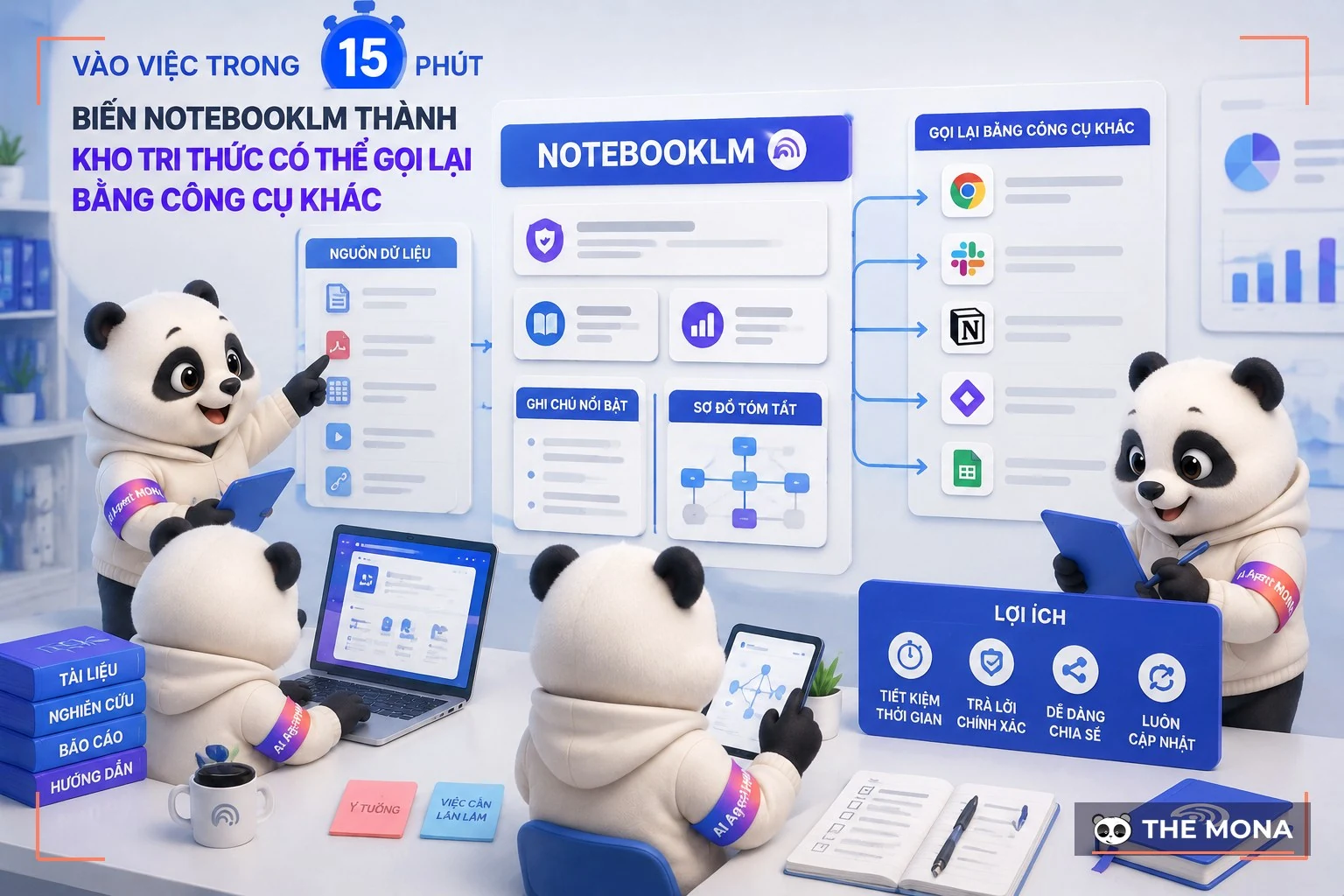
NotebookLM is good at reading documents, summarizing sources, and retrieving ideas in context. Think of it as the knowledge layer for marketing, SEO, sales, and operations.
Don't ask NotebookLM to do everything. It doesn't replace a spreadsheet, it doesn't replace CRM, and it doesn't replace automation software with seamless data.
The value lies in how you split the roles. NotebookLM reads and understands. Other tools store data, trigger processes, and record results.
Dirty sources skew the answers. Duplicate files, messy names, outdated documents, and scattered notes make NotebookLM misread the context.
Clean first. It saves you many rounds of fixes later.
For SEO, you can put the content brief, customer persona, keyword table, and editorial standards into the same notebook. When you need to write a website article, NotebookLM will stick closer to the source documents.
MONA uses this approach when training our internal team and clients on AI tools in their work. Clean documents help newcomers work faster and guess less.
Many teams get tangled by stuffing everything in one place. NotebookLM shouldn't be a task assignment hub, a spreadsheet metrics or a place to store potential customers.
Split the roles properly. The chain will feel lighter.
In sales, for example, NotebookLM can read your product documents and answer frequently asked questions. A spreadsheet still holds the list of potential customers and their follow-up status.
In SEO, for example, NotebookLM helps you review ideas against a strategy document. Website implementation and measurement still need their own system, such as website design and SEO services so your data is organized correctly.
A notebook's name decides how fast you can find it again. Vague names make the whole team waste time asking each other, and then create duplicate notebooks.
Name by goal, not by whim.
This naming approach makes it easier to connect NotebookLM to other tools. As your processes grow, your technical team won't have to guess which notebook serves which job.
NotebookLM is convenient for individuals and small teams. But it hits a ceiling when data is scattered, people work by hand and access is hard to control.
MONA typically uses NotebookLM as a reading and comprehension layer for training and internal research. When a business needs real automation, we still recommend building custom software for CRM, ERP or automated operations workflows.

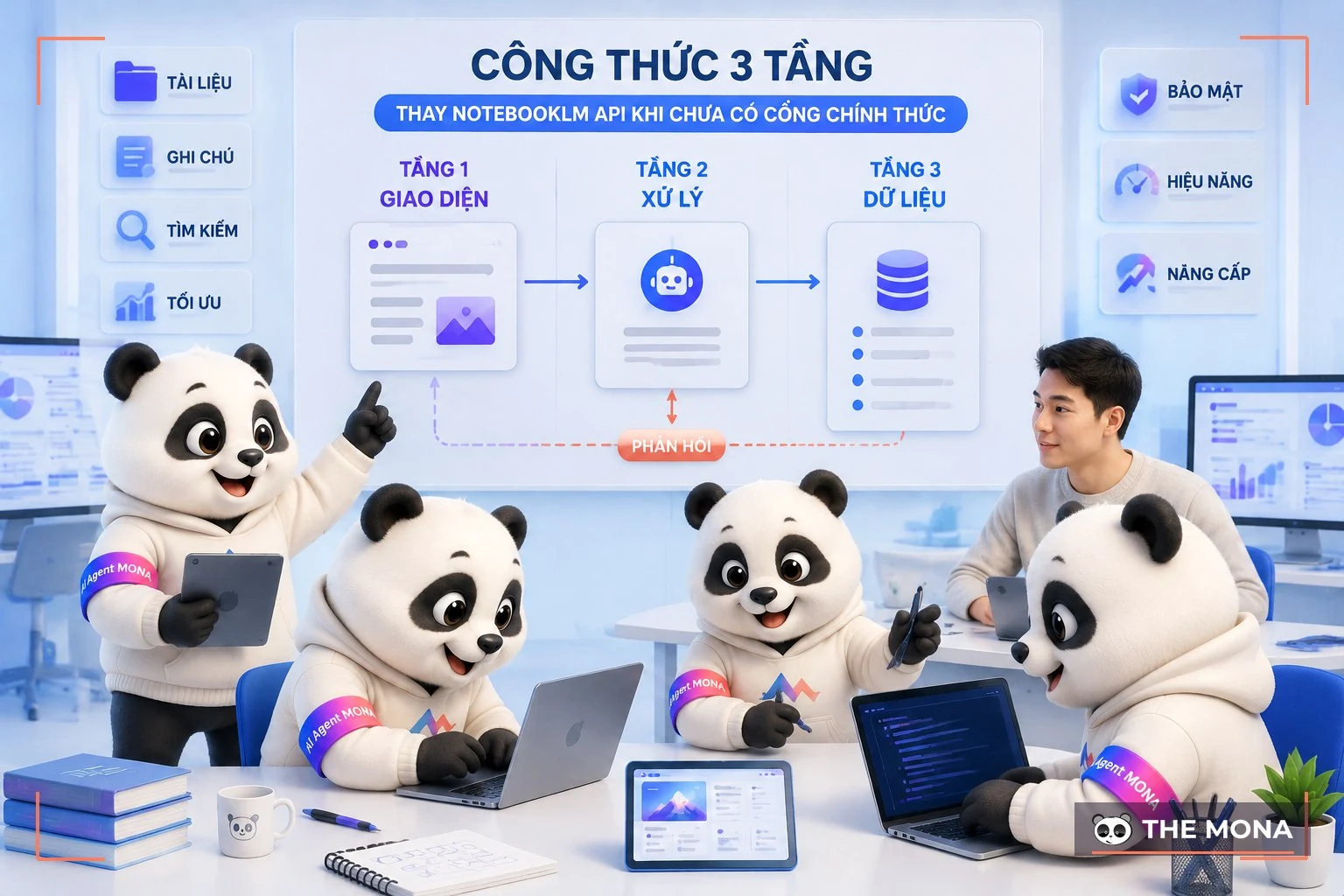
The biggest snag with NotebookLM right now is that you want to connect it to your workflows, but there is no official API to call directly. Don't take shortcuts. Permissions must be clear.
A safer approach is a 3-layer workflow: input, processing, output. MONA uses it for internal training and when showing clients how to use NotebookLM for research, SEO, content and customer care.
The first layer does one thing: standardize your sources before they go into NotebookLM. Sources must be clean. File names must be easy to understand.
At this step, we don't assume NotebookLM has an API. We treat NotebookLM as a controlled reading layer that sits behind a cleaned-up data store.
The second layer is where NotebookLM earns its keep. You use it to ask questions over the sources you loaded, pull citations and condense information into a usable form.
A small tip that is well worth using: create a separate “questioning rules” document and load it alongside your sources. NotebookLM will follow a more consistent style.
The last layer takes results to where your team actually works. Without an official API, you shouldn't build a fake connection. A semi-automated approach is safer.
Avoid turning NotebookLM into an operating system. It is a layer that helps you read and understand. A real system still needs seamless data, clear permissions and an activity log.
For businesses running websites, SEO or marketing, this 3-layer approach is good enough to speed up content research. But it has a ceiling. When a process repeats every day, MONA usually recommends moving to custom software, CRM or an automated workflow that we build so data runs seamlessly and more securely.
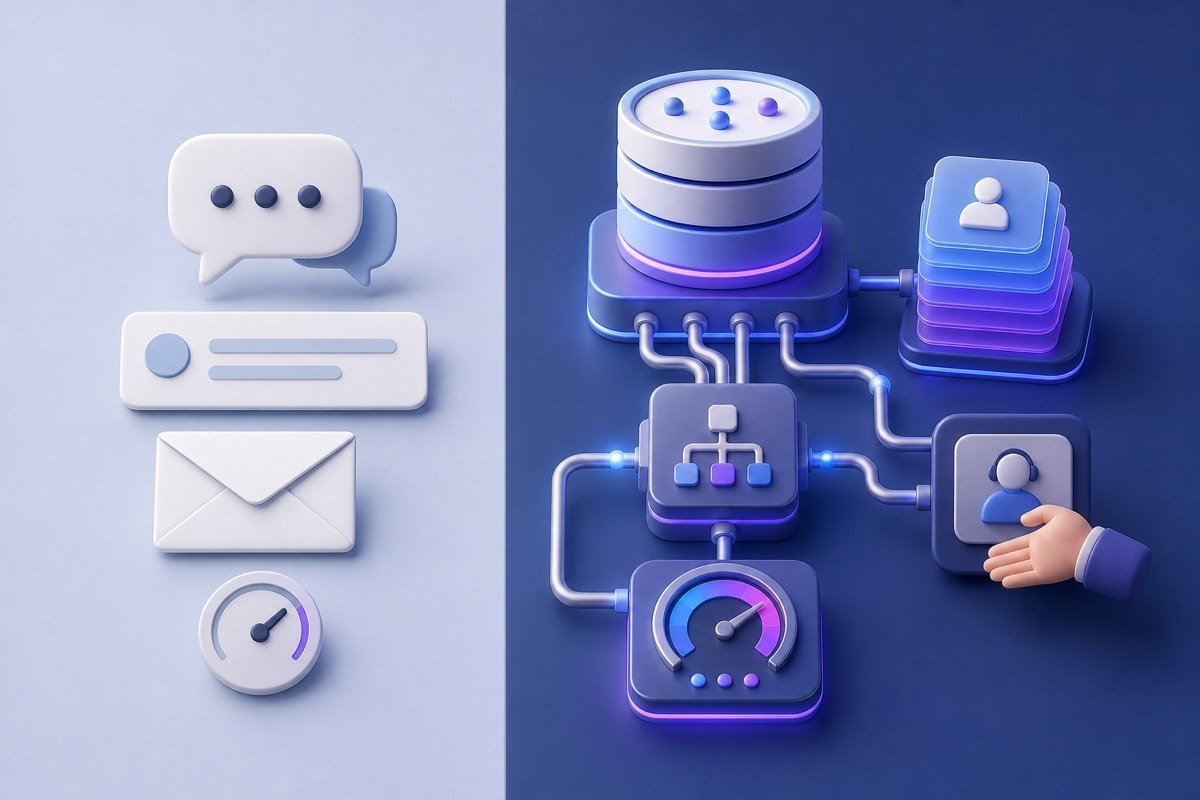
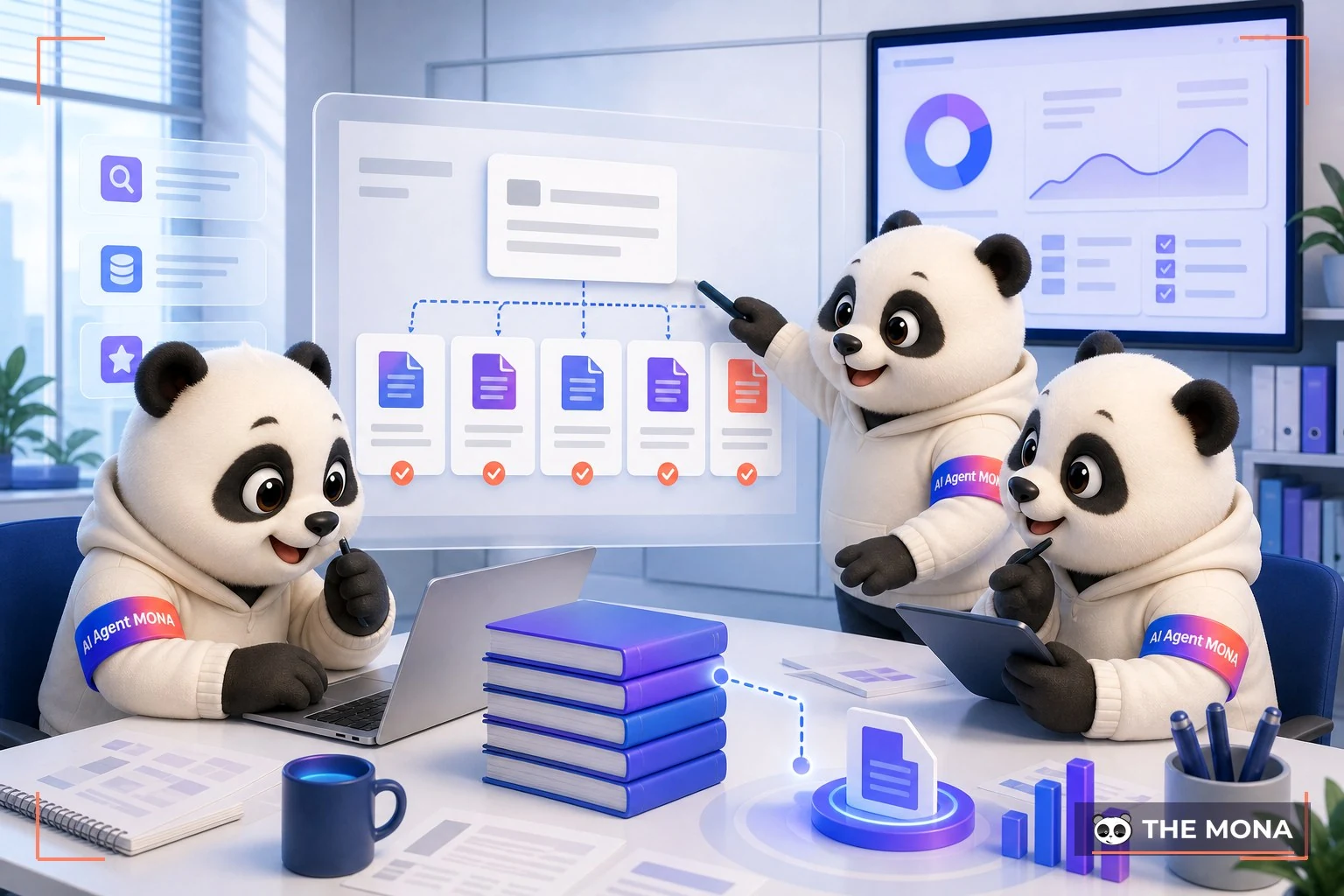
NotebookLM gives diluted answers when you stuff too many sources into one notebook. Web, SEO and customer consulting content gets stretched too wide, with no clear takeaway you can use right away.
Don't stuff in sources. MONA usually splits documents into clusters of 5 sources that are close in purpose. Small clusters keep NotebookLM on task, and the citations are easier to check.
Each notebook should serve one clear job. For example, an SEO writing notebook holds only documents about keywords, search intent and content outlines.
Smaller is sturdier. Don't mix customer personas, price lists, competitor analysis and technical documents in the same notebook.
Split these 4 document groups into separate notebooks. Each group calls for a different way of asking, so mixing them makes NotebookLM go in circles.
MONA uses this approach in internal training on content, SEO and web consulting. We make sure the tool reads the right context first, and only then ask it to write or analyze.
This split keeps answers from getting muddled. When you need to write a post for your website, use the SEO notebook. When you need to advise a customer, use the product and customer persona notebooks.
Source names need discipline. If you name things “new document” or “final file”, you'll lose time hunting them down when NotebookLM cites them.
We usually name sources with a short structure: task group, main content, update date. This lets your marketing, SEO and sales teams share them without confusion.
NotebookLM is very handy for reading, pulling out ideas and answering questions from sources. But standalone tools still have a ceiling when data is scattered and people use them unevenly.
For businesses that need seamless data, MONA usually recommends building custom software for CRM, ERP or operations automation. AI is then just one part of a system that MONA designs and trains your team to use.

NotebookLM works well when you give it the right documents and a tight enough instruction. The formula is very simple. Just 4 lines force the tool to answer in the right role, the right format and with sources you can review.
In marketing, the usual mistake is a prompt that is too broad. The result tends to be generic text with no structure, hard to hand to your content team for immediate use. MONA usually standardizes prompts into short templates so staff can repeat them when working on SEO, web content and sales campaigns.
The first line must lock the role. Don't write at length. State clearly who NotebookLM is playing while it reads your documents.
The closer the role is to the real job, the less the answer drifts. MONA usually separates roles by output, rather than lumping SEO, consulting, landing pages and email into one command.
The second line states the result you want, plainly. Set the goal first. NotebookLM will follow that goal to filter the documents.
Marketing teams drift easily when each person understands the output differently. The 4-line template gets everyone assigning work the same way, and then you adjust the voice for each brand.
The third line decides whether the result is usable right away. Lock the format. NotebookLM needs to know whether you want a table, a checklist or an outline.
The clearer the format, the less time you spend editing by hand. On website designprojects, MONA often uses tables to turn business documents into a content framework for service pages.
The last line must force citations. This is an important control layer. Your content team needs to know which idea comes from which document before anything goes onto the web, into an SEO post or an email.
You can combine the 4 lines into one sample prompt like this:
The same framework works for consultation scripts, landing page content and sales emails. Only the role, goal and format change. The citation line always stays the same.
NotebookLM processes documents fast, but it still has a ceiling. When everything is still done by hand, data is scattered and people use it unevenly, it's hard for a business to turn it into an operating system. MONA uses NotebookLM and other AI tools internally, and also trains clients to use them for the right jobs. For parts that need real automation, we recommend building custom software, a CRM, an ERP or automated workflows tied directly to your web, SEO and business data.

Product documents, customer feedback and old posts are often scattered across many places. SEO teams read a lot but still easily write briefs that lack focus.
The safe approach is to use NotebookLM to collect sources, pull out key points and then turn them into a structured brief. MONA usually takes this route internally when we need to standardize the inputs for website content and SEO.
Start with a set of sources close enough to reality. The clearer the sources, the less generic the brief.
Don't load too many unrelated documents at once. A good brief needs few sources, but the right context.
Once you have the sources, don't ask it to write the article right away. The right step is to make NotebookLM analyze first, before creating the brief.
A command MONA often uses: “Create an SEO brief from these sources, including the post goal, reader persona, purchase barriers, main arguments, an H2 and H3 outline and the internal links to add.”
This command keeps your writers from drifting into outside reference articles. The content keeps the real material of your business.
NotebookLM is a good fit for processing sources and building the framework. Task assignment should still live where your team works every day.
This step cuts back-and-forth revisions between SEO, marketing and subject-matter reviewers. Everyone looks at the same brief and the same sources.
An SEO brief isn't just about writing on the right topic. It also has to lead readers onward through your website with sensible internal links.
NotebookLM handles synthesis and outlining quickly. But this tool still has a ceiling when your team works by hand, data is scattered and everyone does things their own way.
For businesses that need a seamless process, MONA usually goes further with custom software. We connect data, permissions, CRM, ERP and automation the way your business really runs.
MONA started in 2016, has , has delivered 14,000+ projects and maintains 85% retention. We use AI internally, train clients to use it for the right jobs, and then lock in the core with custom software when a business needs to scale sustainably.

Many sales teams use NotebookLM to query documents, then leave the answers sitting in the chat window. The real value lies in the cited passages, because your customer care team can reuse them without misstating policy.
MONA usually treats this as an intermediate data layer. NotebookLM's answers are split into 4 groups: standard answers, consultation scripts, customer notes and answers that need review.
Start with the most stable sources. This group includes price lists, warranty policies, return conditions, product descriptions and internal training materials.
In NotebookLM, we usually write very specific commands. The goal is to get answers you can reuse, not long explanations.
This gives you a layer of standard answers built from real documents. Your sales team no longer recalls policy by gut feel.
The key is to keep the original citations. When there is a dispute, managers can still trace which document an answer came from.
Once you have the standard answers, don't copy them word for word into every channel. Each channel needs a different length and tone.
MONA usually splits the response library into 3 versions: a short one for Zalo, a softer one for Messenger and a full one for email.
For example, the same return policy can be written in 3 forms. The core content stays the same, and only the presentation changes by channel.
This is where NotebookLM helps your content and customer care teams cut repetitive work. You get a source-based response library instead of everyone writing in their own style.
Not every answer NotebookLM returns should go straight to a customer. Anything involving pricing, commitments, legal matters and compensation needs review by the person in charge.
We usually add labels before moving answers into the tracking sheet. The clearer the labels, the less often your operations team uses an answer that hasn't been approved.
The approval step is small but well worth it. It keeps staff from sending answers that sound reasonable but contradict your policy.
For a business with many consultants, this is a necessary control layer. One wrong message can lead to many rounds of explanation afterward.
Once answers are approved, you can put them into your CRM or an internal tracking sheet. Each row should carry enough information to reuse right away.
At this stage, NotebookLM is more than a tool for Q&A over documents. It becomes a starting point for feeding your sales and customer care data.
MONA takes a similar approach internally and when training clients to use AI at work. The manual part still has a ceiling, because scattered data gets hard to control as the team grows.
If you need a seamless CRM, ERP or automated workflow, custom software is still the more durable route. MONA builds custom systems so data flows the right way, with permissions and control.

A homemade NotebookLM API helps you connect a few steps faster. But it has a very clear ceiling.
It doesn't turn into a CRM, an ERP or an operating system with permissions. It only supports one stretch of work, as long as your data stays scattered.
The bottleneck usually isn't NotebookLM. It's how each person saves their own documents, names their own files, asks AI on their own and copies results by themselves.
It's very easy to drift off standard. It's very hard to control.
We see many teams use NotebookLM very quickly at first. After that, the question shifts from “can the AI answer” to “is the data going to the right place”.
This is an important boundary. Standalone tools make individuals faster, but they don't necessarily make the business run more smoothly.
One person using NotebookLM to summarize documents is a personal task. A business using that data to sell, serve customers and measure results is a process.
The two are different. Keep them clearly separate.
For websites, SEO and marketing, this drift directly affects cash flow. One wrong keyword group, one mismatched customer segment or one late reply all create real costs.
So NotebookLM should stay in its lane. It is a layer that helps you read documents, not the core of how your business operates.
MONA uses NotebookLM and AI tools as a knowledge assistant layer. We use them to read documents, gather context, pull out key points and prepare training content.
No worship of the tech. No handing over full control.
Internally, MONA draws a clear line between what AI supports and what must go into a custom system. This keeps our marketing, SEO, web design and engineering teams on the same data source.
When training clients, MONA follows the same approach. You use AI to speed up tasks, then move repetitive work into custom software.
MONA started in 2016. Today, MONA has , has delivered 14,000+ projects and maintains 85% retention.
These figures help us look at AI pragmatically. A tool has to serve operations, not add another disconnected layer.
The switch should begin once the repetitive steps are clear. You don't need to build big from the start.
Building layer by layer is sturdier.
For websites, custom software can connect contact forms, customer data, consultation history and marketing campaigns. See how MONA builds websites at website design service.
For SEO, a custom system can connect keywords, content, landing pages, conversions and customer data. You can read more at SEO services.
For operations, a CRM and an ERP keep data from sitting inside individual people. Automation software runs repetitive steps by the rules you've set.
A homemade NotebookLM API is still valuable. But that value lies in speeding up tasks, not in replacing a system.
For seamless, secure data and stable operations, a business needs custom software. This is what MONA usually builds with custom code, connected to the real process of each business model.
The bottom line is simple. Use NotebookLM to help your people understand faster, and use custom software to help your business run more reliably.

You can use the three-layer formula around NotebookLM yourself when your document volume is moderate and you can still control the hand-off of results manually. When you need to sync sources often, trace answers and push data into your CRM without a stable connection gateway, we will design a custom knowledge system for you; call 1900 636 648 to review your workflow.
Don't force one tool to do everything.

CEO & Founder · The MONA
Founder of The MONA, who built a services company of 60+ staff with 14,000+ projects delivered. Khánh Hùng shares how he thinks about building systems that run themselves, automating a business, and the real lessons from delivering projects at MONA.
 437



Professional website
design services
Own a website with a beautiful, 100% exclusive design and a lifetime warranty, with the ability
to expand features flexibly as your business grows, starting today!






 MONA will never sell your information or send you spam


 MONA will never sell your information or send you spam
