
 MONA OS 2.0
 Hợp tác với MONA


 Tự động hoá doanh nghiệp
 Cẩm nang SEO
 Digital Marketing
 Kinh nghiệm thiết kế website
 Hạ Tầng Server
 Giáo dục


 VI
 EN





















Message us on
Zalo Official


 ProductsNew

 ProductsProducts
 Mới ra mắtKHA AI 2027App tự edit video, tự đăng mọi mạng xã hội, 2 phút mỗi ngày










 Thiết kế websiteVừa đẹp vừa thuyết phục được khách.
Dịch vụ SEOKéo về khách đang tìm đúng thứ anh chị bán.
 Tư vấn digital marketingKéo khách từ nhiều kênh, đo bằng số thật.
Quay video doanh nghiệpVideo giới thiệu công ty, nhà xưởng, đội ngũ.
 MớiDựng video AIDựng phim câu chuyện công ty bằng AI.
 Custom software developmentCRM, ERP and HRM built for your business.
 Viết AI Agent theo yêu cầuĐặt riêng một trợ lý AI cho đúng việc của mình.
 Tư vấn chuyển đổi AIĐưa AI vào vận hành của cả công ty.
NewMONA LMSManagement for centers and schools.
MONA SkillHubInternal training for company staff.
 NHTQ systemEnd-to-end China–Vietnam shipping operations.
MONA JMSManagement for gold, diamond and pawn shops.
 MONA E-LearningA website with every feature you need to sell courses.
 How to sell online courses (course)More than 30 free lessons on selling courses on autopilot.
 MONA Cloudmonacloud.vnServers to get your apps and websites running.
 MONA Basemonabase.vnPostgres database, sign-in and file storage.
 MONA Mailmonamail.vnSend OTP, order and invoice emails from your software.
 MONA Paymonapay.vnAccept bank transfers via VietQR and notify your software when the money arrives.
 MONA eInvoiceComing soonIssue e-invoices that meet tax standards.
Gấu CườiTrả lời khách 24/7 trên web, Fanpage, Zalo và thu lead cho sale.
 Gấu TeleSalesGọi điện tư vấn, chăm khách như tổng đài viên thật.
Dê CườiTư vấn và chốt đơn cho shop ngay trong khung chat.
Gấu WebmasterNhắn nhóm Zalo là website được sửa xong.
 Gấu Pháp ChếSoạn hợp đồng, rà điều khoản trong vài phút.
 Gấu Báo GiáLên báo giá đúng mẫu và gửi khách ngay.
 AI chăm sóc khách hàngTheo dõi và giữ chân khách hàng cũ.
 Gấu Tuyển DụngLọc hồ sơ, hẹn lịch, phỏng vấn ứng viên.
 Mới ra mắt
KHA AI 2027
Xây kênh chuyên gia 2 phút mỗi ngày
Quay bằng điện thoại, AI tự edit video, tự đăng lên 16 nền tảng và tự trả lời bình luận, tin nhắn.
881.547lượt xem trên kênh CEO MONA sau 36 ngày
 Anh Khánh HùngCEO MONA đang dùng mỗi ngày
Xem app làm được gì
 AI
Gấu Cười MONA ĐANG TỰ XÀITrả lời khách 24/7 trên website, Zalo OA, Messenger và thu lead về cho sale.
Dê CườiChốt đơn bán lẻ và sàn: Shopee, TikTok Shop, web. Chăm cả khách sỉ, đại lý.
Gấu WebmasterCập nhật nội dung, tối ưu SEO website mỗi ngày.
Gấu TeleSalesGọi điện tư vấn, chăm khách như tổng đài viên thật.
Gấu Tuyển DụngLọc hồ sơ, hẹn lịch, phỏng vấn ứng viên tự động.
AI chăm sóc khách hàngGiữ khách cũ, cứu lead đã rớt cho phòng kinh doanh.
Gấu Pháp ChếSoạn hợp đồng, rà điều khoản trong vài phút.
Gấu Báo GiáLên báo giá đúng mẫu, gửi khách ngay khi có yêu cầu.
 Chuyển đổi AI toàn phầnGiải pháp tổng cho doanh nghiệp, 3 lớp triển khai.
 Viết AI Agent theo yêu cầuĐặt riêng một con AI gánh đúng nghiệp vụ của bạn.
 Custom softwareCRM, ERP and HRM with built-in AI automation.
 SEO & AEO thời đại AIĐược Google lẫn AI trích dẫn, không chỉ xếp hạng.
 Kiến thức AI cho doanh nghiệpBài phân tích, hướng dẫn ứng dụng AI vào vận hành.
 Free AI courses
 AI tools at work
App mới · KHA AI 2027
Xây kênh 2 phút mỗi ngày
AI tự edit video, tự đăng mọi mạng xã hội
Free consultation, 8am–10pm every day

29 July, 2025
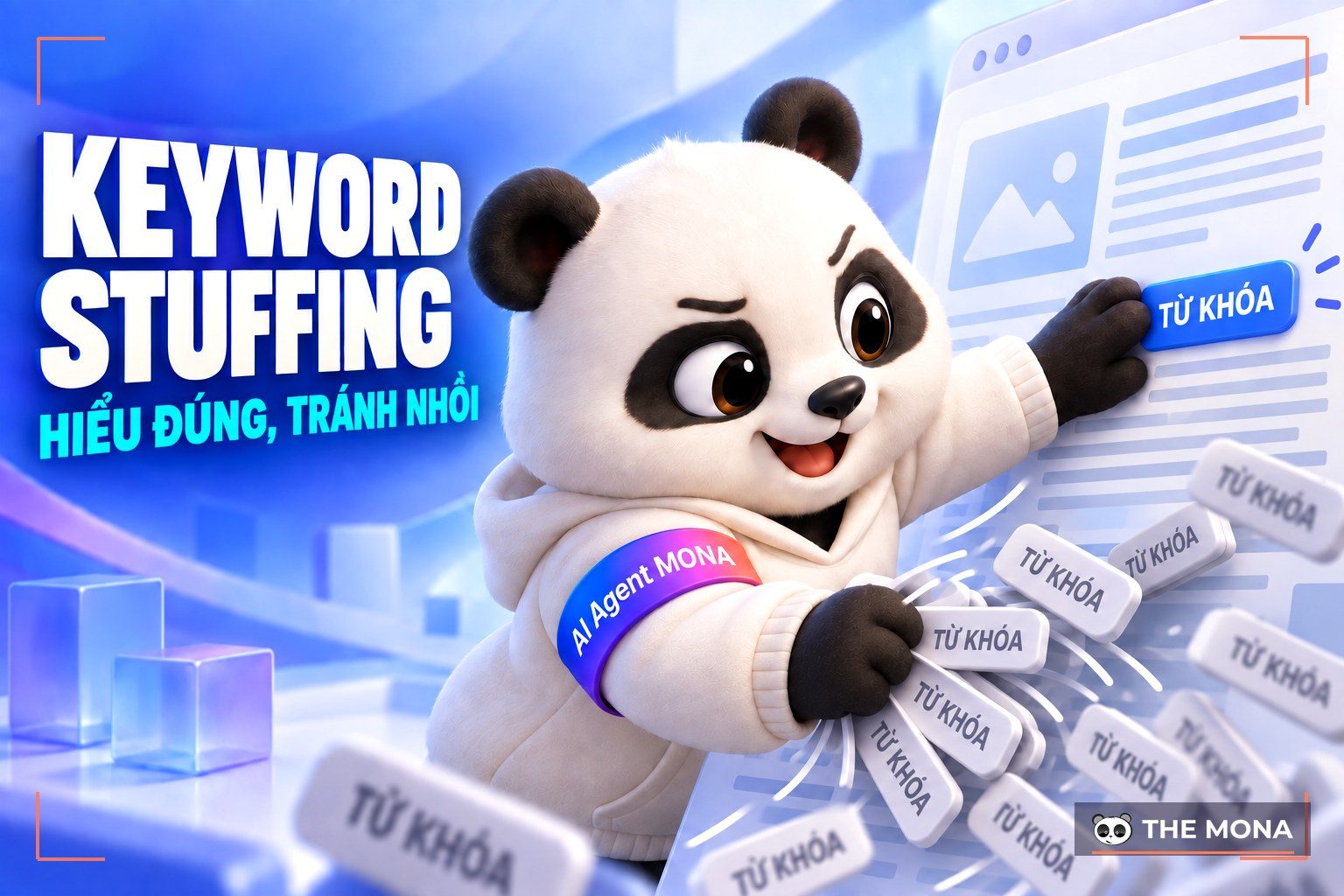
Keyword stuffing is the practice of cramming in keywords to improve rankings on search engines. Whether by accident or on purpose, inserting keywords unreasonably can make content feel forced and unnatural and directly hurt search rankings. So what exactly is the keyword stuffing technique that businesses should stay away from? Let's MONA Media find out what keyword stuffing is and how to avoid it effectively in your articles.
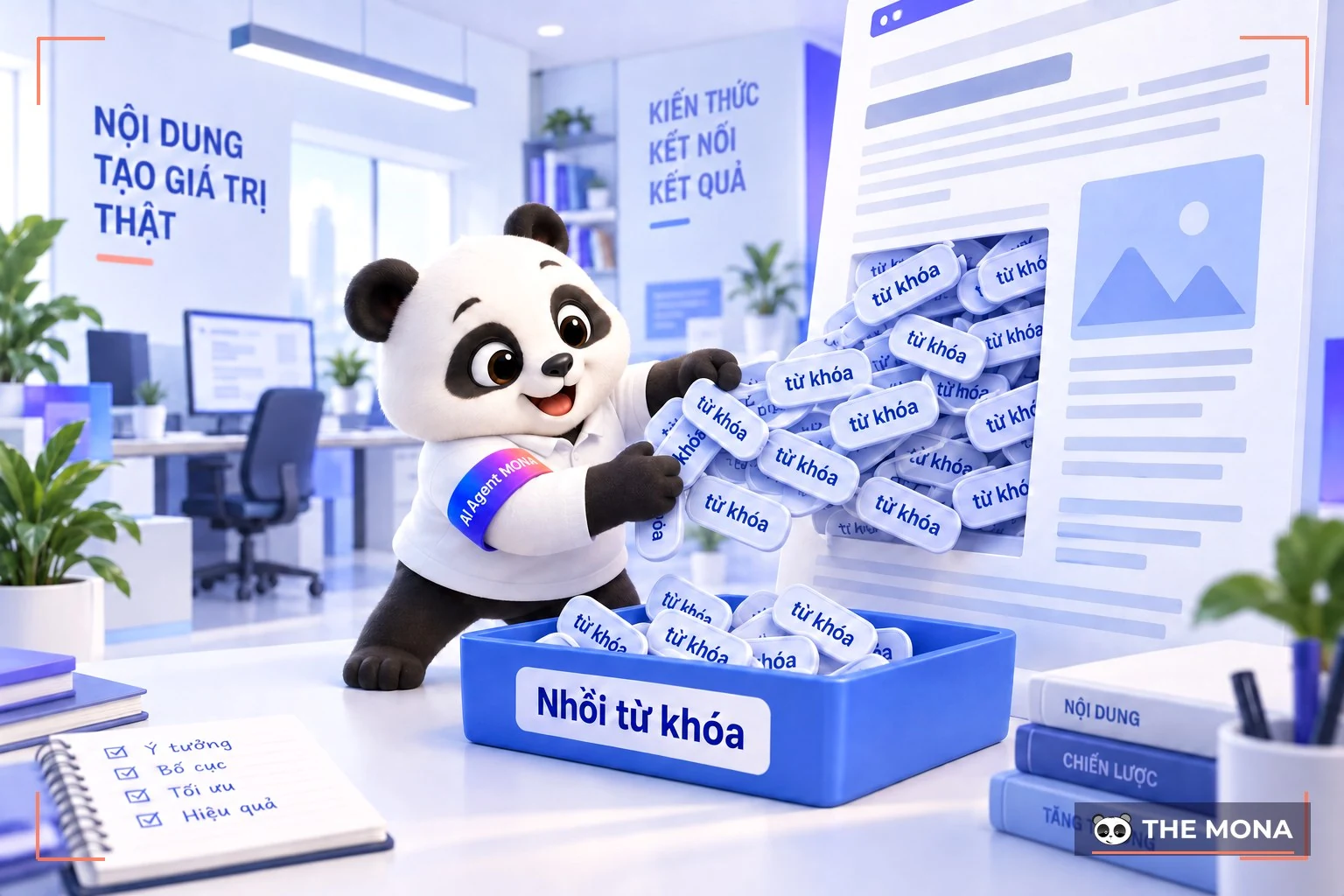
Keyword stuffing is the technique of deliberately repeating keywords many times in the content of a web page, with the aim of manipulating search rankings. Although it worked in the past, this technique is now listed as clear spam and can get a website penalized, affecting overall SEO of your website.
To tell whether an article is being stuffed with keywords, look at these common signs:
Studies from Ahrefs and SEMrush have shown that content with keyword stuffing has a click-through rate (CTR) 22% lower than naturally optimized content. Keyword stuffing in SEO can also have serious consequences for a website, raising the risk of a Google penalty and hurting the user experience. Specifically:
You may also be interested in:
- 13 keyword ranking checker tools the most accurate available today
- How Google ranks keywords
Google splits keyword stuffing into 2 main types: visible and invisible. Google treats both as violations, and either can drop your website in the rankings or remove it from the index.

Visible keyword stuffing is the kind readers can easily spot in the content. The examples below show how overusing keywords looks awkward and works poorly:

Unlike the visible kind, invisible keyword stuffing is more sophisticated. It does not show on the page, but it still sits in the source code and Google can read it. Common invisible keyword stuffing tricks include:
Doing SEO without measuring the customer journey is like selling without knowing what customers need. In this video, Huy walks through how to build a customer journey map step by step, so you can see where you are losing orders and fix it. Very useful for marketers, SEOs and business owners, so watch it now!
No business wants its website posts flagged as spam by Google just because of clumsy keyword use. So how do you avoid keyword stuffing effectively? Below are 10 methods to optimize content naturally and avoid Google keyword stuffing, based on MONA's experience.

A common SEO mistake is trying to cram several main keywords into the same page, which makes the content diluted and unfocused. To fix this, use only 01 Focus keyword per post to keep the topic coherent and avoid unnecessary keyword repetition. The main keyword must accurately reflect search intent and lead the content naturally, which improves both the reading experience and your website's SEO score.
When you write long, in-depth, high-quality posts, you have room to place keywords naturally while still giving users useful information. For example, in a post of about 1500 words, you can repeat the main keyword about 10 – 15 without it feeling like spam or keyword stuffing in SEO.

Keyword density that is too high can raise the bounce rate by 18 – 25% compared with semantically optimized pages (semantic content). Based on MONA's Keyword SEO experience, the effective way to avoid keyword stuffing is to keep density reasonable (usually under 3% of the total words in the whole post). For a 1000-word piece, limit the main keyword to about 15 – 20 times, spread evenly across the title, headings, introduction, body and conclusion.
*Tip: If you use WordPress as your CMS, you can use the Yoast SEO plugin to track keyword density more easily.
You do not always need to repeat the exact original keyword. You can use LSI keyword or secondary keywords to make the content livelier and smoother. For example, instead of repeating the main keyword “create a website” again and again, flexibly use phrases like “build a web page”, “make a high-quality website”, or “custom web design service”.

One technique that makes keywords work without stuffing is putting them in the right places. Prioritize the positions Google values highly, such as the H1 tag, H2 tags, URL, introduction, meta description, image alt text and conclusion. This clearly signals the page's topic and helps improve your website's ranking.
To improve user experience, make sure your post is easy to read and solves the reader's actual problem. If you write about industry terms, explain them in a way that is easy to understand, with natural, unforced sentences, so you keep readers better.
Example: Instead of stuffing the phrase “professional web design service” over and over, you can write: “If you need a proper, polished way to build your website, a professional web design service may be the right choice”.

Compared with short keywords, long-tail keywords have lower competition, are easier to fit into a post, and answer users' search needs more precisely. For example, instead of stuffing the keyword “SEO”, you can use the keyword “how to do website SEO” to optimize content more easily.
When building an outline content standard SEO plan, the SEO specialists should take time to research competition, search volume and keyword relevance. This helps you build a quality piece of content strong enough to compete on Google's search results page.
See also: Top 17 Keyword research tools most popular Google

When you finish a post, reread it from the user's point of view to catch repeated keywords, forced sentences and duplicated information. This is an important step for adjusting keyword density and keeping the content smooth and easy to understand.
Before publishing any content, SEOs should take time to check the SEO Onpage to make sure every element is fully and correctly optimized. Even if you have skillfully avoided keyword stuffing and spread the main keyword sensibly, missing details like the H1 tag, image alt text or meta description can still hurt your SEO results. You can use SEO tools such as Yoast SEO, Ahrefs, SEOQuake to analyze URLs, assess optimization and get improvement suggestions.
If you are not ready to optimize everything yourself, or you do not have time to follow every SEO metric closely, you can hire a professional SEO provider team to work alongside you. So which provider is capable and trustworthy enough to hand this to? You do not need to look far: MONA offers full-scope SEO services all-in-one, optimizing technology, content and user experience.
With over 10 years years of hands-on work, we know how to do get your website to the top that is sustainable and natural, and never flagged as keyword stuffing or content spam. Every content project MONA runs is SEO-compliant, matches user intent and is built on Google's algorithms, helping websites grow traffic steadily every month.

We have taken our own website to the top through SEO, and we can certainly help you do the same. For a detailed discussion and an accurate detailed SEO quote , contact MONA Media now through our hotline 1900 636 648.
In short, keyword stuffing is no longer an effective “shortcut” in SEO like it used to be. On the contrary, it can drop your website in the rankings or even make it disappear from search results. We hope the 10 ways to avoid keyword stuffing that MONA has just shared help you create content that is friendly to Google and still natural for readers. If you need proper, effective support with SEO content optimization, feel free to contact MONA Media.

CEO & Founder · The MONA
Founder of The MONA, who built a services company of 60+ staff with 14,000+ projects delivered. Khánh Hùng shares how he thinks about building systems that run themselves, automating a business, and the real lessons from delivering projects at MONA.
 1,5K




Professional website
design services
Own a website with a beautiful, 100% exclusive design and a lifetime warranty, with the ability
to expand features flexibly as your business grows, starting today!



NHẬN TƯ VẤN SEO MIỄN PHÍ !






 MONA will never sell your information or send you spam


 MONA will never sell your information or send you spam
