
 MONA OS 2.0
 Partner with MONA


 Tự động hoá doanh nghiệp
 Cẩm nang SEO
 Digital Marketing
 Kinh nghiệm thiết kế website
 Hạ Tầng Server
 Giáo dục


 VI
 EN













Message us on
Zalo Official


 ProductsNew

 ProductsProducts
 Mới ra mắtKHA AI 2027App tự edit video, tự đăng mọi mạng xã hội, 2 phút mỗi ngày










 Website designLooks good and wins customers over.
SEO servicesBrings in customers searching for exactly what you sell.
 Tư vấn digital marketingKéo khách từ nhiều kênh, đo bằng số thật.
Corporate video productionVideos introducing your company, factory and team.
 NewAI video productionCompany story films made with AI.
 Custom software developmentCRM, ERP and HRM built for your business.
 Viết AI Agent theo yêu cầuĐặt riêng một trợ lý AI cho đúng việc của mình.
 Tư vấn chuyển đổi AIĐưa AI vào vận hành của cả công ty.
NewMONA LMSManagement for centers and schools.
MONA SkillHubInternal training for company staff.
 NHTQ systemEnd-to-end China–Vietnam shipping operations.
MONA JMSManagement for gold, diamond and pawn shops.
 MONA E-LearningA website with every feature you need to sell courses.
 How to sell online courses (course)More than 30 free lessons on selling courses on autopilot.
 MONA Cloudmonacloud.vnServers to get your apps and websites running.
 MONA Basemonabase.vnPostgres database, sign-in and file storage.
 MONA Mailmonamail.vnSend OTP, order and invoice emails from your software.
 MONA Paymonapay.vnAccept bank transfers via VietQR and notify your software when the money arrives.
 MONA eInvoiceComing soonIssue e-invoices that meet tax standards.
Gấu CườiTrả lời khách 24/7 trên web, Fanpage, Zalo và thu lead cho sale.
 Gấu TeleSalesGọi điện tư vấn, chăm khách như tổng đài viên thật.
Dê CườiTư vấn và chốt đơn cho shop ngay trong khung chat.
Gấu WebmasterNhắn nhóm Zalo là website được sửa xong.
 Gấu Pháp ChếSoạn hợp đồng, rà điều khoản trong vài phút.
 Gấu Báo GiáLên báo giá đúng mẫu và gửi khách ngay.
 AI chăm sóc khách hàngTheo dõi và giữ chân khách hàng cũ.
 Gấu Tuyển DụngLọc hồ sơ, hẹn lịch, phỏng vấn ứng viên.
 Mới ra mắt
KHA AI 2027
Xây kênh chuyên gia 2 phút mỗi ngày
Quay bằng điện thoại, AI tự edit video, tự đăng lên 16 nền tảng và tự trả lời bình luận, tin nhắn.
884.102lượt xem trên kênh CEO MONA sau 36 ngày
 Anh Khánh HùngCEO MONA đang dùng mỗi ngày
Xem app làm được gì
 AI
Gấu Cười MONA ĐANG TỰ XÀITrả lời khách 24/7 trên website, Zalo OA, Messenger và thu lead về cho sale.
Dê CườiChốt đơn bán lẻ và sàn: Shopee, TikTok Shop, web. Chăm cả khách sỉ, đại lý.
Gấu WebmasterCập nhật nội dung, tối ưu SEO website mỗi ngày.
Gấu TeleSalesGọi điện tư vấn, chăm khách như tổng đài viên thật.
Gấu Tuyển DụngLọc hồ sơ, hẹn lịch, phỏng vấn ứng viên tự động.
AI chăm sóc khách hàngGiữ khách cũ, cứu lead đã rớt cho phòng kinh doanh.
Gấu Pháp ChếSoạn hợp đồng, rà điều khoản trong vài phút.
Gấu Báo GiáLên báo giá đúng mẫu, gửi khách ngay khi có yêu cầu.
 Chuyển đổi AI toàn phầnGiải pháp tổng cho doanh nghiệp, 3 lớp triển khai.
 Viết AI Agent theo yêu cầuĐặt riêng một con AI gánh đúng nghiệp vụ của bạn.
 Custom softwareCRM, ERP and HRM with built-in AI automation.
 SEO & AEO thời đại AIĐược Google lẫn AI trích dẫn, không chỉ xếp hạng.
 Kiến thức AI cho doanh nghiệpBài phân tích, hướng dẫn ứng dụng AI vào vận hành.
 Free AI courses
 AI tools at work
App mới · KHA AI 2027
Xây kênh 2 phút mỗi ngày
AI tự edit video, tự đăng mọi mạng xã hội
Free consultation, 8am–10pm every day

01 June, 2026

Applying AI to the accounting department in 2026 means handing software the manual parts that take up most of an accountant's working hours: reading and entering incoming invoices, reconciling bank statements with internal books, gathering figures for reports, and watching for unusual spending in real time. Accountants stay, but move to the parts that need financial judgment: analysis, internal control and dealing with tax. In this article we list 10 specific jobs being handed to machines, with data from a 22-branch food and beverage chain that cut its book-closing time from 7 days to 1 day.
An accounting department at a mid-sized business usually has 3 to 8 people, paid 15 to 22 million per position, for a total payroll of 60 to 120 million a month. Ask yourself honestly: of the 100 working hours across your whole department this week, what percentage went to typing numbers, cross-checking and printing paperwork, and what percentage went to work that truly needs financial judgment?
We've gathered 10 jobs that AI applied to the accounting department is gradually taking over from people. Read on to see where your own department stands.
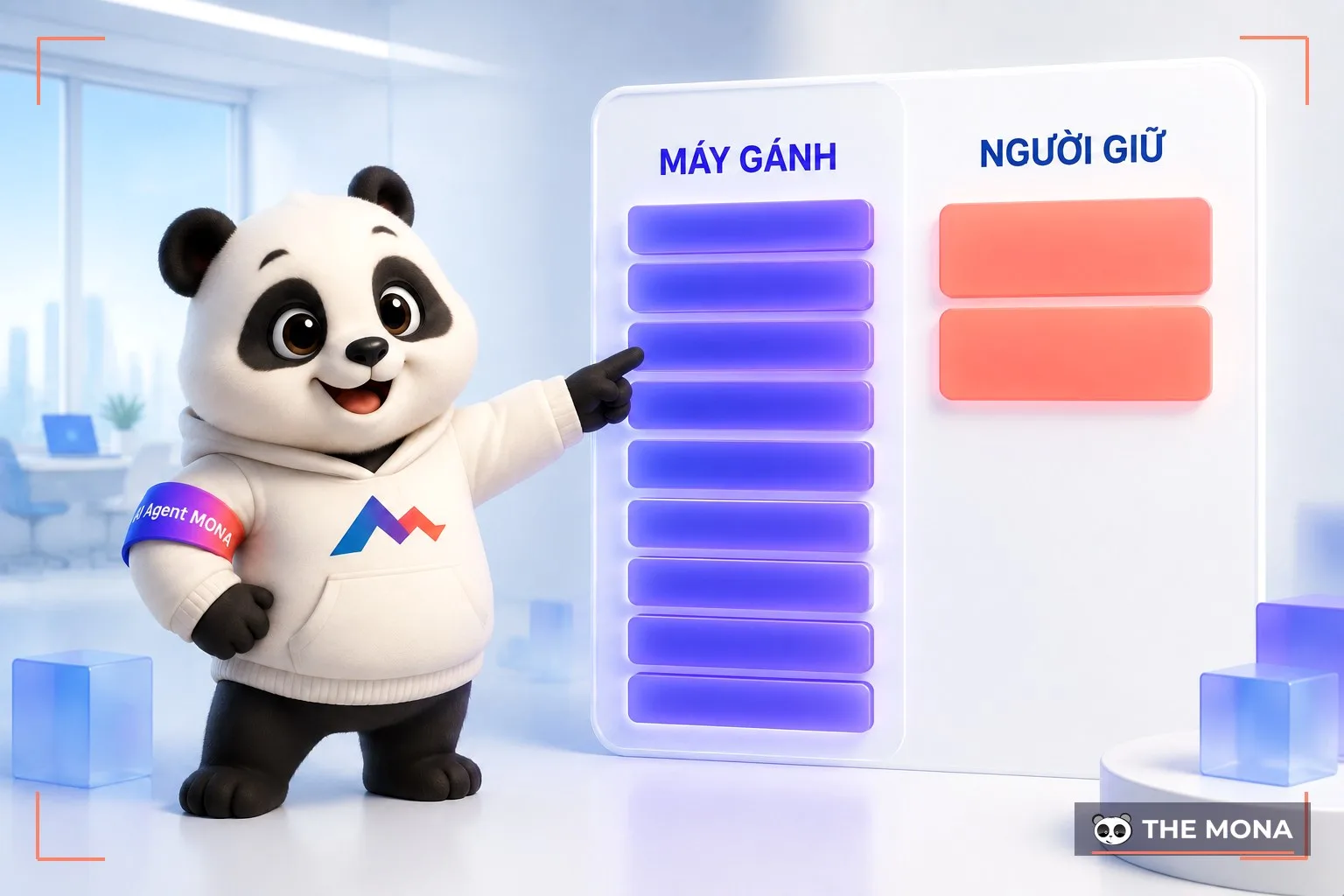
Ten years ago, every job on this list took a pair of hands. By 2026, the first seven run reliably at the chains we work with. The last three still need a person to approve, but the machine handles about 70% of preparing the figures. If you want the general thinking framework before going into each job, read What is AI automation and What is an AI Agent.
A familiar pain for incoming accounting: piles of paper invoices, e-invoices received by email, and export invoices arriving as PDF files. For each one, the accountant types 8 to 12 fields by hand, from the supplier's tax code, invoice number and date to the unit price and VAT. A 22-branch chain receives an average of 200 invoices a day, which means two accountants typing all day just for data entry.
For a few stray PDF invoices or contracts that need editing, an accountant can convert PDF to Word without font errors right in the browser; the problem we're talking about here is when the volume reaches hundreds a day.
Paying 18 to 22 million a month for someone to sit and type for eight hours is a very wasteful use of a person. This work doesn't need an accounting degree, it only needs accuracy, and machines hold accuracy better than people after the sixth hour.
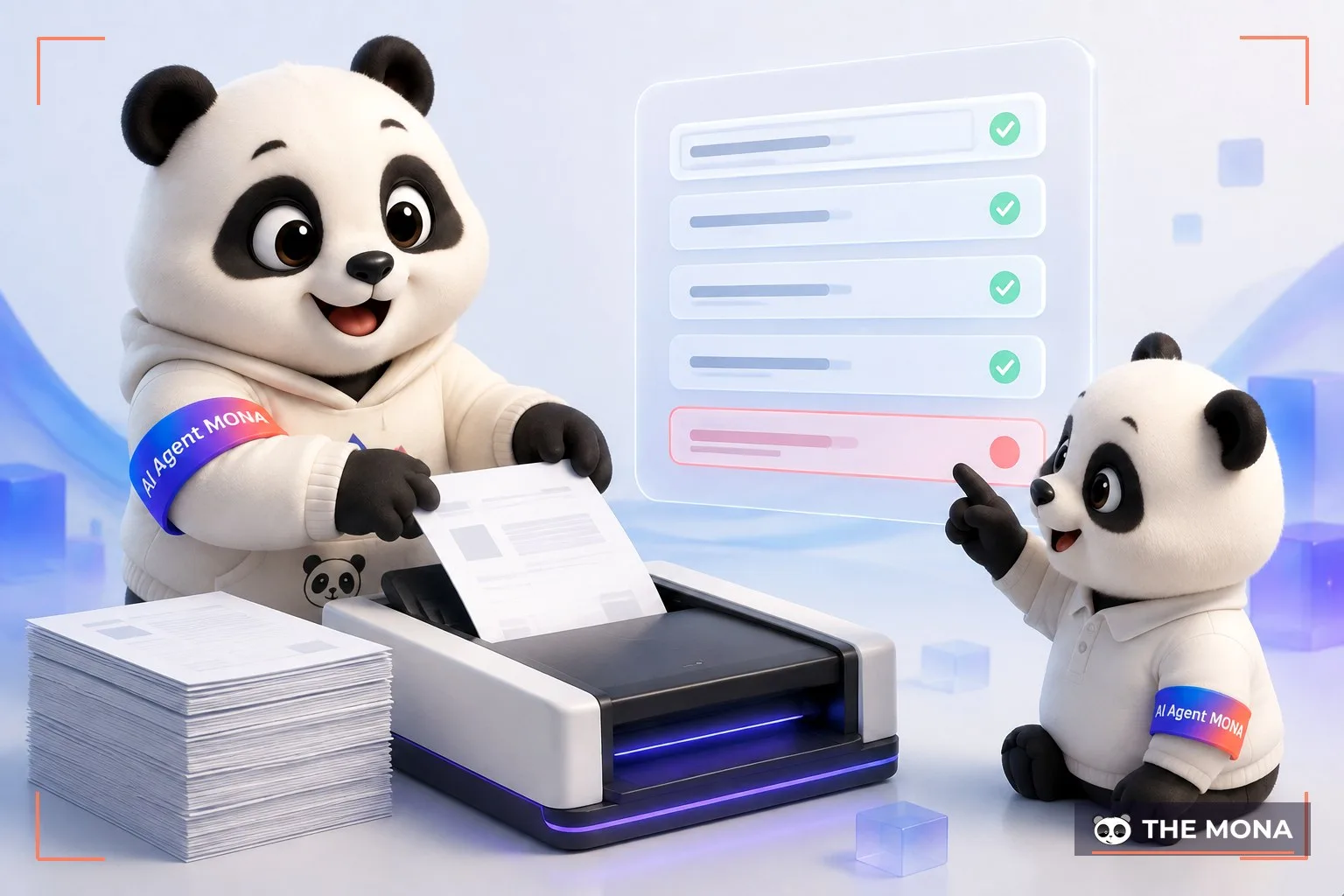
At the 22-branch food and beverage chain we worked with, the new process is very simple: branch staff photograph an invoice and push it into the system, or forward e-invoice emails to a shared address. The software reads it automatically and generates a draft voucher with the fields pre-filled. The accountant just opens the draft, fixes the few fields the machine marks as uncertain, and approves.
In the first four months, the time to enter one invoice dropped from 4 minutes to 25 seconds. The number of invoices processed per day rose from 200 to 320 with just one accountant. The remaining incoming accounting position moved into cost analysis by branch, and that person spotted two branches burning raw materials 18% over budget. Fixing the purchasing process at those two branches alone saved another 140 million a month.
New accountants often mix up the tax figure with the total, mistype the supplier's tax code from skimming, or confuse dates. The machine reads by the tax authority's standard template, checks the tax code against the business database, and spots overdue or wrongly formatted invoices the moment they're entered.
Most important of all, the machine doesn't get tired. Fatigue is what wears down an accountant's accuracy, not skill. The software runs day and night with an error rate under 1%, and the accountant only has to review the parts the machine flagged as hard.
Bank reconciliation is a huge time sink. Open the banking app, download the statement, open the accounting software, print it out, then trace line by line. A 22-branch chain has 4 to 6 bank accounts with 80 to 150 transactions a day, which works out to the whole department spending 3 to 4 days a month just on reconciliation.
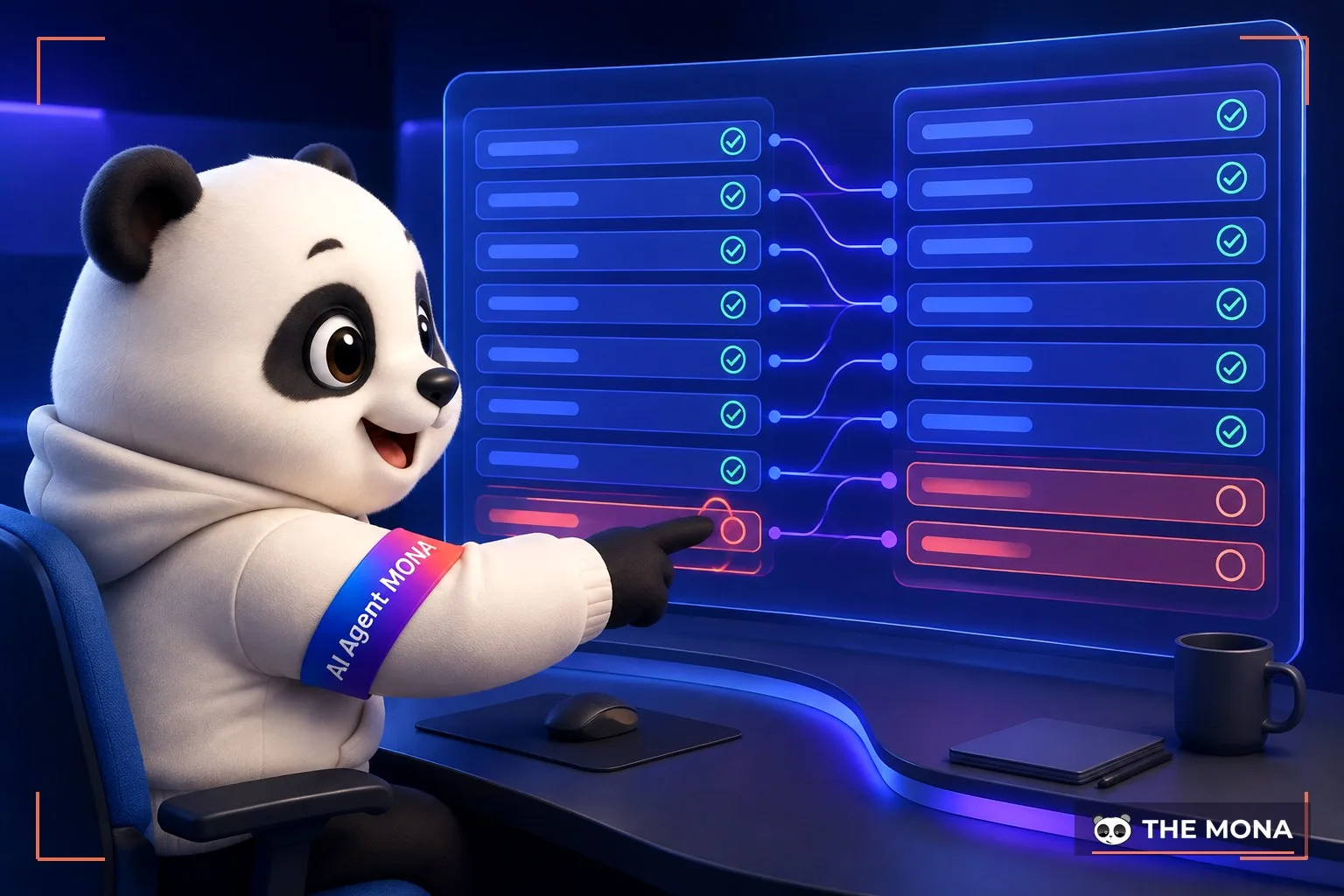
By 2026, most Vietnamese banks have opened connection gateways or real-time transaction push services. We connect the reconciliation software straight to the bank's gateway, so as soon as a new transaction comes in the system receives it, then matches it against internal receipt and payment vouchers based on the transfer description, amount and time.
The automatic match rate reached 87% after 2 months of running. The accounting department only has to handle the 13% of transactions the machine isn't sure about, mostly internal transfers between branches and bank fees. Monthly reconciliation time dropped from 4 days to 4 hours.
The side effect is what leadership likes best: for the first time they see the chain's cash flow in real time, instead of waiting until the 8th to learn how much came in and went out last month.
Have you ever found a payment at double the budget after it was already paid? A supplier payment made twice because the accountant forgot to mark it as paid? A transfer of 87 million sent to the wrong account that took 5 working days to recover?
Everyone in the profession knows that the later an accounting error is found, the more expensive it is. The alert layer we added for the food and beverage chain mentioned above learned the chain's spending patterns in the first 6 months, then flags every unusual transaction in real time.
A few patterns it has caught: duplicate payments to the same supplier within 24 hours, business travel allowances 3 times higher than that branch's average, and advance settlements more than 30 days late. Each alert goes straight to the chief accountant and the finance director on Zalo, with a quick approve button or a button to block the transaction.
After 6 months, this chain blocked 11 duplicate payments totaling 218 million, 3 fake allowance claims totaling 47 million, and 2 overdue advance settlements totaling 95 million. Together that's 360 million saved, money that would certainly have been lost before because no one had time to check line by line.
A 10-minute calculation for your accounting department
You don't need to decide anything yet. Just take out a piece of paper and write down three numbers from your own company. One: how many incoming invoices the accounting department receives each month. Two: how many bank accounts you have to reconcile and how many days a month it takes. Three: on what day last month's financial report landed on your desk.
Multiply those three numbers by the department's payroll and you get right away what you're paying for the typing and cross-checking. At the 22-branch chain in this article, invoice entry alone dropped from 4 minutes to 25 seconds per invoice, and reconciliation from 4 days to 4 hours a month. If you want to see where other businesses started, read more using AI in business.
Reports for the board of directors usually eat 2 to 3 days of the chief accountant's time at month end. Take revenue from the point-of-sale machines at the branches, costs from the accounting software, inventory from spreadsheets, and headcount from the HR system. Open Excel, type formulas, paste charts, write commentary. The report isn't done until the 10th, and by the time the board opens it, a third of the new month has already passed.
A business paying a chief accountant 35 to 50 million a month is paying for financial judgment, not for Excel skills. This is the kind of quiet waste that many Vietnamese accounting departments fall into.
The software we built for an 18-branch education chain connects directly to the management system, the banking system, the inventory spreadsheet and the HR system. Every morning, the machine gathers the figures, builds the dashboard and writes a summary of about 250 words for the board, covering the previous day's revenue, new expenses, unusual points and recommended actions.
The chief accountant reviews that summary for 15 minutes each morning, edits it if needed and sends it out. Month-end reporting time dropped from 3 days to 4 hours. The board has financial figures daily instead of monthly.
The quarterly report for the board of directors is much heavier, needing in-depth judgment, year-over-year comparison and next-quarter forecasts. For this part we add an analysis module so the machine compares the current quarter with the 4 most recent quarters, points out trends and writes an initial assessment, and then the chief accountant and finance director add their internal perspective before it goes out.
Quarterly report prep dropped from 1 week to 1 day. The quality of the insights also improved, because the machine catches repeating patterns that a human eye scanning quickly tends to miss.
Think back to the last time last month's financial report landed on your desk. The 5th? The 7th? The 10th? Every decision you made in the first 10 days of the month was based on gut feeling and old numbers.
This is a pain we see again and again in mid-sized businesses. A fast-growing chain that drifts 1 to 2% off its cost norms loses hundreds of millions of VND, yet the accounting team has no way to report in real time because they are busy reconciling and entering data. The result: you only find out after the money is gone.
The second pain is that hiring good accountants is hard. Salaries run 30 to 40 million VND, and few people in the market have both accounting skills and analytical ability. Hiring one and then putting them on data entry wastes both sides. Automation software frees exactly these people to do work worth their pay: analysis, forecasting and recommending actions.
To make this concrete, here is a case we handled: a restaurant chain with 22 branches across Ho Chi Minh City, Hanoi and Da Nang, about 38 billion VND in monthly revenue, and an accounting team of 6 with a total payroll of 118 million VND.
Before rollout, their process worked like this: 200 incoming invoices a day typed by hand by 2 accountants, 4 days a month to reconcile 6 bank accounts, month-end reports not done until the 8th, and no anomaly alerts at all, so every duplicate or wrong payment only surfaced after the money had already gone out.
We rolled out 4 modules in 10 weeks: invoice-reading software plugged into the branch workflow, bank reconciliation connected to the gateways of 6 banks, a real-time cash flow alert layer, and automated management reports sent to the board every morning. The total software cost was 380 million VND all-in, with 10 million VND per month in running costs.
After 5 months of operation, the accounting team slimmed down from 6 to 4 people, with two positions moving to financial analysis and internal control, saving 38 million VND a month. The alert layer held back 360 million VND over 6 months. Month-end close went from 7 days to 1 day, and the board now gets its report on the 2nd instead of the 8th.
The value that is hardest to put a price on is that the board decided to open its 23rd branch based on daily financial data for the first time, instead of gut feeling. We believe AI for accounting should be used this way: to raise the quality of decisions, not just to cut headcount.
Let us say it straight so you don't waste time: not every accounting team should automate right away. There are three cases where we usually advise holding off.
First, the business is in the middle of a complicated audit or a tax dispute. When the tax authority is inspecting, the accounting team needs human hands to explain every document, and changing the process now only adds confusion.
Second, the financial structure is highly specialized, for example import-export companies shipping through many ports, pharmaceutical companies, or construction companies running many projects in parallel. These need deep customization rather than off-the-shelf software, and the customization cost must be calculated upfront, not afterwards.
Third, the chief accountant is not yet comfortable with technology and is resisting. If the chief accountant doesn't buy in, even good software fails, so training and internal conversations must happen before signing the contract. This is exactly what we have seen when employees push back when a company rolls out AI.
Invoice-reading and bank reconciliation software is not tied to the food and beverage industry. The same set of modules, with only the parameters and forms changed, runs for these 5 industry groups:
If your industry isn't on the list, message us. Every accounting team has repetitive work, and the only differences are the forms and the way controls are set up.
If this article makes sense to you, we suggest a 90-day roadmap. In month one, run the invoice-reading software at one or two pilot branches. In month two, add bank reconciliation and the cash flow alert layer. In month three, add automated management reports, then measure the money and hours saved.
AI for accounting is built in modules, so you can start small, measure the results and then expand, without putting a big sum of money down upfront in exchange for a promise.
For a broader view, read using AI in business and the AI-First handbook for businesses. For the technology foundation, there is What is Claude AI and what ChatGPT is. And when you need to build an internal management interface, see CRM, HRM and ERP software design and the guide to managing income and expenses.
For an outside reference, see McKinsey's operations report and Stanford AI Index. We only took the parts that fit mid-sized businesses in Vietnam; most of the rest reflects the context of large corporations.
Look back at the numbers in this article: 200 invoices a day typed by 2 people, 4 days a month to reconcile 6 accounts, reports not finished until the 8th, and 360 million VND that nearly slipped away in 6 months because nobody had time to check every line.
We know you have already tried many things: buying accounting software for 80 to 150 million VND, hiring a big audit firm for 200 million VND a year, offering a 5 to 10 million VND bonus to whoever closes the books on time, sending the chief accountant to international certification courses, and forcing the process into ISO standards. And the effort you put into looking for solutions is admirable, because most business owners only complain. But none of these methods brought the close time below 5 days, because every month there are still 200 to 400 invoices coming in, 5 to 8 bank accounts to check, and dozens of data groups to collect by hand from inventory, sales and receivables. No matter how good a chief accountant is, they only have 8 hours a day.
What's missing is AI for accounting applied to exactly the repetitive part: reading invoices, reconciling banks, collecting figures, and watching for anomalies in real time. The 2 to 3 solid accountants then stay to do the work that needs brainpower, instead of you hiring more people who leave three months later.
Call 1900 636 648 and tell us three numbers from the section above: monthly invoice volume, number of bank accounts, and the day the report reaches your desk. We will sit down and work out with you which automation software to build first, and more importantly, which parts you should not touch yet. MONA has built software since 2016, through more than 14,000 projects, with an 85% repeat customer rate, so we would rather tell you straight where it doesn't fit than sell you a module that sits unused.
No. The machine takes on data entry, bank reconciliation and recurring bookkeeping, while accountants move into analysis, dealing with the tax authority and internal control. At the food and beverage chain in this article, the accounting department shrank from 6 to 4 people, with two positions moving into financial analysis and internal control rather than leaving.
Packaged accounting software is strong on the standard business layer shared by every industry. What's usually missing is the layer that connects accounting software to a company's own operating systems, and the cash flow alert rules specific to the industry. The two don't compete, the second fills in for the first.
For e-invoices and machine-printed invoices, accuracy is around 95 to 98%. For handwritten invoices or blurry scans it's only around 70 to 80%, and the rest is sent back to the accountant to confirm. This is why we always keep a human in the loop at the last step, rather than letting the machine run fully automatically and push errors into tax reports.
Yes, if it's done carelessly. Our approach is to keep a full log of every machine decision, together with periodic sign-off from the chief accountant. When the tax authority audits, you export that log to prove your internal control process, instead of explaining it verbally.
For the 22-branch chain in this article, the full 4-module package was 380 million with an operating fee of 10 million a month. The usual range for a chain of 15 to 30 branches is 300 to 500 million depending on how many banks need connecting and how many forms need processing. The cash flow alert alone at that chain saved 360 million in the first 6 months.

CEO & Founder · The MONA
The founder of The MONA built a service company of 60+ staff with 14,000+ projects delivered. Khánh Hùng shares his thinking on building self-running systems, automating a business, and the real lessons behind MONA's projects.
 255




Professional website
design services
Own a website with a beautiful, 100% exclusive design and a lifetime warranty, with the ability
to expand features flexibly as your business grows, starting today!






 MONA will never sell your information or send you spam


 MONA will never sell your information or send you spam
