
 MONA OS 2.0


 Tự động hoá doanh nghiệp
 Cẩm nang SEO
 Digital Marketing
 Kinh nghiệm thiết kế website
 Hạ Tầng Server
 Giáo dục



 VI
 EN













Message us on
Zalo Official


 ProductsNew

 ProductsProducts
 Mới ra mắtKHA AI 2027App tự edit video, tự đăng mọi mạng xã hội, 2 phút mỗi ngày










 Website designLooks good and wins customers over.
SEO servicesBrings in customers searching for exactly what you sell.
 Tư vấn digital marketingKéo khách từ nhiều kênh, đo bằng số thật.
Corporate video productionVideos introducing your company, factory and team.
 NewAI video productionCompany story films made with AI.
 Custom software developmentCRM, ERP and HRM built for your business.
 Viết AI Agent theo yêu cầuĐặt riêng một trợ lý AI cho đúng việc của mình.
 Tư vấn chuyển đổi AIĐưa AI vào vận hành của cả công ty.
NewMONA LMSManagement for centers and schools.
MONA SkillHubInternal training for company staff.
 NHTQ systemEnd-to-end China–Vietnam shipping operations.
MONA JMSManagement for gold, diamond and pawn shops.
 MONA E-LearningA website with every feature you need to sell courses.
 How to sell online courses (course)More than 30 free lessons on selling courses on autopilot.
 MONA Cloudmonacloud.vnServers to get your apps and websites running.
 MONA Basemonabase.vnPostgres database, sign-in and file storage.
 MONA Mailmonamail.vnSend OTP, order and invoice emails from your software.
 MONA Paymonapay.vnAccept bank transfers via VietQR and notify your software when the money arrives.
 MONA eInvoiceComing soonIssue e-invoices that meet tax standards.
Gấu CườiTrả lời khách 24/7 trên web, Fanpage, Zalo và thu lead cho sale.
 Gấu TeleSalesGọi điện tư vấn, chăm khách như tổng đài viên thật.
Dê CườiTư vấn và chốt đơn cho shop ngay trong khung chat.
Gấu WebmasterNhắn nhóm Zalo là website được sửa xong.
 Gấu Pháp ChếSoạn hợp đồng, rà điều khoản trong vài phút.
 Gấu Báo GiáLên báo giá đúng mẫu và gửi khách ngay.
 AI chăm sóc khách hàngTheo dõi và giữ chân khách hàng cũ.
 Gấu Tuyển DụngLọc hồ sơ, hẹn lịch, phỏng vấn ứng viên.
 Mới ra mắt
KHA AI 2027
Xây kênh chuyên gia 2 phút mỗi ngày
Quay bằng điện thoại, AI tự edit video, tự đăng lên 16 nền tảng và tự trả lời bình luận, tin nhắn.
357.074lượt xem trên kênh CEO MONA sau 22 ngày
 Anh Khánh HùngCEO MONA đang dùng mỗi ngày
Xem app làm được gì
 AI
Gấu Cười MONA ĐANG TỰ XÀITrả lời khách 24/7 trên website, Zalo OA, Messenger và thu lead về cho sale.
Dê CườiChốt đơn bán lẻ và sàn: Shopee, TikTok Shop, web. Chăm cả khách sỉ, đại lý.
Gấu WebmasterCập nhật nội dung, tối ưu SEO website mỗi ngày.
Gấu TeleSalesGọi điện tư vấn, chăm khách như tổng đài viên thật.
Gấu Tuyển DụngLọc hồ sơ, hẹn lịch, phỏng vấn ứng viên tự động.
AI chăm sóc khách hàngGiữ khách cũ, cứu lead đã rớt cho phòng kinh doanh.
Gấu Pháp ChếSoạn hợp đồng, rà điều khoản trong vài phút.
Gấu Báo GiáLên báo giá đúng mẫu, gửi khách ngay khi có yêu cầu.
 Chuyển đổi AI toàn phầnGiải pháp tổng cho doanh nghiệp, 3 lớp triển khai.
 Viết AI Agent theo yêu cầuĐặt riêng một con AI gánh đúng nghiệp vụ của bạn.
 Custom softwareCRM, ERP and HRM with built-in AI automation.
 SEO & AEO thời đại AIĐược Google lẫn AI trích dẫn, không chỉ xếp hạng.
 Kiến thức AI cho doanh nghiệpBài phân tích, hướng dẫn ứng dụng AI vào vận hành.
 Free AI courses
 AI tools at work
App mới · KHA AI 2027
Xây kênh 2 phút mỗi ngày
AI tự edit video, tự đăng mọi mạng xã hội
Free consultation, 8am–10pm every day

18 March, 2023

A Friday-night live session brings in 400 orders, everyone celebrates until midnight, and on Saturday morning an inventory check shows stock is short for 70 of them. We see this scene at many sellers, and it captures what TikTok Shop is: today's fastest channel for orders, and also the fastest to expose every gap in operations. TikTok Shop is a selling feature built right into TikTok that lets viewers buy from videos, live sessions and the shopping cart on a profile without leaving the app. This article covers the whole loop: what it is, how much the 2026 fees take from each order, step-by-step registration, how to get orders steadily, and the step every serious seller ends up taking: connecting the shop to your own system. About 12 minutes to read.
TikTok Shop turns content into a checkout counter: a viewer scrolling through videos sees an orange cart, taps it, picks a variant, orders and pays, all inside the TikTok app. From liking to buying takes under 1 minute, far shorter than the old way of leaving the app, opening a marketplace, finding the item again and only then ordering.
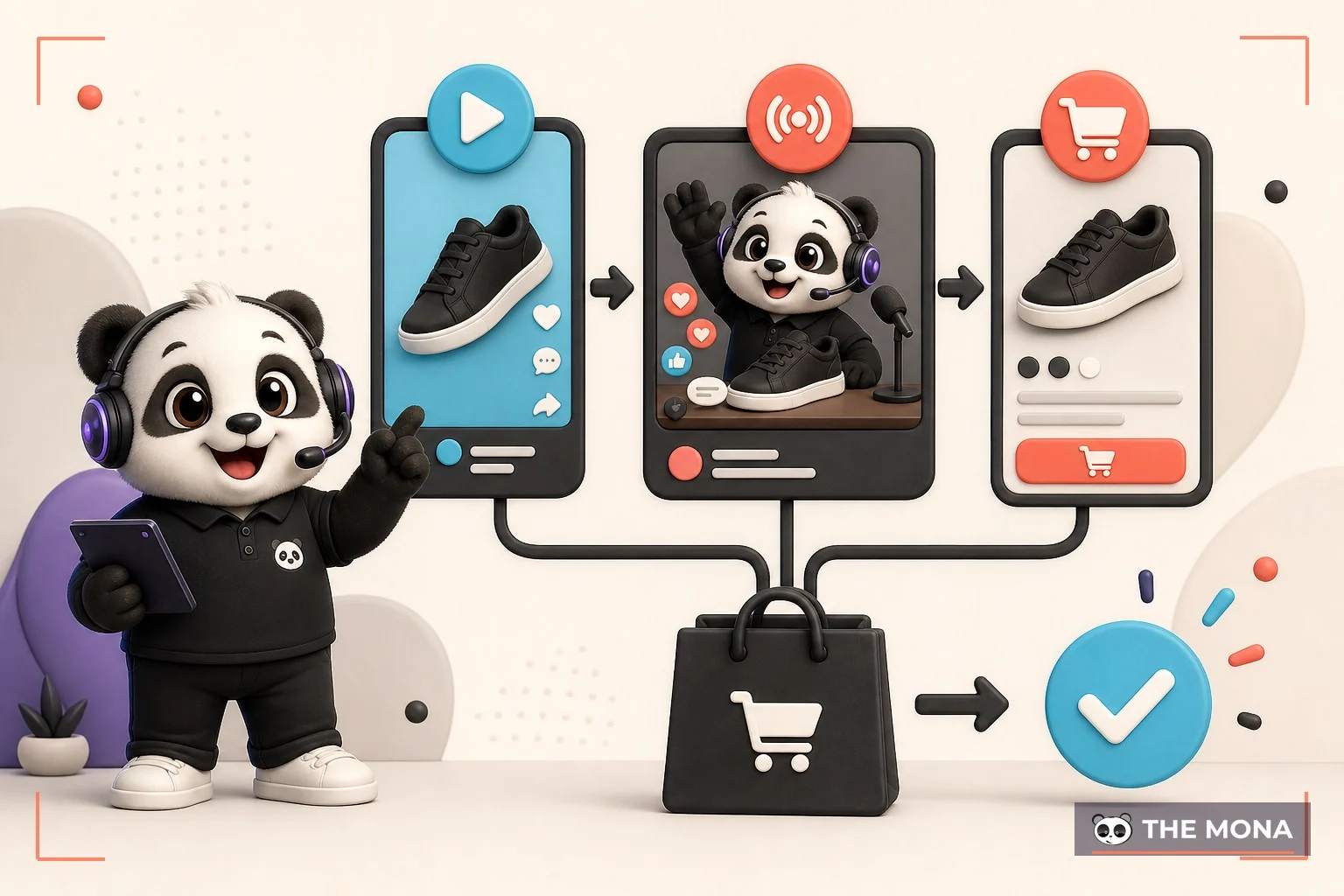
The basic difference from a traditional e-commerce marketplace: on a marketplace, customers arrive already wanting to buy and search for the item; on TikTok, they come to be entertained and get persuaded to buy by the content. A good marketplace seller is good at bidding on keywords, while a good TikTok Shop seller is good at telling a product story that hooks in the first 30 seconds. They really are two different trades. Do not carry your old team over as it is. Hire people who can tell stories first.
Three forces add up, and all three can be measured in numbers within the first 30 days:
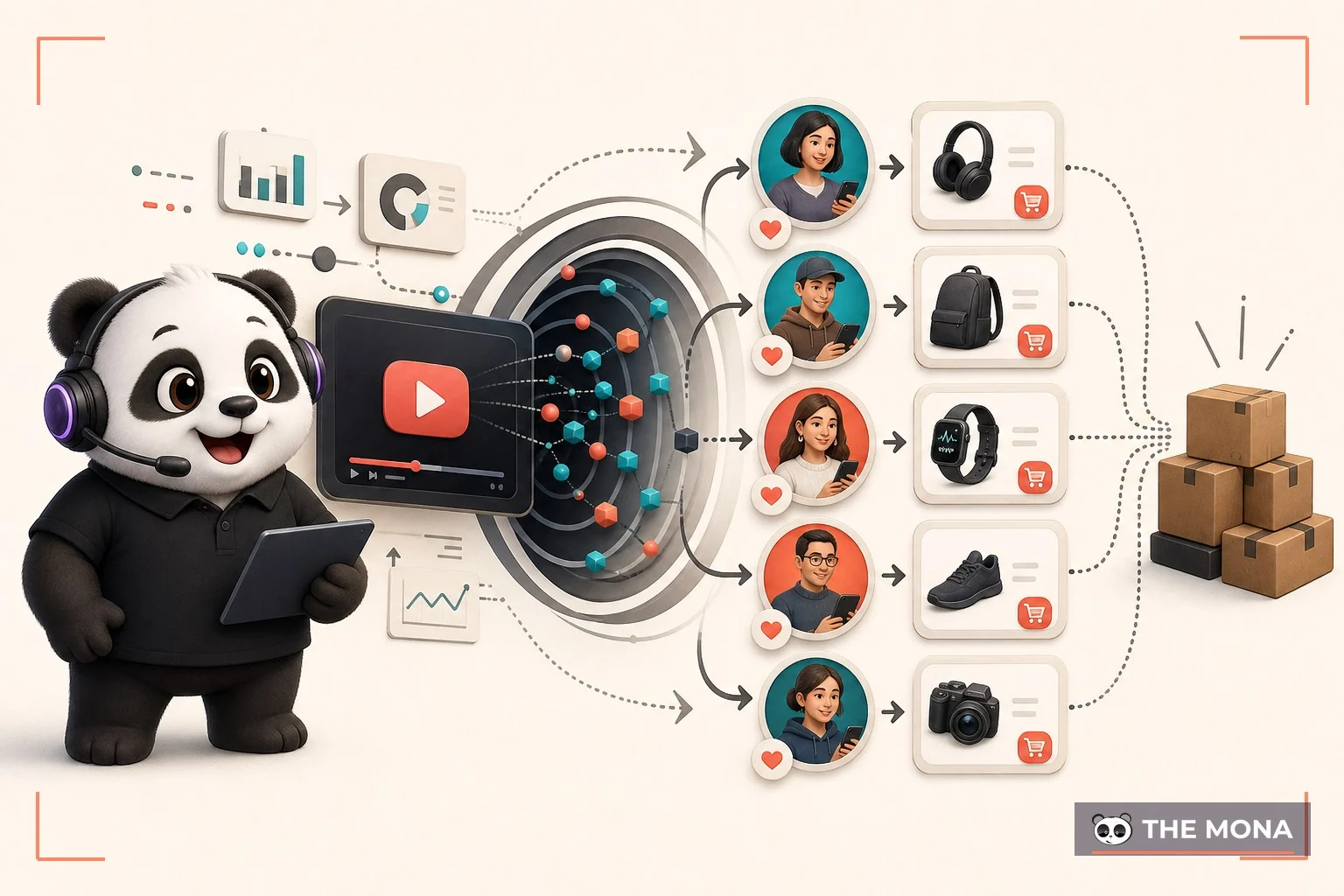
Put those three forces together and a product that fits the channel, with a decent video, sees orders within the first 2 to 4 weeks, and some sellers get orders within the first 7 days, a speed that running ads SEO or building a channel the traditional way cannot match. The speed is real. But speed has a price, covered in the next section.
Many sellers only read this section after they have jumped in and been caught off guard, because fees rise with each adjustment and are announced in the Seller Center with no one reminding you. The current structure has a transaction fee charged on order value, a commission fee by product category, plus an affiliate fee if you turn on the program for creators to sell for you.
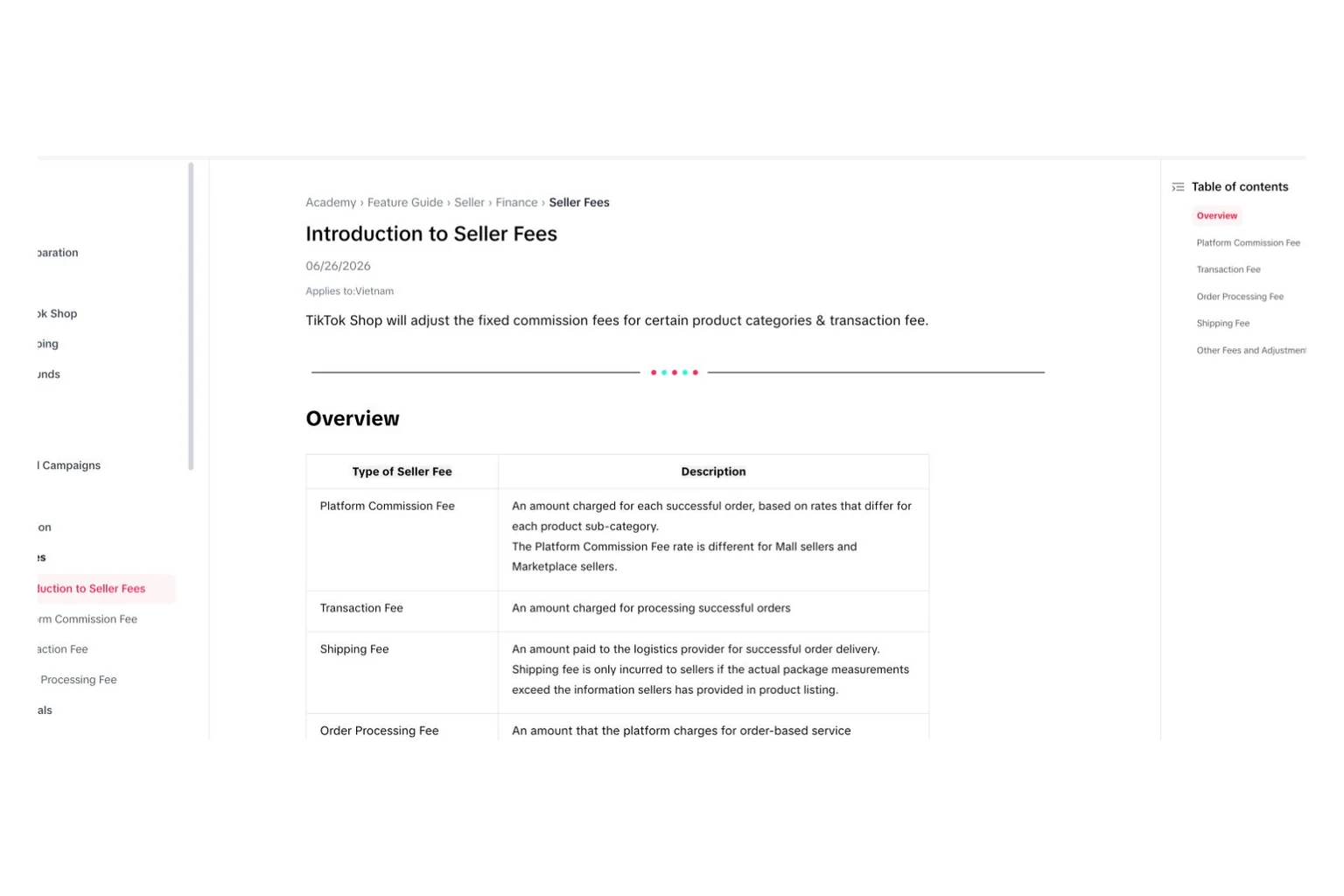
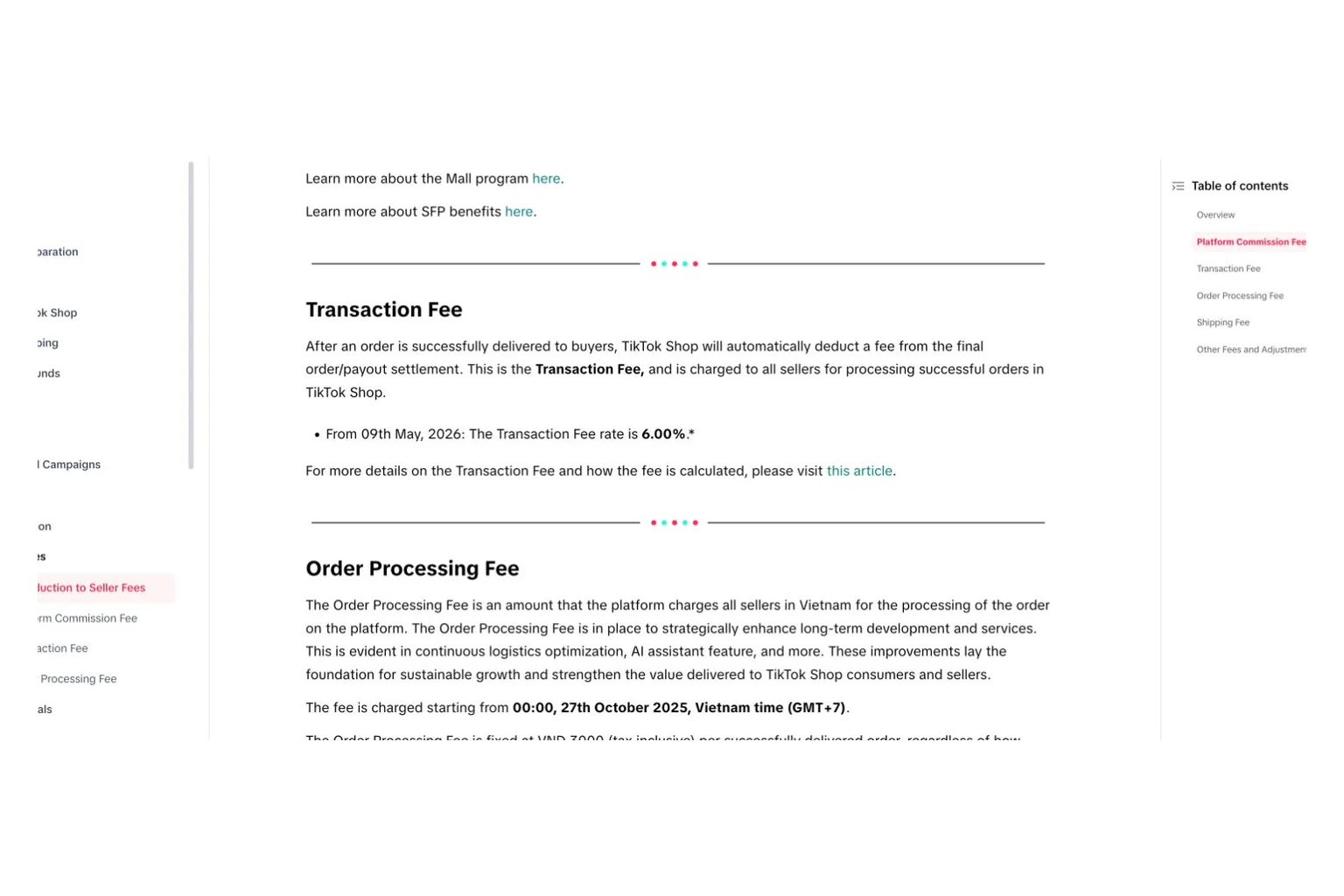
Sample calculation for a 200,000 VND item: total platform fees of about 6 to 10% depending on category take 12,000 to 20,000 VND; turning on a 10 to 20% affiliate commission for creators takes another 20,000 to 40,000 VND; then add cost of goods, packaging and your category's return rate. After 10 minutes with a calculator before you buy your first stock, many of you will find the item you planned to sell no longer makes a profit at the listed price. Better to know 10 minutes early than 3 months late.
Getting orders is the easy part to see; keeping the profit is the hard part, and the three classic breaking points are all behind the scenes:
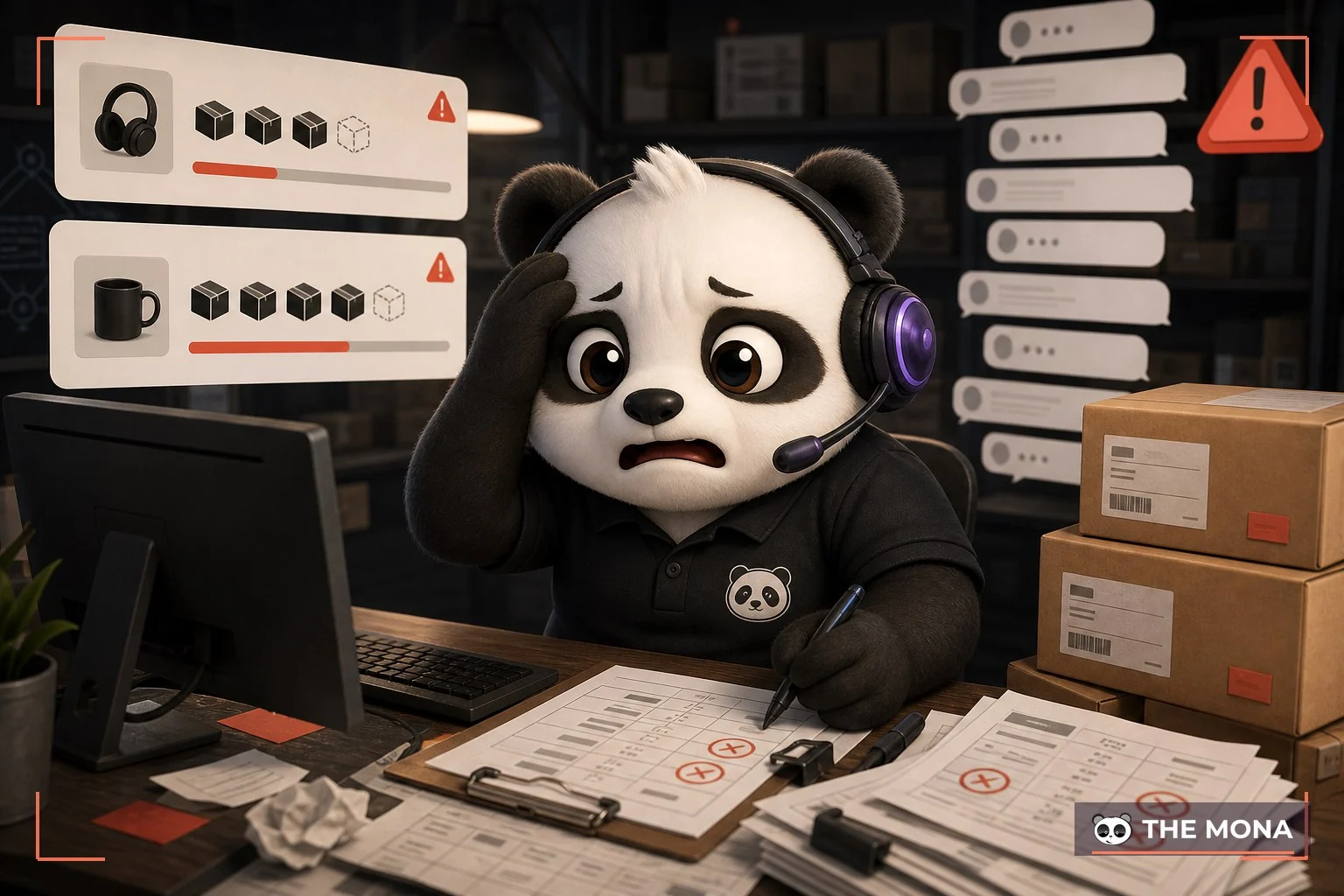
Inventory mismatch is the king of all trouble, and the 400-order live session with a 70-order shortfall at the top of this article is exactly this case: sell at the same time on TikTok, other marketplaces and a store while stock is updated by hand, and sooner or later you sell an item that has run out, get penalized for canceled orders and drop in shop score. Chat overload comes second: a live session brings in hundreds of messages in one night, and leaving them unanswered for more than 24 hours drops your response score, and a lower score means the system pushes your products less. Money reconciliation comes third: payouts arrive on a cycle after fees and returns are deducted, and handwritten, family-style books almost never match the platform's reconciliation statement, off by a few hundred thousand VND each period with no idea which orders are off. All three share one cure: data has to flow into one place automatically, which we cover in detail in the website connection section below. One remedy covers all three.
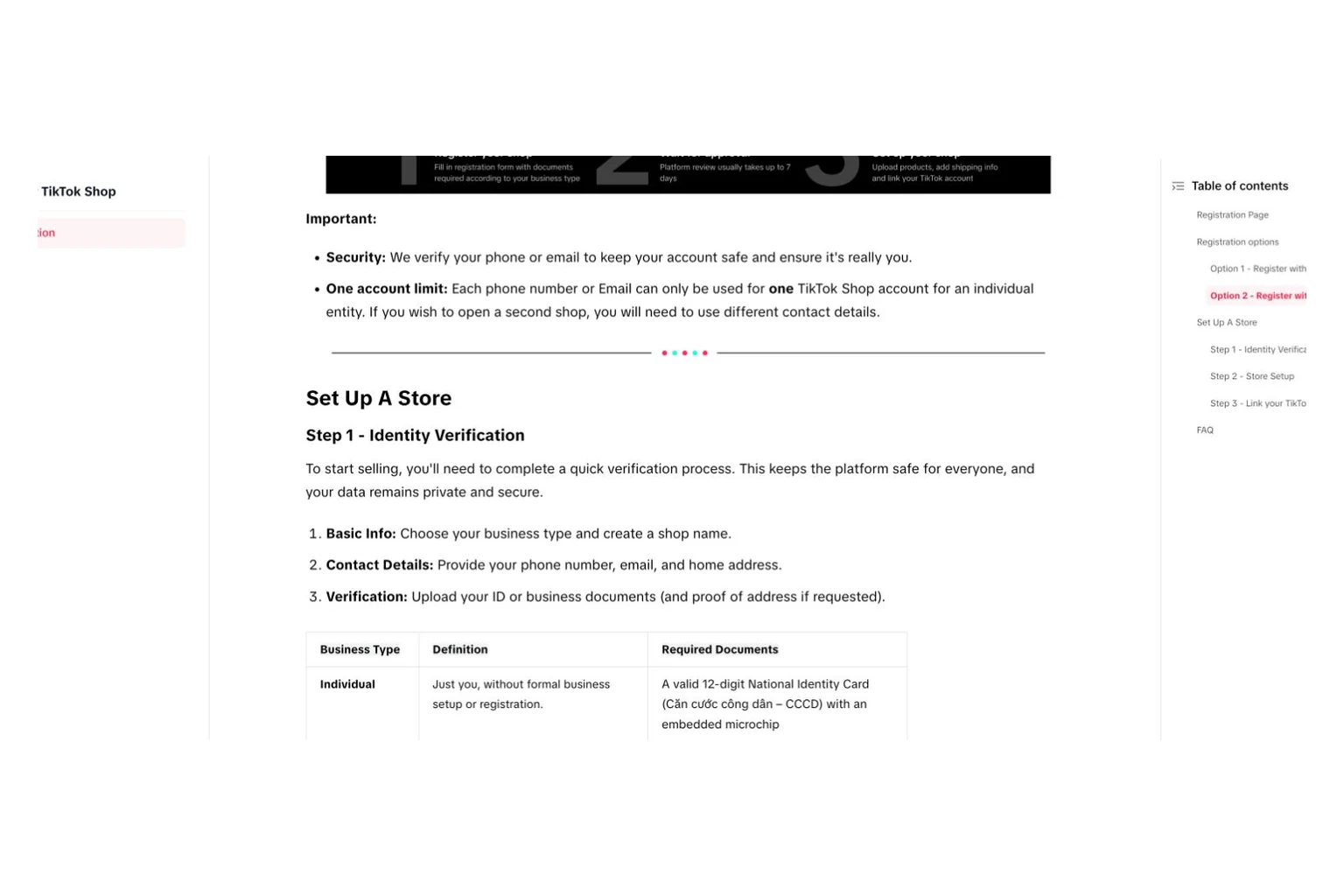
The current process is much simpler than at the start, and individual sellers follow the official guide, which takes about 1 hour:
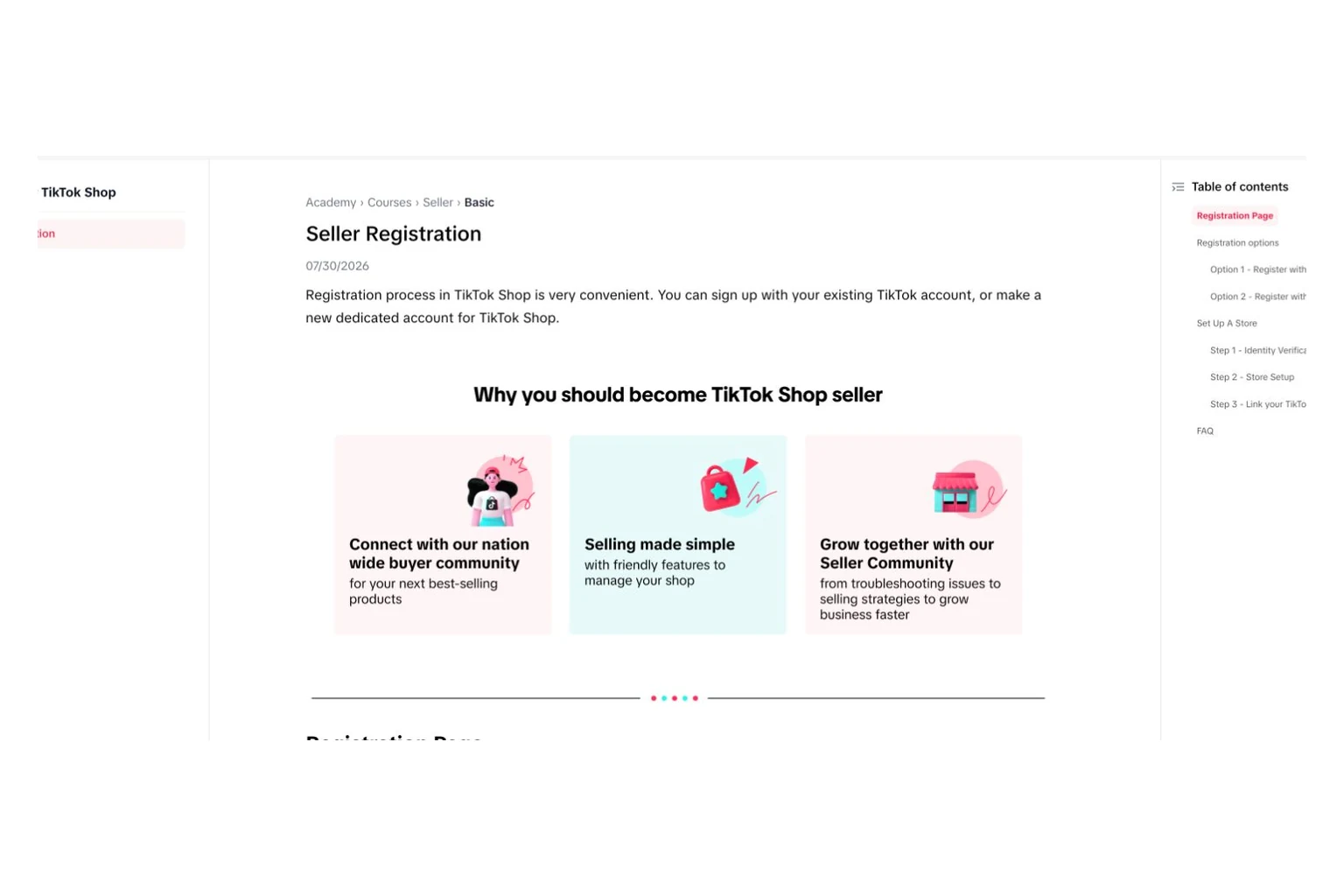
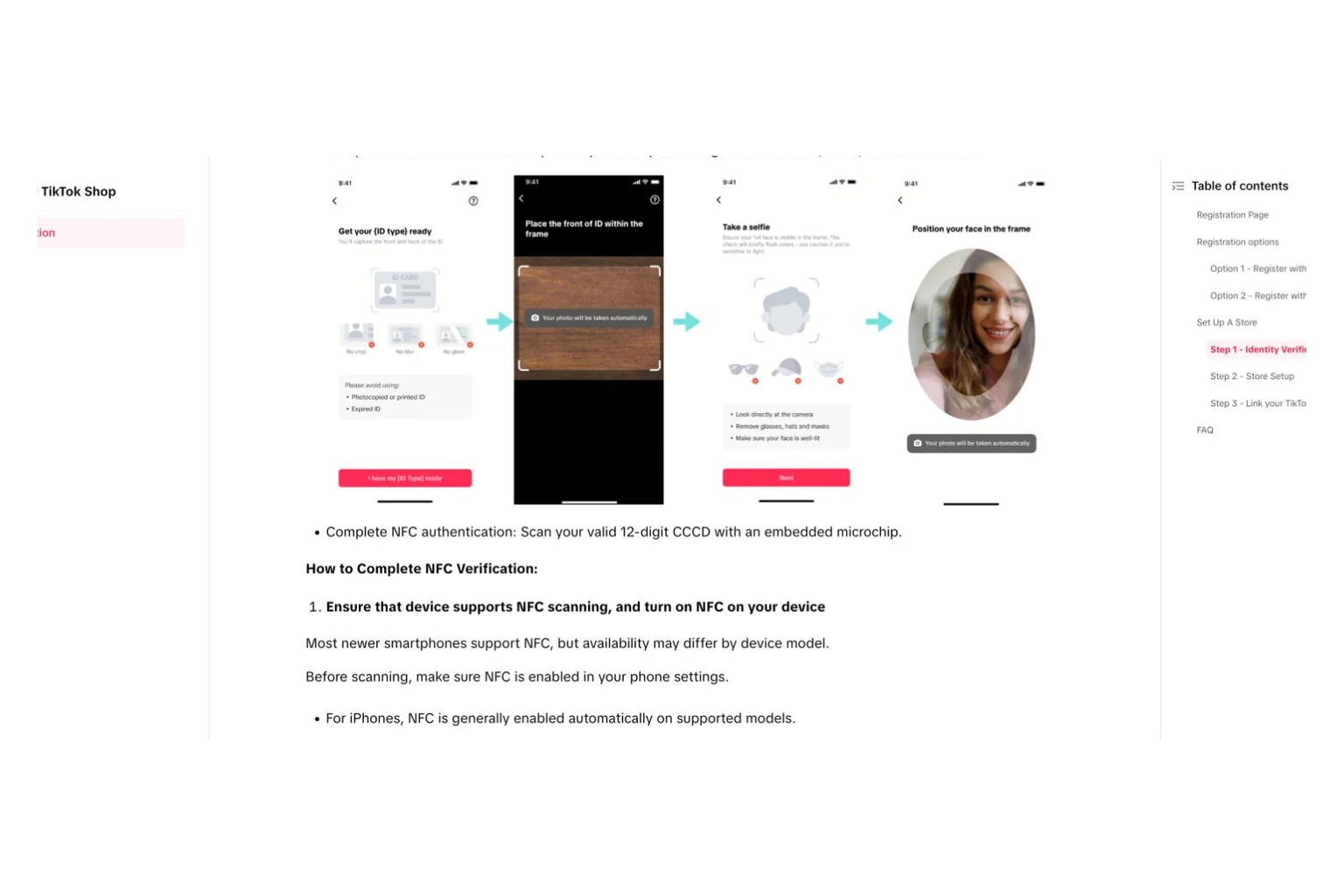
Applications are most often returned for two silly mistakes: blurry or glaring document photos, and a bank account name that does not match the documents. Checking those two things takes 2 minutes before you hit submit and clearly raises your chance of passing the first round. A small thing that saves another 5 to 7 days of waiting. Check, then submit.
Not everyone on TikTok Shop has to hold stock. Three roles are earning on this system, each with a different risk appetite, and choosing the wrong one is tiring from the first month:
A newcomer with empty hands and 0 VND capital should take the second role first: sell for others for 3 to 6 months, pocket 10 to 20% commission per order, learn which items sell and which content rhythm brings orders, and only then take stock and own a shop. Learning the trade on other people's commission is smarter than learning on your own unsold stock. Inventory has no mercy.
Shops doing thousands of orders a month that our shop operations team tracks all run on the same flywheel, at a standard pace of 7 to 14 videos a week:

When the flywheel turns fully in the first 90 days, orders climb in steps, each month higher than the last. Miss one loop and that part stalls: ads with weak content burn money, content without live sessions misses the harvest, and 2 lives a week is about right for a small team. Only with all the loops does it run.
A shop sits on TikTok's land. When rules and algorithms change, the seller bears it, and fees have gone up several rounds in the past 3 years with no sign of stopping. Smart sellers keep TikTok Shop as the door for finding new customers and also build their own e-commerce websites as the home base: customers buy the first time on TikTok, then are guided back to buy directly on the web with member offers. An order that comes back to the web keeps the 6 to 10% platform fee for that order, and the customer records built up over 12 months sit in your own CRM , not in the platform's hands.
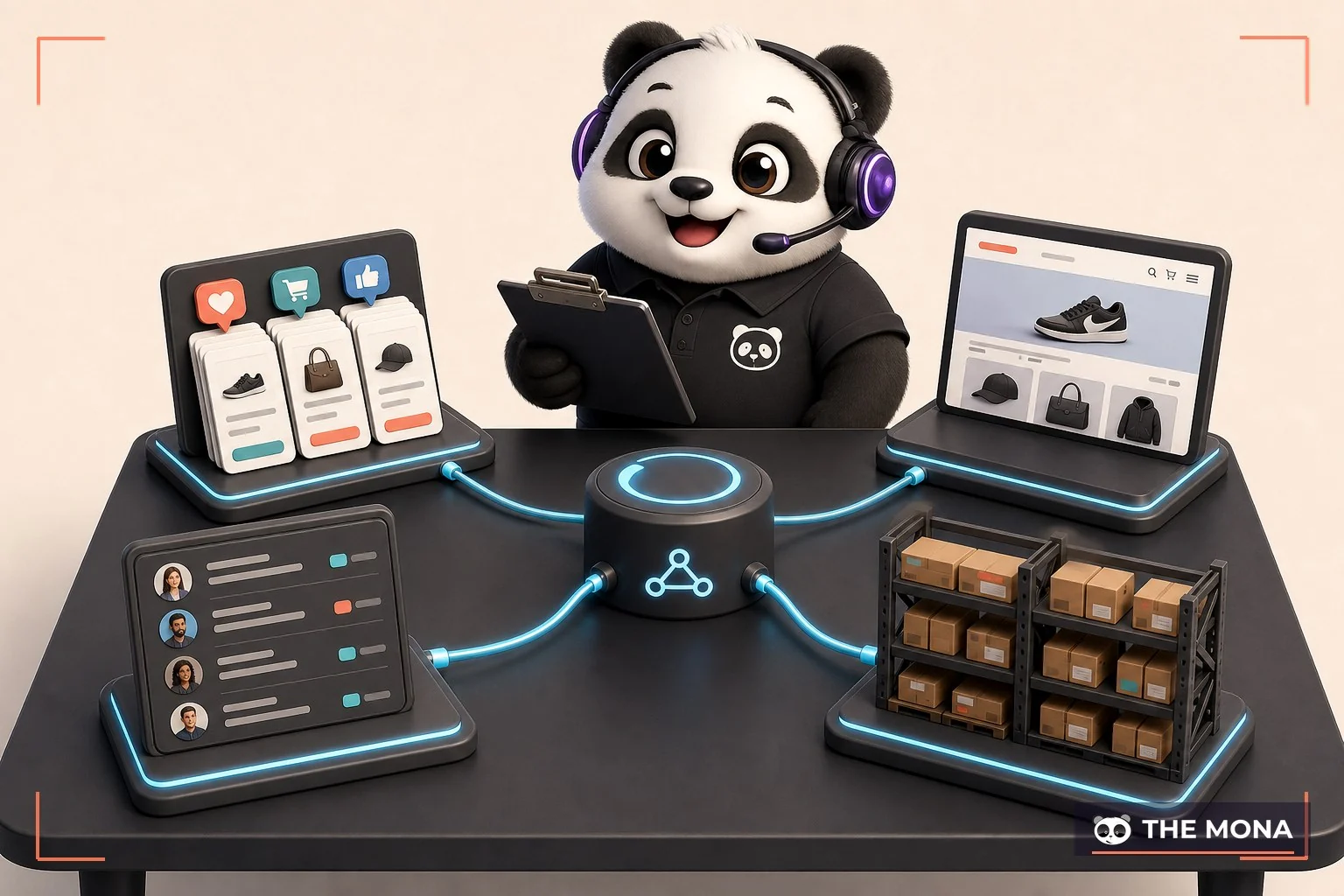
The most valuable technical part of this model is synchronization: inventory, orders and chat from TikTok Shop, other marketplaces and the website all flow into one dashboard, and stock is deducted automatically within 1 to 2 seconds on every channel. That is the cure for all three breaking points in the operations section: no more selling items that are out of stock, no more missed chats, no more reconciliation that is off with no idea where. The books match themselves. One hub, three problems fewer.
This is the trade we have worked in for more than 10 years, so we describe it in real structure. A multichannel system MONA builds for sellers has 4 blocks: a standard sales website e-commerce as the home base; management software connected by API to TikTok Shop and other marketplaces to sync inventory, orders and prices in one place; a CRM that gathers customer records from every channel so you can nurture them again with offers and care; and a reporting layer that shows you real profit and loss per channel after all fees, instead of vanity revenue before fees.
With more than 14,000 projects since 2016, building all 4 blocks usually takes 2 to 3 months, while building a single block is quicker. After all those years we have one firm conclusion: sellers rarely fail from too few orders. They fail more often because orders grow and the system cannot carry them, with stock off, chats missed and cash flow going negative before they know it. So what we sell is the operational skeleton for selling on many channels at once. Only with a firm skeleton can the flesh grow thick.
Yes. Register with a citizen ID card following the 5 steps above. As sales grow, move up to a business household or a company to keep taxes in order and open more approved categories.
Total platform fees are currently around 6 to 10% of order value depending on category, not including affiliate commission if you turn it on. For the exact rate in each category, check the Seller Center, since fees change in rounds, and remember to recalculate your selling price every time the platform changes them.
Yes. Many shops do well with videos of products, the warehouse and the packing process. Showing your face builds trust faster but is not required to get orders. If the product can do the talking, you do not have to.
Most often it is selling items in a banned category, a shop score that drops from canceled orders and late delivery, or verification details that do not match. Read the rules carefully in the Seller Academy before listing: prevention costs 1 hour of reading, while getting unlocked can take 2 to 4 weeks.
It is not too late, but the days when anything sold are over. Anyone joining in 2026 needs a product with a thick enough margin after fees, steady content and a lean operation from the start. With those 3 things, any time is a good time to enter. The door is still open.
TikTok Shop is worth doing, and worth doing now: register in 1 hour, the cheapest tuition in the market is the 0 VND-capital affiliate role, and the flywheel above just keeps turning. But the more orders you get, the bigger the question becomes: where is your customer data sitting, and if this channel changes its rules tomorrow, what is left that belongs to you?

If you are selling on TikTok Shop and your inventory is starting to drift, chats are starting to slip, or you want to build your home base before platform fees rise again, call 1900 636 648. Tell us how many channels you sell on and how many orders you get a month, and in a consultation of about 45 minutes we will redraw your current data map, point out exactly where you are losing money and quote each block separately: website first and inventory sync after, or CRM first, depending on what hurts most. You can do it block by block, and nobody forces a full combo. A house built room by room is still a house.
TikTok Shop brings in customers well, but you do not keep the customer data and you bear the platform's fees and rules. Many shops use TikTok to attract customers and then send them to their own website to close the order and nurture them later. To build a place to send customers back to, see the details here.

CEO & Founder · The MONA
Founder of The MONA, who built a services company of 200+ staff with 14,000+ projects delivered. Khánh Hùng shares how he thinks about building systems that run themselves, automating a business, and the real lessons from delivering projects at MONA.
 1,7K




Professional website
design services
Own a website with a beautiful, 100% exclusive design and a lifetime warranty, with the ability
to expand features flexibly as your business grows, starting today!






 MONA will never sell your information or send you spam


 MONA will never sell your information or send you spam
