
 MONA OS 2.0
 Partner with MONA


 Tự động hoá doanh nghiệp
 Cẩm nang SEO
 Digital Marketing
 Kinh nghiệm thiết kế website
 Hạ Tầng Server
 Giáo dục


 VI
 EN







Message us on
Zalo Official


 ProductsNew

 ProductsProducts
 Mới ra mắtKHA AI 2027App tự edit video, tự đăng mọi mạng xã hội, 2 phút mỗi ngày










 Website designLooks good and wins customers over.
SEO servicesBrings in customers searching for exactly what you sell.
 Tư vấn digital marketingKéo khách từ nhiều kênh, đo bằng số thật.
Corporate video productionVideos introducing your company, factory and team.
 NewAI video productionCompany story films made with AI.
 Custom software developmentCRM, ERP and HRM built for your business.
 Viết AI Agent theo yêu cầuĐặt riêng một trợ lý AI cho đúng việc của mình.
 Tư vấn chuyển đổi AIĐưa AI vào vận hành của cả công ty.
NewMONA LMSManagement for centers and schools.
MONA SkillHubInternal training for company staff.
 NHTQ systemEnd-to-end China–Vietnam shipping operations.
MONA JMSManagement for gold, diamond and pawn shops.
 MONA E-LearningA website with every feature you need to sell courses.
 How to sell online courses (course)More than 30 free lessons on selling courses on autopilot.
 MONA Cloudmonacloud.vnServers to get your apps and websites running.
 MONA Basemonabase.vnPostgres database, sign-in and file storage.
 MONA Mailmonamail.vnSend OTP, order and invoice emails from your software.
 MONA Paymonapay.vnAccept bank transfers via VietQR and notify your software when the money arrives.
 MONA eInvoiceComing soonIssue e-invoices that meet tax standards.
Gấu CườiTrả lời khách 24/7 trên web, Fanpage, Zalo và thu lead cho sale.
 Gấu TeleSalesGọi điện tư vấn, chăm khách như tổng đài viên thật.
Dê CườiTư vấn và chốt đơn cho shop ngay trong khung chat.
Gấu WebmasterNhắn nhóm Zalo là website được sửa xong.
 Gấu Pháp ChếSoạn hợp đồng, rà điều khoản trong vài phút.
 Gấu Báo GiáLên báo giá đúng mẫu và gửi khách ngay.
 AI chăm sóc khách hàngTheo dõi và giữ chân khách hàng cũ.
 Gấu Tuyển DụngLọc hồ sơ, hẹn lịch, phỏng vấn ứng viên.
 Mới ra mắt
KHA AI 2027
Xây kênh chuyên gia 2 phút mỗi ngày
Quay bằng điện thoại, AI tự edit video, tự đăng lên 16 nền tảng và tự trả lời bình luận, tin nhắn.
884.102lượt xem trên kênh CEO MONA sau 36 ngày
 Anh Khánh HùngCEO MONA đang dùng mỗi ngày
Xem app làm được gì
 AI
Gấu Cười MONA ĐANG TỰ XÀITrả lời khách 24/7 trên website, Zalo OA, Messenger và thu lead về cho sale.
Dê CườiChốt đơn bán lẻ và sàn: Shopee, TikTok Shop, web. Chăm cả khách sỉ, đại lý.
Gấu WebmasterCập nhật nội dung, tối ưu SEO website mỗi ngày.
Gấu TeleSalesGọi điện tư vấn, chăm khách như tổng đài viên thật.
Gấu Tuyển DụngLọc hồ sơ, hẹn lịch, phỏng vấn ứng viên tự động.
AI chăm sóc khách hàngGiữ khách cũ, cứu lead đã rớt cho phòng kinh doanh.
Gấu Pháp ChếSoạn hợp đồng, rà điều khoản trong vài phút.
Gấu Báo GiáLên báo giá đúng mẫu, gửi khách ngay khi có yêu cầu.
 Chuyển đổi AI toàn phầnGiải pháp tổng cho doanh nghiệp, 3 lớp triển khai.
 Viết AI Agent theo yêu cầuĐặt riêng một con AI gánh đúng nghiệp vụ của bạn.
 Custom softwareCRM, ERP and HRM with built-in AI automation.
 SEO & AEO thời đại AIĐược Google lẫn AI trích dẫn, không chỉ xếp hạng.
 Kiến thức AI cho doanh nghiệpBài phân tích, hướng dẫn ứng dụng AI vào vận hành.
 Free AI courses
 AI tools at work
App mới · KHA AI 2027
Xây kênh 2 phút mỗi ngày
AI tự edit video, tự đăng mọi mạng xã hội
Free consultation, 8am–10pm every day



Book a FREE demo
11 December, 2023
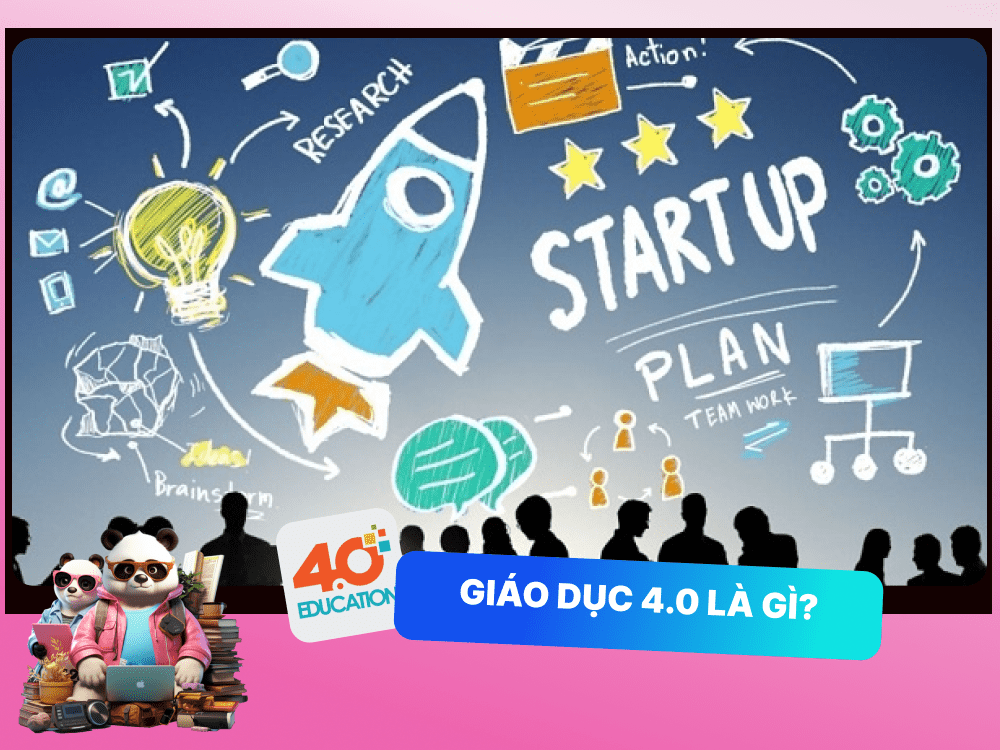
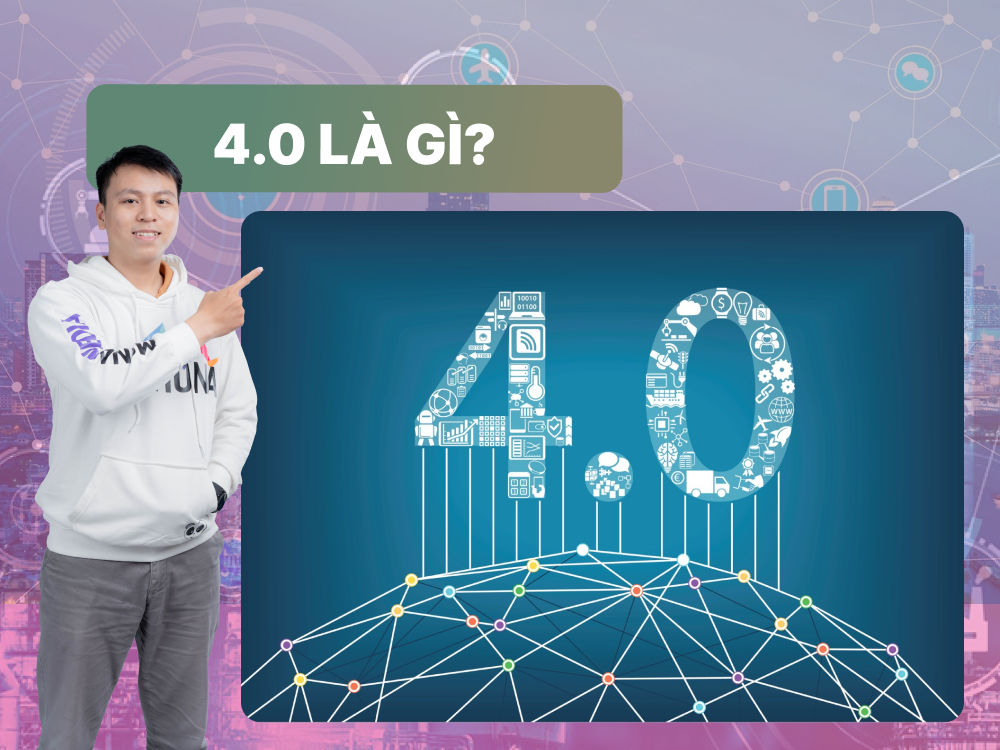
In the age of Industry 4.0, education is going through revolutionary changes. The Education 4.0 model, built on modern technology, brings learners fresher and more effective learning experiences. So what exactly is the concept of Education 4.0 and which elements are changing it? Let's MONA Media find out in the article below!
The term “Education 4.0” puzzles many teachers and learners alike. Education 4.0 is an education model built on Industry 4.0 technology, aiming to train students who are creative, solve problems, and adapt quickly to social change.

In this model, schools, administrators and businesses are closely connected to create a comprehensive and effective education system. Schools provide basic knowledge and skills, administrators ensure educational quality, and businesses provide chances to practice and grow a career. Education in the 4.0 era has these standout characteristics:
Applying and renewing teaching in line with 4.0 is now an inevitable trend in the Industry 4.0 era. The 4.0 teaching model will raise educational quality and produce students who can meet the demands of modern society. So what are the elements of the Education 4.0 model? Read on:

As the global economy goes through major shifts, it needs high-quality human resources that meet labor market demands. In practice, however, new graduates in Vietnam still show many limits in skills and real-world experience. That is why training under the 4.0 model is seen as a breakthrough solution that helps raise the quality of the workforce.
The most notable advantages of the Education 4.0 model include:
According to Mr. Truong Ngoc Anh of the Center for Thinking Science, Education 4.0 is a model meant to train a high-quality workforce that meets labor market demands in in the Industry 4.0 era. To reach this goal, training programs, teaching methods and assessment all need major changes.

Specifically, training programs need to be redesigned to combine theory and practice, and connect closely with businesses. Subjects should be designed to build critical thinking, problem-solving and adaptability. Teaching methods should stress learners' initiative and creativity. Assessment should be objective and transparent, and should judge learners' abilities accurately.
Students need to change how they think about learning. Instead of memorizing, they need to learn to understand and to apply. Students should actively seek out knowledge and skills and build up real experience within the 4.0 training program.
What is the Education 4.0 model? Education 4.0 is an education model built on Industry 4.0 technology, aiming to train students who are creative, solve problems, and adapt quickly to social change.
Education 4.0 brings many benefits to learners, especially university students. The model gives students the chance to get real-world experience at businesses, which helps them understand labor market requirements better. The 4.0 training program also helps students develop the ability to work independently, think creatively and adapt to change.

Today, many schools and training centers in Vietnam have started adopting Education 4.0. Schools have built smart tools to manage and look after their students. They have also introduced smart management software into their teaching programs, along with AI software, and are pushing for more international business partnerships.
However, experts also advise careful preparation before rolling out a 4.0 training program. Teaching in the 4.0 format should be done methodically and for the long term, without rushing. The best approach is to work closely with large businesses to build new training programs.
The Ministry of Education and Training has also set up an editorial board for matters related to Education 4.0. The ministry is working to roll out the 4.0 teaching model as part of the goal of making Vietnam a start-up nation by 2025.
|
Recognizing the need to use modern software to manage education operations, many providers of center management apps have appeared on the market, but not every piece of software is good quality. 
If you don't know which education software to choose, MONA LMS is an excellent choice. MONA LMS offers advantages such as:
CONTACT MONA ngay qua Hotline 1900 636 648 to get the best solution! |
So what is the difference between traditional education and Education 4.0?
| Industry | Traditional education | Education 4.0 |
| Learning goals | Emphasizes academic knowledge | Emphasizes well-rounded development of both knowledge and skills |
| Classroom | Tied to a physical location | Learn anytime, anywhere |
| Role of the teacher | Provides knowledge and learning guidance | Connects, guides and supports learning |
| Self-study | Not valued | Valued and encouraged |
| Anyone can teach | Not possible | You can |
| Learning age | Limited to children and teenagers | Lifelong |
Education 4.0 brings significant advantages over traditional education, specifically:
What are the broader learning goals in Education 4.0? They aim at developing both knowledge and skills, while traditional education focuses only on academic knowledge. This helps learners meet the demands of modern society, where soft skills and creative thinking are increasingly valued.
The 4.0 teaching model lets learners study anytime, anywhere, to suit each person's needs and circumstances. Traditional education, by contrast, is tied to a physical location, which makes it harder for learners to access.

What is the role of teachers in Education 4.0? In this era of educational reform, teachers aren't just people who pass on knowledge. They are also connectors who guide and support learning. This helps learners reach their full potential.
Education 4.0 lets anyone take part in teaching, as long as they have knowledge and experience in the field. This helps widen learning opportunities for everyone.

The 4.0 teaching model encourages self-study, helping learners take more initiative in their learning. Traditional education, meanwhile, tends to be passive and leaves learners dependent on teachers.
Education 4.0 widens the learning age range so that everyone can keep learning throughout life. Traditional education, by contrast, is limited to children and teenagers. That said, the 4.0 training model also has some limits that need fixing, such as:
To get the most out of the 4.0 teaching model, education authorities, schools and learners need to work closely together.
Now that we understand the concept and benefits of Education 4.0, let's look with MONA at how Industry 4.0 technology affects education today!

The Industry 4.0 era has had a deep impact on modern education, opening up many new ways to teach, learn and assess. Here are three typical impacts of Education 4.0 technology:
Education in the 4.0 era encourages new teaching methods such as:
Teaching through virtual reality (VR) gives learners a realistic, vivid experience as if they were taking part in the lesson in person. For example, in a human anatomy class, students can use VR to see the organs inside the body in an intuitive, lifelike way.
The teaching methods of Education 4.0 use multimedia so teachers can deliver information in a vivid, engaging and more interactive way with learners. For example, teachers can use video, images, audio, video games and more to illustrate a lesson.
Now that we have a clear picture of what the Education 4.0 model is, along with its concepts and benefits, how does it boost education?

Teaching with interactive whiteboards helps learners work with lesson content easily, which increases interaction between learners and teachers. For example, learners can use an interactive whiteboard to take notes, draw diagrams, solve exercises and more.
Online learning also offers flexibility in both space and time, where learners can study anytime, anywhere, to suit their own needs and circumstances. In an online learning environment, learners can also easily talk with teachers and classmates through tools such as chat, forums and more.
What do classroom formats look like in Education 4.0? Let's find out below:
First, 4.0 teaching technology makes virtual classrooms possible. A virtual classroom is held online and uses technology tools such as video, audio and chat to connect learners and teachers.
Second, Education 4.0 technology makes it possible to combine in-person and online learning. This format blends in-class study with online study. Learners can flexibly choose online or in-person, depending on their needs and circumstances.
Third, 4.0 teaching technology lets learners rewatch entire lessons and lectures. Lessons and lectures are recorded and stored in the cloud, so learners can easily review them whenever they need to.
This article MONA Media has explained the concept clearly, Education 4.0 along with its benefits over traditional methods. Applying Education 4.0 technology not only opens up new learning possibilities but also makes dry theory more visual and practical to explain.

CEO & Founder · The MONA
Founder of The MONA, who built a services company of 60+ staff with 14,000+ projects delivered. Khánh Hùng shares how he thinks about building systems that run themselves, automating a business, and the real lessons from delivering projects at MONA.
 1,6K


Professional website
design services
Own a website with a beautiful, 100% exclusive design and a lifetime warranty, with the ability
to expand features flexibly as your business grows, starting today!






 MONA will never sell your information or send you spam


 MONA will never sell your information or send you spam
