
 MONA OS 2.0
 Partner with MONA


 Tự động hoá doanh nghiệp
 Cẩm nang SEO
 Digital Marketing
 Kinh nghiệm thiết kế website
 Hạ Tầng Server
 Giáo dục


 VI
 EN








Message us on
Zalo Official


 ProductsNew

 ProductsProducts
 Mới ra mắtKHA AI 2027App tự edit video, tự đăng mọi mạng xã hội, 2 phút mỗi ngày










 Website designLooks good and wins customers over.
SEO servicesBrings in customers searching for exactly what you sell.
 Tư vấn digital marketingKéo khách từ nhiều kênh, đo bằng số thật.
Corporate video productionVideos introducing your company, factory and team.
 NewAI video productionCompany story films made with AI.
 Custom software developmentCRM, ERP and HRM built for your business.
 Viết AI Agent theo yêu cầuĐặt riêng một trợ lý AI cho đúng việc của mình.
 Tư vấn chuyển đổi AIĐưa AI vào vận hành của cả công ty.
NewMONA LMSManagement for centers and schools.
MONA SkillHubInternal training for company staff.
 NHTQ systemEnd-to-end China–Vietnam shipping operations.
MONA JMSManagement for gold, diamond and pawn shops.
 MONA E-LearningA website with every feature you need to sell courses.
 How to sell online courses (course)More than 30 free lessons on selling courses on autopilot.
 MONA Cloudmonacloud.vnServers to get your apps and websites running.
 MONA Basemonabase.vnPostgres database, sign-in and file storage.
 MONA Mailmonamail.vnSend OTP, order and invoice emails from your software.
 MONA Paymonapay.vnAccept bank transfers via VietQR and notify your software when the money arrives.
 MONA eInvoiceComing soonIssue e-invoices that meet tax standards.
Gấu CườiTrả lời khách 24/7 trên web, Fanpage, Zalo và thu lead cho sale.
 Gấu TeleSalesGọi điện tư vấn, chăm khách như tổng đài viên thật.
Dê CườiTư vấn và chốt đơn cho shop ngay trong khung chat.
Gấu WebmasterNhắn nhóm Zalo là website được sửa xong.
 Gấu Pháp ChếSoạn hợp đồng, rà điều khoản trong vài phút.
 Gấu Báo GiáLên báo giá đúng mẫu và gửi khách ngay.
 AI chăm sóc khách hàngTheo dõi và giữ chân khách hàng cũ.
 Gấu Tuyển DụngLọc hồ sơ, hẹn lịch, phỏng vấn ứng viên.
 Mới ra mắt
KHA AI 2027
Xây kênh chuyên gia 2 phút mỗi ngày
Quay bằng điện thoại, AI tự edit video, tự đăng lên 16 nền tảng và tự trả lời bình luận, tin nhắn.
943.722lượt xem trên kênh CEO MONA sau 46 ngày
 Anh Khánh HùngCEO MONA đang dùng mỗi ngày
Xem app làm được gì
 AI
Gấu Cười MONA ĐANG TỰ XÀITrả lời khách 24/7 trên website, Zalo OA, Messenger và thu lead về cho sale.
Dê CườiChốt đơn bán lẻ và sàn: Shopee, TikTok Shop, web. Chăm cả khách sỉ, đại lý.
Gấu WebmasterCập nhật nội dung, tối ưu SEO website mỗi ngày.
Gấu TeleSalesGọi điện tư vấn, chăm khách như tổng đài viên thật.
Gấu Tuyển DụngLọc hồ sơ, hẹn lịch, phỏng vấn ứng viên tự động.
AI chăm sóc khách hàngGiữ khách cũ, cứu lead đã rớt cho phòng kinh doanh.
Gấu Pháp ChếSoạn hợp đồng, rà điều khoản trong vài phút.
Gấu Báo GiáLên báo giá đúng mẫu, gửi khách ngay khi có yêu cầu.
 Chuyển đổi AI toàn phầnGiải pháp tổng cho doanh nghiệp, 3 lớp triển khai.
 Viết AI Agent theo yêu cầuĐặt riêng một con AI gánh đúng nghiệp vụ của bạn.
 Custom softwareCRM, ERP and HRM with built-in AI automation.
 SEO & AEO thời đại AIĐược Google lẫn AI trích dẫn, không chỉ xếp hạng.
 Kiến thức AI cho doanh nghiệpBài phân tích, hướng dẫn ứng dụng AI vào vận hành.
 Free AI courses
 AI tools at work
App mới · KHA AI 2027
Xây kênh 2 phút mỗi ngày
AI tự edit video, tự đăng mọi mạng xã hội
Free consultation, 8am–10pm every day

21 September, 2026
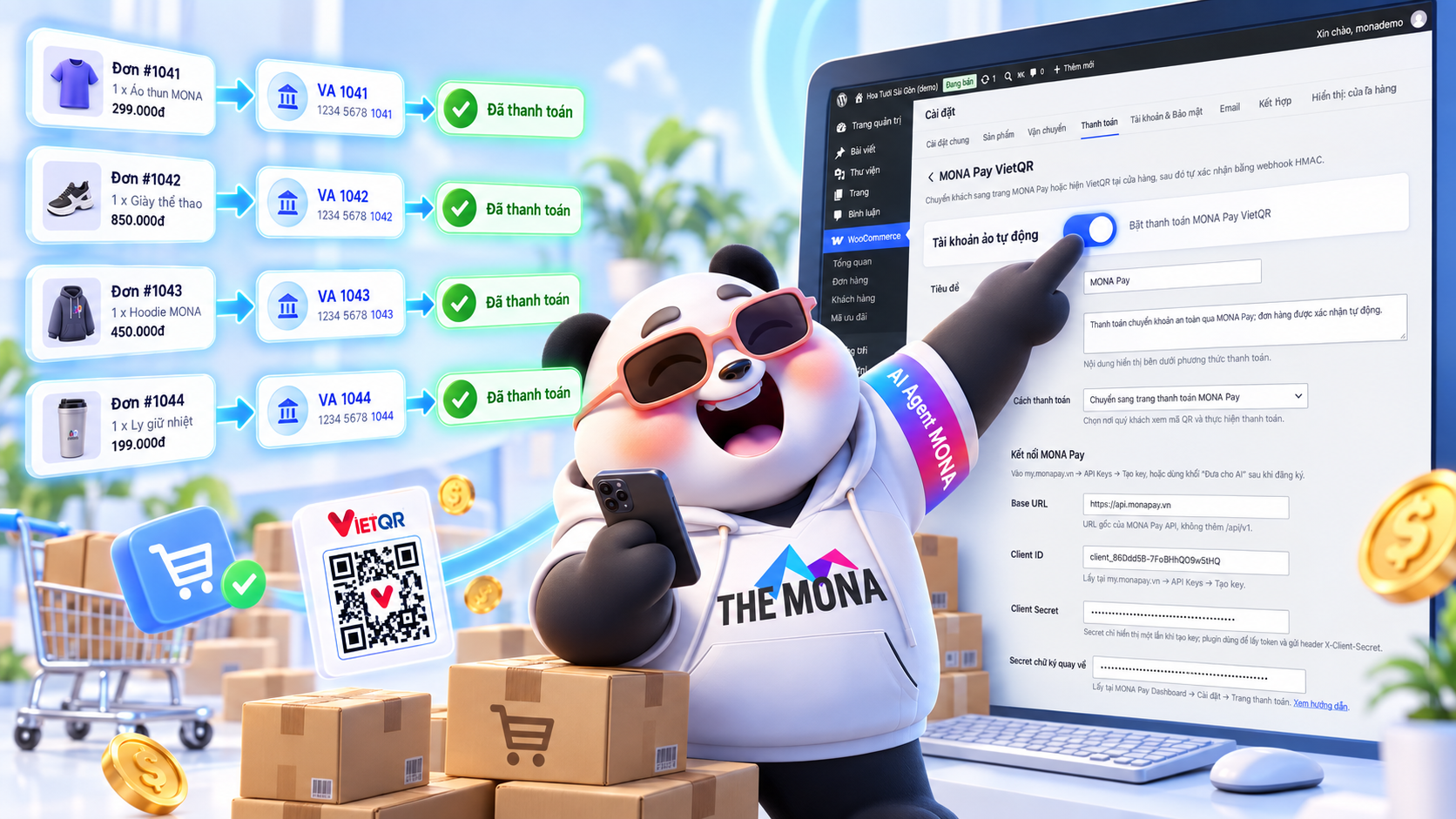
Customers who come to MONA to build a sales website usually bring one worry once orders climb to a few hundred a day: the accountant no longer has the energy to go through the balance changes line by line to see who just transferred money. We've seen this same problem repeat with about 50 customers a year. We once met an online shop that hired a person just to watch the banking app all day, and still missed orders when transactions passed 500 a month during sale season. Virtual accounts for high-order websites solve exactly that by giving each order its own account number, so incoming money matches in 2 seconds, without a dong of error. No more checking by eye. The accountant just looks at the end-of-day summary report.
MONA customers with their own marketplace often fall into sharing one company account number among all buyers, receiving a few hundred transactions a day with transfer notes abbreviated every which way: some write a name, some a phone number, some write nothing. The accountant has to open the banking app and go through each line to find who paid for which order. Some days more than 500 transactions a month pile into a single sale week, and the review runs late into the night. The more sales channels feed one account, the messier name-matching in transfer notes gets, because every customer abbreviates their name differently. Falling a beat behind means losing the customer. A competitor only needs to be a few minutes faster to snatch the sale. We once heard a shop owner say customers canceled because they waited over 6 hours for payment confirmation during a big sale, while a competitor confirmed receipt in 2 seconds. That is why sharing one account number for hundreds of orders a day is no longer a smart choice, even if it was enough when the shop first opened.
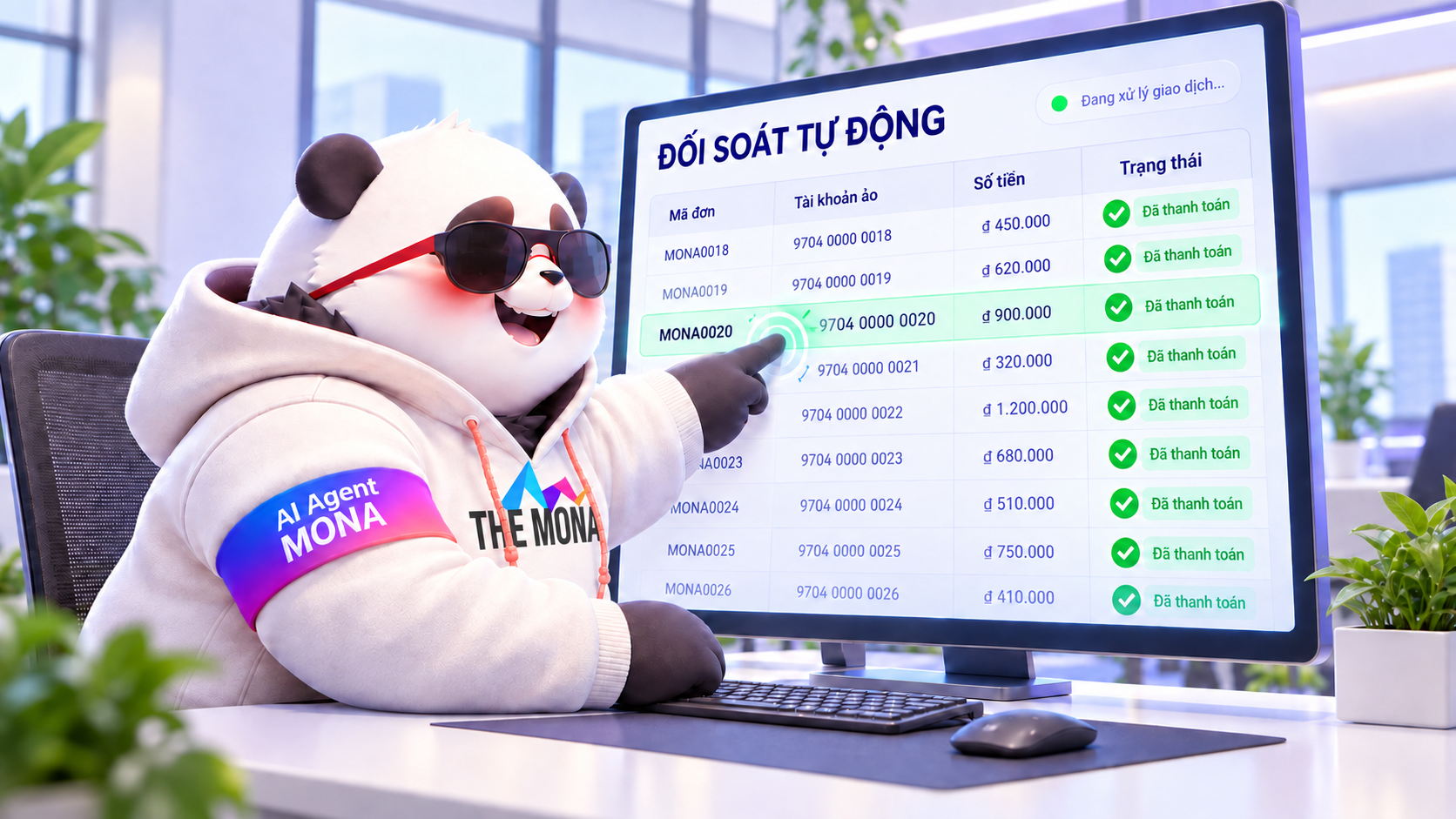
Sharing one account number means every transaction flows to the same place, so the system can only guess which order it belongs to from the transfer note, and customers often forget to write it or misspell it. A virtual account (VA) does the exact opposite. Each customer or order gets its own virtual account so that the sales website confirms orders automaticallyand when the customer transfers to that exact number, the system knows whose it is without reading the note. MONA customers who sell on a recurring subscription model use this for each service plan: one VA per plan, so incoming money matches the right plan within 2 seconds, even when a customer renews several plans in a single transfer. A website selling 2,000 orders a month still keeps every payment clearly separated without adding reconciliation staff. The machine does all this. People only look at the report when they need to cross-check.
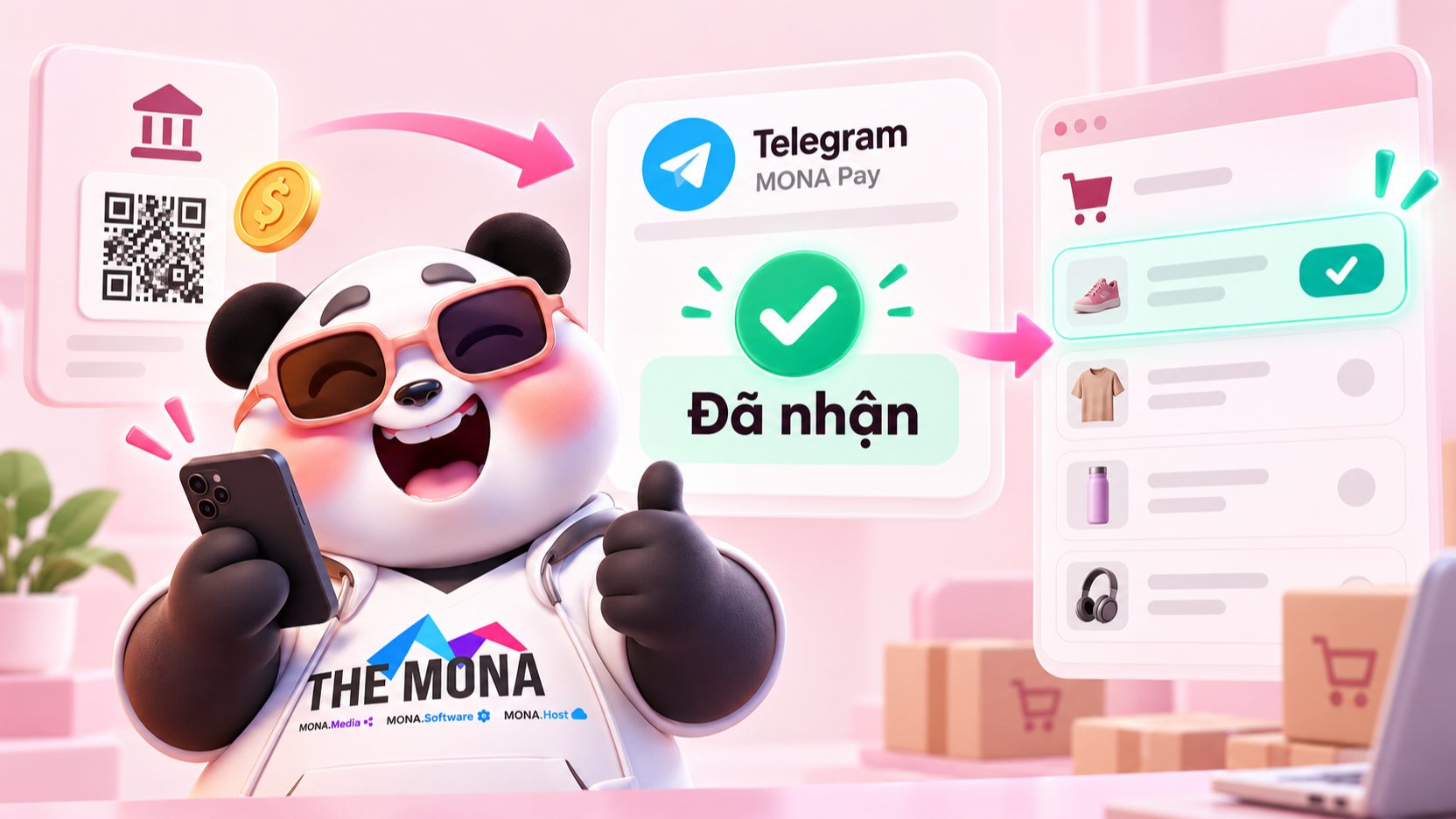
We don't just talk; we've used this very mechanism for MONA Host for many years. MONA Host customers transfer into the same ACB account, but the transfer note carries a prefix specific to each product, such as hosting, domain or business email. The system reads that prefix to separate each service's revenue, even though everything lands in a single account number. One account, many products. This is how we let several MONA products share one ACB account number without mixing their money, splitting the flow correctly within 2 seconds per transaction, and we've applied it continuously for more than 4 years, not just tried it. Since 2022, 6,000+ new MONA customers have paid through this very money-recognition flow, before we packaged it as MONA Pay to share with others.
As soon as money lands in the virtual account, the system signs the packet with HMAC-SHA256 and fires it straight to the website's server through a webhook, all in about 2 seconds from the bank's confirmation. There's no extra waiting. The dashboard updates instantly in real time. In September 2026 we had a memorable incident: reconfiguring a server dropped a secret key, so webhooks still fired but carried an empty signature, and the receiving system returned a 401 error and orders weren't credited even though customers had paid. We had to reopen the webhook history on the dashboard, add the key and bulk resend the same day, so no customer had to wait until the next day to see their order credited. The lesson we often give customers: don't trust “it's running, so it'll run forever.” Always turn on an alert when the webhook success rate drops unexpectedly. Catching it early in the day is very different from having customers find it first and complain on the fanpage.
If your website sells fewer than 20-30 orders a day, we honestly advise that you don't need to invest in a virtual account per customer and complicate things. A dynamic VietQR code with a bot that reports receipts through Telegram or Zalo is enough, and it can be set up in about 10 minutes. Just try it first. If it isn't right, we'll adjust it to your shop's process. When orders rise to a few hundred a day, or you need to distinguish revenue by product line as MONA Host does, that's when virtual accounts are truly worth the effort. We see many shops hook up an API when they have only a few dozen orders, spending on developers when a payment link would do, and that money would be better spent on ads.
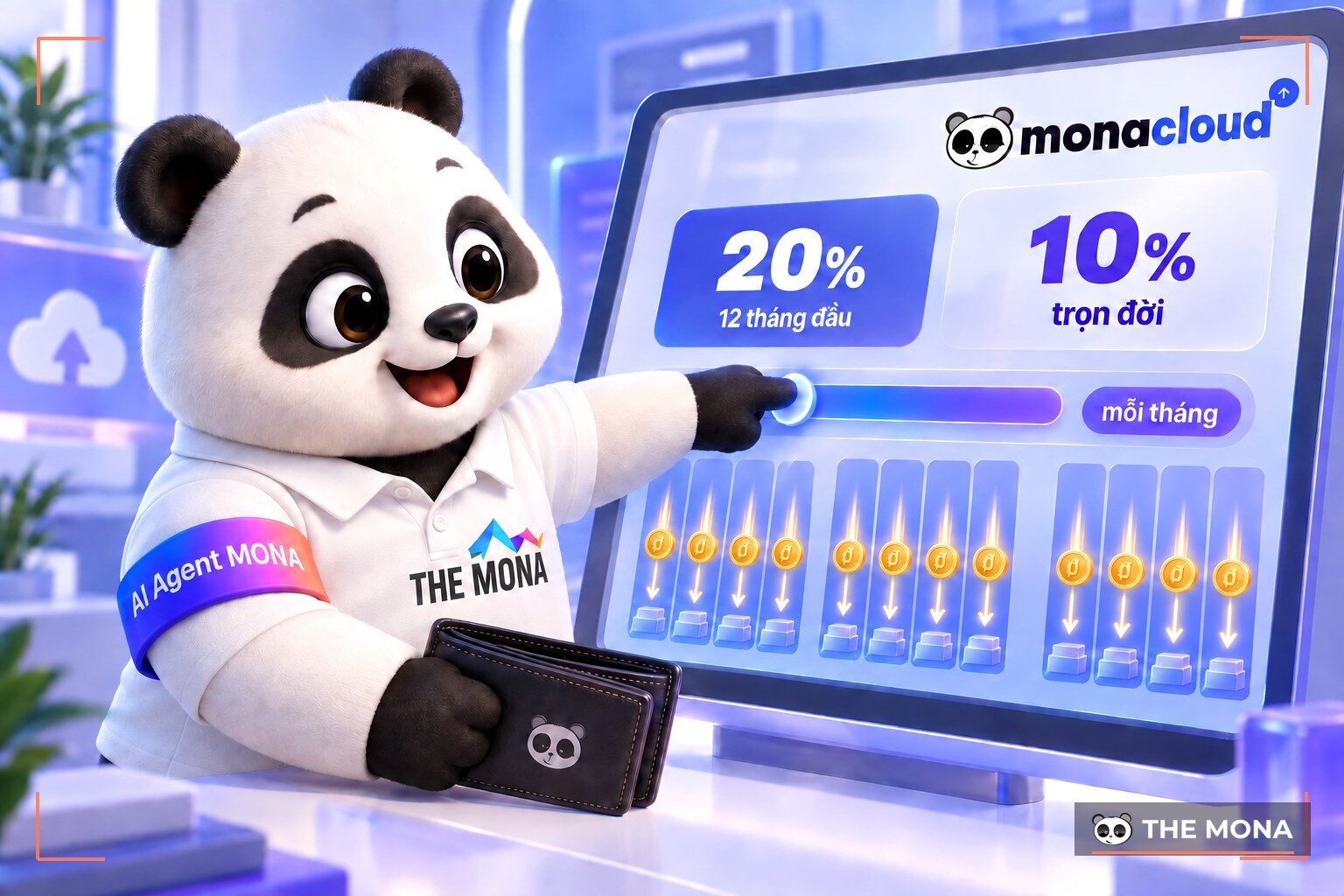
The free plan handles 500 transactions a month. Beyond that, there's a fixed plan from 99,000 VND a month for 2,000 transactions, with no percentage added on the amount on any plan. No percentage. Compared with PayPal, which charges around 4.4% plus a fixed fee on each transaction, that's a significant difference for shops with big revenue, especially when orders reach several thousand a month. ACB is officially live with virtual accounts and real-time credit notifications; other banks are still being connected, so we haven't promised a specific date. We don't promise dates for banks that aren't live. Just check the bank status board at monapay.vn/ngan-hang to see right away; it's updated regularly, not set up and left there.
A WooCommerce website installs the ready-made plugin, which has a sandbox test mode, in about 10 minutes, and Shopify uses the matching app. Neither requires coding knowledge. Once installed, you immediately get a dynamic QR code and virtual accounts running on the checkout page, with no waiting for the tech team to write another line. For custom-built systems, we provide full virtual account (VA) API documentation so developers can fit it into your existing order flow, usually within 1 working day. Sign up to try it at my.monapay.vn, with no approval wait, and you can test in the sandbox before connecting a real bank. The reduce the cart abandonment rate benefit of faster payment confirmation is something we've seen clearly in many deployed projects. No more guessing. The figures we measured across many deployed customers all show similar results. For any technical question, call 1900 636 648 and we'll connect you.
Why does MONA offer this for free?
MONA is a software, digital transformation and AI transformation company, but above all, MONA is a B2B service company that benefits directly from this: the more successful Vietnamese businesses are, the more MONA benefits. A slow, shrinking market with weak technology is exactly what would kill MONA's future business.
So more than anyone, MONA wants you to succeed, and MONA genuinely gets involved in helping you get there.
And AI transformation is the key to that success for all of us.
What happens if a customer transfers the wrong amount to a virtual account? The webhook still sends a notification to your server within about 2 seconds, with the exact amount received, and your system decides whether to open the order right away or wait for the customer to pay the shortfall.
Do you take a percentage of every transaction? No. We take no percentage of the transaction amount on any plan, including when you go past the 500 free transactions per month up to the 2,000-transaction plan. The money lands in your bank account to the last dong.
Is a virtual account an e-wallet that holds money for me? No. A virtual account is just an identifier tied to your bank. The money goes straight in with no intermediary wallet, and MONA Pay only reads the transaction data and reports it to your system within seconds. Full use of that money is yours as soon as the bank confirms.
Does integrating virtual accounts into a website take a lot of developer time? With WooCommerce or Shopify, you just install an existing plugin in about 10 minutes. It doesn't take long. Shop owners can do it themselves without calling anyone for support. For a custom-built system, developers read the API docs and test in the sandbox, usually finishing in one working session.

CEO & Founder · The MONA
The founder of The MONA built a service company of 60+ staff with 14,000+ projects delivered. Khánh Hùng shares his thinking on building self-running systems, automating a business, and the real lessons behind MONA's projects.
 209




Professional website
design services
Own a website with a beautiful, 100% exclusive design and a lifetime warranty, with the ability
to expand features flexibly as your business grows, starting today!






 MONA will never sell your information or send you spam


 MONA will never sell your information or send you spam
