
 MONA OS 2.0
 Partner with MONA


 Tự động hoá doanh nghiệp
 Cẩm nang SEO
 Digital Marketing
 Kinh nghiệm thiết kế website
 Hạ Tầng Server
 Giáo dục


 VI
 EN












Message us on
Zalo Official


 ProductsNew

 ProductsProducts
 Mới ra mắtKHA AI 2027App tự edit video, tự đăng mọi mạng xã hội, 2 phút mỗi ngày










 Website designLooks good and wins customers over.
SEO servicesBrings in customers searching for exactly what you sell.
 Tư vấn digital marketingKéo khách từ nhiều kênh, đo bằng số thật.
Corporate video productionVideos introducing your company, factory and team.
 NewAI video productionCompany story films made with AI.
 Custom software developmentCRM, ERP and HRM built for your business.
 Viết AI Agent theo yêu cầuĐặt riêng một trợ lý AI cho đúng việc của mình.
 Tư vấn chuyển đổi AIĐưa AI vào vận hành của cả công ty.
NewMONA LMSManagement for centers and schools.
MONA SkillHubInternal training for company staff.
 NHTQ systemEnd-to-end China–Vietnam shipping operations.
MONA JMSManagement for gold, diamond and pawn shops.
 MONA E-LearningA website with every feature you need to sell courses.
 How to sell online courses (course)More than 30 free lessons on selling courses on autopilot.
 MONA Cloudmonacloud.vnServers to get your apps and websites running.
 MONA Basemonabase.vnPostgres database, sign-in and file storage.
 MONA Mailmonamail.vnSend OTP, order and invoice emails from your software.
 MONA Paymonapay.vnAccept bank transfers via VietQR and notify your software when the money arrives.
 MONA eInvoiceComing soonIssue e-invoices that meet tax standards.
Gấu CườiTrả lời khách 24/7 trên web, Fanpage, Zalo và thu lead cho sale.
 Gấu TeleSalesGọi điện tư vấn, chăm khách như tổng đài viên thật.
Dê CườiTư vấn và chốt đơn cho shop ngay trong khung chat.
Gấu WebmasterNhắn nhóm Zalo là website được sửa xong.
 Gấu Pháp ChếSoạn hợp đồng, rà điều khoản trong vài phút.
 Gấu Báo GiáLên báo giá đúng mẫu và gửi khách ngay.
 AI chăm sóc khách hàngTheo dõi và giữ chân khách hàng cũ.
 Gấu Tuyển DụngLọc hồ sơ, hẹn lịch, phỏng vấn ứng viên.
 Mới ra mắt
KHA AI 2027
Xây kênh chuyên gia 2 phút mỗi ngày
Quay bằng điện thoại, AI tự edit video, tự đăng lên 16 nền tảng và tự trả lời bình luận, tin nhắn.
915.982lượt xem trên kênh CEO MONA sau 39 ngày
 Anh Khánh HùngCEO MONA đang dùng mỗi ngày
Xem app làm được gì
 AI
Gấu Cười MONA ĐANG TỰ XÀITrả lời khách 24/7 trên website, Zalo OA, Messenger và thu lead về cho sale.
Dê CườiChốt đơn bán lẻ và sàn: Shopee, TikTok Shop, web. Chăm cả khách sỉ, đại lý.
Gấu WebmasterCập nhật nội dung, tối ưu SEO website mỗi ngày.
Gấu TeleSalesGọi điện tư vấn, chăm khách như tổng đài viên thật.
Gấu Tuyển DụngLọc hồ sơ, hẹn lịch, phỏng vấn ứng viên tự động.
AI chăm sóc khách hàngGiữ khách cũ, cứu lead đã rớt cho phòng kinh doanh.
Gấu Pháp ChếSoạn hợp đồng, rà điều khoản trong vài phút.
Gấu Báo GiáLên báo giá đúng mẫu, gửi khách ngay khi có yêu cầu.
 Chuyển đổi AI toàn phầnGiải pháp tổng cho doanh nghiệp, 3 lớp triển khai.
 Viết AI Agent theo yêu cầuĐặt riêng một con AI gánh đúng nghiệp vụ của bạn.
 Custom softwareCRM, ERP and HRM with built-in AI automation.
 SEO & AEO thời đại AIĐược Google lẫn AI trích dẫn, không chỉ xếp hạng.
 Kiến thức AI cho doanh nghiệpBài phân tích, hướng dẫn ứng dụng AI vào vận hành.
 Free AI courses
 AI tools at work
App mới · KHA AI 2027
Xây kênh 2 phút mỗi ngày
AI tự edit video, tự đăng mọi mạng xã hội
Free consultation, 8am–10pm every day

26 July, 2026
A Messenger chatbot is software that automatically replies to messages and comments on a fanpage. The AI version understands what customers type in natural language instead of just throwing out a menu of buttons. It is on duty 24/7, messages privately to customers who just commented on an ad, asks for a phone number and gathers everything into one profile for the sales team.
If your fanpage is running ads and you can't keep up with replying to messages and comments, this article is for you. We go step by step: what it can do, why the old button bot breaks, one customer's path from a comment to a phone number, and which industries should install first.
An AI-powered Messenger chatbot can carry: replying to messages naturally, responding to comments, messaging privately to collect phone numbers, and gathering every chat into one customer profile. Those four jobs take up most of the time of whoever staffs the page today.
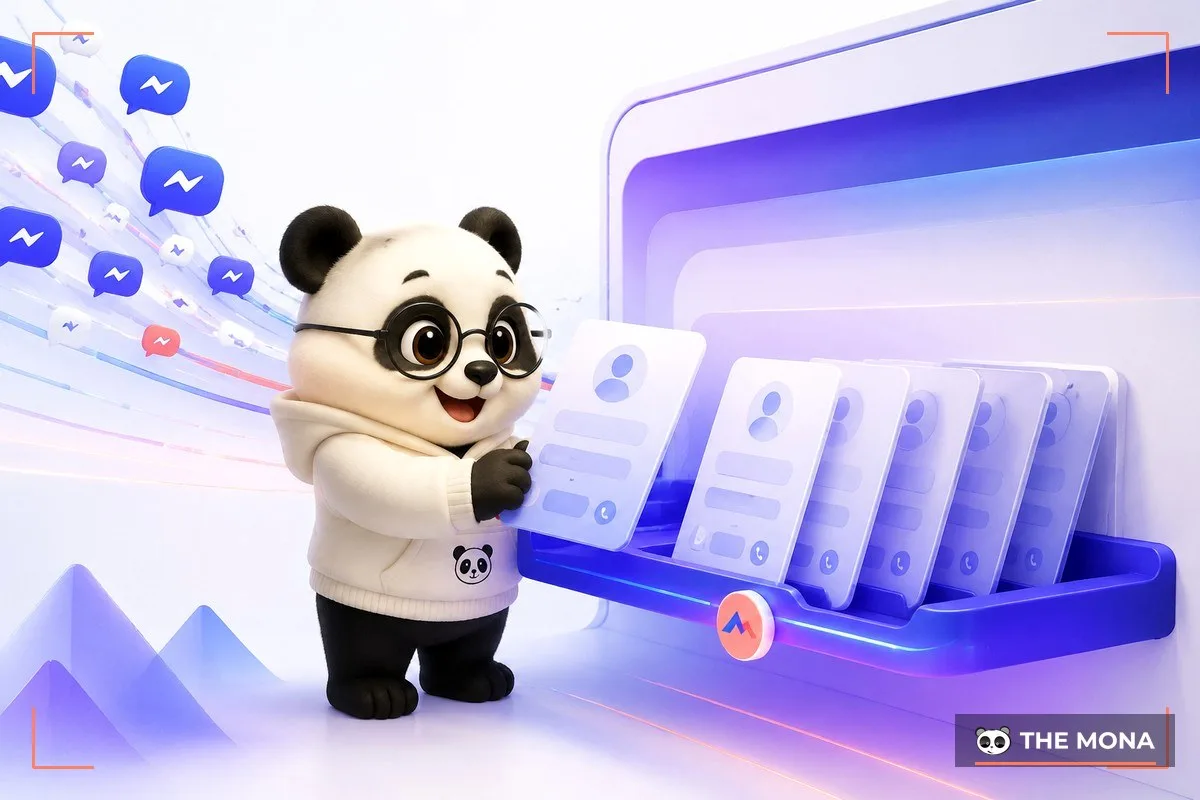
The biggest difference from the old bot era is the word “natural”. A customer types “cái đầm hôm qua live còn size M ko sh” (is the dress from yesterday's livestream still in size M?), and the AI bot reads it and replies like a real person on duty. The foundation for this is the language model, which we explained in detail in the article what is an AI chatbot, so if the concept is new to you, read that first.
Messenger messages don't arrive evenly across the day. They surge with each ad push, right when the on-duty team is at its weakest. This is a pain specific to this channel that websites and Zalo don't have, and it is the reason Messenger chatbots exist.
A women's fashion brand with 22 stores once described exactly this scene to us. On a Friday night the brand ran ads for a clearance livestream, and an hour after the video went up, more than four hundred comments like “price?” and “DM me” flooded in. Three page staff replied until one in the morning and got through under half, everyone's hands were practically glued to their phones, and what the owner remembers best is that the next morning the person on duty asked for leave because “I'm haunted by the ding ding sound.” The rest went cold, and when they called back on Monday, customers said they had already bought elsewhere.
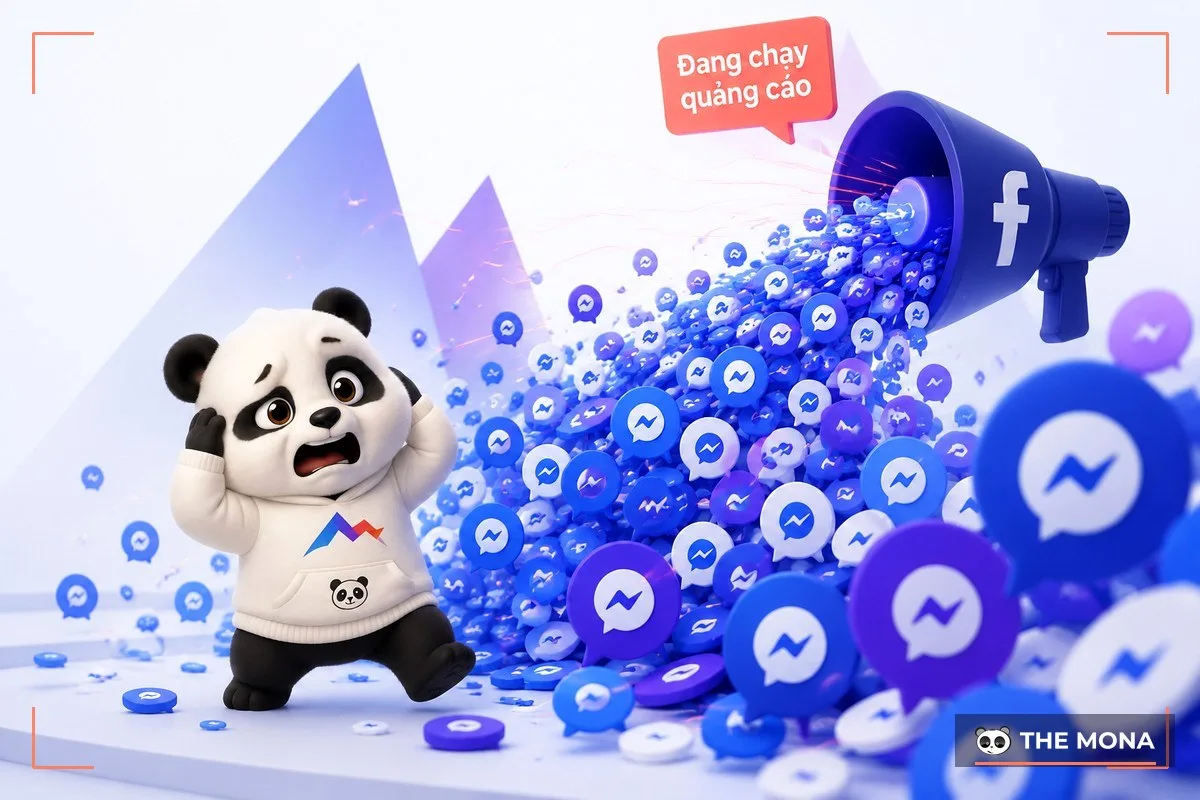
The paradox is that the more you spend on ads, the more the team is stretched, and the higher the share of abandoned messages. Money creates demand but people can't keep up with it. This is exactly where a Messenger chatbot should step in.
On Messenger, customers can see the “Seen” status. Being seen without a reply is worse than not being seen, because the customer knows they are being ignored.
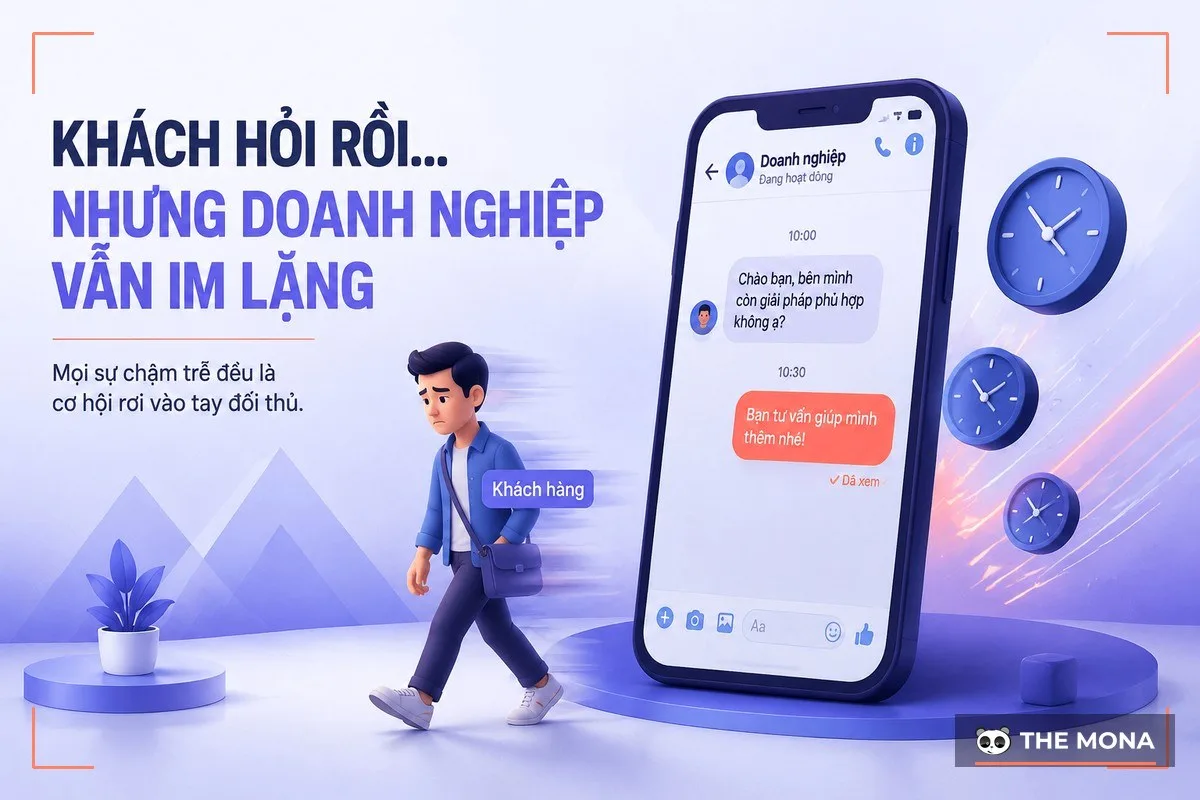
The numbers behind this feeling are clear. A study of Harvard Business Review across 2,241 companies found that following up within one hour makes a real conversation seven times more likely than following up later. Meanwhile, the global Messenger user base remains at billions of monthly active accounts according to Statista, and in Vietnam it is still the familiar channel for retail customers to message and buy. For a channel this big, taking half a day to respond is basically handing over the field.

To see how different a Messenger chatbot that replies in three seconds feels, you can message Gấu Cười, the AI chatbot that is really on duty at MONA. Any hour works, and the later the better. If you want to put it through its paces, bring along question set built into the chatbot demo handbook from us.
A scripted Messenger bot still does framed tasks well: welcome messages, handing out discount codes, answering opening hours, routing complaints. A small fanpage selling a few items is fine with it, and we mean that honestly.
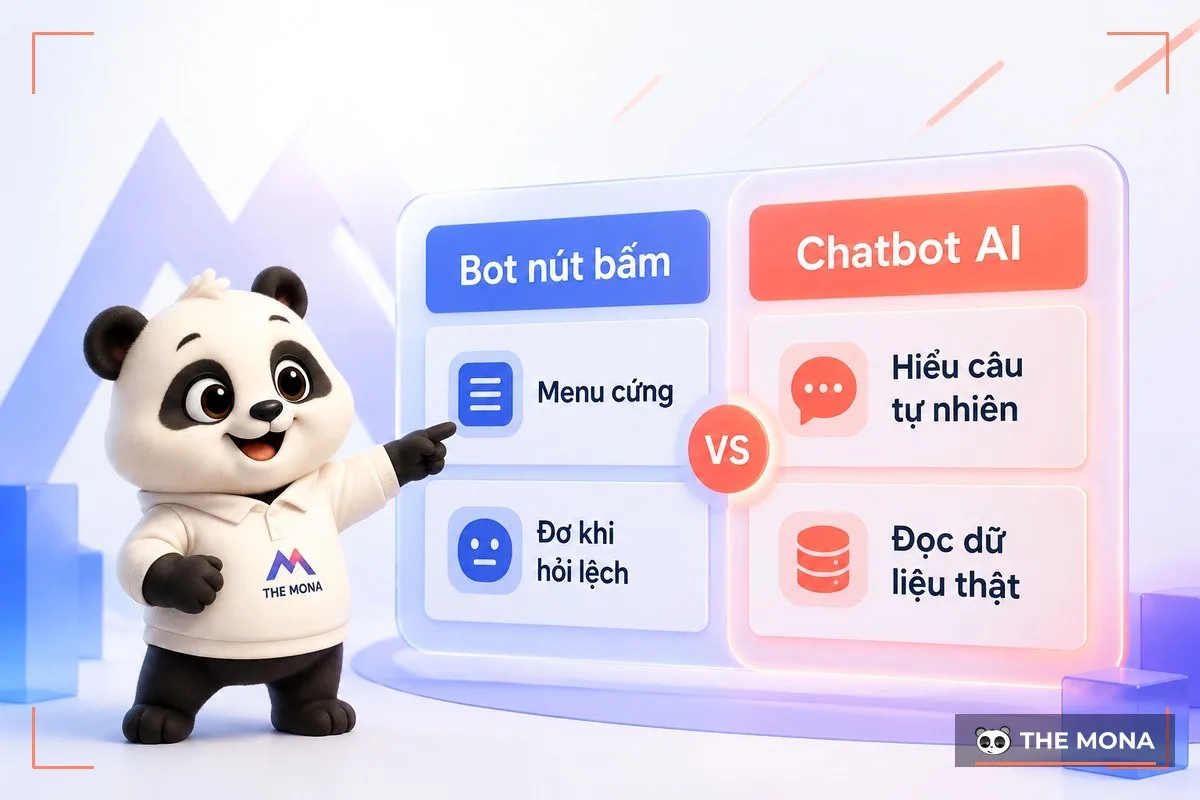
It only breaks when it is given an advising job. When a customer asks for combo pricing, asks which branch has stock, or types shorthand with typos, a button menu is out of moves. The line is simple: if a task has only one right path, give it to a scripted bot; if it needs to understand what the customer means, you need a Messenger chatbot powered by AI and loaded with the shop's real data.
The right way to set up a Messenger chatbot is one AI brain watching two doors at once, private messages and public comments, with every conversation flowing into one shared queue. Splitting the two doors across two different tools means breaking your own customer data.
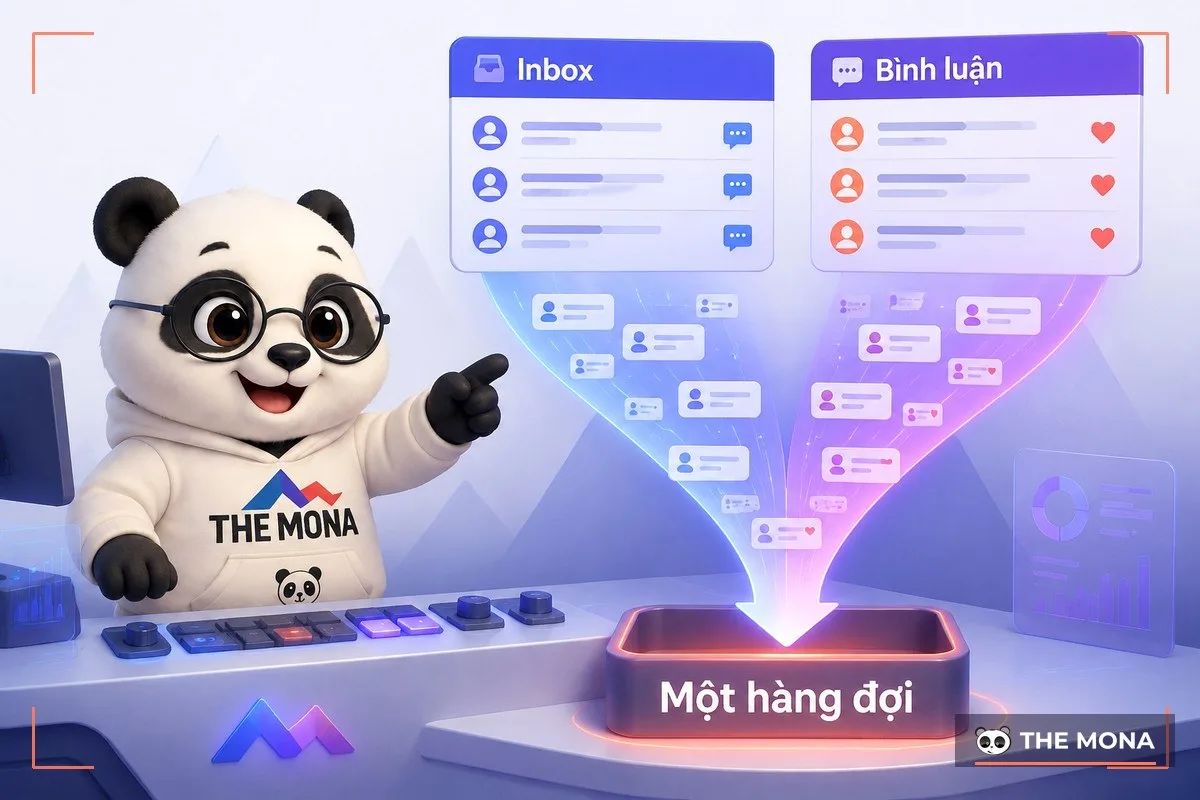
At the comment door, the bot replies publicly to be polite, then proactively messages the person privately for deeper advice, so competitors can't swoop in and steal customers right under your own ad. At the inbox door, the bot follows the thread of the conversation and answers with the data it was actually loaded with. We have already broken down the three layers of a serious bot, from the language model to the CRM bridge, in the what-is-an-AI-chatbot article above. And if your customers message from several platforms, the article multichannel AI chatbot explains in detail how one brain covers eight channels at once.
A standard Messenger chatbot flow has three stages: the customer comments under an ad, the bot messages them privately with advice on exactly the item they asked about, then smoothly asks for a phone number or books an appointment. Every stage can be measured.
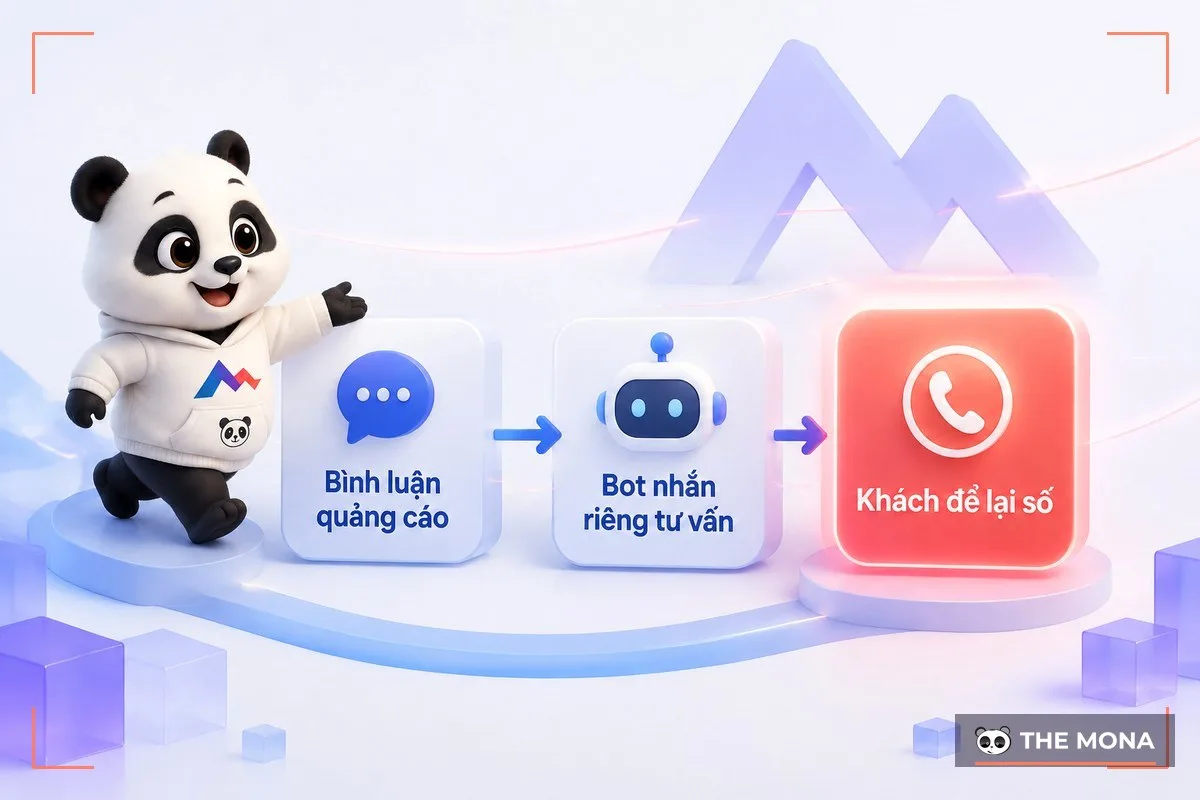
The beauty of this flow is that it turns ad spend into an asset. With a Messenger chatbot, a comment is no longer something that disappears after three days, and a phone number with a stated need is something your sales team can call back and your team can an AI customer care assistant follow up on after a month. The script for each stage deserves care, so check out 12 sample chatbot scripts for closing orders we have already written, so you can take them and adapt them to your industry right away.
For retail shops that want to go one step further and close orders right inside the chat window, MONA has Dê Cười, the AI that closes orders for retail and e-commerce, from the same family as the Messenger chatbot but focused on producing orders.
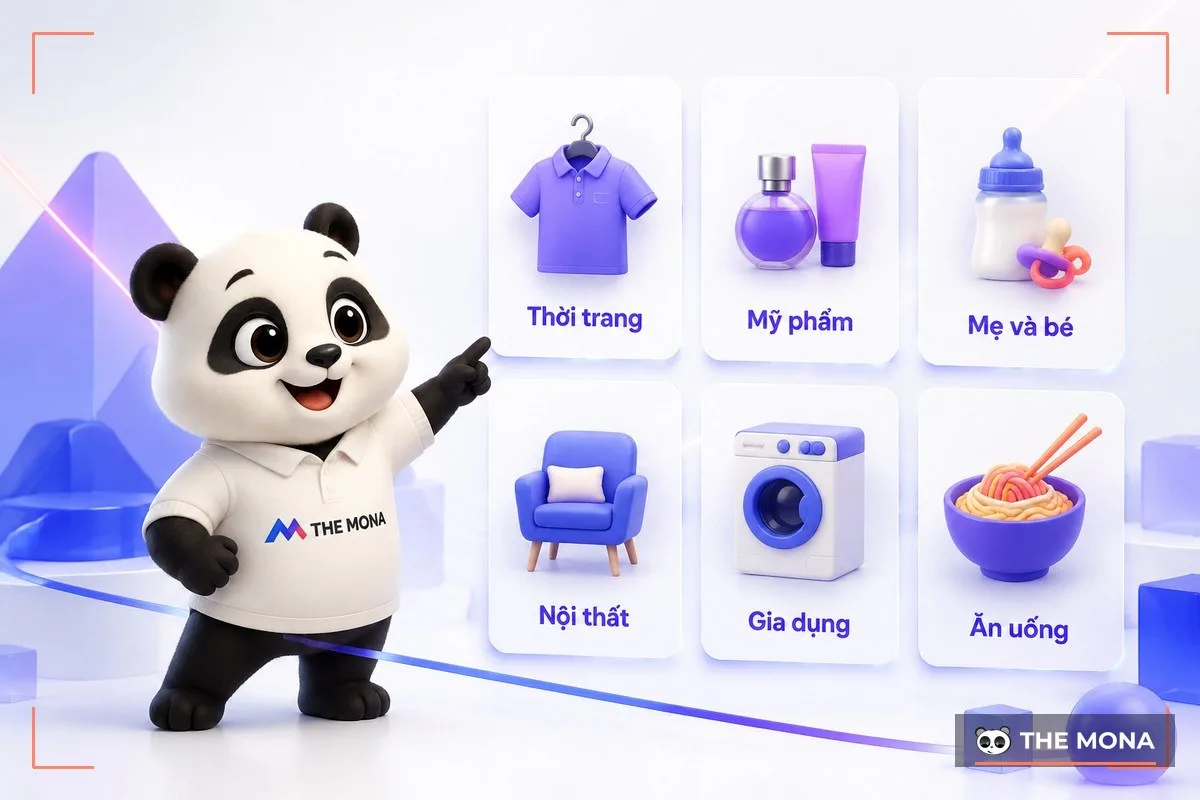
The more an industry sells through Messenger, the sooner and the more profitably it should set up a Messenger chatbot: fashion, cosmetics, mom and baby, furniture, home goods, food and beverage. What these six industries have in common is that regular customers close orders right in the chat window, with no need to meet in person.
Gartner forecasts By 2027, chatbots will become the main customer care channel for about a quarter of businesses. For the six industries above, there's no need to wait until 2027, because many of your competitors have already set one up. If your industry isn't on the list, that's fine too: the core of “answer repeated questions, collect phone numbers, hand tough cases to a person” works in any industry, and if your needs are very specific, we can build a dedicated AI around your workflow.
No, as long as it is done the proper way. The bot connects through Meta's official API and follows the 24-hour messaging window. What gets fanpages locked is tools that get around the rules to mass-spam people who never interacted with the page, and we don't touch anything like that.
Both work. The bot replies to comments publicly and also messages the commenter privately to advise in depth and ask for their number. This is exactly where you get the most phone numbers when running ads.
No. The good parts of your old script can be kept, and the advising part is handed to AI. Old conversation history stays in the fanpage, and customer data from the moment of setup is collected into a far cleaner profile.
The Gấu Cười plan, which covers all channels including Messenger, starts at 5 million VND per month. Put it next to the salary of one person covering the page on the night shift and you can compare for yourself. The exact figure depends on message volume and how deeply it connects to your systems, so call 1900 636 648 and we will price your specific case.
You don't need a big project to start. Take the ad campaign running this week and count three numbers: how many comments, how many messages, and how many of those were answered within one hour. If the third number is under half, you are paying for ads that bring customers to your competitors, just like the 22-store fashion brand above before they fixed it.
Once you have those three numbers, call us 1900 636 648 or message Gấu Cười directly. After we listen, we will tell you straight whether your problem is worth a Messenger chatbot or whether you should fix another step first. If you go ahead, the bot is running live within one to two weeks, loaded with your shop's real data, and the next night you run ads will be the first night no customer is left on read and walks away.
The MONA Group has built software and automation solutions since 2016, with over 14,000 projects delivered and an 85% returning-customer rate. The Messenger chatbot is part of the Gấu Cười suite under MONA's AI Agent suite, do Mona Software developed and run on MONA Host infrastructure in Vietnam. Hotline 1900 636 648, staffed from 8am to 10pm every day.

CEO & Founder · The MONA
The founder of The MONA built a service company of 60+ staff with 14,000+ projects delivered. Khánh Hùng shares his thinking on building self-running systems, automating a business, and the real lessons behind MONA's projects.
 227




Professional website
design services
Own a website with a beautiful, 100% exclusive design and a lifetime warranty, with the ability
to expand features flexibly as your business grows, starting today!






 MONA will never sell your information or send you spam


 MONA will never sell your information or send you spam
