
 MONA OS 2.0
 Partner with MONA


 Tự động hoá doanh nghiệp
 Cẩm nang SEO
 Digital Marketing
 Kinh nghiệm thiết kế website
 Hạ Tầng Server
 Giáo dục


 VI
 EN









Message us on
Zalo Official


 ProductsNew

 ProductsProducts
 Mới ra mắtKHA AI 2027App tự edit video, tự đăng mọi mạng xã hội, 2 phút mỗi ngày










 Website designLooks good and wins customers over.
SEO servicesBrings in customers searching for exactly what you sell.
 Tư vấn digital marketingKéo khách từ nhiều kênh, đo bằng số thật.
Corporate video productionVideos introducing your company, factory and team.
 NewAI video productionCompany story films made with AI.
 Custom software developmentCRM, ERP and HRM built for your business.
 Viết AI Agent theo yêu cầuĐặt riêng một trợ lý AI cho đúng việc của mình.
 Tư vấn chuyển đổi AIĐưa AI vào vận hành của cả công ty.
NewMONA LMSManagement for centers and schools.
MONA SkillHubInternal training for company staff.
 NHTQ systemEnd-to-end China–Vietnam shipping operations.
MONA JMSManagement for gold, diamond and pawn shops.
 MONA E-LearningA website with every feature you need to sell courses.
 How to sell online courses (course)More than 30 free lessons on selling courses on autopilot.
 MONA Cloudmonacloud.vnServers to get your apps and websites running.
 MONA Basemonabase.vnPostgres database, sign-in and file storage.
 MONA Mailmonamail.vnSend OTP, order and invoice emails from your software.
 MONA Paymonapay.vnAccept bank transfers via VietQR and notify your software when the money arrives.
 MONA eInvoiceComing soonIssue e-invoices that meet tax standards.
Gấu CườiTrả lời khách 24/7 trên web, Fanpage, Zalo và thu lead cho sale.
 Gấu TeleSalesGọi điện tư vấn, chăm khách như tổng đài viên thật.
Dê CườiTư vấn và chốt đơn cho shop ngay trong khung chat.
Gấu WebmasterNhắn nhóm Zalo là website được sửa xong.
 Gấu Pháp ChếSoạn hợp đồng, rà điều khoản trong vài phút.
 Gấu Báo GiáLên báo giá đúng mẫu và gửi khách ngay.
 AI chăm sóc khách hàngTheo dõi và giữ chân khách hàng cũ.
 Gấu Tuyển DụngLọc hồ sơ, hẹn lịch, phỏng vấn ứng viên.
 Mới ra mắt
KHA AI 2027
Xây kênh chuyên gia 2 phút mỗi ngày
Quay bằng điện thoại, AI tự edit video, tự đăng lên 16 nền tảng và tự trả lời bình luận, tin nhắn.
941.810lượt xem trên kênh CEO MONA sau 44 ngày
 Anh Khánh HùngCEO MONA đang dùng mỗi ngày
Xem app làm được gì
 AI
Gấu Cười MONA ĐANG TỰ XÀITrả lời khách 24/7 trên website, Zalo OA, Messenger và thu lead về cho sale.
Dê CườiChốt đơn bán lẻ và sàn: Shopee, TikTok Shop, web. Chăm cả khách sỉ, đại lý.
Gấu WebmasterCập nhật nội dung, tối ưu SEO website mỗi ngày.
Gấu TeleSalesGọi điện tư vấn, chăm khách như tổng đài viên thật.
Gấu Tuyển DụngLọc hồ sơ, hẹn lịch, phỏng vấn ứng viên tự động.
AI chăm sóc khách hàngGiữ khách cũ, cứu lead đã rớt cho phòng kinh doanh.
Gấu Pháp ChếSoạn hợp đồng, rà điều khoản trong vài phút.
Gấu Báo GiáLên báo giá đúng mẫu, gửi khách ngay khi có yêu cầu.
 Chuyển đổi AI toàn phầnGiải pháp tổng cho doanh nghiệp, 3 lớp triển khai.
 Viết AI Agent theo yêu cầuĐặt riêng một con AI gánh đúng nghiệp vụ của bạn.
 Custom softwareCRM, ERP and HRM with built-in AI automation.
 SEO & AEO thời đại AIĐược Google lẫn AI trích dẫn, không chỉ xếp hạng.
 Kiến thức AI cho doanh nghiệpBài phân tích, hướng dẫn ứng dụng AI vào vận hành.
 Free AI courses
 AI tools at work
App mới · KHA AI 2027
Xây kênh 2 phút mỗi ngày
AI tự edit video, tự đăng mọi mạng xã hội
Free consultation, 8am–10pm every day

15 June, 2026

Many managers struggle to work with great developers who work by ‘vibe’ and are hard to hold to hard metrics. Managing a Vibe Coder cannot rely only on gut feeling or lines of code. This is where Antigravity helps. It is not just an editor but a system that lets you measure real performance based on data instead of feelings. In this article, we will share how to use Antigravity so you can manage your developer team more effectively.
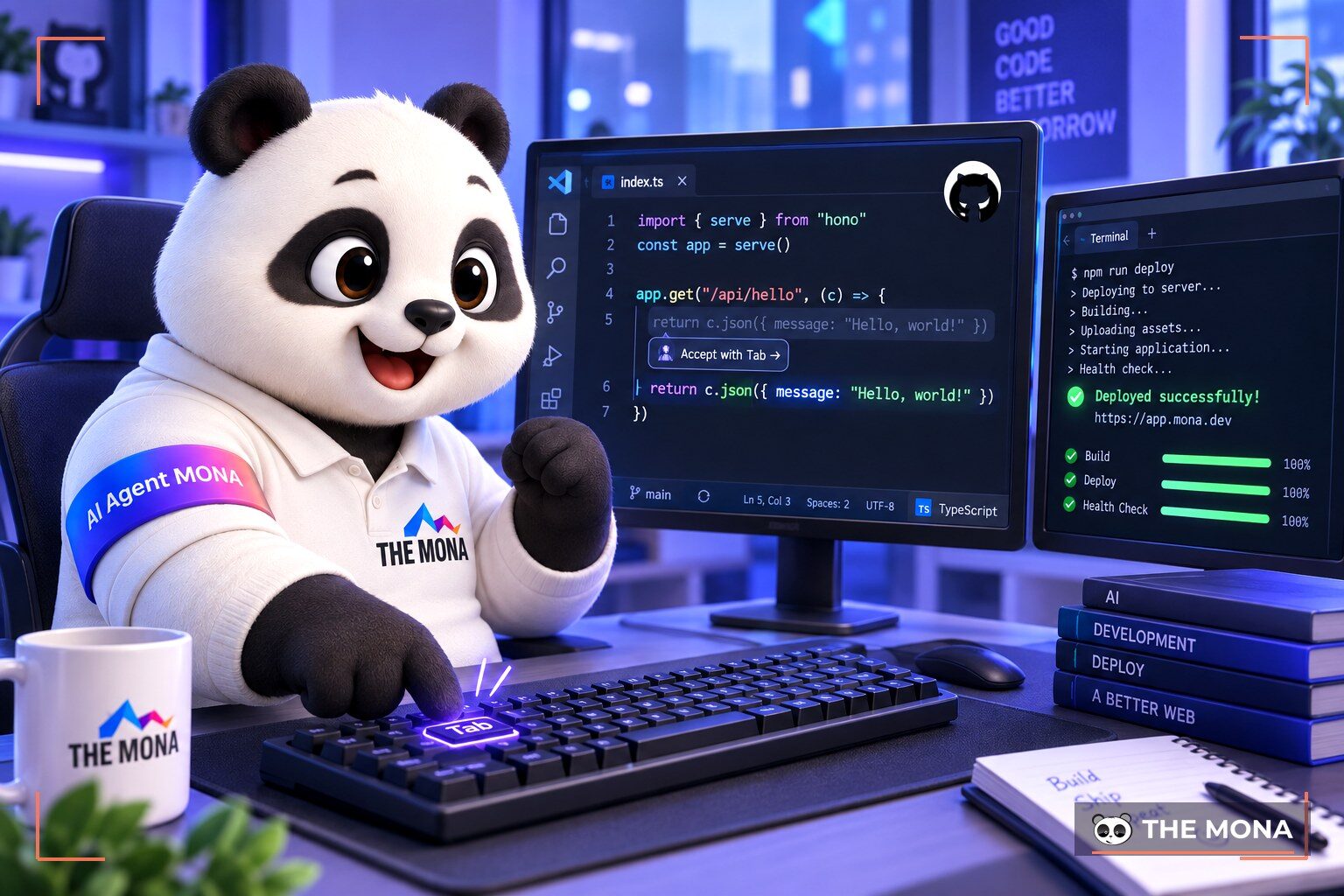
Antigravity is an agent-first AI IDE released by Google, forked from VS Code. It is built for engineers and developers. The AI agent reads, writes and runs code on its own. Humans sit and supervise rather than typing every line.
Many managers look at a code screen and see a fog. You do not know what the dev is doing, whether fast or slow, right or wrong. The feeling of losing control over the tech team is a real pain. Antigravity does not erase that pain right away, but it gives you a window into the process.
The first step is simple. Download the Antigravity public preview, released in November 2025. Install it like any normal editor. Sign in with a Google account to activate the agent. Done, the environment is ready.
Antigravity runs multiple models. You choose Gemini 3, Claude Sonnet or Opus 4.6, or GPT-OSS depending on the task. Each model is strong in its own way. A manager's job is to know which model your team is using for what.
The first command should be simple. Describe a small internal tool in plain language. For example, a data entry page for the accounting department. The agent writes the code and builds the interface by itself. You watch it run step by step.
The key point is that Antigravity can run multiple agents in parallel. One agent builds the interface, another writes the data processing. The manager follows both streams at once.
We advise you not to hand over real work on day one. Let the devs test on a draft project. Watch how the agent works and how the dev corrects it. That is how you understand the tool before betting money on it.
One more note. Antigravity is a tool for devs, not a platform for people who cannot code. If you do not code, you still need a dev supervising the agent. Understanding this role helps you staff it correctly.

No matter how good the agent is, it only does what you state clearly. A vague command gives an off-target result. This is where many teams lose the most time. The dev types one sentence, the agent does something else, and then the whole afternoon goes to going back and forth on fixes.
A manager's big pain is not being able to measure how long a dev loses to sloppy commands. A feature that should take half a day drags to three days. Salaries are paid in full but the product is not out. The feeling of burning money with no result is very unpleasant.
Good commands come down to three concrete parts. The first is context. Tell the agent which department the tool serves and what the business goal is. When the agent understands its role, it guesses less.
The second is detailed requirements. Describe the feature, the input data and the desired output clearly. The more specific you are, the less the agent invents what you do not need. Every ambiguity means one more redo.
The third is format. State how the interface should look and how the data should be sorted. If you say it up front, the agent builds it right the first time, saving a round of fixes.
These three parts are not a secret formula. They are a way of writing clear requirements that any serious tech team should apply. Managers should ask devs to save the commands they used. A good command can be reused for later jobs.
We advise you to treat command quality as a management metric. A dev who gives clear commands and needs few fixes is a high performer. You can measure this by how many rounds the agent has to redo.
For complex, industry-specific business logic, the agent still needs someone who knows the business sitting with the dev. Antigravity speeds things up; it cannot replace your business knowledge.

A vibe coder is a dev who works on inspiration: talented but hard to hold to hard metrics. You cannot measure them by lines of code. More code is not necessarily better, and sometimes it is technical debt. This is the real management problem in the age of AI-written code.
The familiar pain is that you do not know whether a job is done or not, good or bad, until it breaks downstream. The dev reports done, the product runs for a few days and then fails. When you trace it back, nobody remembers what was done. Managing without visibility means managing on trust.
Antigravity makes your team less of a black box through logs. You ask the agent to write a log entry every time it finishes a task. Every step the agent takes leaves a trail. Open the log and you can see where the team has been.
Next come explanatory comments. You ask the agent to write plain-language notes for the complicated parts of the code. A manager who can't read code still understands what each part does. The gap between managers and devs gets smaller.
Supervising the agent is the core of the job. Antigravity lets a human review the agent's output before it moves on. You can set it up so a dev has to review every step the agent proposes. The agent runs fast, but the final valve is still a person.
You should also set automatic alerts for when errors appear. An error caught early is cheap to fix. An error hidden until production is expensive.
We advise you to manage vibe coders by results and traces, not by gut feeling. Measure completed tasks, how often the agent has to redo work, and errors that slip past review. Those are real dev performance metrics, based on data.

Any team that has worked a while piles up a stack of internal tools. Throwing them away is wasteful. Rebuilding from scratch for every new request is slow. This is where many teams burn time without noticing.
The pain is that devs build the same thing several times for different departments. Department A asks for a customer management app, department B asks for an appointment app, and the two are 70% the same. The dev starts over from zero. Time passes, salaries get paid, and the value just repeats.
Antigravity lets you build the new on top of existing code. You keep the small tools you've built as a library of your own inside the project. Each one is a brick you can reuse.
When a new app is needed, the dev tells the agent to reference a tool in the library. The agent reads what already exists and builds the new part on top of it. You don't start from a blank page.
An easy example. The team already has a customer management module. When an appointment app is needed, the dev tells the agent to use the data management part of the old module as the base. The framework is reused and only the appointment logic is added. The time drops noticeably.
Managers should turn this into a team rule. Whatever a dev builds gets saved in an organized way. The company's code assets live there, not in one person's head.
We advise you to measure reuse too. A team that builds on old foundations a lot and rebuilds little is running smartly. This is also a performance metric few people notice.
One note: fast reuse only holds for lightweight internal tools. Products for customers need a much higher standard, and we cover that in the next part.

Antigravity builds prototypes very fast. An internal tool, a test version, a demo for the boss to approve, all fine. But don't confuse a working prototype with software that runs for the whole company.
The pain shows up when a team takes a self-built tool and uses it for hundreds of people. It's slow, it breaks, it can't handle the load. Customer data is at risk of leaking. By then, fixing it costs many times more than doing it properly from the start. What looked cheap at first turns out to be the most expensive.
The first problem is data integration. A real system has to connect with the CRM, the ERP, and the core systems already running. A prototype an agent put together in a hurry can hardly plug into those systems in a lasting way.
The second problem is security. Customer data and internal data have to be protected to the proper standard. Permissions, encryption, access logs. This is not something you patch together in one afternoon.
The third problem is scale. Serving a few people is very different from serving dozens of branches with overlapping processes. A production system has to carry the load, stay stable, and have someone accountable when an incident happens.
Antigravity is a speed tool for devs. It doesn't turn itself into a dedicated engineering team for you. A CEO with a hundred things to do can't sit and watch an agent all day. Real production needs a team that builds and maintains.
This is where MONA 2.0 steps in. We are an AI and automation company. We build specialized automation software, with CRM and ERP integration, enterprise security, and scaling to real size. Use Antigravity to test ideas, and when you need a system that runs for the whole company, hand it to us.


CEO & Founder · The MONA
Founder of The MONA, who built a services company of 60+ staff with 14,000+ projects delivered. Khánh Hùng shares how he thinks about building systems that run themselves, automating a business, and the real lessons from delivering projects at MONA.
 436




Professional website
design services
Own a website with a beautiful, 100% exclusive design and a lifetime warranty, with the ability
to expand features flexibly as your business grows, starting today!






 MONA will never sell your information or send you spam


 MONA will never sell your information or send you spam
