
 MONA OS 2.0
 Partner with MONA


 Tự động hoá doanh nghiệp
 Cẩm nang SEO
 Digital Marketing
 Kinh nghiệm thiết kế website
 Hạ Tầng Server
 Giáo dục


 VI
 EN





Message us on
Zalo Official


 ProductsNew

 ProductsProducts
 Mới ra mắtKHA AI 2027App tự edit video, tự đăng mọi mạng xã hội, 2 phút mỗi ngày









 Website designLooks good and wins customers over.
SEO servicesBrings in customers searching for exactly what you sell.
 Tư vấn digital marketingKéo khách từ nhiều kênh, đo bằng số thật.
Corporate video productionVideos introducing your company, factory and team.
 NewAI video productionCompany story films made with AI.
 Custom software developmentCRM, ERP and HRM built for your business.
 Viết AI Agent theo yêu cầuĐặt riêng một trợ lý AI cho đúng việc của mình.
 Tư vấn chuyển đổi AIĐưa AI vào vận hành của cả công ty.
NewMONA LMSManagement for centers and schools.
MONA SkillHubInternal training for company staff.
 NHTQ systemEnd-to-end China–Vietnam shipping operations.
MONA JMSManagement for gold, diamond and pawn shops.
 MONA E-LearningA website with every feature you need to sell courses.
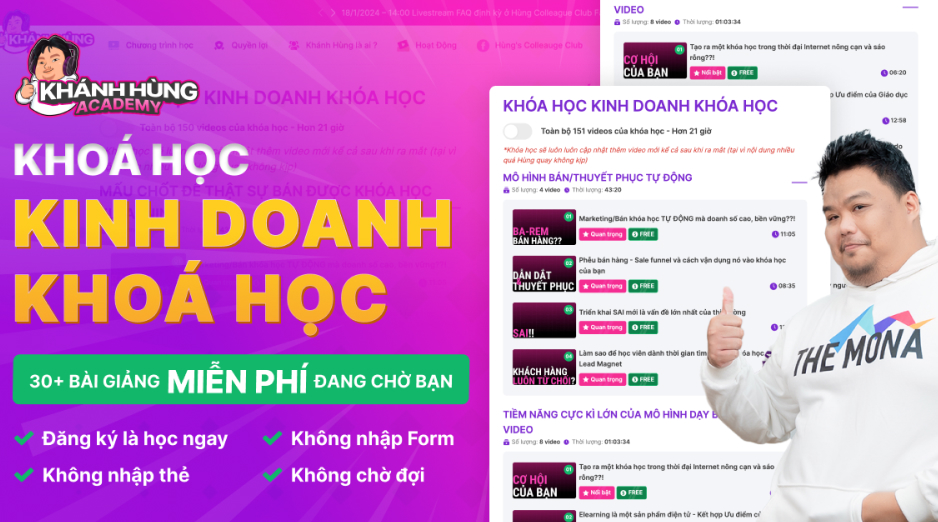 How to sell online courses (course)More than 30 free lessons on selling courses on autopilot.
 MONA Cloudmonacloud.vnServers to get your apps and websites running.
 MONA Basemonabase.vnPostgres database, sign-in and file storage.
 MONA Mailmonamail.vnSend OTP, order and invoice emails from your software.
 MONA Paymonapay.vnAccept bank transfers via VietQR and notify your software when the money arrives.
 MONA eInvoiceComing soonIssue e-invoices that meet tax standards.
Gấu CườiTrả lời khách 24/7 trên web, Fanpage, Zalo và thu lead cho sale.
 Gấu TeleSalesGọi điện tư vấn, chăm khách như tổng đài viên thật.
Dê CườiTư vấn và chốt đơn cho shop ngay trong khung chat.
Gấu WebmasterNhắn nhóm Zalo là website được sửa xong.
 Gấu Pháp ChếSoạn hợp đồng, rà điều khoản trong vài phút.
 Gấu Báo GiáLên báo giá đúng mẫu và gửi khách ngay.
 AI chăm sóc khách hàngTheo dõi và giữ chân khách hàng cũ.
 Gấu Tuyển DụngLọc hồ sơ, hẹn lịch, phỏng vấn ứng viên.
 Mới ra mắt
KHA AI 2027
Xây kênh chuyên gia 2 phút mỗi ngày
Quay bằng điện thoại, AI tự edit video, tự đăng lên 16 nền tảng và tự trả lời bình luận, tin nhắn.
957.751lượt xem trên kênh CEO MONA sau 52 ngày
 Anh Khánh HùngCEO MONA đang dùng mỗi ngày
Xem app làm được gì
 AI
Gấu Cười MONA ĐANG TỰ XÀITrả lời khách 24/7 trên website, Zalo OA, Messenger và thu lead về cho sale.
Dê CườiChốt đơn bán lẻ và sàn: Shopee, TikTok Shop, web. Chăm cả khách sỉ, đại lý.
Gấu WebmasterCập nhật nội dung, tối ưu SEO website mỗi ngày.
Gấu TeleSalesGọi điện tư vấn, chăm khách như tổng đài viên thật.
Gấu Tuyển DụngLọc hồ sơ, hẹn lịch, phỏng vấn ứng viên tự động.
AI chăm sóc khách hàngGiữ khách cũ, cứu lead đã rớt cho phòng kinh doanh.
Gấu Pháp ChếSoạn hợp đồng, rà điều khoản trong vài phút.
Gấu Báo GiáLên báo giá đúng mẫu, gửi khách ngay khi có yêu cầu.
 Chuyển đổi AI toàn phầnGiải pháp tổng cho doanh nghiệp, 3 lớp triển khai.
 Viết AI Agent theo yêu cầuĐặt riêng một con AI gánh đúng nghiệp vụ của bạn.
 Custom softwareCRM, ERP and HRM with built-in AI automation.
 SEO & AEO thời đại AIĐược Google lẫn AI trích dẫn, không chỉ xếp hạng.
 Kiến thức AI cho doanh nghiệpBài phân tích, hướng dẫn ứng dụng AI vào vận hành.
 Free AI courses
 AI tools at work
App mới · KHA AI 2027
Xây kênh 2 phút mỗi ngày
AI tự edit video, tự đăng mọi mạng xã hội
Free consultation, 8am–10pm every day

19 August, 2026
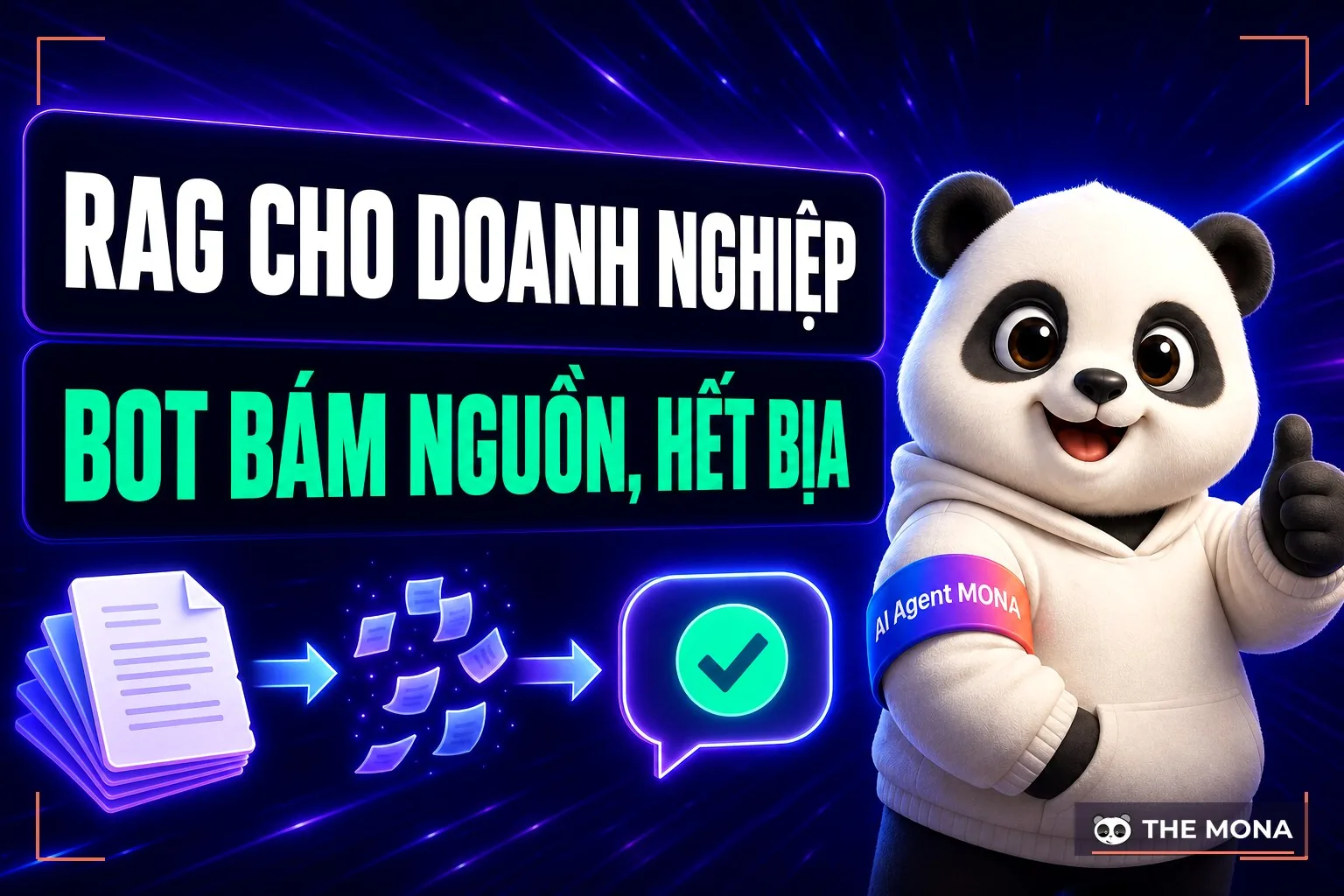
Enterprise RAG deployment means building a flow where a chatbot first finds the right piece of internal documentation, then uses AI to write an answer with sources. After more than 14,000 projects, we only put a bot into operation when the administrator can see the 5-step architecture, the source of the 70 chunks cut from 10 files, and code that has passed 2 review rounds. The definition is already covered in the article What is RAG. Sources must be visible.
When a customer asks about the rescheduling policy, a bot usually has 2 paths: guess from general knowledge, or find the right document the business has approved. RAG takes the second path. It finds the relevant piece in the knowledge base, hands that piece to the model together with the question, and requires the answer to stay within the sources just found. Look up first, then speak.
Each question goes through 5 processing passes in sequence and 2 cross-checks between the retrieved pieces and the answer, so the team knows whether the fault lies in the knowledge base or in the answer-generation instructions. If the bot grabs the wrong piece, fix the knowledge base; if it grabs the right piece but words it wrong, fix the instructions. Separate the faults and fix them.
We place that flow inside the AI-Native software development model, where both code and sources must be checked by a person.
At MONA, the chatbot on mona.media and the call center 1900 636 648 run on a RAG architecture. One sub-knowledge base of the system loads 10 files into 70 chunks, each chunk tagged with its source so the answer leads back to the right document. These are technical traces we actually use, not a diagram made for presentations.
A good RAG knowledge base starts with choosing sources. Internal documents, published price lists, return policies and stable operating guides are reasonable inputs. Balances, stock levels or order status that change every second should be read from the source system through an API. Don't copy them into files and hope RAG stays right. Choose sources first.
| Data type | Put into RAG | How to use it correctly |
|---|---|---|
| Approved internal documents | Have | Split into chunks, tag with file name, section and effective date |
| Price lists, policies | Yes, when versions are clear | Remove the old version when the new one takes effect |
| Stock levels, order status | Don't copy statically | Call the source system at the moment the customer asks |
| Legal decisions | Reference source only | Hand off to the responsible person to decide |
We usually lock 3 minimum metadata fields for each piece: source, document section and version. That way the bot can cite what it relied on, and the administrator can find the file to fix. The team working on AI chatbot for business don't dump a mixed-up pile of documents into the knowledge base and hope the model will tell old versions from new ones on its own.
Before loading, the team runs 3 version checks and 2 cross-checks against the source system for any live data.
The flow below is the skeleton of a RAG chatbot. Use it to question the partner who is implementing it: where does each step run, what evidence does it store, and where does the operator look when something goes wrong. There are exactly 5 steps. If a step is missing, keep asking.
At step 3, retrieving more is not necessarily better; extra pieces add noise to the answer. At step 4, the instructions must be explicit: if no piece gives enough grounds, say nothing was found and hand off to the responsible person. This fallback is what keeps the chatbot from guessing wildly.
The team runs the flow 5 times as designed and repeats it 2 times with questions outside the knowledge base, because a bot that knows when to stop counts as passing acceptance.
The 5-step flow is also a very clear spec for the engineering team. The article how to write a spec for AI shows how to add inputs, outputs, error cases and acceptance criteria so this flow can be coded and then graded against the same answer key.
If you throw a whole long file at the model, the right part easily gets buried among many irrelevant passages. A chunk is a small piece of a document, big enough to carry one complete idea, together with information on which file it came from. MONA's chatbot sub-knowledge base takes 10 files and splits them into 70 chunks, an average of 7 pieces per file in that set. Small pieces are easy to find.

The number 7 is just the division for this sub-knowledge base, not a formula for every document. A contract with long clauses needs related parts kept together; a price list needs the plan name kept next to its price; an FAQ can be split by question and answer pair. We choose boundaries by meaning, not by chopping evenly by character count.
Each chunk keeps at least 3 traces: source file, source section, version or effective date. When the bot answers wrong, the team opens the log to see which of the 70 chunks it pulled. If the source is right but the wording is wrong, fix the instructions; if the source is wrong, fix the splitting or retrieval. Diagnosing in two halves like this saves a lot of rounds of guessing.
At acceptance, the team tries retrieval 5 times with different ways of asking, then runs 2 times with questions that aren't in the knowledge base to check the fallback.
Do you have a folder of documents and aren't sure it's ready for RAG? Send up to 10 representative files through the MONA chat window. We'll point out which files need old versions removed, where sources must be tagged and how to split chunks so your engineering team can build a trial version on its own.
RAG keeps a bot grounded in its sources only when the whole chain is done right. Four common faults: chunks cut so they lose meaning, several versions living side by side, no metadata stored, and forcing the bot to answer even when it finds no basis. Just 1 of these faults is enough for answers to drift away from the real documents. Clean the knowledge base first.
| Where it's sloppy | Sign in the log | How to fix |
|---|---|---|
| Chunk loses context | A piece has the conclusion but misses the conditions before it | Merge into 1 complete business idea |
| Old and new versions coexist | Two chunks return 2 different policies | Add effective dates, switch off the old version |
| No metadata | The bot answers but can't point to a source | Tag file, section and version on every chunk |
| Refusal not allowed | Finds nothing but still produces a confident answer | Add a “no basis yet” branch and hand off to a person |
In the trial version, we check 2 rates separately: for questions with sources, does the bot pull the right piece, and for questions outside the knowledge base, does the bot stop. The brief gives no universal threshold, so each business must fix its acceptance question set from real data. Don't accept a nice-looking number from a partner without seeing the list of questions behind it.
We save both groups of questions so the next knowledge base update re-runs the exact same set, avoiding fixing one spot and breaking another.
Every knowledge base change must pass 4 checks, one per fault in the table, and at least 2 re-runs of the previous question set.
Visitors who open the mona.media chat window or call the call center 1900 636 648 all need answers grounded in information MONA has approved. The RAG architecture takes the question, finds chunks in the knowledge base, generates an answer and keeps the sources in the log. A sub-knowledge base of 10 files split into 70 chunks is the part we've opened up in this brief. Running for real.
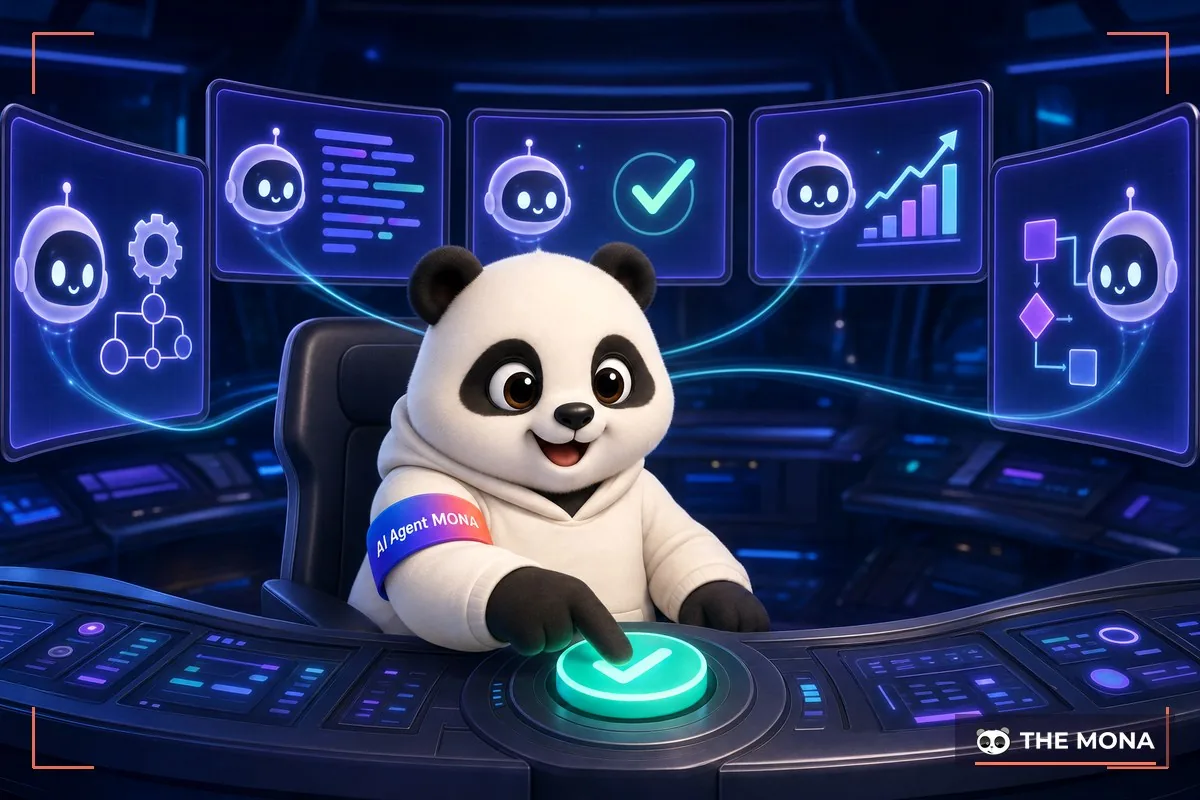
AI handles the finding and the wording. A senior dev reviews code through 2 gates before it reaches the server; the content owner decides which documents go into the knowledge base and when old versions expire. Clearly separated roles keep the bot from becoming the place where policy gets issued.
Each question goes through 5 processing passes, while code and sources keep 2 review rounds with separate roles before a new version goes live.
This architecture also connects to the custom AI agent developmentservice. RAG handles remembering the right documents; an agent handles calling tools within its granted limits. If you need a bot that only answers, stop at RAG; if you need it to update orders or create requests, add permission gates, confirmation and logs.
RAG is not the answer for all business data. For the 3 groups below, the team runs 3 source cross-checks and keeps 2 reviews by the responsible person, because an answer drifting off old data can send a real decision the wrong way. Know when to stop.
A real flow can combine the two: RAG finds the exchange policy, and code checks the purchase date and order status from live data. We advise teams working on enterprise AI transformation to draw this boundary before buying more models or enlarging the document store.
RAG is a technical architecture inside a product; the 4 pillars are how you manage the whole project. SDD records the 5 steps and the acceptance cases, AI-DLC lets AI assist from analysis through operations, Kanban keeps each change flowing continuously, Agentic SDLC keeps small MVPs moving fast within boundaries. Architecture needs process.
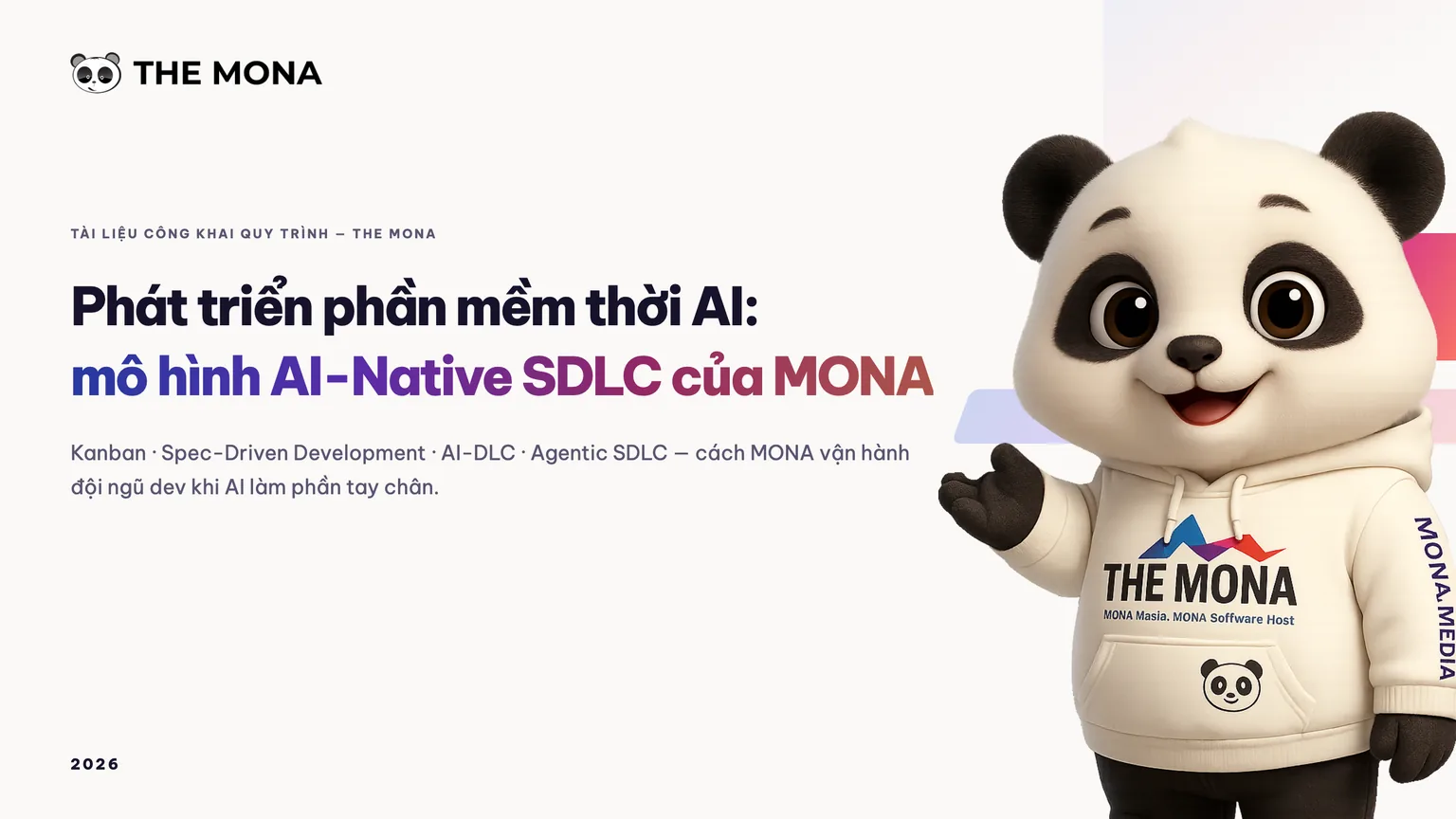
Over AI-Native software development model, while people still set the problems, keep control and take responsibility. The bot searching 70 chunks is the hands and feet; people approve the sources, the permissions and which questions go to a specialist. If your team is stuck because knowledge base changes wait for a 2-week cycle to finish, take a look at Kanban for continuous flow.
On August 19, 2026, we published a 14-page whitepaper on the 4 pillars after one afternoon of work using exactly this model. AI built the repetitive parts, and a person caught 3 layout errors. The same principle keeps a RAG project fast while someone still answers for every response.
RAG cuts down on guessing by forcing the bot to look up sources first. After more than 14,000 projects, we still keep 2 review rounds for sources and code, because a RAG label alone isn't enough to hand responsibility to a machine.
There is no universal file count. The sub-knowledge base MONA uses has 10 files split into 70 chunks, but the number depends on what the documents mean. Pick one group of approved policies and a set of real questions first, then measure how well it finds the right answer.
RAG keeps knowledge in a document store that you replace separately, while the model that generates answers doesn't need to be retrained each time a policy changes. When a new price list takes effect, the team swaps the source and re-indexes the affected part.
The business owner of the topic approves the content; the engineering team handles chunks, metadata and search. At minimum these 2 roles must be clear. Developers don't issue policy on their own, and content owners don't grant system access on their own.
Enterprise RAG deployment should start from one approved set of documents, not the whole storage drive. Run the flow 5 times, repeat 3 times with questions outside the knowledge base, and keep enough source traces for every chunk. A bot that knows to stop when it lacks grounds is worth more than a bot that answers every question. Small knowledge base, clear sources.
If you want to build AI agent suite or a RAG chatbot from internal documents, call 1900 636 648. We'll start with the sources, how to split chunks and the acceptance question set; exactly 5 steps first, and only then talk about the interface or the number of models.
Don't dump your whole document drive into a bot and wait for it to understand on its own
Send MONA 10 representative files. We'll review old versions, sources and chunk boundaries and build the 5-step flow so you can see where the bot gets its answers.

CEO & Founder · The MONA
Founder of The MONA, who built a services company of 60+ staff with 14,000+ projects delivered. Khánh Hùng shares how he thinks about building systems that run themselves, automating a business, and the real lessons from delivering projects at MONA.
 430



Professional website
design services
Own a website with a beautiful, 100% exclusive design and a lifetime warranty, with the ability
to expand features flexibly as your business grows, starting today!






 MONA will never sell your information or send you spam


 MONA will never sell your information or send you spam
