
 MONA OS 2.0
 Partner with MONA


 Tự động hoá doanh nghiệp
 Cẩm nang SEO
 Digital Marketing
 Kinh nghiệm thiết kế website
 Hạ Tầng Server
 Giáo dục


 VI
 EN






Message us on
Zalo Official


 ProductsNew

 ProductsProducts
 Mới ra mắtKHA AI 2027App tự edit video, tự đăng mọi mạng xã hội, 2 phút mỗi ngày










 Website designLooks good and wins customers over.
SEO servicesBrings in customers searching for exactly what you sell.
 Tư vấn digital marketingKéo khách từ nhiều kênh, đo bằng số thật.
Corporate video productionVideos introducing your company, factory and team.
 NewAI video productionCompany story films made with AI.
 Custom software developmentCRM, ERP and HRM built for your business.
 Viết AI Agent theo yêu cầuĐặt riêng một trợ lý AI cho đúng việc của mình.
 Tư vấn chuyển đổi AIĐưa AI vào vận hành của cả công ty.
NewMONA LMSManagement for centers and schools.
MONA SkillHubInternal training for company staff.
 NHTQ systemEnd-to-end China–Vietnam shipping operations.
MONA JMSManagement for gold, diamond and pawn shops.
 MONA E-LearningA website with every feature you need to sell courses.
 How to sell online courses (course)More than 30 free lessons on selling courses on autopilot.
 MONA Cloudmonacloud.vnServers to get your apps and websites running.
 MONA Basemonabase.vnPostgres database, sign-in and file storage.
 MONA Mailmonamail.vnSend OTP, order and invoice emails from your software.
 MONA Paymonapay.vnAccept bank transfers via VietQR and notify your software when the money arrives.
 MONA eInvoiceComing soonIssue e-invoices that meet tax standards.
Gấu CườiTrả lời khách 24/7 trên web, Fanpage, Zalo và thu lead cho sale.
 Gấu TeleSalesGọi điện tư vấn, chăm khách như tổng đài viên thật.
Dê CườiTư vấn và chốt đơn cho shop ngay trong khung chat.
Gấu WebmasterNhắn nhóm Zalo là website được sửa xong.
 Gấu Pháp ChếSoạn hợp đồng, rà điều khoản trong vài phút.
 Gấu Báo GiáLên báo giá đúng mẫu và gửi khách ngay.
 AI chăm sóc khách hàngTheo dõi và giữ chân khách hàng cũ.
 Gấu Tuyển DụngLọc hồ sơ, hẹn lịch, phỏng vấn ứng viên.
 Mới ra mắt
KHA AI 2027
Xây kênh chuyên gia 2 phút mỗi ngày
Quay bằng điện thoại, AI tự edit video, tự đăng lên 16 nền tảng và tự trả lời bình luận, tin nhắn.
925.105lượt xem trên kênh CEO MONA sau 41 ngày
 Anh Khánh HùngCEO MONA đang dùng mỗi ngày
Xem app làm được gì
 AI
Gấu Cười MONA ĐANG TỰ XÀITrả lời khách 24/7 trên website, Zalo OA, Messenger và thu lead về cho sale.
Dê CườiChốt đơn bán lẻ và sàn: Shopee, TikTok Shop, web. Chăm cả khách sỉ, đại lý.
Gấu WebmasterCập nhật nội dung, tối ưu SEO website mỗi ngày.
Gấu TeleSalesGọi điện tư vấn, chăm khách như tổng đài viên thật.
Gấu Tuyển DụngLọc hồ sơ, hẹn lịch, phỏng vấn ứng viên tự động.
AI chăm sóc khách hàngGiữ khách cũ, cứu lead đã rớt cho phòng kinh doanh.
Gấu Pháp ChếSoạn hợp đồng, rà điều khoản trong vài phút.
Gấu Báo GiáLên báo giá đúng mẫu, gửi khách ngay khi có yêu cầu.
 Chuyển đổi AI toàn phầnGiải pháp tổng cho doanh nghiệp, 3 lớp triển khai.
 Viết AI Agent theo yêu cầuĐặt riêng một con AI gánh đúng nghiệp vụ của bạn.
 Custom softwareCRM, ERP and HRM with built-in AI automation.
 SEO & AEO thời đại AIĐược Google lẫn AI trích dẫn, không chỉ xếp hạng.
 Kiến thức AI cho doanh nghiệpBài phân tích, hướng dẫn ứng dụng AI vào vận hành.
 Free AI courses
 AI tools at work
App mới · KHA AI 2027
Xây kênh 2 phút mỗi ngày
AI tự edit video, tự đăng mọi mạng xã hội
Free consultation, 8am–10pm every day

10 June, 2026

ChatGPT for marketing is a hot topic, but not everyone gets the most out of it. You've probably tried using AI to write content, run ads or optimize SEO, and may have struggled when results didn't match your expectations. Many Vietnamese businesses waste time by giving the wrong commands, or by stopping at basic tools. We at MONA understand this and want to share hands-on secrets. This isn't an ordinary ChatGPT guide but the tricks the pros use to force AI to create real value, helping your marketing team raise capacity noticeably while saving cost and time.

Many business owners and marketing heads tell us the same thing. Marketing teams are always in the grind of creative work. It's exhausting. They spend most of their time on repetitive tasks instead of strategic thinking. This is when we need a powerful tool.
Used the right way, ChatGPT is more than a chatbot. It's an engine that speeds up work. We at MONA have applied it and seen the results clearly. The tool frees staff from manual work. That gives them more time for higher-value tasks.
Every day, a marketing employee handles dozens of small jobs. A concrete example. Writing 5 headline variations for a SEO. Drafting 3 emails with different angles. Or creating captions for the same content on Facebook, Zalo and LinkedIn. These take many hours.
With a standard prompt template, ChatGPT can finish them in minutes. Just feed in the original content and a specific request. For example: “From this article, create 5 Facebook captions, each no more than 3 lines, focused on benefits X and Y”. Fast. Effective. Staff only need to review and fine-tune at the end.
Speed is a competitive advantage. The business that publishes quality content faster wins customers' attention. But more capacity usually meant more headcount. That's no longer true.
One person, with ChatGPT's help, can triple or even quintuple their workload. Instead of writing from scratch, they use AI to sketch outlines and draft first versions. Their job is to direct, edit and breathe the brand into the piece. This is how modern marketing teams operate to optimize website and other media channels.
The hardest stage is often the start. A blank page. It's a nightmare. Coming up with ideas for a campaign, a series of posts or a video script can take days.
ChatGPT is an extremely effective brainstorming partner. You can ask it to list 10 blog topic ideas for F&B. Or 5 short video scripts for a new product. What the AI gives back may not be polished. Certainly not. But it provides a solid starting point, breaks the deadlock and helps the team quickly settle on a direction.

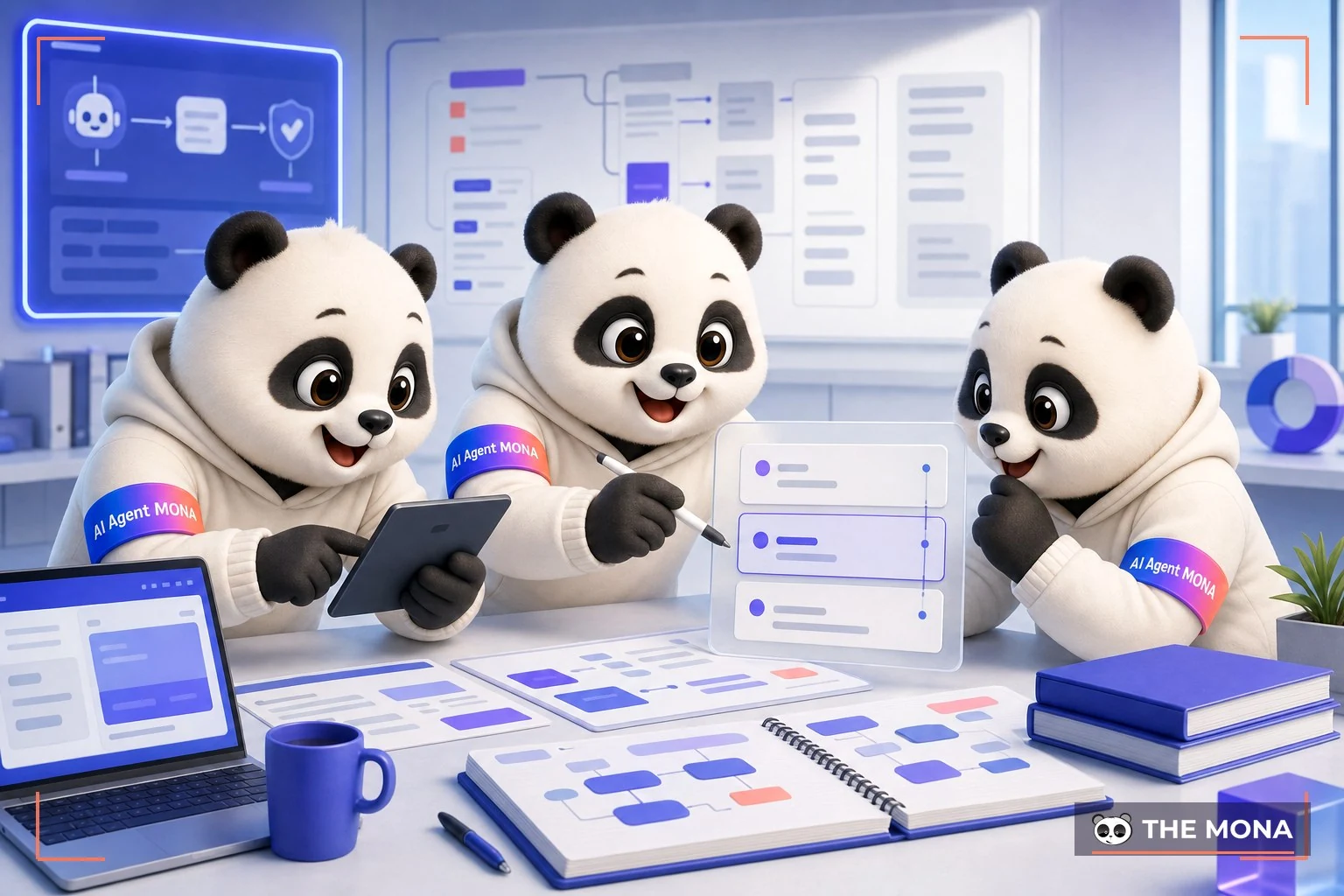
Many people try ChatGPT and find the results very generic. It doesn't grasp their own voice or understand the business's goals. This can be solved. At MONA, we use a 4-layer formula to “train” the AI right inside the prompt. It's the secret to turning ChatGPT from a general-purpose tool into a real marketing assistant for you.
This formula keeps every result consistent. It goes straight to the goal.
The first step is to tell the AI to “play” a specific expert. Instead of a generic request, give it a clear title, experience and point of view. This shapes the AI's whole way of thinking and writing. For example, ask it to write as a Marketing Director with 10 years of experience in F&B, instead of just saying “write an ad”.
The AI can't know your business on its own. We need to give it context. Context includes information about the product, the target customers, the campaign goal, and even what competitors are doing. The more quality background you provide, the more relevant and insightful the content the AI produces, avoiding clichéd ideas.
This is the core of the prompt. Describe exactly what you want the AI to do. The request must be specific, not vague. For example, instead of saying “write about product A”, command: “Write 3 Facebook ad variations for product A, each no more than 150 words, focused on benefits X and Y for female office workers aged 25-35”.
Finally, specify exactly how you want the result returned. This saves editing time and makes the output ready to use. You can ask the AI to reply as a table, a bulleted list, a finished social post with hashtags, or even a snippet of HTML code. A clear format helps the AI understand the exact structure you want.


Many people try it and find ChatGPT's SEO writing very generic. Boring to read. That's because we haven't forced it to think like a real expert, someone with 10 years in the field. When you assign a specific role, the AI stops answering superficially. It starts thinking deeper about strategy.
This is how MONA's SEO team regularly speeds up research and content production for its projects SEO services . The results are very different.
Before writing anything, we need to know what competitors are doing. Instead of having staff read the top 5 to 10 articles by hand, give this job to AI. Tell it to act as an SEO analysis expert.
An effective prompt looks like this:
In just a few seconds, you'll have a detailed analysis. It helps the marketing team understand the playing field before starting, an essential step in projects professional website design with integrated overall SEO.
Once you understand the competitors, the next step is building a better article structure. A good outline must comprehensively answer the user's search intent. This is a crucial factor for Google RankBrain to rate your content highly.
You can continue the conversation with ChatGPT:
The result is a logical, complete outline. It helps staff write faster and ensures the article has depth and covers every aspect readers care about.
LSI (Latent Semantic Indexing) keywords are terms related to the main topic. Including them helps Google understand the context and treat your content as an authoritative source. Searching for them by hand takes a lot of time.
Let the “AI SEO expert” do this:
With this list, the content writer only needs to weave them in skillfully. This approach raises semantic density without keyword stuffing, a technique we always apply for MONA's customers.

Doing social media with ChatGPT shouldn't stop at asking for a few scattered ideas. You need a process tight enough to produce many posts while each channel keeps its own voice.
The easy mistake is taking one main piece of content and posting it unchanged on Facebook, Zalo, Instagram and TikTok. It looks like a time saver, but the voice quickly becomes repetitive.
We usually use ChatGPT as an assistant to build the framework, create variations and check for overlap. This lets the marketing team have 30 draft posts in 1 hour, before editing them with real experience.
The first step is to put ChatGPT in the role of content calendar planner. Don't just type “write a Facebook post for me”, because that prompt is too broad.
Give it full context. The clearer, the faster.
A practical prompt could read as follows. You ask ChatGPT to create a content calendar for 30 social media posts, split by channel and by goal.
The prompt should ask for a table with topic, angle, suitable channel, image format and call to action. This table is the backbone of the whole hour of work.
MONA usually adds a control line at the end of the prompt. That line tells ChatGPT not to repeat angles between posts, and to flag which posts are likely to overlap in message.
Well worth doing.
Once you have the content calendar, choose one core message for each group of posts. ChatGPT will turn that message into multiple versions for each platform.
Facebook needs an opening line with context and a reason to keep reading. Zalo needs to be short, clear and close to a sales conversation or care for existing customers.
Instagram needs strong visuals and tight copy. TikTok needs shooting angles, short dialogue and a situation that's easy to grasp from the first second.
For the same message, we usually ask ChatGPT to split it out with this structure.
The trick is in the command “don't rewrite by swapping synonyms”. ChatGPT has to change the angle, the situation and the way it opens.
That way the posts don't look alike on the surface. More importantly, each channel has its own reason to exist.
Don't post one piece everywhere.
A caption isn't just the text under an image. On social media, the caption decides what viewers understand, tap and remember after a few seconds.
Ask ChatGPT to write captions per channel, not one shared version. Each platform has a different reading rhythm.
The prompt should state the length, tone and desired action. For example, Facebook favors explanation, Zalo favors trust, Instagram favors brevity, TikTok favors spoken lines.
We also often add a self-scoring step. ChatGPT has to rate each caption on clarity, distinctiveness and fit for the channel.
This step saves editing time.
After that, the marketing staff only need to pick the best version, adjust it to the real product and check the information before posting. AI supplies speed, people keep the quality.
For MONA, ChatGPT is a good tool for drafts, posting calendars and visual ideas. But when a business needs seamless data, permissions, performance tracking and multi-step automation, standalone tools hit a ceiling.
That's when you need your own software or a marketing system tied to your website, SEO, CRM and sales data. MONA can build that part with you so content goes out steadily and also feeds cash flow.

An ad only works when it's both accurate and compelling enough to make the reader act. One wrong word or a slightly off idea can drain the message of its force right before the customer decides.
This part helps you use ChatGPT as both writer and content reviewer. Writing isn't enough. You have to make the AI check itself for errors.
ChatGPT tends to write by feel if you only ask it to “write better”. MONA usually guides marketing teams to set criteria before asking the AI to revise.
The clearer the criteria, the closer the self-scoring. You should ask ChatGPT to evaluate by specific groups of errors.
You can use the following prompt to make ChatGPT grade an ad using the 4-layer prompt formula.
This keeps you from being carried away by the first draft. It adds a layer of control before content goes onto the website, into SEO or into ads.
Spelling mistakes in ads cost a brand points fast. Grammar errors also make sales lines stumble, hard to read and hard to believe.
Don't just tell ChatGPT to “fix errors”. That prompt is too broad. You need to make the AI separate errors into clear groups.
The key point is the line “don't add new commitments”. ChatGPT tends to make wording sound more attractive, but sometimes adds claims beyond the real information.
MONA usually reminds content teams to double-check phrases involving price, time, warranty, results and offers. These are the areas most likely to cause misunderstanding on a sales page.
Review this part carefully. Don't hand it off blind.
A weak CTA means an ad gets readers but few clicks. A CTA that's too pushy makes customers feel pressured.
Ask ChatGPT to analyze the CTA by action intent. Each channel needs a different level of push.
The prompt can be written plainly as follows.
Then pick the version that fits where it will appear. A CTA at the top of the page, at the bottom SEO articles and on the landing page button shouldn't all be identical.
MONA applies this approach when training customers to use ChatGPT for website, SEO and marketing content. The tool speeds things up, but the professional must keep final approval.
ChatGPT handles spot-checking errors and suggesting wording well. But when a business needs seamless data, a content approval workflow, permissions and performance tracking, standalone tools have a ceiling.
That's when you need your own system. MONA can build custom software, websites, SEO and automation chains so content ties directly to cash flow.

The prompt formulas MONA shared above will surely help your team work more effectively. Very fast. Very impressive. But we both understand that's only a solution for individuals, for separate tasks.
When the whole marketing department uses it, problems with consistency, data security and seamless connection start to appear. This is when you see the limits of a single AI tool. To truly automate end to end, we need a purpose-built system.
Letting employees use their own separate ChatGPT accounts creates hidden risks that CEOs need to anticipate. These are not minor issues.
A dedicated marketing software system solves these problems for good. It does not replace ChatGPT. It makes the power of AI a core part of how your business runs.
Picture a closed-loop process. When a new customer appears in CRM, the system automatically triggers AI to draft a personalized email sequence. When an article is approved, AI generates 20 social variations and schedules them. Everything runs smoothly with no manual intervention.
Customer, product and campaign performance data connect directly to the AI modules. That keeps every piece of content accurate, consistent and aligned with your goals in SEO and business.
At MONA, we do more than consult. We build automation software systems like this ourselves. With over 10 years of experience and a team of , MONA has worked on 14,000+ projects, helping clients turn automation ideas into reality.
We integrate the most advanced AI cores into software tailored to your workflow. From smart content management and CRM automated customer care to analytics and reporting tools, everything lives on one platform. Safe. Secure. And fully owned by your business.
You can use ChatGPT on your own to draft outlines, social variations and marketing copy once your team has a voice guide and an approval checklist. When you need to produce content for many channels from a single source of data, keep versions, and run content through approval before publishing, we will build a dedicated integrated platform. Call 1900 636 648 for a review of your content workflow.
One clear source, many accurate outputs.

CEO & Founder · The MONA
Founder of The MONA, who built a services company of 60+ staff with 14,000+ projects delivered. Khánh Hùng shares how he thinks about building systems that run themselves, automating a business, and the real lessons from delivering projects at MONA.
 414




Professional website
design services
Own a website with a beautiful, 100% exclusive design and a lifetime warranty, with the ability
to expand features flexibly as your business grows, starting today!






 MONA will never sell your information or send you spam


 MONA will never sell your information or send you spam
