
 MONA OS 2.0
 Partner with MONA


 Tự động hoá doanh nghiệp
 Cẩm nang SEO
 Digital Marketing
 Kinh nghiệm thiết kế website
 Hạ Tầng Server
 Giáo dục


 VI
 EN













Message us on
Zalo Official


 ProductsNew

 ProductsProducts
 Mới ra mắtKHA AI 2027App tự edit video, tự đăng mọi mạng xã hội, 2 phút mỗi ngày










 Website designLooks good and wins customers over.
SEO servicesBrings in customers searching for exactly what you sell.
 Tư vấn digital marketingKéo khách từ nhiều kênh, đo bằng số thật.
Corporate video productionVideos introducing your company, factory and team.
 NewAI video productionCompany story films made with AI.
 Custom software developmentCRM, ERP and HRM built for your business.
 Viết AI Agent theo yêu cầuĐặt riêng một trợ lý AI cho đúng việc của mình.
 Tư vấn chuyển đổi AIĐưa AI vào vận hành của cả công ty.
NewMONA LMSManagement for centers and schools.
MONA SkillHubInternal training for company staff.
 NHTQ systemEnd-to-end China–Vietnam shipping operations.
MONA JMSManagement for gold, diamond and pawn shops.
 MONA E-LearningA website with every feature you need to sell courses.
 How to sell online courses (course)More than 30 free lessons on selling courses on autopilot.
 MONA Cloudmonacloud.vnServers to get your apps and websites running.
 MONA Basemonabase.vnPostgres database, sign-in and file storage.
 MONA Mailmonamail.vnSend OTP, order and invoice emails from your software.
 MONA Paymonapay.vnAccept bank transfers via VietQR and notify your software when the money arrives.
 MONA eInvoiceComing soonIssue e-invoices that meet tax standards.
Gấu CườiTrả lời khách 24/7 trên web, Fanpage, Zalo và thu lead cho sale.
 Gấu TeleSalesGọi điện tư vấn, chăm khách như tổng đài viên thật.
Dê CườiTư vấn và chốt đơn cho shop ngay trong khung chat.
Gấu WebmasterNhắn nhóm Zalo là website được sửa xong.
 Gấu Pháp ChếSoạn hợp đồng, rà điều khoản trong vài phút.
 Gấu Báo GiáLên báo giá đúng mẫu và gửi khách ngay.
 AI chăm sóc khách hàngTheo dõi và giữ chân khách hàng cũ.
 Gấu Tuyển DụngLọc hồ sơ, hẹn lịch, phỏng vấn ứng viên.
 Mới ra mắt
KHA AI 2027
Xây kênh chuyên gia 2 phút mỗi ngày
Quay bằng điện thoại, AI tự edit video, tự đăng lên 16 nền tảng và tự trả lời bình luận, tin nhắn.
917.341lượt xem trên kênh CEO MONA sau 40 ngày
 Anh Khánh HùngCEO MONA đang dùng mỗi ngày
Xem app làm được gì
 AI
Gấu Cười MONA ĐANG TỰ XÀITrả lời khách 24/7 trên website, Zalo OA, Messenger và thu lead về cho sale.
Dê CườiChốt đơn bán lẻ và sàn: Shopee, TikTok Shop, web. Chăm cả khách sỉ, đại lý.
Gấu WebmasterCập nhật nội dung, tối ưu SEO website mỗi ngày.
Gấu TeleSalesGọi điện tư vấn, chăm khách như tổng đài viên thật.
Gấu Tuyển DụngLọc hồ sơ, hẹn lịch, phỏng vấn ứng viên tự động.
AI chăm sóc khách hàngGiữ khách cũ, cứu lead đã rớt cho phòng kinh doanh.
Gấu Pháp ChếSoạn hợp đồng, rà điều khoản trong vài phút.
Gấu Báo GiáLên báo giá đúng mẫu, gửi khách ngay khi có yêu cầu.
 Chuyển đổi AI toàn phầnGiải pháp tổng cho doanh nghiệp, 3 lớp triển khai.
 Viết AI Agent theo yêu cầuĐặt riêng một con AI gánh đúng nghiệp vụ của bạn.
 Custom softwareCRM, ERP and HRM with built-in AI automation.
 SEO & AEO thời đại AIĐược Google lẫn AI trích dẫn, không chỉ xếp hạng.
 Kiến thức AI cho doanh nghiệpBài phân tích, hướng dẫn ứng dụng AI vào vận hành.
 Free AI courses
 AI tools at work
App mới · KHA AI 2027
Xây kênh 2 phút mỗi ngày
AI tự edit video, tự đăng mọi mạng xã hội
Free consultation, 8am–10pm every day

13 June, 2026

making customer retention a priority. AI chatbot AI sales chatbots have proven to be an effective way for businesses to engage customers quickly and professionally. This article will help you understand more about the benefits of AI chatbots for keeping customers on your fanpage and website.
You put money into a chatbot, thinking customers would be cared for 24/7. A few months later you look back: orders haven't grown, and customers still drop out of the funnel. We run into this situation all the time.
Most chatbots on the market are just machines that reply with canned answers. A customer asks the price, and it reads out the price list. A customer asks something it was never taught, and it freezes. The customer gets angry and leaves. Ads pull customers to your door, and the bot pushes them back out.
A new generation of AI is different: chatbot Messenger agents like MONA's Dê Cười understand context, advise on their own and create orders instead of reading canned lines.
The biggest pain is that you can't see that hole. Everything looks like it's running. The bot still blinks, automatic messages still go out. But revenue stays silent.
If the chatbot isn't tied to your business data, you don't know how many orders it brings in. How many customers messaged and then bought. How many left halfway because the bot answered wrong.
Without numbers, you manage by feel. This month there are lots of messages, so you think it's good. Next month it's quiet, so you blame the season. In truth the funnel is leaking and nobody is plugging it.
Worse, you keep paying fees chatbot software every month. A few million VND a month for a tool nobody knows is earning money or burning it. That is blind spending.
Before we talk about technology, we always give you one piece of advice. Don't keep feeding what you can't measure. A sales chatbot must be tied into your systems so you can trace every order, every conversation, every dong of revenue.
You spend money running ads to pull customers to your fanpage and website. Customers inbox, leave comments, leave numbers. This is the most expensive part of the whole sales machine.
Then a weak chatbot handles that golden stretch. A customer asks three questions and the bot gets two wrong. A customer waits five minutes and nobody picks up. Every lead that drops is ad money poured into the river.
In many industries a lead costs tens to hundreds of thousands of VND. Multiply that by several hundred leads a month, and you are burning a large sum just because the response step is broken.
Ads and the chatbot must form one continuous chain. At MONA we run ads for ourselves and bring in over 4000 leads a month, so we understand one thing well. Pulling customers in without a system to keep and close them only makes the ad platforms richer.

When a sales chatbot does its job right, it does more than answer. It keeps pace with the customer. A customer who messages at midnight still gets someone. A customer who asks ten times gets the same patience as the first time.
Response speed decides whether a customer stays or goes. A customer who waits too long in the inbox has already opened a competitor's tab. An AI chatbot covers that gap, replying in seconds, long enough to keep the customer at the table.
But a fast reply alone isn't enough. The bot must answer correctly: the right price, the right stock, the right policy. To do that it has to be fed with the business's real data.
A good sales process is one where the customer moves from asking to buying without tripping on any step. An AI chatbot sits at exactly those easy-to-drop steps to catch the customer.
A customer asks about a product, and the bot advises based on their need. A customer hesitates, and the bot offers the right promotion. A customer wants to buy, and the bot collects their details and hands off to staff to close or creates the order itself. The whole chain runs smoothly, and nobody has to retype from the beginning.
Our Gấu Cười product handles customer care and lead capture. Dê Cười handles multichannel order closing, syncing stock and variants across TikTok and Shopee. Wherever the customer goes, the system keeps up.
We always advise you to see a chatbot as a link in the chain, not a toy bolted on the side. Bolted on, it only answers. Built into the process, it sells.
Customers don't like being answered with curt machine replies. They want to be understood. A good chatbot remembers what this customer asked before, what they bought, and where they are stuck.
When the bot mentions the exact product the customer looked at yesterday, the customer feels cared for. That feeling keeps customers around longer than any canned greeting.
On the fanpage, the bot catches every inbox and comment, missing none at midnight or at peak hour. On the website, the bot guides customers from the product page to the cart without letting them get lost.
Seamless engagement across every channel is something manual work can't handle. A chat agent gets tired after a few hours and makes mistakes after a few dozen messages. A system stays steady all day. We build the data and scripts behind it so that steadiness is also correct.

Many people try plugging in a ready-made chatbot on their own, dragging and dropping a few scripts and letting it run. The first week looks fine. When a customer asks something off-script, the bot goes haywire, the customer gets annoyed, and that is when you realize you have lost control.
The hard part isn't switching the bot on. It's everything behind it: connecting data, processes, stock and orders. That part can't be finished by drag and drop.
A professional system differs from a makeshift bot right there. It is designed to handle load, to learn the business's real workflow, and to keep the owner holding the reins at all times.
DIY is cheap at first and expensive later. You save on the service fee, but you pay in your team's time, in leads lost to wrong bot answers, and in a leaking funnel nobody patches.
DIY also hits a capability ceiling. A drag-and-drop no-code chatbot is fine for learning and testing with a very small business. For a mid-size or larger business with high customer volume and complex operations, it breaks right away.
Hiring a team to build a professional system is buying reliability. We build the data, process and integration layers, then hand over a working machine, not a pile of loose scripts.
Owners of larger businesses shouldn't sit and assemble automation themselves. We always advise you to save your energy for the big things and leave the system building to us.
What businesses that make money from chatbots have in common is that they don't treat it as a one-off item. They tie it into the whole sales machine, from ads and advising to closing and re-engagement.
They also measure everything. Every dong put in, every lead that comes back, every closed order has a number. That tells them where to tighten and where to let go.
And they pick a team that knows the craft instead of fumbling alone. MONA has been at this since 2016, serving over 14,000 customers with an 85% retention rate. We built AI and automation systems for ourselves first, before bringing them to you.
We always give one piece of advice. Don't plug in a bot and hope for luck. Build a system that can be measured and controlled, then speed up.

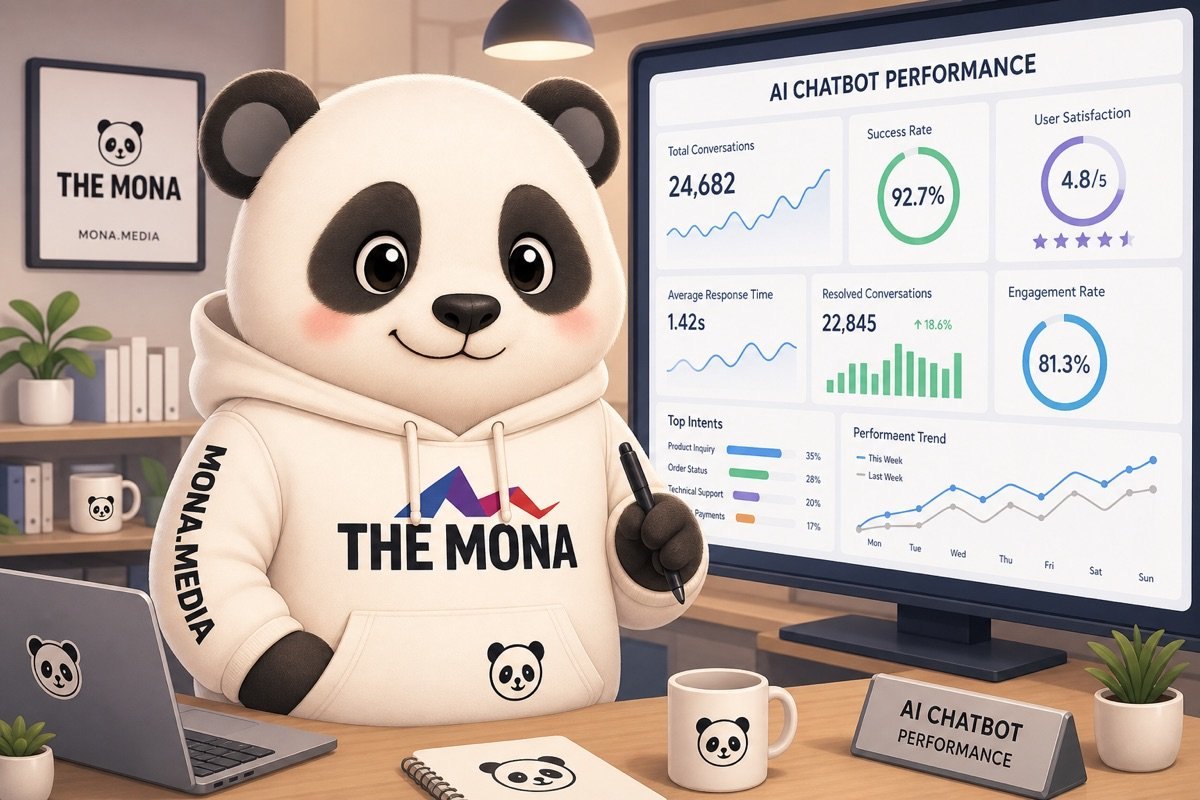
You can't manage what you don't measure, and the same goes for a sales chatbot. As soon as it's installed, set up your metrics so you know whether it is pulling customers in or pushing them away.
Many places get swept up by AI advertising, assuming that having a bot means having revenue. It only hits them when they look at the numbers: the bot answers a lot but closes very little. Measurement is the only way to separate truth from rumor.
Measuring correctly also lets you improve continuously. See which question customers often drop at, and fix the script there. See which time slot has high load, and reinforce it.
First is the response rate. What percentage of messages the bot picks up right away, and how many fall into a waiting gap. The shorter the wait, the more customers stay.
Next is the conversion rate. Of the customers who message, how many leave their details and how many close an order. This number tells you straight whether the chatbot can sell.
Then comes the share the bot handles completely compared with what must be passed to a person. The more the bot carries, the lighter your team. And don't forget the cost per order from the chat channel, to check against the ad money you spent.
We always advise you to settle your KPI set before switching the bot on, not to go hunting for numbers after it is on. The systems we build come with this tracking built in, so you open it and see.
Once you have numbers, you have to read the story in them. Don't look at total messages and cheer. Look at the customer's path and see where they drop.
Filter by customer group, by fanpage or web channel, by product. You will see which group closes easily, which channel deserves more money, and which product customers ask about often but rarely buy.
Compare over time to know whether each script tweak made the numbers better. Improving without measuring before and after is just guessing.
Many of you don't have time to read the numbers. At MONA, we use the same performance-based, measurable filtering method we use internally to build reports for you, so you can make a decision from a single screen.
An AI sales chatbot isn't picky about industry. Anywhere customers message and there is something to sell, it works. What differs is the script and the data behind it, which is different for each industry.
The shared pain across industries is that customers arrive and leave because nobody keeps up. The golden hour in the inbox falls just when staff are off. A chatbot patches exactly that gap for each industry.
Selling online lives on speed. Customers ask whether it's in stock, how long shipping takes, whether there's a discount code, and a few minutes of delay sends them to another shop.
A sales chatbot checks stock instantly, says clearly whether an item is available or sold out, and suggests substitutes when it's out. When the customer wants to buy, the bot collects their details and creates the order without making them wait.
Multichannel selling is even messier. Messages from the fanpage, website and marketplaces pour in at once, and a stock mismatch makes overselling easy. Our Dê Cười was built for exactly this scene, syncing stock and variants and covering TikTok and Shopee too. We advise online sellers to connect the chatbot to their order management system from the start.
In service businesses, customers ask the same questions again and again. What does it cost, how do I book, what is the return policy. Staff get tired of answering the same thing and make mistakes.
The chatbot carries that repetitive part, answering steadily and correctly around the clock. Our Gấu Cười does this customer care and lead capture well, so your team can focus on tough cases that need a human.
When the bot pre-filters needs, staff receive warm customers and the closing rate is much higher. We advise letting the bot work the front line and people work the decision line.
Training centers and schools get flooded with parent messages during enrollment season. Tuition, start dates, career outcomes. Answer slowly and you lose students to a place that advises faster.
The chatbot replies instantly, keeps parents engaged, and gathers information so the advising team can call back the right person at the right time. Not a single lead is missed through the whole peak season.
We have a ready-made product for training and have run it for real on our own student base. We advise training centers to set up the chatbot before enrollment season, not wait until they are flooded with messages.
By now it should be clear. An AI sales chatbot is not something that makes money the moment you plug it in. It is one link in a chain, strong or weak depending on the system behind it.
Plug in a sample bot and you have an answering machine. Build a system with data, process and measurement and you have a machine that keeps customers and closes orders. The gap between the two is the gap between burning money and making money.
MONA has taken this path since 2016, with over 14,000 customers and 85% of them staying. We are a company that applies AI and automation, and we use products like Gấu Cười and Dê Cười ourselves before bringing them to you.
If you are running ads that cost money while customers keep dropping at the chat step, or you are feeding a bot nobody can say earns a single dong, call us. We will help you find where the funnel is leaking.
We don't sell a standalone chatbot. We build the whole chain that keeps customers and closes orders for your business, tied into your own data and processes.
Call hotline 1900 636 648 to book a consultation. We will look at your model and tell you straight what to do, with no embellishment.
The first step is to sit down and break apart your current sales process, finding the steps where customers often drop. We do this part together with you, so you don't have to describe it by guesswork.
Step two is connecting data and scripts, from the price list, stock and policies to your brand voice. Step three is setting up the KPI set and a tracking dashboard, so you can measure from the very first day.
The final step is to go live, read the numbers, and tighten the script week by week. Keep improving until the funnel is sealed. We stay with you through this whole stretch, and we don't disappear after handover. If you want to start, call 1900 636 648 and we will schedule you within the week.

CEO & Founder · The MONA
Founder of The MONA, who built a services company of 60+ staff with 14,000+ projects delivered. Khánh Hùng shares how he thinks about building systems that run themselves, automating a business, and the real lessons from delivering projects at MONA.
 295




Professional website
design services
Own a website with a beautiful, 100% exclusive design and a lifetime warranty, with the ability
to expand features flexibly as your business grows, starting today!






 MONA will never sell your information or send you spam


 MONA will never sell your information or send you spam
