
 MONA OS 2.0
 Partner with MONA


 Tự động hoá doanh nghiệp
 Cẩm nang SEO
 Digital Marketing
 Kinh nghiệm thiết kế website
 Hạ Tầng Server
 Giáo dục


 VI
 EN














Message us on
Zalo Official


 ProductsNew

 ProductsProducts
 Mới ra mắtKHA AI 2027App tự edit video, tự đăng mọi mạng xã hội, 2 phút mỗi ngày










 Website designLooks good and wins customers over.
SEO servicesBrings in customers searching for exactly what you sell.
 Tư vấn digital marketingKéo khách từ nhiều kênh, đo bằng số thật.
Corporate video productionVideos introducing your company, factory and team.
 NewAI video productionCompany story films made with AI.
 Custom software developmentCRM, ERP and HRM built for your business.
 Viết AI Agent theo yêu cầuĐặt riêng một trợ lý AI cho đúng việc của mình.
 Tư vấn chuyển đổi AIĐưa AI vào vận hành của cả công ty.
NewMONA LMSManagement for centers and schools.
MONA SkillHubInternal training for company staff.
 NHTQ systemEnd-to-end China–Vietnam shipping operations.
MONA JMSManagement for gold, diamond and pawn shops.
 MONA E-LearningA website with every feature you need to sell courses.
 How to sell online courses (course)More than 30 free lessons on selling courses on autopilot.
 MONA Cloudmonacloud.vnServers to get your apps and websites running.
 MONA Basemonabase.vnPostgres database, sign-in and file storage.
 MONA Mailmonamail.vnSend OTP, order and invoice emails from your software.
 MONA Paymonapay.vnAccept bank transfers via VietQR and notify your software when the money arrives.
 MONA eInvoiceComing soonIssue e-invoices that meet tax standards.
Gấu CườiTrả lời khách 24/7 trên web, Fanpage, Zalo và thu lead cho sale.
 Gấu TeleSalesGọi điện tư vấn, chăm khách như tổng đài viên thật.
Dê CườiTư vấn và chốt đơn cho shop ngay trong khung chat.
Gấu WebmasterNhắn nhóm Zalo là website được sửa xong.
 Gấu Pháp ChếSoạn hợp đồng, rà điều khoản trong vài phút.
 Gấu Báo GiáLên báo giá đúng mẫu và gửi khách ngay.
 AI chăm sóc khách hàngTheo dõi và giữ chân khách hàng cũ.
 Gấu Tuyển DụngLọc hồ sơ, hẹn lịch, phỏng vấn ứng viên.
 Mới ra mắt
KHA AI 2027
Xây kênh chuyên gia 2 phút mỗi ngày
Quay bằng điện thoại, AI tự edit video, tự đăng lên 16 nền tảng và tự trả lời bình luận, tin nhắn.
890.158lượt xem trên kênh CEO MONA sau 36 ngày
 Anh Khánh HùngCEO MONA đang dùng mỗi ngày
Xem app làm được gì
 AI
Gấu Cười MONA ĐANG TỰ XÀITrả lời khách 24/7 trên website, Zalo OA, Messenger và thu lead về cho sale.
Dê CườiChốt đơn bán lẻ và sàn: Shopee, TikTok Shop, web. Chăm cả khách sỉ, đại lý.
Gấu WebmasterCập nhật nội dung, tối ưu SEO website mỗi ngày.
Gấu TeleSalesGọi điện tư vấn, chăm khách như tổng đài viên thật.
Gấu Tuyển DụngLọc hồ sơ, hẹn lịch, phỏng vấn ứng viên tự động.
AI chăm sóc khách hàngGiữ khách cũ, cứu lead đã rớt cho phòng kinh doanh.
Gấu Pháp ChếSoạn hợp đồng, rà điều khoản trong vài phút.
Gấu Báo GiáLên báo giá đúng mẫu, gửi khách ngay khi có yêu cầu.
 Chuyển đổi AI toàn phầnGiải pháp tổng cho doanh nghiệp, 3 lớp triển khai.
 Viết AI Agent theo yêu cầuĐặt riêng một con AI gánh đúng nghiệp vụ của bạn.
 Custom softwareCRM, ERP and HRM with built-in AI automation.
 SEO & AEO thời đại AIĐược Google lẫn AI trích dẫn, không chỉ xếp hạng.
 Kiến thức AI cho doanh nghiệpBài phân tích, hướng dẫn ứng dụng AI vào vận hành.
 Free AI courses
 AI tools at work
App mới · KHA AI 2027
Xây kênh 2 phút mỗi ngày
AI tự edit video, tự đăng mọi mạng xã hội
Free consultation, 8am–10pm every day

09 July, 2026
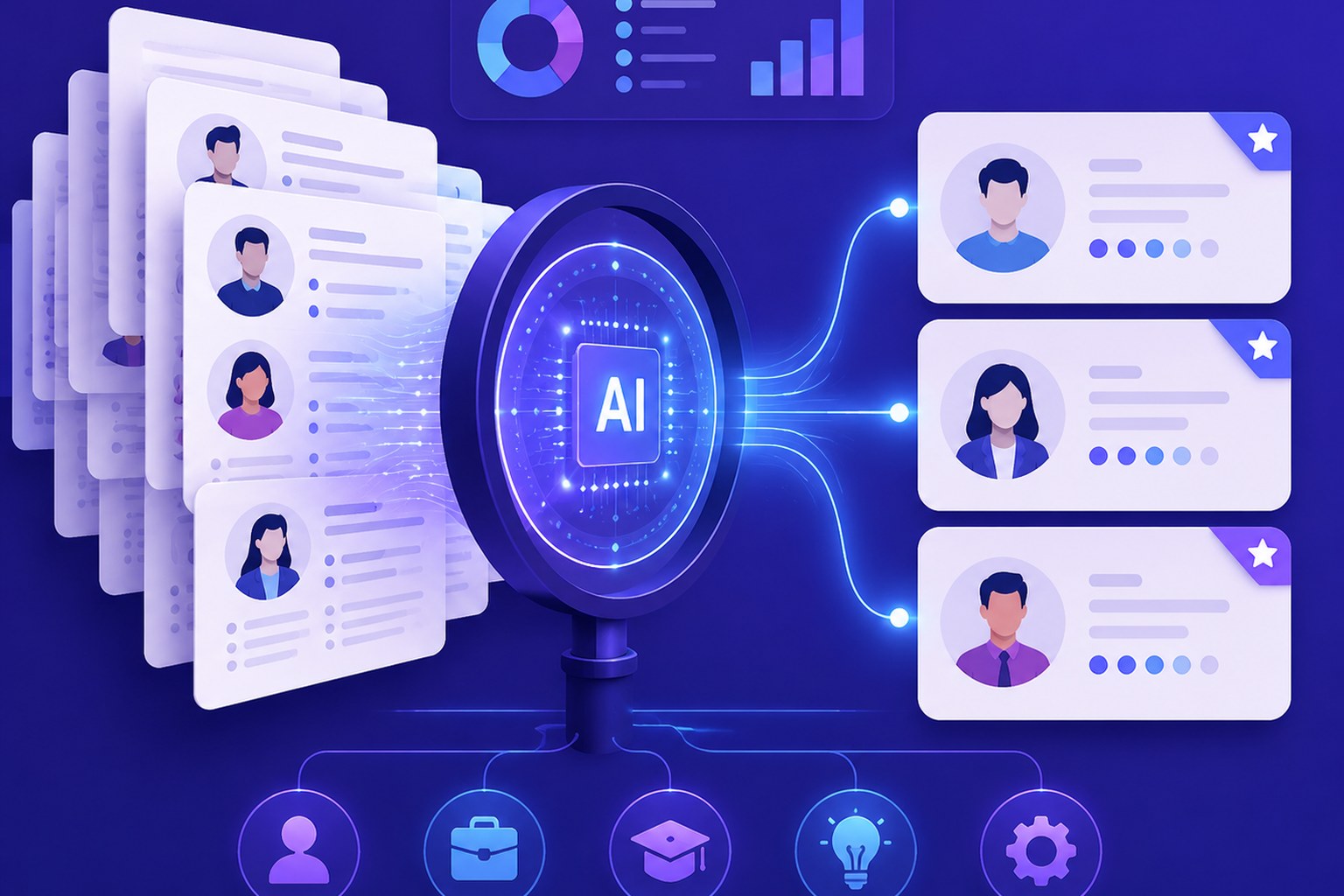
One hiring round at your company can bring in several hundred to a thousand resumes. By the fiftieth resume, the HR person's eyes are tired, and candidates who applied last often get only a skim. AI CV screening solves exactly this: the machine reads each resume for meaning and scores it against the role's requirements with evidence, so nobody is overlooked just because they applied late. In this article we break down how a machine really reads a CV and how to use it properly.
Crude filters from ten years ago only matched words. You set the keyword "sales management," and any resume without that exact phrase got rejected, even if the person wrote "in charge of regional revenue" and meant the same thing. This wrongly rejects many strong people and keeps those who know how to stuff keywords.
AI CV screening reads for meaning, not for the exact words. The machine understands that two different phrasings can describe the same skill, and conversely that two people who both write "team lead" may have very different scopes of work. That makes candidate rankings much closer to reality. It is one link in the AI recruitment automation picture we build for businesses.
In short: old tools count words, AI understands meaning. That is the decisive difference between a filtered list full of keyword stuffers and one with people who can actually do the job.
To trust the result, you need to understand what the machine does inside, rather than hand your trust to a score from nowhere.
First the machine reads the file, including CVs that are photos or messily formatted PDFs, then splits it into parts: experience, skills, education, employment timeline, and achievements with numbers. Then it compares each part with the role requirements you set, scores each axis, and combines them into a total score with a threshold. Most important, every score comes with a quote of the exact line in the CV as its basis.
Because scoring comes with evidence, your reviewer can read one summary line and understand why one resume ranks above another. You keep the right to overturn it, and the machine doesn't dictate. This transparent scoring is what we also apply to the automated AI interview in the next round.
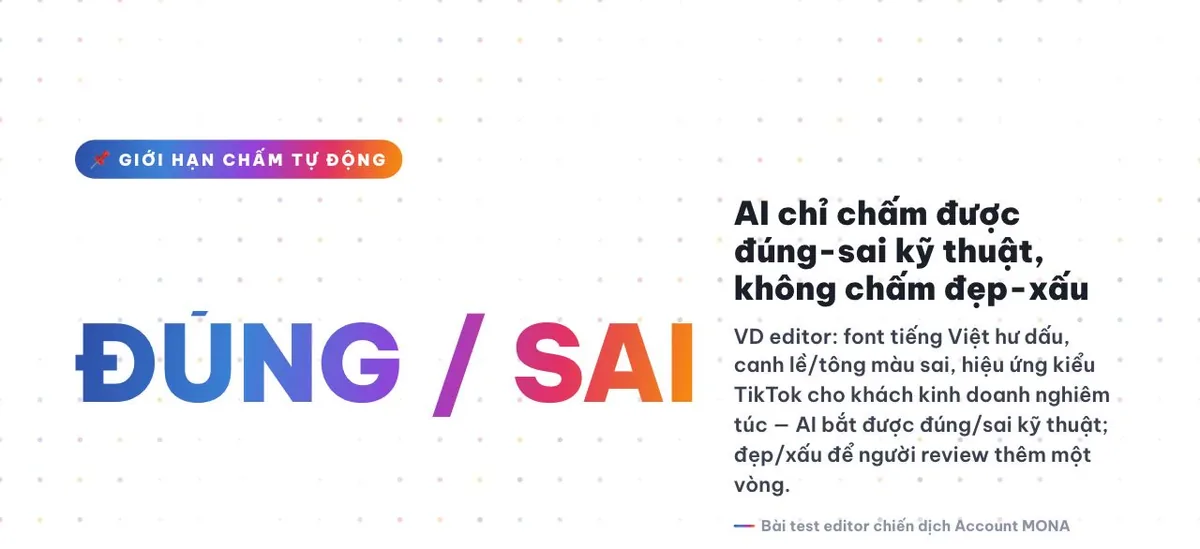
We won't sugarcoat it. AI CV screening has a real risk: bias hidden in the training data. If past data leans toward one group, a badly trained machine can unfairly reject others.
This is not an idle worry. Harvard Business Review has analyzed how automated filters wrongly reject many qualified candidates because of rigid criteria. McKinsey classifies data bias as a major risk when using AI, and Gartner recommends always keeping humans in HR decisions. That is why a well-built system never lets the machine decide alone. Resumes near the pass/fail line are always reviewed by a person. Scoring criteria are set around the actual job, not the candidate's school or where they live. And you should periodically check whether the machine is rejecting one group disproportionately.
In other words, AI helps you read faster and read more, but responsibility for fairness stays with the people running it. A serious vendor will tell you about this risk up front instead of promising the machine is always right.
A common mistake is setting the threshold too tight to keep the list short. The result is that you also lose people who can do the job but don't know how to write a CV.
We recommend two levels. Those above the threshold get invited right away. Those just below it shouldn't be rejected outright; collect them into a waiting list for a person to glance over, because that is where the rough diamonds often sit. MONA has many times hired very strong people from this very group of unimpressive CVs, because their real ability only shows when they work, not on paper.
This soft threshold keeps you from missing talent while still saving time on most resumes. It is also the natural bridge to the preliminary conversation with candidates via the recruitment chatbot before in-depth interviews.
The more resumes per position, the more AI CV screening is worth.
What these industries share is a resume volume far beyond human reading capacity. That is where AI carries the load, so HR can put its effort into judgment, as in the overall applying AI in the HR department and the broader business automation direction we pursue.
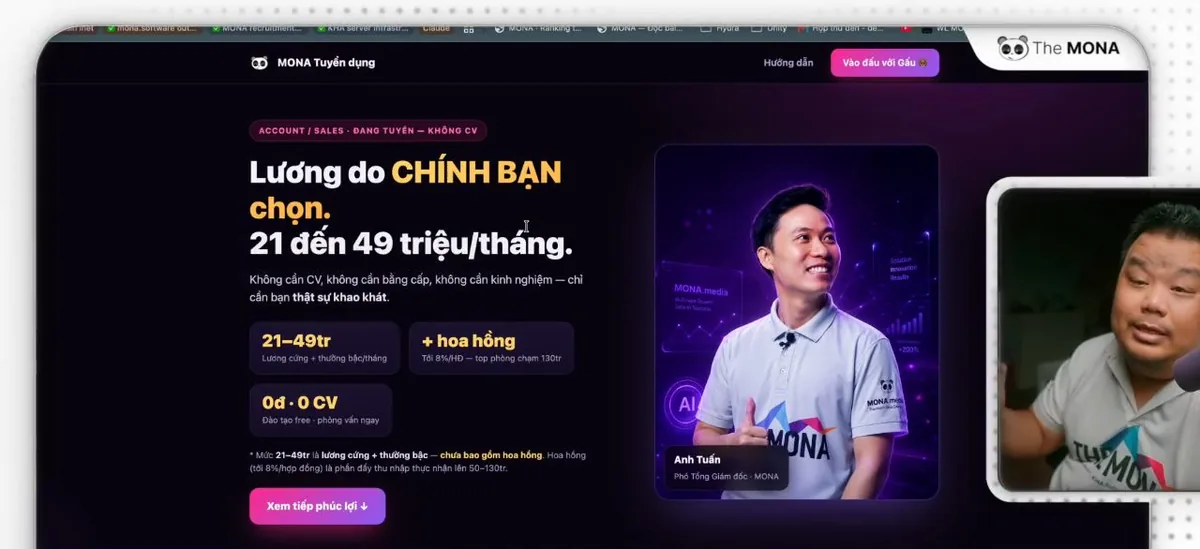
We don't promote what we haven't used. MONA is hiring Account staff with this very screening system, running on real ads and reading and ranking real resumes every day.
The machine reads the CV, scores it against the role requirements, keeps the near-threshold group for a panel to rescue, then moves qualified people into the automated interview round. The whole outer round is about 80% automated, and people only review and meet candidates in the final round. This is one piece of the a recruitment AI Agent in the AI Agent suite that MONA built for itself. For training people after they are hired, you can look at Khánh Hùng Academy.
One honest piece of advice: don't stitch together loose drag-and-drop tools to build your own CV filter. It's fine at low volume, but at peak season when thousands of resumes pour in, one wrong setting clogs the whole flow and strong candidates slip away. MONA builds custom software that holds up day and night, with a team accountable when something breaks. If you want a fuller HR system, the team Mona Software also builds HR management software with built-in AI and recruitment management software that follows your own process, including a recruitment website as the gateway for receiving applications.
🐻 MONA uses its own AI Agent for recruitment
This isn't theory. Right now MONA is hiring Account staff with its own a recruitment AI Agent system: it runs on real ads, interviews and scores candidates automatically for about 80% of the outer-round process, at a real cost of about 12,000 VND per candidate who passes the first round. With the same method, MONA screened 1,000 worker applications in 3 hours. See the system running for real, then decide.
Book a demo of MONA's recruitment AI Agent →In MONA's July 2026 hiring drive, 400 resumes came in over two weeks. Reading that by hand would take 4 to 5 HR people, and by the hundredth resume everyone's eyes glaze over and the right person is easy to miss. The CV screening machine never tires, and works in 3 steps.
Step one, extract the text: CVs arrive in every form, PDF, Word, and some people even photograph a paper CV and send it through chat. The system converts everything into machine-readable text, and for image files it uses optical character recognition to read the text in the picture. Step two, match against criteria: the recruiter prepares a criteria sheet for the role, such as years of experience, required skills and must-have requirements. The AI checks each criterion against the CV, states clearly where it passes or fails, and must point to the line in the CV as its basis rather than saying vaguely "suitable." Step three, score against a dynamic threshold: the total score is compared with the interview threshold, and the threshold is adjusted for urgency. When people are needed fast it goes down, for example inviting anyone from 50 points. When the team is almost full it goes up to 70 to keep only the best group. The final decision is still the recruiter's; the machine hands over a scored list with its basis.
To try the text extraction step yourself, you can convert a scanned PDF to Word with MONA's free tool and see how much text the machine can read from a scan.
Rejected candidates get a proper reply too: the system sends a polite rejection email at every stage. Many candidates aren't upset about being rejected, but about submitting and never hearing back, and the machine fixes exactly that.
The machine reads consistently and doesn't tire, so it is more even at high volume. But final accuracy depends on how you set the criteria and on people reviewing near-threshold resumes. The machine assists, people decide.
Today's systems can read messy PDFs and photos thanks to optical character recognition. Still, the clearer the resume, the more reliable the result, so it is worth encouraging candidates to submit a clean version.
Prevention is a soft threshold, keeping the near-threshold group for people to review, and periodically checking whether the machine skews against any group. The machine is not allowed to reject outright on its own.
A serious system stores and processes data inside the business's own system and masks personal information as regulations require. You should ask the vendor to commit to this clearly.
Take the pile of resumes from your latest hiring round and count two numbers: how many hours it took to read them all, and how many late applications almost no one read. Those two numbers are what AI CV screening gives back to you.
Once that is clear, we invite you to book a call with MONA to see the screening system running for real. If you want the overall picture first, read What is AI recruitment first to get the big picture.
The whole screening process in this article has been packaged by MONA at the AI recruitment software Gấu Tuyển Dụng, with live running numbers on the page.

CEO & Founder · The MONA
The founder of The MONA built a service company of 60+ staff with 14,000+ projects delivered. Khánh Hùng shares his thinking on building self-running systems, automating a business, and the real lessons behind MONA's projects.
 450




Professional website
design services
Own a website with a beautiful, 100% exclusive design and a lifetime warranty, with the ability
to expand features flexibly as your business grows, starting today!






 MONA will never sell your information or send you spam


 MONA will never sell your information or send you spam
