
 MONA OS 2.0


 Tự động hoá doanh nghiệp
 Cẩm nang SEO
 Digital Marketing
 Kinh nghiệm thiết kế website
 Hạ Tầng Server
 Giáo dục



 VI
 EN






















Message us on
Zalo Official


 ProductsNew

 ProductsProducts
 Mới ra mắtKHA AI 2027App tự edit video, tự đăng mọi mạng xã hội, 2 phút mỗi ngày










 Website designLooks good and wins customers over.
SEO servicesBrings in customers searching for exactly what you sell.
 Tư vấn digital marketingKéo khách từ nhiều kênh, đo bằng số thật.
Corporate video productionVideos introducing your company, factory and team.
 NewAI video productionCompany story films made with AI.
 Custom software developmentCRM, ERP and HRM built for your business.
 Viết AI Agent theo yêu cầuĐặt riêng một trợ lý AI cho đúng việc của mình.
 Tư vấn chuyển đổi AIĐưa AI vào vận hành của cả công ty.
NewMONA LMSManagement for centers and schools.
MONA SkillHubInternal training for company staff.
 NHTQ systemEnd-to-end China–Vietnam shipping operations.
MONA JMSManagement for gold, diamond and pawn shops.
 MONA E-LearningA website with every feature you need to sell courses.
 How to sell online courses (course)More than 30 free lessons on selling courses on autopilot.
 MONA Cloudmonacloud.vnServers to get your apps and websites running.
 MONA Basemonabase.vnPostgres database, sign-in and file storage.
 MONA Mailmonamail.vnSend OTP, order and invoice emails from your software.
 MONA Paymonapay.vnAccept bank transfers via VietQR and notify your software when the money arrives.
 MONA eInvoiceComing soonIssue e-invoices that meet tax standards.
Gấu CườiTrả lời khách 24/7 trên web, Fanpage, Zalo và thu lead cho sale.
 Gấu TeleSalesGọi điện tư vấn, chăm khách như tổng đài viên thật.
Dê CườiTư vấn và chốt đơn cho shop ngay trong khung chat.
Gấu WebmasterNhắn nhóm Zalo là website được sửa xong.
 Gấu Pháp ChếSoạn hợp đồng, rà điều khoản trong vài phút.
 Gấu Báo GiáLên báo giá đúng mẫu và gửi khách ngay.
 AI chăm sóc khách hàngTheo dõi và giữ chân khách hàng cũ.
 Gấu Tuyển DụngLọc hồ sơ, hẹn lịch, phỏng vấn ứng viên.
 Mới ra mắt
KHA AI 2027
Xây kênh chuyên gia 2 phút mỗi ngày
Quay bằng điện thoại, AI tự edit video, tự đăng lên 16 nền tảng và tự trả lời bình luận, tin nhắn.
352.433lượt xem trên kênh CEO MONA sau 20 ngày
 Anh Khánh HùngCEO MONA đang dùng mỗi ngày
Xem app làm được gì
 AI
Gấu Cười MONA ĐANG TỰ XÀITrả lời khách 24/7 trên website, Zalo OA, Messenger và thu lead về cho sale.
Dê CườiChốt đơn bán lẻ và sàn: Shopee, TikTok Shop, web. Chăm cả khách sỉ, đại lý.
Gấu WebmasterCập nhật nội dung, tối ưu SEO website mỗi ngày.
Gấu TeleSalesGọi điện tư vấn, chăm khách như tổng đài viên thật.
Gấu Tuyển DụngLọc hồ sơ, hẹn lịch, phỏng vấn ứng viên tự động.
AI chăm sóc khách hàngGiữ khách cũ, cứu lead đã rớt cho phòng kinh doanh.
Gấu Pháp ChếSoạn hợp đồng, rà điều khoản trong vài phút.
Gấu Báo GiáLên báo giá đúng mẫu, gửi khách ngay khi có yêu cầu.
 Chuyển đổi AI toàn phầnGiải pháp tổng cho doanh nghiệp, 3 lớp triển khai.
 Viết AI Agent theo yêu cầuĐặt riêng một con AI gánh đúng nghiệp vụ của bạn.
 Custom softwareCRM, ERP and HRM with built-in AI automation.
 SEO & AEO thời đại AIĐược Google lẫn AI trích dẫn, không chỉ xếp hạng.
 Kiến thức AI cho doanh nghiệpBài phân tích, hướng dẫn ứng dụng AI vào vận hành.
 Free AI courses
 AI tools at work
App mới · KHA AI 2027
Xây kênh 2 phút mỗi ngày
AI tự edit video, tự đăng mọi mạng xã hội
Free consultation, 8am–10pm every day

18 March, 2023
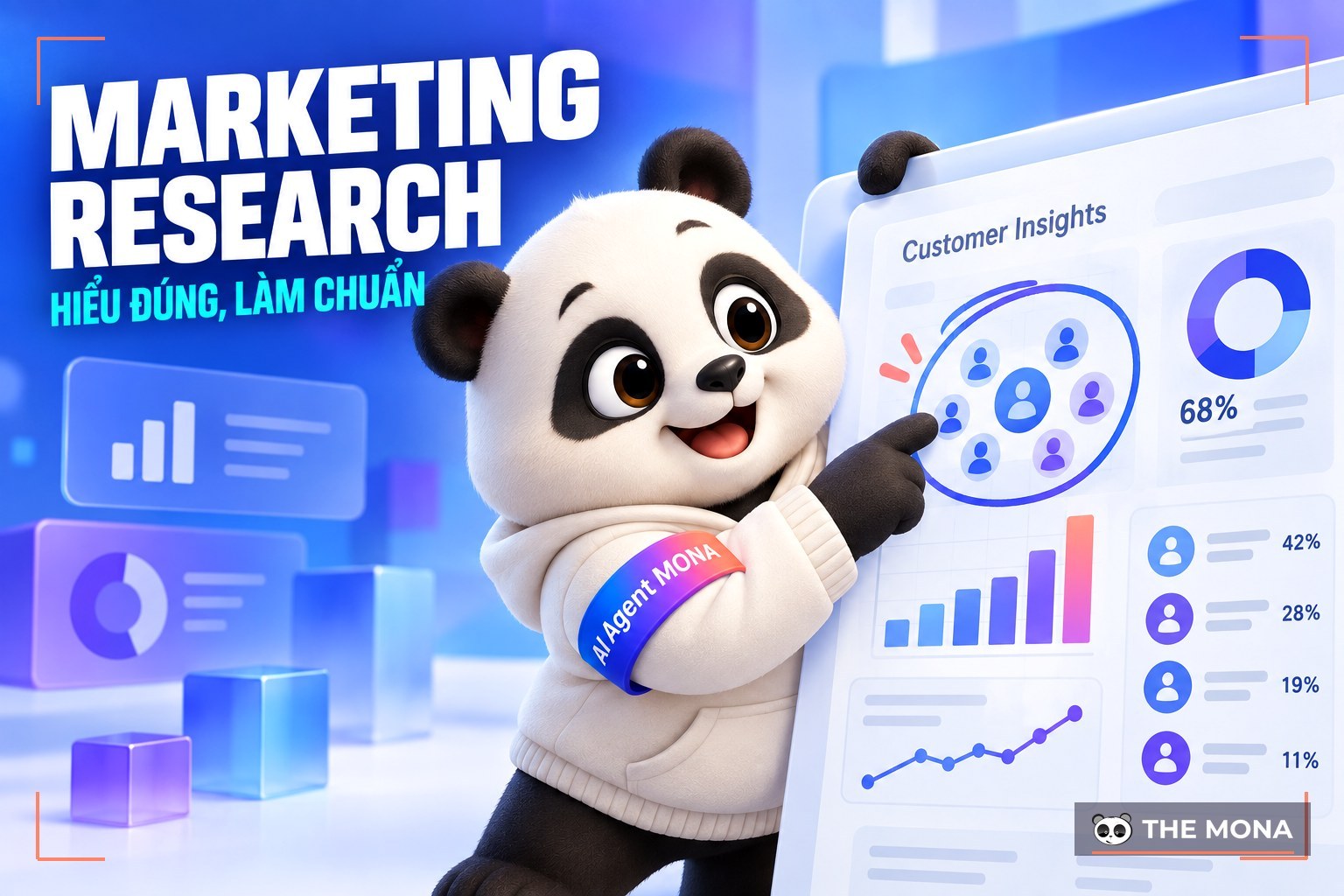
Market research is the study of the market that a business does before planning marketing for its product or service. It is a key stage for understanding customer needs and behaviour, as well as the traits and position of competitors.
Once you understand your customers through market research, the next step is to use AI customer care tools to engage and retain customers automatically.
Market research covers collecting and analysing information on competitors, potential markets and target customers. With it, a business can tell whether its product or service suits the target market, and adjust its marketing strategy for the best results.
Marketing research, also called market research, is the process of gathering, analysing and delivering accurate, clear information and data on matters related to an organisation's marketing activity
This research covers customers' characteristics, needs and past and present buying habits for the product or service, in order to:
-> What is market analysis? Steps to analyse a market
Understanding what market research is, and using the accurate information you gather, is the foundation of a business that grows successfully. Your marketing strategy gives a business the confidence to compete with others in its industry.
Marketing research supplies the relevant data needed to deal with the challenges a business may face, and it is an essential part of business planning. In practice, strategies built on clearly defined market segment specifics and product differentiation will not grow or bring success to a business without market research.
Building successful strategies applies to our clients and to Mona Media itself. Through careful, detailed market research, we brought our main website to TOP 1 web hosting top rankings in search for the hottest keyword sets in the industry.

Thanks to the strategy work we do up front, our SEO projects have delivered better results than expected. Sign up for our Full-scope SEO plan and you will also receive FREE a brand SEO service. Take over your industry's market and bring your website to TOP GOOGLE the top in as little as 6 MONTHS.
Contact with us today to start your SEO journey.

Market research and marketing research are often confused, but there are basic differences between them:
-> What is Customer Insight? How to build accurate customer insight in just 6 steps

Businesses in general, and marketers in particular, need to know how market trends are shifting. Marketing research helps you gather that information and answer questions about:
Here are some of the most popular types of market research today:
In today's business market, understanding customers and consumer trends is a key factor in success. That is why market research has become an important part of business strategy.
In addition, website is a strong driver of sales for a business. In the digital era, a brand without a website will be known by only a handful of people.
Business website design in a structured way now, if you want to see 5X THE REVENUE, organic traffic UP 200% and be the one brand customers think of when they search for anything in your industry.

When doing marketing research, researchers and businesses set specific goals to meet research needs and create business value. Here are the main goals:
Marketing and revenue research gives you the baseline data for rolling out marketing plans, policies, programmes and processes in the business.
-> How to build an effective marketing strategy that keeps costs down
Marketing research helps you find effective ways to cut marketing costs, such as selling more efficiently, planning advertising, and choosing how to distribute products.
The purpose of marketing research is to find new markets for the product while holding on to the existing one.
Marketing research is a very useful tool for working out the right formulas for pricing each of a business's products. It can be based on competitors' pricing policies or market needs,…
-> What is a pricing strategy? How to choose the right one for your business
The main purpose of marketing research is to find out what customers need, think and want. It is the link between your business and your customers, and you learn what they like and dislike.
With detailed marketing research, you can easily identify the customer group that fits your business goals, then build a content plan to attract that group. A content plan makes every production activity easier.
Building the right content creates value that helps improve traffic traffic and sales. The content you deliver to customers must be chosen carefully; not every topic you post will draw many followers.
SEO content writing services at Mona Media delivers quality content for businesses. Product information, blog posts and knowledge-sharing are all written around carefully chosen keywords. The aim is both to deliver content marketing that is most valuable to the business and to help the site rank on Google.
Contact with Mona, and we will build together with you a Content Marketing strategy that is creative and effective.

Marketing research also means knowing the competitors who sell products like yours. To do it, a company needs reliable sources on competitors' moves and strategies, and on factors that could affect its plans in future.
-> Read more: The 7 most effective steps to analyse competitors today
Marketing research gives you useful information by studying how external factors affect the organisation. These include:
Marketing research is the collection and analysis of market information (customers, products, services and so on) to produce the most effective marketing strategy. What it studies depends on each business's goals and methods. Still, the six most common types of marketing research today are:

Many different data collection methods are used in market research. Here are some popular, widely used ones in marketing research:
Primary market research collects feedback from focus groups, surveys, expert tests, interviews or market observation to meet the company's specific needs. It helps assess demand for a proposed service and work out the cost of your new product.
However, primary research is expensive. You can cut the cost with online tools, such as direct surveys using questionnaires.
Secondary market research gathers information from existing sources. This information is produced by other bodies such as governments, chambers of commerce and trade associations.
You can find secondary market research free or at low cost on websites, at local libraries, online, in newspapers or in business magazines.
However, secondary research is not tailored to an organisation's needs, so it is less useful than primary research.
Qualitative research in marketing research helps a business understand customers' needs and wants, its competitors and market trends, so it can set effective business and communication strategies.
This method usually collects information through interviews, direct observation or focus group discussions with open questions, and is typically applied to small, focused samples. It answers the “why” and “how” of a behaviour or phenomenon.
Quantitative research in marketing research is a method that uses data analysis techniques to give useful information to those involved in promoting a product or service.
Quantitative research usually involves surveys, polls or questionnaires to collect data on the target market and on customers' behaviour, needs and wants. Its results can be measured and analysed to test research hypotheses or to produce actionable information for marketing strategy.

Many data collection methods are used in marketing research to meet specific research goals. Here are some popular methods, with examples of market research using each:
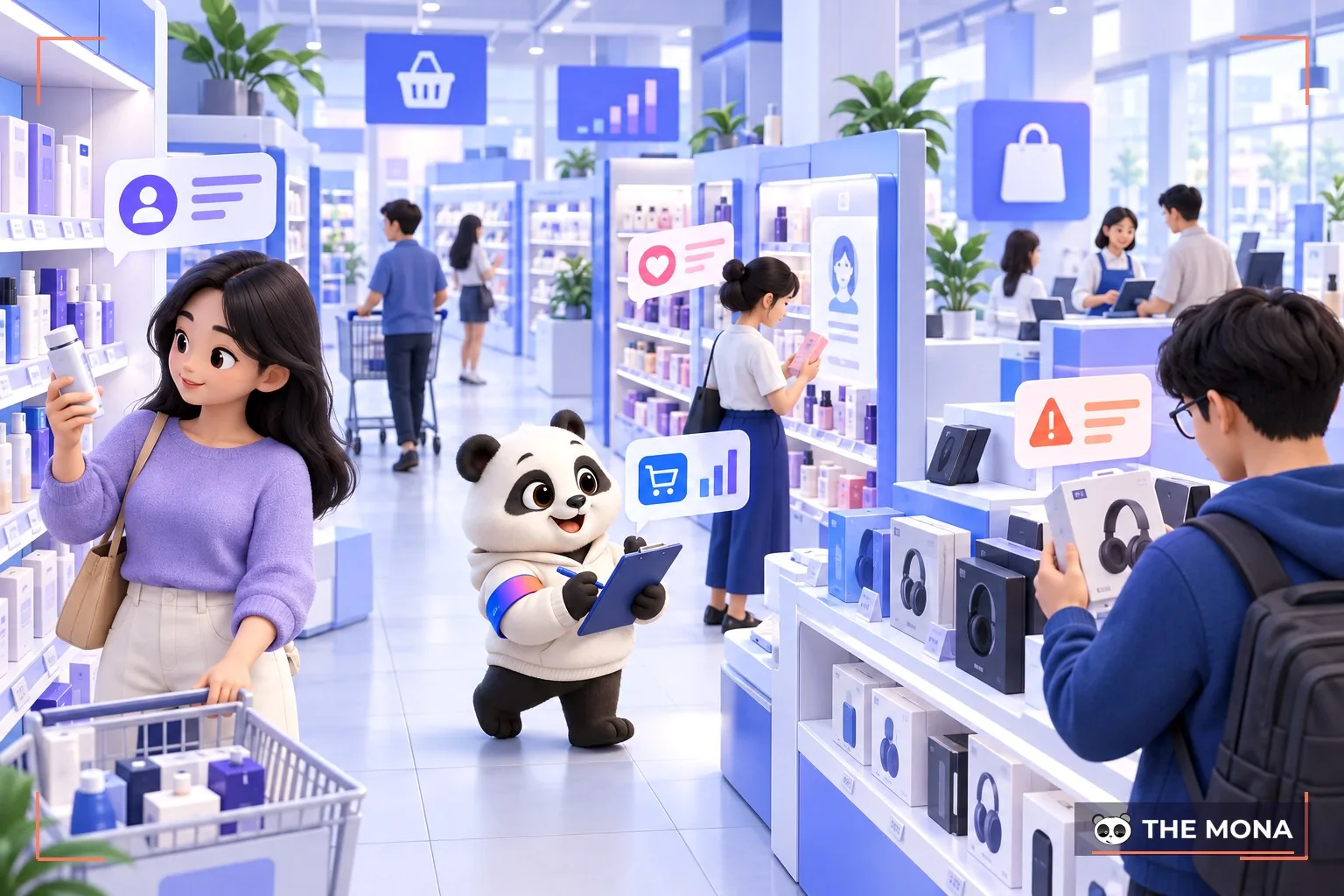
A direct survey collects marketing research data by interviewing people in places such as shopping centres, supermarkets and markets. It lets you show product samples, packaging or ads and gather feedback quickly.
Direct surveys have advantages such as:
Example: To learn how customers feel about a new ice cream, you could go where potential customers gather, such as parks or schools, and give out free samples. Then ask directly about flavour, colour, packaging and price. This way you get feedback right away and see how people react as they taste it.
An indirect survey collects marketing research data by asking about a product or service without requiring respondents to answer directly. It helps uncover information respondents don't want to share or don't know. Its advantages include:
Example: Instead of asking directly, “Are you happy with this laundry detergent?”, you can ask, “Would you recommend this product to family and friends?” This question shows satisfaction through behaviour, without being affected by politeness or fear of judgement.

Observation and listening in marketing research uses the senses to gather information from real social settings, so you can discover customers' behaviour, attitudes, feelings and opinions more naturally and effectively. It meets the research goal without asking customers directly.
Observation and listening have clear advantages:
Example: To study shopping habits in a fashion store, you can visit the store and watch customers: how they pick clothes, look at prices, interact with staff, and listen to conversations between customers and staff to hear their opinions and feelings about the products. You collect valuable information on customers' needs and wants without interfering with their shopping.
Product testing collects information on consumer behaviour, tastes and reactions to a product. It tests the feasibility, quality and appeal of a product before it launches. The benefits of this method include:
Example: If you want to launch a new sausage, you can send free samples to a group of potential customers and ask them to rate flavour, colour, packaging and price. You can also compare with competitors' similar products to see your own strengths and weaknesses. This gives you key information to refine the product before it goes to market.
The discussion group method gathers opinions on a specific issue. It lets you explore customers' views, attitudes, feelings and needs without asking them directly. Some advantages of discussion groups:
Example: To study the tastes and shopping behaviour of younger customers, you can run a discussion group of 6 to 8 people from your target audience. Ask about the products they care about, what influences their buying decisions, and which information channels they use. You can also observe and note their gestures, expressions and mood during the discussion. That gives you valuable information on young customers' needs and wants.

To carry out marketing research, follow these market research steps:
Businesses must pin down the core problem they are researching so they can solve it. The problem must be defined properly: if it is too vague, resources are wasted, and if it is too detailed, it is hard to reach an accurate conclusion. To define the right problem, a business needs to answer a few questions:
This step covers gathering the information needed for the goals of the market research steps, as follows:
Researchers can collect data on the research problem from primary or secondary sources. Primary sources are first-hand data that do not already exist in research reports or outside publications, as secondary data usually does.
To do market research well, defining the problem is essential. It shapes the research goals and points to the right solution. There are several ways to define the problem, including:
At the start of research, we need to identify the problems to solve by collecting information on the market, customers and competing products. Then we analyse that information to find the main problems.
Observational research collects data by watching events, behaviour or interactions between individuals or groups. It gives us more natural, objective information than surveys do. Forms of observational research include direct, indirect and non-participant observation.
Managers collect information on the customer base, including age, gender, income and interests, to find suitable problems and solutions. This research also helps assess market potential and compete with rivals.
To find problems in market research, we study the target group. That means choosing different groups to learn about them and what they think of the market and your product. Focusing on a small group lets you dig deeper and gather more information to solve your problem.
After choosing a target group, identify the problems customers run into when using your product or service. You can do this through surveys, interviews or by tracking customer behaviour on online platforms. Once you have enough information, review your marketing strategy and make improvements that improve the customer experience and raise sales.
Research surveys help managers understand the market, customers and competitors better, so they can make better strategic decisions.
In a research survey, pay attention to defining the right problem to solve. This takes managers with professional knowledge of their own field. They need to know the market, competition and customers well to ask the right questions and get the most important information.
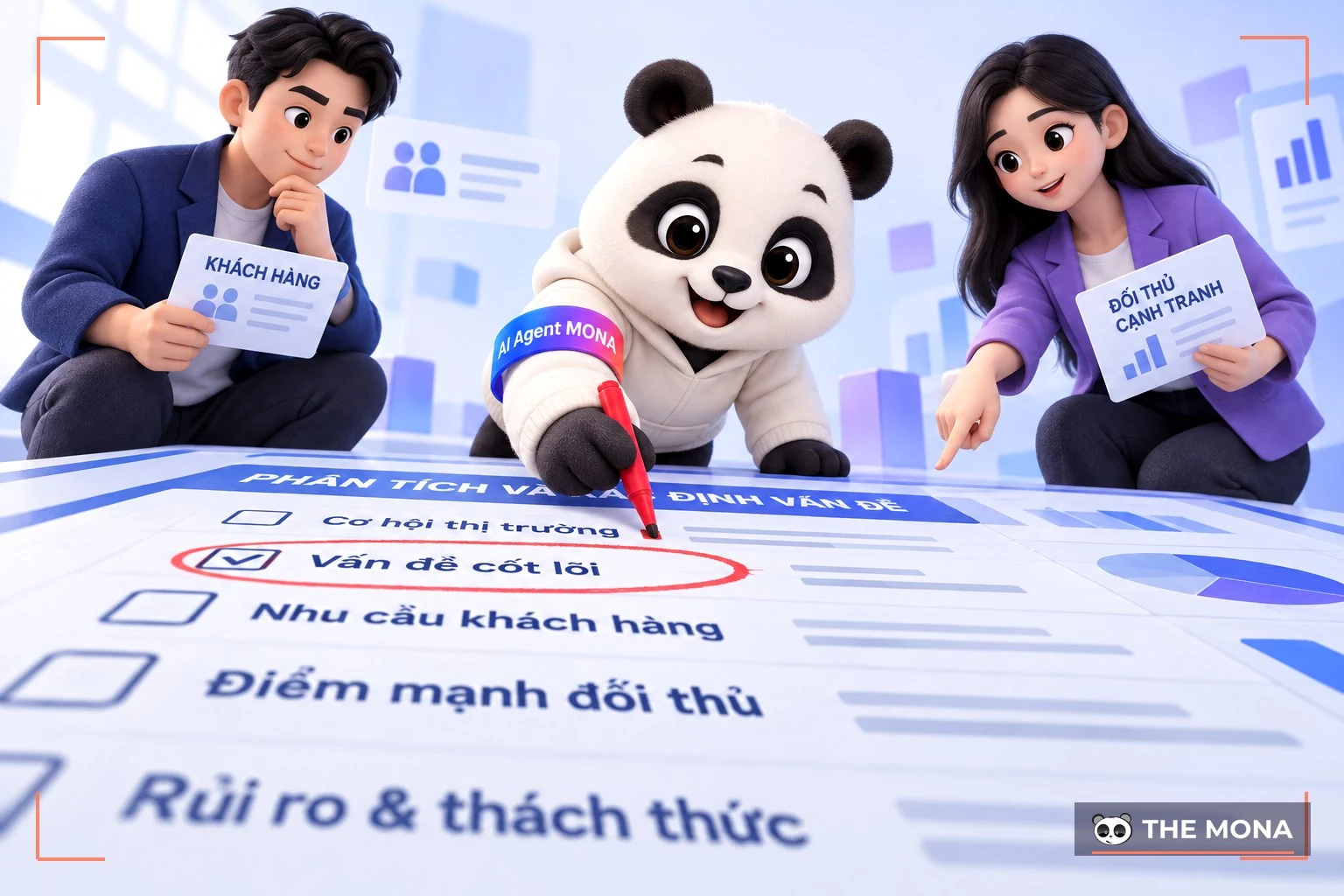
To find problems in marketing research, you need data on customer behaviour. That means assessing the company's current products and services, researching the market to learn customer trends and preferences, and analysing data to find the strengths and weaknesses of products and services. Once the problem is identified, the company can come up with solutions to improve its products and services, and so raise sales and profit.
Experience research gives a better understanding of how customers use our products and services. It leads to improvements and to products and services that fit customers' needs.
This method also measures customer satisfaction and points to ways of improving the quality of our products and services.
Once you've chosen a research method, the researcher needs to prepare a sampling plan by answering these questions:
The researcher must pick a main method that makes it easy to reach respondents. This could be email marketing, phone, in person or an online form.
Direction and market research are the foundation for every method that follows. But if you go in the wrong direction, you lose everything. You would be handing all your effort to your competitors. If you aren't confident in the subject knowledge or lack deep marketing experience, then
Marketing strategy consulting at Mona Media is your best option. We offer the FREE plan to you through the button below. Sign up now to open a new chapter for your business and bring in over 20,000+ organic visits per month.

At this stage the marketer has to screen and choose the best methods for collecting more information. Different respondents may give inaccurate answers, because of bias toward the product or a refusal to answer.
Once you've compiled the information, you need to organise it so staff can analyse it. Some statistical techniques you can use include measures of dispersion, calculating averages, and so on.
When the research is done, pull together the key findings into reports for analysis and for future use.

This is the last step in marketing research. Once visualised and written up, the information goes to the decision makers, who use the extra data to make the wisest, most accurate choices.
The career path for marketing research and market research in general is quite clear. Market research matters to the business and takes effort, transparency and a passion for numbers.
Market researchers play an important role between sales and marketing. People in marketing research can work at market research firms, marketing consultancies, advertising agencies, or in the marketing departments of manufacturing or service companies.
Marketing research calls for skills such as collecting and analysing data, communication and presentation, creativity and problem-solving, teamwork and self-learning. If you are passionate about marketing and want to dig deep into markets and customers, marketing research is an attractive career choice.
When doing market research, researchers and businesses often have some common questions. Here are some of them, with answers:
1. How is market research carried out?
Market research is an important process for analysing the market and target customers. Researchers usually use several methods, including surveys, interviews, direct observation, statistical data analysis and online market research.
2. What does online market research mean?
Online market research (e-market research) is market research done on the internet, using online paid surveys to assess and determine how factors in the marketing mix affect consumers' buying behaviour.
It helps a business collect information on customers' preferences, needs and interests, evaluate its new products, compare competitors' prices for products and services, and look for substitutes for its current products.
3. What is the salary for a marketing research career?
Pay for marketing research roles is fairly attractive. On average, an entry-level marketing researcher earns about 10-12 million VND per month. With 2 or more years of experience, pay is higher, at 15-20 million VND per month.
Marketing research is a way to collect market-related data and help design marketing strategy as effectively as possible. We hope this article helps you understand what marketing research is or what market research is, so you can apply it in your company's business plan. Good luck!
Please contact us via:
See also:

CEO & Founder · The MONA
Founder of The MONA, who built a services company of 200+ staff with 14,000+ projects delivered. Khánh Hùng shares how he thinks about building systems that run themselves, automating a business, and the real lessons from delivering projects at MONA.
 1,6K




Professional website
design services
Own a website with a beautiful, 100% exclusive design and a lifetime warranty, with the ability
to expand features flexibly as your business grows, starting today!






 MONA will never sell your information or send you spam


 MONA will never sell your information or send you spam
