
 MONA OS 2.0
 Partner with MONA


 Tự động hoá doanh nghiệp
 Cẩm nang SEO
 Digital Marketing
 Kinh nghiệm thiết kế website
 Hạ Tầng Server
 Giáo dục


 VI
 EN


















Message us on
Zalo Official


 ProductsNew

 ProductsProducts
 Mới ra mắtKHA AI 2027App tự edit video, tự đăng mọi mạng xã hội, 2 phút mỗi ngày










 Website designLooks good and wins customers over.
SEO servicesBrings in customers searching for exactly what you sell.
 Tư vấn digital marketingKéo khách từ nhiều kênh, đo bằng số thật.
Corporate video productionVideos introducing your company, factory and team.
 NewAI video productionCompany story films made with AI.
 Custom software developmentCRM, ERP and HRM built for your business.
 Viết AI Agent theo yêu cầuĐặt riêng một trợ lý AI cho đúng việc của mình.
 Tư vấn chuyển đổi AIĐưa AI vào vận hành của cả công ty.
NewMONA LMSManagement for centers and schools.
MONA SkillHubInternal training for company staff.
 NHTQ systemEnd-to-end China–Vietnam shipping operations.
MONA JMSManagement for gold, diamond and pawn shops.
 MONA E-LearningA website with every feature you need to sell courses.
 How to sell online courses (course)More than 30 free lessons on selling courses on autopilot.
 MONA Cloudmonacloud.vnServers to get your apps and websites running.
 MONA Basemonabase.vnPostgres database, sign-in and file storage.
 MONA Mailmonamail.vnSend OTP, order and invoice emails from your software.
 MONA Paymonapay.vnAccept bank transfers via VietQR and notify your software when the money arrives.
 MONA eInvoiceComing soonIssue e-invoices that meet tax standards.
Gấu CườiTrả lời khách 24/7 trên web, Fanpage, Zalo và thu lead cho sale.
 Gấu TeleSalesGọi điện tư vấn, chăm khách như tổng đài viên thật.
Dê CườiTư vấn và chốt đơn cho shop ngay trong khung chat.
Gấu WebmasterNhắn nhóm Zalo là website được sửa xong.
 Gấu Pháp ChếSoạn hợp đồng, rà điều khoản trong vài phút.
 Gấu Báo GiáLên báo giá đúng mẫu và gửi khách ngay.
 AI chăm sóc khách hàngTheo dõi và giữ chân khách hàng cũ.
 Gấu Tuyển DụngLọc hồ sơ, hẹn lịch, phỏng vấn ứng viên.
 Mới ra mắt
KHA AI 2027
Xây kênh chuyên gia 2 phút mỗi ngày
Quay bằng điện thoại, AI tự edit video, tự đăng lên 16 nền tảng và tự trả lời bình luận, tin nhắn.
884.102lượt xem trên kênh CEO MONA sau 36 ngày
 Anh Khánh HùngCEO MONA đang dùng mỗi ngày
Xem app làm được gì
 AI
Gấu Cười MONA ĐANG TỰ XÀITrả lời khách 24/7 trên website, Zalo OA, Messenger và thu lead về cho sale.
Dê CườiChốt đơn bán lẻ và sàn: Shopee, TikTok Shop, web. Chăm cả khách sỉ, đại lý.
Gấu WebmasterCập nhật nội dung, tối ưu SEO website mỗi ngày.
Gấu TeleSalesGọi điện tư vấn, chăm khách như tổng đài viên thật.
Gấu Tuyển DụngLọc hồ sơ, hẹn lịch, phỏng vấn ứng viên tự động.
AI chăm sóc khách hàngGiữ khách cũ, cứu lead đã rớt cho phòng kinh doanh.
Gấu Pháp ChếSoạn hợp đồng, rà điều khoản trong vài phút.
Gấu Báo GiáLên báo giá đúng mẫu, gửi khách ngay khi có yêu cầu.
 Chuyển đổi AI toàn phầnGiải pháp tổng cho doanh nghiệp, 3 lớp triển khai.
 Viết AI Agent theo yêu cầuĐặt riêng một con AI gánh đúng nghiệp vụ của bạn.
 Custom softwareCRM, ERP and HRM with built-in AI automation.
 SEO & AEO thời đại AIĐược Google lẫn AI trích dẫn, không chỉ xếp hạng.
 Kiến thức AI cho doanh nghiệpBài phân tích, hướng dẫn ứng dụng AI vào vận hành.
 Free AI courses
 AI tools at work
App mới · KHA AI 2027
Xây kênh 2 phút mỗi ngày
AI tự edit video, tự đăng mọi mạng xã hội
Free consultation, 8am–10pm every day

22 May, 2023
A marketing strategy is one of the things that decide whether a business succeeds, and many companies put a lot of time and money into it. A strong marketing strategy builds a solid brand and brings in more potential customers. How to build one, and what big brands did to succeed, are MONA Media covered below.
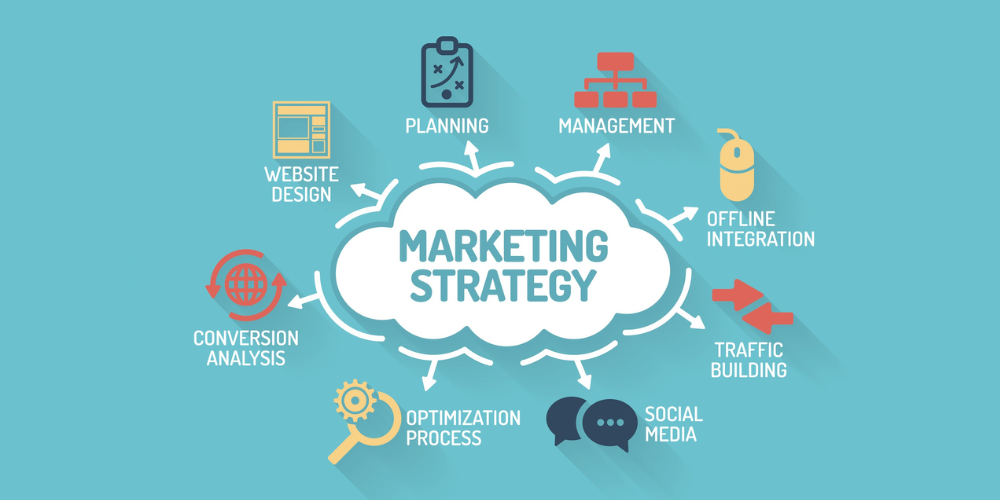
Put simply, a strategy Marketing is an overall marketing plan that helps a business reach more users and convert potential customers into customers who use the business's products and services.
A business's marketing strategies usually include:
Watch the video to better understand how to build an effective marketing strategy and avoid wasting resources
->See: What is online marketing? How to build an effective online marketing strategy
Any work is easier and more likely to succeed when it follows a plan set in advance, and marketing is no exception.
A business that hasn't defined the goals, plan, audience, channels and methods for its marketing campaigns will struggle to get results.
Otherwise, the business may spend a lot of time, effort and money on communication that brings no clear results. Worse, it can seriously damage the brand if you go down the wrong path and have no way to recover.

That is why, before you start doing marketing, the first step is to build a marketing strategy. This step gives the business a clear and accurate direction. Based on this strategy, marketers can also manage the business's activities and allocate resources sensibly.
After each campaign, marketers can review what didn't fit or didn't work, and use those lessons to get better results from later campaigns.
One of the most effective marketing strategies today is using a personal brand to build trust and connect with customers. This is why many business owners have started investing in personal branding. Watch the video below to understand this view better
A well-structured marketing strategy helps a business carry out marketing work professionally and in the right direction, saving time and cost.
In particular, when a business builds a suitable marketing strategy, it gains many benefits, such as:
A marketing strategy is built on careful, detailed market research and analysis.
Through this process, the business gets a better understanding of its industry, its own situation and its position in the market. It also learns who its competitors are and how they market and sell…

From there, the business can learn lessons and come up with a marketing approach that fits its industry and reaches exactly its target customers.
Building and growing a brand is very hard work that takes a long time and the right strategy.
When you build the right marketing strategy, you know how to reach your target customers and where to show up to raise awareness and build credibility for your brand.
A well-structured, detailed marketing plan includes allocating people and budget to each marketing activity. With it, the business can forecast and balance its marketing spend, which helps keep its finances healthy.
An effective marketing strategy keeps the business present in customers' minds and helps them understand the brand's products and services clearly and accurately.
Analyzing customer personas and understanding customers helps the business know how to deliver information to the right people, so they take action and make specific decisions.

So a marketing strategy also plays an important part in creating engagement and in building and maintaining the relationship between the business and its customers.
A business with the right marketing strategy and smart marketing approaches builds good relationships with customers, and that gives it a lasting foundation to grow.
The first job of marketing is to create profit. Marketing meets customer needs and also widens reach, so more people get to know the business's products.
From there, the business has more chances to bring its products closer to consumers and earn revenue from them.
Building a marketing strategy is not just about applying models or tools; more importantly, you need the right business mindset. Yet in Vietnam, many people are still reluctant to talk about business and marketing, and these concepts even carry negative labels such as ‘tricks’ or ‘schemes’. The video below will help you look at business thinking more realistically, giving you a solid foundation to build an effective marketing strategy for your business.
People sometimes confuse a marketing strategy with a marketing plan. Here is how they differ:
A marketing strategy is the market research to come up with specific marketing plans. A marketing strategy studies customer segments, potential markets, social trends, geographic location and customer habits…

Marketing plan is about setting the goals to reach and carrying out the plan to reach them. It turns the research done in the marketing strategy into concrete goals. Plans to grow the market, expand the brand and reach the right customers fall short without a marketing strategy.
In short, the two work together. You start with the marketing strategy, use its data and analysis to set marketing plans, and the last step to success is carrying out those strategies and plans.
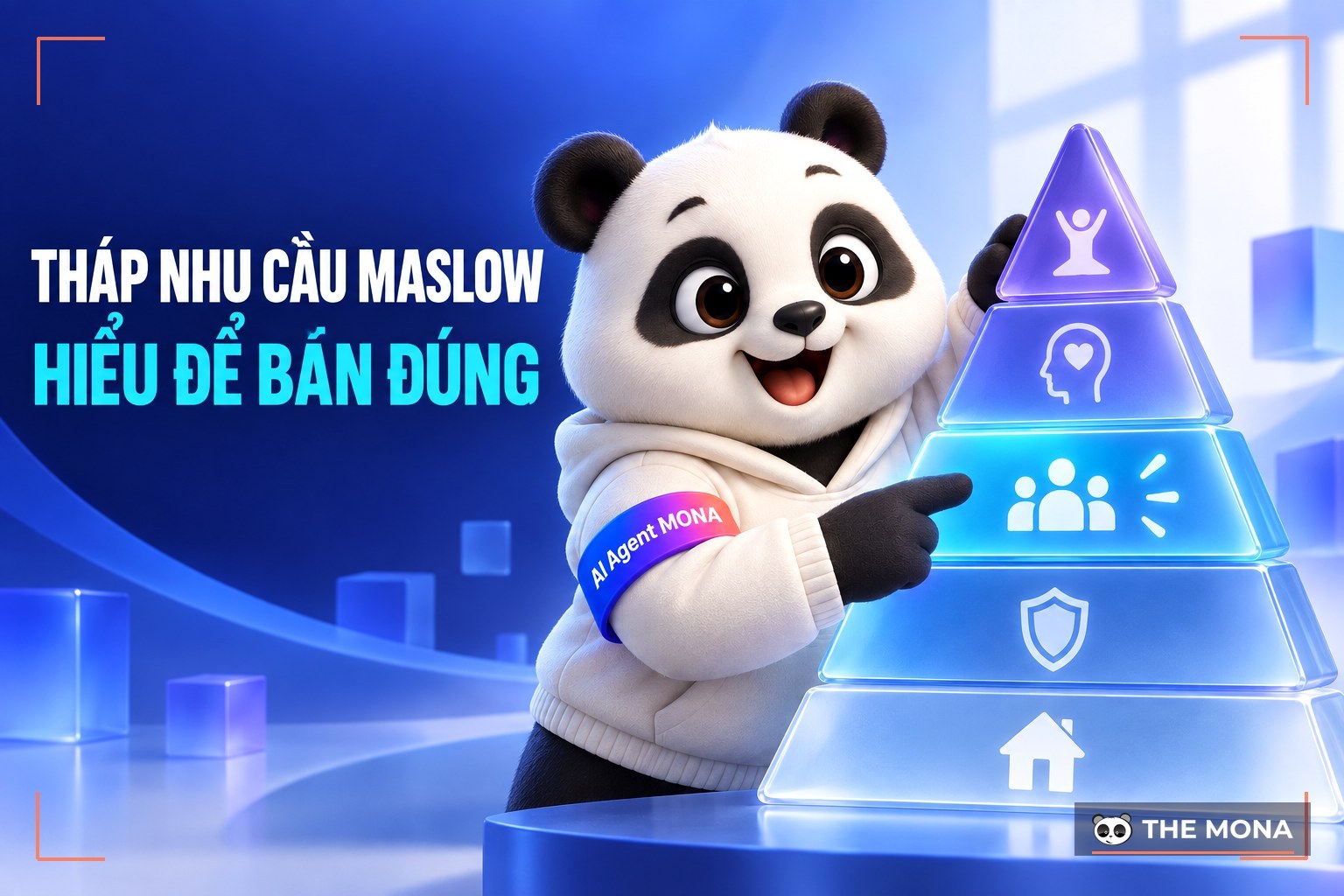
->See: Applying Maslow's hierarchy of needs to customer segments.
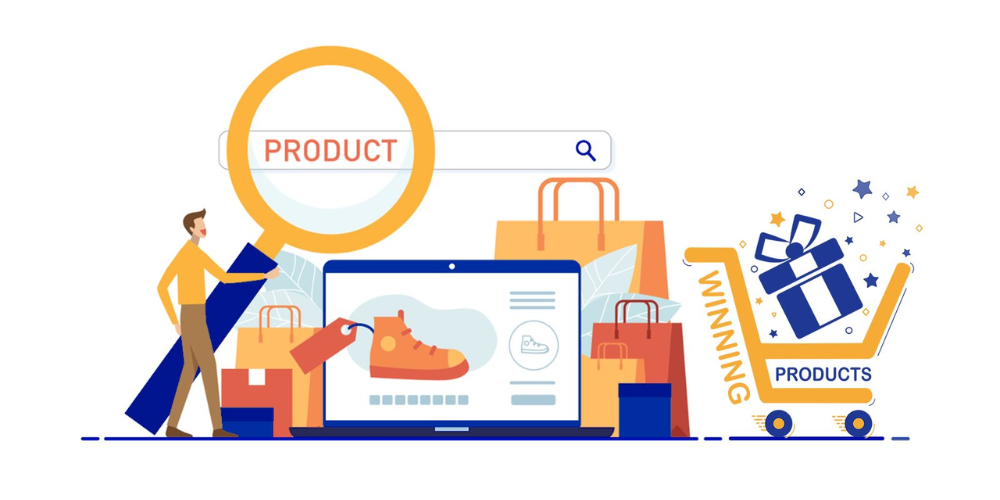
To decide what you should sell, you need to study in detail what potential customers need from that product or service and adjust what you sell to meet those needs.
Meeting customer expectations makes them more likely to buy from you, recommend you to others and come back again.
Some important factors to consider when making a product:
1/ Will you mass-produce or make to order? Will you offer the same product to every buyer or a separate product tailored to each customer's needs?
2/ What type of goods does your business sell?
Knowing which type your product belongs to helps you price it, choose where to sell it, and distribute and promote it in the right place, to the right people, at the right time.
3/ Is the product new or already on the market?
4/ What is your product's quality?
Whether a defect is big or small, your product can still disappoint people and cause revenue to drop. So make sure your product gets no bad feedback by answering the following questions:
The price you sell at affects how many units you sell.
To work out your product's cost, you need to consider:
Once you know these factors, you can work out the profit your goods and services will bring in.

Besides the factors above, you can set your product's price based on market share and competition, such as:
Where will you sell the product, and how will you distribute it?
Even if you are just starting out, it is worth considering a new distribution method.
Promotion is the strategy of getting your product in front of as many users as possible. For customers to buy from you, they need to know about it, have a positive impression and be convinced that they need or want your product.
There are many tactics you can use to promote your product to potential customers, such as:
Which promotion method fits depends on your budget and your potential customers. Make sure you are advertising the product where people will see it.

Three important things that make your product/service promotion strategy succeed are packaging, messaging and the brand image you project.
On top of the 4 main elements (4Ps), in 1981 Bernard Booms and Mary Bitner expanded the “4Ps” model into the “7Ps”. They added 3 elements:
->See more: What are the 7Ps in marketing? Applying the 7P marketing mix in practice
Many people ask Hùng how a service company can grow more sustainably. His answer: find clients the right way, at the right time and with the right level of investment. Watch this video to hear Hùng share 7 approaches MONA has used in practice.
Many marketing strategies are in use today. Among them, you will come across the basic, widely used strategies below.
This is the most popular marketing strategy. The marketing mix strategy (or 4Ps strategy) was mentioned above.
This strategy includes 4 elements:
A segmentation marketing strategy uses different market segments to run and roll out campaigns that make marketing more effective.

In general, there are 3 main groups of customer segments that marketers can consider when building a strategy:
This is also a widely used strategy today. Its advantage is that it uses many elements of the internet to make communication more effective.
Through it, the strategy can attract target audiences and increase organic purchase conversions through content development, social media,…
However, for the strategy Digital Marketing to succeed, you need a complete, thorough plan from setting goals to the specific execution steps. You also need to define the metrics that measure effectiveness so you can act on solutions in time and make your digital marketing strategy work better.
These days, using marketing as the main way to promote a brand and grow revenue is nothing new. One of the most effective digital marketing methods is SEO Google. MONA Media specializes in website services such as end-to-end website design, SEO services helping getting your business to the top spot on Google.
We have more than 10 years of experience in website work and have completed more than 300 projects, with more than 10,000 clients. See our full-scope SEO service below.
A competitive strategy usually puts all resources into building a competitive advantage over the business's competitors in the market.
To do this, a business needs to study its competitors in depth to find the right competitive strategy.

Which strategy fits depends on the business's position and market share:
The business should also plan for anything that could backfire and turn into a PR crisis while the competitive strategy is running.
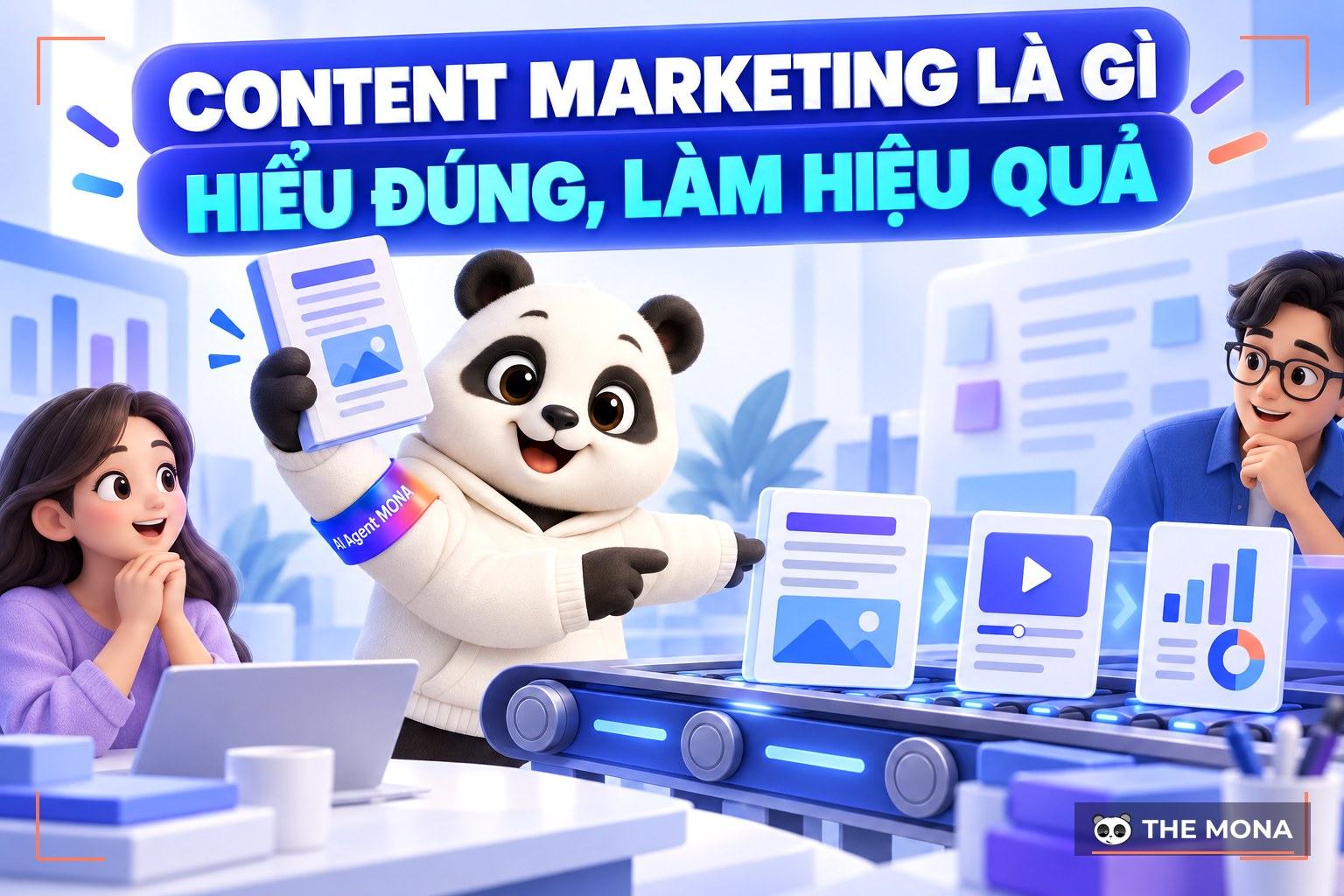
Content Marketing is the practice of creating truly valuable and useful content. It includes text, images, video, podcasts,… to attract customers.
Instead of reaching customers passively, for example by buying ads in newspapers, media and billboards, content marketing persuades potential customers in a more active and subtle way.
Content marketing focuses on useful, practical, quality content, so customers find the brand on their own, take steps toward buying and get care that improves their experience.
As a result, customers feel at ease, make buying decisions on their own and stay loyal longer, with their questions answered and less of the wariness they feel toward traditional advertising.
When you launch a new product or need to push an existing one, give it its own marketing strategy. This matters for any individual or business that sells.
Expert figures show that more than 20,000 new products are launched every year, but only 15% of them succeed. Make sure your strategy is solid.
Some product marketing strategies you can consider:
Promotions are strategies that raise awareness and increase sales. There are many types of promotion strategies, but the main elements of a successful one include:

There are many promotion tactics you can use, such as:
There are many marketing strategies to apply in business, but how do you build a marketing strategy that truly works?
>>Read more: What is SEM? An overview of SEM online marketing strategy
There are many ways to build a basic marketing strategy. Below are the 5 factors that matter most to your success.
Marketing goals can include one or more specific goals, such as:
This is the second step you need to take after setting the strategy's goals.
To make the analysis easier and more accurate, you should use marketing research tools such as Ansoff, PESTLE, SWOT, Porter's 5 Forces,…
Start by researching customers' habits, interests and what they want from the product/service. Dig deep into your target customers to refine a product/service that fits them. Any line of business should put customers at the center.

Gender, age, interests, location, social status and even education level should all be researched. That makes it easier to work out their personality and buying motives.
When a customer is highly interested in a product or service and you offer exactly what they need, you create strong buying demand and high conversion.
You can create landing pages, CTA or sign-up forms, and use customer cookies to gather insight and build an accurate profile of your customers.
In addition, customers' internet habits, online hours and the channels they use to search for products/services are also very important. The deeper you research your target customers, the better your marketing strategies and marketing plans will fit.
You must always stay ahead of your competitors, with bold strategies that stand out from theirs. When comparing two brands that offer the same product/service, customers judge them on criteria such as website rankings, brand reach, price and business strategy… So you need to research your analyzing competitors in every respect.
Finding out where they beat you and where they fall short will help you spot opportunities and improve your business.

Look into the marketing channels your competitors are active on. Analyze their marketing strategies on those channels: when they post, and how they create content and events for their products. In particular, dig into the keyword sets they are using and the methods SEO that help them rank higher…
There are also many tools that help you research competitors. You can use them, or sign up as their “customer” to get their emails and messages on your personal accounts. That makes it easy to keep track of their strategies, marketing plans and events.
A marketing strategy is made of many smaller strategies, and you have to build each one, such as:
Once the marketing strategy is built, the next step is a plan to implement and execute it.
One very important step in building a marketing strategy, and one that many agencies won't tell you about, is the marketing funnel.
A marketing funnel is a simplified model of the path a target customer takes to a product, service or business, with the customer at the center.
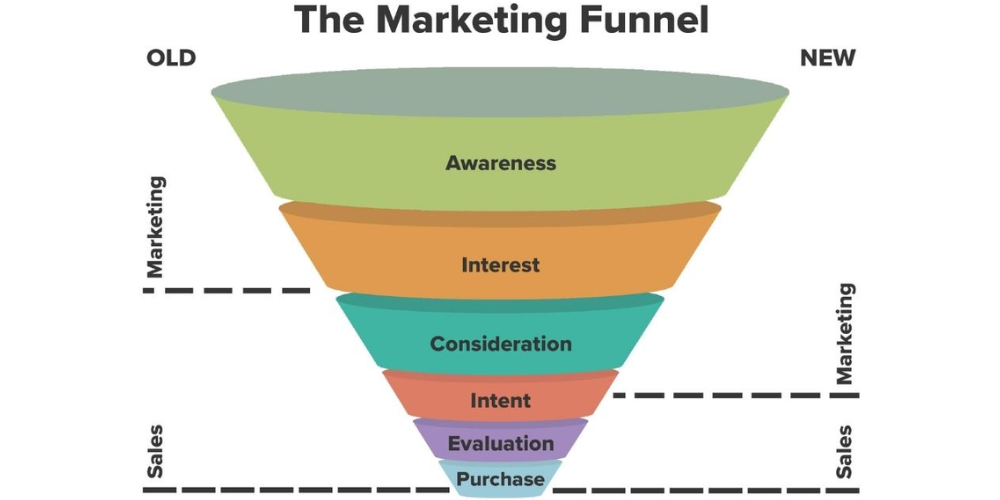
For a marketing strategy, understanding how your customers move through the funnel matters most. In practice the process is messy, because consumer behavior varies a lot.
The key is to define clear content and goals for each stage, so your brand can meet customers wherever they are and at every stage of the process.
This is the last step, and just as important. After each marketing strategy, you need to evaluate, analyze and measure how well each stage worked.
That shows you which stages, steps or methods didn't work well, so you can improve them and get better marketing results.
-> Learn more: What is the SMART model ? How to apply the SMART model in business

Any business with a well-structured, sound marketing strategy will succeed, and there is plenty of evidence for it. Below, we look at the marketing strategies big brands use.
For a long time, Apple has not had to spend much on advertising new products, thanks to its smart marketing strategy.
They rely on a strategy of creating buzz, also called word-of-mouth marketing, to get users excited and eager for their upcoming products.
According to Bloomberg, ever since the first iPhone came out in 2007, the press has been especially fond of Apple's products. Without the company having to advertise, the media have raced to cover its new products.

From then on, Apple's new products have always been covered quickly. Even when Apple has revealed nothing about a product, media rumors have turned upcoming iPhones into must-have phones.
Apple also creates a fear of missing out and a “follow the crowd” mindset among its customers.
In fact, this Apple strategy goes back to 1984 with the “Big Brother” ad, and a message that reached an entire generation: “Throw off your shackles. Break the status quo. Think different”.
Chanel is famous for its “3 no's” strategy: no discounts – no selling on social media – no attention to competitors.

Thanks to this strategy, they stand apart from their competitors, and it has contributed to their success all along.
For many years, Colgate has presented itself as more than an ordinary toothpaste, with a very different approach to customers.
Colgate planned what is called a trust-building marketing strategy. It took Colgate from selling toothpaste to becoming one of the leading and most trusted oral care brands in the world.
They started focusing on in-depth dental care, providing information and videos on proper oral hygiene. They share valuable information with users on how to brush, keep teeth and gums healthy, use dental floss, prevent tooth decay,…
Users get useful, free information that they learn and apply. That turned a toothpaste brand into a brand that teaches its customers, solving an everyday problem for them and earning their complete trust.
->See: What is performance marketing? Common forms of performance marketing
A brand familiar to Vietnamese people made a comeback in 2017 through standout events, media campaigns and viral videos.
A marketing strategy built on viral videos brought the brand huge revenue and made a big splash in the Vietnamese footwear market.
To achieve this success, Biti's applied the AIDA communication formula in a structured and engaging way to its famous marketing strategy.
Running several marketing strategies at once is a way to test which one works. Make sure each gets proper investment and careful research so it fits your business. Once you find the right one, focus on it to get the best results.
Mona's answer is yes, and the effect is big. If your business has a good product but no customers come to buy and use it, your business will soon go under.
A well-funded marketing strategy that fits the business's products helps the business grow quickly and bring in large revenue and profits.
How much a marketing strategy costs depends on its scale and how it is carried out. While planning the strategy, you also need to keep your budget and business goals in mind. These are the two key factors that guide you in building the right marketing strategy.
A marketing strategy plays an important role in a business's success and in promoting its brand. To get strong results, you need to understand how marketing strategies work and apply them well. We hope the information Mona has shared is useful. Don't forget to visit Mona Media regularly for more useful articles.

CEO & Founder · The MONA
Founder of The MONA, who built a services company of 60+ staff with 14,000+ projects delivered. Khánh Hùng shares how he thinks about building systems that run themselves, automating a business, and the real lessons from delivering projects at MONA.
 1,6K




Professional website
design services
Own a website with a beautiful, 100% exclusive design and a lifetime warranty, with the ability
to expand features flexibly as your business grows, starting today!






 MONA will never sell your information or send you spam


 MONA will never sell your information or send you spam
