
 MONA OS 2.0
 Partner with MONA


 Tự động hoá doanh nghiệp
 Cẩm nang SEO
 Digital Marketing
 Kinh nghiệm thiết kế website
 Hạ Tầng Server
 Giáo dục


 VI
 EN





Message us on
Zalo Official


 ProductsNew

 ProductsProducts
 Mới ra mắtKHA AI 2027App tự edit video, tự đăng mọi mạng xã hội, 2 phút mỗi ngày










 Website designLooks good and wins customers over.
SEO servicesBrings in customers searching for exactly what you sell.
 Tư vấn digital marketingKéo khách từ nhiều kênh, đo bằng số thật.
Corporate video productionVideos introducing your company, factory and team.
 NewAI video productionCompany story films made with AI.
 Custom software developmentCRM, ERP and HRM built for your business.
 Viết AI Agent theo yêu cầuĐặt riêng một trợ lý AI cho đúng việc của mình.
 Tư vấn chuyển đổi AIĐưa AI vào vận hành của cả công ty.
NewMONA LMSManagement for centers and schools.
MONA SkillHubInternal training for company staff.
 NHTQ systemEnd-to-end China–Vietnam shipping operations.
MONA JMSManagement for gold, diamond and pawn shops.
 MONA E-LearningA website with every feature you need to sell courses.
 How to sell online courses (course)More than 30 free lessons on selling courses on autopilot.
 MONA Cloudmonacloud.vnServers to get your apps and websites running.
 MONA Basemonabase.vnPostgres database, sign-in and file storage.
 MONA Mailmonamail.vnSend OTP, order and invoice emails from your software.
 MONA Paymonapay.vnAccept bank transfers via VietQR and notify your software when the money arrives.
 MONA eInvoiceComing soonIssue e-invoices that meet tax standards.
Gấu CườiTrả lời khách 24/7 trên web, Fanpage, Zalo và thu lead cho sale.
 Gấu TeleSalesGọi điện tư vấn, chăm khách như tổng đài viên thật.
Dê CườiTư vấn và chốt đơn cho shop ngay trong khung chat.
Gấu WebmasterNhắn nhóm Zalo là website được sửa xong.
 Gấu Pháp ChếSoạn hợp đồng, rà điều khoản trong vài phút.
 Gấu Báo GiáLên báo giá đúng mẫu và gửi khách ngay.
 AI chăm sóc khách hàngTheo dõi và giữ chân khách hàng cũ.
 Gấu Tuyển DụngLọc hồ sơ, hẹn lịch, phỏng vấn ứng viên.
 Mới ra mắt
KHA AI 2027
Xây kênh chuyên gia 2 phút mỗi ngày
Quay bằng điện thoại, AI tự edit video, tự đăng lên 16 nền tảng và tự trả lời bình luận, tin nhắn.
569.404lượt xem trên kênh CEO MONA sau 25 ngày
 Anh Khánh HùngCEO MONA đang dùng mỗi ngày
Xem app làm được gì
 AI
Gấu Cười MONA ĐANG TỰ XÀITrả lời khách 24/7 trên website, Zalo OA, Messenger và thu lead về cho sale.
Dê CườiChốt đơn bán lẻ và sàn: Shopee, TikTok Shop, web. Chăm cả khách sỉ, đại lý.
Gấu WebmasterCập nhật nội dung, tối ưu SEO website mỗi ngày.
Gấu TeleSalesGọi điện tư vấn, chăm khách như tổng đài viên thật.
Gấu Tuyển DụngLọc hồ sơ, hẹn lịch, phỏng vấn ứng viên tự động.
AI chăm sóc khách hàngGiữ khách cũ, cứu lead đã rớt cho phòng kinh doanh.
Gấu Pháp ChếSoạn hợp đồng, rà điều khoản trong vài phút.
Gấu Báo GiáLên báo giá đúng mẫu, gửi khách ngay khi có yêu cầu.
 Chuyển đổi AI toàn phầnGiải pháp tổng cho doanh nghiệp, 3 lớp triển khai.
 Viết AI Agent theo yêu cầuĐặt riêng một con AI gánh đúng nghiệp vụ của bạn.
 Custom softwareCRM, ERP and HRM with built-in AI automation.
 SEO & AEO thời đại AIĐược Google lẫn AI trích dẫn, không chỉ xếp hạng.
 Kiến thức AI cho doanh nghiệpBài phân tích, hướng dẫn ứng dụng AI vào vận hành.
 Free AI courses
 AI tools at work
App mới · KHA AI 2027
Xây kênh 2 phút mỗi ngày
AI tự edit video, tự đăng mọi mạng xã hội
Free consultation, 8am–10pm every day

18 March, 2023
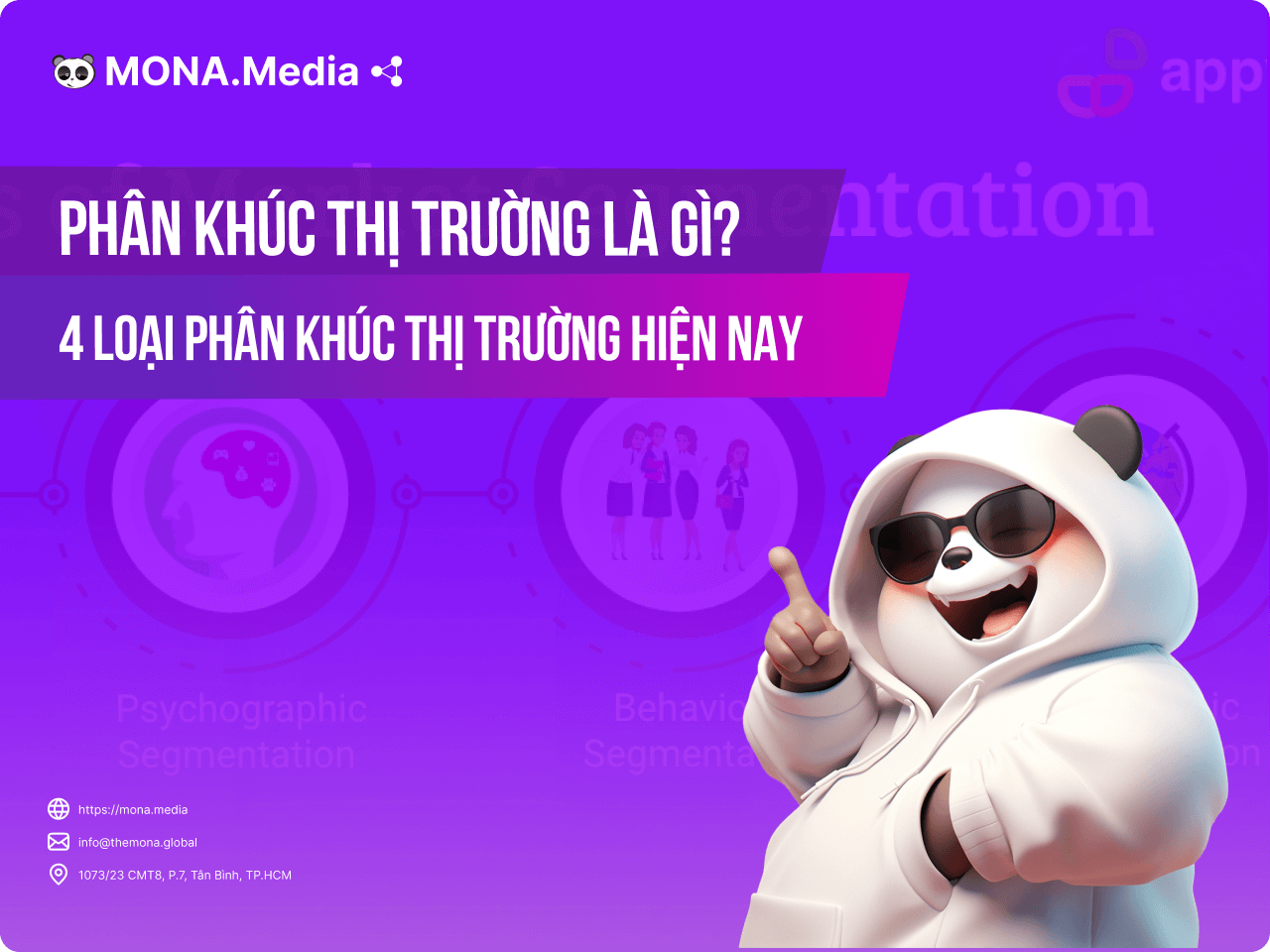
Whenever a business runs a marketing campaign aimed at a particular market, it always carries out market segment. So what is market segmentation, why do businesses need to do it, and what happens if they skip it? Let's look at MONA Media find out in the article below.
Market segmentation (market segmentation). It means dividing a market into groups with distinct characteristics that are uniform within each group. Grouping customers by their traits and needs makes it easier for a business to research them and serve them well.

A business cannot meet every individual customer's needs, so it can only set policies for groups of customers. Even with the same your target market different businesses may segment the market in different ways, depending on their strategy.
There are many ways to segment a market, but the type most businesses use is based on customer characteristics. Segmenting by income: high-income customers and middle- or low-income customers. Some businesses also separate VIP customers, regular customers, new customers and so on. potential customers.
Understanding market segmentation in depth makes it easier for a business to build its marketing strategy Take a small, newly founded business with a marketing team that is still in training and a tight budget. It should work with an experienced professional firm like MONA to get accurate advice.
We do market research work every day and every hour across many different industries . That is why our team understands the economic situation well and can give sensible advice to your business. With experience from more than 6,000+ projects projects, and solid results for many client partners, we are confident we are the right choice for your business.

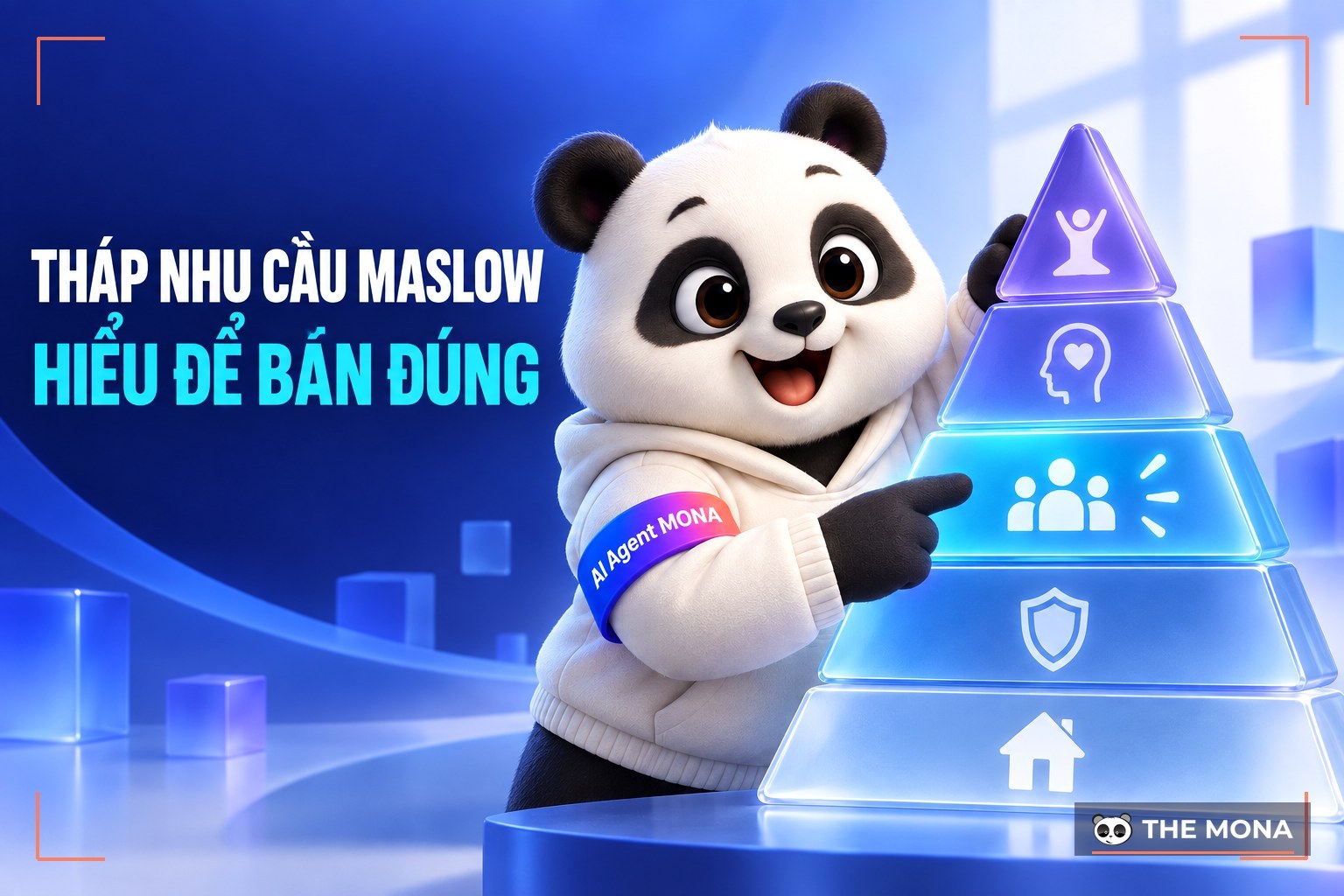
-> See also: Segment your customers more easily with Maslow's hierarchy of needs
Customers rarely have the same product needs, so a business cannot serve people one by one. Segmenting the market saves the business effort, time and budget.
Customers in one market segment share many traits and needs, so marketing strategies roll out faster and work better. Because the group you research is narrower, you get more accurate information and data about your customers..
Identifying the right market segment makes online marketing run more smoothly. Example of an SEO method.

Traffic of a business in the immigration consulting sector
In addition, departments also find it easier to manage and follow up with their own customers. Each department should focus on one specific customer group so those customers are satisfied with the service the business provides.
In addition, when segmenting the market as part of a marketing strategy, the business also sees its own strengths and weaknesses,. It would also and can set the right strategy for each segment to get the best results, compete with rivals and find potential customers.
When you segment customers well, building and carrying out your strategy gets easier. Without an accurate customer segment, your marketing strategy goes off course, the business grows slowly, revenue does not improve and money is wasted.
Market segments and target customers are two key concepts for deciding and steering a company's business strategy. Here is why both matter so much:

There are 4 types of market segment: Geographic (area, region), social factors, customer behavior and psychological factors. Let's go through each type in detail with MONA below:
Based on regional characteristics, a business carries out market segment (market segmentation) by geography, such as mountains, plains, rural areas or cities. A business expanding to international markets can segment by region or continent. People living in the same area usually share similar traits, so researching a market by location is easier and more convenient.
Example: A fashion brand running a marketing strategy will study geographic segments to find the places with the most potential. People in the north dress differently from people in the south, partly because of the weather.
With each region's traits in mind, a business can build and run more effective strategies. Competition among businesses in the same area is very high, so a business needs to research carefully and plan sensibly.
Once the customer segmentation research is done, SEO website optimization is the next step to take to bring your website to the top of Google. MONA Media is proud to be Agency has had more than 10+ years of experience in the marketing field with full-scope SEO services and website design.

We are proud of an SEO team that has successfully carried out thousands of SEO projects for more than 12,000 clients and partners in many industries, in Vietnam and abroad. MONA is confident it can help you increase revenue up to 300 times through SEO alone, and keep that SEO performance strong over the long term.
Act now and CONTACT US with MONA via Hotline 1900 636 648 for detailed advice, and reach the best SEO results for your website sooner.

Based on customer characteristics such as age, gender, education, occupation, income, culture or religion. This is the segmentation method that gives the best results and is used by many businesses, because the data it produces is reliable.
Example: A food company can analyze the market by consumer age to develop products for children, middle-aged people or seniors. This helps the company meet customer needs better and sell more, which raises revenue.
Consumer behavior also has a big effect on a business's marketing strategy. Besides the traditional way of shopping in person at a store, online shopping is now popular with many people.
So businesses should develop their products on websites or e-commerce platforms. They should study how customers use the internet to promote products, and collect user data through surveys and customer feedback.
You can measure and capture the number of potential customers interested in your industry. For some industries considered "hard" to advertise, a website is the way to bring your products and services closer to users.
-> See also: Research steps customer behavior useful for businesses

Customers' buying decisions depend largely on their personality and daily spending habits. They tend to buy right away when a product meets their criteria or matches their tastes.
Example: Customers who like eco-friendly products are willing to pay more for them. For other goods, they may hesitate or even decide not to buy.
Customers also tend to like discounted products or products that come with a free extra item. One study found that promoted products sell better than regular ones.
So understanding user psychology helps a business develop better product lines and hit consumer psychology directly, which lifts sales quickly. Effective marketing strategies make a business more competitive and grow its market share.
Market segmentation is a must for every business when it carries out a marketing strategy. So what is the best way to segment a market and reach your goals? Follow these methods:

First, to decide which factors to segment the market by, a business needs to run surveys and market research that goal. You can survey customers directly, survey the market through online questionnaires, or study existing data.
After collecting the data you need, the business's marketing strategy team analyzes it and draws conclusions. From this data the business analyzes and evaluates social trends and its own ability to serve the market.
At MONA, we always do data analysis and market research thoroughly before starting website optimization.
Take the logistics market. After analysis, we found 3 "heavyweight" competitors in logistics at the time, with many keywords ranking at the top of search engines. MONA's expert team researched based on 2 customer groups, followed by many more steps, to reach the result of 90% OF KEYWORDS IN THE TOP 3-5, AND 250+ NEW CUSTOMERS.
Click the banner below to read the full story!

To understand the market better, businesses run preliminary surveys, opinion polls and so on. They ask questions about the chosen segments, using quantitative or qualitative methods for respondents to answer.
Each segment has its own customer characteristics and personality. So once you have identified the potential market segments, describe each one in detail to know exactly what makes it distinct.
After grouping customers by shared traits and attitudes, the business can segment the market into the 4 types of market segment. It can also use the following standards to describe each segment:

Testing and assessing how attractive each market segmentis, helps the business understand its goals and choose the right market segment. Next, use conversion tracking to measure how effective it is. If results are low, review the research methods or the segmentation you used.
Evaluating segments accurately determines the goal the segment aims at. This is also one of the most important steps in the whole process, because an effective segment shapes later marketing strategies and product positioning.
Brand positioning is the process of defining the position and image a brand wants to build in the minds of its target customers. This strategy creates a point of difference and unique value for the brand, which builds recognition, preference and trust among customers.
At this stage, the business needs marketing strategies that leave its mark on customers so they always remember you. Factors such as pricing, point of sale, product strengths and credibility decide how well the brand is positioned in customers' eyes.
After segmenting the market, the next step is to choose between a concentrated strategy and a multi-segment strategy. In detail:

Concentrated strategy is used when a business chooses one segment to research and develop. It puts all its time and budget into promoting its products in that segment.
By concentrating on one segment, the business can cut advertising and staffing costs. However, focusing on a single segment is also risky if your Marketing does not work. The business could lose its entire investment or suffer losses from missing its goals.
In contrast to the concentrated strategy, the multi-segment strategy runs promotion plans across different market segments. It is safer, because you may fail in one segment but succeed in another.
But the business has to spend more resources, time and money on research and on running plans across segments. In return it earns from more sources and is under less pressure from possible risks.

To segment a market fully and in detail, a business must make sure the segments meet the following criteria:
A market segment needs its own traits that set it apart from other segments. This ensures it attracts the interest and choice of potential customers.
A market segment must be defined clearly and specifically, so you can plan strategies and actions for the customers in it.
A market segment must be measurable and trackable. This lets you evaluate how well marketing campaigns work and adjust the strategy based on results.
A market segment must be easy to reach, so marketing can be carried out effectively within it. This ensures the business can engage with the segment and take advantage of its opportunities.
A market segment must be large enough to be profitable and support sustainable growth. This ensures that focusing on the segment brings long-term business value.

Biti’s is a well-known footwear brand in Vietnam. Its market segment Biti’s is the fashion and sports footwear market for young consumers. Biti's makes and distributes footwear from sports shoes to loafers and sandals.
In the fashion footwear segment, Biti's makes good-looking, stylish shoes that keep up with fashion trends. The main customers in this segment are young people and who care about fashion. Biti's offers a wide range of colors, styles and materials, from sports shoes to sneakers and high heels.
Beyond that, Biti’s is also present in the sports footwear segment. The brand offers high-quality shoes suited to sports and leisure. Biti's has notable partners in the sports industry, supplying official footwear to football teams, badminton players and other sports partners. The brand is known for its varied products and stylish designs, which meet consumers' need to build a personal style and express themselves.

Novaland is known as one of the largest real estate groups in Vietnam. Novaland works mainly in the real estate market, developing and selling residential and commercial properties. The company serves different segments of the real estate industry, including:

Coca Cola is one of the leading beverage companies in the world, with a very broad market segment. Here are Coca-Cola's main market segments:
To segment a market more effectively, a business should have the following:
Based on what this article has covered, you now have a clearer picture of how to segment a market and why it matters. Applying these methods to identify segments well helps a business get better results from its marketing strategy.

1- Is identifying a market segment important?
Identifying a market segment is very important in business. When a company understands the segment it is aiming at, it can focus its resources and effort on meeting that specific customer group's needs as well as possible.
2- Which market segment should you focus on?

When deciding which market segment to focus on, consider factors such as target customers, field or industry, market demand, level of competition and how sustainable the segment is.
3- How do you identify the right customer segment?
As you can see, market segment is used for many business goals. We hope the information MONA shared above has helped you understand what market segmentation is and how to identify the right market and the right target customers, so your business gets the best results. We wish your business every success!

CEO & Founder · The MONA
The founder of The MONA built a service company of 60+ staff with 14,000+ projects delivered. Khánh Hùng shares his thinking on building self-running systems, automating a business, and the real lessons behind MONA's projects.
 1,5K




Professional website
design services
Own a website with a beautiful, 100% exclusive design and a lifetime warranty, with the ability
to expand features flexibly as your business grows, starting today!






 MONA will never sell your information or send you spam


 MONA will never sell your information or send you spam
