
 MONA OS 2.0
 Partner with MONA


 Tự động hoá doanh nghiệp
 Cẩm nang SEO
 Digital Marketing
 Kinh nghiệm thiết kế website
 Hạ Tầng Server
 Giáo dục


 VI
 EN








Message us on
Zalo Official


 ProductsNew

 ProductsProducts
 Mới ra mắtKHA AI 2027App tự edit video, tự đăng mọi mạng xã hội, 2 phút mỗi ngày










 Website designLooks good and wins customers over.
SEO servicesBrings in customers searching for exactly what you sell.
 Tư vấn digital marketingKéo khách từ nhiều kênh, đo bằng số thật.
Corporate video productionVideos introducing your company, factory and team.
 NewAI video productionCompany story films made with AI.
 Custom software developmentCRM, ERP and HRM built for your business.
 Viết AI Agent theo yêu cầuĐặt riêng một trợ lý AI cho đúng việc của mình.
 Tư vấn chuyển đổi AIĐưa AI vào vận hành của cả công ty.
NewMONA LMSManagement for centers and schools.
MONA SkillHubInternal training for company staff.
 NHTQ systemEnd-to-end China–Vietnam shipping operations.
MONA JMSManagement for gold, diamond and pawn shops.
 MONA E-LearningA website with every feature you need to sell courses.
 How to sell online courses (course)More than 30 free lessons on selling courses on autopilot.
 MONA Cloudmonacloud.vnServers to get your apps and websites running.
 MONA Basemonabase.vnPostgres database, sign-in and file storage.
 MONA Mailmonamail.vnSend OTP, order and invoice emails from your software.
 MONA Paymonapay.vnAccept bank transfers via VietQR and notify your software when the money arrives.
 MONA eInvoiceComing soonIssue e-invoices that meet tax standards.
Gấu CườiTrả lời khách 24/7 trên web, Fanpage, Zalo và thu lead cho sale.
 Gấu TeleSalesGọi điện tư vấn, chăm khách như tổng đài viên thật.
Dê CườiTư vấn và chốt đơn cho shop ngay trong khung chat.
Gấu WebmasterNhắn nhóm Zalo là website được sửa xong.
 Gấu Pháp ChếSoạn hợp đồng, rà điều khoản trong vài phút.
 Gấu Báo GiáLên báo giá đúng mẫu và gửi khách ngay.
 AI chăm sóc khách hàngTheo dõi và giữ chân khách hàng cũ.
 Gấu Tuyển DụngLọc hồ sơ, hẹn lịch, phỏng vấn ứng viên.
 Mới ra mắt
KHA AI 2027
Xây kênh chuyên gia 2 phút mỗi ngày
Quay bằng điện thoại, AI tự edit video, tự đăng lên 16 nền tảng và tự trả lời bình luận, tin nhắn.
884.102lượt xem trên kênh CEO MONA sau 36 ngày
 Anh Khánh HùngCEO MONA đang dùng mỗi ngày
Xem app làm được gì
 AI
Gấu Cười MONA ĐANG TỰ XÀITrả lời khách 24/7 trên website, Zalo OA, Messenger và thu lead về cho sale.
Dê CườiChốt đơn bán lẻ và sàn: Shopee, TikTok Shop, web. Chăm cả khách sỉ, đại lý.
Gấu WebmasterCập nhật nội dung, tối ưu SEO website mỗi ngày.
Gấu TeleSalesGọi điện tư vấn, chăm khách như tổng đài viên thật.
Gấu Tuyển DụngLọc hồ sơ, hẹn lịch, phỏng vấn ứng viên tự động.
AI chăm sóc khách hàngGiữ khách cũ, cứu lead đã rớt cho phòng kinh doanh.
Gấu Pháp ChếSoạn hợp đồng, rà điều khoản trong vài phút.
Gấu Báo GiáLên báo giá đúng mẫu, gửi khách ngay khi có yêu cầu.
 Chuyển đổi AI toàn phầnGiải pháp tổng cho doanh nghiệp, 3 lớp triển khai.
 Viết AI Agent theo yêu cầuĐặt riêng một con AI gánh đúng nghiệp vụ của bạn.
 Custom softwareCRM, ERP and HRM with built-in AI automation.
 SEO & AEO thời đại AIĐược Google lẫn AI trích dẫn, không chỉ xếp hạng.
 Kiến thức AI cho doanh nghiệpBài phân tích, hướng dẫn ứng dụng AI vào vận hành.
 Free AI courses
 AI tools at work
App mới · KHA AI 2027
Xây kênh 2 phút mỗi ngày
AI tự edit video, tự đăng mọi mạng xã hội
Free consultation, 8am–10pm every day

18 March, 2023
The Alt tag is a term most people outside the industry have never heard of, though anyone working in content or advertising knows a bit about it. This article explains what the Alt tag is and how to write an image Alt tag that is optimized for SEO. Let’s MONA Media get started.
The Alt tag is an abbreviation of the phrase Alternative Information (understood as “alternative information”). Other names for the Alt tag are Alt Tag, image Alt description or the Alt attribute in the img tag. It is used as a short text describing the content of the image.
The Alt tag in HTML helps Google understand what the image is about, so it can return more accurate results to users. Also, in cases where the image cannot be displayed, users can still understand what the article is saying about the image through the Alt Text.
Put simply, the Alt tag appears in place of an image on a page to describe it to readers who visit the website but cannot see what the image is. The image Alt attribute is considered one of the important factors in SEO Onpage though not as important as keywords, SEO titles and descriptions.
-> See more: How to write the tag Meta Description SEO-ready
Alternative text is an important factor in website design. The main purpose of Alt Text is to describe images to visitors who cannot see them. That includes browsers that block images, screen readers, and especially users who are visually impaired or cannot recognize images. Good alt text means every internet user, whatever their eyesight, can make full use of your website’s content.
Alternative text gives visitors a better experience, and it also helps your SEO in ways both subtle and obvious. Good image titles and file names, together with alternative text, all contribute to your image SEO.
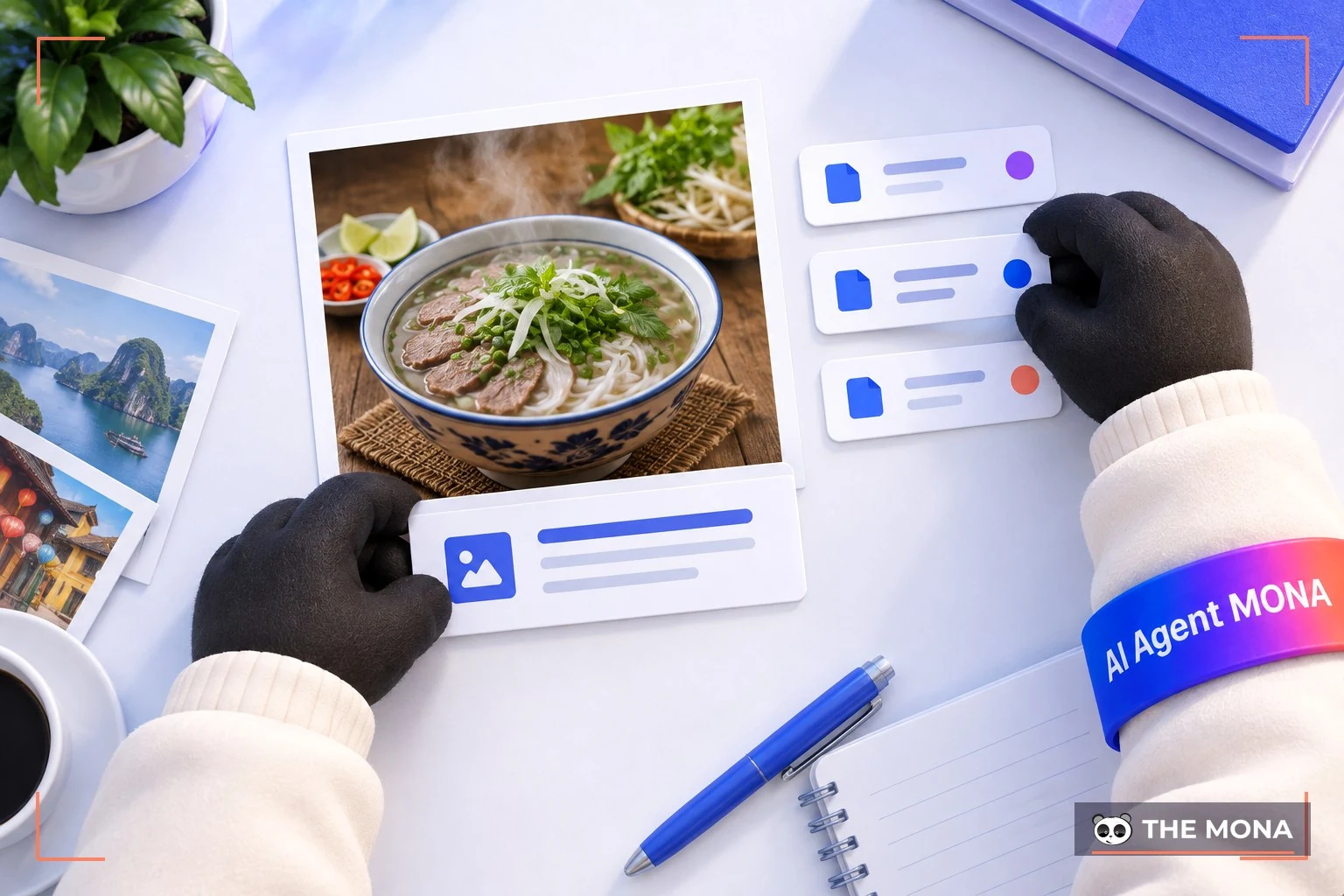
Although search engines' image recognition technology has improved a lot in recent years, search crawlers still cannot “read” images on a website the way we can.
That is why we should not leave this interpretation to the search engine. If it misreads the image or doesn't understand it at all, you may miss out on rankings completely or rank for keywords you didn't intend.
Example: Google may be able to see the image above and decode it as a man and a girl holding pictures. But if you want to rank for the keyword “thiết kế website bán hàng trực tuyến” (online store website design), you need to help the search engine understand the image by writing the most relevant Alt Text possible.
Alt text also gives you one more place to include your target keyword. Since keywords are a ranking factor, write an Alt attribute that describes the image and includes a few of the keywords or phrases you are targeting.
Many businesses invest heavily in website content and images but overlook the ALT tag, a small detail with a big impact. Without the ALT tag, Google cannot understand what your image is trying to convey, which means the website loses the chance to appear on Google Images, a potential source of organic traffic. SEO is not just about writing articles or good-looking design; you also need both users and Google's bot to “understand” your value. Optimizing every small detail is the core principle Agency SEO – MONA follows when delivering full-scope SEO for clients' websites.
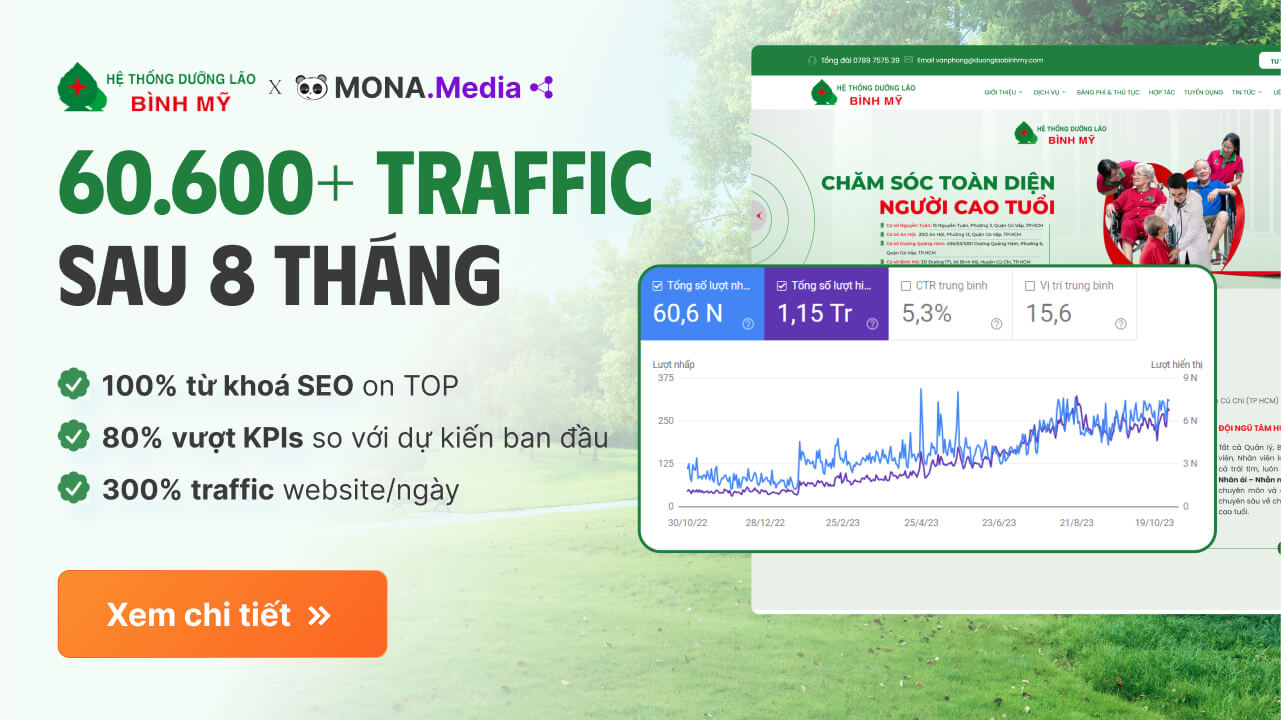
Explore the case study MONA x Bình Mỹ Elderly Care System, one of the standout projects where the MONA team worked alongside the client to reach the top of Google. Thanks to a tailored optimization strategy built around the website’s actual condition, Bình Mỹ exceeded its targets and got 100% keywords into Google's top search results.
To get the most out of the Alt tag, keep the following points in mind:
-> See more: What is image SEO? How to do image SEO effectively
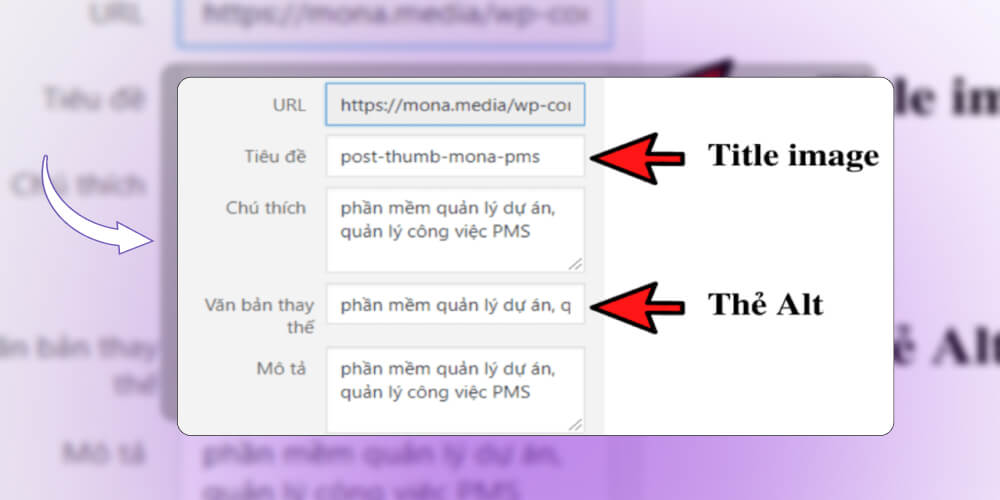
Many people mistakenly think the Alt tag and the Image Title are the same. In fact, they are two completely different things.
Specifically, the image Title is just Additional Information for the image, and it should always be short. However, the Image Title content is not displayed if the image fails to load. Conversely, readers can see the Alt attribute if they hover over the image.
The Alt Tag and the Image Title are added to article content in two different ways. But both are important additions for optimizing images in an article.
A website that looks good but doesn’t bring in orders isn’t doing its job. CRO decides whether the revenue comes in. Huy breaks it down into two strategies that are easy to understand and apply. It’s all in the video, so hit play and get started.
The Alt tag needs optimizing too, and the more natural the optimization, the better your results. Here is how to optimize Alt tags for SEO:
The general structure of an Alt Tag is: <img src=”url” alt=”some_text”> or written out in plain words: <img src=”link to the image file” alt=”description” />
In the img src part, add the link to the image file you want to display. In the Alt attribute, you can write any content for the image. However, it must still meet the criteria mentioned above for Alt Text.
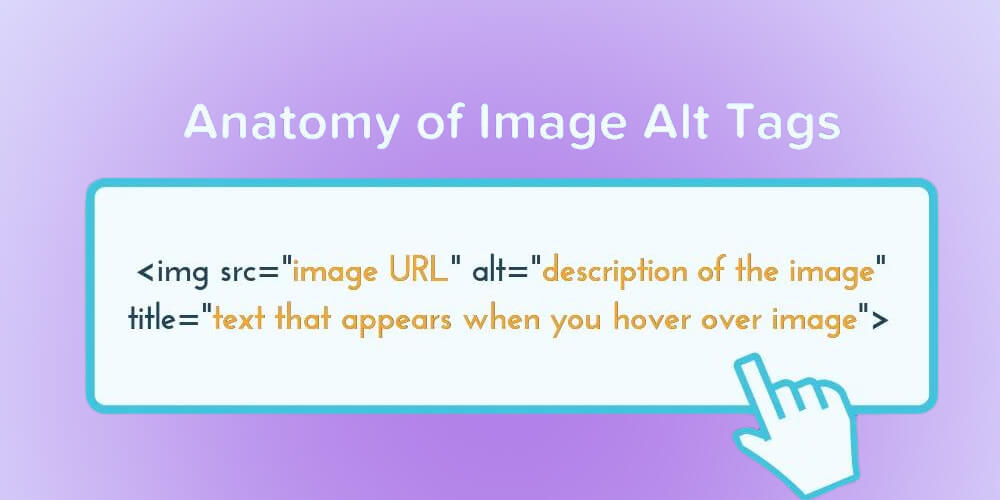
Or if you want to add an Image Title to the image, you can follow this structure:
<img title=”image title tag” src=”image link” alt=”image alt tag” />
The title tag is optional, but Alt is the part Google recommends we use.
Writing a description for an image is actually very simple; almost anyone can do it after looking it up or being shown once. Most website platforms today have a built-in field for adding Alt to images.
You can go to your website's media library and click on an image. Each image has fields for the Alt tag, title tag and description tag for you to fill in. All you need to do is fill them in sensibly and follow the steps the website asks. That's it, you've added Alt Text to the image quickly and easily.
If the website doesn't have this function yet, it is a job for a website developer. They will modify the website's code using the structures shown above. Once they edit and update the system, the image Alt attribute field will appear and you can use it.
Optimizing the Alt tag is an essential step that has a real effect on your website’s SEO performance, so don’t skip it.
Did you know that up to 1/3 of a website's organic traffic comes from Google Images? In visually driven fields like fashion, cosmetics, furniture, food or travel, each image is not just an illustration; it can also become a “magnet” for organic traffic if optimized correctly. Because we understand that value, MONA Media offers full-scope SEO services that help businesses make the most of this sustainable and completely free source of traffic.
At MONA, we don't just focus on pushing keyword rankings; we aim for a comprehensive SEO strategy, optimizing every factor from content and technical aspects to user experience.

Highlights of full-scope SEO services at MONA Media:
Put your business in front of millions of potential customers every day. Contact with MONA Media for a consultation and to receive SEO services quote full-scope service in Ho Chi Minh City that best fits your business.
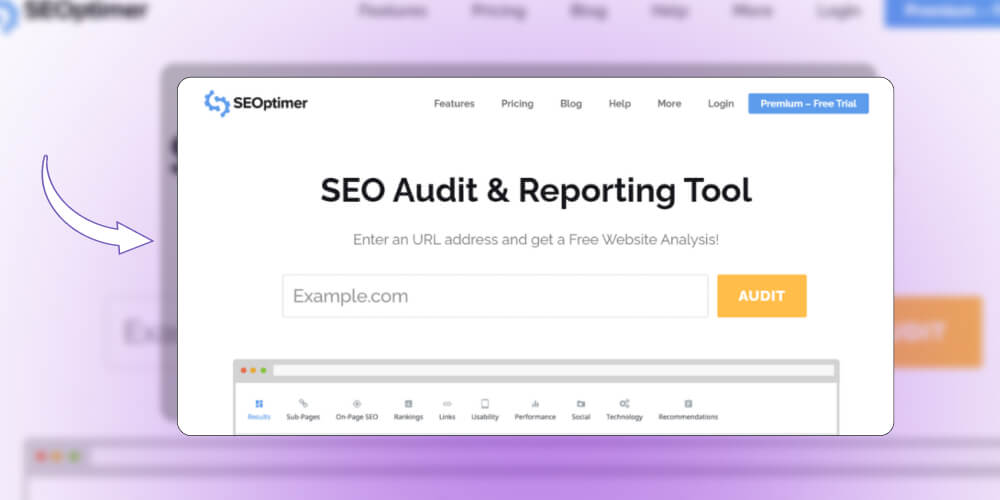
There are many ways to check whether images on a website have Alt tags. Use a website checking tool or install dedicated software.
We recommend the tool SEOptimer. It is very easy to use: just enter the URL of the website you want to check and click check. Image Alt Tag Checker gives you results within seconds, including: the number of images on the website, the number of images missing Alt, and the names of the images missing Alt.
These are simple criteria, but they make your article easier for search engines to crawl. Besides the Alt tag, there is one more thing to optimize: the image file name.
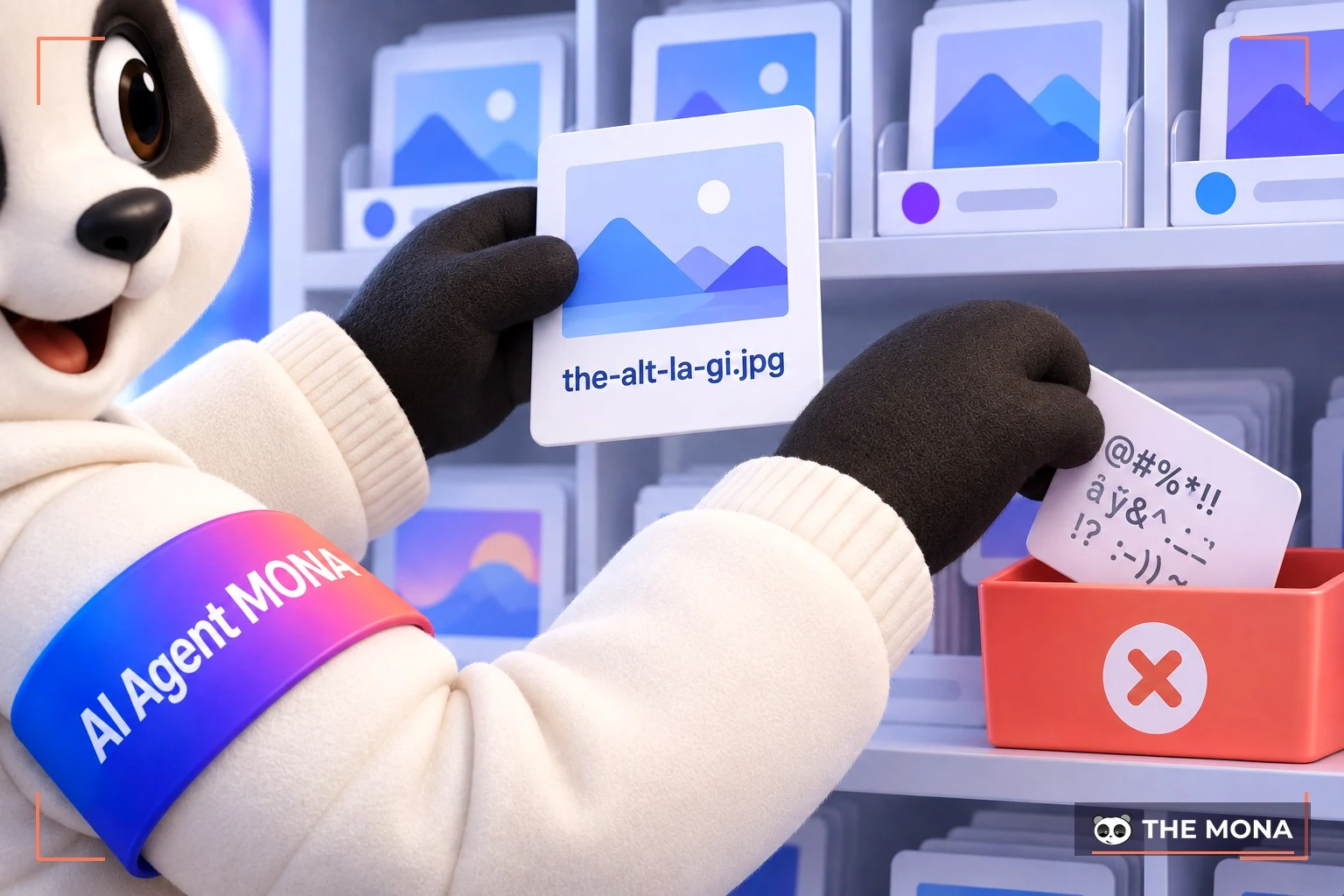
You can name images however you like, but if you want to optimize them, pay attention to the following:
The reason you should write image names without diacritics or spaces is that servers often use the UTF-8encoding. When you first upload, there may be no problem, but when you backup (back up) to move to another server, the image names get re-encoded.
At that point, keywords with diacritics and spaces are automatically converted to UTF-8 escape characters. Of course you can rename them, but with many images it takes a lot of time to rename them all.
At a time when users increasingly search for information on AI tools like Google SGE, ChatGPT or Bing Copilot, the traditional SEO approach is gradually changing. Instead of just trying to “get to the top” of Google, businesses need to be present wherever customers search. That is why AI SEO is no longer a passing trend; it has become an important strategy that helps brands keep up with the era of smart search.
Why should your business start AI SEO services now?
At MONA Media, we applied AI SEO early to our own website and for many clients. We're proud to see our clients' brands chosen by AI as suggested answers, significantly increasing organic traffic and brand recognition every day.
Don’t let your business fall behind as search moves to AI. Contact MONA Media for advice on the right AI SEO strategy and a detailed quote.
1- What information can the ALT tag contain?
The ALT tag can contain a description of the image content, including details such as subjects, colors and activities taking place in the image. It can also contain keywords related to the content and purpose of the web page.
2- Can the ALT Tag be used on elements other than images?
Although the ALT tag is most commonly used with the <img>tag, it can also be used on some other elements such as <area> and <input>. This helps provide descriptions for interactive elements and supports accessibility for users with disabilities.
3- Is there an optimal length for ALT Text?
There is no specific optimal length for the ALT tag. However, try to write a short, complete and accurate description of what is visible in the image, so users can understand the image content without reading too much.
Those are the criteria you need to optimize Alt tags for SEO and things to keep in mind when adding image Alt attributes. Your article can rank higher in search engines if it meets all the image ALT Text SEO criteria introduced in this article. Good luck!

CEO & Founder · The MONA
Founder of The MONA, who built a services company of 60+ staff with 14,000+ projects delivered. Khánh Hùng shares how he thinks about building systems that run themselves, automating a business, and the real lessons from delivering projects at MONA.
 1,9K




Professional website
design services
Own a website with a beautiful, 100% exclusive design and a lifetime warranty, with the ability
to expand features flexibly as your business grows, starting today!








 MONA will never sell your information or send you spam


 MONA will never sell your information or send you spam
