
 MONA OS 2.0
 Partner with MONA


 Tự động hoá doanh nghiệp
 Cẩm nang SEO
 Digital Marketing
 Kinh nghiệm thiết kế website
 Hạ Tầng Server
 Giáo dục


 VI
 EN














Message us on
Zalo Official


 ProductsNew

 ProductsProducts
 Mới ra mắtKHA AI 2027App tự edit video, tự đăng mọi mạng xã hội, 2 phút mỗi ngày










 Website designLooks good and wins customers over.
SEO servicesBrings in customers searching for exactly what you sell.
 Tư vấn digital marketingKéo khách từ nhiều kênh, đo bằng số thật.
Corporate video productionVideos introducing your company, factory and team.
 NewAI video productionCompany story films made with AI.
 Custom software developmentCRM, ERP and HRM built for your business.
 Viết AI Agent theo yêu cầuĐặt riêng một trợ lý AI cho đúng việc của mình.
 Tư vấn chuyển đổi AIĐưa AI vào vận hành của cả công ty.
NewMONA LMSManagement for centers and schools.
MONA SkillHubInternal training for company staff.
 NHTQ systemEnd-to-end China–Vietnam shipping operations.
MONA JMSManagement for gold, diamond and pawn shops.
 MONA E-LearningA website with every feature you need to sell courses.
 How to sell online courses (course)More than 30 free lessons on selling courses on autopilot.
 MONA Cloudmonacloud.vnServers to get your apps and websites running.
 MONA Basemonabase.vnPostgres database, sign-in and file storage.
 MONA Mailmonamail.vnSend OTP, order and invoice emails from your software.
 MONA Paymonapay.vnAccept bank transfers via VietQR and notify your software when the money arrives.
 MONA eInvoiceComing soonIssue e-invoices that meet tax standards.
Gấu CườiTrả lời khách 24/7 trên web, Fanpage, Zalo và thu lead cho sale.
 Gấu TeleSalesGọi điện tư vấn, chăm khách như tổng đài viên thật.
Dê CườiTư vấn và chốt đơn cho shop ngay trong khung chat.
Gấu WebmasterNhắn nhóm Zalo là website được sửa xong.
 Gấu Pháp ChếSoạn hợp đồng, rà điều khoản trong vài phút.
 Gấu Báo GiáLên báo giá đúng mẫu và gửi khách ngay.
 AI chăm sóc khách hàngTheo dõi và giữ chân khách hàng cũ.
 Gấu Tuyển DụngLọc hồ sơ, hẹn lịch, phỏng vấn ứng viên.
 Mới ra mắt
KHA AI 2027
Xây kênh chuyên gia 2 phút mỗi ngày
Quay bằng điện thoại, AI tự edit video, tự đăng lên 16 nền tảng và tự trả lời bình luận, tin nhắn.
945.455lượt xem trên kênh CEO MONA sau 46 ngày
 Anh Khánh HùngCEO MONA đang dùng mỗi ngày
Xem app làm được gì
 AI
Gấu Cười MONA ĐANG TỰ XÀITrả lời khách 24/7 trên website, Zalo OA, Messenger và thu lead về cho sale.
Dê CườiChốt đơn bán lẻ và sàn: Shopee, TikTok Shop, web. Chăm cả khách sỉ, đại lý.
Gấu WebmasterCập nhật nội dung, tối ưu SEO website mỗi ngày.
Gấu TeleSalesGọi điện tư vấn, chăm khách như tổng đài viên thật.
Gấu Tuyển DụngLọc hồ sơ, hẹn lịch, phỏng vấn ứng viên tự động.
AI chăm sóc khách hàngGiữ khách cũ, cứu lead đã rớt cho phòng kinh doanh.
Gấu Pháp ChếSoạn hợp đồng, rà điều khoản trong vài phút.
Gấu Báo GiáLên báo giá đúng mẫu, gửi khách ngay khi có yêu cầu.
 Chuyển đổi AI toàn phầnGiải pháp tổng cho doanh nghiệp, 3 lớp triển khai.
 Viết AI Agent theo yêu cầuĐặt riêng một con AI gánh đúng nghiệp vụ của bạn.
 Custom softwareCRM, ERP and HRM with built-in AI automation.
 SEO & AEO thời đại AIĐược Google lẫn AI trích dẫn, không chỉ xếp hạng.
 Kiến thức AI cho doanh nghiệpBài phân tích, hướng dẫn ứng dụng AI vào vận hành.
 Free AI courses
 AI tools at work
App mới · KHA AI 2027
Xây kênh 2 phút mỗi ngày
AI tự edit video, tự đăng mọi mạng xã hội
Free consultation, 8am–10pm every day

18 March, 2023
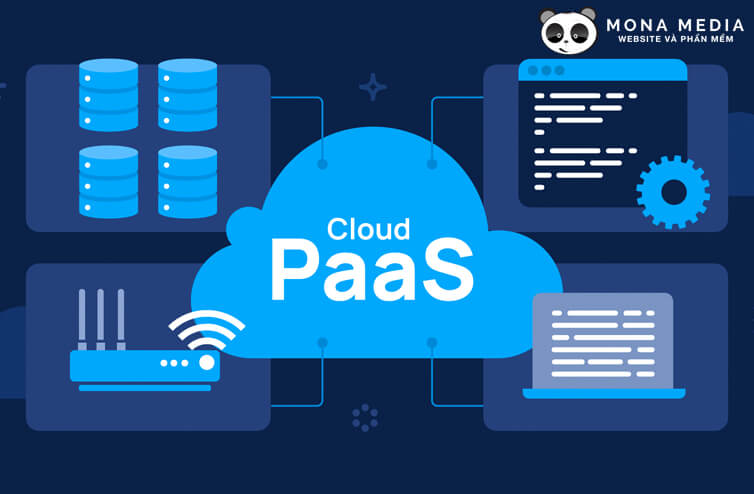
If you use technology regularly, the term "cloud platform" will certainly be familiar. Some well-known cloud platform services include SaaS, IaaS, PaaS,… In this article we introduce what PaaS is and the pros and cons of PaaS. Let's find out together!
PaaS, or Platform as a Service, is a cloud computing model that gives users a complete cloud platform (infrastructure, hardware and software) to develop and manage applications. In other words, a third-party provider supplies the tools needed to develop applications for customers over the internet.
PaaS providers host the hardware and software on their own infrastructure. As a result, PaaS frees developers from installing in-house hardware and software to run or develop a new application.

-> See also: What is a platform? The top platforms right now
PaaS is delivered through the provider's hosted infrastructure, cloud server services so it cannot fully replace a company's IT infrastructure for developing software. Providers can deliver PaaS through public, private or hybrid clouds to offer services such as application hosting or Java development.
Other PaaS services include:
Users usually pay for PaaS on a pay-per-use basis. Some providers instead charge a fixed monthly fee for access to the platform and its applications.

PaaS brings users several benefits, such as:
With PaaS you don't need to buy or install hardware and software to build and maintain your application development platform. Development teams also don't have to wait while that is done. Instead, you simply go to the provider's PaaS, provision resources and start developing right away.
PaaS lets you try or test new operating systems, other tools and languages without investing heavily in them or in the infrastructure needed to run them.
On an on-premises platform, scaling is often expensive, wasteful and sometimes still not enough. Many users guard against traffic spikes by buying extra computing, network and storage capacity. But when traffic is low, most of that capacity sits idle, and none of it can be increased fast enough to cope well with a sudden spike. With PaaS you can buy extra capacity and use it right away, or whenever you need it.
PaaS provides a shared software development environment. This lets development and operations teams reach all the tools they need from anywhere with an internet connection.
PaaS lowers overall cost by letting an organization avoid the capital equipment costs of building and scaling an application platform, reduce or eliminate software licensing costs, and lower application management costs for users.

Today developers can choose from several types of PaaS, including:
Public PaaS is suited to use in a public cloud. It lets users control software deployment while the provider manages delivery of the other IT components needed to host the applications.
This type of PaaS is usually delivered as software or an appliance behind the user's firewall and is maintained in the company's on-premises data center.
Hybrid PaaS combines public PaaS and private PaaS. It gives companies the flexibility of the near-unlimited capacity of public PaaS and the cost efficiency of using a private cloud.
This is a cloud-based platform that lets you add real-time communication to applications without needing back-end infrastructure or interfaces.
Mobile PaaS uses a paid integrated environment to configure mobile applications, delivered through a web browser. This type of PaaS usually supports public cloud, private cloud and on-premises hosting.
Open PaaS is an enterprise-oriented platform. It is also open source, free and works on all devices. Open PaaS offers useful web applications, including a calendar, contacts and mail.

PaaS brings many benefits, but this service platform has both notable strengths and some limitations. Read on to find out the pros and cons of PaaS.
The users who benefit most from PaaS are:
That is how Mona Media has shared all the basics of what PaaS is. We hope this article has helped you understand this service platform better.

CEO & Founder · The MONA
Founder of The MONA, who built a services company of 60+ staff with 14,000+ projects delivered. Khánh Hùng shares how he thinks about building systems that run themselves, automating a business, and the real lessons from delivering projects at MONA.
 1,5K




Professional website
design services
Own a website with a beautiful, 100% exclusive design and a lifetime warranty, with the ability
to expand features flexibly as your business grows, starting today!






 MONA will never sell your information or send you spam


 MONA will never sell your information or send you spam
