
 MONA OS 2.0
 Partner with MONA


 Tự động hoá doanh nghiệp
 Cẩm nang SEO
 Digital Marketing
 Kinh nghiệm thiết kế website
 Hạ Tầng Server
 Giáo dục


 VI
 EN















Message us on
Zalo Official


 ProductsNew

 ProductsProducts
 Mới ra mắtKHA AI 2027App tự edit video, tự đăng mọi mạng xã hội, 2 phút mỗi ngày










 Website designLooks good and wins customers over.
SEO servicesBrings in customers searching for exactly what you sell.
 Tư vấn digital marketingKéo khách từ nhiều kênh, đo bằng số thật.
Corporate video productionVideos introducing your company, factory and team.
 NewAI video productionCompany story films made with AI.
 Custom software developmentCRM, ERP and HRM built for your business.
 Viết AI Agent theo yêu cầuĐặt riêng một trợ lý AI cho đúng việc của mình.
 Tư vấn chuyển đổi AIĐưa AI vào vận hành của cả công ty.
NewMONA LMSManagement for centers and schools.
MONA SkillHubInternal training for company staff.
 NHTQ systemEnd-to-end China–Vietnam shipping operations.
MONA JMSManagement for gold, diamond and pawn shops.
 MONA E-LearningA website with every feature you need to sell courses.
 How to sell online courses (course)More than 30 free lessons on selling courses on autopilot.
 MONA Cloudmonacloud.vnServers to get your apps and websites running.
 MONA Basemonabase.vnPostgres database, sign-in and file storage.
 MONA Mailmonamail.vnSend OTP, order and invoice emails from your software.
 MONA Paymonapay.vnAccept bank transfers via VietQR and notify your software when the money arrives.
 MONA eInvoiceComing soonIssue e-invoices that meet tax standards.
Gấu CườiTrả lời khách 24/7 trên web, Fanpage, Zalo và thu lead cho sale.
 Gấu TeleSalesGọi điện tư vấn, chăm khách như tổng đài viên thật.
Dê CườiTư vấn và chốt đơn cho shop ngay trong khung chat.
Gấu WebmasterNhắn nhóm Zalo là website được sửa xong.
 Gấu Pháp ChếSoạn hợp đồng, rà điều khoản trong vài phút.
 Gấu Báo GiáLên báo giá đúng mẫu và gửi khách ngay.
 AI chăm sóc khách hàngTheo dõi và giữ chân khách hàng cũ.
 Gấu Tuyển DụngLọc hồ sơ, hẹn lịch, phỏng vấn ứng viên.
 Mới ra mắt
KHA AI 2027
Xây kênh chuyên gia 2 phút mỗi ngày
Quay bằng điện thoại, AI tự edit video, tự đăng lên 16 nền tảng và tự trả lời bình luận, tin nhắn.
895.765lượt xem trên kênh CEO MONA sau 37 ngày
 Anh Khánh HùngCEO MONA đang dùng mỗi ngày
Xem app làm được gì
 AI
Gấu Cười MONA ĐANG TỰ XÀITrả lời khách 24/7 trên website, Zalo OA, Messenger và thu lead về cho sale.
Dê CườiChốt đơn bán lẻ và sàn: Shopee, TikTok Shop, web. Chăm cả khách sỉ, đại lý.
Gấu WebmasterCập nhật nội dung, tối ưu SEO website mỗi ngày.
Gấu TeleSalesGọi điện tư vấn, chăm khách như tổng đài viên thật.
Gấu Tuyển DụngLọc hồ sơ, hẹn lịch, phỏng vấn ứng viên tự động.
AI chăm sóc khách hàngGiữ khách cũ, cứu lead đã rớt cho phòng kinh doanh.
Gấu Pháp ChếSoạn hợp đồng, rà điều khoản trong vài phút.
Gấu Báo GiáLên báo giá đúng mẫu, gửi khách ngay khi có yêu cầu.
 Chuyển đổi AI toàn phầnGiải pháp tổng cho doanh nghiệp, 3 lớp triển khai.
 Viết AI Agent theo yêu cầuĐặt riêng một con AI gánh đúng nghiệp vụ của bạn.
 Custom softwareCRM, ERP and HRM with built-in AI automation.
 SEO & AEO thời đại AIĐược Google lẫn AI trích dẫn, không chỉ xếp hạng.
 Kiến thức AI cho doanh nghiệpBài phân tích, hướng dẫn ứng dụng AI vào vận hành.
 Free AI courses
 AI tools at work
App mới · KHA AI 2027
Xây kênh 2 phút mỗi ngày
AI tự edit video, tự đăng mọi mạng xã hội
Free consultation, 8am–10pm every day

25 July, 2026

We’re guessing you’ve recently scrolled past headlines like these: one person, no team, can’t code, picks up AI and builds a company worth hundreds of millions of dollars. People online call it the one-person company, and reading it can leave you with an uneasy feeling. It isn’t quite envy. It feels more like being left behind: you worked for decades and fed a whole machine of dozens of people, while some kid typing away for six months sells a company for 80 million USD. And you haven’t done anything wrong. What’s wrong is that those headlines about one-person companies tell only half the story. The other half, the half that decides who wins and loses, gets cut because it isn’t sensational. In this article we tell the half that got cut, based on analysis by Ash Maurya, author of Running Lean and one of the respected voices in lean startups. After reading, you will never read those headlines the old way again, and more importantly, you will see what you are holding that the headlines never mention.
Quick summary: A one-person company run with AI is real, but the big headlines cut the important part: every founder came with years of industry experience and past failures. AI lets you test ideas faster and cheaper than ever, but building a product that holds up under real load still takes engineers behind it.
It all began with a prediction. Dario Amodei, CEO of Anthropic, the company behind the Claudemodel, said he expects a 1 billion USD company run by exactly one person to appear within the next few years. Asked when, he answered: 2026. It wasn’t a casual joke, he put his confidence at 80%. The head of one of the world’s biggest AI labs treats it as something about to happen, not something that might.
That one sentence set off a wave online. The solo founder is the future. No team needed. One person, one AI, one dream is enough. You have probably seen articles like these all over the news and social media for months. Every wave needs proof, and this one found two stories. Ash Maurya, who works directly with founders like these, took both apart in a recent video. We retell them in his order: first the way the internet tells it, then the part the internet hides.

The first story is about the founder of the platform vibe coding called Base44. He truly worked alone: no co-founder, no engineering team. He built the entire product himself, then sold it to Wix, the large website-building platform you may have heard of, for about 80 million USD. All of it took about 6 months. Six months, one person, 80 million USD. That is exactly the kind of headline that makes people close their laptops and wonder what they are doing with their lives.
The second story is a US telehealth company with about 400 million USD in annual revenue and exactly 2 staff. The founder started alone, then brought in his younger brother to help. Not strictly one person, but close enough for the internet to tell it as a solo-founder story. Both stories are real, the numbers are real, and both are staggering. On social media the story usually ends here: one person, AI, a huge result, then the credits roll.

The cut part of both stories is identical, and it sits in the word “before.” Before the telehealth company, before everything, that founder had built another company: 60 staff and about 11 million USD in annual revenue. Sounds like a success, right? Except for one detail: it made almost no profit. Picture that feeling. You spend years building a machine, 60 people draw a salary every month, 11 million USD flows in each year, and at the end you look at the bottom of the vault and it’s empty. Carrying a huge operation and still standing at zero is a feeling many of you have probably tasted to some degree.
So when he came back to the second idea, the one that made the news, he wasn’t a newcomer who got lucky. He came back covered in scars. He knew exactly what not to do, what customers really need, what regulators look at, and where the money leaks. Only then did he pick up the new tool. The headline says AI helped him scale the company. But it was that first company, the painful one with no profit, that taught him where to point the tool. The Base44 founder is the same: many years in the trade, understanding the product down to the bone, before the internet called him a lone wolf. Without that capital, no matter how powerful the tool, you are just a person with a fast machine and no map.

And even with scars, running too fast still has a price. According to Maurya, the very telehealth company in the story received a warning from the FDA, the US drug regulator, not long after launch, along with problems of AI-generated content being inaccurate. In healthcare, where regulation is tight and a mistake touches people’s health, that is no small slip. The speed AI gives is real, but the faster you run, the easier it is to cut corners, even for a disciplined person.
This is worth pausing on, because it is the trap of our time. In the past, building a product took 18 months and a team of 10, and the world slowed itself down: whatever was wrong got fixed before launch. Now one person can ship something wrong, sloppy and unchecked to thousands of users in a single weekend. The faster the tool, the sturdier the map has to be. What happens when AI agent is let loose with no one overseeing it, we covered in detail in our article on agentic vibe coding for businesses, including a case where an AI agent deleted a customer’s entire live database. One point is enough here: speed can’t replace judgment.

So where does that map come from? Maurya’s answer: industry experience. He calls it hidden capital, because it builds up quietly over the years and even its owner rarely notices. It’s the years you lived inside a problem, burned money on it, got beaten up by it. It’s knowing which customer complaints deserve listening and which are just venting. It’s knowing which corners you can cut to move faster and which will kill you. It’s the lesson from 2 a.m. when everything falls apart, which no book records.
What matters about this kind of knowledge: AI doesn’t have it, and doesn’t hand it to anyone on its own. However good a Generative AI model is, it doesn’t know why your customers leave, or what the regulators in your industry look at. That lives in the heads of people who have been in the trade. It is the variable hidden in every one-person company headline, for two reasons: it is invisible, and it isn’t sensational. “Ten years selling building materials wholesale” won’t earn a single click, even though it is the part that decides everything.
Here the story flips in a lovely way, and it’s why we rewrote this article for you rather than for tech people. If industry experience is the deciding variable, who holds the most of it? Not young people who are good at AI. It’s people like you: business owners who have lived in an industry long enough to know it like the back of their hand. Maurya calls this group latent founders, people sitting on exactly the asset the big headlines ignore, and most of them never realize it.
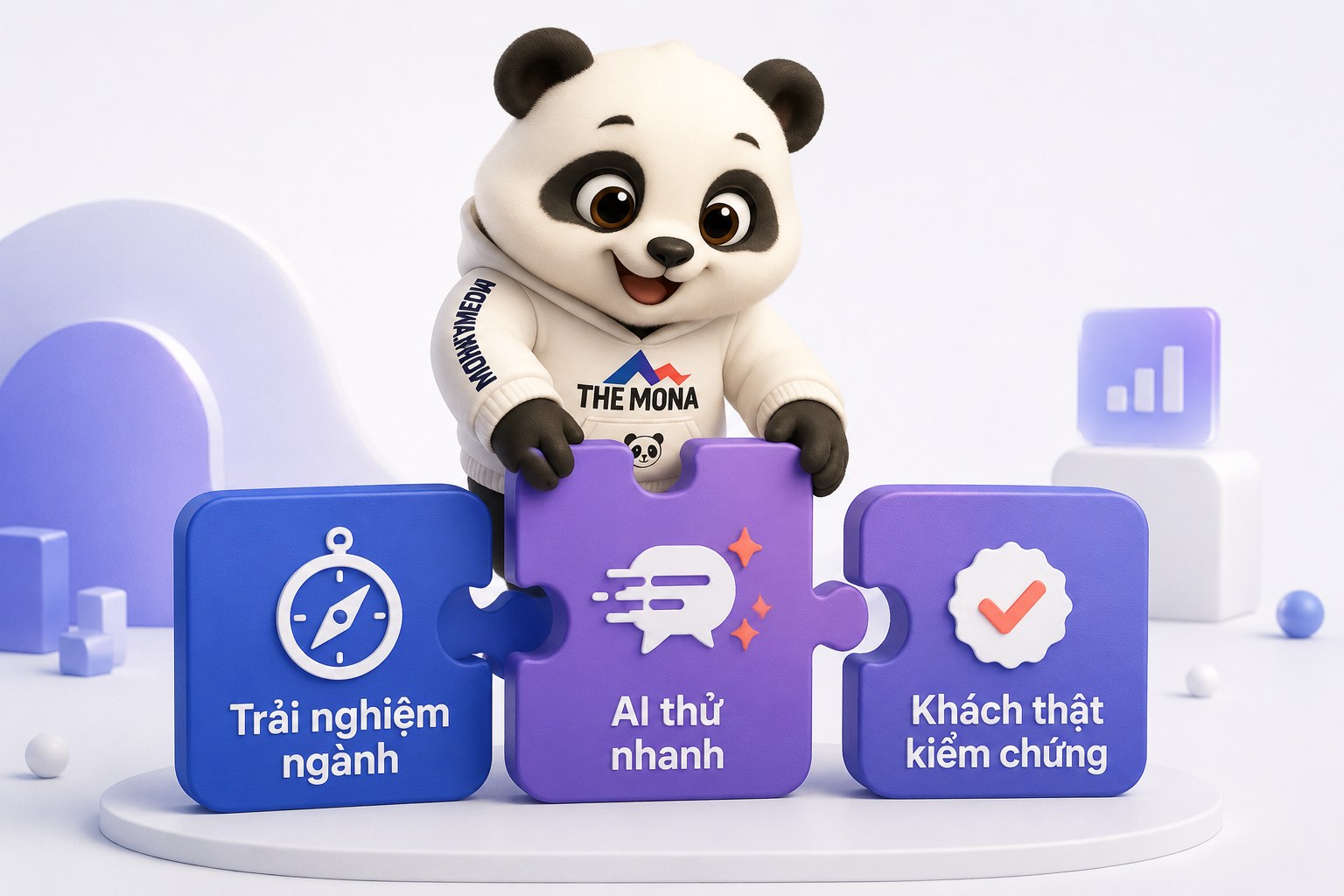
So where does AI fit in the formula? It is still a key piece, but its role is very different from the headline. AI doesn’t build the company for you. AI shortens the distance between “I have an idea” and “I have proof.” Before, to find out whether an idea was worth pursuing, you had to hire real development: wait half a year, spend a few hundred million VND, and only then find out. Now a working prototype can be built in an afternoon, a landing page goes up in an hour, and real customers can click through it within the week. The cost of putting an idea in front of real customers has dropped by tens of times.
Here is a number that shows how valuable that test is: statistics from CB Insights across hundreds of failed startups show the most commonly recorded reason, at 42%, is building something the market doesn’t need. Nearly half the money and years poured into startups die from a question that could have been answered at the start: does anyone need this? AI’s cheap test exists to answer exactly that question before you put down a year of your life and a pile of cash.
Let us tell you something we ran into earlier this year. A woman who owns a 22-branch spa chain, a longtime MONA client since we built her business website. She’s cheerful; after every work meeting she shows off her new orchids, and if anyone compliments them she talks about orchids for another ten minutes. She had been carrying an idea for two years: an app to track customers’ treatment courses, which branch they had their skin treatment at, which step they were on, with automatic appointment reminders. She asked for a quote, heard 700 million VND, balked and shelved it. Early this year one of her marketing staff started tinkering with AI and built a prototype in 4 days. It was ugly and slow, and many buttons didn’t work. But she handed that ugly version to 30 regular customers to try, and found something nobody expected: customers weren’t excited about appointment reminders. What lit them up was being able to look back at photos of their own skin from session to session. The 700 million VND idea in her head had nearly been built around the wrong thing. Four days and an ugly prototype saved her that money.

Are you also holding on to an idea like that? Most business owners we meet have at least one, usually sitting in their heads for years after hearing a quote and shelving it. Now it has two paths: keep dying in your head, or become a prototype that real customers can click through within days. If you want the second path but don’t know where to start, send a description of your idea to MONA’s software team, and we’ll show you how to build a cheap test first, with nothing to sign.
Now to the part Maurya stresses that the headlines never mention: the test has a ceiling. He says the founders he follows, when trying to go from an initial prototype to a real product that people depend on every day, almost always get stuck unless they have, or bring in, real engineers. A product that runs in a demo and a product that serves 10,000 paying customers without crashing are two different worlds. The second world needs what we deal with every day: load handling, permissions, data security, correctly configured servers, and someone on call when something breaks. That is why custom software development is still a trade, even though the tools have changed.
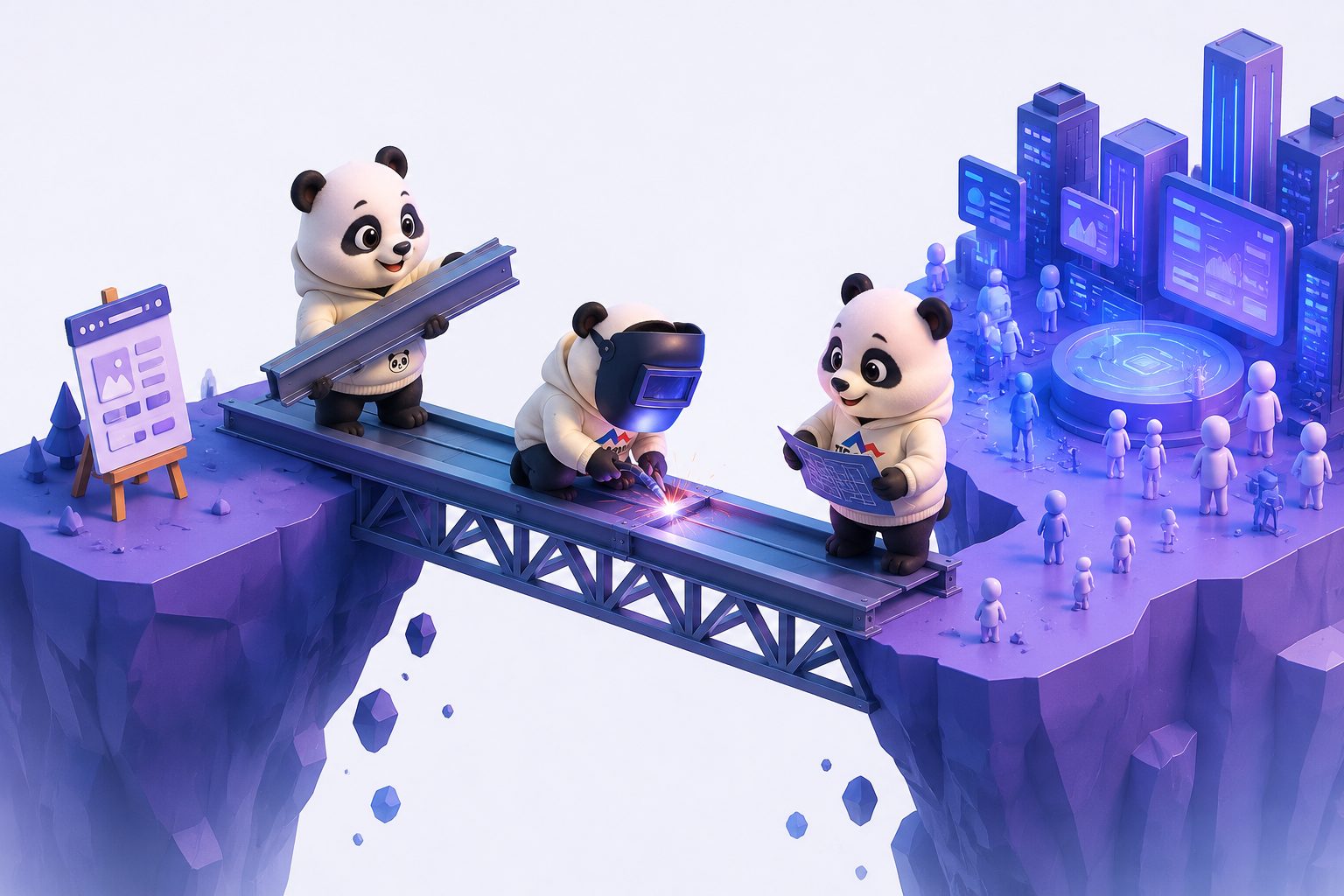
The mistake Maurya sees repeated, and we see the same in Vietnam, is doing things in the wrong order. The tools make everything look so close that people dive straight into building the real thing with vibe coding, skip validation, and then discover one of two things: nobody needs what they built, or what they built can’t carry real customers. There is only one right order: validate fast with AI first, build for real with an engineering team after. MONA stands on the second half of that formula. You bring industry experience and a prototype your customers have nodded at, and we turn it into a system that handles real load, with someone accountable behind it. Since 2016, our 60+ staff have done this across more than 14,000 projects, and since the whole company moved AI transformation toward AI-first, the real build has become noticeably faster and cheaper than before.
Having read this far, try applying the latent-founder frame to your own industry. The person who knows your industry best isn’t any tech person, it’s you, and in every industry we see a few ideas already waiting for a test:

The common thread across all five: you already have plenty of industry experience, and the test is now cheap. The only missing piece is starting the first test, instead of letting the idea sit for a few more years.
What does a one-person AI company mean?
It is a model where one person runs almost the entire company by handing most of the work to AI tools for business: writing software, customer care, content and operations. That person focuses on decisions and judgment, and leaves the repetitive work to machines.
Has anyone actually pulled it off?
There are very close cases: the founder of Base44 worked alone and sold the company to Wix for about 80 million USD after 6 months, and a telehealth company reached about 400 million USD in revenue with 2 staff. But both came with years of industry experience and lessons from a previous company. They did not succeed by picking up AI empty-handed.
I’m not technical. Should I copy this model?
Learn its core: use AI to validate ideas very fast and very cheaply before investing heavily. Don’t copy the shell: quitting everything to build a real product alone with AI, because load handling, security and operations still need skilled people.
When do I need a real engineering team?
As soon as the product is more than a prototype: when it starts holding customer data, taking payments, or has many users relying on it every day. Past that point, a purely AI-built version needs to be reviewed by engineers or rebuilt to handle the load.
To sum up, the real formula behind every headline isn’t “AI replaces the founder.” It is this: industry experience points the way, AI makes testing cheap and fast, and validating with real customers tells you right from wrong before you bet a whole year. Human plus machine is always stronger than either alone. And in that formula, the hardest ingredient to find isn’t AI, it’s the first one, the thing you have spent decades building.
So this week, try three things. One, write down the three pains in your industry you know by heart, the ones customers or staff have complained about year after year. Two, pick the heaviest pain and have someone in your company build a prototype with AI, ugly is fine, as long as real customers can click through it. Three, hand that prototype to 20 to 30 regular customers and listen to what they say. Remember the 42% figure above: nearly half the money poured into startups dies from skipping exactly this third step.
And if your prototype has already won customers’ nods, or you want someone seasoned to draw that map with you from the start, remember the spa chain owner: a 4-day prototype saved her from building the wrong 700 million VND idea. That is exactly the kind of session we want to have with you. Call 1900 636 648 or send your idea to info@themona.global, book a 30-minute session, and MONA’s technical team will work through three questions with you: is this pain worth testing yet, how do we build a cheap test, and if customers say yes, how much and how long will the load-ready version take? You bring industry experience, we bring engineering. That is exactly the formula every successful one-person company is hiding behind the headline.
The MONA Group, founded in 2016, 60+ staff, has delivered more than 14,000 website and software projects, and 85% of clients keep using our services. Three main lines: Mona.Media (web design, SEO), Mona.Software (custom software built to order) and Mona.Host (server infrastructure). Hotline 1900 636 648, email info@themona.global. If you want to validate an idea or explore how the one-person company model fits your business, call us.

CEO & Founder · The MONA
The founder of The MONA built a service company of 60+ staff with 14,000+ projects delivered. Khánh Hùng shares his thinking on building self-running systems, automating a business, and the real lessons behind MONA's projects.
 419




Professional website
design services
Own a website with a beautiful, 100% exclusive design and a lifetime warranty, with the ability
to expand features flexibly as your business grows, starting today!






 MONA will never sell your information or send you spam


 MONA will never sell your information or send you spam
