Quick summary: The Marketing Mix is the set of actions and tactics a business uses to promote its brand, product or service to the market. The basic model has 4 elements: Product, Price, Place and Promotion. The Marketing Mix helps a business build a complete plan, reach its target customers effectively, and increase both brand awareness and revenue.
Marketing Mix plays an extremely important role for businesses of every size. It helps a business build a complete plan, reach its target customers easily, raise brand awareness effectively and drive strong revenue. However, a successful Marketing Mix strategy is hard to build. So how do you plan and run an effective Marketing Mix campaign? Let Mona Media set out the key points to know in the article below.
What is the Marketing Mix?
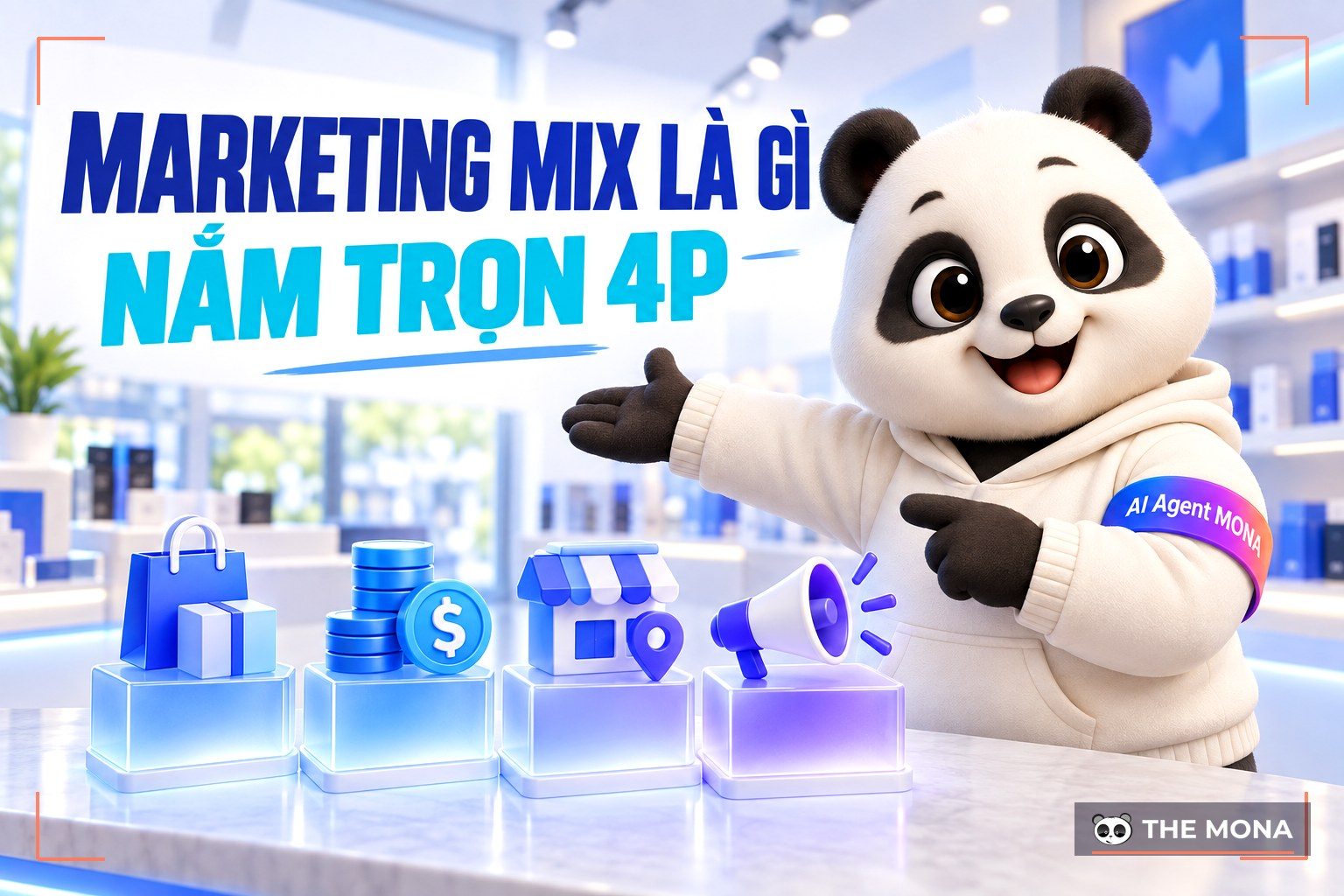
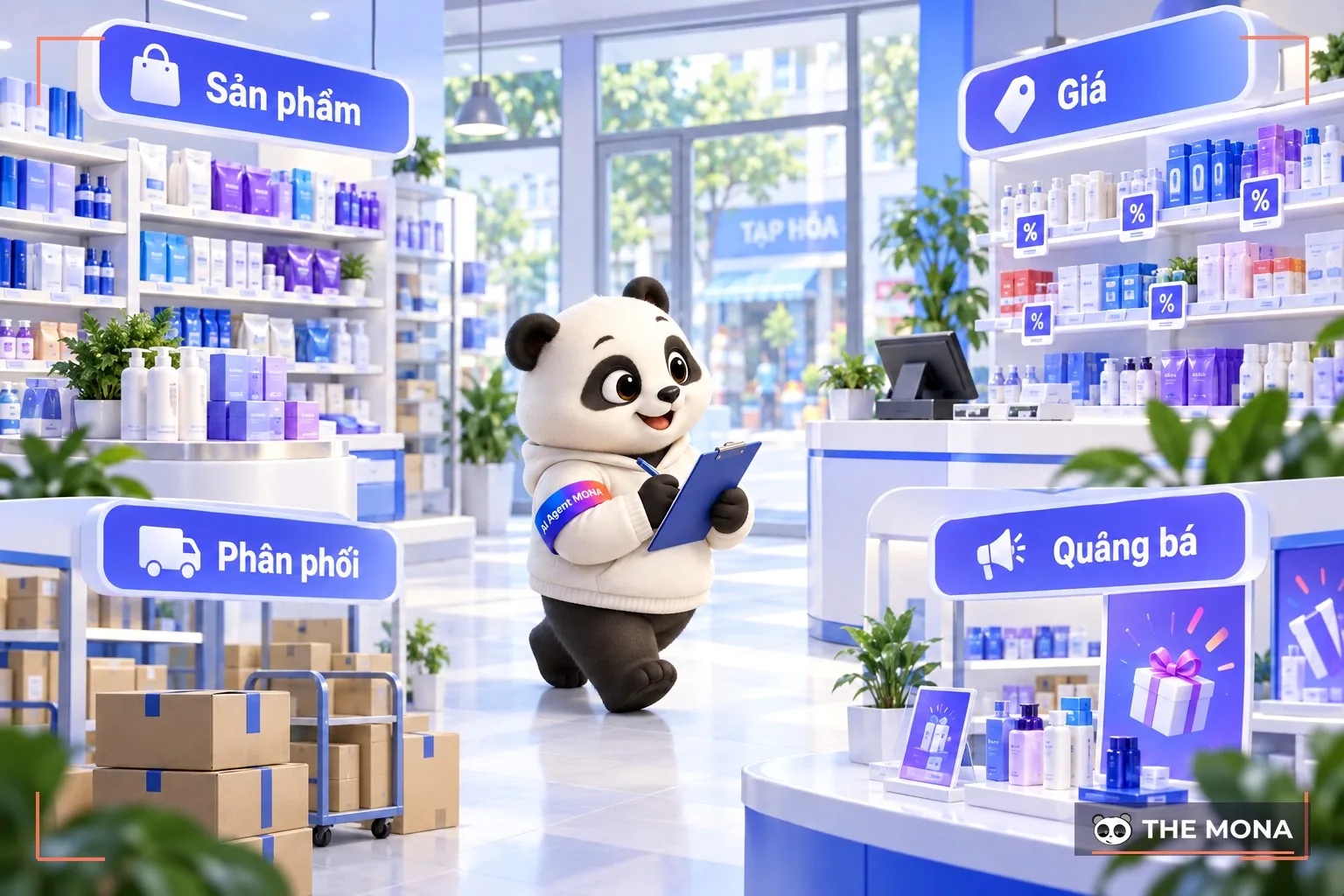
Marketing Mix is the set of actions and tactics that a company or business applies. They use it to promote a brand, product or service to the market.
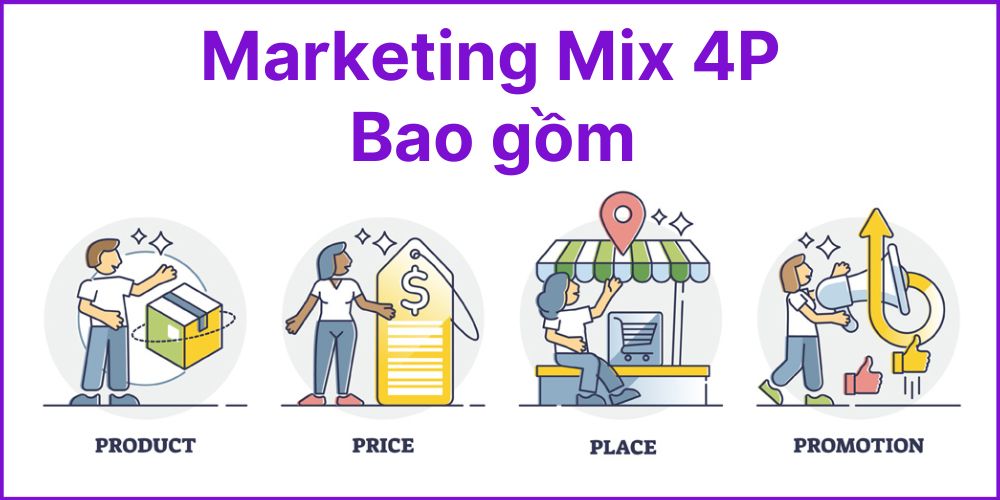
At its most basic, a marketing mix includes: product, price, place and promotion. These 4 elements work together and depend strongly on one another. Today, marketing experts have studied and proposed other important elements for a Marketing Mix strategy. What are they? Mona Media explains more in the section "7Ps in marketing", so keep reading.
History of the Marketing Mix
In an article called "The Concept of Marketing Mix" (1960), the concept of this term was set out. The person who introduced the idea of what the Marketing Mix is was Neil Borden (Neil Hopper Borden). He was a well-known American expert, scholar and Harvard professor. Neil Borden said he took the idea of the "Marketing Mix" from the concept of “Mixers of ingredients”. That concept was coined by James Culliton, and it later became more and more common in business strategy. The concepts have also kept developing and expanding.
Pros and cons of the Marketing Mix
Advantages
Simple and comprehensive: It can simplify things by bringing together concepts with different content into one. It makes running a marketing campaign easier and brings better management results.
Independent: It is fully separate from other activities in the company. Direct management can be assigned to a separate department with the right expertise, or even to a single marketing specialist.
Flexible: It can change depending on current budget and resources. It can also be changed easily to follow customer needs and the market.
Disadvantages
It can only be directed from inside the company. It cannot direct or change customer behavior.
It is impossible to capture the relationship with customers. When a Marketing Mix campaign runs, consumers become passive because there is no room for interaction.
It is more passive than active. Companies can only focus on a single product or service. That is a big problem, since most businesses sell many different products and services.
The marketing mix strategy does not cover building relationships with customers. This is one of the central elements. In other words, it cannot assess the whole user experience of using the company's products and services.
Marketing Mix through digital communication tools
Mona Media chose to go the way of Digital Marketing (digital communications), creating effective, solid business solutions in the digital environment. Thanks to the SEO techniques of our experts, not only we ourselves but many partner businesses have been lifted to the top in their industries.
At Mona Media, we create "Success" through the concept of "Trust". Mona Media's clients succeed through improvements in sales, brand awareness and business scale. Do you need a Digital Marketing campaign for your business? Or just extra features to improve the customer experience and lift revenue? Contact Mona Media by clicking the button below for the fastest support.
What role does the Marketing Mix play for a business?
For a business to survive and stay with its customers over the long term, a Marketing Mix campaign is essential. A company that wants effective marketing does not do just one thing, which is Advertising (advertising). It has to run its product and place strategies at the same time, and above all its pricing for the products and services it sells. Why go to this trouble? Understanding the target customers shows how to reach them and meet their needs. That is the key to strong revenue. A Marketing Mix campaign also gives a company a strong advantage and creates a "unique" quality for it.
Why the Marketing Mix matters
For businesses
The Marketing Mix matters to businesses because it can help bring creativity to the product and lift service quality to a new level. An effective campaign also brings benefits beyond expectations.
Creates two-way marketing. It brings the business to consumers, and consumers to the business. This helps increase sales and the company's reputation.
For consumers
Consumers decide whether a product or service survives on the market or not. A product that benefits customers or exceeds their expectations has a better chance of growing. The Marketing Mix brings value to current users and to future ones too. On long-term value, the marketing mix also helps products and services keep developing. It meets users' changing needs over the long run, raises credibility and wins a large base of loyal customers.
For society
It carries real weight for society. It lets most consumers reach products and meet their personal needs. Business results improve at the same time. Some businesses work with community purposes and high social benefit. You will know some leading Vietnamese brands and businesses (Vinamilk, Bach hoa XANH and so on). They communicate as honestly as possible and put quality first in their products and services. This noticeably lowers the share of businesses following negative trends.
Benefits of applying a Marketing Mix strategy
The biggest benefit for any business that applies a Marketing Mix strategy successfully is a solid brand. Its position is also reinforced, and it can adapt to consumers' constantly changing needs. The brand reaches not only domestic customers but also overseas markets.
Allocate resources more sensibly
A company's human and financial resources depend largely on its marketing mix strategy. It lets the business optimize profit and reach its business goals. Resource allocation is one factor that secures the success of a marketing campaign.
Easy management
It makes it convenient and easy to manage all of the business's internal and external resources. It also shows professionalism through how data is allocated.
Strengthen competitive advantage
Beyond product, price and place, the Marketing Mix also creates many opportunities for trade promotion. That strengthens competitive advantage because the business gains an edge and a point of difference in a fiercely competitive market.
Marketing Mix strategies
The 4P model in marketing
Product
Price
Place
Promotion
Product is the first element when creating a marketing campaign. The questions to answer about the product include:
Who needs to use the product or service?
How does the product or service differ from competitors'?
How do you determine the value of the product or service for consumers?
Price is the next key element, after the product questions are answered. Will customers buy your product once they see the price? So marketers need to answer these questions:
What pricing strategy do you want to apply to the product?
Does the product have something special or exclusive that justifies a higher price?
When will the discount strategy be launched?
Will discounting the product attract users?
Does the product quality match the price?
Place are 3 of the 4Ps and have a big effect on how well a Marketing Mix strategy works. You need to answer key questions such as:
How will the product be rolled out at each location?
Where should the product be displayed to catch target customers' attention?
What is the best way to arrange a product?
Promotion covers advertising, PR (public relations) and IMC (integrated communications) to bring the product or service brand to consumers. Solutions that make promotion effective:
Why combine it with "Place" to make activities more effective?
Which promotion activities best suit the product or service?
Should you invest heavily in promotion?
7Ps in marketing
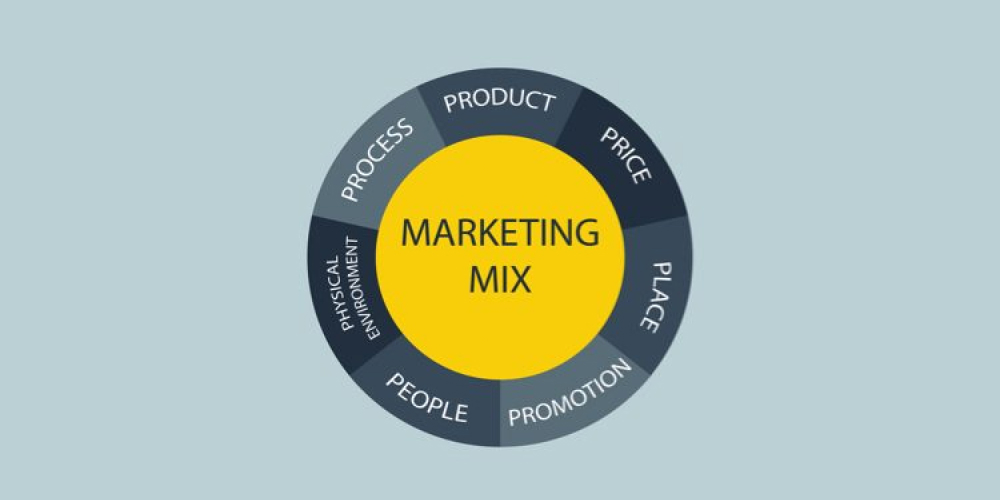
You need to tell the Marketing Mix strategies apart. The elements that make up a campaign must not be confused or left out, or the strategy will fail. Do not assume that the 7Ps in marketing Mix elements are unimportant. It may be a solution for your success later. This model has 7 main elements in total, and these are especially important:
Product
Price
Place
Promotion
People
Process
Physical Evidence
Bernard Booms and Mary Bitner developed the 7P Marketing model on top of the 4P model. Specifically, beyond the original 4Ps (Product, Price, Place, Promotion), 3 elements were added and later became widely used: People, Process and Physical Evidence. Mona Media covered the 4Ps in the section The 4P model in marketing, and the other 3 elements of the 7Ps are:
People in the 7P model. Here, this element refers to anyone directly or indirectly involved in the company's business, in other words the individuals inside and outside the company. The people element helps a lot in evaluating the strategy. It lets you assess user satisfaction and customer service. It also helps the company avoid future risks, which could damage the brand's reputation, and it helps improve the internal environment and make the most of the external one.
Process in the Marketing Mix 7P. This is a very important element. Without a complete process, by what routes does your product reach target customers? The process in the 7Ps looks at business operations, packaging, shipping to distributors, delivery and payment. If the process is smooth and personalized for customers, winning their satisfaction is not hard. By contrast, when the process is broken and does not put the customer at the center, the first result is a poor customer experience. Customers with a bad experience will pick a competitor's product, or even boycott yours.
Physical Evidence nothing is more convincing than this element. It is the existence of the company, or simply the brand as a whole: a website, a brand identity, an office, or even a thank-you card for customers. These tangible proofs raise customer trust and show that the company is reliable and transparent in every way. If you win customers' trust, that shows the strategy the company carried out has worked.
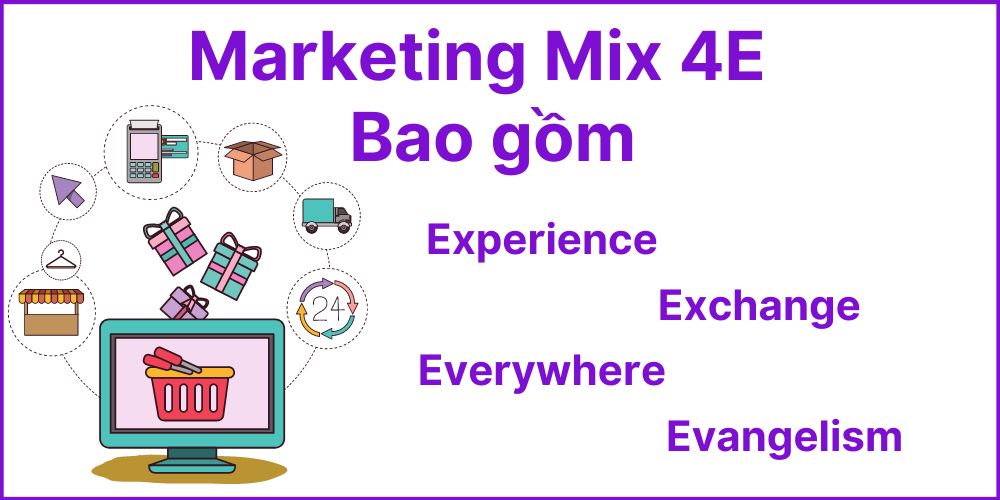
4E in marketing
Experience
Exchange
Everywhere
Evangelism
Experience this concept replaces the first P (Product) in the Marketing 4Pstrategy. Users' needs keep growing, and they no longer stop at buying one or two products. Customers want a satisfying experience, even one beyond satisfaction. A product that delivers a poor experience may, in serious cases, be boycotted by customers. This element strongly affects how fast word spreads. For a brand, product or service to survive and earn customers' trust, marketers keep researching how to improve the user experience.
Exchange is similar to the second P of the 4Ps (Price). It judges fit, meaning whether the value of the product is reasonable for the money the customer paid. To learn how customers judge it, you can run a survey.
Everywhere is similar to Place in the 4P Marketing Mix. Some customers want the product they need to be available everywhere, ready whenever they need it. A concrete example: a product like "Kotex" sanitary pads. It is highly flexible and is on the shelves of every shopping mall, supermarket, store and grocery. It is distributed everywhere, which raises convenience.
Evangelism by nature it can spread widely like a virus. A good product with good service can meet the 4th E of the 4E strategy.
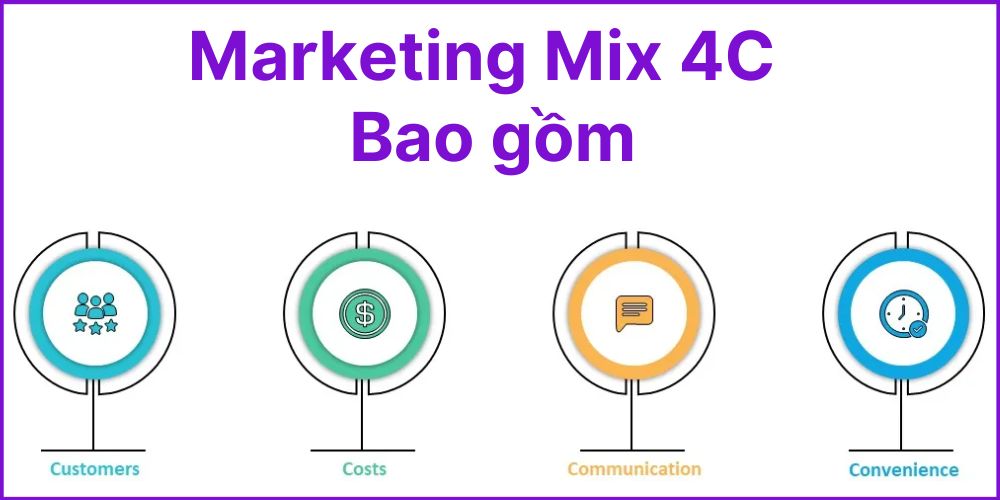
Marketing Mix 4C
Customer Solutions
Convenience
Customer Cost
Communication
Customer Solutions this element requires you to understand customers well. Study the target customer group closely. You need to identify the needs and problems the customers are facing.
Convenience one of the main points of the Marketing Mix 4C. It means working on how widely the product reaches users, and not only reach but also finding the right position for it. Weigh these points to maximize the number of products sold and the user experience.
Customer Cost or in other words, how much a customer is willing to spend on a product. Does their need reach a level where they will pay a high price? Of course, you also have to judge whether the value the product delivers is a good fit.
Communication you need to understand why two-way communication works. To sell, you need to know where your customers show up. This helps the business know how and where to reach them. Reach out and communicate with users to increase the credibility and professionalism of the company.
Steps to build an effective Marketing Mix strategy
To build a basic, simple but complete Marketing Mix strategy, the steps are:
Step 1: Set goals and a budget for the campaign
The goal is the most basic and important element of a Marketing Mix campaign. Only once you have a goal can you set a budget that fits it. The SMART model is one of the popular models many businesses apply.
Step 2: Research customers
Next, once the goal is set, research the target customers. This helps the business find the group of customers who need and use the product, and keep costs as low as possible.
Step 3: Define your USP
A USP (unique selling proposition) is the value that only your product or brand offers. It sets you apart from competitors in the market. To win your target customers, though, the USP has to be communicated simply and clearly, so customers can see right away that your product is one that nothing else can replace.
Step 4: Analyze your competitors
The metrics you gather from competitors help your business build a stronger product. From the strategies competitors already use, you can design one that performs better. That is why this is one of the most important steps.
Step 5: Identify the product's special features
Once you know the special features, turn them into benefits for the customer. Try answering the question: "When customers buy this product, what do they care about?" Pair each feature with a benefit. For example, say you sell a curved-screen TV. The customer asks: "What is special about a curved TV? Why should I buy it?" Your job is to turn the feature "curved screen" into a benefit by telling the customer what they gain from buying it. Some benefits might be: "A curved screen processes images much better than an ordinary flat screen" or "It suits many entertainment needs".
Step 6: Product pricing strategy
Pricing a new product
Penetration pricing
Price skimming
Pricing a product mix
Product line pricing
Optional product pricing
Captive product pricing
Raw-material pricing
Bundle pricing
Adjusting the price of a single product
Segmented pricing
Psychological pricing
Promotional pricing
Geographic pricing
International pricing strategy
Pricing a service
Cost-based pricing
Value-based pricing
Competitive pricing
Step 7: Choose distribution channels and promotion methods
To reach the right target customers, you need to pick the right distribution channel and the right way to promote the product. If you get one of the two wrong, or both, the strategy fails completely because the product does not sell.
4P vs 7P marketing
The 4P model
4P: Product, Price, Place, Promotion.
The 4P marketing mix model applies to ordinary products.
4P is the traditional marketing model. It is the original, and later marketing models were developed from it and added to it.
The model was designed at the time products were first being sold. But those products lacked a service element, and the role service plays in building a brand.
The 7P model
7P: the 4P plus 3 more (People, Process, Physical Evidence)
The 7P marketing model is usually applied when the product is a service.
7P in marketing is an improvement on the original 4P model and builds on it.
7P was designed as a complete solution for a service product, extending to the customer's experience after purchase. It works very well for brand development.
Points to note when running a Marketing Mix campaign
Target audience: Identify the right customer group. If the target customers set at the start are wrong, the campaign will fail completely.
Process: Set up a process so the rollout runs smoothly. Ideally you have a complete process before the campaign starts.
User journey: Study the customer journey closely so you can plan accordingly. Each journey gets its own plan that is effective and detailed, limits risk and makes it easy to find the right solution.
Data collected: When data is studied and processed well, it is easier to set direction in a marketing strategy.
Coordination: A lack of coordination. Here it means coordination between departments inside the business, such as the marketing team and the sales team.
Small details: Details that seem unimportant can be the seed of a big risk.
Timing: From the start, setting a completion time is essential. The time set has to be reasonable for each action.
Tips for a successful Marketing Mix rollout
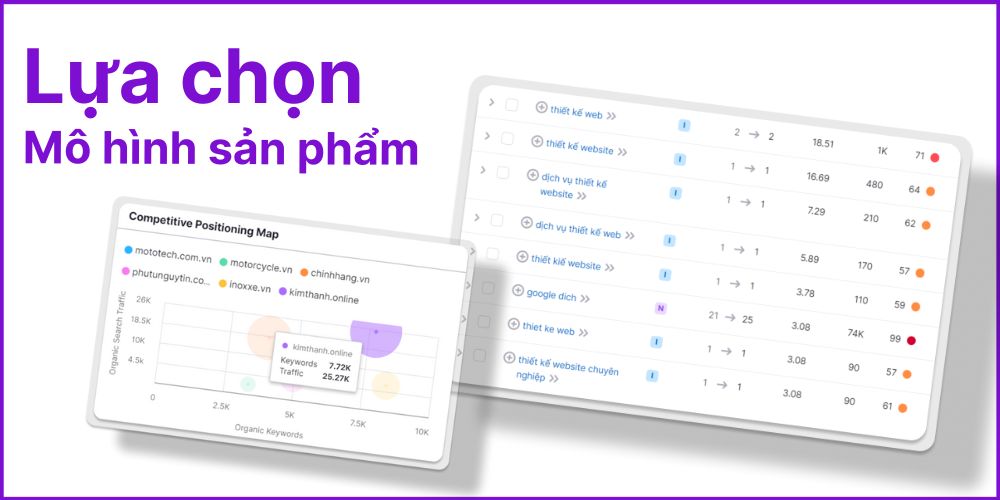
Choose a product and service model that fits
For a marketing mix strategy to succeed without any risk, you first need to know what your product or service is. Only then can you pick the model that fits it. Identify the core product, the actual product and the augmented product within a complete product model.
Put the customer at the center
A smart way of doing business is to put the customer at the center. A business needs customers to survive. This approach brings many benefits: it builds a loyal customer base and speeds up word of mouth.
Use two-way communication
Asymmetric two-way communication: The business, product or service reaches the customer first. Then you observe the attitudes and behavior customers show, which tells you how well the campaign is working. Finally, you improve based on the results.
Symmetric two-way communication: An equal model, because it runs on the trust and support customers have already given.
Learn from experts and study successful strategies
Lessons come from experts with a lot of experience, who have run and are running strategies that deliver strong results. You should also study the details of strategies from big brands, learn from them and draw lessons for your own campaign.
Case studies using the Marketing Mix
Highlands Coffee's marketing strategy
Product: Varied, and suits many types of customers
Price: Like the product, Highlands Coffee's prices suit many customer groups, from students to office staff and other working people.
Place: Highlands Coffee owns many good premises and locations. This is one of the factors behind its outstanding success.
Promotion: It is a brand with real standing, no less than its rivals. It reads customer sentiment and trends well, and builds promotion to match.
Starbucks' marketing strategy
Product: A brand known for constantly changing its products to keep up with customer needs. It offers a wide range of drinks, food and more for breakfast, lunch and dinner.
Price: You can see that Starbucks is a brand with a "premium pricing strategy"
Place: Like its products, Starbucks keeps changing how it delivers them to customers. Most of its customers are busy people, and the launch of "Starbucks on the go" raised their satisfaction noticeably.
Promotion: The investment is substantial: most campaigns from 2016 to 2020 were each worth no less than 200 million USD.
Pepsi's marketing strategy
Product: Pepsi is not limited to soft drinks. It builds products that match customers' state of mind, especially during the recent Covid-19 period, with a focus on low-calorie and zero-calorie products that reduce the urge to snack.
Price: Pepsi uses a variety of pricing strategies: penetration pricing, discount pricing and differentiated pricing by product. This has helped the brand win a large number of customers.
Place: The brand needs no introduction. It is distributed through intermediaries across many countries.
Promotion: Pepsi understands customer psychology well, which has led to many highly successful promotions.
Frequently asked questions about the Marketing Mix
1. What is the standout element of a marketing mix strategy?
The standout elements of a marketing mix strategy are the 4 basic ones: Product, Place, Price and Promotion. They are the foundation on which later marketing elements were built. That said, one of the four may stand out more than the others, depending on the company's goal. The business picks one lead element and focuses on it more than the rest. For example, if the strategy is product-centered, the standout element is Product. In the same way, if the strategy is customer-centered, the standout element is People (in the 7P marketing model)).
2. What are the elements of a product mix?
Brand
Product variety
Product quality
Design and packaging
Distinctive product features
Services
3. How many stages are in a product life cycle?
A product life cycle has 4 stages in total:
Introducing
Growth
Maturity
Decline
4. Limitations of a marketing mix campaign
Input standards are vague and unclear
Research takes a lot of time
Lack of standards and not enough measurement data
It cannot assess the performance of multi-channel activity
Conclusion
This article has set out all the basic knowledge Marketing Mix you need. It covers the popular marketing mix models and case studies of companies that use a marketing mix strategy. Mona Media We hope the article answers your questions. Take the lessons from it and choose a smart marketing strategy for yourself.
FAQ
What is the difference between the 4P and 7P Marketing Mix?
The 4P Marketing Mix covers Product, Price, Place and Promotion, and is the basic foundation. The 7P model, developed by Bernard Booms and Mary Bitner, adds 3 elements: People, Process and Physical Evidence, and suits service industries better.
What are the disadvantages of the Marketing Mix?
The Marketing Mix is directed only from inside the business. It cannot change customer behavior or capture the relationship with customers. It also does not cover building customer relationships, and it does not fit when a business sells many products and services at once.
About The MONA Group: Founded in 2016, with 60+ staff, MONA has delivered 14,000+ projects with an 85% client retention rate. MONA provides website design, full-scope SEO, custom software and AI automation solutions for businesses. Consultation hotline: 1900 636 648. Explore MONA AI Agent suite and MONA SEO services.
MONA has a podcast: listen instead of readingEpisodes on AI, automation & SEO for Vietnamese businesses
Founder of The MONA, who built a services company of 200+ staff with 14,000+ projects delivered. Khánh Hùng shares how he thinks about building systems that run themselves, automating a business, and the real lessons from delivering projects at MONA.
Own a website with a beautiful, 100% exclusive design and a lifetime warranty, with the ability
to expand features flexibly as your business grows, starting today!

 MONA OS 2.0
 Partner with MONA


 Tự động hoá doanh nghiệp
 Cẩm nang SEO
 Digital Marketing
 Kinh nghiệm thiết kế website
 Hạ Tầng Server
 Giáo dục


 VI
 EN










 ProductsNew

 Products
 Mới ra mắtKHA AI 2027App tự edit video, tự đăng mọi mạng xã hội, 2 phút mỗi ngày











 Tư vấn digital marketingKéo khách từ nhiều kênh, đo bằng số thật.
 NewAI video productionCompany story films made with AI.
 Custom software developmentCRM, ERP and HRM built for your business.
 Viết AI Agent theo yêu cầuĐặt riêng một trợ lý AI cho đúng việc của mình.
 Tư vấn chuyển đổi AIĐưa AI vào vận hành của cả công ty.
 NHTQ systemEnd-to-end China–Vietnam shipping operations.
 MONA E-LearningA website with every feature you need to sell courses.
 How to sell online courses (course)More than 30 free lessons on selling courses on autopilot.
 MONA Cloudmonacloud.vnServers to get your apps and websites running.
 MONA Basemonabase.vnPostgres database, sign-in and file storage.
 MONA Mailmonamail.vnSend OTP, order and invoice emails from your software.
 MONA Paymonapay.vnAccept bank transfers via VietQR and notify your software when the money arrives.
 MONA eInvoiceComing soonIssue e-invoices that meet tax standards.
 Gấu TeleSalesGọi điện tư vấn, chăm khách như tổng đài viên thật.
 Gấu Pháp ChếSoạn hợp đồng, rà điều khoản trong vài phút.
 Gấu Báo GiáLên báo giá đúng mẫu và gửi khách ngay.
 AI chăm sóc khách hàngTheo dõi và giữ chân khách hàng cũ.
 Gấu Tuyển DụngLọc hồ sơ, hẹn lịch, phỏng vấn ứng viên.
 Mới ra mắt
KHA AI 2027
Xây kênh chuyên gia 2 phút mỗi ngày
Quay bằng điện thoại, AI tự edit video, tự đăng lên 16 nền tảng và tự trả lời bình luận, tin nhắn.
850.429lượt xem trên kênh CEO MONA sau 29 ngày
 Anh Khánh HùngCEO MONA đang dùng mỗi ngày
Xem app làm được gì
 AI
 Chuyển đổi AI toàn phầnGiải pháp tổng cho doanh nghiệp, 3 lớp triển khai.
 Viết AI Agent theo yêu cầuĐặt riêng một con AI gánh đúng nghiệp vụ của bạn.
 Custom softwareCRM, ERP and HRM with built-in AI automation.
 SEO & AEO thời đại AIĐược Google lẫn AI trích dẫn, không chỉ xếp hạng.
 Kiến thức AI cho doanh nghiệpBài phân tích, hướng dẫn ứng dụng AI vào vận hành.
 Free AI courses
 AI tools at work

 Marketing Mix is the set of actions and tactics that a company or business applies. They use it to promote a brand, product or service to the market.
At its most basic, a marketing mix includes: product, price, place and promotion. These 4 elements work together and depend strongly on one another. Today, marketing experts have studied and proposed other important elements for a Marketing Mix strategy. What are they? Mona Media explains more in the section "7Ps in marketing", so keep reading.
 At Mona Media, we create "Success" through the concept of "Trust". Mona Media's clients succeed through improvements in sales, brand awareness and business scale. Do you need a Digital Marketing campaign for your business? Or just extra features to improve the customer experience and lift revenue? Contact Mona Media by clicking the button below for the fastest support.

 You need to tell the Marketing Mix strategies apart. The elements that make up a campaign must not be confused or left out, or the strategy will fail. Do not assume that the 7Ps in marketing Mix elements are unimportant. It may be a solution for your success later. This model has 7 main elements in total, and these are especially important:
 For a marketing mix strategy to succeed without any risk, you first need to know what your product or service is. Only then can you pick the model that fits it. Identify the core product, the actual product and the augmented product within a complete product model.
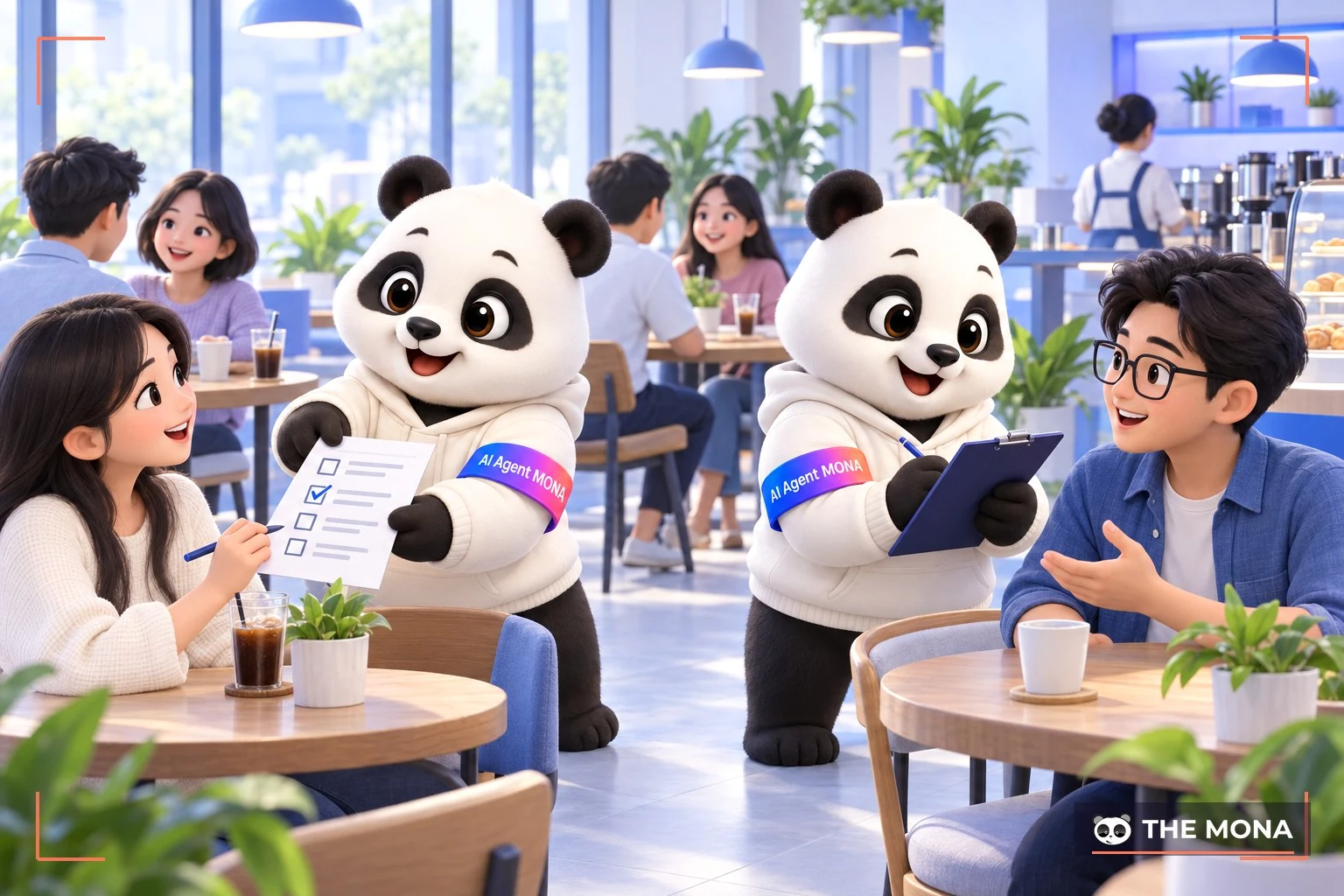 A smart way of doing business is to put the customer at the center. A business needs customers to survive. This approach brings many benefits: it builds a loyal customer base and speeds up word of mouth.

 1,5K









 MONA will never sell your information or send you spam


