
 MONA OS 2.0
 Partner with MONA


 Tự động hoá doanh nghiệp
 Cẩm nang SEO
 Digital Marketing
 Kinh nghiệm thiết kế website
 Hạ Tầng Server
 Giáo dục


 VI
 EN







Message us on
Zalo Official


 ProductsNew

 ProductsProducts
 Mới ra mắtKHA AI 2027App tự edit video, tự đăng mọi mạng xã hội, 2 phút mỗi ngày










 Website designLooks good and wins customers over.
SEO servicesBrings in customers searching for exactly what you sell.
 Tư vấn digital marketingKéo khách từ nhiều kênh, đo bằng số thật.
Corporate video productionVideos introducing your company, factory and team.
 NewAI video productionCompany story films made with AI.
 Custom software developmentCRM, ERP and HRM built for your business.
 Viết AI Agent theo yêu cầuĐặt riêng một trợ lý AI cho đúng việc của mình.
 Tư vấn chuyển đổi AIĐưa AI vào vận hành của cả công ty.
NewMONA LMSManagement for centers and schools.
MONA SkillHubInternal training for company staff.
 NHTQ systemEnd-to-end China–Vietnam shipping operations.
MONA JMSManagement for gold, diamond and pawn shops.
 MONA E-LearningA website with every feature you need to sell courses.
 How to sell online courses (course)More than 30 free lessons on selling courses on autopilot.
 MONA Cloudmonacloud.vnServers to get your apps and websites running.
 MONA Basemonabase.vnPostgres database, sign-in and file storage.
 MONA Mailmonamail.vnSend OTP, order and invoice emails from your software.
 MONA Paymonapay.vnAccept bank transfers via VietQR and notify your software when the money arrives.
 MONA eInvoiceComing soonIssue e-invoices that meet tax standards.
Gấu CườiTrả lời khách 24/7 trên web, Fanpage, Zalo và thu lead cho sale.
 Gấu TeleSalesGọi điện tư vấn, chăm khách như tổng đài viên thật.
Dê CườiTư vấn và chốt đơn cho shop ngay trong khung chat.
Gấu WebmasterNhắn nhóm Zalo là website được sửa xong.
 Gấu Pháp ChếSoạn hợp đồng, rà điều khoản trong vài phút.
 Gấu Báo GiáLên báo giá đúng mẫu và gửi khách ngay.
 AI chăm sóc khách hàngTheo dõi và giữ chân khách hàng cũ.
 Gấu Tuyển DụngLọc hồ sơ, hẹn lịch, phỏng vấn ứng viên.
 Mới ra mắt
KHA AI 2027
Xây kênh chuyên gia 2 phút mỗi ngày
Quay bằng điện thoại, AI tự edit video, tự đăng lên 16 nền tảng và tự trả lời bình luận, tin nhắn.
835.566lượt xem trên kênh CEO MONA sau 27 ngày
 Anh Khánh HùngCEO MONA đang dùng mỗi ngày
Xem app làm được gì
 AI
Gấu Cười MONA ĐANG TỰ XÀITrả lời khách 24/7 trên website, Zalo OA, Messenger và thu lead về cho sale.
Dê CườiChốt đơn bán lẻ và sàn: Shopee, TikTok Shop, web. Chăm cả khách sỉ, đại lý.
Gấu WebmasterCập nhật nội dung, tối ưu SEO website mỗi ngày.
Gấu TeleSalesGọi điện tư vấn, chăm khách như tổng đài viên thật.
Gấu Tuyển DụngLọc hồ sơ, hẹn lịch, phỏng vấn ứng viên tự động.
AI chăm sóc khách hàngGiữ khách cũ, cứu lead đã rớt cho phòng kinh doanh.
Gấu Pháp ChếSoạn hợp đồng, rà điều khoản trong vài phút.
Gấu Báo GiáLên báo giá đúng mẫu, gửi khách ngay khi có yêu cầu.
 Chuyển đổi AI toàn phầnGiải pháp tổng cho doanh nghiệp, 3 lớp triển khai.
 Viết AI Agent theo yêu cầuĐặt riêng một con AI gánh đúng nghiệp vụ của bạn.
 Custom softwareCRM, ERP and HRM with built-in AI automation.
 SEO & AEO thời đại AIĐược Google lẫn AI trích dẫn, không chỉ xếp hạng.
 Kiến thức AI cho doanh nghiệpBài phân tích, hướng dẫn ứng dụng AI vào vận hành.
 Free AI courses
 AI tools at work
App mới · KHA AI 2027
Xây kênh 2 phút mỗi ngày
AI tự edit video, tự đăng mọi mạng xã hội
Free consultation, 8am–10pm every day

18 March, 2023
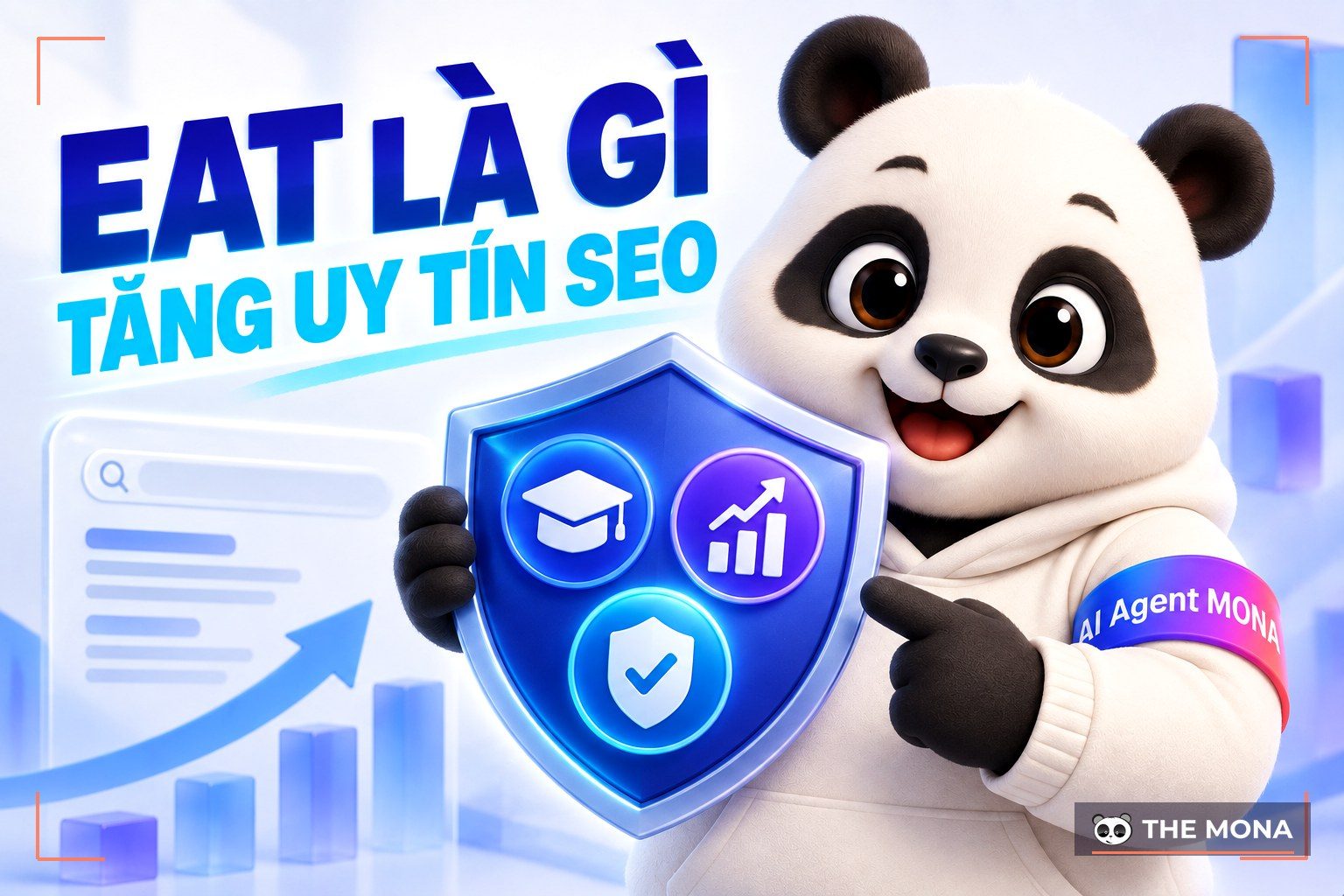
The concept of EAT has existed since 2014, but it has become more popular in recent years and is gradually becoming one of the most important SEO factors. It is even a basis on which Google judges the quality of a website or a business. So what is What is EAT? And how do you improve EAT? Read on as Mona Media read this article to find out more.
EAT is short for three words: Expertise, Authoritativeness and Trustworthiness. EAT is seen as a factor Google uses to judge the overall quality of a website. As you know, to raise your website's ranking in organic search its quality needs to be as high as possible. Google has stated that the key factors used to determine a website's overall quality are:

So the more a page shows its trustworthiness and expertise, the higher it will rank.
YMYL is short for "Your Money or Your Life". Google uses this phrase as a guideline to classify websites that affect your health, finances, happiness or safety. YMYL websites are held to the highest EAT standards, because their topics can directly affect users if they are misrepresented.
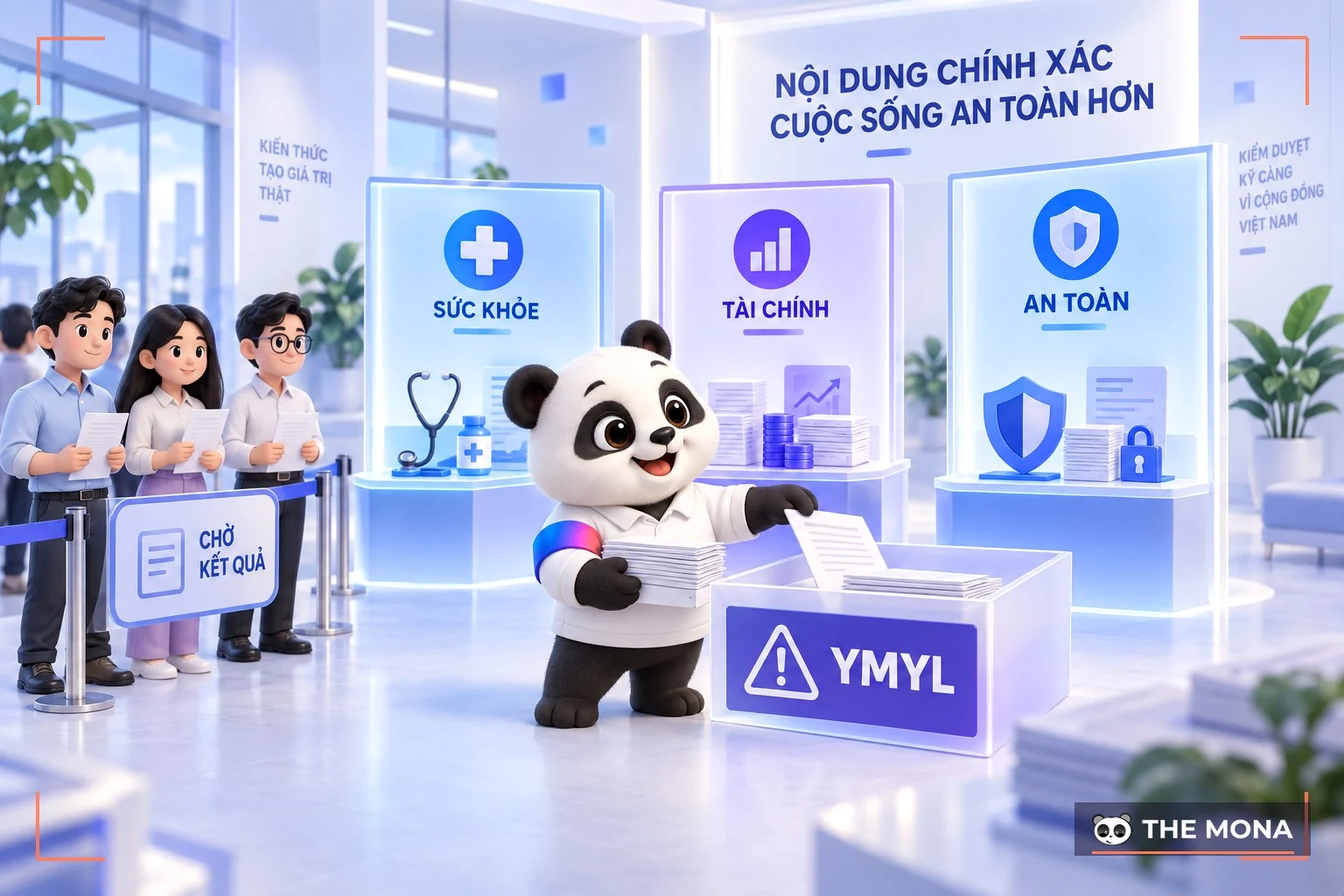
Types of YMYL websites
If you have followed Google's recent core search algorithm updates, you will notice a topic that keeps coming up: improve the user experience.
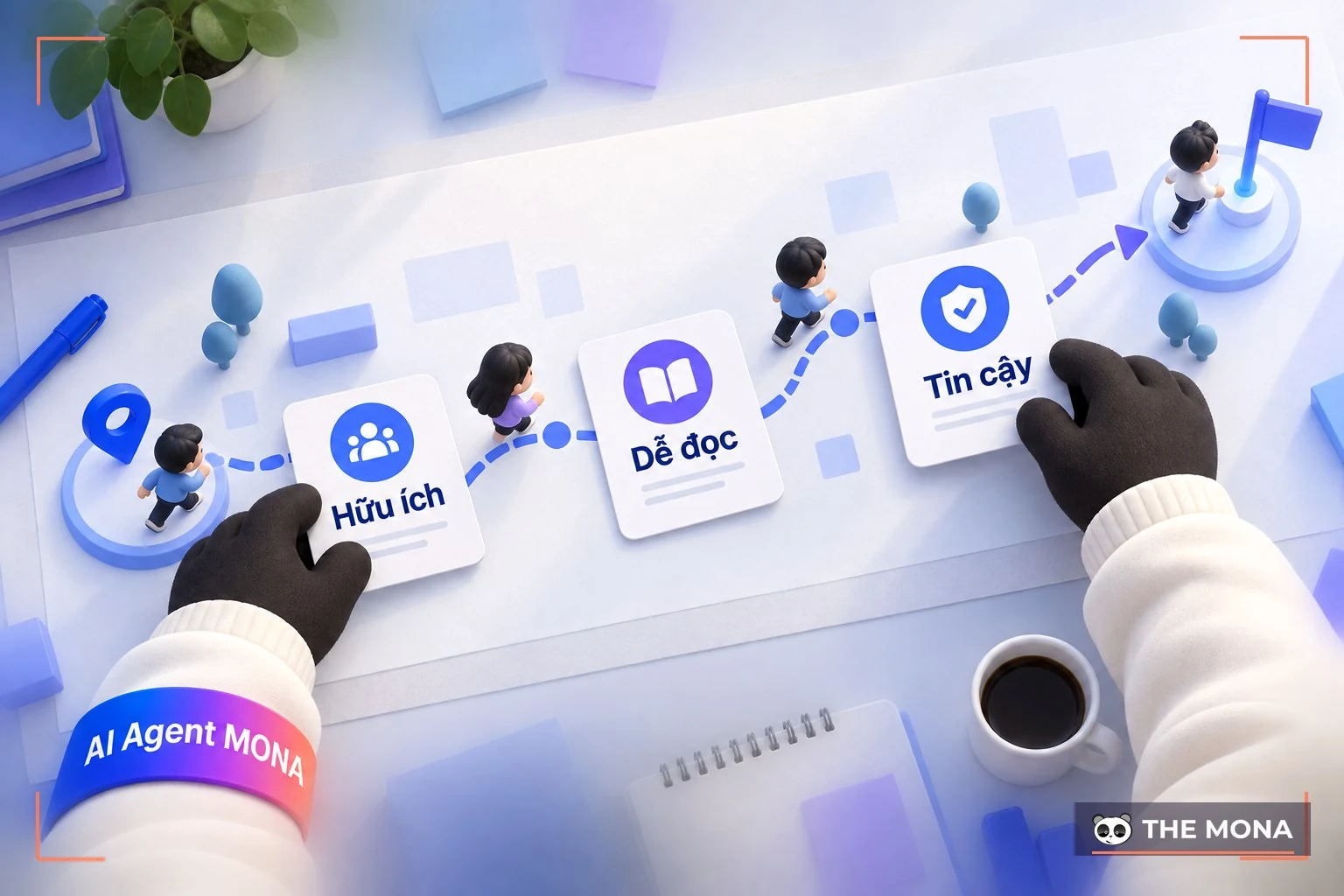
Google has penalized keyword stuffing because it disrupts the reading experience. As most users began to search on mobile devices, responsiveness on those devices became a ranking factor. Google prioritizes HTTPS instead of HTTP because it wants to strengthen security for searchers.
Google wants to serve the most valuable pages for a specific search query, because that is how it keeps readers coming back. So besides search engine optimization, EAT SEO should also be a top priority when you want to grow SEO services to get your website to the top.
The answer is NO. Google has no scoring scale for calculating a website's EAT. This probably won't surprise you once you understand how Google evaluates EAT improvements and what the Quality Raters do. And because there is no fixed measure, you have more freedom to build your website's expertise, trustworthiness and authority in the eyes of the Quality Raters.
→ Take a look at our: A guide to SEO that gets your website to the top of Google effective way
One of the most effective ways to show that your organization is trustworthy in its field is to earn backlinks from relevant, highly authoritative domains. This is considered the backbone of an effective off-page SEO strategy.
Say you work in IT consulting, but you accept a backlink from a teen fashion website. Not only does this do nothing for you, it can also get you a manual action penalty if you overuse this tactic.
Invest the time and resources to prove you are an authority (on any topic). Then build relationships with relevant publishers and influencers. High-value backlinks will follow.
Besides backlinks, being mentioned on highly trusted sources can strengthen your EAT signals. The more often your name or brand appears on authoritative sources online, the more Google will see you as an authoritative, trustworthy entity.
So how do you earn more mentions? There are many ways, listed below:
This is an effective strategy for earning and promoting online reviews of your services or products. Reviews like these help build your website's EAT with Google. A large number of positive reviews across many review sites (Facebook, Yelp, Google, Trustpilot, etc.) shows that your company is trusted by consumers.

As soon as a review comes in, take the time to reply, even if it is negative. In fact, replying to feedback builds your credibility as a reputable brand committed to keeping customers satisfied.
Google likes content from experts. It appears Google especially rewards content created by someone with the degrees or certifications to produce it. Expert-sourced material matters a great deal if your website falls under YMYL. That is why many leading health information websites are written by medical professionals.
If you want to improve your website's EAT SEO, don't assume that calling an author an expert is enough. You have to prove their qualifications.
Verify their information and publish it on your website alongside the content they produce. You can also link to the author's own websites and social media profiles to help Google understand the entities behind the content. If the writer holds certifications, certificates or degrees, or has put in enough time to be recognized as an authority in a specific field, your brand has every right to let Google and everyone else know.

The more time readers spend on your website, the more it shows that your content and website quality are engaging and useful. It is an important signal when you meet or solve readers' needs and give them value. However, what counts as a good time on site differs by type of article, page and article length.
This is part of the Trust element of EAT. In its quality rater guidelines, Google mentions that users should be able to contact the business that owns a website easily. To Google, if users cannot reach your business, you may be hiding something. Put simply, it is about transparency.
Put a phone number in the header or footer. Set up a live chat box so customers can chat with you directly. Even if your website is just a blog, you should still give readers an email address so they can reach you when they need to. Better still, have a dedicated "Contact information" section.
A basic contact section should include:
EAT is a factor Google takes extremely seriously and applies strictly. With this article, MONA hopes you now have a clearer understanding of what EAT is and why it deserves more attention when you carry out an SEO campaign. It is fair to say EAT is one of the leading factors that decide your website's ranking in organic search. If you want to improve your website's overall SEO, don't hesitate to contact MONA for advice and SEO services quote detailed plan.

CEO & Founder · The MONA
The founder of The MONA built a service company of 60+ staff with 14,000+ projects delivered. Khánh Hùng shares his thinking on building self-running systems, automating a business, and the real lessons behind MONA's projects.
 1,5K




Professional website
design services
Own a website with a beautiful, 100% exclusive design and a lifetime warranty, with the ability
to expand features flexibly as your business grows, starting today!






 MONA will never sell your information or send you spam


 MONA will never sell your information or send you spam
