
 MONA OS 2.0
 Partner with MONA


 Tự động hoá doanh nghiệp
 Cẩm nang SEO
 Digital Marketing
 Kinh nghiệm thiết kế website
 Hạ Tầng Server
 Giáo dục


 VI
 EN














Message us on
Zalo Official


 ProductsNew

 ProductsProducts
 Mới ra mắtKHA AI 2027App tự edit video, tự đăng mọi mạng xã hội, 2 phút mỗi ngày










 Website designLooks good and wins customers over.
SEO servicesBrings in customers searching for exactly what you sell.
 Tư vấn digital marketingKéo khách từ nhiều kênh, đo bằng số thật.
Corporate video productionVideos introducing your company, factory and team.
 NewAI video productionCompany story films made with AI.
 Custom software developmentCRM, ERP and HRM built for your business.
 Viết AI Agent theo yêu cầuĐặt riêng một trợ lý AI cho đúng việc của mình.
 Tư vấn chuyển đổi AIĐưa AI vào vận hành của cả công ty.
NewMONA LMSManagement for centers and schools.
MONA SkillHubInternal training for company staff.
 NHTQ systemEnd-to-end China–Vietnam shipping operations.
MONA JMSManagement for gold, diamond and pawn shops.
 MONA E-LearningA website with every feature you need to sell courses.
 How to sell online courses (course)More than 30 free lessons on selling courses on autopilot.
 MONA Cloudmonacloud.vnServers to get your apps and websites running.
 MONA Basemonabase.vnPostgres database, sign-in and file storage.
 MONA Mailmonamail.vnSend OTP, order and invoice emails from your software.
 MONA Paymonapay.vnAccept bank transfers via VietQR and notify your software when the money arrives.
 MONA eInvoiceComing soonIssue e-invoices that meet tax standards.
Gấu CườiTrả lời khách 24/7 trên web, Fanpage, Zalo và thu lead cho sale.
 Gấu TeleSalesGọi điện tư vấn, chăm khách như tổng đài viên thật.
Dê CườiTư vấn và chốt đơn cho shop ngay trong khung chat.
Gấu WebmasterNhắn nhóm Zalo là website được sửa xong.
 Gấu Pháp ChếSoạn hợp đồng, rà điều khoản trong vài phút.
 Gấu Báo GiáLên báo giá đúng mẫu và gửi khách ngay.
 AI chăm sóc khách hàngTheo dõi và giữ chân khách hàng cũ.
 Gấu Tuyển DụngLọc hồ sơ, hẹn lịch, phỏng vấn ứng viên.
 Mới ra mắt
KHA AI 2027
Xây kênh chuyên gia 2 phút mỗi ngày
Quay bằng điện thoại, AI tự edit video, tự đăng lên 16 nền tảng và tự trả lời bình luận, tin nhắn.
899.727lượt xem trên kênh CEO MONA sau 37 ngày
 Anh Khánh HùngCEO MONA đang dùng mỗi ngày
Xem app làm được gì
 AI
Gấu Cười MONA ĐANG TỰ XÀITrả lời khách 24/7 trên website, Zalo OA, Messenger và thu lead về cho sale.
Dê CườiChốt đơn bán lẻ và sàn: Shopee, TikTok Shop, web. Chăm cả khách sỉ, đại lý.
Gấu WebmasterCập nhật nội dung, tối ưu SEO website mỗi ngày.
Gấu TeleSalesGọi điện tư vấn, chăm khách như tổng đài viên thật.
Gấu Tuyển DụngLọc hồ sơ, hẹn lịch, phỏng vấn ứng viên tự động.
AI chăm sóc khách hàngGiữ khách cũ, cứu lead đã rớt cho phòng kinh doanh.
Gấu Pháp ChếSoạn hợp đồng, rà điều khoản trong vài phút.
Gấu Báo GiáLên báo giá đúng mẫu, gửi khách ngay khi có yêu cầu.
 Chuyển đổi AI toàn phầnGiải pháp tổng cho doanh nghiệp, 3 lớp triển khai.
 Viết AI Agent theo yêu cầuĐặt riêng một con AI gánh đúng nghiệp vụ của bạn.
 Custom softwareCRM, ERP and HRM with built-in AI automation.
 SEO & AEO thời đại AIĐược Google lẫn AI trích dẫn, không chỉ xếp hạng.
 Kiến thức AI cho doanh nghiệpBài phân tích, hướng dẫn ứng dụng AI vào vận hành.
 Free AI courses
 AI tools at work
App mới · KHA AI 2027
Xây kênh 2 phút mỗi ngày
AI tự edit video, tự đăng mọi mạng xã hội
Free consultation, 8am–10pm every day

30 June, 2026

The cost of running an IT department is always a heavy burden, and it keeps many business owners awake at night. From salaries and infrastructure to constant maintenance and building new features, it all eats up a sizable budget. When Google Antigravity appeared, promising a new phase of software development automation and far less dependence on developers, many of you immediately saw a chance to cut costs. However, we at MONA know that behind the technology hype there are still hidden risks you need to understand. Especially when moving
Every business owner sees IT spending swell again and again. This puts pressure on cash flow and directly erodes profit. You invest heavily in technology but the results fall short of expectations, and are even late and risky.
Worry about IT costs is not unique to you. We regularly talk with business owners who are wondering how to optimize their IT operation while still keeping work performance up. It is a hard problem that calls for a fresh, more practical approach.
It is common for an IT department to keep adding people while overall performance does not improve. You hire more people and pay high salaries, but projects still drag. New hires need time for training and learning the process, which adds to the load on the existing team.
A restaurant chain with 20 branches in Hanoi and Da Nang, with revenue of about 40 billion VND per month, once told MONA it had 12 in-house IT staff. Even so, building new features for its ordering app or inventory management was still very slow. Every small update meant the whole team meeting and debating for weeks.
We often tell business owners that the problem is not the number of people but how we operate and use technology. Patching things up by adding headcount only raises costs without fixing the root of the performance problem.
When an in-house IT team is overloaded or lacks deep expertise, software projects tend to run long. This directly hurts a business's competitiveness and its speed of adapting to the market. A business opportunity can slip away just because the software was not ready.
Many businesses build small internal solutions on their own, sometimes through the self-taught tinkering of a few individuals. But these self-built prototypes usually lack strict security, are easy to attack, or fail badly when many users connect. A fashion retail chain with 35 stores nationwide once suffered a customer data leak because its self-built order management system was not properly protected.
Relying on ad hoc solutions without professional standards brings serious risks to your data and reputation. We at MONA understand that pressure. We need a new direction that not only cuts costs but also ensures quality and safety across the whole technology system. Studying and understanding in depth what Google Antigravity does will help optimize our workflow.
A new wave of technology is arriving, and many business owners and managers feel anxious facing concepts like Google Antigravity. We fear missing out and falling behind competitors who already use powerful automation tools. The feeling is completely understandable, because the pace of AI development makes staying up to date extremely hard.
In reality, Google Antigravity represents a big step forward in automated coding, where software can write, debug and run development tasks itself. This promises to take a lot of weight off in-house IT teams, who are often swamped with mountains of work from maintenance to building new features. We understand that you are always looking for ways to optimize costs and improve performance, and this technology looks like a promising answer.
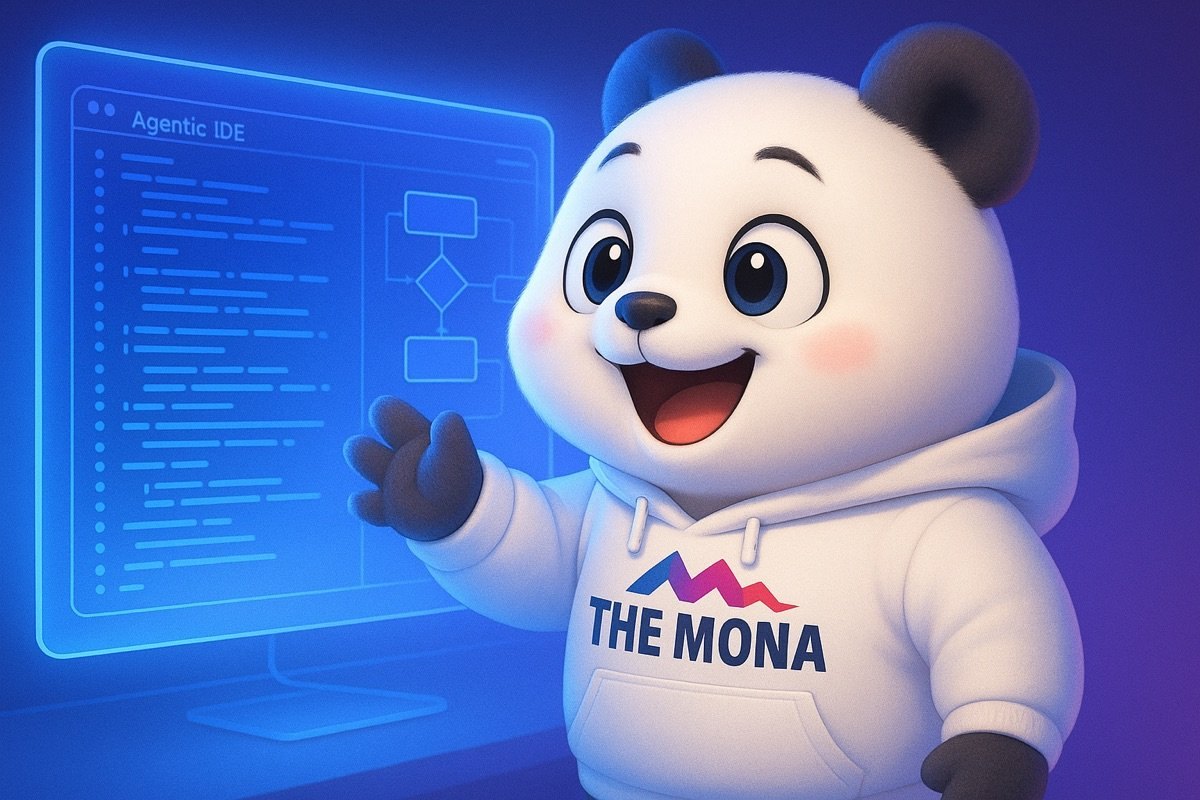
An Agentic IDE is an integrated development environment where AI Agents automate the entire coding cycle. Instead of a developer writing every line of code, these Agents can understand requirements in natural language, generate code, check for errors, and even run commands to make sure the software works properly. You can think of an Agentic IDE as a team of virtual developers who work nonstop and make fewer mistakes.
For example, a 35-branch restaurant chain in Hanoi, with revenue of about 40 billion VND per month, often needs to update menus and promotions in its ordering app. Before, even a small change needed the IT team, taking a few days to a week. With an Agentic IDE, you just describe the requirement, and the system updates the source code, deploys and tests it automatically. This helps cut waiting time and staffing costs . MONA has seen many Vietnamese businesses struggling with similar manual processes, causing delays and wasted resources.
Google Antigravity and other Agentic IDEs have great potential for building small internal apps, simple process automation tools, or quick prototypes. We can use them to build a small document management system, an internal data reporting tool, or even a simple mobile app for customer surveys. This saves a lot of time and resources on projects that do not require high complexity or absolute security.
However, we tell customers that, powerful as they are, AI Agent automation solutions like Antigravity still have limits. They are especially effective for testing or for apps that are not too complex. But when it comes to real production (production-grade), deep integration with core systems such as CRM, ERP, DMS, or absolute customer data security, self-built prototypes may not hold up. They are fragile and prone to errors under heavy traffic or when data needs strict protection. This is when you need a professional automation software solution from MONA.
The automation features and similar applications of the AI Agent system are also deployed effectively by MONA for these industries: furniture manufacturing, fresh flower store chains, fashion wholesale, pharmacy chains, cosmetics distribution, transport logistics.
The worry about a bloated IT department, high operating costs and performance that falls short of expectations is a heavy burden for many business owners. We often see technology projects drag on and IT headcount keep growing, yet still fail to keep up with the pace of the market.
This not only burns budget but also holds back the company's ability to scale. MONA understands these concerns, because we faced the same problem before automating end to end.
On 20/4/2026, MONA kicked off an internal revolution, overhauling its whole way of operating with AI within two months. The goal was to use it ourselves first, prove it works, and only then bring the solution to customers.
MONA's IT department also used to struggle with manual processes, spending time on writing code, fixing bugs and maintaining systems. We realized that to be truly effective we needed automation all the way, not halfway.
By building production-grade automation modules into our development and operations process, MONA cut costs and headcount by up to 60% in the areas we converted. Repetitive tasks are handled by machines, freeing developers to focus on more creative and strategic work.
For example, the initial rollout of new software projects, from ideation to drafting source code and test runs, is now much faster. Our AI agents automatically check, fix and optimize code, greatly reducing waiting time and human error.
The shift from the traditional IT model to a team that manages automated systems is an irreversible trend. You will no longer have to struggle to find, train or keep good developers for repetitive work.
Instead, the current team gets upgraded skills to supervise and tune automated systems, focusing on overall architecture and innovation. This not only raises capacity but also improves product quality.
We tell customers that AI and automation are not meant to replace people entirely but to elevate their role. They help us do more, faster and more efficiently with optimal resources.
That said, we always stress that IT automation needs a solid, professional foundation. A prototype built with Agentic IDE tools like Google Antigravity is great for experiments or internal demos, but to go into real production, integrate with core systems like CRM, ERP, DMS and guarantee absolute security, you need a dedicated automation software solution from MONA. Otherwise the system easily breaks when many people use it, creating big risks for the business.
The automation features and similar applications of the AI Agent system are also deployed effectively by MONA for these industries: furniture manufacturing, fresh flower store chains, fashion wholesale, pharmacy chains, cosmetics distribution, transport logistics.
Many managers and business owners are now looking for ways to automate IT processes. Google Antigravity, an Agentic IDE platform, can write code, fix bugs and run commands automatically. It is a powerful tool for building your own prototypes or small internal apps, letting you visualize ideas quickly and present them to leadership.
However, we often see you getting carried away by the initial convenience and forgetting important limits. Tools like Antigravity are great for fast development, but we must be very careful about putting these products into a real production environment. A prototype can never replace a professional, stable and secure software system.
MONA always advises customers that automation is a process that needs investment in the right place. Using a powerful tool for the wrong purpose can lead to big risks later and waste the effort and money already spent.
A quickly built prototype usually lacks the solid foundation to carry a large user base or sensitive data. The app may run well with a few internal users, but when rolled out to the whole company or to customers, the system overloads and collapses easily.
We once saw an 18-branch restaurant chain in Hanoi, with revenue of about 40 billion VND per month, build its own internal order management app with a similar tool. At first it worked well for a few branches. But when expanded to the whole system, the app kept failing, and order data became inaccurate or even disappeared. This stalled operations and directly hurt the chain's revenue and reputation.
Prototype apps are usually not designed with strong security layers, so they are easy to attack or leak information. Customer data, financial information and business secrets may be at risk. MONA always stresses the importance of protecting data, especially for core systems such as CRM, ERP or accounts receivable management.
We need to understand the difference between these two concepts. A prototype is a quick sketch used to test an idea and collect early feedback. It accepts some shortcomings in performance, security and scalability.
In contrast, production-grade software is a complete system built to run stably, safely and efficiently in a real environment. It must meet high standards for security, performance, scalability and maintainability, and integrate smoothly with the business's other core systems.
MONA, with over 14,000 customers and 10 years of experience, always focuses on building automation software at production-grade quality. We do not stop at creating features. We also care about system architecture, multi-layer security and flexible scalability. This ensures your system not only works well today but is also ready for future growth.
Digital transformation needs a long-term view. Let tools like Antigravity shine in the experimental phase, and trust professional solutions for your core systems. This helps you avoid unnecessary risks while ensuring a sustainable return on investment.
The automation features and similar applications of the AI Agent system are also deployed effectively by MONA for these industries: fashion retail chains, beauty services (spa, salon, nail), online education, warehouse management, and food distribution businesses.
If you are considering building a production-grade software system, learn more about the solutions website design and SEO services from MONA to get a solid foundation for your business.
Many business owners feel a loss of control when they look at their in-house technology setup. Costs climb, projects run late, and the IT team is bloated, yet results fall short of expectations. You may have tried building small tools with an Agentic IDE, but taking them to real production scale, deeply integrated into core systems, is a big challenge.
We understand that worry. MONA does not just provide a software solution but acts as a professional technology partner. Together we build a custom automation system that is secure and integrates seamlessly with the management software you already use.
One of the biggest pains for businesses is disconnected processes. Data is out of sync and information gets stuck between departments. This makes it hard to control all operations, especially as the business scales.
MONA has fully applied the AI Agent model to its own internal management system since April 2026. We have seen clear results. Now we bring that experience to you through the AI Agent system on MONA Sales OS.
This system includes specialized AI Agents such as Gấu Cười (multi-channel customer care), Gấu Thợ Bào (sales assistant), Dê Cười (order closing, stock checks) and PMS (the service management brain). They all look at the same customer record and automate the whole chain from first contact to closing the order and after-sales care. All information is tightly linked, so you can see your business in real time.
For example, a 28-branch spa chain across HCM, Hanoi and Da Nang, with revenue of about 52 billion VND per month, used to spend a great deal of time handling bookings, checking treatment plans and replying to customers. After deploying MONA's AI Agent system, Gấu Cười books appointments automatically, and Dê Cười checks room availability and sends notifications automatically. The chain owner can now follow all activity in a single interface, with fewer errors and happier customers.
Investing in technology is a strategic decision. You need to see the return on investment, not just a cost. Many Vietnamese businesses have tried ad hoc solutions or bought off-the-shelf software, but in the end did not solve the core problem. The return fell short of expectations, and extra maintenance costs even appeared.
We tell customers that automation must go all the way, not halfway. We focus on customizing software to fit your unique business process exactly. This removes waste, optimizes resources and delivers real performance.
We have automated SEO up to 99%, software and websites about 70%, design and video production 60%, and sales and marketing over 50%. As a result, MONA cut costs and headcount by up to 60% in the areas we converted. These are real numbers we achieved when rolling out MONA 2.0.
A cosmetics distributor with 15 branches and revenue of 35 billion VND per month once faced complicated warehouse and accounts receivable management. After MONA customized automation software, the system updates stock automatically and reconciles receivables with dealers in real time. Now they can make business decisions quickly, cut losses and clearly raise profit.
MONA has also deployed similar automation features and AI Agent applications effectively for these industries: furniture manufacturing, fresh flower chains, wholesale fashion, pharmacy chains, cosmetics distribution, and transport logistics.
Business owners often hear success stories from other companies that adopted automation. You may wonder whether this technology really fits your industry, or whether it is just a set of isolated solutions that are hard to scale. The fear of missing out and being left behind in the digital transformation race is completely understandable.
In reality, MONA's automation solutions are not limited to one field. We have shown we can adapt and deploy successfully across many industries, from retail chains to specialized services, helping businesses scale while keeping costs and performance under control.
We all see that store chains, whether in fashion, cosmetics or food, always face the problem of managing inventory, staff and complicated sales processes. A fashion retail chain with 20 branches nationwide, with revenue of about 45 billion VND per month, was long frustrated by mismatched stock numbers, so best sellers ran out while slow movers tied up capital.
MONA deployed an automated inventory and sales management system with built-in AI to predict consumer trends and optimize purchase quantities. The customized modules for sales management and inventory sync data in real time across branches. Staff only need to scan a barcode and the system updates automatically, reducing errors and speeding up service.
As a result, the chain cut inventory costs by 15% and grew sales by 10% thanks to responding quickly to market demand. We tell business owners that full automation is not only about cutting costs but also about building momentum for sustainable growth.
The education sector, especially language centers and skills training centers, also faces the challenge of managing students, schedules, teachers and materials. A language center with 18 branches in Hanoi and Da Nang and over 5,000 students per quarter often struggled to arrange classes and track each person's progress.
We developed an education management system with built-in AI that automates registration, class assignment and notifications. Modules such as LMS (Learning Management System) and E-learning let students access materials, do assignments and receive automatic feedback. The system can also analyze learning performance to suggest personalized learning paths.
The center saved a lot of time for its management team, cut administrative work by 30% and raised student satisfaction with a seamless learning experience. MONA believes technology should serve people, helping us focus on core value.
The automation features and similar applications of the AI Agent system are also deployed effectively by MONA for industries such as furniture manufacturing, fresh flower store chains, fashion wholesale, pharmacy chains, cosmetics distribution and transport logistics. Each industry has its own pain points, but in general they all need a digital "brain" to coordinate and optimize.
MONA always stresses the importance of customization. Effective automation software must be "tailor-made" for each business's process and character. Applying our AI modules at the right touchpoints will help you maximize your return on investment.
Thanks to this flexibility, MONA's solutions have helped many businesses cut costs and headcount by up to 60% in the areas converted, while increasing capacity and reducing risk. We are facing a big opportunity to change how we operate, and MONA is ready to work alongside you.
Many managers have tried IT automation tools like Agentic IDE themselves and gotten promising early results. But when they put these apps into real operation, we often face the risk of the system breaking, data loss, or failing to scale as expected. This causes financial damage and also hurts credibility, making it hard for you to convince leadership or colleagues of automation's potential.
Putting time and effort into an IT project that ends up never going live is a common worry. You need a clear, proven roadmap to avoid repeating costly mistakes. We at MONA understand that this transformation cannot be rushed or done halfway.
Before starting any automation project, you need to look squarely at the current state of your IT department. We need to identify which processes cost the most in staff and time and are the most error-prone. For example, a 35-store retail chain with revenue of 60 billion VND per month often struggles to sync inventory between online and in-store channels, or to update new product prices on time.
This takes an objective view, not only from a technical angle but also from a business-results angle. We usually advise business owners to spend time analyzing operating data in depth. We need to set specific, measurable automation goals, such as cutting order processing time by 30% or raising customer service capacity by 20%.
Only then can we draw up a suitable IT digital transformation roadmap. It must tackle the biggest bottlenecks first and ensure a clear return on investment. Clear goals give you a basis for judging success and prevent "doing it for show" without real value.
Agentic IDEs like Google Antigravity are powerful tools for building prototypes or small internal apps. But putting a system into real production (production-grade), deeply integrated with core software such as CRM, ERP, DMS or supply chain management, takes high experience and expertise. A self-built app may work well with a few users, but it easily "breaks" under hundreds or thousands of simultaneous visits.
MONA has seen many businesses build internal software on their own, only to face huge maintenance costs, customer data security risks and difficulty scaling. That is why we always stress the role of a professional technology partner. MONA does not only provide automation software but also works with you on system architecture, security and scalability.
With experience delivering thousands of projects, MONA knows how to build solid systems. We applied the internal operations automation method (MONA 2.0) and got clear results: costs and headcount down by up to 60% in the areas converted. This is concrete proof that MONA's solutions can bring real value to your business.
We believe IT automation is not just a trend but a requirement for a business to keep its competitive edge. You do not have to grope around on your own or risk the embarrassment of failed projects. Let MONA, with proven experience and technology, work alongside you.
MONA will help you analyze your needs, build an effective IT digital transformation roadmap, and deploy production-grade automation software solutions. Together we will turn the challenges of IT cost and performance into sustainable growth. Do not hesitate to contact us for in-depth advice and a roadmap customized for your business.
The automation features and similar applications of the AI Agent system are also deployed effectively by MONA for these industries: furniture manufacturing, fresh flower store chains, fashion wholesale, pharmacy chains, cosmetics distribution, transport logistics.

CEO & Founder · The MONA
Founder of The MONA, who built a services company of 60+ staff with 14,000+ projects delivered. Khánh Hùng shares how he thinks about building systems that run themselves, automating a business, and the real lessons from delivering projects at MONA.
 463




Professional website
design services
Own a website with a beautiful, 100% exclusive design and a lifetime warranty, with the ability
to expand features flexibly as your business grows, starting today!






 MONA will never sell your information or send you spam


 MONA will never sell your information or send you spam
