
 MONA OS 2.0
 Partner with MONA


 Tự động hoá doanh nghiệp
 Cẩm nang SEO
 Digital Marketing
 Kinh nghiệm thiết kế website
 Hạ Tầng Server
 Giáo dục


 VI
 EN















Message us on
Zalo Official


 ProductsNew

 ProductsProducts
 Mới ra mắtKHA AI 2027App tự edit video, tự đăng mọi mạng xã hội, 2 phút mỗi ngày










 Website designLooks good and wins customers over.
SEO servicesBrings in customers searching for exactly what you sell.
 Tư vấn digital marketingKéo khách từ nhiều kênh, đo bằng số thật.
Corporate video productionVideos introducing your company, factory and team.
 NewAI video productionCompany story films made with AI.
 Custom software developmentCRM, ERP and HRM built for your business.
 Viết AI Agent theo yêu cầuĐặt riêng một trợ lý AI cho đúng việc của mình.
 Tư vấn chuyển đổi AIĐưa AI vào vận hành của cả công ty.
NewMONA LMSManagement for centers and schools.
MONA SkillHubInternal training for company staff.
 NHTQ systemEnd-to-end China–Vietnam shipping operations.
MONA JMSManagement for gold, diamond and pawn shops.
 MONA E-LearningA website with every feature you need to sell courses.
 How to sell online courses (course)More than 30 free lessons on selling courses on autopilot.
 MONA Cloudmonacloud.vnServers to get your apps and websites running.
 MONA Basemonabase.vnPostgres database, sign-in and file storage.
 MONA Mailmonamail.vnSend OTP, order and invoice emails from your software.
 MONA Paymonapay.vnAccept bank transfers via VietQR and notify your software when the money arrives.
 MONA eInvoiceComing soonIssue e-invoices that meet tax standards.
Gấu CườiTrả lời khách 24/7 trên web, Fanpage, Zalo và thu lead cho sale.
 Gấu TeleSalesGọi điện tư vấn, chăm khách như tổng đài viên thật.
Dê CườiTư vấn và chốt đơn cho shop ngay trong khung chat.
Gấu WebmasterNhắn nhóm Zalo là website được sửa xong.
 Gấu Pháp ChếSoạn hợp đồng, rà điều khoản trong vài phút.
 Gấu Báo GiáLên báo giá đúng mẫu và gửi khách ngay.
 AI chăm sóc khách hàngTheo dõi và giữ chân khách hàng cũ.
 Gấu Tuyển DụngLọc hồ sơ, hẹn lịch, phỏng vấn ứng viên.
 Mới ra mắt
KHA AI 2027
Xây kênh chuyên gia 2 phút mỗi ngày
Quay bằng điện thoại, AI tự edit video, tự đăng lên 16 nền tảng và tự trả lời bình luận, tin nhắn.
835.465lượt xem trên kênh CEO MONA sau 27 ngày
 Anh Khánh HùngCEO MONA đang dùng mỗi ngày
Xem app làm được gì
 AI
Gấu Cười MONA ĐANG TỰ XÀITrả lời khách 24/7 trên website, Zalo OA, Messenger và thu lead về cho sale.
Dê CườiChốt đơn bán lẻ và sàn: Shopee, TikTok Shop, web. Chăm cả khách sỉ, đại lý.
Gấu WebmasterCập nhật nội dung, tối ưu SEO website mỗi ngày.
Gấu TeleSalesGọi điện tư vấn, chăm khách như tổng đài viên thật.
Gấu Tuyển DụngLọc hồ sơ, hẹn lịch, phỏng vấn ứng viên tự động.
AI chăm sóc khách hàngGiữ khách cũ, cứu lead đã rớt cho phòng kinh doanh.
Gấu Pháp ChếSoạn hợp đồng, rà điều khoản trong vài phút.
Gấu Báo GiáLên báo giá đúng mẫu, gửi khách ngay khi có yêu cầu.
 Chuyển đổi AI toàn phầnGiải pháp tổng cho doanh nghiệp, 3 lớp triển khai.
 Viết AI Agent theo yêu cầuĐặt riêng một con AI gánh đúng nghiệp vụ của bạn.
 Custom softwareCRM, ERP and HRM with built-in AI automation.
 SEO & AEO thời đại AIĐược Google lẫn AI trích dẫn, không chỉ xếp hạng.
 Kiến thức AI cho doanh nghiệpBài phân tích, hướng dẫn ứng dụng AI vào vận hành.
 Free AI courses
 AI tools at work
App mới · KHA AI 2027
Xây kênh 2 phút mỗi ngày
AI tự edit video, tự đăng mọi mạng xã hội
Free consultation, 8am–10pm every day

18 March, 2023
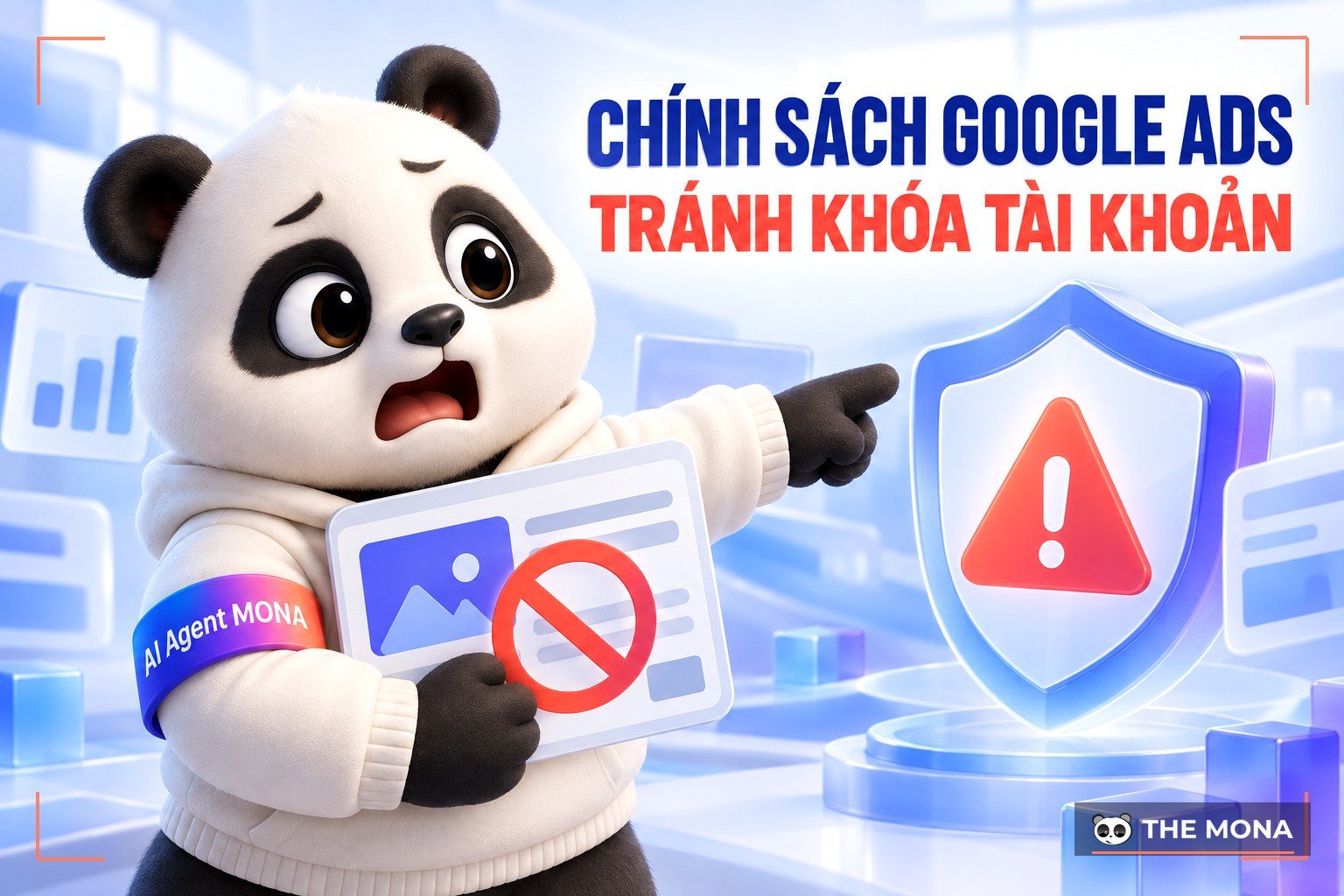
To protect users, Google has set very strict Google Ads policies . So which kinds of ads are completely banned? And what should you do if your Google account is suspended by accident? In the article below, MONA Media will answer everything you need to know about Google advertising policies.

Google has set advertising policies that prohibit certain harmful content. The policies exist to protect users, publishers and Google Ads advertisers alike. Based on these policies, advertisers need to keep up to date, comply, and build campaigns that fit them.
The main benefits of Google Ads policies include:
≫ Learn more now: Adwords negative keywords – Detailed user guide
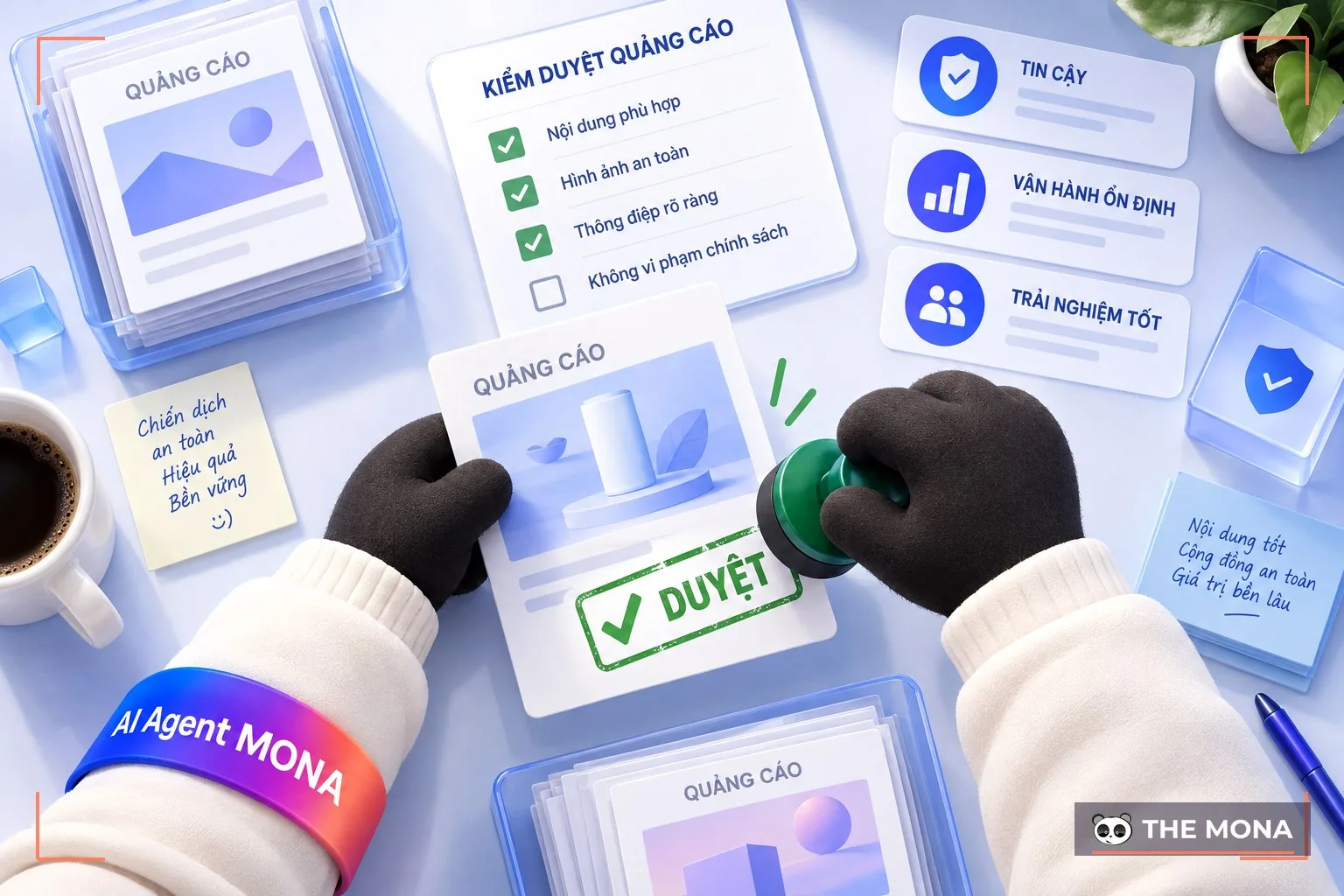
Google does not set so many policies, and require advertisers to follow them, for no reason. Depending on how serious the violation is, Google applies a proportionate penalty.
The specific cases below show what can happen:
That is why following Google Ads policy matters so much: it has a big effect on an advertiser's interests.
To help you understand advertising policies in detail and avoid unnecessary risks, MONA has put together the Google advertising policies you need to know below:
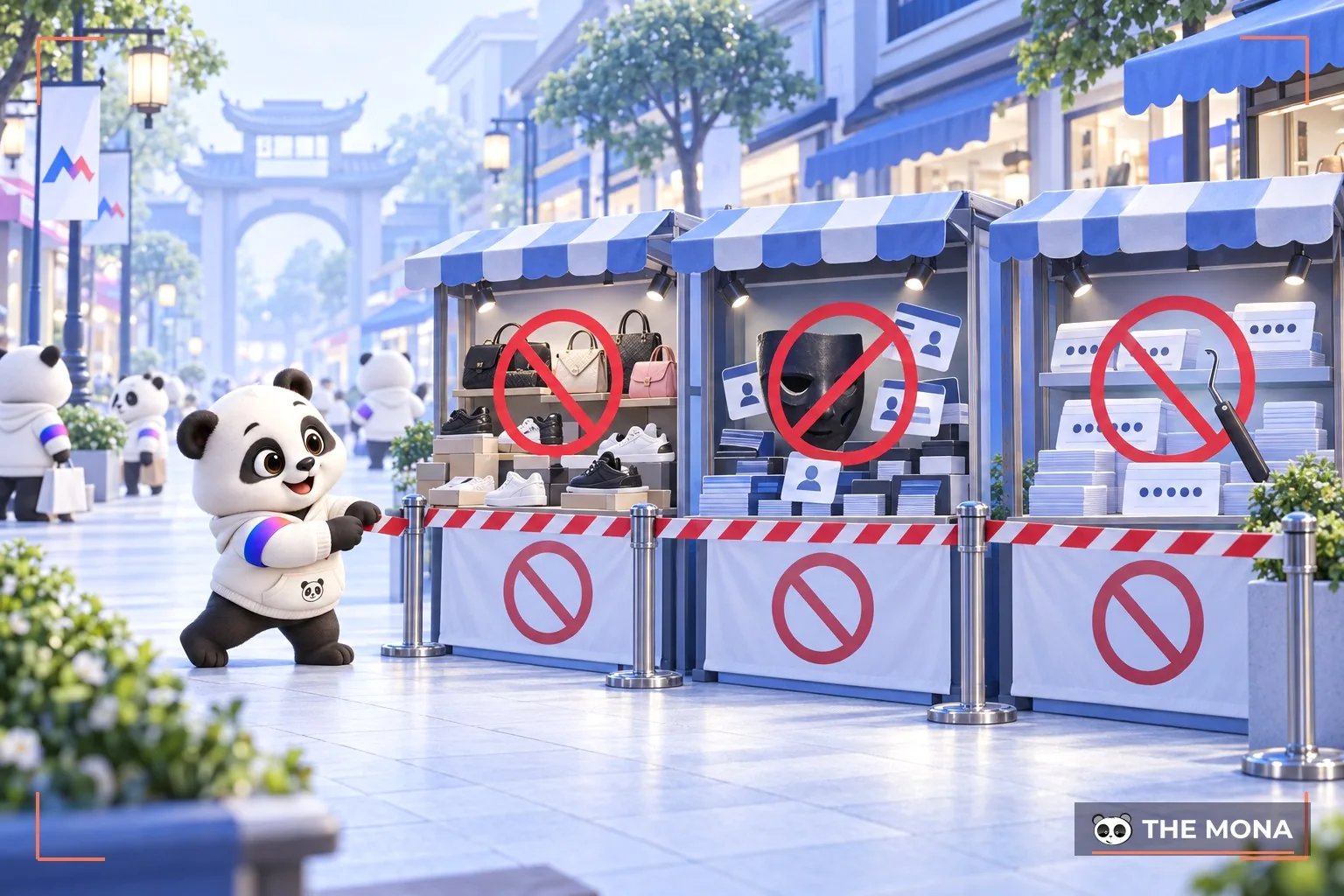
To protect users and keep the ad ecosystem transparent, Google sets strict rules on how ads are run. If any of the methods below is detected, your ads can be disapproved or your account permanently suspended.
Google does not allow ads that deliberately get around the system or create a harmful experience.
Examples: hiding the real landing page, spreading malware, building landing pages only to show ads, or manipulating the review system.
Users' personal information must be kept secure and used only with clear consent.
Examples: collecting ID numbers or sensitive financial information, taking data through insecure servers, or misusing personalized advertising features.
Ads must be clear and honest, and must not hide costs or exaggerate benefits.
Examples: advertising offers that do not exist, hiding loan interest rates, making unrealistic weight loss promises, or faking a brand to scam people.
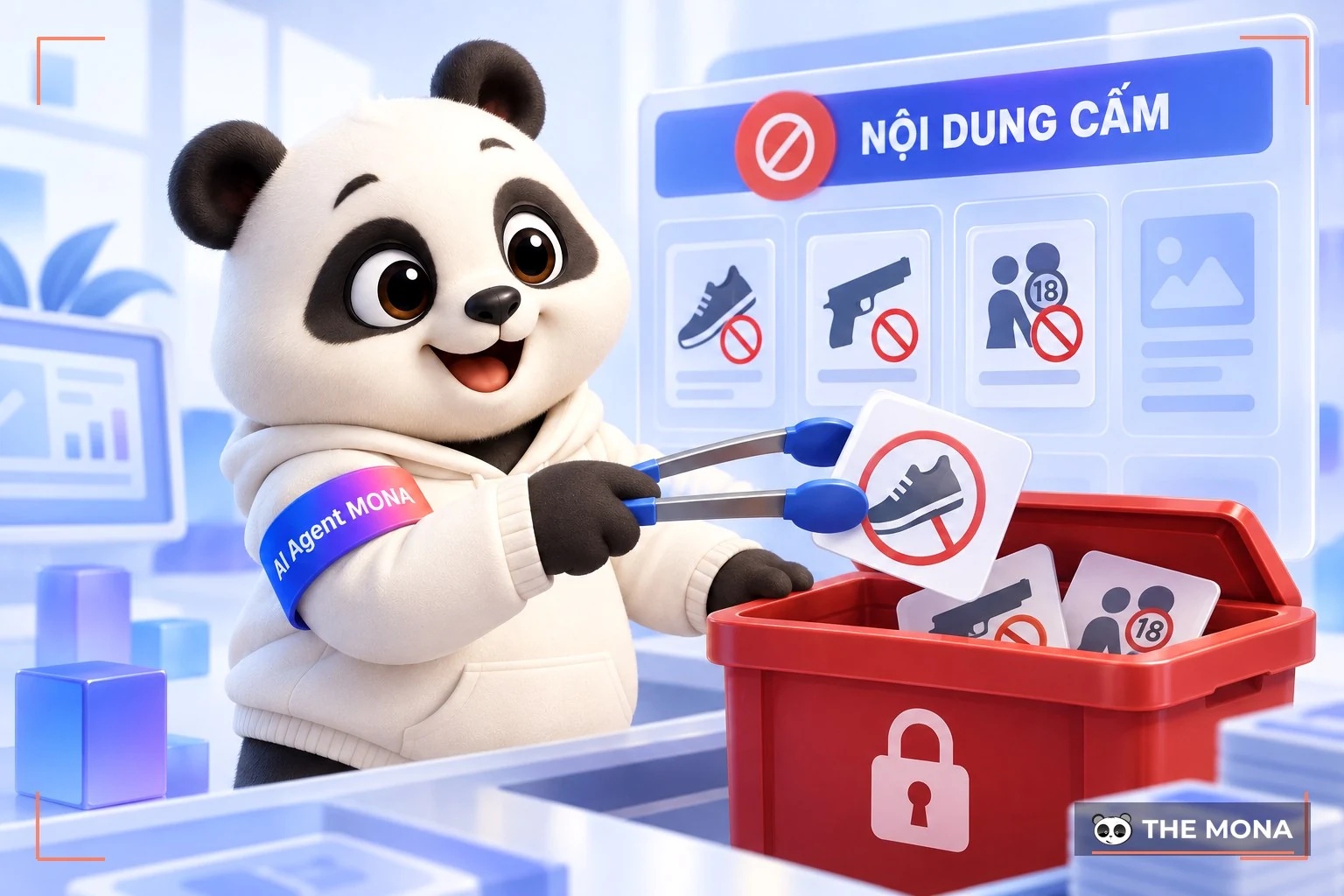
To protect users and keep the ad environment safe, Google Ads strictly bans the promotion of content that can be harmful, deceptive or offensive. The groups of content below are typical examples:
Google does not allow ads for products that imitate genuine brands. These are items that use trademarks, logos or near-identical designs to deceive consumers.
Examples: fake watches, bags and shoes bearing famous brand logos.
Products that harm health or safety are banned from promotion.
Examples: narcotics, psychoactive substances, drug paraphernalia, weapons, ammunition, fireworks, loose tobacco, or instructions for making explosives.
Google does not allow products or services that enable fraud or illegal activity.
Examples: data-stealing software, fake traffic services, forged documents, academic cheating services.
Ads must respect diversity and must not shock, or incite hatred or violence.
Examples: racist content, promotion of hate groups, graphic accident scene images, animal cruelty, child exploitation, or ads with vulgar language.
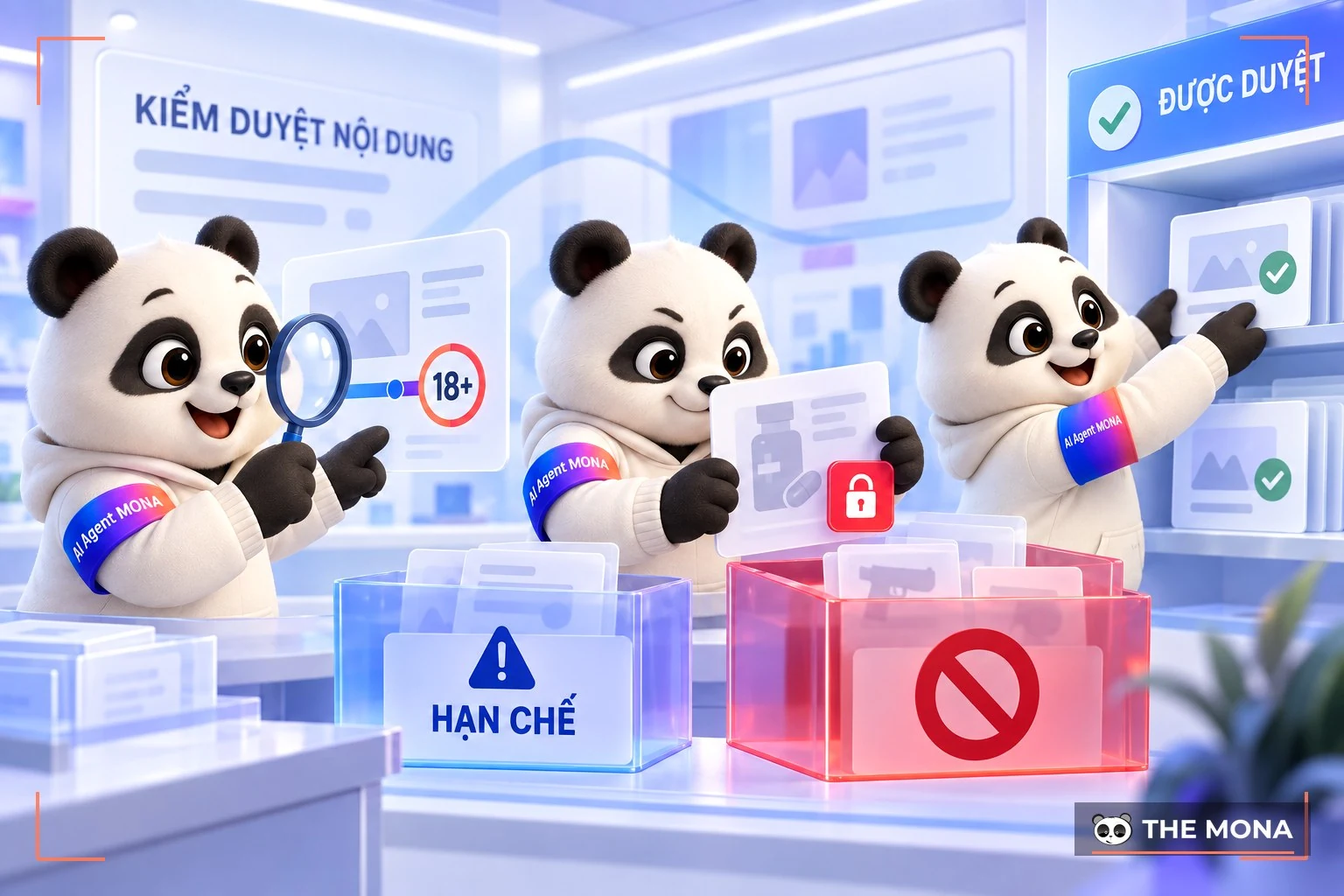
Google Ads sets strict rules to keep the ad ecosystem transparent and safe and to give users a positive experience. Some content and features are completely banned in ads, regardless of purpose or how they are implemented.
Google does not allow any ad that contains or relates to the following:
Counterfeit goods, copyright or trademark infringement: This covers selling, distributing or promoting fake or unauthorized products.
Dangerous products or services: Weapons, explosives, narcotics, banned substances, or instructions for making dangerous products.
Sexually explicit or exploitative content: Any form of sexual suggestiveness, nudity or prostitution services is strictly prohibited.
Scams and misleading behavior: Fake financial services, tricks to collect personal information, or any form of fraud.
Hate speech, violence and discrimination: Content that promotes hatred, divides people by ethnicity, religion or gender, or incites violence.
Beyond content, Google also bans the misuse of certain ad features:
Deceptive techniques: Hiding information, sending users to unrelated landing pages, or installing malware.
Misuse of personal data: Collecting or using user data without clear consent.
Formats that harm the experience: Pop-ups, interstitial ads or autoplay ads that can interrupt users and affect their safety.
Misusing advanced ad features: For example, inappropriate targeting, deliberately getting around display limits, or using ad technology to manipulate user behavior.
Google stresses that advertisers are responsible for complying with all laws in the country or region where the ad is shown, in addition to Google's own policies. A violation can lead to ad disapproval, account restrictions or a permanent ban on the Google Ads account.

To make sure ads are both engaging and good for users, Google Ads sets clear standards for writing, landing pages, technical requirements and display formats. If you do not follow them, your ad may be disapproved or limited.
Ads must be clear, professional and specific. Google does not accept generic ads or ads that abuse characters to grab attention.
Examples of violations: “Buy products here”, “F-R-E-E!!!”, “F₹€€!!”.
The landing page must work properly, be easy to navigate and give users value.
Examples of violations: a landing page that will not open, a displayed URL that differs from the real URL, or a blocked back button.
Ads must run reliably and display correctly on supported devices and languages.
Examples of violations: ads that exceed the account limit, target an unsupported language, or HTML5 that shows blank.
Each format (text, image, video and so on) has its own standards for characters, size, file weight and content.
Examples of violations: headlines over the character limit, images of the wrong size, videos that are too long, or image ads with sensitive content.
≫ Find out more: Google Ads extensions that increase conversions
When an ad does not comply with policy, Google takes action based on the nature and severity of the violation, for example:
Disapproval of the ad or asset: Only the violating part is blocked from showing, and the account keeps running normally.
Account suspension: Applied for serious or repeated violations. All campaigns are stopped until the issue is fixed.
Disabling remarketing lists: Happens when the violation involves user data. You cannot reuse the audience lists you built.
Permanent account ban: The heaviest penalty, usually for fraud or especially serious violations. A banned account cannot be restored.
Many businesses want to “get orders fast” and skip the important step of learning and following Google Ads policy. The result is rejected ads, a restricted account and damage to the brand. To avoid these risks, a business needs a professional partner that knows the policies and optimizes campaigns for the long term.

With over 10 years of experience in online marketing, MONA has worked with hundreds of clients across many industries, from small businesses to large corporations. We do not just run ad campaigns. We optimize them for results that last and stay safe.
Why choose Google Ads services services at MONA?
Solid experience: Over 10 years of successfully running and advising on campaigns large and small.
Diverse solutions: Google Search, Google Display, Remarketing and multichannel advertising.
Control and optimization: Transparent account management and budget optimization for the best results.
Protection from click fraud: MONA uses anti-click-fraud technology to protect your ad spend.
Tailored strategy: Solutions tailored to each business's goals and characteristics.
If you are looking for an effective and sustainable Google advertising solution, please contact MONA to get advice and the most detailed quote for our Google Ads service.

If your Google Ads account is restricted, suspended or banned from advertising, do not panic. First, find out the cause carefully and try to fix the violation in your ads. Then send Google a request for review.
You can also contact Google directly for Google Ads support if you run into trouble and cannot fix the issue yourself. In this case, expect to wait a few days for a personal account, because the resolution process takes a while.
This article MONA Media has summarized and shared the key Google Ads policies for your reference. We hope it helps you understand why following Google policy matters if you want to get the most out of running Google ads and protect your account. We wish you success in running effective ad campaigns.
≫ See more:

CEO & Founder · The MONA
Founder of The MONA, who built a services company of 200+ staff with 14,000+ projects delivered. Khánh Hùng shares how he thinks about building systems that run themselves, automating a business, and the real lessons from delivering projects at MONA.
 1,6K




Professional website
design services
Own a website with a beautiful, 100% exclusive design and a lifetime warranty, with the ability
to expand features flexibly as your business grows, starting today!






 MONA will never sell your information or send you spam


 MONA will never sell your information or send you spam
