
 MONA OS 2.0
 Partner with MONA


 Tự động hoá doanh nghiệp
 Cẩm nang SEO
 Digital Marketing
 Kinh nghiệm thiết kế website
 Hạ Tầng Server
 Giáo dục


 VI
 EN









Message us on
Zalo Official


 ProductsNew

 ProductsProducts
 Mới ra mắtKHA AI 2027App tự edit video, tự đăng mọi mạng xã hội, 2 phút mỗi ngày








 Website designLooks good and wins customers over.
SEO servicesBrings in customers searching for exactly what you sell.
 Tư vấn digital marketingKéo khách từ nhiều kênh, đo bằng số thật.
Corporate video productionVideos introducing your company, factory and team.
 NewAI video productionCompany story films made with AI.
 Custom software developmentCRM, ERP and HRM built for your business.
 Viết AI Agent theo yêu cầuĐặt riêng một trợ lý AI cho đúng việc của mình.
 Tư vấn chuyển đổi AIĐưa AI vào vận hành của cả công ty.
NewMONA LMSManagement for centers and schools.
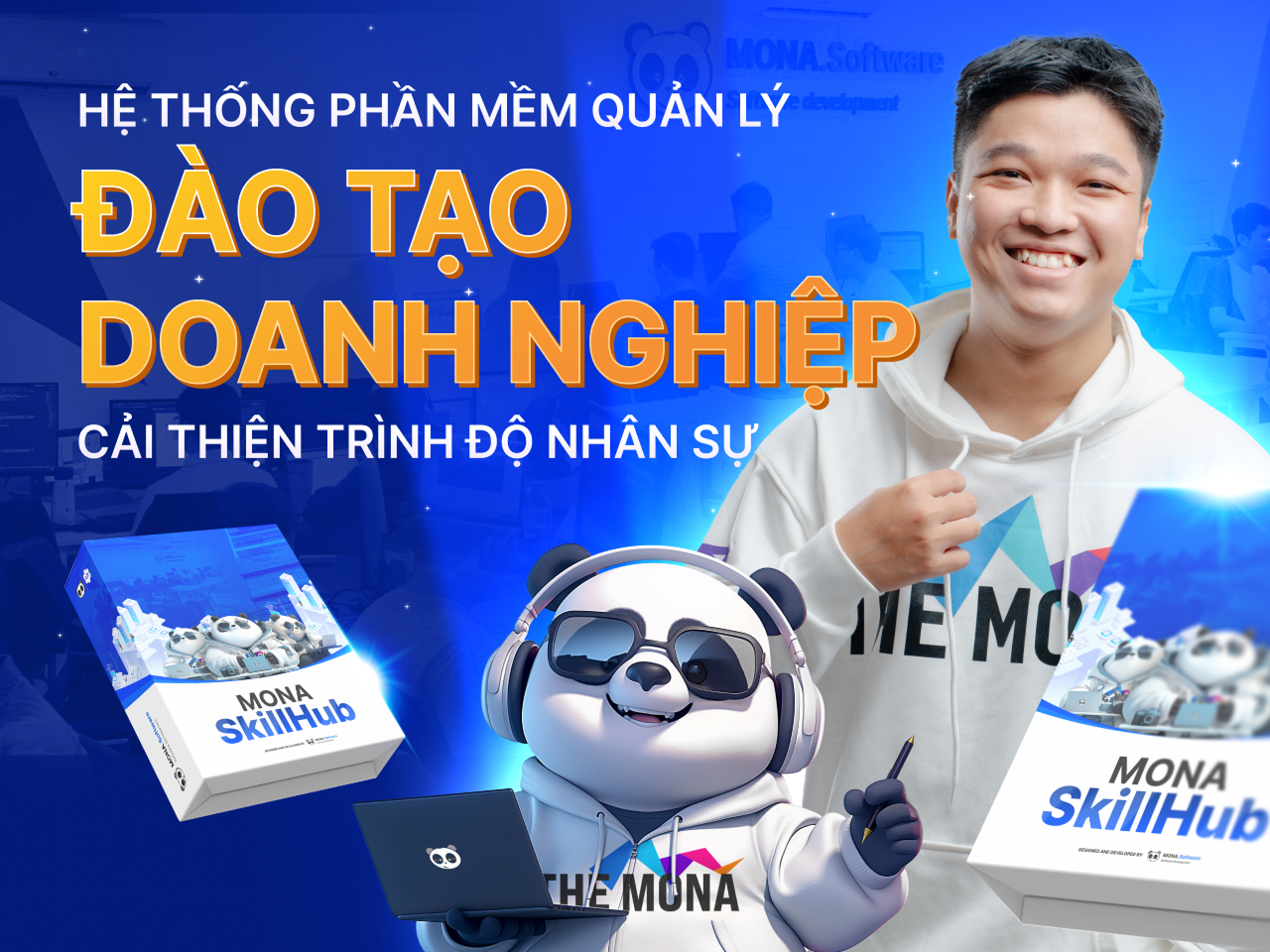
MONA SkillHubInternal training for company staff.
 NHTQ systemEnd-to-end China–Vietnam shipping operations.
MONA JMSManagement for gold, diamond and pawn shops.
 MONA E-LearningA website with every feature you need to sell courses.
 How to sell online courses (course)More than 30 free lessons on selling courses on autopilot.
 MONA Cloudmonacloud.vnServers to get your apps and websites running.
 MONA Basemonabase.vnPostgres database, sign-in and file storage.
 MONA Mailmonamail.vnSend OTP, order and invoice emails from your software.
 MONA Paymonapay.vnAccept bank transfers via VietQR and notify your software when the money arrives.
 MONA eInvoiceComing soonIssue e-invoices that meet tax standards.
Gấu CườiTrả lời khách 24/7 trên web, Fanpage, Zalo và thu lead cho sale.
 Gấu TeleSalesGọi điện tư vấn, chăm khách như tổng đài viên thật.
Dê CườiTư vấn và chốt đơn cho shop ngay trong khung chat.
Gấu WebmasterNhắn nhóm Zalo là website được sửa xong.
 Gấu Pháp ChếSoạn hợp đồng, rà điều khoản trong vài phút.
 Gấu Báo GiáLên báo giá đúng mẫu và gửi khách ngay.
 AI chăm sóc khách hàngTheo dõi và giữ chân khách hàng cũ.
 Gấu Tuyển DụngLọc hồ sơ, hẹn lịch, phỏng vấn ứng viên.
 Mới ra mắt
KHA AI 2027
Xây kênh chuyên gia 2 phút mỗi ngày
Quay bằng điện thoại, AI tự edit video, tự đăng lên 16 nền tảng và tự trả lời bình luận, tin nhắn.
956.140lượt xem trên kênh CEO MONA sau 52 ngày
 Anh Khánh HùngCEO MONA đang dùng mỗi ngày
Xem app làm được gì
 AI
Gấu Cười MONA ĐANG TỰ XÀITrả lời khách 24/7 trên website, Zalo OA, Messenger và thu lead về cho sale.
Dê CườiChốt đơn bán lẻ và sàn: Shopee, TikTok Shop, web. Chăm cả khách sỉ, đại lý.
Gấu WebmasterCập nhật nội dung, tối ưu SEO website mỗi ngày.
Gấu TeleSalesGọi điện tư vấn, chăm khách như tổng đài viên thật.
Gấu Tuyển DụngLọc hồ sơ, hẹn lịch, phỏng vấn ứng viên tự động.
AI chăm sóc khách hàngGiữ khách cũ, cứu lead đã rớt cho phòng kinh doanh.
Gấu Pháp ChếSoạn hợp đồng, rà điều khoản trong vài phút.
Gấu Báo GiáLên báo giá đúng mẫu, gửi khách ngay khi có yêu cầu.
 Chuyển đổi AI toàn phầnGiải pháp tổng cho doanh nghiệp, 3 lớp triển khai.
 Viết AI Agent theo yêu cầuĐặt riêng một con AI gánh đúng nghiệp vụ của bạn.
 Custom softwareCRM, ERP and HRM with built-in AI automation.
 SEO & AEO thời đại AIĐược Google lẫn AI trích dẫn, không chỉ xếp hạng.
 Kiến thức AI cho doanh nghiệpBài phân tích, hướng dẫn ứng dụng AI vào vận hành.
 Free AI courses
 AI tools at work
App mới · KHA AI 2027
Xây kênh 2 phút mỗi ngày
AI tự edit video, tự đăng mọi mạng xã hội
Free consultation, 8am–10pm every day

11 June, 2026
| Criterion | Claude | Gemini |
|---|---|---|
| Tool type | AI assistant / chatbot | AI assistant / chatbot |
| Strengths | long-form writing and coherent reasoning | Google integration, multimodal |
| Best for | drafting long documents and analysis | working inside the Google ecosystem |
| Free version | Yes (limited) | Yes (limited) |
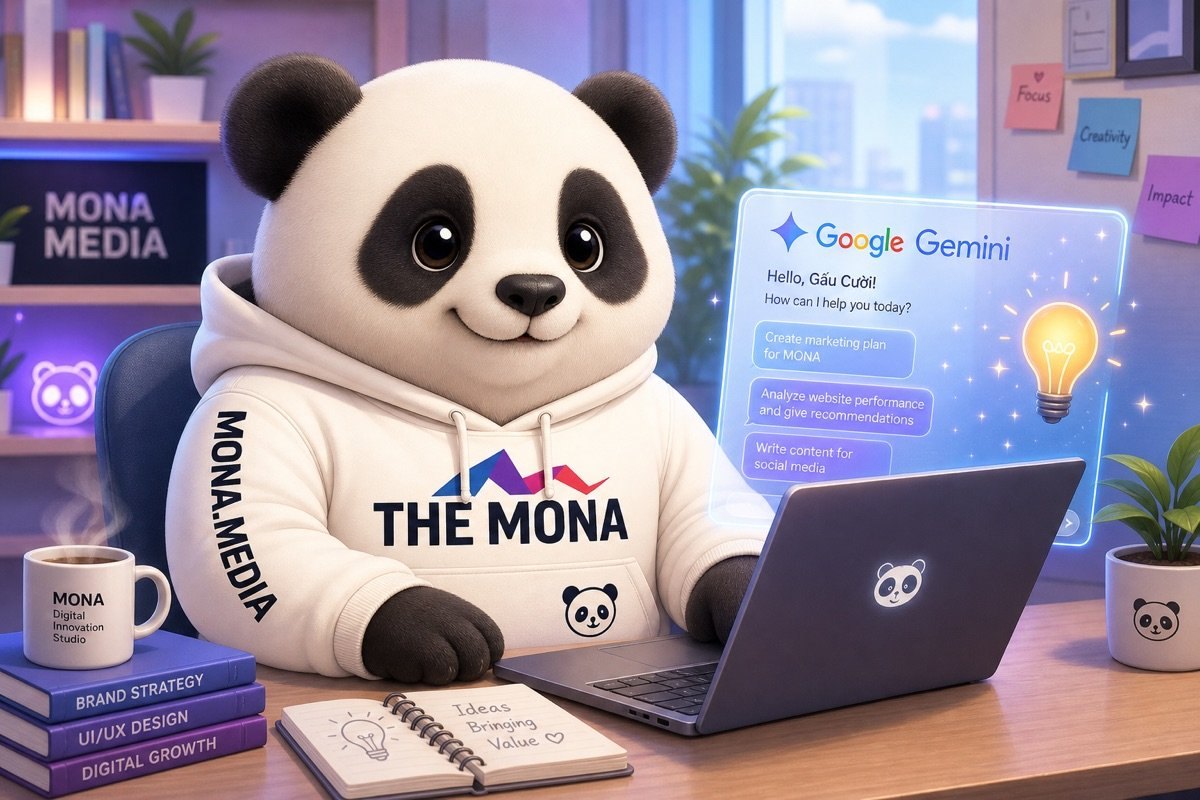
Comparing Gemini and Claude has become a major concern for many business owners and marketing teams looking for AI tools support. We all want to make the most of artificial intelligence to raise productivity, especially in content creation, data analysis and marketing automation. We at MONA understand that choosing the right tool saves time and opens new opportunities for your digital strategy. This article goes into each model, points out the core differences and shows how to apply them in your daily work.
Modern marketing demands speed. Business owners and marketing teams are always looking to increase output. They need to shorten content production time.
Gemini and Claude are two powerful AI tools that can support you. They help produce many kinds of marketing content in just minutes. The capability is impressive. We have seen these tools free teams from repetitive tasks, so people can focus on strategy and bigger ideas. Streamlining your marketing process becomes much easier.
To optimize your marketing campaigns in 2026, you need to know each tool's strengths. Each AI platform has its own particular capabilities. Gemini is strong at multimodal processing. Claude is the language specialist.
We have put together a detailed comparison table to help you picture it. You will quickly see which tool fits your marketing goals.
Gemini is developed by Google. It is a powerful multimodal model. It handles images, video and audio well. Gemini produces visual content very effectively, which is a big advantage in marketing.
You can use Gemini to analyze competitors' images. It helps you spot design trends. Gemini also generates new ad image ideas. You can even write video captions. The platform integrates deeply with the Google ecosystem, which brings benefits for data and analytics.
For example, a fashion chain with 20 stores used Gemini. They analyzed images from social media, and Gemini suggested new collections. The visual campaigns that followed drew in more customers.
Claude from Anthropic focuses strongly on text. Its ability to understand and produce long content is impressive. Claude handles complex documents extremely well and helps you build high-quality content.
It specializes in customer sentiment analysis. Claude summarizes long market reports. It also writes industry blog posts. You can draft detailed email marketing scripts. Claude keeps your brand voice consistent. Precision in language is Claude's strength.
A financial services company with over 50 staff adopted Claude. They use it to write internal newsletters. The content has depth and tight logic, which helps raise the team's knowledge.
Choosing Gemini or Claude depends on your main need. Consider your overall marketing strategy. What is the campaign goal? What resources do you have?
If a campaign needs a lot of visual elements, choose Gemini. It supports creating visual content. Conversely, Claude is the ideal choice for long-form content. It suits reports and in-depth analysis. Some businesses even combine both, which creates a combined strength.
Whichever tool you use, the end result is still cash flow. You are looking for ways to streamline your process. MONA understands this. We specialize in developing custom automation software. These solutions integrate AI deeply. They are not just standalone tools. They are a whole seamless system.
We have helped Vietnamese businesses since 2016. Over 14,000+ projects have trusted us. MONA has a team of 60+ staff. We are committed to delivering lasting performance. Together, let's take your marketing to a new level.
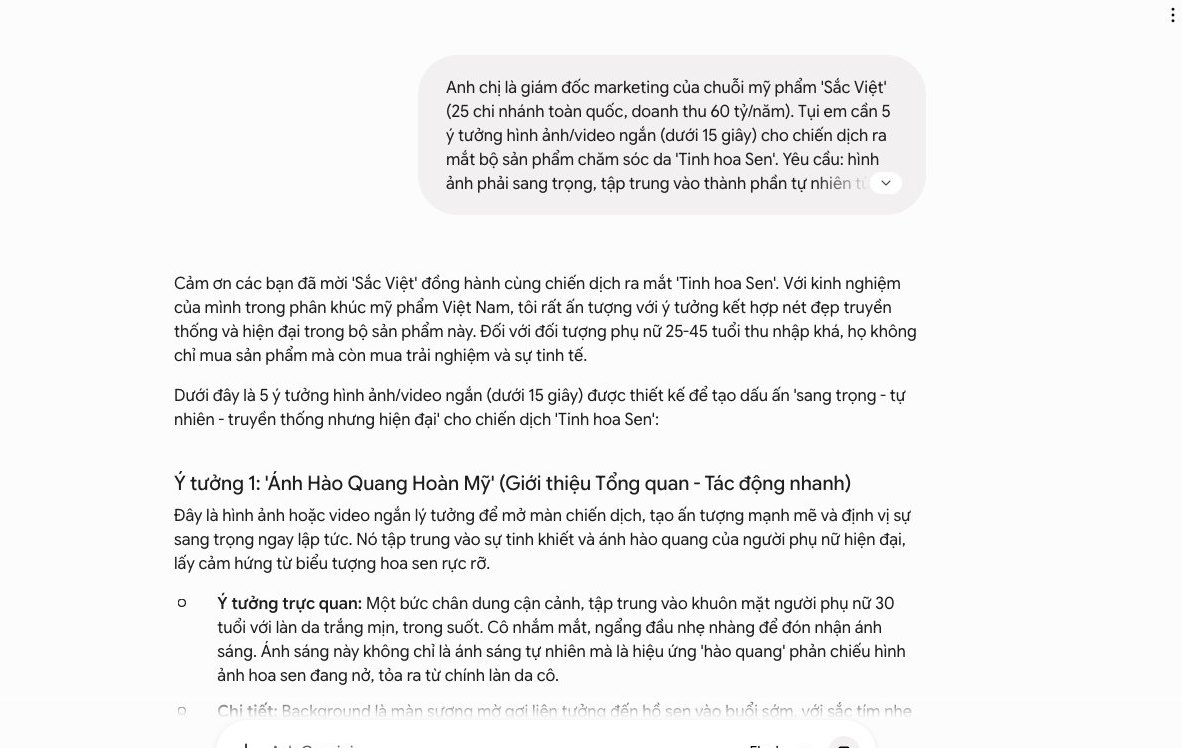

To streamline creating marketing content, we need an effective method. The "multi-role prompt" technique lets you shape the AI's response. It helps tools like Gemini or Claude produce high-quality content scripts. You get output that matches your direction with just a few steps.
This technique saves a lot of time. It cuts down on editing afterward. We can come up with dozens of ideas in just one hour.
The secret to great AI content is giving it a clear role. Treat the AI as a member of your team. We need to position the AI as a marketing expert. For example, the AI can be a "social media content specialist", a "professional copywriter" or an "email campaign manager".
Next, set a specific goal for every request. The goal could be to boost post engagement, attract email sign-ups, or drive customers to a product page. The clearer the goal, the easier it is for the AI to deliver what you ask.
For example, you could ask: “You are a marketing specialist for a high-end restaurant chain. Create 5 Facebook post ideas to introduce a new dish, with the goal of increasing table bookings by 20% next week.”
A single prompt is usually not enough. We need “prompt chaining” so the AI can develop ideas in greater depth. Build up step by step, from the overview to the details. It is an iterative process.
Start with a basic prompt. Then follow up with more prompts to refine, expand or request variations. This technique helps the AI understand the context and the request better, so the output gets closer to what you originally wanted. You can ask the AI to change the tone, the length or add specific keywords. That keeps the content right for each platform and audience.
For example, after the AI gives you 5 ideas, you could continue: “Good. Now develop idea number 3 into a complete post of up to 150 words. The tone should be friendly but upscale, and include the hashtag #mon_moi_tuyet_hao.”

Let's look at a real example. You want to create posts for Facebook and LinkedIn, and each platform has its own character.
For Facebook:
You could use this prompt: “You are a social media specialist for a women's fashion brand. Write a 100-word Facebook post introducing the new summer collection. The goal is to build excitement and encourage customers to visit the store. Include 3 relevant hashtags.”
Then continue: “Create 3 different headline options for this post. Each headline must be no longer than 50 characters.”
For LinkedIn:
A more professional prompt would be: “You are a B2B marketing specialist in the technology sector. Write a short LinkedIn post (150-200 words) about the benefits of process automation for mid-size and large businesses. The goal is to attract CEOs and CTOs interested in our solutions. The post should have a formal tone and emphasize return on investment.”
Continue: “Please suggest 2-3 open questions to encourage discussion in the comments.”
This way, you can create varied, fitting content. It is how you get the most out of Gemini and Claude.
At MONA, we apply similar techniques. We use AI to streamline our internal content creation process, and we also train clients to use these tools effectively.
However, standalone AI tools only solve part of the job. They hit a limit when a business needs a full automation system. For seamless data and strong security, you need custom software. MONA can build a solution to your requirements.
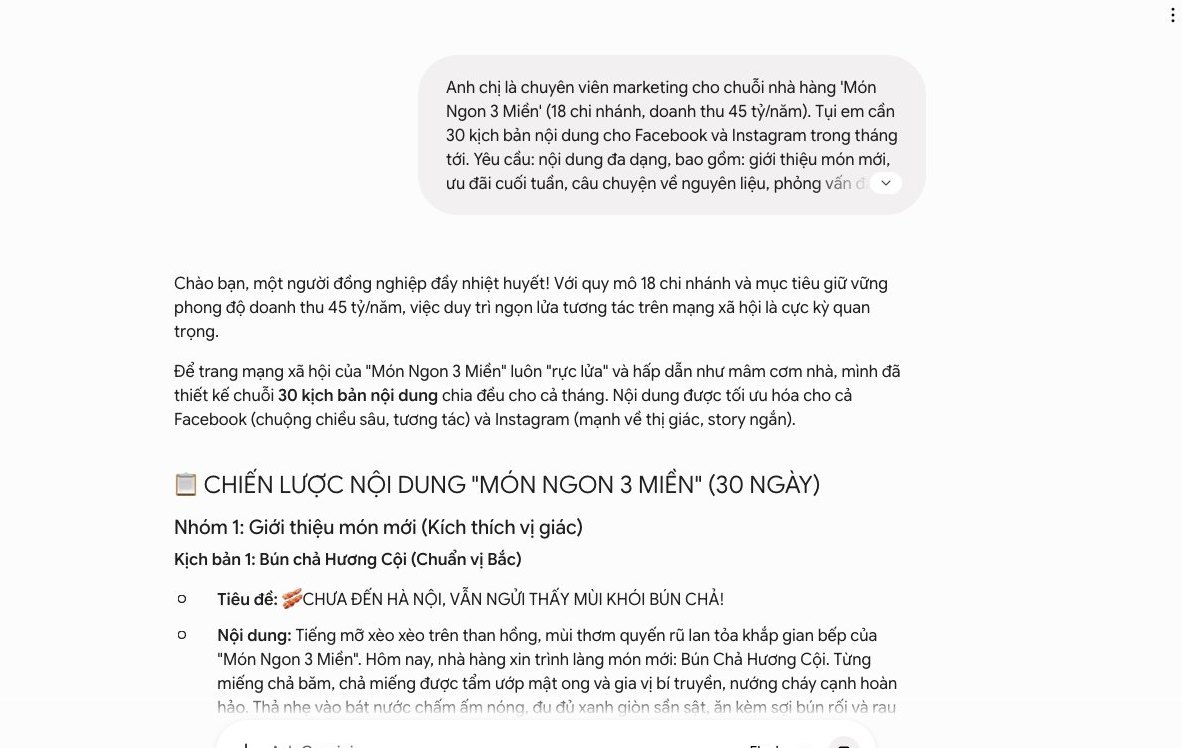

Keyword research is the foundation of every SEO campaign, and an effective keyword strategy takes care and precision. You can turn Claude or Gemini into a capable market research assistant. These tools help you uncover keyword “gold mines”: niche keywords that few competitors target.
We will walk through the process step by step. The goal is to increase your visibility on search engines. We will also share how to build an SEO-ready article outline, which speeds up content creation for your marketing team.
To find effective keywords, we need to understand the customer. Ask the AI to “role-play” your target customer. Give Claude or Gemini a detailed description of the customer profile.
Suggested prompts:
The AI will analyze and suggest hidden keywords, the ones you may have overlooked. They give you deep insight into what the market really needs.

Competitor analysis is essential. Give the AI the names of 3-5 main competitors and ask Claude or Gemini to analyze their keyword strategy.
Suggested prompts:
The AI will help you spot market “gaps”. They are your chance to create content that stands out, and that brings in more high-quality traffic.
Once you have a list of promising keywords, the next step is building the article outline. Give the keyword to the AI and ask it to create a complete article structure.
Suggested prompts:
Claude or Gemini will produce an outline quickly, and you can adjust it to fit your brand voice. This saves your marketing team a lot of time, while content quality still meets SEO standards.

Using Gemini or Claude for keyword research streamlines your marketing process. But using AI tools in isolation still has limits. Your team may struggle to integrate data, and may also miss bigger opportunities.
To truly automate and synchronize marketing data, you need a custom system. MONA has over 10 years of experience (since 2016). We specialize in building automation software and website design. MONA's solutions keep your data seamless and secure. MONA also uses AI to optimize your SEO strategy internally. We train clients to get the most out of AI. Let MONA build a solid system for your business.
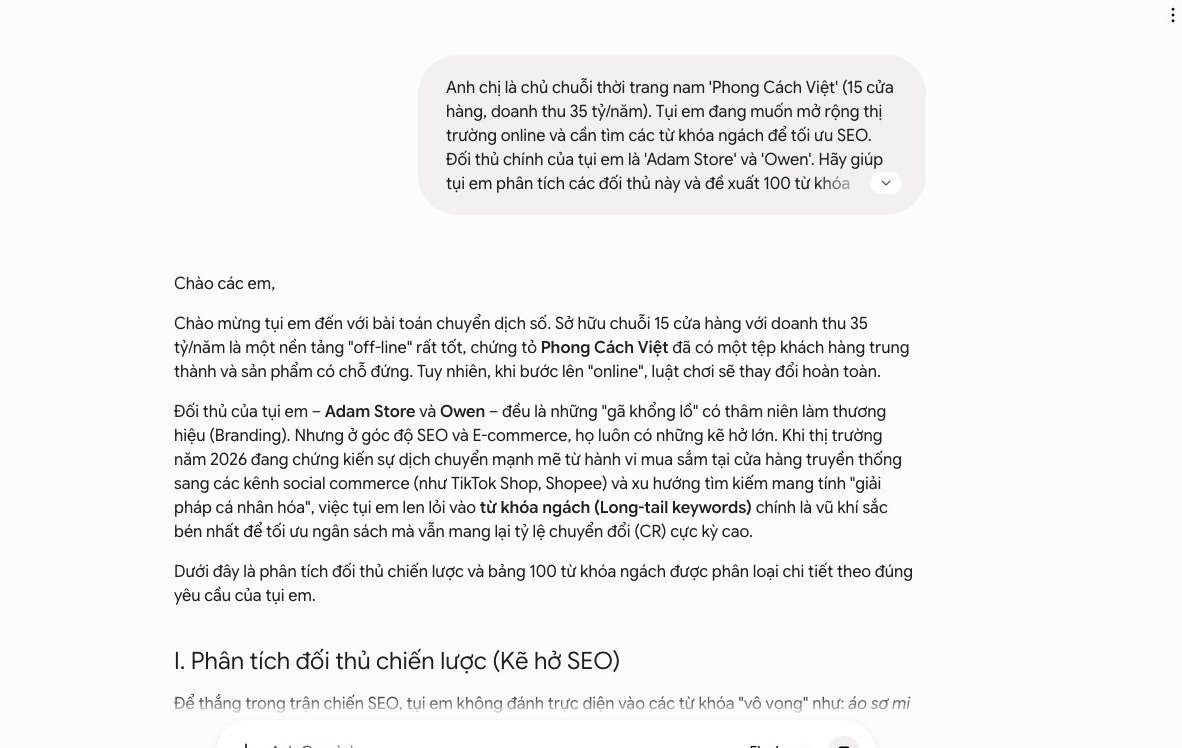
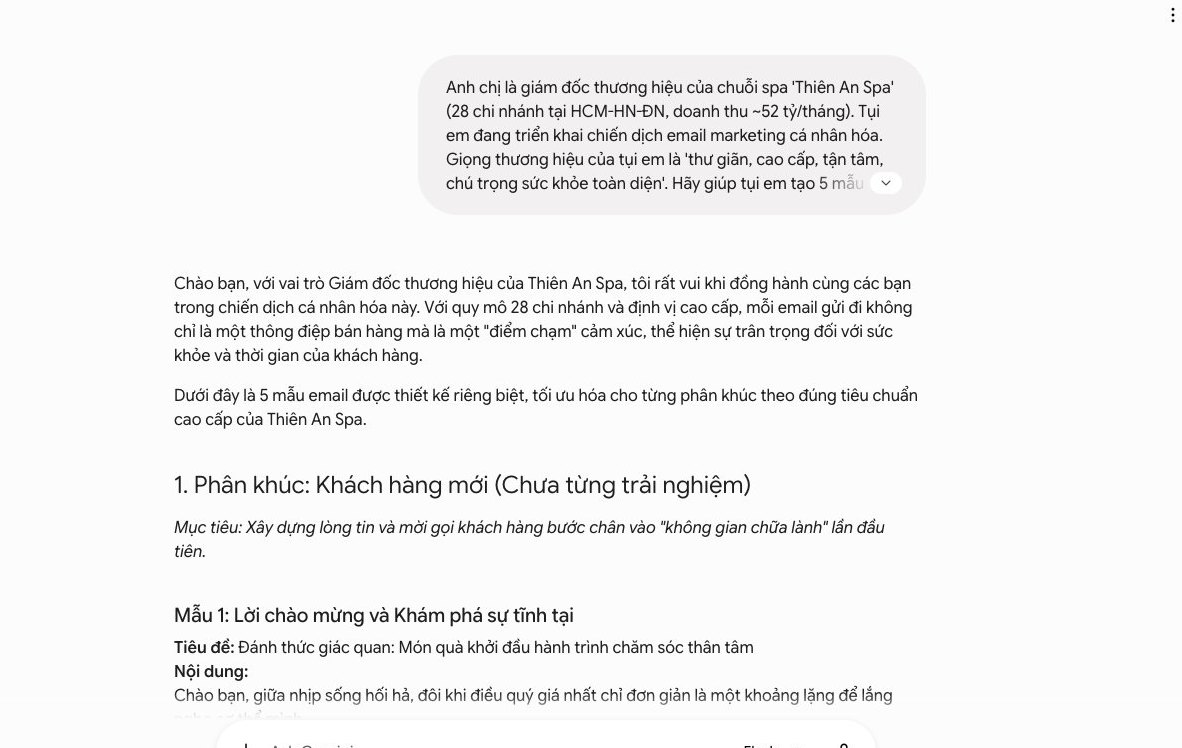
To create hundreds of personalized marketing messages, the AI needs to understand your brand voice well. That keeps emails, messages and customer support replies consistent and noticeably lifts your conversion rate. Let's look at how to train AI to learn your business's own communication style.
The first step is to give the AI a clear set of brand voice rules. Pull together the core elements, since they are your guiding compass: commonly used words, the main tone (professional, friendly, humorous), signature phrases, and what to avoid.
For example, if your business sells premium products, the tone should be formal and refined. If you run a bubble tea chain aimed at young people, the language should be close and energetic. Be specific. Also give the AI examples of content that “should” and “should not” be written, and it will learn faster. At MONA, we usually build a detailed document that classifies each shade of tone.
You can use a sample prompt like this for Gemini or Claude: “You are the marketing specialist for the brand [Brand name]. Our brand voice is [tone description, e.g. friendly, professional, inspiring]. Preferred words: [word list]. Words to avoid: [word list]. Your task is to write [type of content] in this voice.”
Automated replies in customer support are where AI shines. It saves you time and keeps customers satisfied. What matters is that the AI keeps your business's signature tone. Do NOT let it answer mechanically.
Give the AI sample reply scripts, plus common questions and their ideal answers. This is valuable source data. The AI analyzes the structure, vocabulary and emotion in those answers, then generates similar replies on its own. You can use AI to handle simple requests, such as product information, return policy and usage instructions. It works well.
A retail chain with 35 stores in Hanoi and Hai Phong applied this approach. They used an AI customized by MONA to reply to customer messages on Messenger and Zalo. Their fast-reply rate rose noticeably, customers felt more cared for, and the tone stayed consistent across every channel. That builds trust.
For the AI to truly perfect your brand voice, testing and adjusting are essential. We need to run A/B tests regularly. They let you compare how different message versions perform. One message can hit the customer right in the heart, while another does not.
For example, you can create two versions of a marketing email, each with a slightly different tone. Then send them to two small customer groups. Track open rate, click rate and conversion rate. This data matters. Analyze the results to see which message works better, then adjust the prompt for the AI accordingly. Keep refining until you reach optimal performance. It is a continuous process.
At MONA, we usually design automated optimization cycles. They let the AI learn from every test and gradually sharpen its skills. The result is messaging that gets sharper and closer to what you want. That is very valuable.
As a business owner or marketing team, you are seeing Gemini and Claude deliver instant results. These tools handle single tasks well. They quickly take care of content creation and basic analysis. But when your vision is to automate the entire marketing chain, standalone AI tools hit a ceiling. We need a unified system with seamless data. This is when the need for custom automation software becomes clear.
Using many separate AI tools creates data “islands”. Each tool keeps its own information. This causes heavy fragmentation, and you struggle to get a complete view of your customers. Marketing data is not synchronized, which blocks deeper analysis. Moving data back and forth between platforms also carries security risks, and sensitive customer information could be exposed. At that point a business needs a centralized solution: a strong data protection system. MONA Media builds systems like this, keeping data safe and seamless.
An automated marketing chain needs smooth coordination, with every step working in sync. With separate AI tools, that coordination is hard. You spend a lot of effort connecting them, and errors easily creep in during handoffs. Brand voice can drift and the customer experience becomes inconsistent. As you scale, management turns into a burden. We see many businesses stuck here, and their overall performance suffers.
With MONA, we do not just provide a tool. We build a complete marketing automation system, “tailor-made” for each business. It integrates deeply with every part of your operation, from content creation to distribution and campaign management. Data is centralized and highly secure. MONA's systems are fully custom-coded, which ensures compatibility and security. We integrate AI modules such as Claude or Gemini into the system so they serve your exact purpose, as part of a larger whole. MONA has over 10 years of experience. We have grown alongside 14,000+ projects. Our team of 60+ staff. Our client retention rate is 85%. We help businesses reach further and grow sustainably in the age of automation.

CEO & Founder · The MONA
Founder of The MONA, who built a services company of 60+ staff with 14,000+ projects delivered. Khánh Hùng shares how he thinks about building systems that run themselves, automating a business, and the real lessons from delivering projects at MONA.
 166



Professional website
design services
Own a website with a beautiful, 100% exclusive design and a lifetime warranty, with the ability
to expand features flexibly as your business grows, starting today!






 MONA will never sell your information or send you spam


 MONA will never sell your information or send you spam
