
 MONA OS 2.0
 Partner with MONA


 Tự động hoá doanh nghiệp
 Cẩm nang SEO
 Digital Marketing
 Kinh nghiệm thiết kế website
 Hạ Tầng Server
 Giáo dục


 VI
 EN




















Message us on
Zalo Official


 ProductsNew

 ProductsProducts
 Mới ra mắtKHA AI 2027App tự edit video, tự đăng mọi mạng xã hội, 2 phút mỗi ngày










 Website designLooks good and wins customers over.
SEO servicesBrings in customers searching for exactly what you sell.
 Tư vấn digital marketingKéo khách từ nhiều kênh, đo bằng số thật.
Corporate video productionVideos introducing your company, factory and team.
 NewAI video productionCompany story films made with AI.
 Custom software developmentCRM, ERP and HRM built for your business.
 Viết AI Agent theo yêu cầuĐặt riêng một trợ lý AI cho đúng việc của mình.
 Tư vấn chuyển đổi AIĐưa AI vào vận hành của cả công ty.
NewMONA LMSManagement for centers and schools.
MONA SkillHubInternal training for company staff.
 NHTQ systemEnd-to-end China–Vietnam shipping operations.
MONA JMSManagement for gold, diamond and pawn shops.
 MONA E-LearningA website with every feature you need to sell courses.
 How to sell online courses (course)More than 30 free lessons on selling courses on autopilot.
 MONA Cloudmonacloud.vnServers to get your apps and websites running.
 MONA Basemonabase.vnPostgres database, sign-in and file storage.
 MONA Mailmonamail.vnSend OTP, order and invoice emails from your software.
 MONA Paymonapay.vnAccept bank transfers via VietQR and notify your software when the money arrives.
 MONA eInvoiceComing soonIssue e-invoices that meet tax standards.
Gấu CườiTrả lời khách 24/7 trên web, Fanpage, Zalo và thu lead cho sale.
 Gấu TeleSalesGọi điện tư vấn, chăm khách như tổng đài viên thật.
Dê CườiTư vấn và chốt đơn cho shop ngay trong khung chat.
Gấu WebmasterNhắn nhóm Zalo là website được sửa xong.
 Gấu Pháp ChếSoạn hợp đồng, rà điều khoản trong vài phút.
 Gấu Báo GiáLên báo giá đúng mẫu và gửi khách ngay.
 AI chăm sóc khách hàngTheo dõi và giữ chân khách hàng cũ.
 Gấu Tuyển DụngLọc hồ sơ, hẹn lịch, phỏng vấn ứng viên.
 Mới ra mắt
KHA AI 2027
Xây kênh chuyên gia 2 phút mỗi ngày
Quay bằng điện thoại, AI tự edit video, tự đăng lên 16 nền tảng và tự trả lời bình luận, tin nhắn.
884.778lượt xem trên kênh CEO MONA sau 36 ngày
 Anh Khánh HùngCEO MONA đang dùng mỗi ngày
Xem app làm được gì
 AI
Gấu Cười MONA ĐANG TỰ XÀITrả lời khách 24/7 trên website, Zalo OA, Messenger và thu lead về cho sale.
Dê CườiChốt đơn bán lẻ và sàn: Shopee, TikTok Shop, web. Chăm cả khách sỉ, đại lý.
Gấu WebmasterCập nhật nội dung, tối ưu SEO website mỗi ngày.
Gấu TeleSalesGọi điện tư vấn, chăm khách như tổng đài viên thật.
Gấu Tuyển DụngLọc hồ sơ, hẹn lịch, phỏng vấn ứng viên tự động.
AI chăm sóc khách hàngGiữ khách cũ, cứu lead đã rớt cho phòng kinh doanh.
Gấu Pháp ChếSoạn hợp đồng, rà điều khoản trong vài phút.
Gấu Báo GiáLên báo giá đúng mẫu, gửi khách ngay khi có yêu cầu.
 Chuyển đổi AI toàn phầnGiải pháp tổng cho doanh nghiệp, 3 lớp triển khai.
 Viết AI Agent theo yêu cầuĐặt riêng một con AI gánh đúng nghiệp vụ của bạn.
 Custom softwareCRM, ERP and HRM with built-in AI automation.
 SEO & AEO thời đại AIĐược Google lẫn AI trích dẫn, không chỉ xếp hạng.
 Kiến thức AI cho doanh nghiệpBài phân tích, hướng dẫn ứng dụng AI vào vận hành.
 Free AI courses
 AI tools at work
App mới · KHA AI 2027
Xây kênh 2 phút mỗi ngày
AI tự edit video, tự đăng mọi mạng xã hội
Free consultation, 8am–10pm every day

14 June, 2023
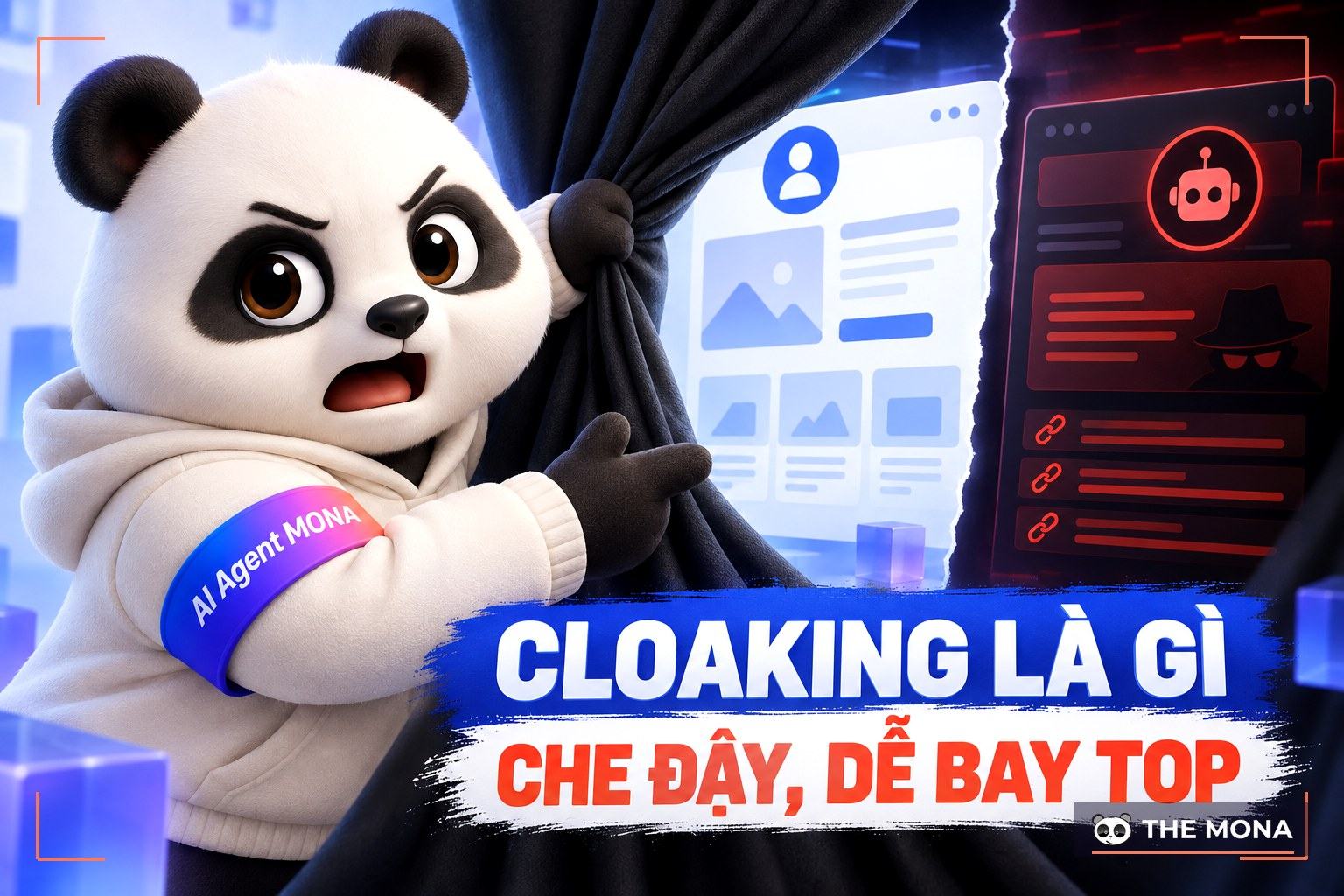
Cloaking (also known as concealment) is one of the best-known black hat SEO techniques because it can bring quick results. However, along with the benefits, cloaking carries big risks: if Google detects it, the website can be heavily penalized and may even disappear from search results. In this article, MONA Media will analyze the costs and benefits of cloaking to help you decide whether to use this technique on your website.
What is cloaking? Cloaking is a black hat SEOtechnique that tries to fool search engines by showing different content to Google Bot than the content actually shown to users. The goal is to raise rankings in search results, but if Google detects it, the site can face serious penalties.

There are several types of cloaking, such as user-agent, IP, Referer, JavaScript, HTTP Accept-Language header and session cloaking.
*Note: Although cloaking can bring benefits, MONA advises you not to use it for SEO, because it violates Google's webmaster guidelines and risks damaging your website's credibility and traffic.
See more: The business's Google's algorithms that SEO practitioners should know
Although seen as a double-edged sword in SEO, cloaking is still used by some risk-taking teams for the short-term gains it brings. So what makes cloaking tempting enough for some SEOs to trade risk for a chance at a quick rise on Google?

Google has two main penalties when it detects a website using cloaking:

To recover from a Google penalty for cloaking in SEO, take these steps:
See more: Geotag What is geotagging? How to geotag images for SEO in detail (2023)
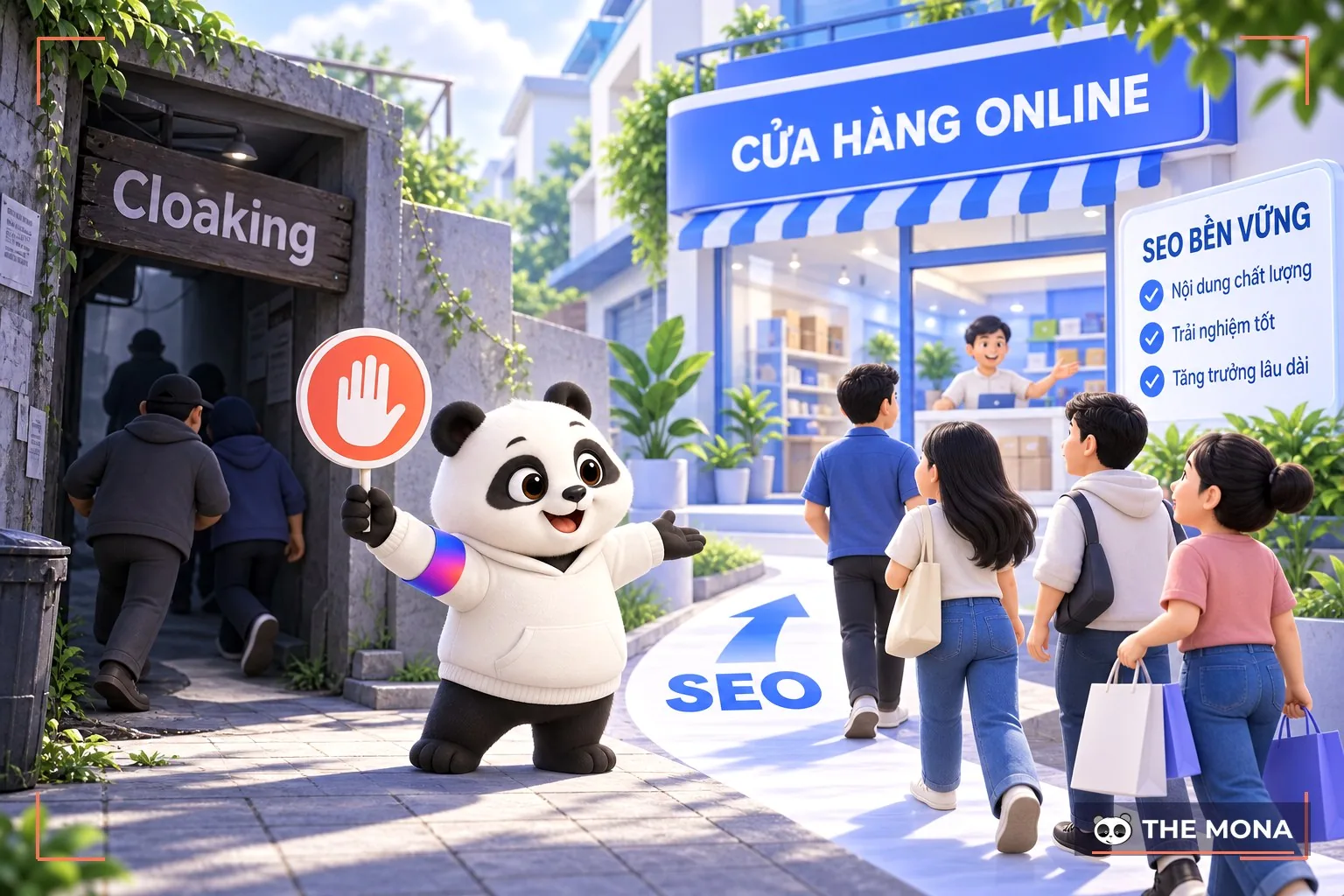
Cloaking can bring some short-term benefits, but in the long run it causes serious consequences for a website, such as:
For the best results for your website, you should not use cloaking in SEO. Instead of using this technique that violates Google's policies, focus on providing high-quality, valuable content for users, and on optimizing your site full-scope SEO in a healthy way for the longest-lasting results.
– MONA Digital Marketing team
SEOers use many different types of cloaking. Here are the most common cloaking techniques today:
This technique is also known as User-Agent Cloaking. It uses a program to identify the user agent, such as a web browser or a search engine bot. It then shows different content to each user agent, in order to deceive Google's search engine bots.
For example, the user agent of Google Chrome is:
| Mozilla/5.0 (Windows NT 10.0; Win64; x64) AppleWebKit/537.36 (KHTML, like Gecko) Chrome/91.0.4472.114 Safari/537.36 |
Meanwhile, the user agent of Google's crawler bot is:
| Mozilla/5.0 (compatible; Googlebot/2.1; +http://www.google.com/bot.html) |
This technique, also called JavaScript Cloaking, uses JavaScript to detect whether the user has JavaScript turned on or off in their browser. Based on the result, the website shows different content in each case, which can "fool" search engine bots.

JavaScript commonly relies on methods such as window.location or document.write to redirect users to other content or overwrite the page's current content, controlling how bots and users see the page.
This technique is IP Cloaking, which black hat SEOers use quite often today. It uses the user's IP address to work out their location, country, language or device. It then shows different content for different IP addresses, in order to deceive search engine bots.
For example, your computer's IP address is: 192.168.1.100
But the IP address Googlebot crawls from is: 66.249.66.1
Referer Cloaking uses the referer to identify where a user comes from, for example which website they used to reach your site. It then shows different content for each referer, in order to protect content from being copied or stolen.
For example, when you click a link from page A to page B, the referer of the request to page B is the URL of page A.
When the site detects a request from a specific source, such as a Google search results page, it shows a version of the content optimized for SEO. If the request comes from another source, the user may see completely different content.
This technique is known as HTTP Accept-Language Header Cloaking. It uses the HTTP Accept-Language header to determine the language in which the user wants to view content. It then shows different content for each language, in order to deceive search engine bots.

In web programming, a session stores information about a user's browsing session, including session variables or session cookies. A session can hold data such as login name, shopping cart and browsing history.
Session-based cloaking uses session information to tell bots from real users. For example, if a visitor browses very fast (like a crawling bot), the page shows SEO-optimized content, while a visitor who stays longer sees different content suited to their experience.
There are many ways to use cloaking in SEO. Depending on their skills and needs, SEOers choose the form that suits them best. The most common ways to use SEO techniques are as follows:
This means using a text color that matches the background to hide content from users, so it is hard for them to notice while Google's bot can still read it. Hiding text or links to manipulate search rankings is considered cheating and violates Google's webmaster guidelines.

Instead of ordinary HTML, some websites only build a Flash version to deceive search engines, while real users are redirected to a different page.
The better your SEO skills, the higher the share of text in your HTML. In other words, your page should have more text and content than HTML tags. However, if you are writing a news item or a short post, the text ratio will not be high. To get around this, black hat SEOers often use cloaking to meet Google's SEO guidelines.
Cloaking with Java scripts is one of the most common methods among black hat SEOers. It uses JavaScript to check whether the user has JavaScript turned on or off in their browser, then shows different content in each case. This is used to deceive Google's bot and improve rankings.

In short, these are the methods black hat SEOers most often use for cloaking. However, as mentioned above, you need to think carefully before using this technique in SEO. It violates Google's webmaster guidelines and can harm your website's reputation and traffic.
Cloaking is a sophisticated trick and is often hard to spot with the naked eye. However, you can still check whether a website uses cloaking in the ways below:

Many online tools can help detect cloaking, and the most popular is the Small SEO Tools Cloaking Checker. Just enter the URL of the website you want to check, and the tool shows the content the page displays to search bots such as Googlebot, Bingbot, Yahoo Slurp or Yandexbot. If the content shown to bots differs significantly from what users see, the website is very likely using cloaking.
To tell whether a website uses cloaking, you can open it in several browsers, such as Chrome, Firefox, Safari or Edge, and even on different devices (computer, phone, tablet). If the content changes unusually depending on the browser or device, this can be a sign of cloaking.

The user agent tells you which browser or bot is visiting your website. With these tools, you can change your browser's user agent and "pretend" to be Googlebot, Bingbot or other search engines. If the website's content changes when you switch user agents, the website is very likely using cloaking.
Some websites show different content depending on the visitor's IP address. To detect this, you can use a VPN or an IP spoofing tool to change your geographic location. If the website shows different content when you visit from different IPs, there is a 90% chance it uses black hat SEO cloaking.
Besides the methods above, an SEO expert can also use a referer spoofing tool to check for cloaking. The referer shows where the user came from, for example from Google search results or from another website.

Referer spoofing tools let you fake the traffic source, so the system thinks you are coming from somewhere else. For example, you can make it look like you are coming from Google, Bing or Yahoo search results and see whether the website shows different content.
If a website shows SEO-optimized content when visited from Google but different content when visited from other sources, that is referer-based cloaking.
To protect your website and brand reputation, you should use white hat SEO and SEO website practices. This is also the direction MONA has stayed committed to for more than 10 years.

At MONA Media, we are committed to delivering sustainable SEO, safe and lasting results. With an experienced team of experts and the right SEO strategy , MONA will help your website reach high rankings on Google and attract quality leads that turn into real conversions. Your business does not have to do anything or "burn" money on ads, and can still grow revenue 2x to 3x.
MONA knows that words alone are not convincing enough, so take a look at the real case study we have delivered, which brought success to many businesses, by clicking the image below.

That is the essential information about the cloaking trick Cloaking, covering how it works, its benefits and its hidden risks. MONA Media hopes this article gives you a clearer picture and helps you think carefully before deciding to use it. Instead of risking black hat SEO techniques, let MONA work with you on sustainable, transparent and effective SEO strategies. Contact us now for a consultation and website SEO quote professional support to help your business stay steady on its way to the top of Google.

CEO & Founder · The MONA
Founder of The MONA, who built a services company of 60+ staff with 14,000+ projects delivered. Khánh Hùng shares how he thinks about building systems that run themselves, automating a business, and the real lessons from delivering projects at MONA.
 1,5K




Professional website
design services
Own a website with a beautiful, 100% exclusive design and a lifetime warranty, with the ability
to expand features flexibly as your business grows, starting today!



NHẬN TƯ VẤN SEO MIỄN PHÍ !






 MONA will never sell your information or send you spam


 MONA will never sell your information or send you spam
