
 MONA OS 2.0
 Partner with MONA


 Tự động hoá doanh nghiệp
 Cẩm nang SEO
 Digital Marketing
 Kinh nghiệm thiết kế website
 Hạ Tầng Server
 Giáo dục


 VI
 EN





Message us on
Zalo Official


 ProductsNew

 ProductsProducts
 Mới ra mắtKHA AI 2027App tự edit video, tự đăng mọi mạng xã hội, 2 phút mỗi ngày










 Website designLooks good and wins customers over.
SEO servicesBrings in customers searching for exactly what you sell.
 Tư vấn digital marketingKéo khách từ nhiều kênh, đo bằng số thật.
Corporate video productionVideos introducing your company, factory and team.
 NewAI video productionCompany story films made with AI.
 Custom software developmentCRM, ERP and HRM built for your business.
 Viết AI Agent theo yêu cầuĐặt riêng một trợ lý AI cho đúng việc của mình.
 Tư vấn chuyển đổi AIĐưa AI vào vận hành của cả công ty.
NewMONA LMSManagement for centers and schools.
MONA SkillHubInternal training for company staff.
 NHTQ systemEnd-to-end China–Vietnam shipping operations.
MONA JMSManagement for gold, diamond and pawn shops.
 MONA E-LearningA website with every feature you need to sell courses.
 How to sell online courses (course)More than 30 free lessons on selling courses on autopilot.
 MONA Cloudmonacloud.vnServers to get your apps and websites running.
 MONA Basemonabase.vnPostgres database, sign-in and file storage.
 MONA Mailmonamail.vnSend OTP, order and invoice emails from your software.
 MONA Paymonapay.vnAccept bank transfers via VietQR and notify your software when the money arrives.
 MONA eInvoiceComing soonIssue e-invoices that meet tax standards.
Gấu CườiTrả lời khách 24/7 trên web, Fanpage, Zalo và thu lead cho sale.
 Gấu TeleSalesGọi điện tư vấn, chăm khách như tổng đài viên thật.
Dê CườiTư vấn và chốt đơn cho shop ngay trong khung chat.
Gấu WebmasterNhắn nhóm Zalo là website được sửa xong.
 Gấu Pháp ChếSoạn hợp đồng, rà điều khoản trong vài phút.
 Gấu Báo GiáLên báo giá đúng mẫu và gửi khách ngay.
 AI chăm sóc khách hàngTheo dõi và giữ chân khách hàng cũ.
 Gấu Tuyển DụngLọc hồ sơ, hẹn lịch, phỏng vấn ứng viên.
 Mới ra mắt
KHA AI 2027
Xây kênh chuyên gia 2 phút mỗi ngày
Quay bằng điện thoại, AI tự edit video, tự đăng lên 16 nền tảng và tự trả lời bình luận, tin nhắn.
852.764lượt xem trên kênh CEO MONA sau 29 ngày
 Anh Khánh HùngCEO MONA đang dùng mỗi ngày
Xem app làm được gì
 AI
Gấu Cười MONA ĐANG TỰ XÀITrả lời khách 24/7 trên website, Zalo OA, Messenger và thu lead về cho sale.
Dê CườiChốt đơn bán lẻ và sàn: Shopee, TikTok Shop, web. Chăm cả khách sỉ, đại lý.
Gấu WebmasterCập nhật nội dung, tối ưu SEO website mỗi ngày.
Gấu TeleSalesGọi điện tư vấn, chăm khách như tổng đài viên thật.
Gấu Tuyển DụngLọc hồ sơ, hẹn lịch, phỏng vấn ứng viên tự động.
AI chăm sóc khách hàngGiữ khách cũ, cứu lead đã rớt cho phòng kinh doanh.
Gấu Pháp ChếSoạn hợp đồng, rà điều khoản trong vài phút.
Gấu Báo GiáLên báo giá đúng mẫu, gửi khách ngay khi có yêu cầu.
 Chuyển đổi AI toàn phầnGiải pháp tổng cho doanh nghiệp, 3 lớp triển khai.
 Viết AI Agent theo yêu cầuĐặt riêng một con AI gánh đúng nghiệp vụ của bạn.
 Custom softwareCRM, ERP and HRM with built-in AI automation.
 SEO & AEO thời đại AIĐược Google lẫn AI trích dẫn, không chỉ xếp hạng.
 Kiến thức AI cho doanh nghiệpBài phân tích, hướng dẫn ứng dụng AI vào vận hành.
 Free AI courses
 AI tools at work
App mới · KHA AI 2027
Xây kênh 2 phút mỗi ngày
AI tự edit video, tự đăng mọi mạng xã hội
Free consultation, 8am–10pm every day

18 March, 2023

Right now, selling new online sales channel is a very popular way of doing business. It has spread not only through websites and big e-commerce platforms such as lazada, Sendo and Shopee, but mostly on social networks such as Facebook, Instagram and Zalo. Which social network to use depends on the product and the customers the seller wants to reach. What customers care about most when buying online is price. To tell customers the price, shops have two main options: show the price publicly or have them inbox for it. Showing prices publicly is quite normal. But many customers get "angry" and unhappy at having to inbox for the price to a shop, even though a great many online shops choose it today. So why ask for an inbox for the price when selling online??
First, let's look at the benefits when shops sell online show prices publicly in the product ad post. This has quite a few benefits for both buyers and sellers. The main ones are:
Any customer buying anything puts price first. Of course everyone wants both good quality and a fair price. But when shopping, the buyer's instinct is still to "ask the price". Buyers spend a lot of time comparing prices of similar goods first, and only then look at quality before deciding. This is a big advantage for shops with the lowest prices.

Many customers are always suspicious when a shop does not show its prices publicly.
In fact, social media there are some bad cases where people with bad intentions set up fake sales pages, approach buyers, hack their accounts, break into personal accounts and run scams or similar bad acts. Social network users therefore always keep a certain doubt and stay on guard. So if the fanpage of that online shop shows full prices, origin, source and uses of the product, along with praise in the comments, it builds solid trust with customers. Buyers will not have doubts like: "Why does this shop hide the price? Are they going to scam me for my information by making me inbox? It must cost more than elsewhere, so they hide it…" They then switch to buying in person at a supermarket or store instead of mua online because in reality, many online products look very different in the ads from the real thing. That also worries many customers.
When customers click on your selling fanpage and can freely see the information and prices, and read the comments below to judge your shop, they see your shop as more professional. From there they weigh their budget and decide whether to buy.
When prices are public, you do not spend time answering comments or inbox from customers asking for the price. Many fanpages have auto-reply, but that is only a first step to reach the customer. Public prices also stop other sellers from quoting high prices or dumping prices to attract customers, which helps balance the online market.
Overall, showing prices publicly has quite a few benefits for both sellers and buyers. But on the whole the benefit leans toward buyers, because they have more choice and can weigh different sellers against each other. In particular they have the right to compare and judge the shop online based on prices and products.
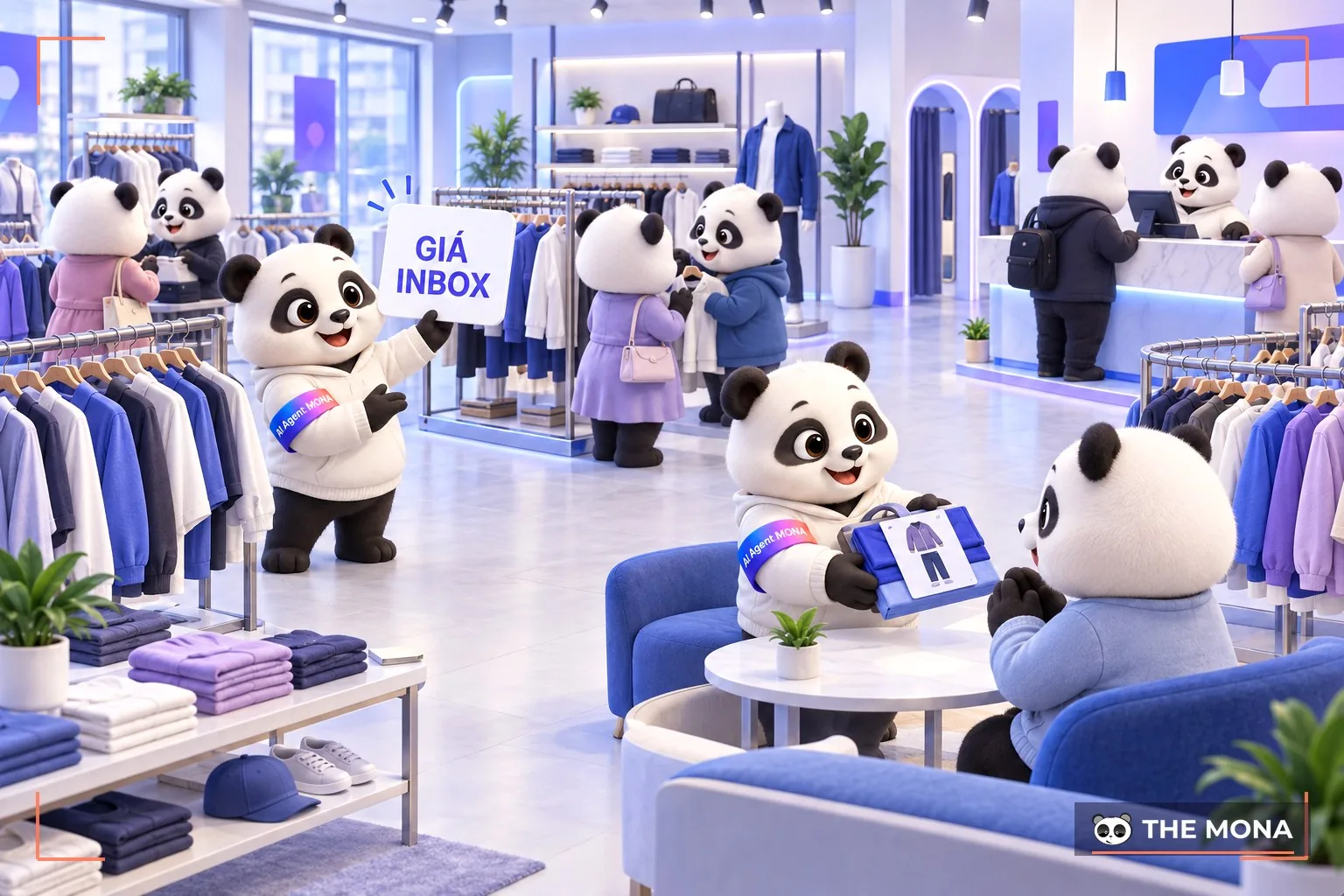
Benefits of asking customers to inbox for the price.
If public prices give buyers many benefits and more choice of goods, then what are the benefits of asking for the price by inbox when selling online? What are the benefits?
Many online shop owners are surprised when the shipper returns an item because "the customer already received the goods earlier". Or a shop has only just taken the order but already gets feedback from the customer like "the shop delivered very fast and even gave a discount, thank you", while the item the customer received is not the same quality as the shop's and does not look like it. Worse, the shop has not even shipped anything. What is the cause?
In fact, when customers see that the price and product information are complete and ready on the page, many will comment right away below: "send me one A to house number X, street Y, district Z… phone number…". Because buyers themselves make this recipient information public, rival sellers jump in and poach the customer. Within seconds of the customer's comment going up, some person X proactively inboxes them as if they were the admin or the shop owner and arranges delivery right away. This is customer poaching, and the buyer unknowingly sets up the conditions for it. The poacher spends nothing on ads and still gets the customer.
Alongside the poaching above, thanks to the "opening" that buyers unwittingly create, many buyers end up with bitter results. If the buyer gets good goods from the shop that poached them, that is lucky. In reality, many find out only after receiving the goods that they were cheated and what arrived is completely different from what they ordered. Some order a dress costing a million dong or more and get a bundle of rags.
So this protects customers' rights. Having customers inbox for the price inbox the shop keeps their information private and protects them from scams with poor-quality goods, so they do not save a few dong on shipping and lose a million in the end. Also, when quoting the price directly by inbox, customers get more specific advice about the product and detailed answers on quality and origin, and so feel more at ease about product quality.
After being sold poor-quality goods as above, many customers do not understand what happened and turn to criticize the shop, using rude language and leaving bad reviews, which damages the shop's image and reputation. Although this is the buyer's unintentional doing, the consequences are quite heavy for many shops sell online.
Customers who have messaged the shop about price or asked for advice on how to use the product are its most promising customers. The reason is that selling fanpages cannot inbox directly each person. With hundreds of millions of social network users, filtering out the people interested in your product to send information to is also a hard problem. But a fanpage can interact with customers already in its inbox, and people who have messaged directly have shown some interest in the product. So whenever the shop has a promotion or launches a new collection, the information is automatically sent by inbox to customers at their old message address. This gives online shops a sizeable pool of potential customers.

A fanpage can raise user engagement thanks to its existing inbox.
You may notice that on your news feed, besides posts from your friends, there are posts from other fanpages. These are fanpages you have liked or messaged, meaning you have interacted with them or clicked on their homepage to find out more. Facebook and other social networks can filter, by the amount and timing of your interactions, the fanpages you interact with most and show them on your news feed. This lets shops reach more people, creating room for more potential customers and a bigger sales scale.
The biggest weakness of asking customers to inbox for prices is reply speed. If a customer messages at 11 pm and nobody reads it until the next morning, most have already bought elsewhere. That is why many shops put an AI chatbot that answers messages on the front line: it quotes prices from the approved price list, records what the customer needs and hands over to sales to close the next morning.
Overall, each format has its own benefits, affecting both seller and buyer. Both public pricing and inbox for the price are chosen by many online shops, and naturally they choose based on the benefits they see.
For direct quotes, the benefit leans toward customers, the buyers, because they can choose, compare different online shops and rate the product and the shop. For inbox for the price, the benefit leans more toward the seller, since it protects reputation, builds a ready pool of potential customers and raises engagement with customers. As a result reach is also higher.
In short, depending on the product, online shop owners will either show prices publicly or ask for an inbox for the price. However, compared with inbox pricing, public pricing is preferred by customers. We hope this article helps buyers understand why many shops keep inbox pricing instead of showing prices, and understand the sellers' point of view so they do not doubt them or judge them badly. For those of you who sell online, we hope you pick the right format to grow your online business model smoothly.
')}

CEO & Founder · The MONA
The founder of The MONA built a service company of 60+ staff with 14,000+ projects delivered. Khánh Hùng shares his thinking on building self-running systems, automating a business, and the real lessons behind MONA's projects.
 1,5K




Professional website
design services
Own a website with a beautiful, 100% exclusive design and a lifetime warranty, with the ability
to expand features flexibly as your business grows, starting today!






 MONA will never sell your information or send you spam


 MONA will never sell your information or send you spam
