
 MONA OS 2.0
 Hợp tác với MONA


 Tự động hoá doanh nghiệp
 Cẩm nang SEO
 Digital Marketing
 Kinh nghiệm thiết kế website
 Hạ Tầng Server
 Giáo dục


 VI
 EN












Message us on
Zalo Official


 ProductsNew

 ProductsProducts
 Mới ra mắtKHA AI 2027App tự edit video, tự đăng mọi mạng xã hội, 2 phút mỗi ngày










 Thiết kế websiteVừa đẹp vừa thuyết phục được khách.
Dịch vụ SEOKéo về khách đang tìm đúng thứ anh chị bán.
 Tư vấn digital marketingKéo khách từ nhiều kênh, đo bằng số thật.
Quay video doanh nghiệpVideo giới thiệu công ty, nhà xưởng, đội ngũ.
 MớiDựng video AIDựng phim câu chuyện công ty bằng AI.
 Custom software developmentCRM, ERP and HRM built for your business.
 Viết AI Agent theo yêu cầuĐặt riêng một trợ lý AI cho đúng việc của mình.
 Tư vấn chuyển đổi AIĐưa AI vào vận hành của cả công ty.
NewMONA LMSManagement for centers and schools.
MONA SkillHubInternal training for company staff.
 NHTQ systemEnd-to-end China–Vietnam shipping operations.
MONA JMSManagement for gold, diamond and pawn shops.
 MONA E-LearningA website with every feature you need to sell courses.
 How to sell online courses (course)More than 30 free lessons on selling courses on autopilot.
 MONA Cloudmonacloud.vnServers to get your apps and websites running.
 MONA Basemonabase.vnPostgres database, sign-in and file storage.
 MONA Mailmonamail.vnSend OTP, order and invoice emails from your software.
 MONA Paymonapay.vnAccept bank transfers via VietQR and notify your software when the money arrives.
 MONA eInvoiceComing soonIssue e-invoices that meet tax standards.
Gấu CườiTrả lời khách 24/7 trên web, Fanpage, Zalo và thu lead cho sale.
 Gấu TeleSalesGọi điện tư vấn, chăm khách như tổng đài viên thật.
Dê CườiTư vấn và chốt đơn cho shop ngay trong khung chat.
Gấu WebmasterNhắn nhóm Zalo là website được sửa xong.
 Gấu Pháp ChếSoạn hợp đồng, rà điều khoản trong vài phút.
 Gấu Báo GiáLên báo giá đúng mẫu và gửi khách ngay.
 AI chăm sóc khách hàngTheo dõi và giữ chân khách hàng cũ.
 Gấu Tuyển DụngLọc hồ sơ, hẹn lịch, phỏng vấn ứng viên.
 Mới ra mắt
KHA AI 2027
Xây kênh chuyên gia 2 phút mỗi ngày
Quay bằng điện thoại, AI tự edit video, tự đăng lên 16 nền tảng và tự trả lời bình luận, tin nhắn.
878.195lượt xem trên kênh CEO MONA sau 35 ngày
 Anh Khánh HùngCEO MONA đang dùng mỗi ngày
Xem app làm được gì
 AI
Gấu Cười MONA ĐANG TỰ XÀITrả lời khách 24/7 trên website, Zalo OA, Messenger và thu lead về cho sale.
Dê CườiChốt đơn bán lẻ và sàn: Shopee, TikTok Shop, web. Chăm cả khách sỉ, đại lý.
Gấu WebmasterCập nhật nội dung, tối ưu SEO website mỗi ngày.
Gấu TeleSalesGọi điện tư vấn, chăm khách như tổng đài viên thật.
Gấu Tuyển DụngLọc hồ sơ, hẹn lịch, phỏng vấn ứng viên tự động.
AI chăm sóc khách hàngGiữ khách cũ, cứu lead đã rớt cho phòng kinh doanh.
Gấu Pháp ChếSoạn hợp đồng, rà điều khoản trong vài phút.
Gấu Báo GiáLên báo giá đúng mẫu, gửi khách ngay khi có yêu cầu.
 Chuyển đổi AI toàn phầnGiải pháp tổng cho doanh nghiệp, 3 lớp triển khai.
 Viết AI Agent theo yêu cầuĐặt riêng một con AI gánh đúng nghiệp vụ của bạn.
 Custom softwareCRM, ERP and HRM with built-in AI automation.
 SEO & AEO thời đại AIĐược Google lẫn AI trích dẫn, không chỉ xếp hạng.
 Kiến thức AI cho doanh nghiệpBài phân tích, hướng dẫn ứng dụng AI vào vận hành.
 Free AI courses
 AI tools at work
App mới · KHA AI 2027
Xây kênh 2 phút mỗi ngày
AI tự edit video, tự đăng mọi mạng xã hội
Free consultation, 8am–10pm every day

08 September, 2026

We guess that for the past few months you have been carrying a feeling that is hard to name: impatient, annoyed, and a little wounded, because everyone seems to be benefiting from AI except you. You open your phone in the morning to AI news, at noon an employee asks to buy another AI plan, in the evening a partner over coffee brags that their company now “does everything with AI”. Everyone says people who do not use AI will be replaced. And you are not lazy: you tried ChatGPT, bought this plan and that plan, your staff use it too, and the only thing you have not seen is the money coming back. It sounds like your own private problem, but the whole country is in the same boat: a CPA Australia survey in August 2024 found nearly 8 in 10 Vietnamese businesses said they had used AI in the past 12 months, while Cisco’s readiness index measured only 27% of Vietnamese organizations as ready to deploy AI end to end (2023 edition), and the 2024 edition shows that falling to 22%. Eight in ten have tried, fewer than three in ten are ready. The gap between those two numbers is exactly the feeling you are carrying.
We see this clearly at the consulting table. Since early 2025, customers coming to MONA have asked about “doing AI” more than “building a website”, and after many meetings like that we drew one conclusion that this whole article will spell out: AI multiplies what you already have. With customers, data and workflows, AI multiplies very fast. With nothing, AI multiplies by zero. The foundation comes first, AI second. That is why the biggest beneficiaries of AI over the past 2 years are business owners who already had a foundation, and within each profession, the seniors who know how to set the task and review the result. In this article we combine MONA customer stories with measurements from Stanford, Harvard, MIT and Google, plus what MONA has done itself, so you can place yourself in the right group and know where to start.
Quick summary: AI does not create customers, data or workflows by itself. It only multiplies what exists. Google DORA 2025 calls AI an “amplifier”: companies that run well get multiplied, companies in disarray get more disorderly. Stanford measured it on real payroll data: employment of 22 to 25 year olds in AI-exposed occupations fell 19% relative to experienced workers in the same occupations. The biggest beneficiaries of AI are business owners with customers, data and workflows already in place, plus seniors who know how to review work. If you have no foundation, build the foundation first and plug in AI second.

An AI consulting meeting at MONA usually lasts 30 minutes, and we notice that customers spend the first 20 minutes listing the tools they have already bought, which plan is still active and which one they forgot to cancel. After hearing this many times we see customers fall into exactly 3 groups, and the remaining 10 minutes are enough to tell which group will see money from plugging in AI.
The first group already has a foundation. A website that has run for years and still brings in customers every month, management software with clean customer records, and clear ownership of who takes orders, who quotes and who approves. The owner of a 12-branch spa chain in Ho Chi Minh City came to MONA with a laptop open to her management software, holding 40,000 customer records with each person’s treatment history. She asked whether AI could be plugged into appointment reminders and treatment suggestions. We nodded the moment we saw the data, because AI had something to read and somewhere to plug in, and appointment reminders were being run by 6 receptionists calling by hand every day. One side detail we remember: she also brought a handwritten notebook tracking the no-show rate each month, ruled with a ballpoint pen, kept for 3 years. For someone like that, plugging in AI pays off right away, because AI just does faster what she has already been doing steadily.
The second group has customers and money, but their data is scattered across Zalo, notebooks and Excel files, with each person holding their own copy. The owner of a 60-worker woodworking shop wanted AI to quote automatically from drawings, but the timber price list lives in the accountant’s head and past orders sit in the Zalo of 4 salespeople. AI has nothing to read. For this group we usually advise building the foundation first, typically 6 to 12 months: gather data into one piece of software, rebuild the website properly, draw the workflows clearly, and only then talk about AI. It sounds slow, but it is the shortest road we know.
The third group comes out of fear. Fear that competitors are showing off AI, fear of falling behind, while their website is still an intro page built in 2018 that nobody visits, there is no customer data, and the sales process depends on the memory of one or two people. One sales manager arrived with budget in hand demanding a chatbot for the fanpage, and when we asked how many messages the fanpage gets per day, he said about 3. For this group we say it straight: buying AI now is buying one more plan that nobody will use. Saying so costs us a customer in the short term, but saves losing one in the long term.
The same tool at the same price, and group one sees money within weeks while group three does not. Why? The answer lies in the nature of AI, which we cover in the next section.

For non-technical readers: AI today is good at one thing, doing faster and in greater volume what you already know how to do. It does not create customers by itself, it does not generate data by itself, and it does not know by itself what rules your company uses to quote. If you have 1,000 past customers in your system, AI writes 1,000 individual care messages in one morning. If you have 0 customers in your system, who is AI writing to? That is multiplication, and zero times anything is still zero.
There are measurements behind what we say. The Google DORA 2025 report, a survey of 4,867 software professionals in more than 100 countries, found that 90% of respondents already used AI at work, and concluded with a line we think holds for every industry, not just software: AI’s main role is as an amplifier, enlarging the strengths of organizations that do well and enlarging the mess of organizations that struggle. Amplification does not pick sides. A small-scale survey from MIT NANDA in mid-2025, with only 52 interviews and 153 responses so read it with caution, points the same direction: 95% of organizations could not yet measure a single dong from generative AI, and only 5% of projects really made money. More notable than the 95% is the reason: successful projects are those attached to a step that runs every day, and projects bought from outside partners reach production about 67% of the time, while in-house builds do so only about 33%.
We see exactly that at the consulting table. The owner of a dental clinic in group three bought a customer-answering chatbot plan for 8,000,000 VND a year and switched it off after 2 weeks on the fanpage. The clinic had no unified price list for the bot to read and no consultation script written down, so the bot answered one way, the receptionist another, and a customer asking three times got three prices. The bot was not wrong. It multiplied exactly what the clinic had, which is disorder.
So what is the “what you already have” that AI multiplies? We boil it down to 4 things, covered in the next section.

First are customers and a channel that brings them in. A website with steady visitors, a fanpage with people messaging, a list of past customers with correct phone numbers. Without customers AI has no one to sell to, however well it writes. A number we like to cite so you can see you are standing in a very large crowd: according to the Ministry of Planning and Investment, as of December 31, 2024 the country had 940,078 active enterprises, nearly 98% of them small and medium, and by October 2025 the country had passed 1 million enterprises, with 195,100 new ones established in 2025 alone. Resolution 68 also sets a goal of 2 million enterprises by 2030. In a crowd that size, anyone with an existing customer channel is already far ahead, and the most durable customer channel we know is still a website that ranks in search, because it runs 24 hours without paying for each click.
Second is clean data. Purchase history, customer records, inventory and contracts must sit in one place and be recorded correctly. AI reads data to guess intent, and with junk data it guesses wrong, very confidently. Third is clear workflows: who takes orders, who quotes, who approves, how long a reply may take. AI can only plug into a step that has a name, and we have never seen anyone plug AI into something vague called “the company”. Fourth is money and people to sustain the first 6 to 12 months, because AI plugged in during month one usually shows no numbers yet and needs people to tune it and more data to feed it.
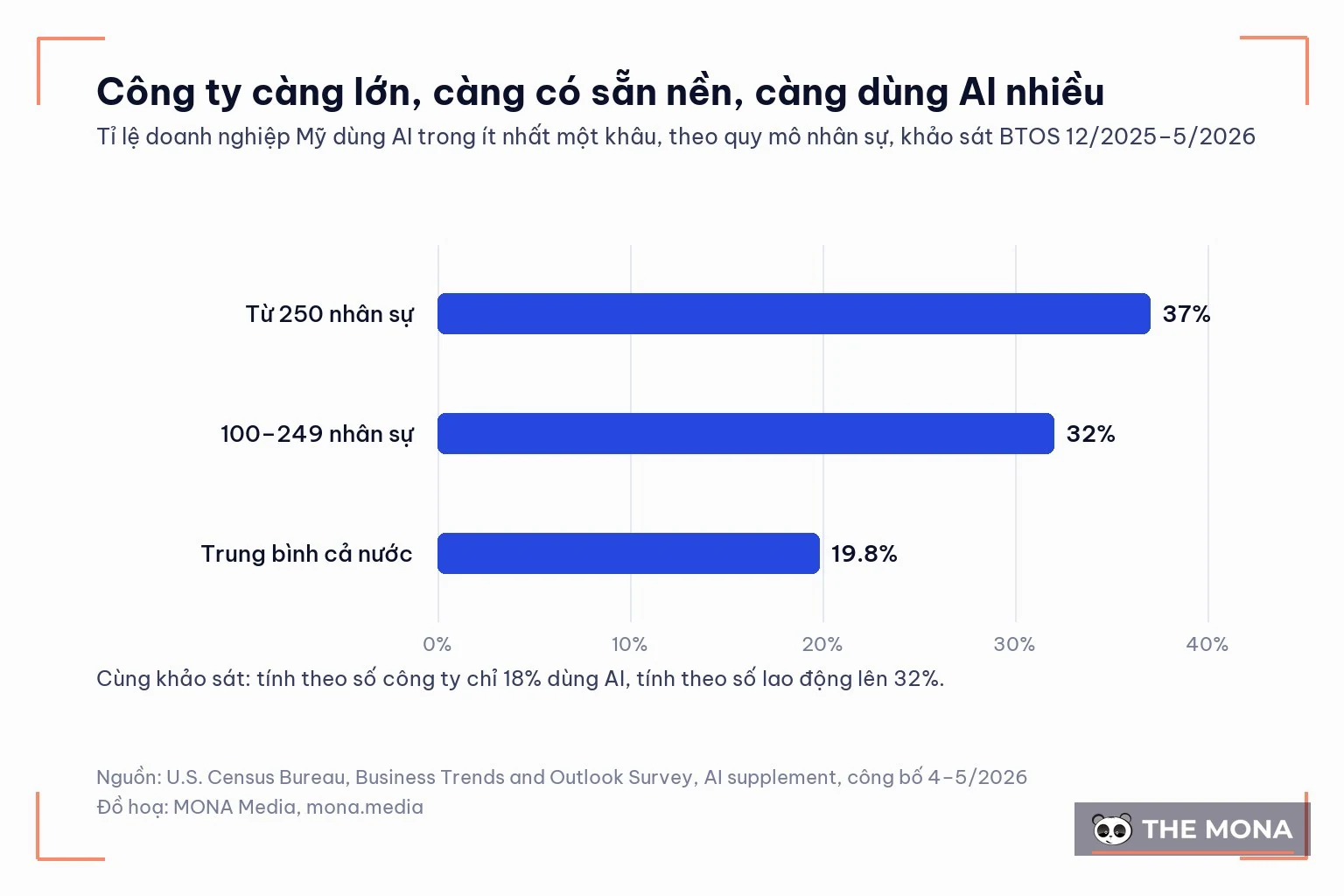
The larger the company, the more of these four things it already has, and the numbers show they use AI much more. The US Census Bureau measured in its BTOS survey published in May 2026: companies with 250 or more employees using AI in at least one step are at 37%, companies with 100 to 249 employees at 32%, while the national average is only 19.8%. In the same survey, counted by number of companies, 18% use AI, and counted by number of workers it rises to 32%, meaning AI is concentrating where people, data and workflows already exist. The report McKinsey State of AI 2026, which surveyed 1,719 companies in 97 countries, offers another angle: 37% say AI has contributed to pre-tax profit, but only 6% are true high performers, and about 75% of that group redrew their workflows before plugging in AI, compared with about 25% of the rest. Workflow goes first, AI second. That is what the numbers say, not us.
We often start a consulting session with 4 questions about exactly these 4 things, before talking about AI at all. A logistics company director in Dong Nai opened his 5-year shipping data file right away, every column as it came, and we could sketch the AI step in the very first session. Another customer arrived with four empty boxes, and we advised building the foundation first and meeting again in six months. Those who already have a foundation eating first is nothing new: history has repeated at least 3 times, always with the same script.
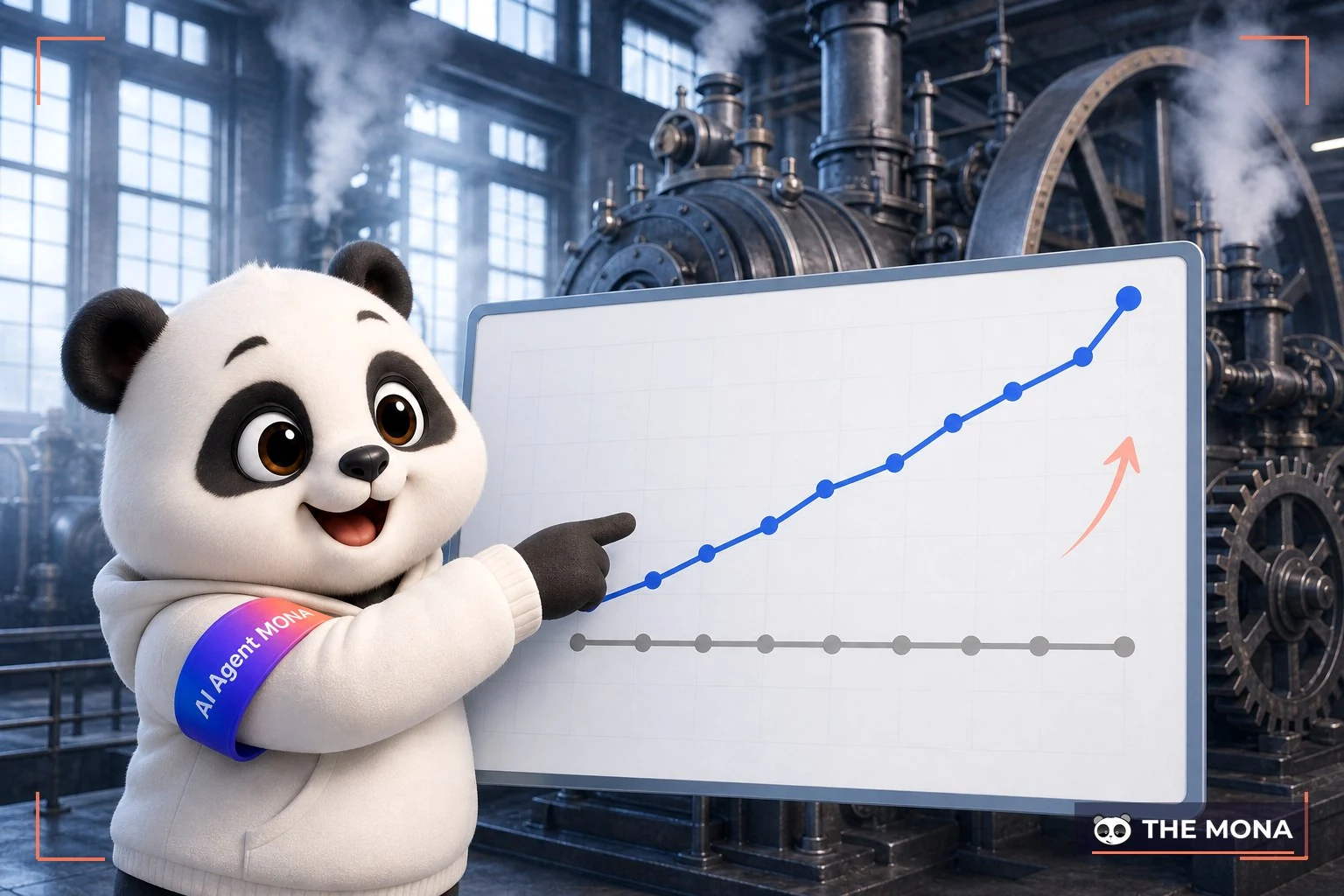
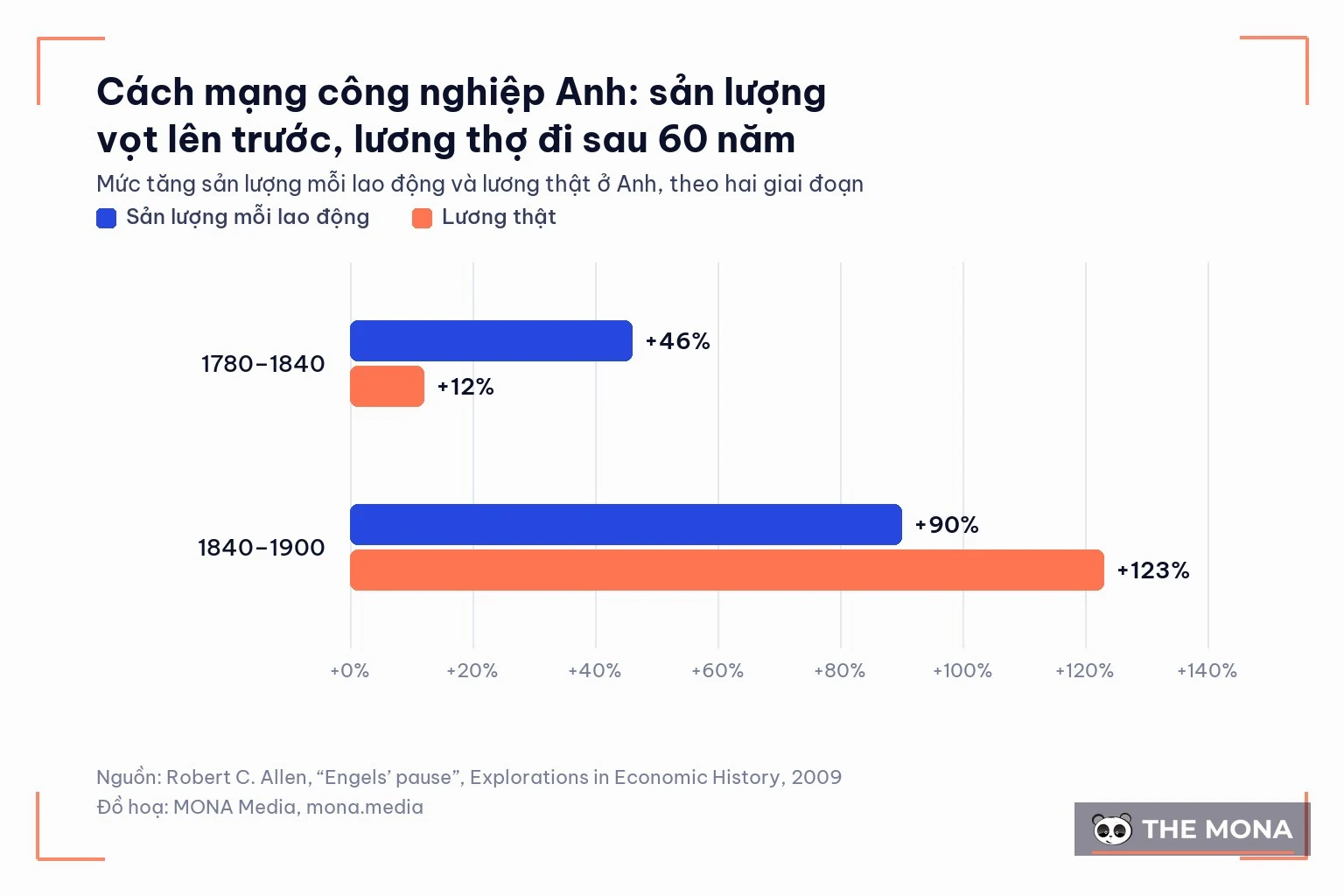
The first time was the steam engine in Britain. Economic historian Robert Allen, in a 2009 paper titled “Engels’ pause”, measured that from 1780 to 1840, output per worker in Britain rose 46% while workers’ real wages rose only 12%. Where did the difference go? Into factory owners’ pockets: capital’s share of national income rose from about 20% to over 40%, and the profit rate from about 10% to over 20%. Only in the period 1840 to 1900 did wages catch up, with output up 90% and wages up 123%. In the first sixty years of the steam engine, those who already owned factories ate first, skilled mechanics who knew how to tune the machines ate next, and hand weavers lost. Whoever had the foundation ate first, and for quite a while.
The second time was electricity. Economist Paul David, in his 1990 paper on “the dynamo and the computer”, showed that American factories took about 40 years, from the 1880s to the 1920s, before they saw productivity gains from electricity. The reason is very ordinary: for the first few decades people just removed the steam engine and attached an electric motor while keeping the production line exactly as before. Only when the next generation of factory owners rebuilt the factory around electricity, placing a small motor at each machine instead of one big drive shaft, did productivity jump. New technology pays those who are willing to rearrange their work, not those who only swap the machine. This matches exactly what McKinsey measured in the section above: 75% of high performers redrew their workflows first.
The third time was the internet, and this time we were there. After years of building websites for factories and shops, we saw that online orders flowed in steadily only for those who already had a warehouse, a delivery team and wholesale customers they knew beforehand, with the website simply opening another door for that foundation. Those who built the website first and then went looking for goods and customers rarely made it to year two. Three major technologies, one script: those with a foundation eat first, skilled craftspeople who know how to steer the technology eat next, and the reward comes after a wait rather than falling into the hands of whoever just picked up the machine. With AI, that script is repeating right in our own trade, in writing code.

Programming is where AI moves fastest, so it is also where winners and losers are easiest to see. Y Combinator’s W25 batch, according to Jared Friedman in March 2025, had about 25% of startups with 95% of their code written by AI. Boris Cherny, who built Claude Code at Anthropic, said about 80 to 90% of that tool’s own code was written by Claude, and by mid-2026 he had not typed a line himself in 8 months. Where does Vietnam stand? According to The Anthropic Economic Index, February 2026 edition, Vietnam ranks 2nd in the world for the share of AI use in software development, 42.1%, behind only India at 45.2%. Vietnamese developers are holding AI more than almost anywhere in the world.
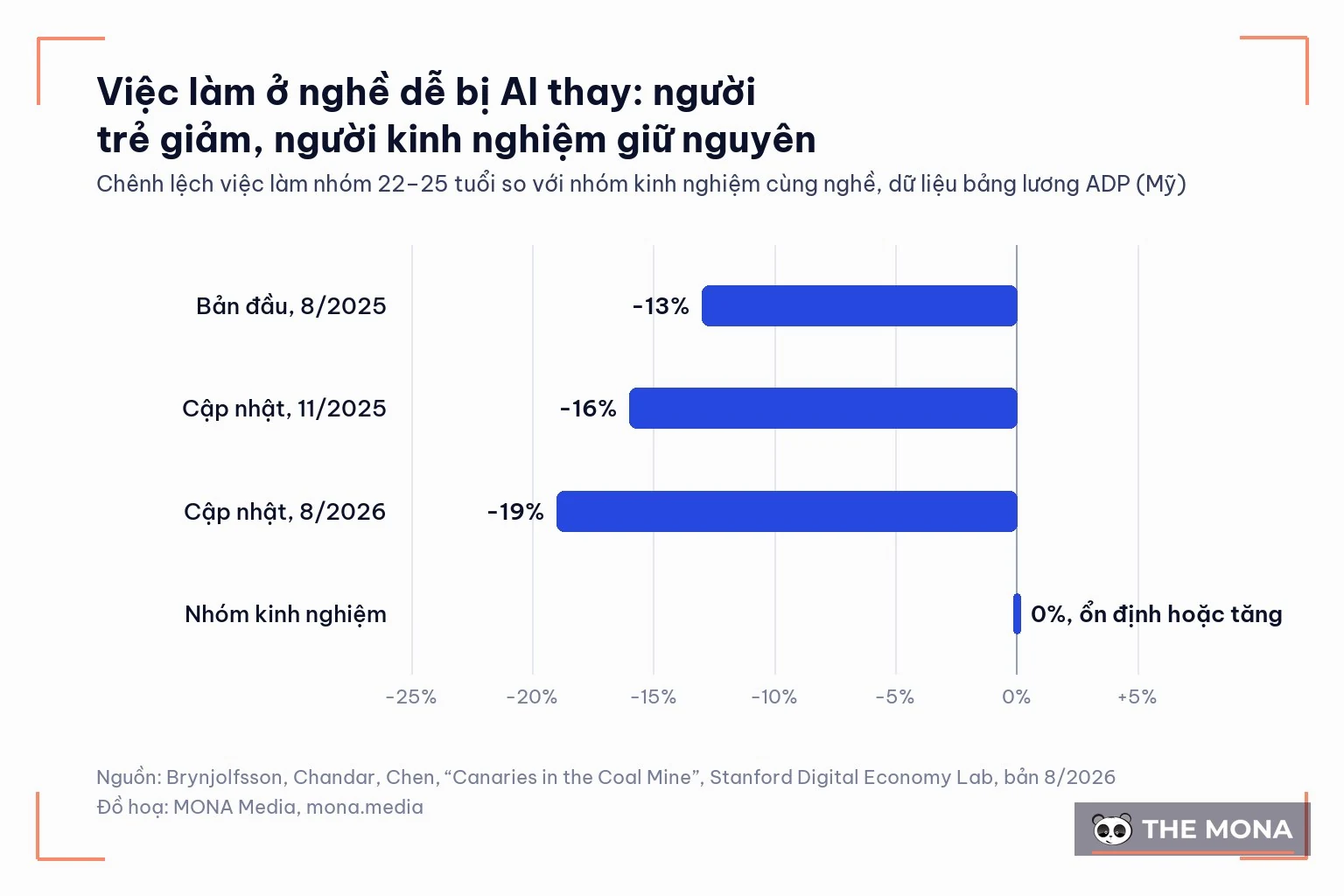
Holding a lot, but who makes money, and how far does AI replace programmers? Stanford’s “Canaries in the coal mine” study measured on ADP’s real payroll data across more than 730 occupations: the early August 2025 version found employment of 22 to 25 year olds in AI-exposed occupations down 13% relative to experienced workers in the same occupations, the August 2026 update raises that to 19%, while the experienced group stayed stable or grew. The mechanism is also worth noting: companies are not laying off young people, they have simply stopped hiring. Another Harvard study, “Generative AI as Seniority-Biased Technological Change”, using data on about 62 million workers at 285,000 US companies, found that companies adopting generative AI cut junior hiring by about 9% over 6 quarters, while senior headcount stayed unchanged. The SignalFire 2026 hiring report measured at big tech companies: new-graduate hiring down about 65% compared with 2019, and at early-stage startups down about 76%. Three sources, one direction.
At this point you may think seniors holding AI are naturally faster. The measurements say otherwise. METR, July 2025, had 16 veteran open-source developers do 246 tasks on projects they knew well, and the group using AI was 19% slower, even though beforehand they had predicted being 24% faster and afterward still believed they were 20% faster. A follow-up in February 2026 with newer tools still gave no firm result, and METR itself called it an unreliable signal. We read both and drew one lesson for our trade: AI does not make anyone faster by itself. What decides is how work is organized around it, how clear the task is, how it is reviewed and who is accountable when it is wrong. The Stack Overflow 2025 survey of about 49,000 developers also shows veterans are more clear-eyed: 84% of respondents use AI, but 46% do not trust its accuracy, 66% are most frustrated by AI that is “almost right but not quite”, and the group with over 10 years of experience has the highest share of “highly distrust”, at 20.7%. They distrust it, so they review carefully. They review carefully, so they make money.
At MONA today, the way builds software works is that seniors write the task, which we call spec, clear enough for AI to execute, AI generates code, and then seniors review it section by section and catch errors. A junior reading the same code sees that it runs and calls it done, while a senior spots three places that will break: where input data is not validated, a security hole at security, and where 200 people clicking at once will hang it. We once took over fixing an order management system that a young developer had built with AI for a customer at a very low price. The demo with 5 users looked great, and on day one with 200 employees using it for real, it went down, and the final cost of fixing it was higher than rebuilding from scratch. They were not lazy, they just did not yet have the eye to know where this code was wrong. That eye is something AI cannot sell yet, and it is not limited to coding.

The claim that “AI levels the playing field between newcomers and experts” is real, but only within one zone. In a 2023 study, Harvard Business School together with BCG “Navigating the Jagged Technological Frontier”gave 758 BCG consultants 18 tasks to do with GPT-4. For tasks within AI’s capability, AI users completed 12.2% more tasks, 25.1% faster, at 40% higher quality, and the below-average group improved by as much as 43% while the above-average group improved only 17%. That makes it sound like AI is lifting weaker people up to the level of strong ones. But for tasks outside AI’s capability frontier, people relying on AI got the right answer 19 percentage points less often than people working on their own. Where that frontier lies, AI will not tell you. Only someone who has done the work for a long time knows. The study “Generative AI at Work” by Brynjolfsson, Li and Raymond, published in the Quarterly Journal of Economics in 2025, followed 5,172 customer support agents across more than 3 million chats: productivity rose 15% on average, about 30% for new agents, while skilled veteran agents were only slightly faster and saw quality dip slightly. The Stanford AI Index 2026 summarizes by task type: gains of about 14 to 15% in customer support, 26% in software development, 50% in marketing, largest for structured work and smaller for work that needs deep reasoning.
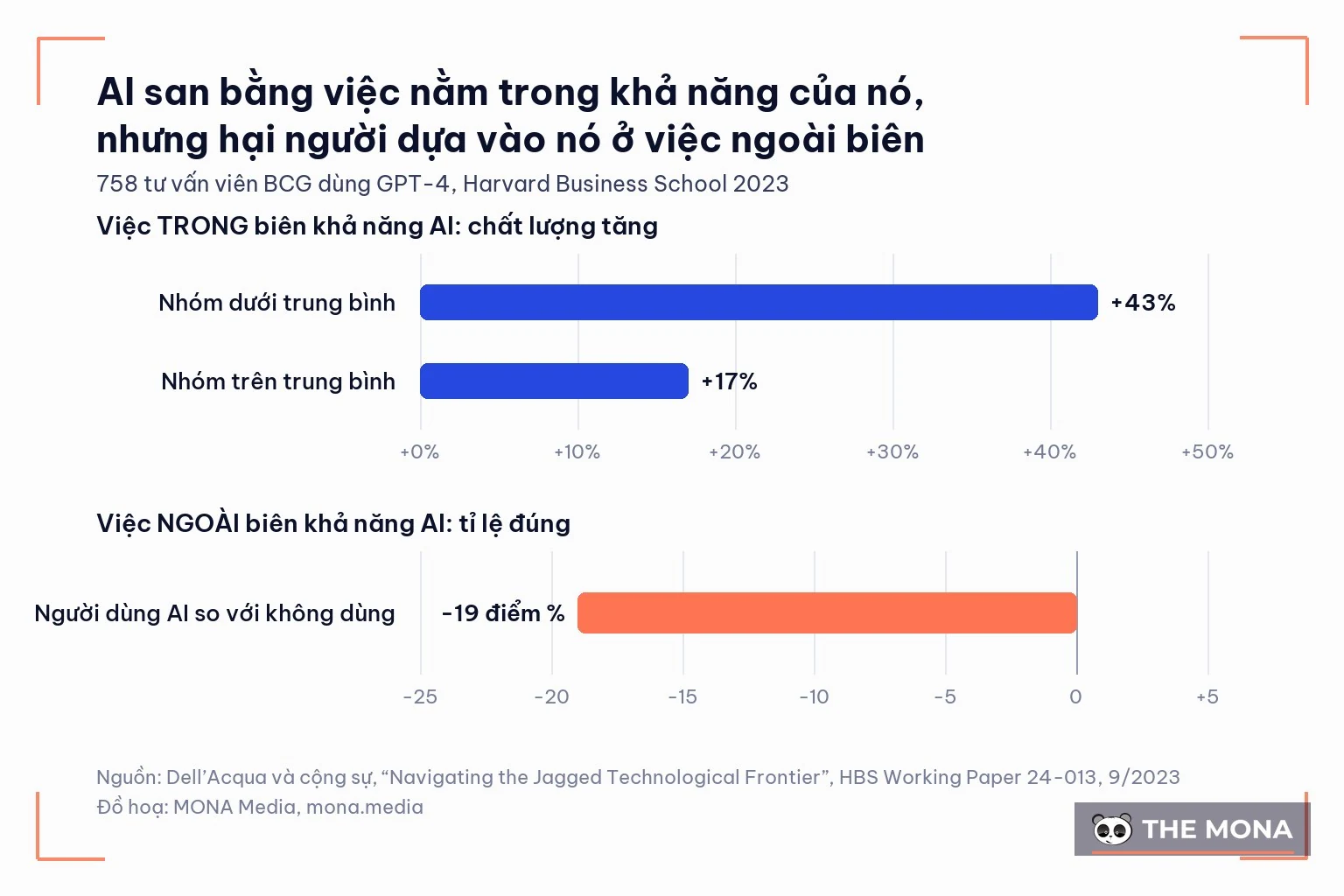
Reading these numbers as a business owner gives a simple conclusion: repetitive, templated work can now be done by anyone, and AI does it cheaply. When execution gets cheap, money flows to two places. One is people who have customers, meaning business owners with a customer channel and data. The other is people who know how to review, meaning seniors who know which work sits inside AI’s frontier, which sits outside, and which of the 20 versions AI produced is the one that makes money. The two 2023 studies measure the gap within a fixed task, and the 2025 and 2026 studies from Stanford and Harvard measure the structure of the labor market. The two kinds of numbers do not contradict each other: within each task AI lifts newcomers, but in the market companies stop hiring newcomers, because the work newcomers used to do has become cheap.
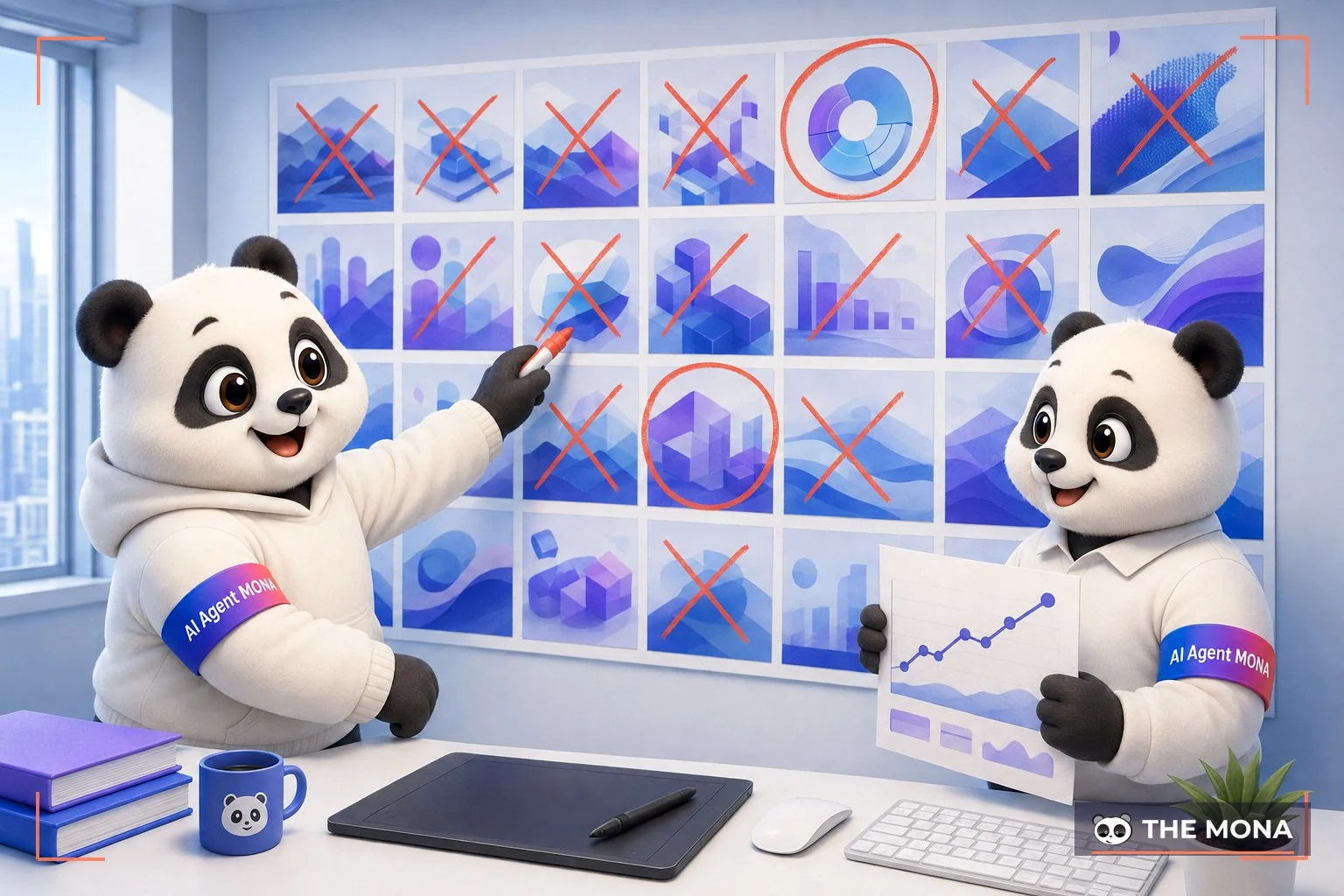
Our design team now lets AI produce 20 layout options for a home page in about 10 minutes, something that took 2 days two years ago. But picking the right 2 to show the customer, and explaining why the other 18 are wrong, wrong for the pharma industry’s taste, wrong selling emphasis, broken diacritics in the type, is the job of a designer who has done more than 100 projects. Marketing is the same: AI writes 50 ad variants in one session, but reading the numbers after 3 days of running to know which ad is carrying the load and which is burning money is still the work of a marketer who has burned enough money to be afraid. AI does the hands, and the eyes still need a person. That eye cannot be bought yet. That completes the part about people with a foundation and with a craft. We owe honesty to the rest.
If you are new to the field, or your company falls into the third group at the top of this article, this is the part where we do not sugarcoat things. IMF, January 2024, estimated that nearly 40% of jobs worldwide are exposed to AI, about 60% in advanced economies, 40% in emerging markets and 26% in low-income countries, and warned plainly: workers whose jobs are complemented by AI will see disproportionately higher income, and capital returns will flow to those who are already rich, so AI may widen inequality. Anthropic's measurements of how people use AI point the same way: “hand the whole task over” usage rose from 27% in late 2024 to 39% in 2025, and through the enterprise API up to 77% is automation rather than assistance. If a task can be handed fully to AI, the company no longer needs to hire someone to do it. There is no magic pill. But there are 2 paths, and we think both are workable.
Path one, for people new to the field: use AI as a coach, not as someone who does the work for you so you can hand it in. The difference is this: when a junior at MONA gets an assignment, they write it themselves first, then have AI grade it, ask why a part is wrong, fix it by hand, and only then compare with the version AI wrote. That is 2 times slower in the first 3 months, but after 1 year they know what a senior's eye looks for, and we believe this generation reaches senior in 2 to 3 years instead of the 5 to 7 years their predecessors needed, because someone is explaining things hands-on 24 hours a day. The trap is the opposite direction: using AI to avoid learning, handing work in fast, getting lots of praise, and 2 years later still being a junior in a market where junior openings have dropped 65%. Nobody fires them. Nobody just calls.
Path two, for companies without a foundation: do things in the right order. Customer channels first, then gather data into one software system, map the process, and only then add AI. A factory director with 40 mechanical workers in Binh Duong came to MONA last year asking to “build AI for quoting.” When we looked at the factory, quotes were sitting in 3 notebooks and in the heads of 2 engineers. He agreed to follow the right order: rebuild a website that industrial customers come to with inquiries, then build internal quoting software have the 2 engineers enter material norms in one place, run it for 8 months to collect enough data, and only then add AI to read drawings and suggest prices. Now a quote comes out in 2 hours instead of 2 days, but for the first 8 months he had no AI at all, only a foundation. We dare advise clients to go that slowly because MONA took exactly the same path itself.

MONA was founded in 2016 and has since built over 14,000 projects websites and software projects, with 85% of clients continuing to use our services. Our foundation is the customer channel: since 2019, SEO has been the channel that brings in the most clients, and today marketing brings in over 4,000 leads a month, most of them finding us on their own through search. The second foundation is data: records of thousands of projects, questions clients have asked again and again over many years, and a shared codebase. The third foundation is process: account managers take the brief, engineers build to spec, then testing, handover and warranty. Those three come first, AI is added afterward, and it is added to each stage rather than standing alone.
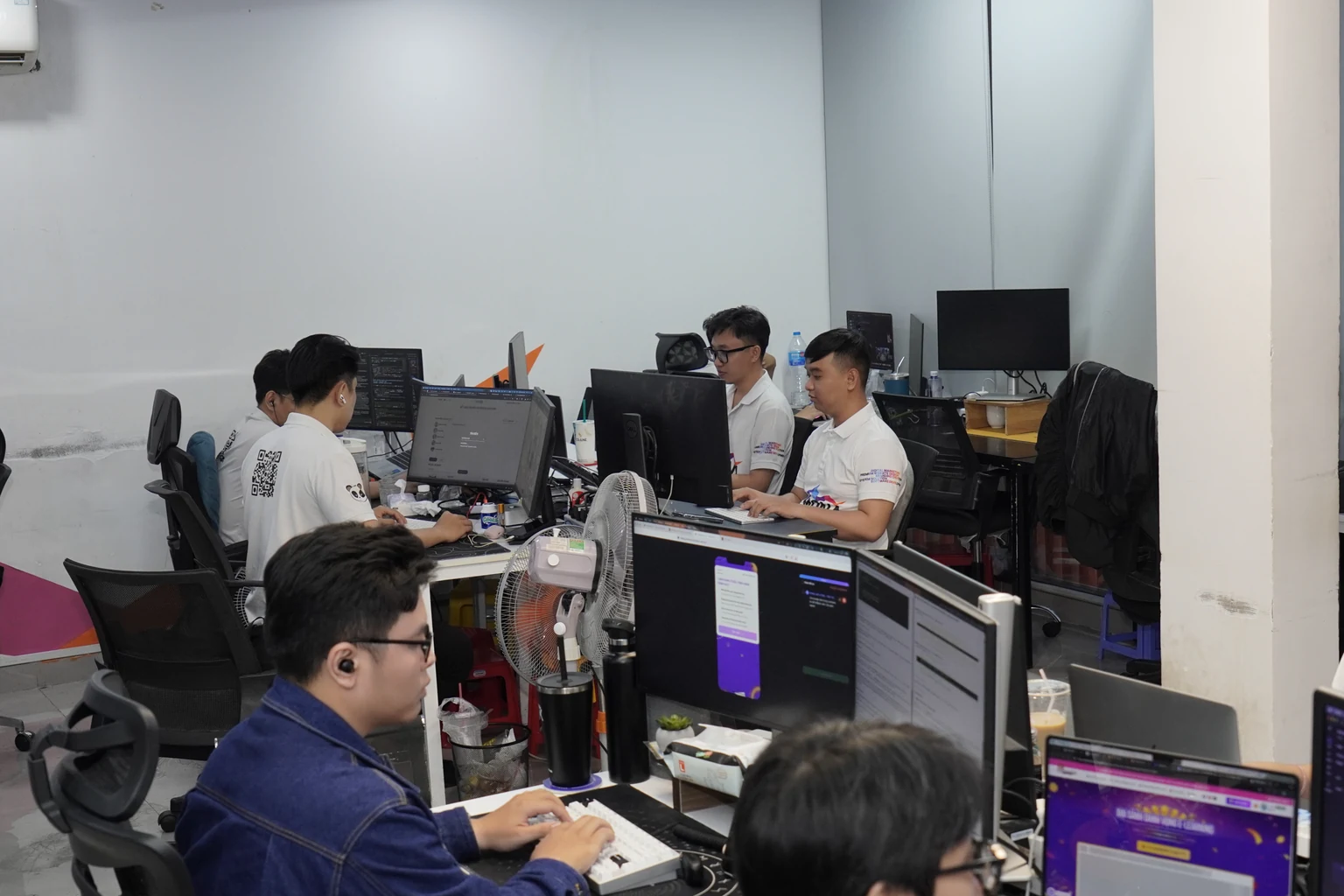
For the front desk that answers inquiries, we added a bot Gấu Cười that answers chat and leads 24 hours a day, built on questions collected over many years, so when a customer asks “how much is an online store website,” the bot knows what to ask back before quoting. For SEO, we wrote our own set of 21 tools at congcuseo.mona.media so the SEO team can check client websites faster instead of buying 5 overseas tool subscriptions. For content, we built an article-writing engine with a person reviewing every post before it goes live, and the article you are reading went through that engine before reaching the final editor. For software development, we switched to that treats the spec as the asset, where AI generates code and seniors review it. In August 2026 MONA was accepted into the OpenAI Select Partner, and we think that came from how we add AI to real work, not from buying lots of subscriptions. Every AI at MONA stands on a stage that has run for years. That is the whole secret.
We say this so you can see that benefiting from AI at MONA is nothing magical. It is the same as the spa owner with 12 branches at the top of this article: with 40,000 records already in hand and 6 receptionists already calling by hand, AI has something to multiply. If you have read this far and see yourself in group one or group two, we have a 30-minute session to review exactly that foundation: how many clients your website brings in each month, how many places your customer data sits in, which stage of the process breaks, and then point to the first stage worth adding AI to. No package to sell, just 3 questions answered. Call 1900 636 648, and say “review the foundation for AI” and we will know what you mean. As for how to start on your own this week, see the next section.
First, call a few department heads into a 1-hour meeting, list the 5 most repetitive stages in the company, and pick the stage with the most data rather than the one that sounds the most impressive. Based on what we see with MONA clients, using AI in business almost always starts with quoting, re-engaging past customers, or answering warranty questions, because these three stages already have thousands of records of history. Second, check whether the data for that stage is clean, in a very manual way: take the 100 most recent customer records and count how many have a correct phone number and how many have a purchase history. If under 70% are clean, clean the data first and do not add anything yet. Third, add AI to that one stage only, and measure before and after over 30 days with a single number: time to produce a quote, the rate at which past customers reply, or the number of repeat orders. One stage, one number, 30 days.
There is one thing we want to say on maintenance grounds rather than as criticism: for a business-critical stage that touches money and orders, do not assemble it yourself with drag-and-drop tools. Drag-and-drop suits light personal work, with one user, where you fix your own mistakes. A stage with heavy traffic running day and night breaks when a third party changes its interface, one misconfigured field stops the whole flow, orders drift past with nobody noticing to fix them, and the more flows you have, the more people you need to watch them. That stage needs custom-built software that can handle the load, with data inside your own system and a team accountable when something fails.
We often make clients pick exactly one stage and see numbers before opening the next, and a case we like to tell is a director of a pharmaceutical distribution company with 30 sales staff. She added AI to the stage that produces quotes for pharmacies and measured for exactly 30 days: time to produce a quote dropped from 2 days to 2 hours, and the number of quotes sent tripled without hiring anyone. Only then did she ask to open the second stage. Remember the multiplication from the top of the article: she already had 2,000 pharmacies in her system, so AI had something to multiply, and anyone who does not have those 2,000 pharmacies yet should still start by gathering them. If you want to know which stage in your company has enough data to add AI right away, send a few lines describing the stage that is drowning in work to info@themona.global, or call 1900 636 648. Within 2 working days, a MONA engineer will answer you with exactly 3 answers: can AI be added to this stage yet, what data to gather first, and if we do it, how long until you see numbers. If it cannot be done yet, we will say not yet, along with what to do first, and we will not take it on blindly.
Who benefits most from AI in a business?
Business owners who already have a customer channel, clean data and a clear process, because AI multiplies exactly those three things. Within each department, experienced people who know how to set the task and review the results. McKinsey 2026 found that 75% of high-performing teams redrew their processes before adding AI. Have a foundation, then you get a share.
Should a small business with no data buy AI right away?
Not yet. Buying now just adds one more plan nobody uses, because AI has no data to read. Follow the right order: build a customer channel, gather data into one piece of software, draw the workflows, which takes about 6 to 12 months, then plug AI into one step and measure for 30 days.
Will AI replace programmers?
It replaces the repetitive work of newcomers: hiring of new graduates at big tech companies is down about 65% from 2019, and employment of 22 to 25 year olds in AI-exposed occupations is down 19%. Senior programmers keep their jobs because they write the task, review the code and know where things will break.
What should newcomers learn so AI does not replace them?
Learn to review, not just to do. Do it yourself first, have AI grade it, ask why it was wrong, fix it by hand, and only then compare with the AI version. People who take this path reach senior in 2 to 3 years. People who hand everything to AI to submit quickly are still in the same place 2 years later.
Which step should I start plugging AI into?
Start with the most repeated step that has the most data, usually quoting, caring for past customers or answering inquiries. Check the 100 most recent records to see whether the data is more than 70% clean, plug AI into exactly one step, measure one number over 30 days, and only then open the next step.
Back to the 3 groups of clients at the top of the article. Group one has a foundation, and adding AI shows numbers within weeks, like the spa owner with 40,000 records. Group two has customers and money but data scattered everywhere, and needs 6 to 12 months to gather it in one place before adding AI, like the woodworking workshop owner with 60 craftsmen. Group three has nothing yet, and buying AI now means buying one more subscription nobody uses. Those three groups are also three paths, the only difference being that now you know where you stand, and you know multiplication only pays the person who has a number in front of the multiplication sign.
We do not think this is bad news, because the people who benefit from AI are always the ones willing to build the foundation, and anyone can build a foundation. All three things AI needs, customer channel, data and process, are things you can build yourself. They take time but no miracles, and whoever finishes the foundation gets first pick with every wave of technology, from the steam engine to today. MONA's part is to sit with you at both ends: building the foundation for those who do not have one, and adding AI to each stage for those who do. Either path starts with one stage, one number, 30 days. As for where the whole country stands on that road, and how far each company size should go in 12 months, we continue in AI in Vietnamese businesses: where we are, where to go, and why you cannot afford to miss it this time in the article on you could miss digital transformation, but AI transformation is mandatory. As for AI, it only does multiplication, and multiplication is always fair: whatever you have, it multiplies.
The MONA Group, founded in 2016, has delivered over 14,000 website and software projects, and 85% of clients keep using our services. Three main areas: Mona.Media (web design, SEO), Mona.Software (custom-built software) and Mona.Host (server infrastructure). Hotline 1900 636 648, email info@themona.global. If you want to know which group your company is in and which stage can benefit from AI first, call us, and within 30 minutes you will have an answer.

CEO & Founder · The MONA
Founder of The MONA, who built a services company of 60+ staff with 14,000+ projects delivered. Khánh Hùng shares how he thinks about building systems that run themselves, automating a business, and the real lessons from delivering projects at MONA.
 283




Professional website
design services
Own a website with a beautiful, 100% exclusive design and a lifetime warranty, with the ability
to expand features flexibly as your business grows, starting today!






 MONA will never sell your information or send you spam


 MONA will never sell your information or send you spam
