
 MONA OS 2.0
 Partner with MONA


 Tự động hoá doanh nghiệp
 Cẩm nang SEO
 Digital Marketing
 Kinh nghiệm thiết kế website
 Hạ Tầng Server
 Giáo dục


 VI
 EN















Message us on
Zalo Official


 ProductsNew

 ProductsProducts
 Mới ra mắtKHA AI 2027App tự edit video, tự đăng mọi mạng xã hội, 2 phút mỗi ngày










 Website designLooks good and wins customers over.
SEO servicesBrings in customers searching for exactly what you sell.
 Tư vấn digital marketingKéo khách từ nhiều kênh, đo bằng số thật.
Corporate video productionVideos introducing your company, factory and team.
 NewAI video productionCompany story films made with AI.
 Custom software developmentCRM, ERP and HRM built for your business.
 Viết AI Agent theo yêu cầuĐặt riêng một trợ lý AI cho đúng việc của mình.
 Tư vấn chuyển đổi AIĐưa AI vào vận hành của cả công ty.
NewMONA LMSManagement for centers and schools.
MONA SkillHubInternal training for company staff.
 NHTQ systemEnd-to-end China–Vietnam shipping operations.
MONA JMSManagement for gold, diamond and pawn shops.
 MONA E-LearningA website with every feature you need to sell courses.
 How to sell online courses (course)More than 30 free lessons on selling courses on autopilot.
 MONA Cloudmonacloud.vnServers to get your apps and websites running.
 MONA Basemonabase.vnPostgres database, sign-in and file storage.
 MONA Mailmonamail.vnSend OTP, order and invoice emails from your software.
 MONA Paymonapay.vnAccept bank transfers via VietQR and notify your software when the money arrives.
 MONA eInvoiceComing soonIssue e-invoices that meet tax standards.
Gấu CườiTrả lời khách 24/7 trên web, Fanpage, Zalo và thu lead cho sale.
 Gấu TeleSalesGọi điện tư vấn, chăm khách như tổng đài viên thật.
Dê CườiTư vấn và chốt đơn cho shop ngay trong khung chat.
Gấu WebmasterNhắn nhóm Zalo là website được sửa xong.
 Gấu Pháp ChếSoạn hợp đồng, rà điều khoản trong vài phút.
 Gấu Báo GiáLên báo giá đúng mẫu và gửi khách ngay.
 AI chăm sóc khách hàngTheo dõi và giữ chân khách hàng cũ.
 Gấu Tuyển DụngLọc hồ sơ, hẹn lịch, phỏng vấn ứng viên.
 Mới ra mắt
KHA AI 2027
Xây kênh chuyên gia 2 phút mỗi ngày
Quay bằng điện thoại, AI tự edit video, tự đăng lên 16 nền tảng và tự trả lời bình luận, tin nhắn.
903.036lượt xem trên kênh CEO MONA sau 37 ngày
 Anh Khánh HùngCEO MONA đang dùng mỗi ngày
Xem app làm được gì
 AI
Gấu Cười MONA ĐANG TỰ XÀITrả lời khách 24/7 trên website, Zalo OA, Messenger và thu lead về cho sale.
Dê CườiChốt đơn bán lẻ và sàn: Shopee, TikTok Shop, web. Chăm cả khách sỉ, đại lý.
Gấu WebmasterCập nhật nội dung, tối ưu SEO website mỗi ngày.
Gấu TeleSalesGọi điện tư vấn, chăm khách như tổng đài viên thật.
Gấu Tuyển DụngLọc hồ sơ, hẹn lịch, phỏng vấn ứng viên tự động.
AI chăm sóc khách hàngGiữ khách cũ, cứu lead đã rớt cho phòng kinh doanh.
Gấu Pháp ChếSoạn hợp đồng, rà điều khoản trong vài phút.
Gấu Báo GiáLên báo giá đúng mẫu, gửi khách ngay khi có yêu cầu.
 Chuyển đổi AI toàn phầnGiải pháp tổng cho doanh nghiệp, 3 lớp triển khai.
 Viết AI Agent theo yêu cầuĐặt riêng một con AI gánh đúng nghiệp vụ của bạn.
 Custom softwareCRM, ERP and HRM with built-in AI automation.
 SEO & AEO thời đại AIĐược Google lẫn AI trích dẫn, không chỉ xếp hạng.
 Kiến thức AI cho doanh nghiệpBài phân tích, hướng dẫn ứng dụng AI vào vận hành.
 Free AI courses
 AI tools at work
App mới · KHA AI 2027
Xây kênh 2 phút mỗi ngày
AI tự edit video, tự đăng mọi mạng xã hội
Free consultation, 8am–10pm every day

18 March, 2023
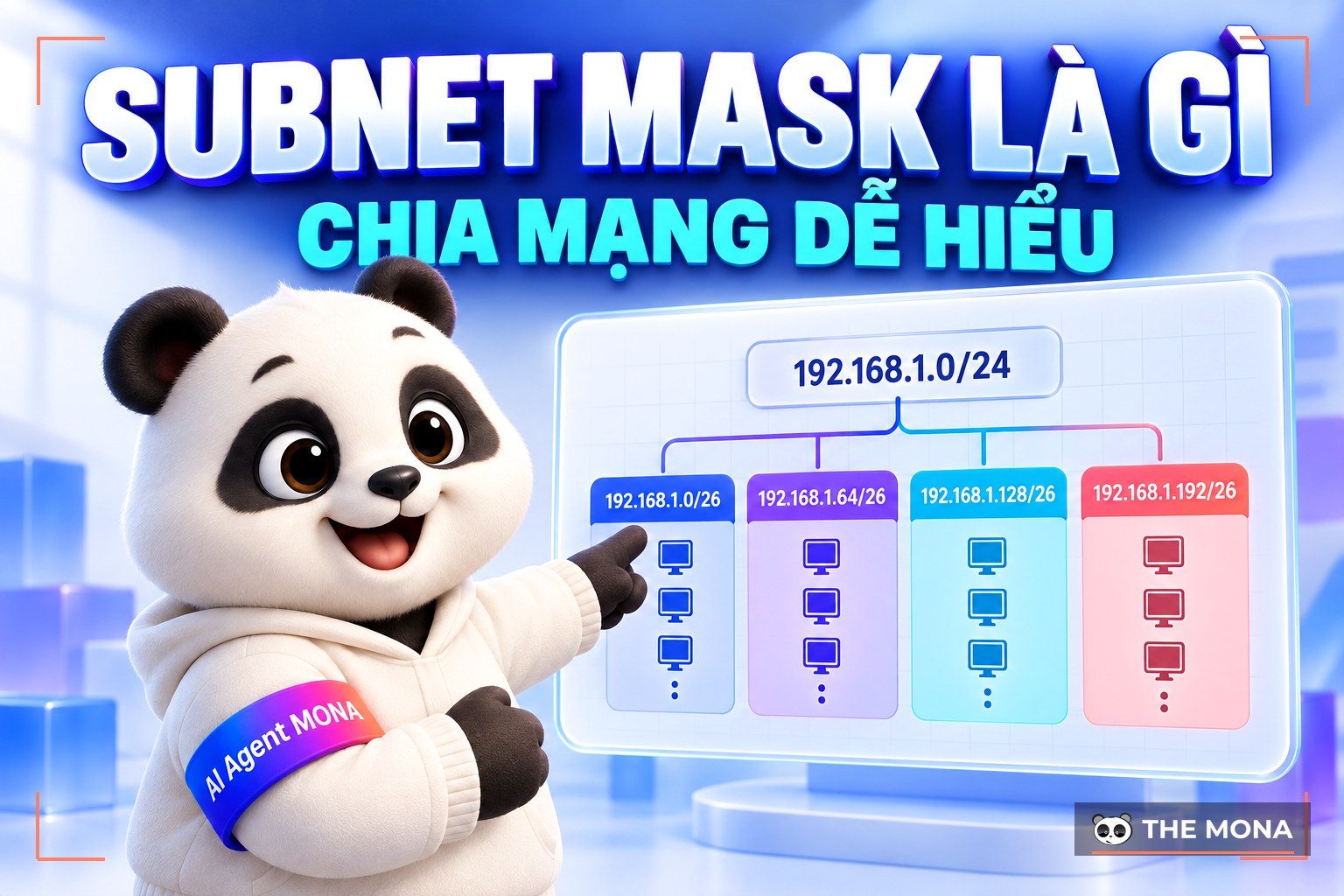
Subnet masks are used by many organizations and businesses. Using a subnet mask makes network allocation more orderly and logical. Let's look at what a subnet mask is? How does a subnet mask work? Let MONA Media walk you through the details of the subnet mask in the article below.
Today's smart devices each have their own IP address with two parts: the host/client address and the network address. IP addresses are assigned by a DHCP server or set manually (static IP address). The subnet mask divides an IP address into the host address and the network address. It tells the system exactly which parts of an IP address belong to the network and which belong to the device.
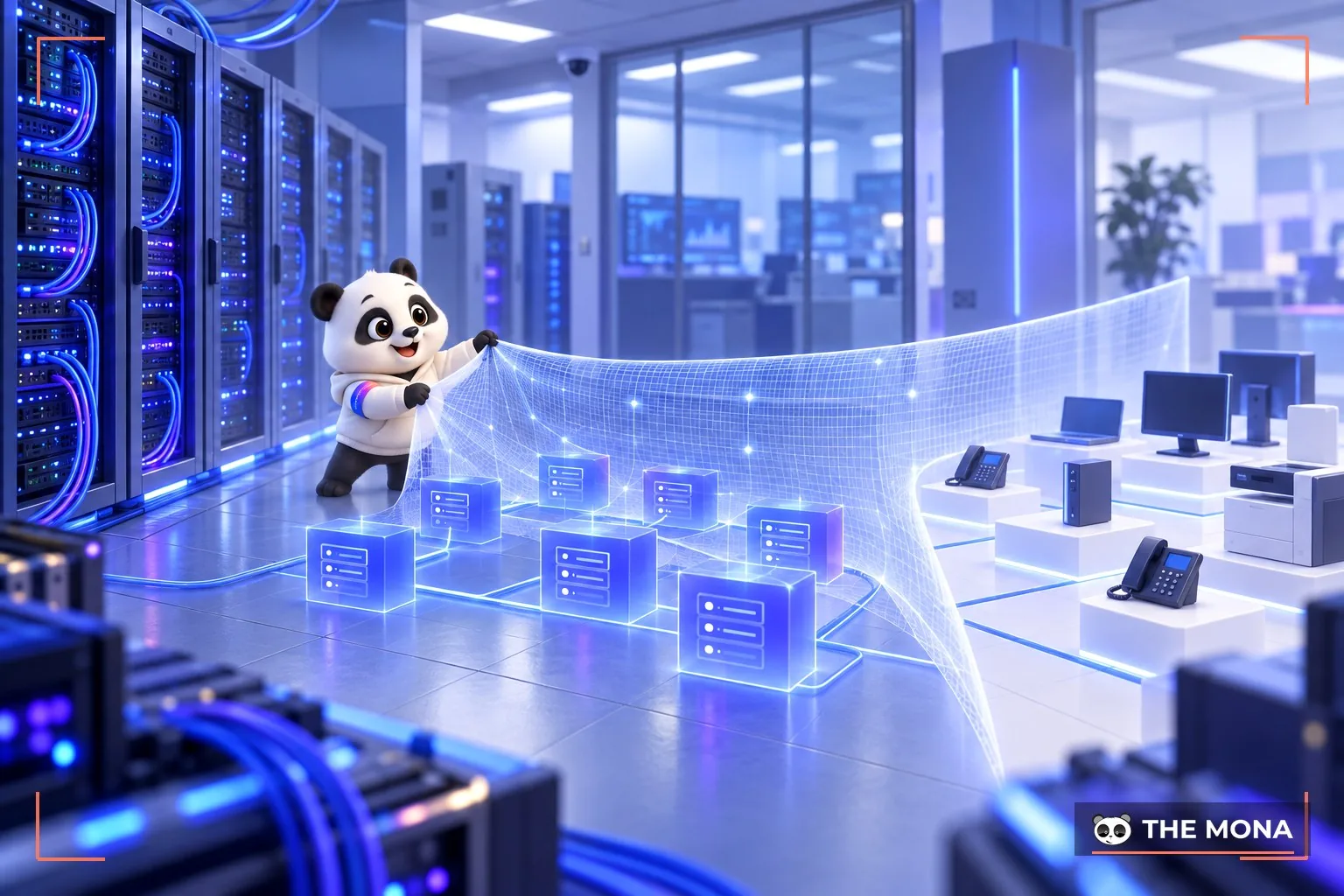
First, let's get the definition of a subnet mask so we have a clear picture of the term. A subnet mask is a 32-bit binary number that lets you split an IP address into a network address and a host address. Certain numeric addresses cannot be used for hosts.
For example, address 255 is always assigned as the broadcast address, while address 0 is assigned by default as the network address. The subnet mask, IP address, gateway or router make up the basic structure most networks use to communicate between devices over the Internet Protocol.
When required, sub-networking automatically divides the host portion of an IP address into smaller subnets, which enables the subnetting process.
When a business uses a subnet mask to divide its network, the system can tell the private network from the company-wide network. The network is also split into smaller sub-networks with separate IP addresses. As a result, the network's connectivity reaches its maximum.
Here is a more concrete example of what a subnet mask does. Say a large company has hundreds of thousands of devices accessing its LAN. On paper, the network structure can handle every connection. In practice, the structure limits the number of machines that can connect: some can get on the network, others cannot.
In worse cases, when all devices share one network, the system becomes harder to manage and control. The subnet mask was created to solve these difficulties.
A subnet mask brings users several benefits, such as:
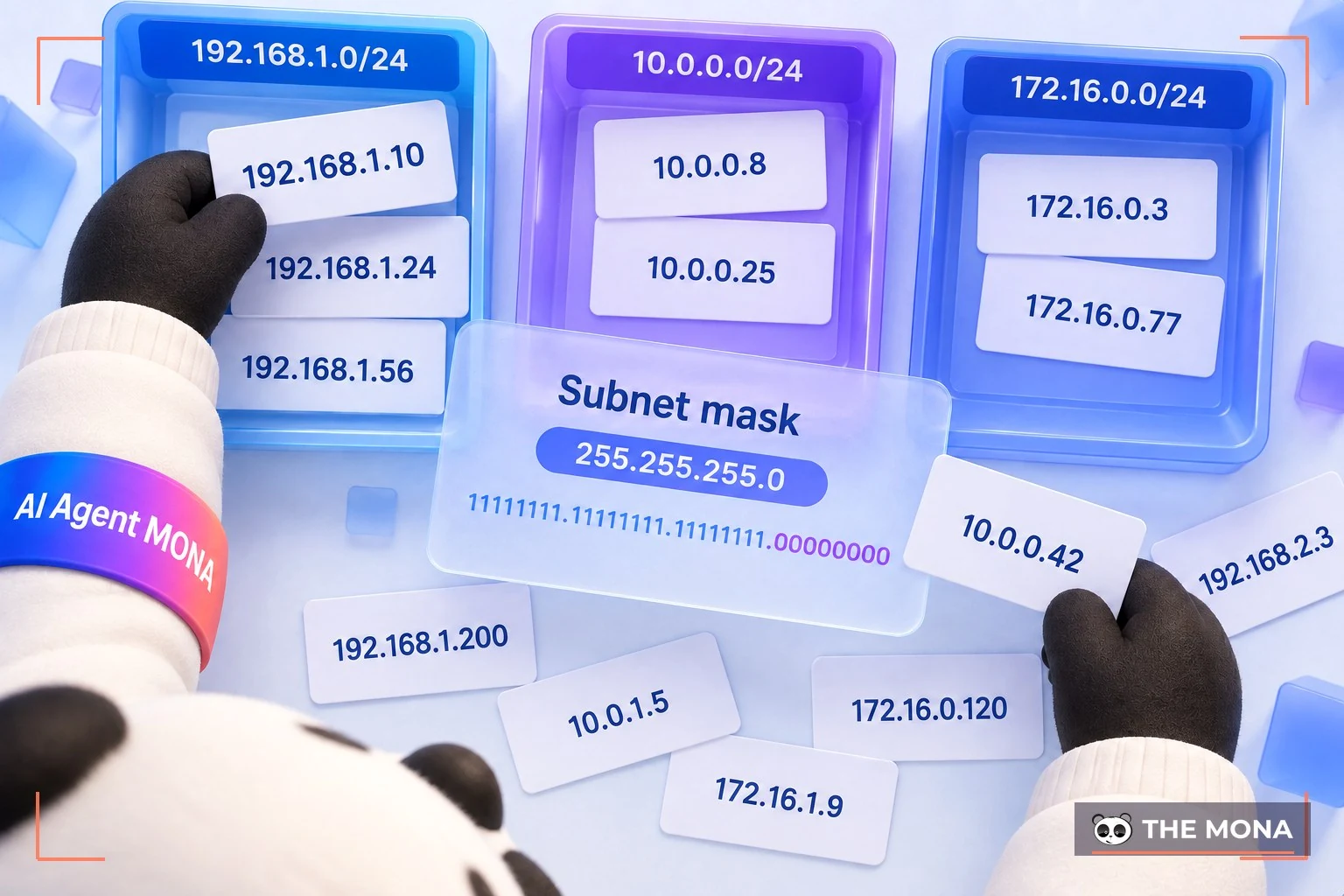
It is worth understanding how this number works before you use it. A subnet mask divides a network into several parts, called subnetworks or subnets.
Users do not need to install or add a new network to reduce network traffic, which makes using the internet easier. You only need one main network, and the sub-units divide it into smaller networks for their own use. This way the network does not get overloaded.
For organizations that use a single local LAN and need to split it into several segments, subnetting is essential, and it gives these benefits:
By the subnet concept, a network has 256 addresses in total (a class C network). Of these, one address identifies the network and another identifies the broadcast address. That leaves 254 addresses available for hosts.
Divide the 256 addresses evenly into 8 subnets, and each subnet has 32 addresses. Each new subnet needs 2 addresses for the subnet itself and for broadcast. The end result is 8 subnets, each with 30 network addresses available for hosts. Managing addresses is then easier and more efficient.
Address schemes for a range of existing networks are based on how an IP address is divided into octets. As the picture below shows, the class is determined by the three leftmost high-order bits of any given IP address, across the five network classes A to E.
The classes are divided as follows:
Class A, B and C networks also have a natural mask, or default subnet mask:
You can determine the number of hosts and the type of an IP address from its default subnet mask.
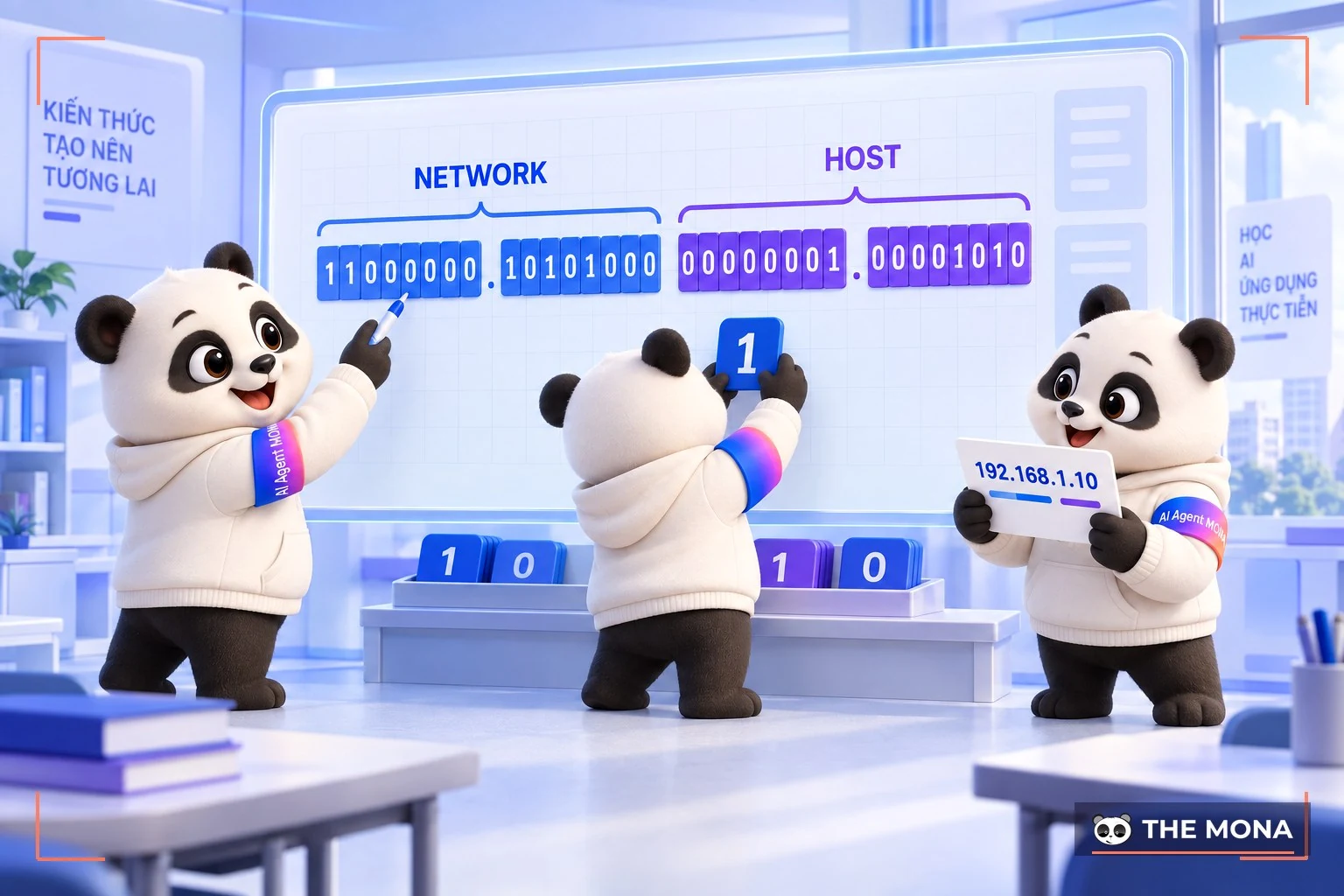
Normally, a 32-bit IP address represents one unique device on the network. Through the subnet mask, the 32 binary bits are split into the host and network parts, in 4 groups of 8 bits. Binary is hard for many people to calculate with, so developers solved this by converting each octet to decimal numbers separated by dots.
Example: 172.16.254.5 is a dotted decimal address whose values range from 0 to 255, representing 00000000 to 11111111 in binary.
The calculation methods have many uses, such as widening the range or searching with tools known as subnet mask calculators. A subnet mask calculator gives you information such as the IP range, IP addresses and so on.
Some popular subnet mask calculators are:
The article above covered what a subnet mask is? How a subnet mask works. It also pulled together how to divide a network with a subnet mask and what subnet mask calculators are. We hope this useful information helps you understand the subnet mask, a very important part of any network system.

CEO & Founder · The MONA
Founder of The MONA, who built a services company of 60+ staff with 14,000+ projects delivered. Khánh Hùng shares how he thinks about building systems that run themselves, automating a business, and the real lessons from delivering projects at MONA.
 1,5K




Professional website
design services
Own a website with a beautiful, 100% exclusive design and a lifetime warranty, with the ability
to expand features flexibly as your business grows, starting today!






 MONA will never sell your information or send you spam


 MONA will never sell your information or send you spam
