
 MONA OS 2.0
 Hợp tác với MONA


 Tự động hoá doanh nghiệp
 Cẩm nang SEO
 Digital Marketing
 Kinh nghiệm thiết kế website
 Hạ Tầng Server
 Giáo dục


 VI
 EN








Message us on
Zalo Official


 ProductsNew

 ProductsProducts
 Mới ra mắtKHA AI 2027App tự edit video, tự đăng mọi mạng xã hội, 2 phút mỗi ngày










 Thiết kế websiteVừa đẹp vừa thuyết phục được khách.
Dịch vụ SEOKéo về khách đang tìm đúng thứ anh chị bán.
 Tư vấn digital marketingKéo khách từ nhiều kênh, đo bằng số thật.
Quay video doanh nghiệpVideo giới thiệu công ty, nhà xưởng, đội ngũ.
 MớiDựng video AIDựng phim câu chuyện công ty bằng AI.
 Custom software developmentCRM, ERP and HRM built for your business.
 Viết AI Agent theo yêu cầuĐặt riêng một trợ lý AI cho đúng việc của mình.
 Tư vấn chuyển đổi AIĐưa AI vào vận hành của cả công ty.
NewMONA LMSManagement for centers and schools.
MONA SkillHubInternal training for company staff.
 NHTQ systemEnd-to-end China–Vietnam shipping operations.
MONA JMSManagement for gold, diamond and pawn shops.
 MONA E-LearningA website with every feature you need to sell courses.
 How to sell online courses (course)More than 30 free lessons on selling courses on autopilot.
 MONA Cloudmonacloud.vnServers to get your apps and websites running.
 MONA Basemonabase.vnPostgres database, sign-in and file storage.
 MONA Mailmonamail.vnSend OTP, order and invoice emails from your software.
 MONA Paymonapay.vnAccept bank transfers via VietQR and notify your software when the money arrives.
 MONA eInvoiceComing soonIssue e-invoices that meet tax standards.
Gấu CườiTrả lời khách 24/7 trên web, Fanpage, Zalo và thu lead cho sale.
 Gấu TeleSalesGọi điện tư vấn, chăm khách như tổng đài viên thật.
Dê CườiTư vấn và chốt đơn cho shop ngay trong khung chat.
Gấu WebmasterNhắn nhóm Zalo là website được sửa xong.
 Gấu Pháp ChếSoạn hợp đồng, rà điều khoản trong vài phút.
 Gấu Báo GiáLên báo giá đúng mẫu và gửi khách ngay.
 AI chăm sóc khách hàngTheo dõi và giữ chân khách hàng cũ.
 Gấu Tuyển DụngLọc hồ sơ, hẹn lịch, phỏng vấn ứng viên.
 Mới ra mắt
KHA AI 2027
Xây kênh chuyên gia 2 phút mỗi ngày
Quay bằng điện thoại, AI tự edit video, tự đăng lên 16 nền tảng và tự trả lời bình luận, tin nhắn.
863.175lượt xem trên kênh CEO MONA sau 31 ngày
 Anh Khánh HùngCEO MONA đang dùng mỗi ngày
Xem app làm được gì
 AI
Gấu Cười MONA ĐANG TỰ XÀITrả lời khách 24/7 trên website, Zalo OA, Messenger và thu lead về cho sale.
Dê CườiChốt đơn bán lẻ và sàn: Shopee, TikTok Shop, web. Chăm cả khách sỉ, đại lý.
Gấu WebmasterCập nhật nội dung, tối ưu SEO website mỗi ngày.
Gấu TeleSalesGọi điện tư vấn, chăm khách như tổng đài viên thật.
Gấu Tuyển DụngLọc hồ sơ, hẹn lịch, phỏng vấn ứng viên tự động.
AI chăm sóc khách hàngGiữ khách cũ, cứu lead đã rớt cho phòng kinh doanh.
Gấu Pháp ChếSoạn hợp đồng, rà điều khoản trong vài phút.
Gấu Báo GiáLên báo giá đúng mẫu, gửi khách ngay khi có yêu cầu.
 Chuyển đổi AI toàn phầnGiải pháp tổng cho doanh nghiệp, 3 lớp triển khai.
 Viết AI Agent theo yêu cầuĐặt riêng một con AI gánh đúng nghiệp vụ của bạn.
 Custom softwareCRM, ERP and HRM with built-in AI automation.
 SEO & AEO thời đại AIĐược Google lẫn AI trích dẫn, không chỉ xếp hạng.
 Kiến thức AI cho doanh nghiệpBài phân tích, hướng dẫn ứng dụng AI vào vận hành.
 Free AI courses
 AI tools at work
App mới · KHA AI 2027
Xây kênh 2 phút mỗi ngày
AI tự edit video, tự đăng mọi mạng xã hội
Free consultation, 8am–10pm every day

18 March, 2023
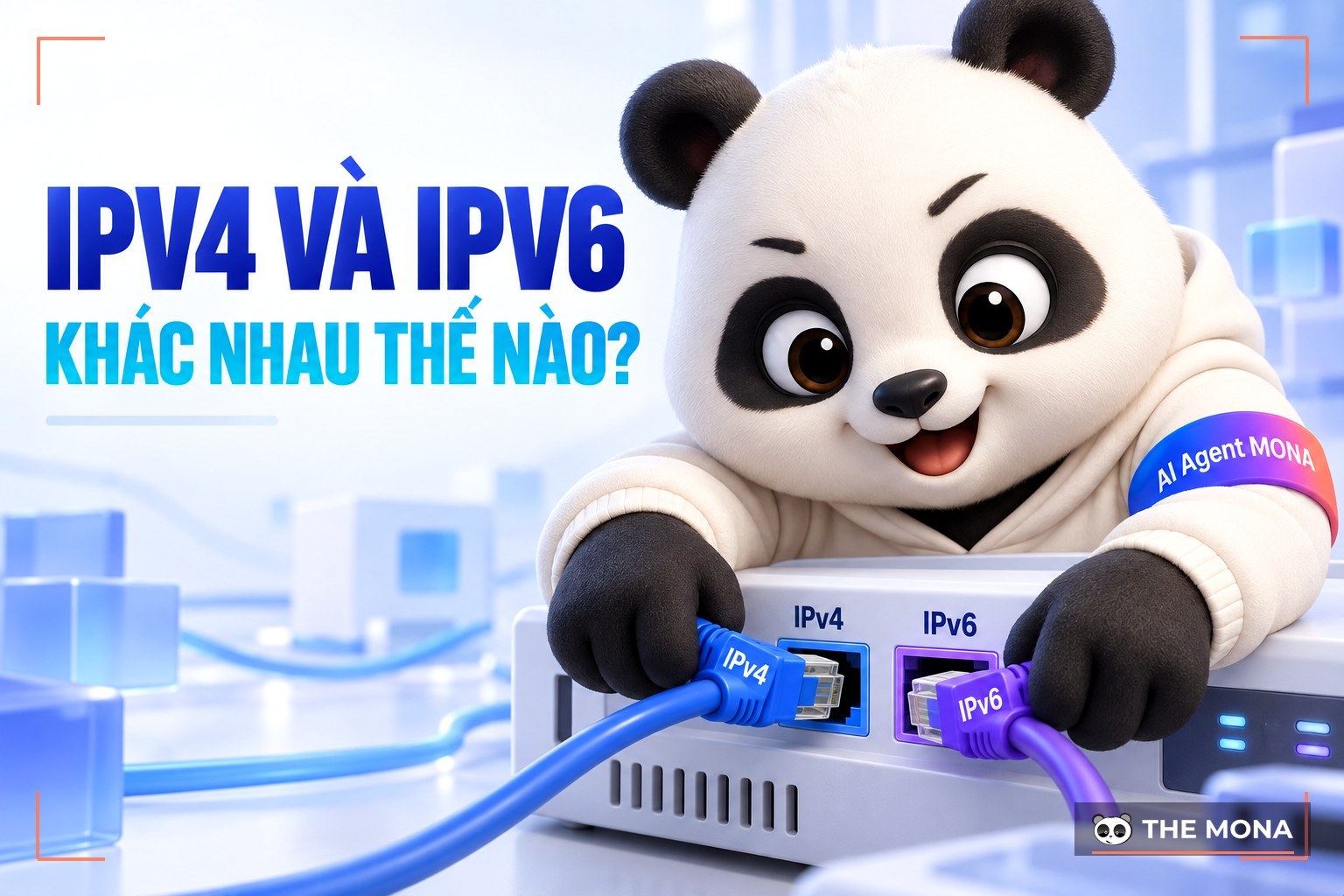
Computers and devices can communicate over the internet thanks to the Internet Protocol (IP). There are now two versions of IP, IPv4 and IPv6. Both are used to label devices connected to a network, but they differ in certain respects. In this article you will learn the differences between the two internet protocols, IPv4 and IPv6, in detail.

The Internet Protocol (IP) is a set of rules responsible for routing data across networks and delivering it to the right destination.
When data is sent over a network, the computer splits it into small units called packets, which makes the transfer faster and more efficient.
Every packet carries both the source and the destination IP address. An IP address is a unique identifier assigned to every device connected to the internet or a computer network.
Just as you need a mailing address to send a letter, a device needs the correct IP address to send information across a network.
IP addresses are allocated by the Internet Assigned Numbers Authority (IANA), a US-based organization that manages the pool of IP addresses.
Note that an IP address is different from a domain name, which is a website address that is easier to remember than a numeric IP address.

IPv4 is the most widely used protocol for moving data. It was designed as a connectionless protocol, meaning it sends packets without making sure the receiving device is ready. The advantage is that IPv4 can send packets along different paths if a router fails or a link in the middle has trouble.
IPv4 follows a best-effort model, so it does not fully guarantee quality or successful delivery. It is very flexible and can be configured automatically or manually on many kinds of devices, depending on the type of network.
This version of IP uses 32-bit addresses, the format most people picture when they talk about IP addresses. An IPv4 address consists of four decimal numbers between 0 and 255, separated by three dots.
A 32-bit address space provides about 4.3 billion addresses. However, a large share of them is reserved for private networks and is not available for public use.

Internet Protocol version 6 (IPv6) is the newer version of IP, also known as Internet Protocol Next Generation (IPng).
It works like IPv4 and gives every device connected to the internet a unique address. Unlike IPv4, though, IPv6 uses 128-bit addresses instead of 32-bit ones.
The 128-bit address space provides roughly 340 undecillion addresses, many trillions of times more than IPv4.
An IPv6 address is made of letters and numbers, written as eight groups of four hexadecimal digits separated by colons.
Besides offering far more addresses, IPv6 has a simpler header than IPv4. Its header uses a new format designed to cut header overhead, so packets are processed more efficiently.
IPv6 also makes services such as Voice over IP (VoIP) and Quality of Service (QoS) easier to implement and deploy.
The maximum number of IPv4 addresses looks huge, but it is not enough for every device connected around the world, especially with the growing number of devices Internet of Things (IoT).
That is why IPv6 was created: to meet the demand for more internet addresses. Even so, as the world moves toward the new protocol, IPv4 is still needed.
Many large content providers, such as Facebook and Netflix, can now be reached over IPv6. But only about 19.1% of Alexa's top ten million websites are reachable over it, which shows there is still a long way to go before IPv6 is fully adopted. For website hosting services, customers using Hosting VPS usually get IPv6 support too, which improves security and helps limit DDoS attacks.

Now that we know the features of IPv4 and IPv6, the differences between the two can be summarized in the table below:
| Difference | IPv4 | IPv6 |
| Mobile device compatibility | Addresses use dotted decimal notation, which is not well suited to mobile networks | Addresses are separated by colons and written in hexadecimal, which makes them work better with mobile networks |
| Mapping | Uses Address Resolution Protocol (ARP) to map to MAC addresses | Uses Neighbor Discovery Protocol (NDP) to map to MAC addresses |
| DHCP | When connecting to a network, clients must contact a DHCP server | Clients receive an address without having to contact any other server |
| IP security | Options | Required |
| Optional fields | Have | No. Extension headers are used instead. |
| Local subnet group management | Uses Internet Group Management Protocol (IGMP) | Uses Multicast Listener Discovery (MLD) |
| Address configuration | Done manually or through DHCP | Uses stateless address autoconfiguration with ICMPv6 or DHCPv6. |
| DNS Record | In the A record | In the AAAA record |
| Packet Header | The packet flow cannot be identified for QoS handling. Includes checksum options. | The Flow Label field identifies the packet flow for QoS handling |
| Packet size | Minimum of 576 bytes | Minimum of 1,208 bytes |
| Security | Relies mainly on the application layer | Has its own security protocol called IPSec |
| SNMP | Support | Not supported |
| Address Features | Network Address Translation (NAT) is used, allowing a single public address to stand in for thousands of non-routable addresses. | Direct addressing is possible because of the vast address space. |
| Network configuration | Configured manually or with DHCP | Automatic configuration |
| Fragmentation | Done during routing. | Done by the sender |
| VLSM | Support | Not supported |
| Configuration | To communicate with other systems, a new system must be configured | Configuration options |
| Address types | Multicast, Broadcast and Unicast | Anycast, Unicast and Multicast |
| Checksum field | Have | No |
| Header length | 20 | 40 |
| Number of header fields | 12 | 8 |
| Address method | Numeric addresses | Alphanumeric addresses |
| Address size | 32 bit | 128 bit |
IPv4 addresses ran out around the 1990s. That is why the Internet Engineering Task Force proposed and began developing IPv6 in 1994.
It can be done, but it will take a lot of time, probably decades. IPv4 is still very well optimized, and the cost of switching is high, among other factors, so a full move to IPv6 is unlikely within a few years.
ARP (Address Resolution Protocol) is a protocol, or procedure, that links an Internet Protocol (IP) address, which can change, to a fixed physical machine address.
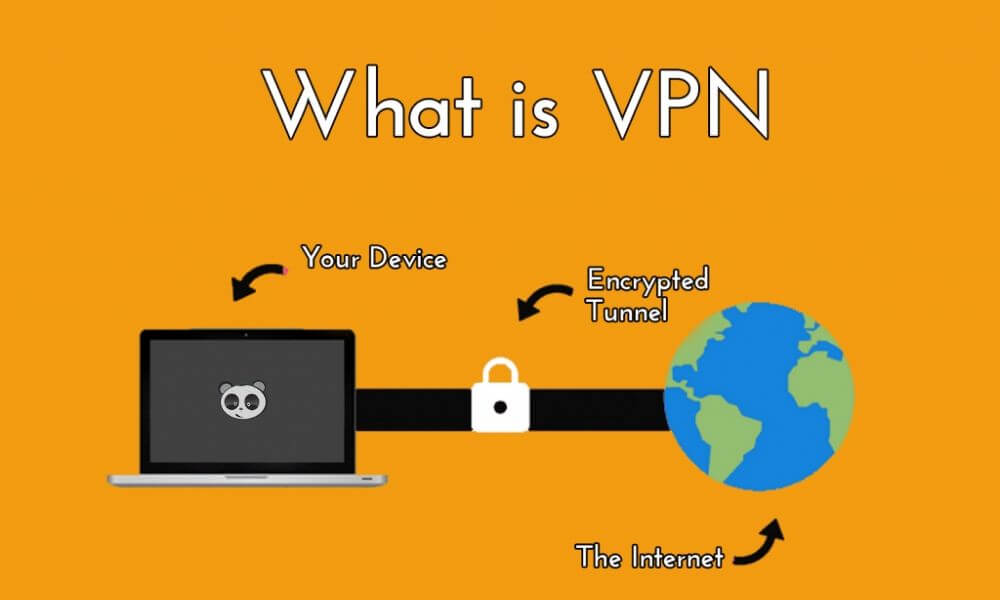
You can protect your IP address in many ways. Among them, using VPN is the best-value and least costly option.
Mona hopes this article comparing IPv4 and IPv6 has helped you understand the differences between these internet protocols. If you have any questions, leave us a comment below.

CEO & Founder · The MONA
Founder of The MONA, who built a services company of 200+ staff with 14,000+ projects delivered. Khánh Hùng shares how he thinks about building systems that run themselves, automating a business, and the real lessons from delivering projects at MONA.
 1,5K




Professional website
design services
Own a website with a beautiful, 100% exclusive design and a lifetime warranty, with the ability
to expand features flexibly as your business grows, starting today!






 MONA will never sell your information or send you spam


 MONA will never sell your information or send you spam
